Controversial Legal Risks in the Latest Round of Funding for Crypto KOLs
TechFlow Selected TechFlow Selected
Controversial Legal Risks in the Latest Round of Funding for Crypto KOLs
Have you fallen into the KOL wheel trap?
 Navigating Web3 tides with focused insights
Author: Liu Honglin, Founder and Director of Shanghai Manqin Law Firm;
Huang Wenyin, Li Jiaqian, Legal Assistants at Shanghai Manqin Law Firm
SatoshiVM became one of the hottest projects in the first half of 2024, partly due to a "farce" triggered by KOLs.
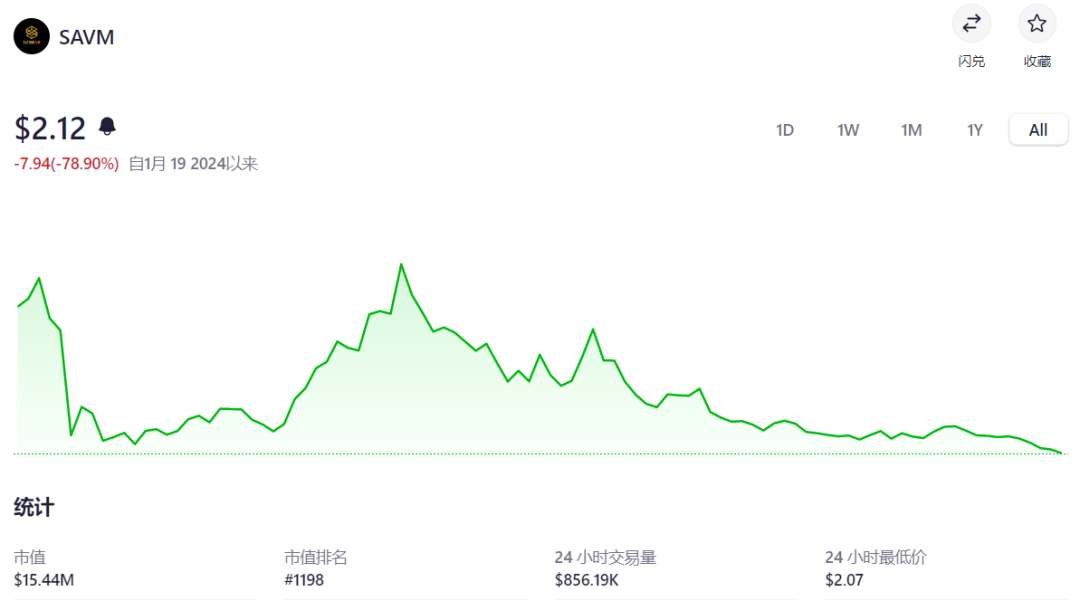
In January 2024, SatoshiVM launched its token SAVM for the first time. Due to extensive pre-launch promotion by numerous collaborating KOLs, the price of SAVM surged immediately after release, quickly reaching $11.66 shortly after launch. However, news soon emerged that the KOLs had received tokens from the project team and promptly sold them, sparking major controversy and causing the token's price to plummet. According to trading data from June 12, 2024, the lowest transaction price of SAVM within 24 hours was $2.07, a far cry from its former peak.
In fact, collaboration between crypto projects and KOLs has long been an accepted marketing practice in the industry, giving rise to the concept known as the "KOL round" of fundraising. However, KOL participation in such rounds poses various legal challenges, especially when the promoted projects experience significant market volatility.
Therefore, today Manqin lawyers will discuss the topic of crypto KOL rounds—what exactly is a KOL round? What are its legal risks? And how can these risks be mitigated?
01 KOLs and the KOL Round
(1) What Is a KOL?
KOL (Key Opinion Leader), literally meaning "key opinion leader," refers to individuals who possess more accurate and comprehensive product information, are trusted or accepted by a certain group, and significantly influence the purchasing behavior of that group.
In the Web3.0 space, KOLs are essentially influential figures with substantial investment experience or strong "gold-rush" awareness, who have accumulated a certain number of followers in the cryptocurrency community. Their high visibility ensures their content reaches a wide audience.
As "influencers" in the Web3.0 domain, they do not necessarily need to reach a massive follower count to qualify as KOLs. Even a KOL with only 5,000 followers may receive promotional offers from project teams and earn compensation through project promotion.
There are generally two ways KOLs earn income: the first is receiving immediate compensation, similar to typical influencer marketing—such as common giveaway campaigns on X (formerly Twitter) or promotions by NBA stars. The second is acting as project investors, leveraging their influence as a form of "technical equity" or directly investing, thereby receiving tokens or purchasing them at a discount upon project launch as early contributors or investors.
(2) Understanding the KOL Round
The KOL round actually refers to the second model described above. The different terminology arises from differing perspectives.
From the project’s fundraising perspective, some cryptocurrency startups raise venture capital through equity, while others raise funds by selling issued or affiliated tokens. Some even adopt hybrid funding rounds combining both tokens and equity.
A KOL round occurs when a project team invites KOLs to promote the project while simultaneously treating them as fundraising participants. Unlike other investors, KOLs, as early contributors, often receive discounts or even free allocations when purchasing the project’s tokens.
In April 2024, RootData, a Web3.0 asset data platform, released statistics on KOL participation in project financing over the past six months, showing that "dingaling" ranked first with involvement in 21 project financings.
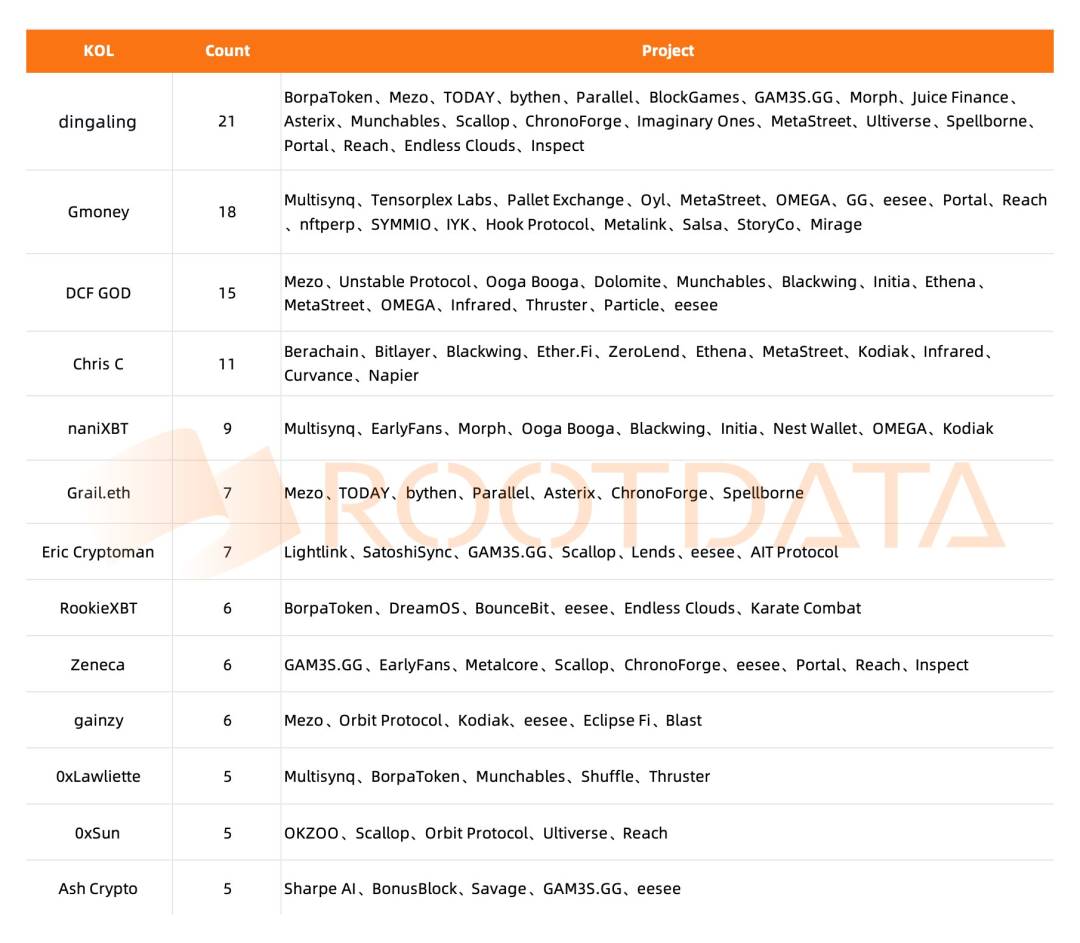
Notably, NFT enthusiasts make up a relatively large proportion on this list. One possible reason is that the NFT market has underperformed in recent years. As a result, both NFT project teams and KOLs are seeking new growth opportunities and breakthroughs to stimulate market activity. The close collaboration between project teams and KOLs may explain why many NFT players are flooding into primary and secondary markets.
02 Legal Issues to Consider in KOL Rounds
(1) Regulatory Developments Related to KOL Rounds
In China, according to regulations such as the Advertising Law, the Code of Conduct for Online Streamers, and the Guiding Opinions on Strengthening Standardized Management of Online Live Streaming issued by the State Administration for Market Regulation, traditional KOLs must clearly disclose their promotional relationships with brands in text or video content and are subject to relevant oversight. For example, if a KOL includes product promotion in a video, they must label it as an advertisement. However, in the cryptocurrency industry, there is currently no targeted legal framework in China.
In contrast, in the United States, according to a disclosed written contract for KOL financing reported by Bloomberg: KOLs investing at a discounted price must promote the project via long-form podcasts, TikTok videos, etc., and must disclose their relationship with the project during promotion.
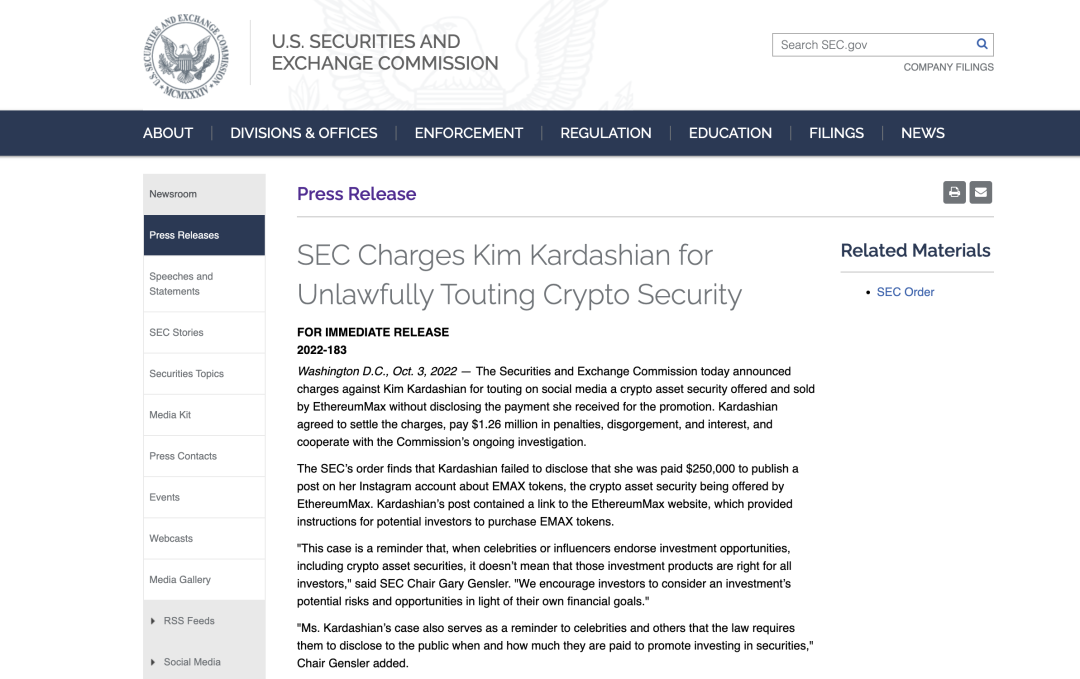
Moreover, KOL crypto promotions are also subject to scrutiny by the U.S. Securities and Exchange Commission (SEC). For instance, in October 2022, Kim Kardashian was accused of violating U.S. regulations for promoting a token without disclosing her paid relationship with the project, leading to SEC investigation and charges.
In practice, however, it is usually difficult for outsiders to know the internal connections between project teams and KOLs or their transaction models. Not all project teams or KOLs disclose their affiliations. Therefore, unless insiders leak information, regulatory authorities often struggle to obtain details about KOL rounds, making effective oversight challenging.
(2) Risk of Fraudulent Promotion
As surfers in the Web3.0 world, many investors understand that even if a KOL merely receives payment for advertising without participating in project financing, their overly enthusiastic endorsements should not be fully trusted. Extending this logic, once a KOL purchases or intends to purchase project tokens and invest in the project, the authenticity of their feedback becomes even more questionable.
According to statements from some industry insiders, few KOLs provide honest assessments during promotion. Their statements often contain vague, misleading, or even completely false information intended to induce investors to buy project tokens.
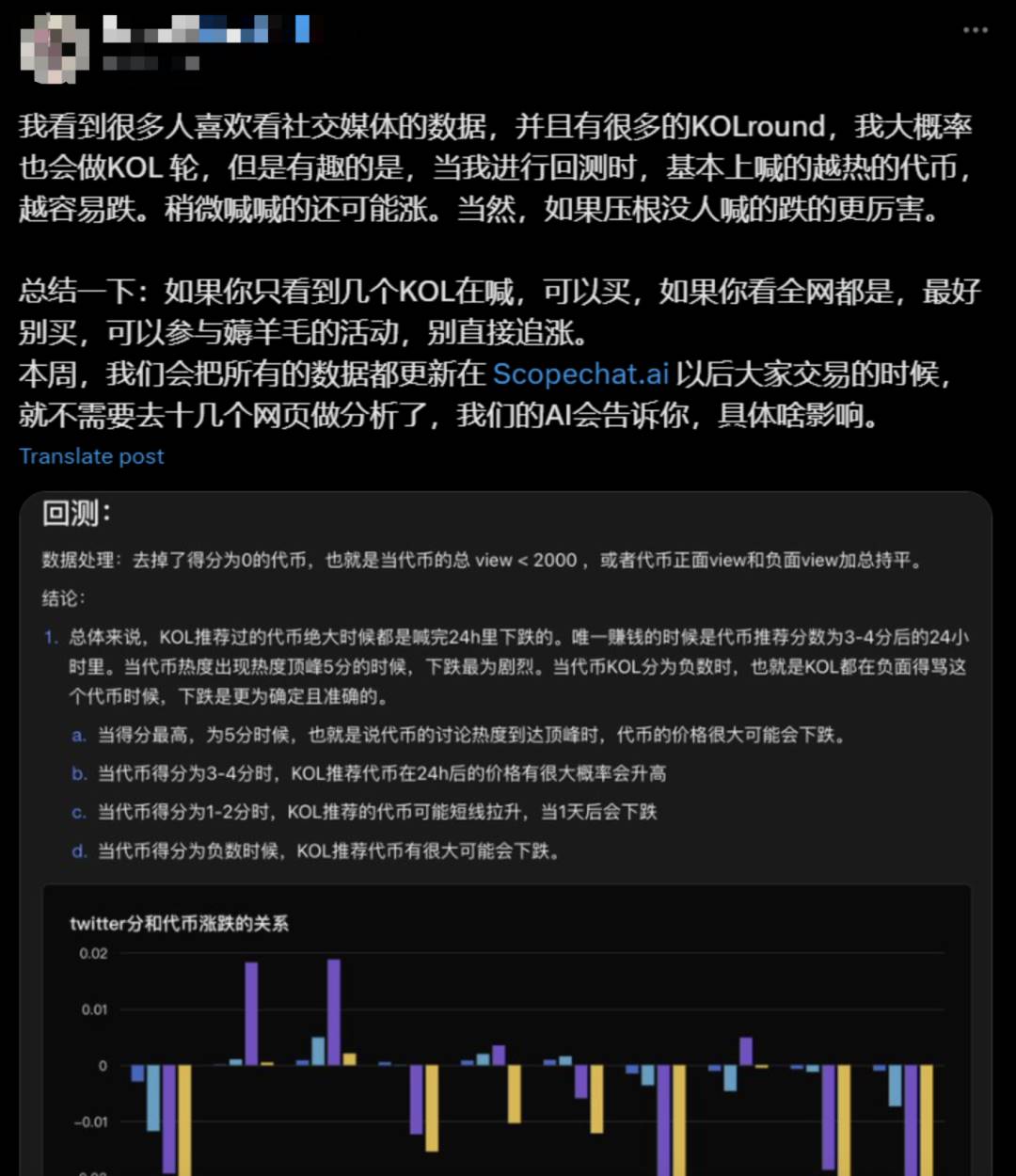
In reality, such half-truths and exaggerated promotions by KOLs carry legal risks of civil fraud and even criminal fraud. According to Article 148 of the Civil Code, if a KOL’s false statements cause investors to develop mistaken beliefs and subsequently purchase tokens or participate in a project, resulting in financial loss, the KOL’s actions constitute civil fraud, entitling investors to claim compensation.
More seriously, if a KOL intentionally seeks to illegally obtain investors’ assets and uses deceptive means to help the project acquire investor funds, ultimately causing financial losses, the KOL’s actions could violate Article 266 of the Criminal Law on fraud, leading to criminal liability.
(3) Risk of Illegal Pyramid Schemes
As previously mentioned, cooperation models between KOLs and project teams are typically opaque, making it hard for the public to know how KOLs obtain project tokens. However, if a KOL’s token allocation is tied to the number of successfully recruited investors and the promotion occurs within a paid community, such practices may涉嫌 illegal pyramid schemes.
Under Article 224 of China’s Criminal Law, the key elements of organizing or leading a pyramid scheme include: charging “entry fees,” compensating based on “headcount,” inducing or coercing participants to recruit others, and forming hierarchical structures of three or more levels.
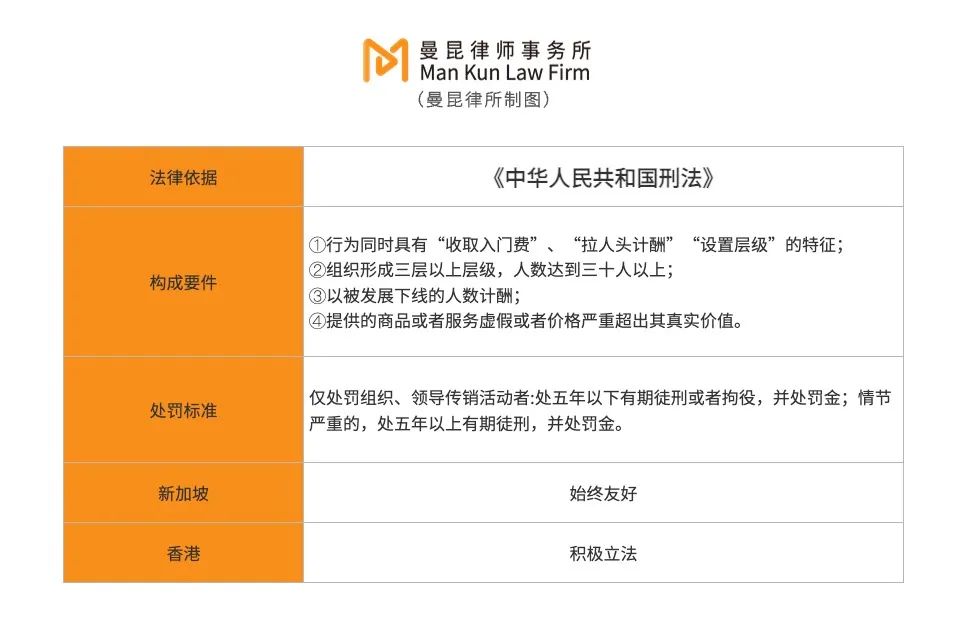
Thus, if a KOL’s promotion involves collecting membership fees, receiving token rewards based on the number of recruited investors, encouraging those investors to recruit further participants, and forming a three-tier or deeper hierarchy, their actions may violate laws against organizing or leading pyramid schemes and incur criminal liability.
(4) Risk of Being Deemed an Accomplice to Criminal Activity
Recently, the ZKasino project has drawn widespread attention to the risks associated with KOL promotion. In March 2024, the project team announced a staking campaign.
Multiple KOLs participated in ZKasino’s KOL round, promoting the project through Twitter, crypto forums, offline events, and other channels, receiving token commissions and investment benefits in return.
However, after over a million users bridged more than 10,000 ETH, the ZKasino team unilaterally altered and removed the official event description—not only failing to return users’ staked ETH as promised but also forcibly converting all user ETH into platform tokens.
This action sparked intense backlash. After the project was accused of a "soft rug pull," several KOLs involved in the fundraising and promotion faced strong criticism and accusations from fans, who alleged improper benefit transfers and demanded they be held criminally liable as accomplices.
Like the KOLs in this incident, many KOLs believe that promoting a project and selling tokens at peak prices are normal investment behaviors unrelated to the project team and requiring no accountability to users.
But as the saying goes, “success and downfall come from the same source.” While KOLs can profit greatly from surging token prices, they also risk serious legal consequences if the project turns out to be fraudulent or collapses.
If the project team becomes embroiled in criminal allegations due to fundraising methods or project content, and the KOL played a clear promotional role in the project, then under Article 25 of the People’s Republic of China Criminal Law, the KOL may be deemed to have known or should have known about the project’s insider information and face prosecution and legal liability.
Some experienced KOLs have already recognized this risk and begun taking protective measures. For example, KOL KillTheWolf (0xKillTheWolf) shared on Twitter his reasons for declining participation in the ZKasino KOL round, including skepticism toward the project’s valuation and revenue data, as well as distrust in the founder’s integrity. This cautious approach serves as a valuable lesson for other KOLs.
03 The KOL Round Isn’t Always Profitable
From the above legal risk analysis, it is evident that when KOLs participate in Web3.0 project KOL rounds and engage in promotion, they should pay attention to the following points to avoid misleading investors and being drawn into criminal cases:
-
Conduct comprehensive due diligence and risk assessment on the project, understanding key information such as its business model, revenue model, development prospects, and potential risks;
-
Fully disclose their vested interest in holding the project’s tokens when promoting it;
-
Avoid false promotion and refrain from abusing influence to manipulate the market.
Some KOLs may assume that operating abroad or promoting foreign projects shields them from Chinese judicial oversight. This belief is overly simplistic. According to relevant provisions of China’s Criminal Law, China retains jurisdiction as long as the criminal act or its consequences occur within Chinese territory, or if the KOL holds Chinese nationality.
Finally, Manqin lawyers recommend that KOLs in the Web3.0 space exercise caution in all promotional activities, adopting a responsible attitude toward investors. Only in this way can they truly fulfill the professional value of being “key opinion leaders” and contribute to the healthy development of the Web3.0 ecosystem.
Join TechFlow official community to stay tuned
Telegram:https://t.me/TechFlowDaily
X (Twitter):https://x.com/TechFlowPost
X (Twitter) EN:https://x.com/BlockFlow_News