Former House Speaker: Stablecoins Could Help U.S. Avoid Debt Crisis
TechFlow Selected TechFlow Selected
Former House Speaker: Stablecoins Could Help U.S. Avoid Debt Crisis
Dollar stablecoins could become one of the largest buyers of U.S. Treasury securities.
 Navigating Web3 tides with focused insights
Author: Paul D. Ryan, Former Speaker of the U.S. House of Representatives and Member of Paradigm’s Policy Committee
Translation: Luffy, Foresight News
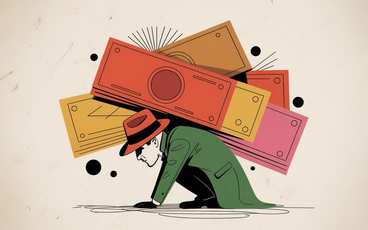
America's economic and social experiment stands at a critical crossroads, most clearly evident in its national debt. The United States is heading toward a predictable yet avoidable debt crisis. Without action, the economy will stagnate, and government promises on healthcare and retirement security will go unmet. Even more troubling, cuts to defense spending would leave the nation vulnerable.
As fiscal pressures grow and effective solutions remain out of reach, a crisis could begin with failed Treasury auctions, forcing drastic budgetary adjustments. As the economy contracts, the dollar would suffer a major credibility shock, further endangering growth prospects. The clear answer is to address the root causes. Entitlement programs are the main drivers of debt and need reform—but politicians lack the courage to do what’s necessary. Thus, the country is on a dangerous path. What can we do?
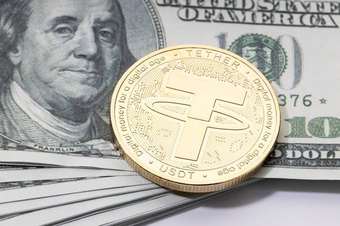
Consider stablecoins seriously. According to data from the U.S. Treasury and cryptocurrency analytics site DeFiLlama, dollar-backed stablecoins are becoming significant net buyers of U.S. government debt. If fiat-backed U.S. dollar stablecoin issuers were treated as a single country, they would rank just outside the top 10 holders of U.S. Treasuries—smaller than Hong Kong but larger than Saudi Arabia. If this sector continues to grow, stablecoins could become one of the largest purchasers of U.S. government debt.
Stablecoins have emerged at precisely the right moment as a mechanism to promote the dollar. The dollar’s status as the primary global reserve currency has provided immense benefits to the United States, including cheap and reliable financing for fiscal spending and outsized influence over the global financial system. Because of dollar dominance, most financial transactions ultimately flow through U.S. banks. Yet as the global economy becomes more digital and multipolar, that dominance is increasingly under threat.
China understands what is at stake. Beijing’s financial authorities have made digital currency a cornerstone of its international strategy and foreign policy. The Chinese government is leveraging investments in physical and digital infrastructure across emerging markets, combined with financial engineering, to embed the yuan into networks it can control and use to exert influence. The United States cannot afford to let its top geopolitical rival capitalize on the growing demand for secure and convenient digital money. The framework for understanding how the dollar gains power must evolve with the changing world.
Take an example illustrating the drivers of dollar dominance. Suppose a Japanese company sells goods or services to a customer in Wisconsin. How does that company handle the dollars it receives? Since the early 1970s, it could invest those dollars into the deep, liquid U.S. Treasury market—the most attractive destination because U.S. debt is backed by the world’s most dynamic economy. After all, U.S. government debt represents a claim on future output from the American economy.
Despite the growing burden of U.S. government debt, the fact that Uncle Sam continues to sell debt internationally at low interest rates proves one crucial point: global demand for the dollar remains seemingly insatiable. Yet signs suggest this status quo may be shifting—and quickly.
Countries like China and Saudi Arabia, historically large buyers of U.S. debt, are gradually exiting the market. They are increasingly pursuing payment and settlement mechanisms outside the dollar system. At the same time, the risk of failed U.S. debt auctions grows ever greater—a terrifying prospect that would disrupt markets and severely damage America’s credibility.
If other nations successfully expand the use of their own currencies while reducing holdings of U.S. Treasuries, the United States will need new ways to maintain the dollar’s appeal. Dollar-backed stablecoins offer one such solution.
Most stablecoin users come from economically weaker and less developed countries, where ordinary people and institutions seek “higher-quality” money. As Timothy G. Massad, former chairman of the Commodity Futures Trading Commission, recently described in a Brookings Institution research paper, stablecoins resemble Eurodollars—the offshore dollar-denominated liabilities that helped drive dollar dominance during the Cold War.
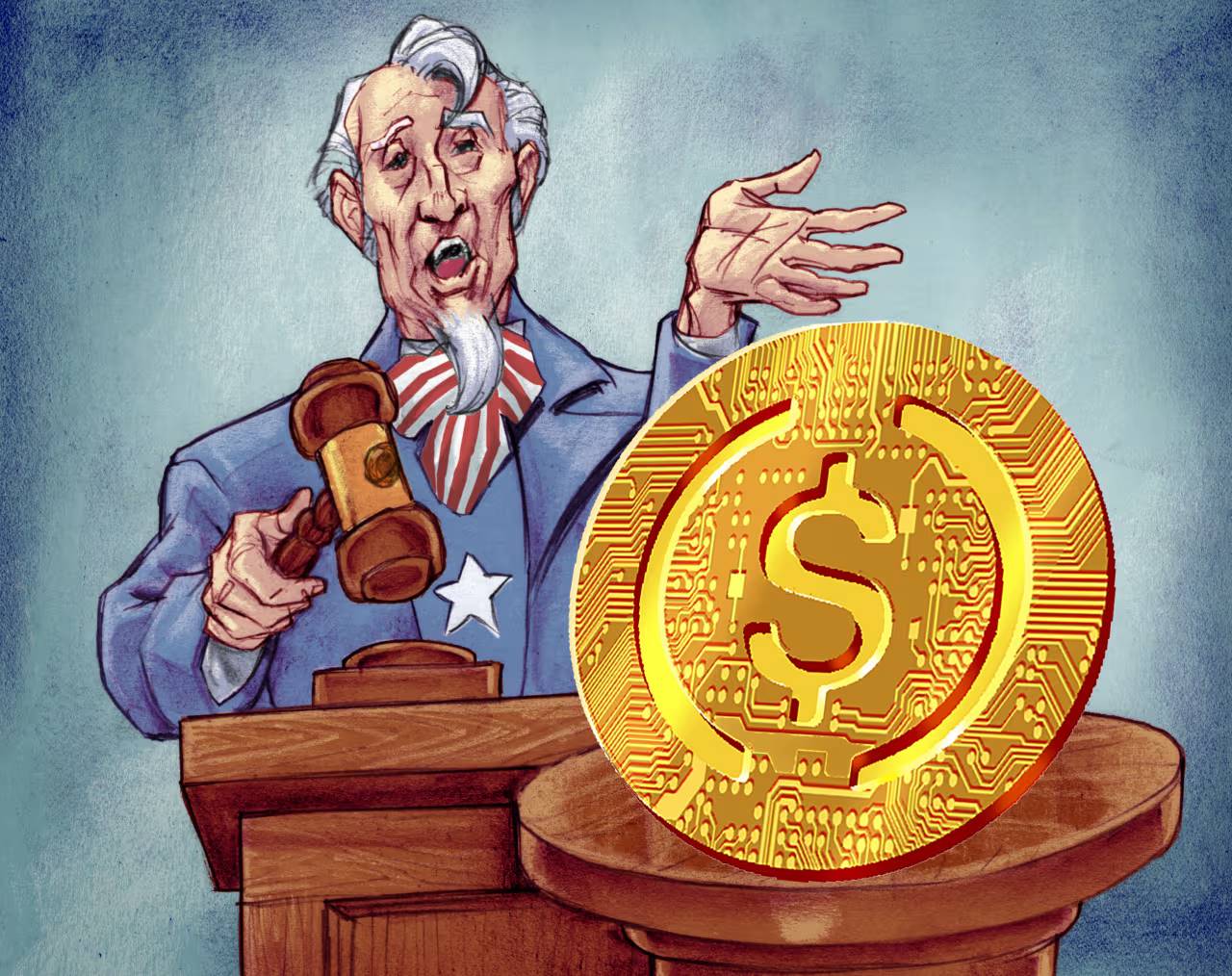
Promoting dollar-backed stablecoins follows a proven path and offers clear short-term benefits. It would sustainably increase demand for U.S. debt, reducing the risks of auction failures and debt crises. Unlike China’s digital financial infrastructure, dollar-backed stablecoins issued on public, permissionless blockchains embody the values of freedom and openness that the United States has long championed.
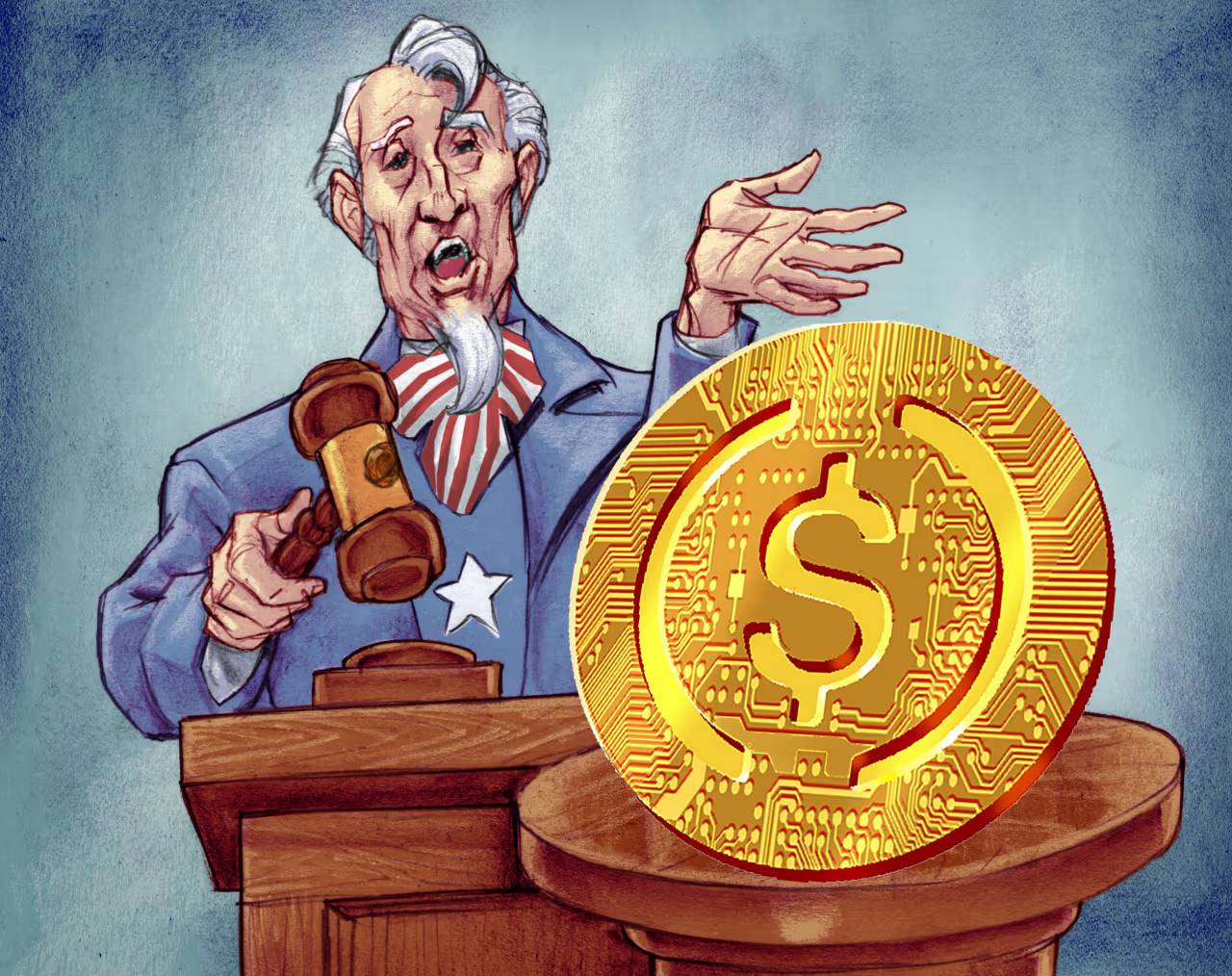
A sound, predictable regulatory framework for stablecoins, supported by both parties in Congress, could significantly expand the use of digital dollars at a critical moment. In an election year, amid all the political turmoil ahead, we need exactly this kind of win to strengthen confidence in financial markets.
Join TechFlow official community to stay tuned
Telegram:https://t.me/TechFlowDaily
X (Twitter):https://x.com/TechFlowPost
X (Twitter) EN:https://x.com/BlockFlow_News