








Will the "Crypto President" team from "Mastering Bitcoin" grow into a new global consensus?
TechFlow Selected TechFlow Selected
Will the "Crypto President" team from "Mastering Bitcoin" grow into a new global consensus?
Global election year, 4 billion people focus on presidential developments.
 Navigating Web3 tides with focused insights
Author: Huo Huo
2024 is a super election year, with key elections taking place in dozens of countries and regions worldwide, involving a total population exceeding 4 billion. Among them, the U.S. presidential election stands out as the biggest focus. However, unlike previous years, cryptocurrency ranks third in terms of discussion volume among all major political action committees involved in the 2024 U.S. election.
Just four years ago, it was rare for presidential candidates to discuss Bitcoin during campaigns. Three years ago, when El Salvador became the first country to adopt Bitcoin as legal tender, most people were merely observers. However, by last year’s primaries, things began to change—Bitcoin's era of political marginalization appears to be over.
On one hand, former President Trump and current President Biden are making various efforts to win support from crypto voters; on the other, many crypto companies plan to inject significant funds into the 2024 U.S. presidential election, and there are already signs that this funding is helping the industry gain more support in Washington.
Additionally, among the 12 primary candidates running for the 2024 U.S. presidential election surveyed in 2023, five explicitly expressed public support for Bitcoin and the crypto industry. In late December 2023, Argentina elected Javier Milei as president. Milei’s policy agenda includes dollarization, abolishing currency controls, closing the central bank, drastically cutting government spending, and actively supporting Bitcoin…

Argentine President Javier Milei
Which global leaders and regions have clearly expressed support for Bitcoin?
El Salvador: Nayib Bukele
In 2021, El Salvador became the first country in the world to officially recognize Bitcoin as legal tender. That same year, El Salvador designated Bitcoin as legal currency and launched Chivo Wallet, a government-designed digital wallet app allowing users to make payments in either U.S. dollars or Bitcoin. At the time, Bitcoin traded around $36,000.
This decision was driven by President Nayib Bukele. On one hand, El Salvador’s economy relies heavily on agriculture and foreign remittances as a key component of GDP. On the other, Bukele sought urgently to lead the country toward prosperity, and his party held an absolute majority with 64 out of 84 legislative seats.
In November 2022, when Bitcoin dropped to around $16,000, Bukele announced that El Salvador would begin buying one Bitcoin per day.
In March 2024, foreign media reported that Bukele stated the country’s actual Bitcoin holdings might exceed public estimates. He also tweeted that El Salvador was earning revenue related to Bitcoin through its passport program, converting Bitcoin into U.S. dollars for use by local businesses, mining operations, and government services. He claimed the country’s Bitcoin portfolio had a market value of nearly $205 million and had already generated $83 million in profit from its investment strategy.
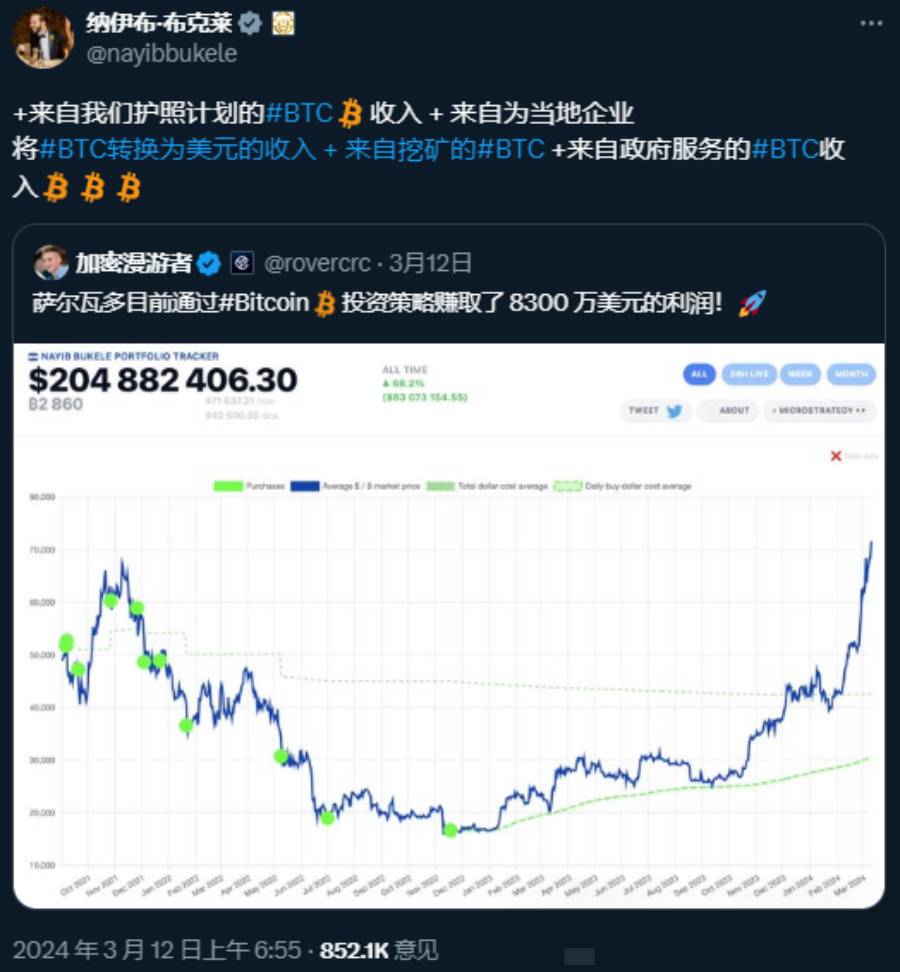
Shortly after, on March 14, Bukele posted again stating that the country planned to store a "significant portion" of its Bitcoin assets in offline devices such as cold wallets.
However, a December 2023 study published in the journal *Science* found that since adopting Bitcoin as legal tender, its usage in El Salvador remained limited and concentrated in few digital payment scenarios.
U.S. Presidents (Former Presidents and Candidates)
By the end of 2024, the United States will hold its next presidential election. Although official voting won’t begin until November 5, 2024, dozens of American politicians have already signaled their intention to challenge incumbent Democratic President Joe Biden.
Among the 12 candidates running for the 2024 U.S. presidential election, five have explicitly voiced support for Bitcoin and crypto assets: four Republicans—Donald Trump, Ron DeSantis, Francis Suarez, Vivek Ramaswamy—and one Democrat, Robert F. Kennedy Jr. According to FiveThirtyEight data at the time, among declared Republican candidates, Donald Trump led with 54% support, followed by Ron DeSantis at 17%.
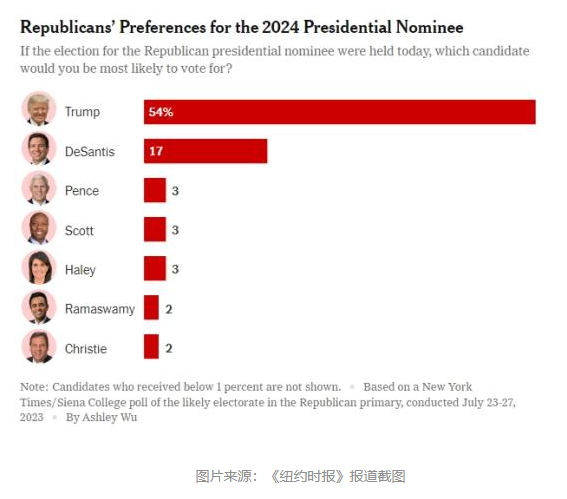
As expected, Trump and Biden have entered the “crypto election” battle.
It is well known that the current Biden administration (Democratic Party) has generally taken an anti-crypto stance. Therefore, if a pro-crypto candidate wins, it could significantly impact the next crypto bull market. From the parties’ current positions on crypto, most Democrats led by Biden adopt a cautious approach, especially after the collapse of FTX, which further solidified their push for strict regulation. In contrast, most Republicans, perhaps to differentiate themselves politically and attract votes, have unusually shown openness toward crypto.
As Trump increasingly promotes a “crypto-friendly” message and champions technological innovation—even launching a cryptocurrency donation website in May—Biden and other Democrats have responded by softening their stance, announcing plans to hire a meme manager.
Although crypto may only play a small role in the overall U.S. election, this doesn't mean crypto voters aren't important—sometimes even a minor policy shift can significantly affect voter support.
1) Donald John Trump
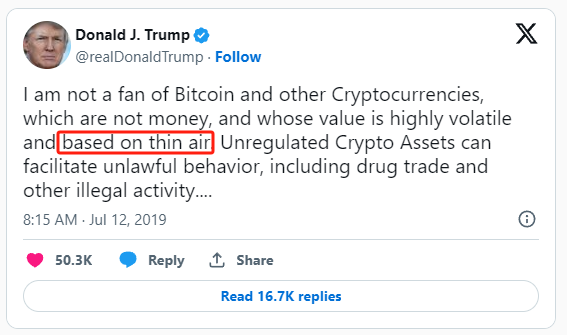
Although Trump publicly criticized cryptocurrencies during his presidency (January 2017 – January 2021), calling them “thin air,” his actions in recent years have told a different story—he has become one of the most crypto-savvy presidential candidates.
His NFT project launched on December 16, 2022—the Trump Digital Trading Cards—sold out completely, generating $4.87 million in revenue. Additionally, according to disclosures from Washington-based nonprofit Citizens for Responsibility and Ethics (CREW) on August 14, 2013, a crypto wallet believed to belong to Trump holds nearly $2.8 million worth of Ethereum (ETH).
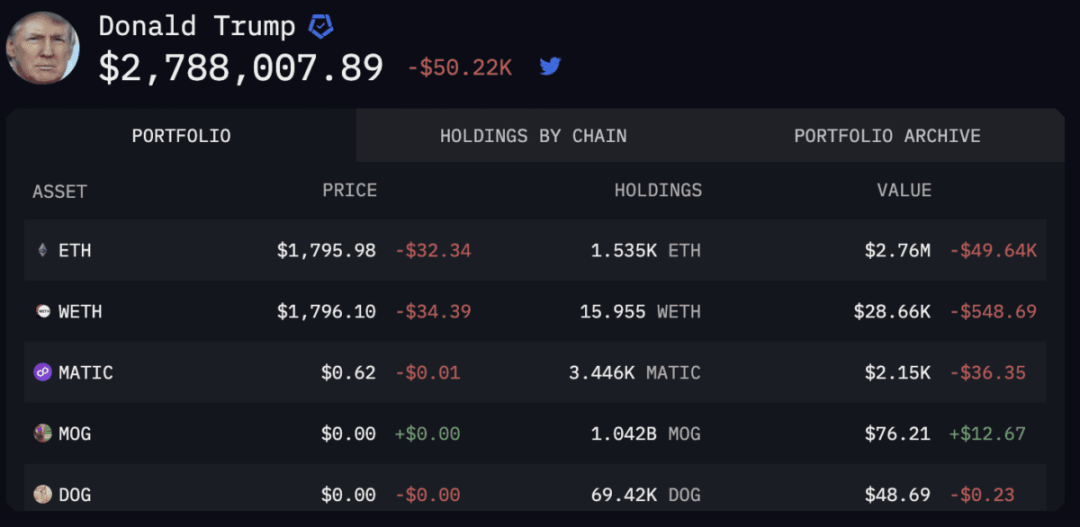
Currently, Trump leads other Republican candidates by a wide margin in polls. However, with increasing numbers of Republicans entering the race and ongoing legal issues surrounding Trump, it remains uncertain who will ultimately represent the Republican Party in the 2024 U.S. presidential election.
2) Ron DeSantis
On July 31, 2023, during a campaign event in New Hampshire, U.S. presidential candidate and Florida Governor Ron DeSantis addressed the Biden administration’s crackdown on crypto assets and institutions since 2023:
“When I am elected president, I will end Biden’s war on Bitcoin and crypto.”
“We will allow Americans to invest in Bitcoin and crypto assets. No one is forcing you, but if you want to buy crypto, you should be able to.”
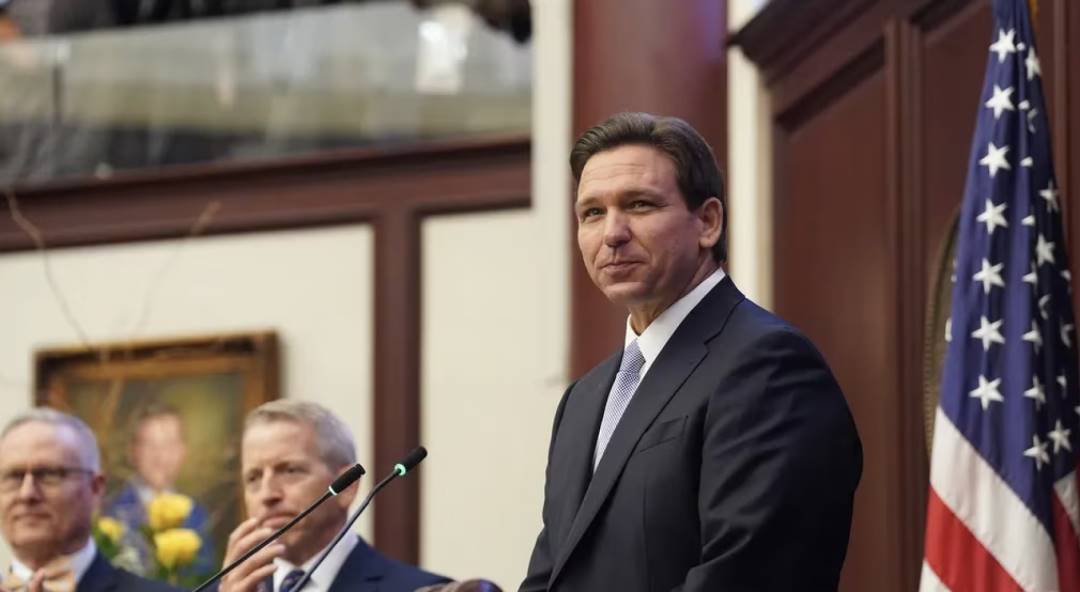
DeSantis also firmly opposes CBDCs (central bank digital currencies). He argues that unlike decentralized cryptocurrencies, CBDCs transfer massive power from individuals to central authorities, giving the federal government control over where money flows.
DeSantis added, “If I’m president, we will abolish the central bank digital currency from day one.”
3) Robert F. Kennedy Jr.
Another presidential candidate investing in crypto is Robert F. Kennedy Jr., running as a Democrat in the 2024 U.S. presidential race. A member of the prominent Kennedy political family, he is the nephew of former U.S. President John F. Kennedy.
On July 24, 2023, Kennedy attended the Bitcoin Conference in Miami and announced that his campaign would be “the first presidential campaign in history to accept Bitcoin donations via the Lightning Network.”
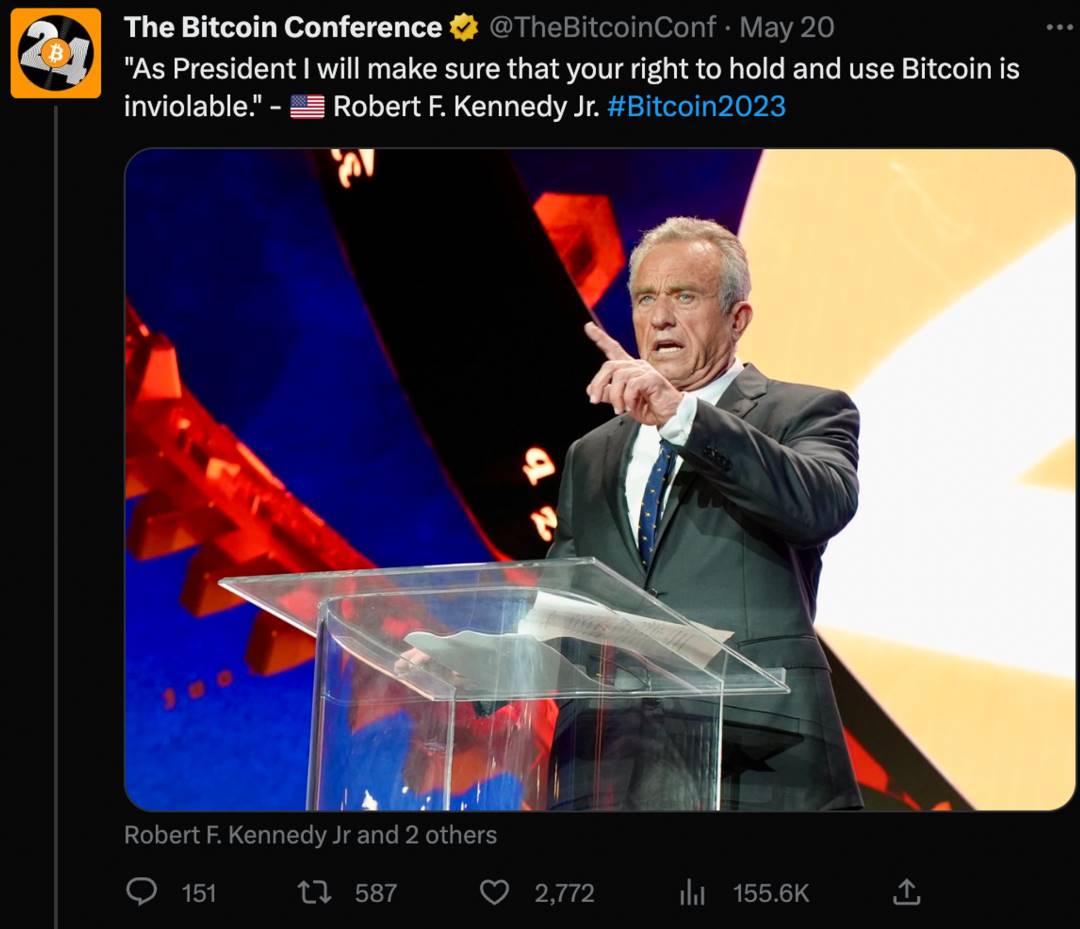
Robert F. Kennedy speaking at the 2023 Miami Bitcoin Conference
On July 27, he confirmed on Twitter that he owns Bitcoin and has purchased two Bitcoins each for his seven children. He emphasized that Bitcoin is inflation-resistant, offering financial freedom to retail investors rather than relying on state-controlled fiat currency. He advocates for exempting Bitcoin from capital gains tax.
Like DeSantis, Kennedy strongly believes in the future of Bitcoin and crypto, pledging that if elected president, he will gradually back the U.S. dollar with Bitcoin. He describes this as a gradual process starting at a very small scale—perhaps only 1% of national debt backed by hard assets like gold, silver, platinum, or Bitcoin.
4) Others
Two other presidential candidates—Vivek Ramaswamy and Francis Suarez—currently have low poll numbers and thus lower chances of becoming the next U.S. president, though not impossible. Both are supporters of Bitcoin.
Unlike DeSantis, however, Vivek Ramaswamy says he is a fan of Bitcoin but won’t use it as a commodity basket to stabilize the dollar: “For several reasons, I don’t believe Bitcoin currently meets the criteria to be included in a commodity basket. It may become part of one someday, but for technical reasons, I wouldn’t include it today.”
Francis Suarez, presidential candidate and Mayor of Miami, will accept Bitcoin donations for his campaign. During his tenure as mayor, Suarez gained fame for advocating cryptocurrencies. He vowed to turn Miami into a Bitcoin hub and personally accepted his salary in Bitcoin. Suarez is deeply involved in the development of the crypto industry and believes the U.S. needs a president who understands both crypto assets and artificial intelligence technologies.
Argentina President: Javier Milei
Javier Milei is an Argentine economist and former member of Argentina’s National Congress, leading a liberal movement. He successfully won the presidential election in November 2023.
Tucker Carlson, a well-known American journalist, interviewed Milei. The interview surpassed 421 million views on Twitter, with a key topic being dollarization of Argentina’s economy. In his proposal, Milei stresses the importance of abolishing Argentina’s central bank and sees Bitcoin as providing opportunities in this transition.
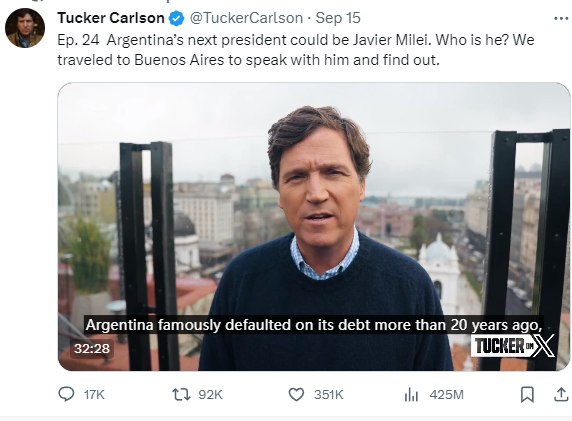
In his vision, after shutting down the central bank, Bitcoin would serve as the primary remedy against hyperinflation. Prior to his election,Milei appeared on multiple talk shows promoting the benefits of Bitcoin and crypto, claiming “Bitcoin can eliminate central banks.”
On November 20, 2023, possibly due to Milei’s victory, Bitcoin rose above $37,000 after hovering around $30,000, gaining 2.3% in 24 hours.
After his election, particularly in recent weeks, contrary to earlier reports, the Milei government has not pushed forward a Bitcoin standard in Argentina. Many sources clarify that while Milei expresses positive sentiments toward Bitcoin and criticizes central banks, his main economic recommendation is dollarizing Argentina’s economy—not adopting Bitcoin as legal tender. His statement about returning money creation “to its original creators—the private sector”—has been taken out of context to imply broader pro-Bitcoin policies, which were never actually proposed by him.
Could this serve as a cautionary tale for the U.S. election and crypto development?
Mexico Presidential Candidate: Indira Kempis
Kempis is currently a senator in the 65th session of Mexico’s federal legislature representing the Citizens' Movement Party. In late August 2023, amid internal party disputes, she announced her intention to become Mexico’s first female presidential candidate.
Kempis is well known among Bitcoin and crypto advocates for openly stating that early adoption of Bitcoin could bring opportunities to Mexico. Since taking office in 2018, the senator has promoted the crypto economy over the past few years. According to Bitcoin Magazine, she has also advocated for Mexico to implement Bitcoin regulations similar to those in El Salvador.
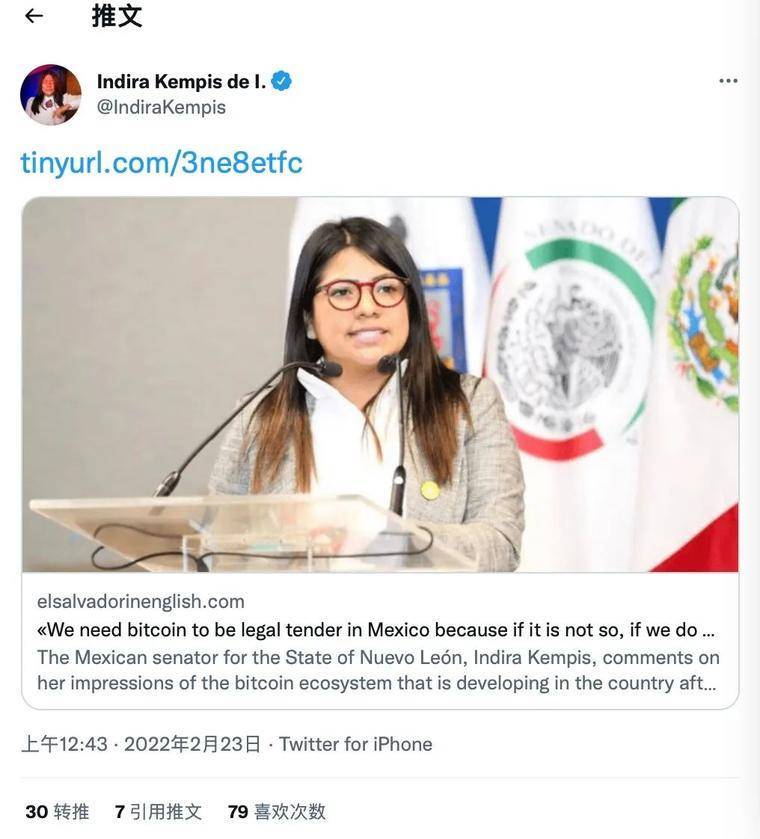
In 2022, Kempis introduced a bill proposing the creation of a CBDC. While the bill did not mention crypto initially, her suggestion that the Mexican central bank be the sole issuer of a digital peso made headlines.
However, after criticism from the crypto community regarding CBDC introduction, Kempis amended the bill to include Bitcoin, aiming to make the first crypto asset—Bitcoin—a legal currency in Mexico.
The Bank of Mexico has not yet analyzed the CBDC bill, and reactions among legislators vary. For example, some senators strongly oppose it, arguing that although El Salvador legalized Bitcoin, Mexico “will not accept” Bitcoin as legal tender.
She has also actively participated in crypto-related initiatives—for instance, in August 2023, in her home state of Nuevo León, she helped certify a program called “My First Bitcoin.”
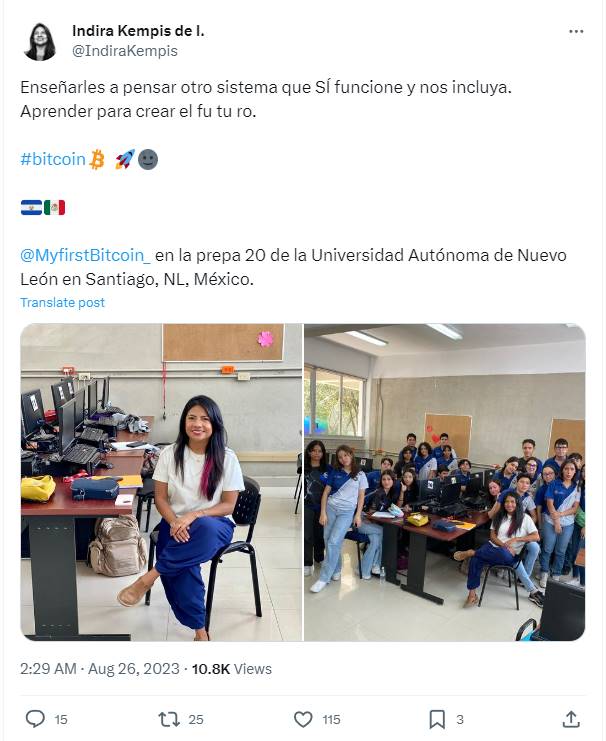
However, Mexico’s presidential election began on June 2, 2024. On June 3, Claudia Sheinbaum, candidate of the ruling National Regeneration Movement (MORENA) coalition, announced victory in Mexico City, becoming the country’s first female president. She will take office on October 1, though her stance on crypto remains largely undisclosed.
While this outcome marks a milestone for gender equality in Mexico, the incoming administration is likely to maintain existing crypto regulatory policies, warranting continued attention.
UK Prime Minister: Rishi Sunak
Rishi Sunak, newly elected leader of the UK’s Conservative Party, officially became Prime Minister on October 25, 2022.
During his time as Chancellor of the Exchequer, Sunak actively promoted economic policies and financial legislation. While no specific crypto events directly link to him, his decisions influenced the UK’s economy and financial landscape.
In April 2021, as Chancellor, Sunak proposed that the UK Treasury and Bank of England explore creating a central bank digital currency (CBDC).
In April 2022, Sunak called for recognizing stablecoins as valid payment methods.
Months before his election, Sunak told a reporter he preferred Bored Ape Yacht Club (BAYC) over CryptoPunks. Rather than favoring one or two cryptos, he prefers a diversified crypto investment portfolio—indicating long-standing and high-level interest in the space.
After taking office, Sunak aggressively promoted a pound-pegged stablecoin, stating, “My ambition is for the UK to become a global hub for cryptoasset technology,” and moved to regulate stablecoins and recognize crypto as a legitimate payment method.
In April 2023, he proposed transforming the UK into a crypto-friendly tech center and planned to launch an official UK NFT.
However, the UK general election is scheduled for July 4, 2024, potentially resulting in the Conservative Party losing power. Polls suggest the Labour Party is poised to win the upcoming election. Though Labour hasn’t clarified its stance on the crypto industry, it has expressed interest in making the UK a tokenization hub and supports the Bank of England’s digital pound initiative.
Central African Republic President: Faustin-Archange Touadéra
In April 2022, the Central African Republic announced Bitcoin as legal tender, accepting crypto for tax payments. It also established a legal framework to regulate cryptocurrency use, making CAR the second country after El Salvador—and the first in Africa—to formally adopt Bitcoin as legal tender.
That same month, President Touadéra pushed the National Assembly to pass a law adopting Bitcoin as legal tender to aid the country’s economic recovery and development.
In May, he launched Project Sango, a “Crypto Hub” initiative aimed at attracting global crypto enthusiasts, planning to build a crypto island and digital wallet. He also announced the passage of the “Tokenization Act,” approving tokenization of land and natural resources. However, as the crypto bear market deepened, progress stalled.
But the CAR president stated, “If no one believes in Bitcoin, then we’ll issue our own national cryptocurrency.”
In July, CAR launched a public sale of its national cryptocurrency, Sango Coin, positioning the country as a “crypto-economy nation.” Deployed on a Bitcoin sidechain interacting with the main Bitcoin chain, Sango Coin allows trading between itself and Bitcoin. The initial sale price was $0.10, with a total supply of 21 billion tokens, sold in 12 phases with prices rising gradually to a final $0.45. The country offered various incentives, including citizenship, e-residency, or land ownership through purchasing or staking Sango Coin.
However, two months after the Sango Coin sale, CAR’s Constitutional Court ruled that using tokens to purchase land or citizenship was unconstitutional. Additionally, the country’s parliament announced in March this year that Bitcoin would be reclassified from legal tender to a benchmark cryptocurrency.
Despite setbacks, CAR continues exploring this path.
Japan Prime Minister: Fumio Kishida
The Japanese government maintains a relatively open stance toward crypto, regarded as one of the leading markets globally for crypto assets, implementing a series of regulations to oversee and promote crypto development.
In April 2017, Japan officially recognized crypto assets as legal payment methods and enacted the Payment Services Act to regulate centralized and decentralized exchanges and service providers.
Additionally, Japan established a dedicated regulator, the Financial Services Agency (FSA), responsible for overseeing crypto exchanges and related activities. The FSA conducts exchange reviews and implements measures to ensure user fund security.
In November 2021, Fumio Kishida of the Liberal Democratic Party became Japan’s Prime Minister. After taking office, Kishida stated: “With a shrinking workforce, there is an urgent need to leverage digital technology. Japan will actively promote digital transformation in both public and private sectors.”
In June 2022, Japan’s parliament passed a bill clarifying the legal status of stablecoins, defining them essentially as digital currencies, making Japan one of the first major economies to establish a legal framework for stablecoins.
Subsequently, Kishida proposed making Web3.0 a pillar of economic reform and released a white paper in April 2023 addressing issues such as cryptocurrency tax reform and NFTs. This white paper outlines regulatory proposals for all Web3-related matters, from NFTs to DAOs.
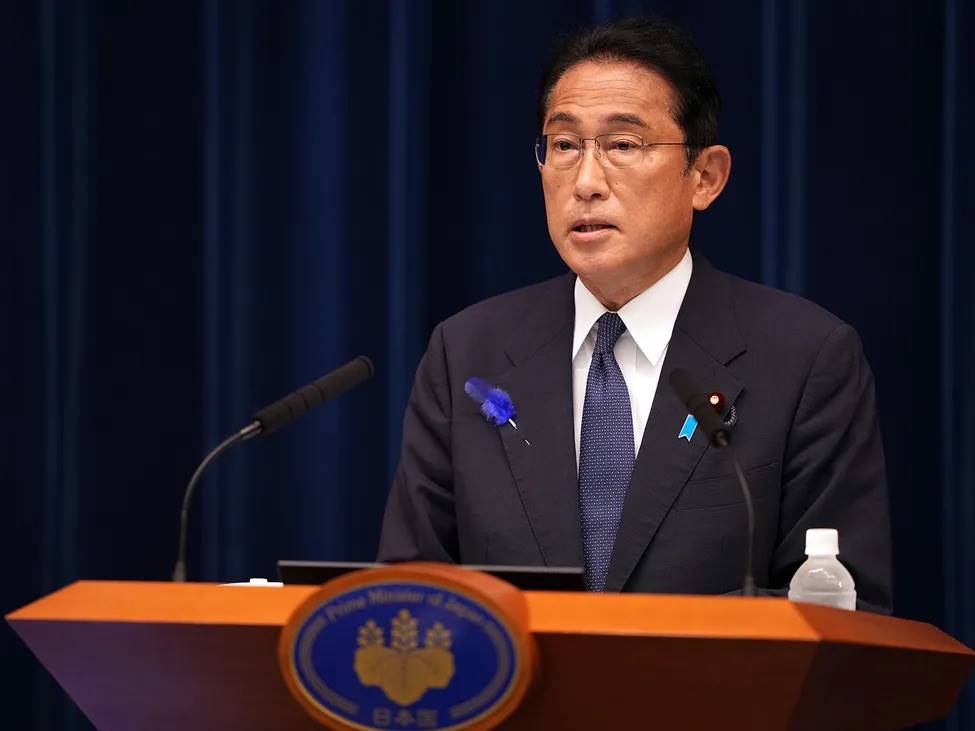
In July 2023, at the WebX Summit hosted by media outlet CoinPost, Kishida stated that Web3 technology has the potential to disrupt traditional internet frameworks and drive social transformation, and that the Japanese government is working to improve the environment for Web3 development.
On February 16, 2024, Kishida’s administration approved the Industrial Competitiveness Enhancement Act, which adds crypto assets to the list of allowable investments for limited partnership enterprises—an important policy shift enabling venture capital firms to directly invest in projects issuing crypto assets.
In short, since Kishida became Prime Minister in 2021, he has actively advanced Web3 and crypto-related industries. These recent legislative moves signal Japan’s continued openness and development in digital assets.
Brazil Former President: Jair Bolsonaro
Former Brazilian President Jair Bolsonaro adopted an open and proactive stance on crypto policy. He expressed support for legalizing Bitcoin as legal tender, hoping Brazil would become the first country to adopt Bitcoin. During his term, he did not impose VAT or income tax on crypto transactions and supported the Central Bank’s research into issuing a digital currency.
Additionally, in April 2022, after lengthy deliberation in the Brazilian Senate, a bill was approved—it became Brazil’s first comprehensive crypto regulation, laying the foundation for a regulatory framework for the country’s crypto industry.
Originally proposed by a federal congressman in 2015, the bill was eventually signed into law by former President Jair Bolsonaro, legalizing the use of cryptocurrencies as a payment method in Brazil.
Overall, Bolsonaro increased Brazil’s openness to crypto policy while also seeking to use digital assets to strengthen national sovereignty and control. His policies played a role in promoting Brazil as a crypto hub in South America.
Summary
Clearly, Bitcoin and other crypto assets are increasingly integrating into national development through economic and political channels. The emergence of crypto-friendly nations is accelerating crypto’s journey from fringe finance to mainstream acceptance.
As more countries recognize the potential of blockchain technology and digital currencies, we may witness a more integrated and robust global crypto market.
Join TechFlow official community to stay tuned
Telegram:https://t.me/TechFlowDaily
X (Twitter):https://x.com/TechFlowPost
X (Twitter) EN:https://x.com/BlockFlow_News
 白话区块链
白话区块链


