








Redefining Web3 Projects and Token-Market Fit from the User's Perspective
TechFlow Selected TechFlow Selected
Redefining Web3 Projects and Token-Market Fit from the User's Perspective
In this playground where everything is accelerated, attention is a scarce resource.
 Navigating Web3 tides with focused insights
Author: IOSG Ventures
Over the past few months, I’ve spoken with dozens of startup teams. I noticed that some teams aren’t thinking about users from first principles—they lack clarity on user needs, assume what users want, or make excessive assumptions about user behavior.
Technological innovation is fascinating. But ultimately, users are the end recipients. As Steve Jobs said: "You've got to start with the customer experience and work back toward the technology – not the other way around." Founders need to think more user-centrically and adopt a “work backwards” mindset.
Folks, it’s time to seriously refocus our attention on users.
1. UI/UX
Source: Uniswap
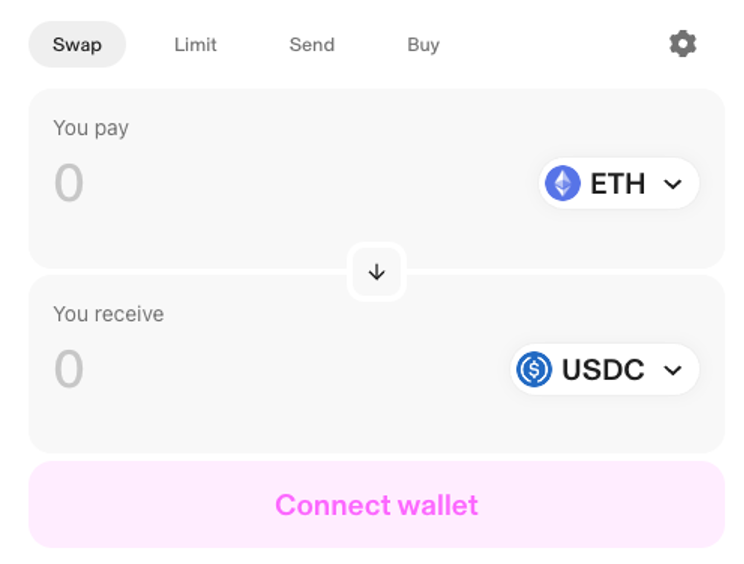
Interfaces like those of Uniswap and Lido have effectively become benchmarks for Crypto. When designing UI/UX, strive for simplicity and intuitiveness—make it easy for users to understand and use your product, minimize friction as much as possible, and make minimal assumptions about users.
1.1 UI
Websites are often a key entry point for users interacting with a project. As someone deeply immersed in product experiences, I’ve had two particularly frustrating moments:
-
When I open a website and am immediately greeted by three or four entry buttons. Clicking them instinctively, each takes me to a different page filled with overwhelming information and complex design elements. Suddenly, I feel anxious—where should I even begin?
-
The project offers no documentation. For many users, documentation serves as a fast track to understanding a project—more efficient than whitepapers or blog posts. Buzzwords on the homepage may be catchy, but they don’t help users truly grasp what the project is about.
1.2 UX
Let me illustrate with two examples—current Crypto user experience still requires finer-grained optimization.
-
Mobile
I’ve long believed mobile has been overlooked. Most dapps today lack smooth mobile experiences, relying solely on (in-wallet) browsers, requiring constant switching between browser and wallet. Imagine being an active memecoin trader—you’d feel anxious about your positions when away from your desk. A mobile version of Dexscreener would bring significant peace of mind.
Through its collaboration with Privy, friend.tech took a step forward by integrating wallets natively. Yet compared to CEX mobile apps, DEXs still have a long way to go. Real-time push notifications or price alerts are crucial for time-sensitive trading (e.g., derivatives). For social apps, the importance of instant sharing goes without saying.
-
AI Agent
AI and LLMs can greatly assist users in understanding new projects.
For instance, when visiting a Layer2 ecosystem page, I often feel lost. It displays familiar protocols like Uniswap and Aave, numerous wallets and tools—I recognize them, but I don’t know where to start. Now imagine an agent that analyzes recent on-chain data to tell you which dapps people are actively using on this Layer2, or which protocol is growing fastest. It could even analyze individual address behaviors to offer personalized recommendations.
Such possibilities highlight how much room there is for UX improvement in Crypto. A few years ago, I thought we lacked sufficient infrastructure for mass adoption. Recently, however, scalable base layers and seamless user onboarding solutions have emerged—it’s time to invest more deeply in UX.
2. Stickiness…What do?
Source: IOSG Ventures
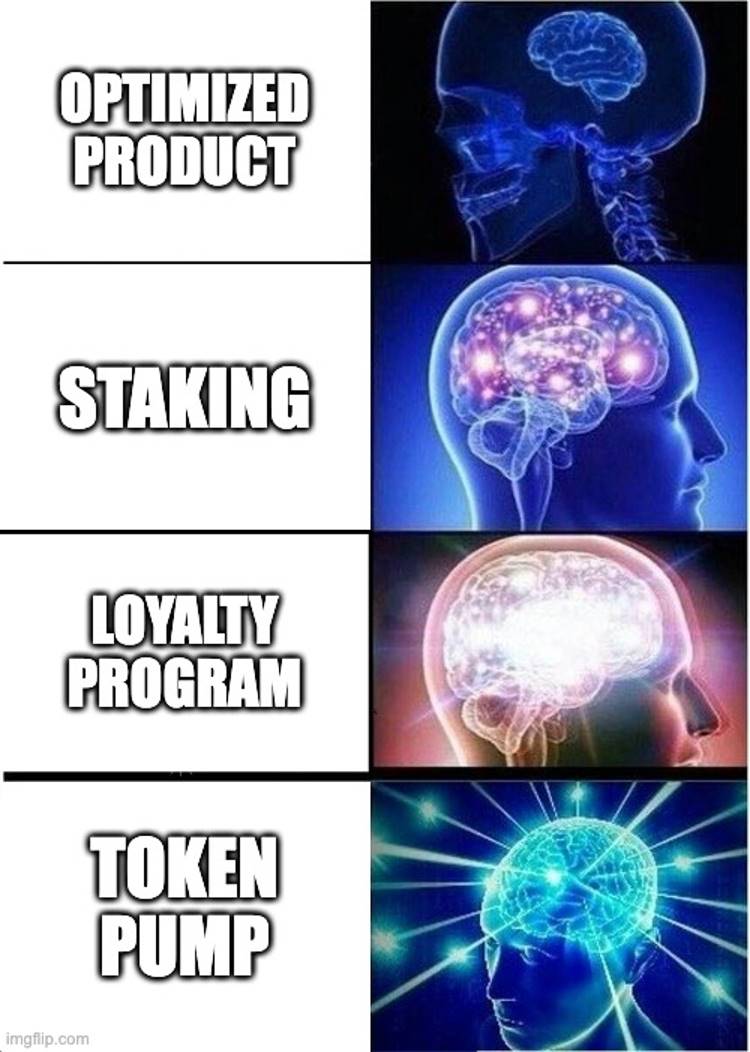
In Crypto, achieving short-term growth metrics is relatively easy—you can launch a campaign and distribute Genesis NFTs to meet immediate goals. This has effectively set an implicit expectation among users about potential future benefits. However, attracting genuine users and securing their long-term adoption is far more difficult—and there are almost no shortcuts. (Uniswap spent nearly three years building a solid product before DeFi Summer arrived.)
It's worth noting that Warpcast currently accounts for 90% of network activity, yet other clients can build unique offerings atop this infrastructure. Moreover, most users treat it as a pure Web2 social platform because they haven’t yet been trained to leverage its full capabilities. Key growth signals will emerge when individuals adopt Farcaster-native solutions and experience its intended features (decentralized social graph, frames, etc.), though this may take time as the graph itself remains immature in its early stages.
2.1 Acquisition, wait…it’s all about airdrop?
Source: IOSG Ventures
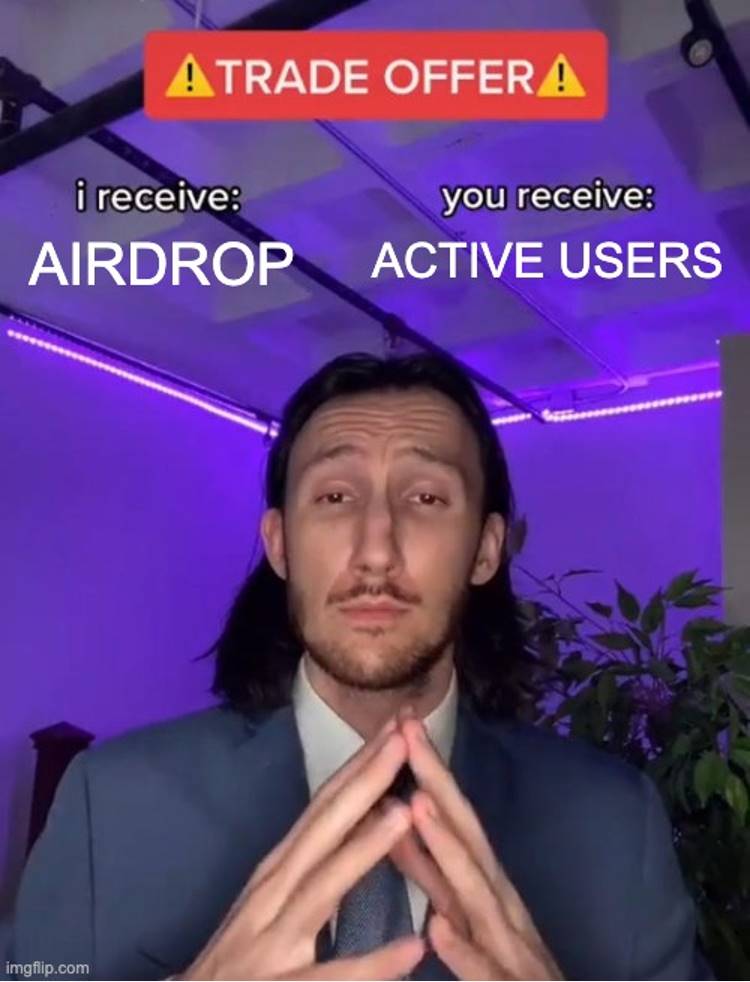
Although I hesitate to equate airdrops directly with user acquisition, airdrops have effectively become a shortcut for acquiring users.
Generally speaking, airdrops are now treated as acquisition tools, and distributed tokens are seen as acquisition costs.
What matters is reflecting on the intent behind airdrops. What goal do you hope to achieve through an airdrop? How should expectations and strategies be managed accordingly?
StarkNet recently airdropped tokens to contributors among the top 5,000 GitHub repositories—a clear move to bring StarkNet and Crypto into the awareness of traditional developers. Other protocols have proposed distributing airdrops to home stakers or teams building public goods.
Source: IOSG Ventures
I agree with Regan’s statement: “Community means making money with your internet friends.” We must acknowledge that many users engage with pre-token protocols primarily for airdrop eligibility.
However, I remain skeptical of Hayden’s advice: “Don’t be stingy—give a significant amount away. If you don’t think the community deserves a significant amount, don’t release a token.” The “community” Hayden refers to and the actual on-chain “community” are not interchangeable.
In an era of rampant sybil attacks during airdrop seasons, distinguishing true community members from sybils is extremely difficult—sybil farming has become an industry. Protocols must spend more time identifying genuine contributors for sustainable long-term development.
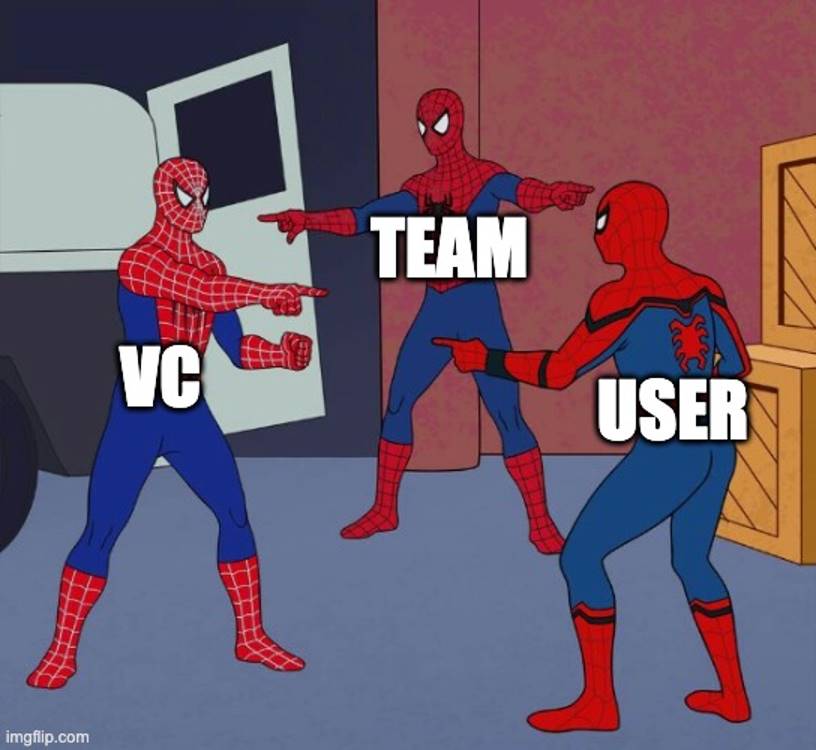
Airdrops have become somewhat toxic. Users often view venture capital firms and project teams as absolute adversaries. Project teams face a dilemma in designing fair airdrop rules—airdrop farmers constitute a large portion of the community, and if they feel under-rewarded, they may spread FUD on CT. Yet without sybil filtering, tokens often fail to reach real users and create heavy sell pressure. This presents a tough balancing act for teams.
That said, if you’re using airdrops to bootstrap, never be vague or misleading—communicate clearly and transparently.
In my view, if you’re a long-term builder, aim to return to organic growth. Avoid over-marketing or creating unnecessary expectations—focus on building a great product.
Ultimately, most projects conduct airdrops to attract users and encourage long-term engagement. This requires having a solid, usable product before releasing airdrop expectations. If the user experience is poor, airdrops might backfire and leave negative impressions.
If you lack clear airdrop goals, a coherent strategy, or a strong product, focus on building, embrace organic growth, and wait for better timing.
2.2 Retention
Different types of projects require different retention strategies: for DeFi, it’s liquidity; for NFTs, it’s often community.
Source: jonwu.eth
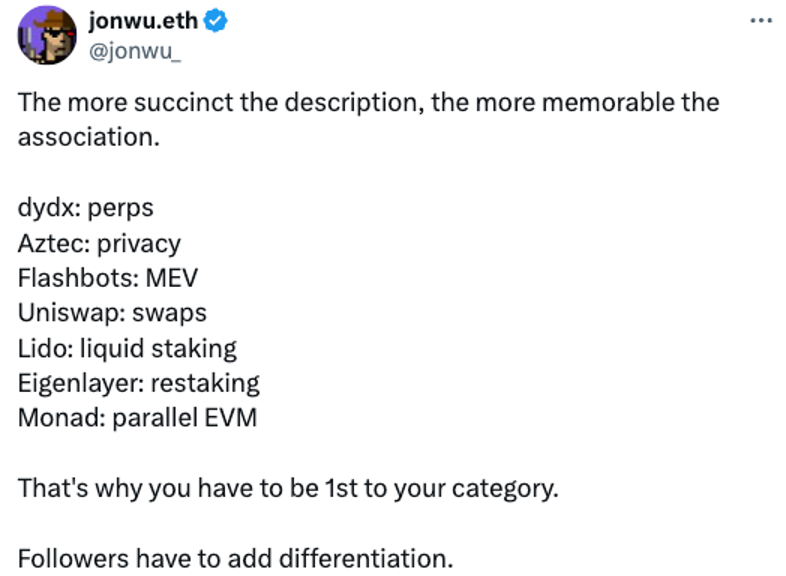
Over the past few years, Uniswap has built unshakable liquidity and a powerful brand. When people want to swap a token, they instinctively think of Uniswap first, assuming it offers the best liquidity and lowest slippage—without needing to check DeFiLlama for the deepest pool. This intuitive brand effect creates a formidable moat.
Moreover, liquidity provided by large players tends to be stable—their actions are typically slower than retail participants. Unless you offer massive incentives, recreating such liquidity is extremely difficult.
Source: David Hoffman
For consumer-facing application projects, community may be the most important asset. Of course, “community” is hard to define concretely. You might describe it as a culture, a set of symbols and meanings—an eccentric group of misfits gathering around something fun.
When evaluating whether founders are truly crypto-native, we often discuss their understanding of community. This understanding comes from long-term immersion—at least one or two years spent within communities—developing intuition and mindset. For such projects, founders must learn to listen to the community, feel its culture, and hear what users are saying.
3. Seeking Token-market-fit
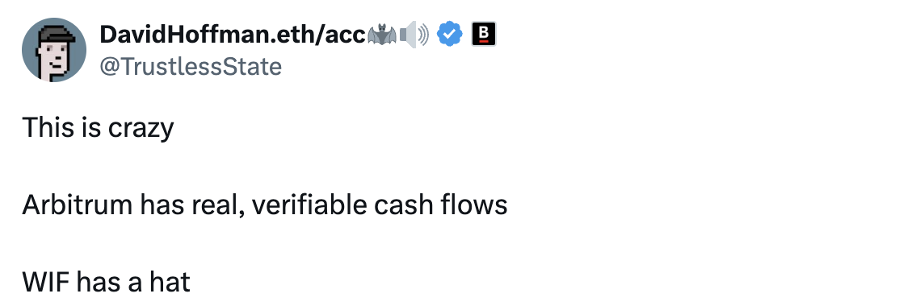
Tokens, to some extent, reflect market consensus around a project. Using earlier examples: Arbitrum, as the L2 with the highest TVL, having strong cash flow is a consensus; the “hat consensus” around dogwifhat is also a consensus. What kind of tokens does the market want? Which tokens does the market buy into? I examine this through utility and speculation.
Utility
Utility comes in several forms:
-
One type stems from expected future returns—for example, staking 32 ETH to become an Ethereum validator and earn ~4.5% APR.
-
Another resembles token-gating: holding a certain amount of token or NFT grants access to a community or protocol.
Some infrastructure projects inherently struggle to provide strong token utility—for example, most L2 tokens currently serve only governance functions or speculative narratives.
Speculation
Source: IOSG Ventures
Retail investors believe a token has upside potential—regardless of reason, be it direction, product, or narrative—and the market collectively supports its price.
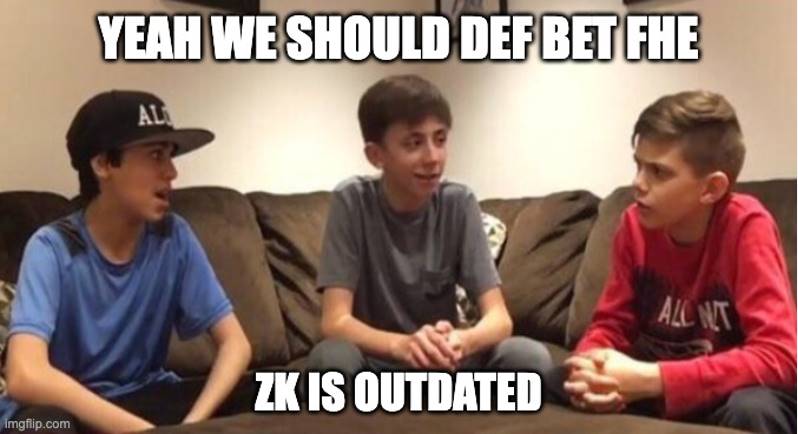
For users, narrative is often the most direct and accessible aspect. Many infrastructure projects suffer from overly abstract concepts—it’s unrealistic to expect every user to understand cryptographic principles like ZK or FHE, or developer tools and their benefits. But we can try simplifying messaging, turning abstractions into memorable acronyms or phrases: ZK, FHE, Restaking, etc.
Trace, in Unbundling Attention, highlights two powerful ideas: “bigness” and “simplicity.” For example, L1 is a timeless narrative in Crypto—big enough to support countless dapps and users. Memecoins are the simplest tokens—almost zero learning curve; users buy purely based on price appreciation expectations, allowing rapid capture of user attention.
I believe another critical factor is how users perceive and interact with a project. A clear example: when users experience Solana, the most noticeable difference from Ethereum is speed and low cost—this leads them to conclude Solana is better. It’s a simple mental model. I’ve also observed that many EigenLayer restakers don’t actually know what AVS is, but because EigenLayer provides a clear staking interface and interaction flow, it feels familiar and helps them accept the Restaking narrative faster.
4. Closing
More projects and tokens are flooding the market at an accelerating pace. Users face rapidly shifting narratives and an overwhelming number of choices. In this high-speed playground, attention is a scarce resource.
Crypto has evolved for nearly a decade. Users today don’t want just another functional DEX, as they did years ago. Building a successful Crypto project is harder now than it was a few years back.
Regardless, the ultimate destination is user-centricity. Refocus on users. Think from first principles about user needs. This is my sincere advice to every Crypto founder.
Join TechFlow official community to stay tuned
Telegram:https://t.me/TechFlowDaily
X (Twitter):https://x.com/TechFlowPost
X (Twitter) EN:https://x.com/BlockFlow_News
 IOSG Ventures








