CoinList "ditches" VC tokens: public listing FDV over 13x higher than private round valuation, users obviously refuse to take the bag
TechFlow Selected TechFlow Selected
CoinList "ditches" VC tokens: public listing FDV over 13x higher than private round valuation, users obviously refuse to take the bag
The crypto market is now flooded with high FDV projects. Although exchanges have adjusted their listing strategies to address community concerns, these measures are ultimately "treating the symptoms, not the root cause."
 Navigating Web3 tides with focused insights
Author: Nancy, PANews
Valuation is both an art and a science. The crypto market today is littered with sky-high FDVs. Although exchanges have adjusted their listing strategies in response to community backlash, such measures are ultimately symptomatic rather than fundamental solutions. As the logic behind high project valuations urgently needs reconstruction, MEME coins are dominating trading charts, triggering FOMO behaviors as institutions, celebrities, and even politicians rush into the space.
Listings show massive premiums over private rounds—reducing VC profits may be the way forward
In recent years, projects raising tens or even hundreds of millions of dollars in funding have become increasingly common in the crypto space. According to RootData, total fundraising in the crypto market reached $10.16 billion over the past year, with an average deal size of $9.69 million. Nearly 40.2% of funded projects raised over $10 million, primarily during seed rounds.
Beyond the growing scale of fundraising, initial listing valuations on major exchanges remain elevated. For instance, data released earlier this month by RootData shows that since 2021, Binance Launchpool has disclosed valuations for 20 projects totaling approximately $5.94 billion—averaging about $297 million per project—with overall valuations remaining stable. During the same period, OKX Jumpstart revealed valuations for 10 projects totaling around $5.01 billion, averaging $501 million each.
Valuation metrics are often used as key indicators of potential value, and highly funded projects were once darlings among investors, even prompting slogans like "chasing highs is the real bottom-feeding" and "those afraid of high prices are just doomed." However, judging from the token price performance of these high-valuation projects today, a sense of "valuation anxiety" is spreading across the market, suggesting they are no longer favored by investors. Particularly under immense selling pressure, criticism of inflated valuations has intensified.
CoinList, a well-known public sale platform, tweeted today (May 28) that a high FDV in itself isn't the issue—it's when projects raise funds privately at one FDV and then list publicly at an FDV 20 times higher. For example, recently high-profile airdrop projects DYM, STRK, ARB, and W had an average listing FDV of $14.7 billion, representing a 13.3x premium over their private round valuations.
"For founders, this approach is destructive to long-term development, as their fleeting unicorn status can quickly collapse due to factors like 'airdrop recipients rushing to sell' and 'continuous selling pressure from private investors,'" CoinList noted. It argues that retail investors would be far more satisfied if they could participate at prices closer to the final VC round.
CoinList cited its own track record: the retail prices for its first five token launches this year were only 1.04x higher than the previous VC round, with no lock-up periods and shorter vesting schedules.
Market speculation intensifies MEME mania, leading to rampant fraud and shilling
As tensions grow between VCs and retail investors, MEME coins have emerged as mainstream investment assets. For example, according to recent data shared by Zaheer Ebtikar, co-founder of Split Capital, four out of the top 10 largest cryptocurrencies by open interest are MEME coins: PEPE, DOGE, BONK, and WIF. Notably, PEPE’s open interest reached $812.6 million—about half of SOL’s $1.78 billion.
Similarly, Robinhood’s Q1 revenue report highlights investor appetite for MEME coins: user holdings of Dogecoin totaled $7.6 billion, surpassing Ethereum’s $5.63 billion.
Meanwhile, large institutions are also paying attention and making moves in the MEME sector. MarketVector, a subsidiary of VanEck, launched a Meme Coin Index tracking six major MEME tokens—DOGE, SHIB, PEPE, WIF, FLOKI, and BONK—while Franklin Templeton has published multiple research reports on MEME coins.
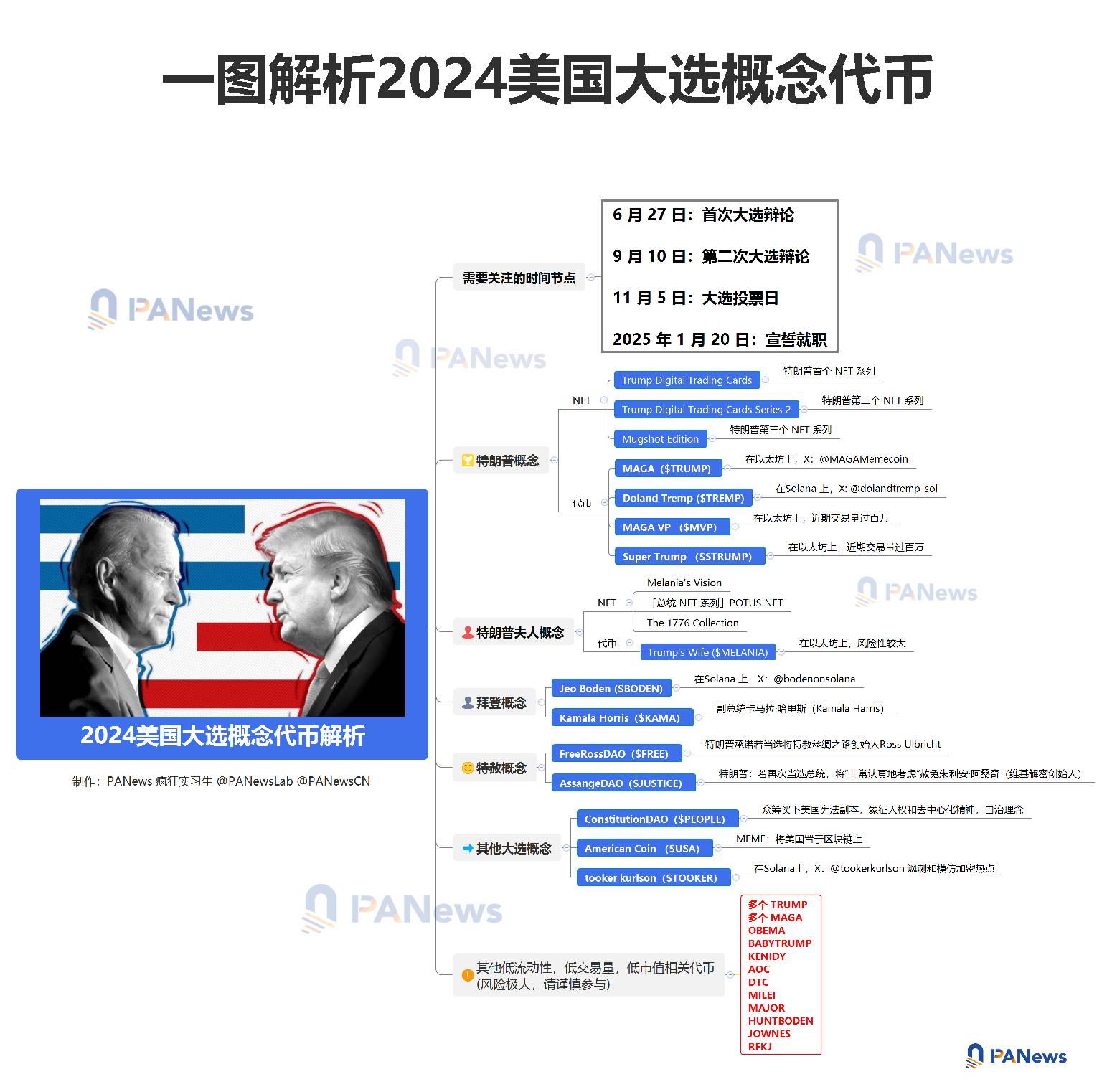
MEME coins have even entered political arenas. U.S. presidential candidate Donald Trump announced his campaign will accept donations in Dogecoin and Shiba Inu, while Joe Biden’s campaign team plans to hire a Meme manager to appeal to younger voters. This trend has driven broad gains in PolitiFi-related MEME tokens. According to CoinGecko, as of May 28, the market cap of PolitiFi tokens exceeded $1.35 billion.
However, the surge in MEME popularity has brought significant chaos. Recently, numerous crypto KOLs and media personalities had their X accounts hacked to promote fake MEME coins. For instance, the hacker who compromised well-known trader GCR’s account was linked to the CAT MEME coin team. In extreme cases, individuals have resorted to dangerous stunts to promote their own MEME coins—resulting in third-degree burns. These incidents underscore the critical role credible VCs play as "information filters" in such an environment.
Join TechFlow official community to stay tuned
Telegram:https://t.me/TechFlowDaily
X (Twitter):https://x.com/TechFlowPost
X (Twitter) EN:https://x.com/BlockFlow_News
 PANews