
Has modularization cooled down? These key developments are brewing a transformation
TechFlow Selected TechFlow Selected
Has modularization cooled down? These key developments are brewing a transformation
Innovative applications over the next decade will be built on a modular trajectory.
 Navigating Web3 tides with focused insights
Author: Andy
Translation: Luffy, Foresight News
The wave of modular blockchains is beginning to take shape, and the coming months will be crucial for achieving modularization's ultimate goal.
As blockchain technology innovation accelerates rapidly, numerous popular applications continue to emerge. This article outlines recent key developments in the modular space.
First, Initia has just launched its public testnet, with its mainnet soon to follow. They are building their own "mini-ecosystem," including Blackwing and MilkyWay, attracting growing attention. All Initia rollups will use Celestia as their data availability layer (DA).
Forma has officially launched—the first sovereign rollup using Astria as its sequencing layer, which itself is built on Celestia. Astria is a dark horse that could become the actual sequencing network users need to connect to, in order to tap into the network effects of the Celestia rollup ecosystem.
Sovereign rollups represent the next step for the Celestia ecosystem. They resemble L1s that use Celestia specifically as a DA layer.
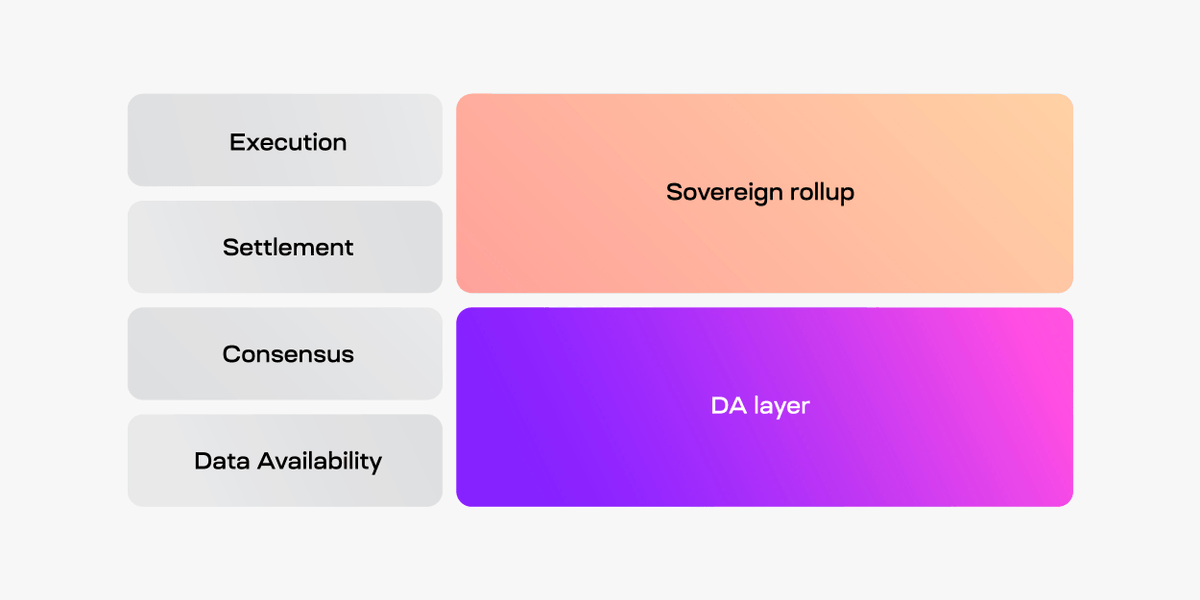
The overall trend of adoption for modular DA providers is also accelerating.
Teams like Mantle are adopting EigenDA, while Avail has begun gaining significant traction since its launch.
We expect this trend to continue, with more teams like 0G Labs entering the DA space and capturing market share within specific niche communities.
Currently, the market is dominated by three major players.
Other projects worth watching include Dymension’s advancing ecosystem—NIM Network has already launched, Rivalz Network is about to roll out, and other ecosystems are in preparation. Price has always been a key factor affecting market sentiment, but these projects are very new, so their market performance will naturally experience ups and downs.
Additionally, rollup frameworks are flooding in.
Both Caldera and Gelato Network recently announced major progress (ApeChain and Reya Labs respectively).
We are witnessing an accelerated evolution from application to chain—Lens launching on the ZK stack, ENS moving toward L2s.
Other frameworks such as Cartesi and Sovereign are quietly building their ecosystems, growing and thriving alongside increasing builder demand for appchains and rollups.
Next-generation VM ecosystems like Fuel are becoming active, with testnets launching soon and mainnets imminent. Applications are being funded and deployed there; Movement recently announced a surge of apps building on it, and its developer network will go live in weeks.
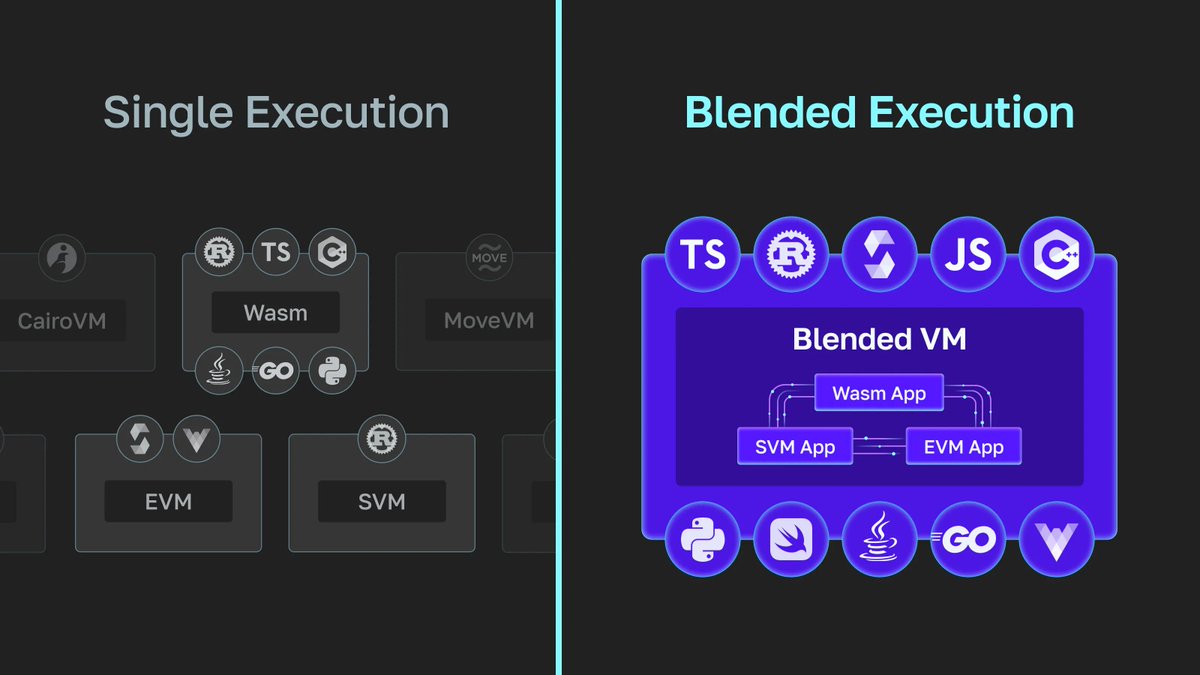
Lumio has carved out a position in modular VM abstraction by enabling applications from any VM to run on any chain. Solana apps are set to launch on the Optimism Superchain.
Meanwhile, Fluent has just announced a breakthrough in hybrid execution environments.
The Fraxtal ecosystem is also heating up, with large-scale hackathons underway. Twenty-one chains/apps are preparing to build L3s and L2s within the Fraxtal ecosystem. Innovative blockspace incentives and points systems are being tested in real time.
Another hot topic recently has been chain abstraction, which I believe is the most critical next step toward a modular future.
What good are these chains if we can't make the modular user experience equivalent to that of a monolithic L1? In my view, chain abstraction protocols like Connext, Particle Network, Across Protocol, and Socket Protocol have made solid progress in advancing this vision. The other piece of the puzzle is interoperability, which I’ll discuss shortly.
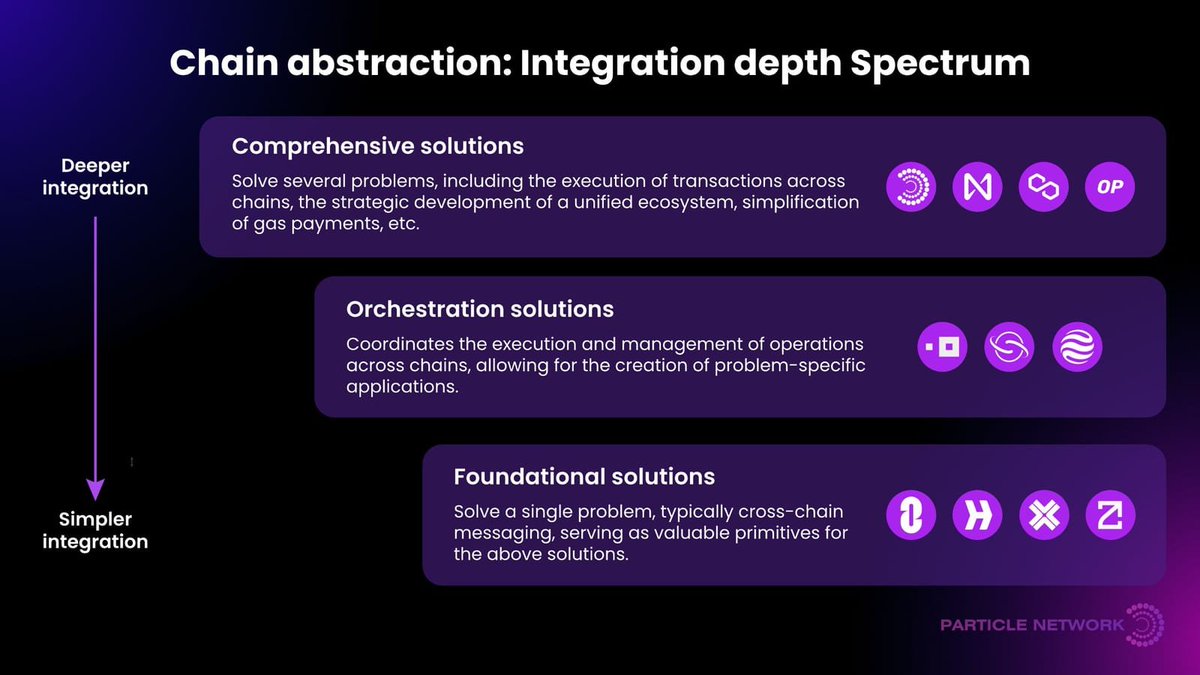
My biggest question is: when will we actually see them go live?
After speaking with several teams, I’m confident that within the next 3–6 months, we’ll witness a major breakthrough in the adoption of chain abstraction technologies.
Beyond chain abstraction, the biggest challenge in modularity remains interoperability—but I am equally confident about solutions emerging here as well.
Omni Network, Union, Polygon AggLayer, Across Protocol, Jumper, deBridge, and Hyperlane are leading in this area. Hyperlane, Jumper, deBridge, and Across have undergone multiple rounds of testing and usage, while others are still progressing toward production readiness.
The AggLayer shown below aligns with the argument of "one proof to rule them all"—and I know some of the teams above share this perspective... But there’s still a long way to go in this direction.
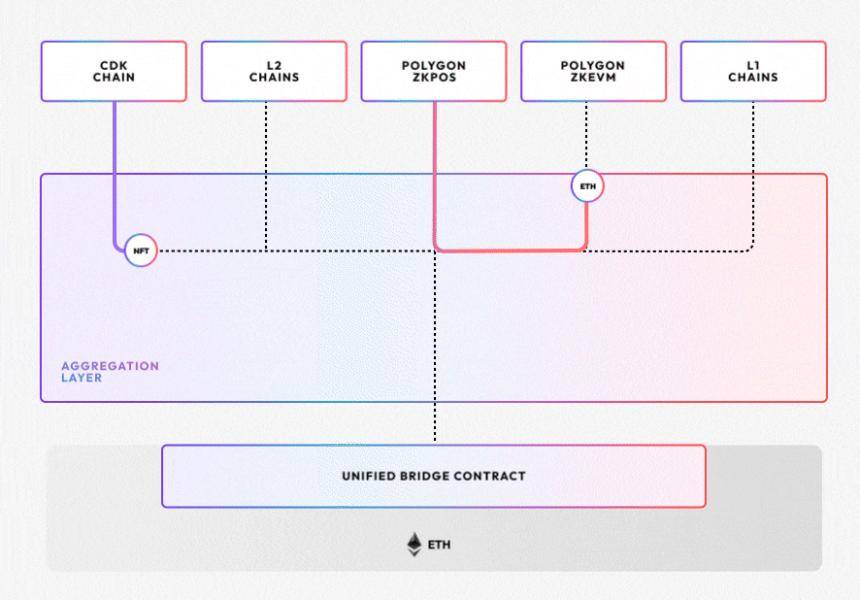
My concern lies in the scalability of these protocols: who can serve as the interoperability provider for thousands of chains?
Many will claim they can, but we’ll see that in six months, there may again be 50–100 rollups demanding seamless access.
Last week, Catalyst also launched its mainnet—an event that could prove a major win for the modular space. They’ve demonstrated the ability to quickly deploy their own DEX on nearly any chain. They’ve already started deploying three superchains and plan to expand at an even faster pace.
I’m extremely excited about what I'm seeing in this space, yet discussions around modularity seem to have cooled over the past few months (I suspect this correlates with TIA’s price movement, but in hindsight, that will look foolish).
A lot has happened in recent months—enough to confirm several of our core arguments:
-
The shift from applications to chains will continue to accelerate.
-
The "fragmentation" issue of modularity is only a short-term hurdle, not a long-term deterrent.
-
The modular stack isn’t just three components—it’s 8–9 distinct layers.
I firmly believe that the most innovative applications of the next decade will be built on modular rails. We must embrace modularity to succeed together.
Join TechFlow official community to stay tuned
Telegram:https://t.me/TechFlowDaily
X (Twitter):https://x.com/TechFlowPost
X (Twitter) EN:https://x.com/BlockFlow_News
 Foresight News