ETF approval expectations drive price surge — where is the ETH ecosystem headed?
TechFlow Selected TechFlow Selected
ETF approval expectations drive price surge — where is the ETH ecosystem headed?
Clearer regulation and higher accessibility are expected to attract broader demand into ETH and its ecosystem.
 Navigating Web3 tides with focused insights
Author: Tanay Ved
Translation: TechFlow
Key Takeaways:
-
A reversal in the odds of Ethereum ETF approval drove a 25% price increase in ETH and related tokens within the Ethereum ecosystem.
-
The discount of Grayscale’s Ethereum Trust (ETHE) to its net asset value (NAV) narrowed from 50% a year ago to just 1.28% at the time of ETF approval.
-
The exclusion of staking in ETH ETFs could impact ETH supply dynamics, the staking ecosystem, and network resilience.
Introduction
In an unexpected turn of events, the U.S. Securities and Exchange Commission (SEC) approved spot exchange-traded funds (ETFs) for the second-largest digital asset—ETH. On May 23, 19b-4 filings from eight issuers were approved, including industry giants such as BlackRock, Fidelity, Bitwise, VanEck, and Grayscale. Just four months earlier, we witnessed the end of a decade-long pursuit for a spot Bitcoin ETF, with 11 issuers participating in what was dubbed the “Cointucky Derby.” Prior to launch, months of anticipation led to $12B in net inflows, making it the fastest-growing ETF launch in history.
However, the situation has been different for Ethereum. Questions remain about Ethereum's proof-of-stake (PoS) consensus mechanism and its security status, alongside SEC actions against prominent industry players like Coinbase and Consensys. Nevertheless, the likelihood of spot Ethereum ETF approval shifted from unlikely in January to probable by May, marking a pivotal week that signaled a significant shift in the regulatory landscape for digital assets. In this report, we assess market reactions and network impacts following the SEC’s approval of spot Ether ETFs in the U.S.
Market Reaction
With such a short pricing window for this development, the market reacted swiftly. As approval odds rose to 75%, immediate price responses emerged across ETH and other Ethereum ecosystem tokens. PEPE (+80%), the largest meme token on Ethereum; LDO (+44%), the governance token of liquid staking provider Lido; and UNI (+44%), the token of decentralized exchange Uniswap, delivered the highest returns, while ETH itself surged (+27%).
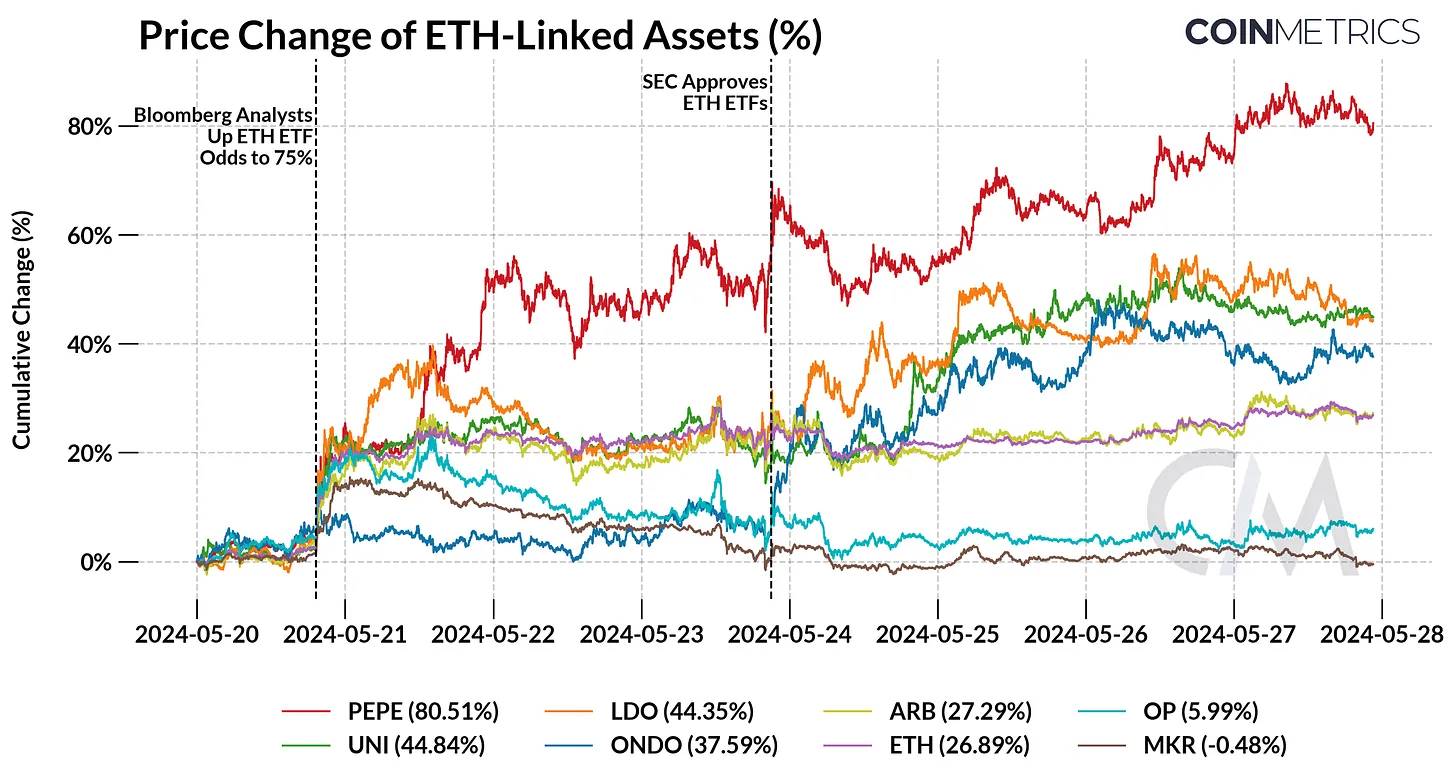
(Source: Coin Metrics Reference Rate)
The ETH/BTC ratio had been in a downtrend since September 2022, underperforming relative to BTC and other major crypto assets like SOL. This news provided a much-needed boost, pushing the ratio up to 0.056 ahead of ETF approval. However, it still needs to break through key resistance levels to resume an upward trend and close the performance gap. While the 19b-4 approval did not immediately accelerate gains, the anticipated S-1 registration approval and subsequent ETF launches should serve as strong catalysts for broader acceptance of ETH as an investable "commodity" and mainstream adoption of the Ethereum network.
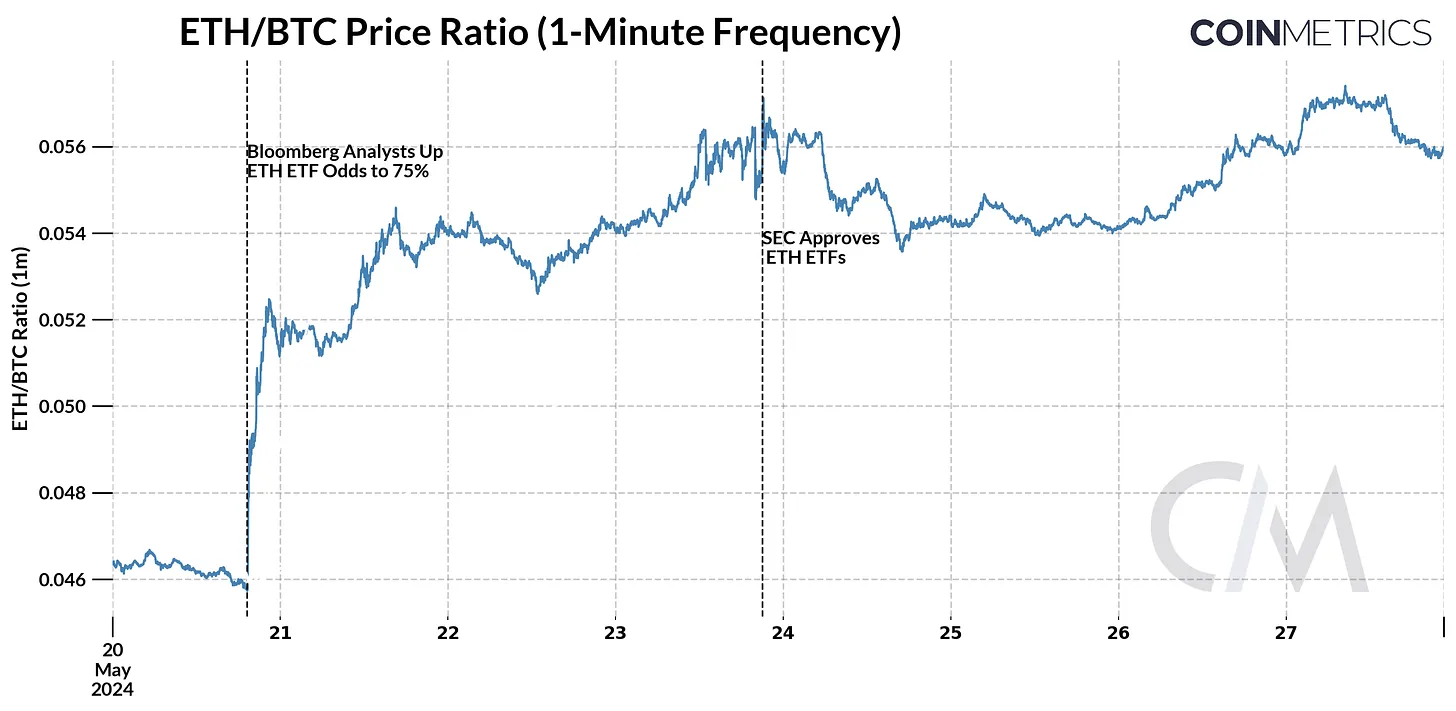
(Source: Coin Metrics Reference Rate)
Investor Sentiment and Market Positioning
The market sentiment around spot Ethereum ETF approval is reflected in the narrowing discount of Grayscale Ethereum Trust (ETHE) to its net asset value (NAV). Compared to a ~50% discount a year ago, ETHE’s market price is now within 1.28% of its NAV, with 20 percentage points of that compression occurring within just five days.
While reminiscent of Grayscale Bitcoin Trust (GBTC) before its conversion to an ETF in January, the speed of ETHE’s discount compression was faster, underscoring how surprising this shift was to market participants. Nonetheless, investors have already begun positioning strategically in anticipation of ETHE converting into an exchange-traded product upon public offering.
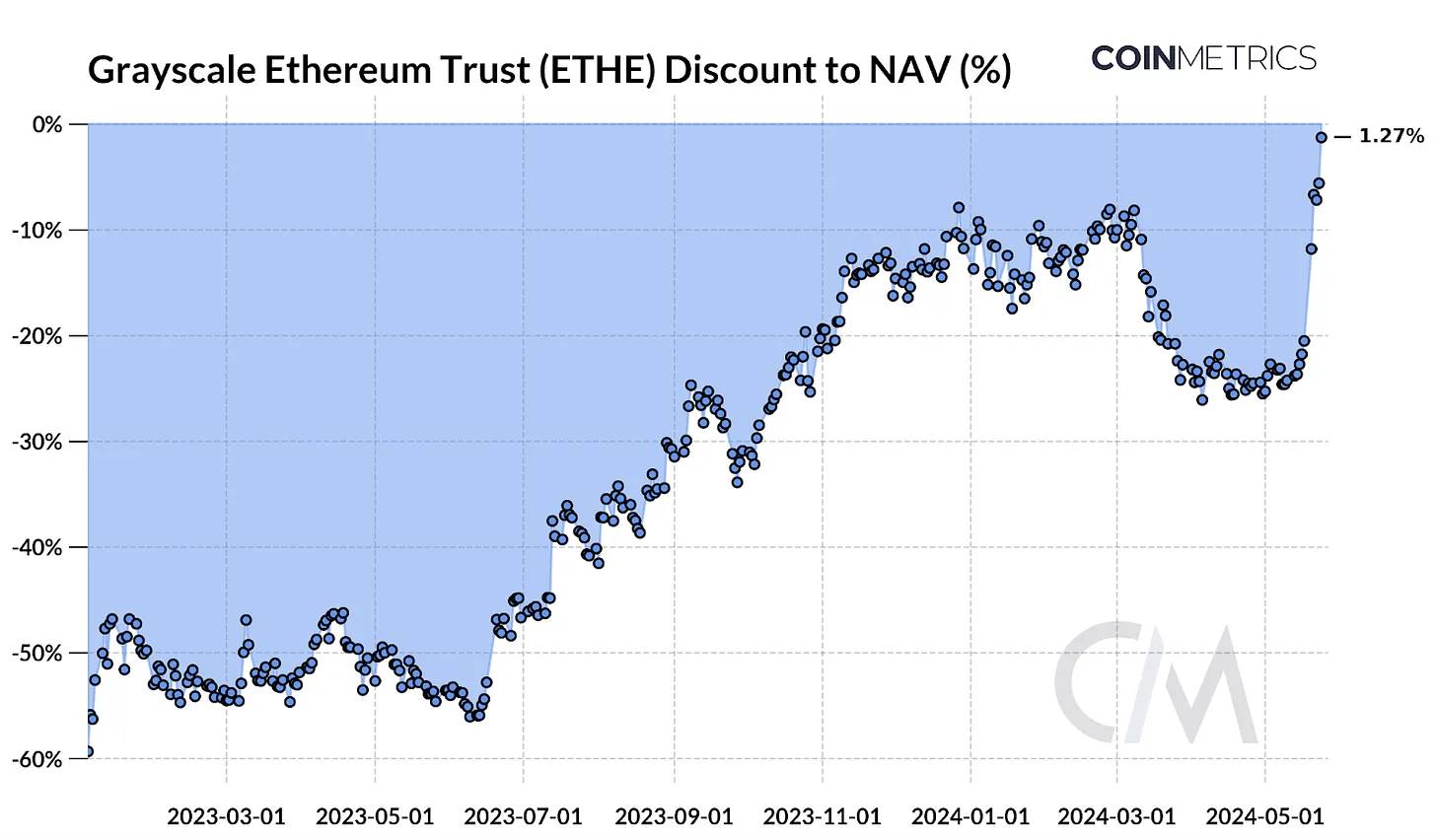
(Source: Coin Metrics Institutional Metrics, Grayscale)
Open interest (OI) in ETH futures contracts reached a record $13.8 billion, indicating increased speculation around the Ether ETF. Although this figure remains below BTC OI levels prior to the spot Bitcoin ETF launch, growing open interest across Binance, OKX, and CME suggests heightened activity from both retail and institutional investors.
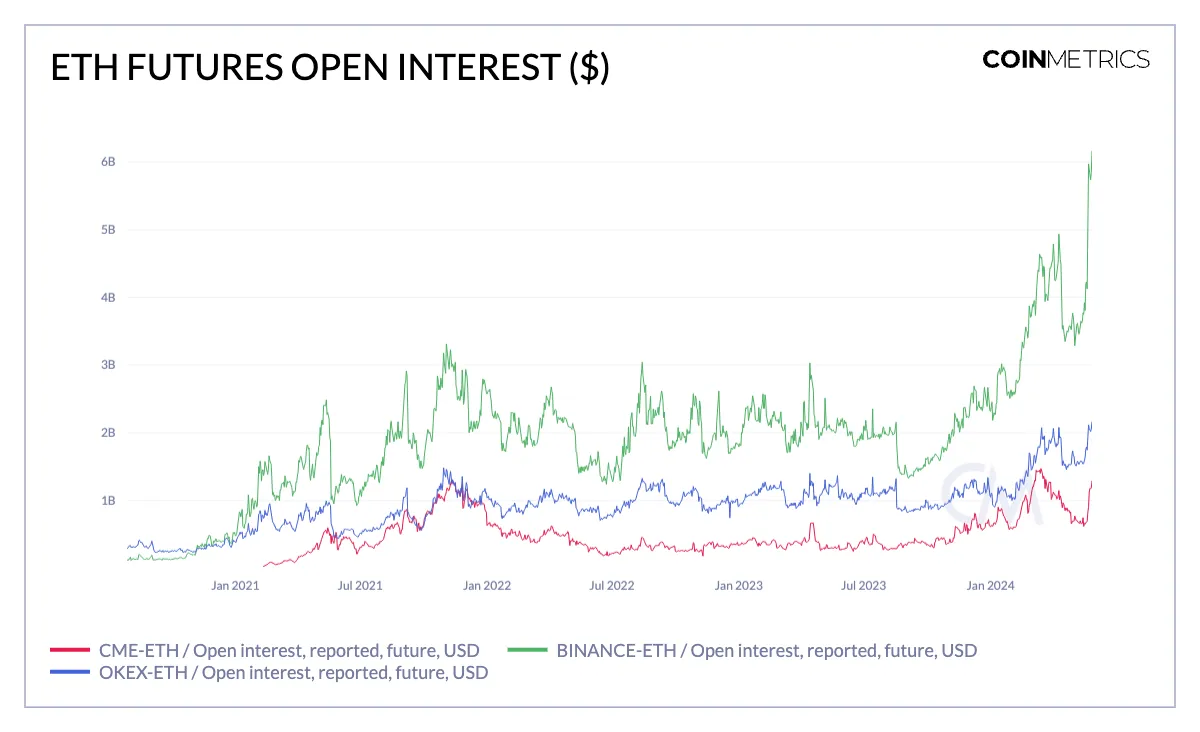
(Source: Coin Metrics Market Data)
How Will ETH ETFs Impact Staking?
A critical aspect of the spot Ethereum ETF approval is that they will not include staking functionality. Issuers cannot stake ETH, which may have potential implications for ETH supply dynamics, the health of Ethereum’s consensus layer, and the broader staking ecosystem.
Impact on ETH Supply Dynamics
As the native asset of the Ethereum ecosystem, ETH lies at the core of its operations and security. ETH serves as a unit of account, store of value, or collateral, forming a diversified economic system. This includes using ETH for staking to secure the network under the proof-of-stake (PoS) consensus mechanism, depositing ETH into smart contracts to support decentralized finance (DeFi) services, paying transaction fees, or holding it as an investment or store of value in user accounts.
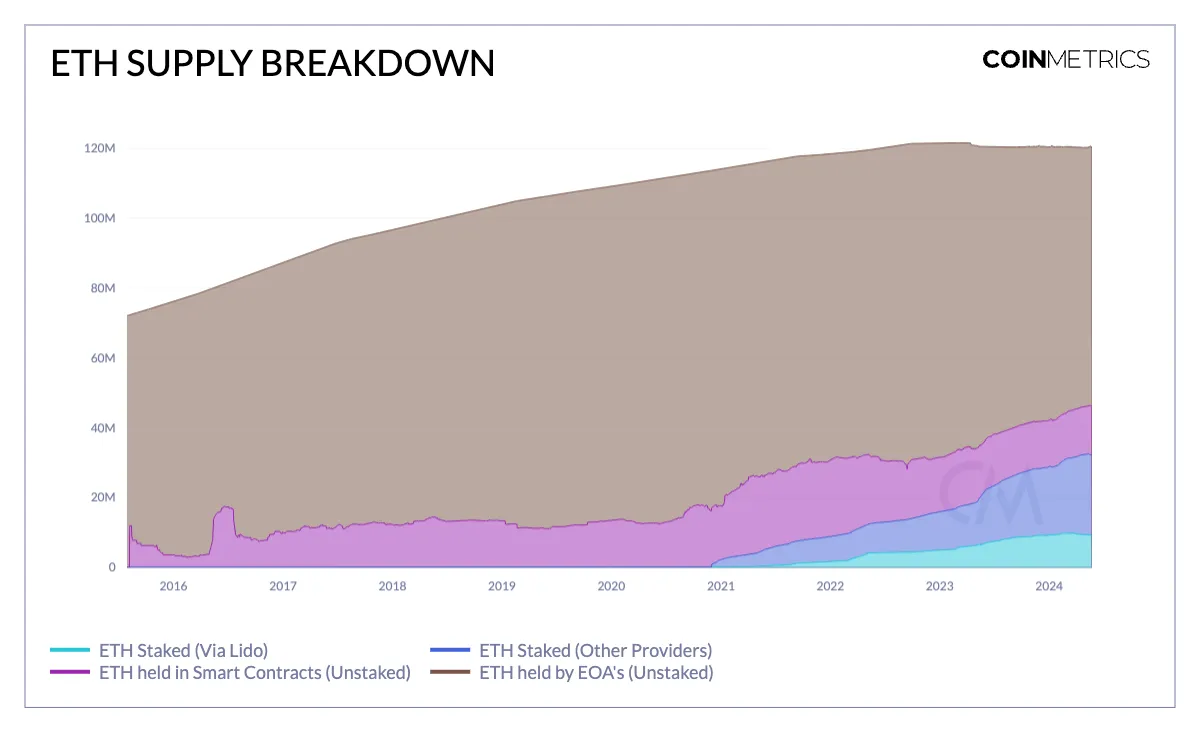
(Source: Coin Metrics Network Data)
Currently, out of the total 120M ETH supply, 27% is staked on the consensus layer, 11% is held in smart contracts (unstaked), and 61% is held in external accounts (EOAs). As ETF issuers absorb more circulating ETH, most of this supply is expected to be locked up, potentially reducing market availability. A reduction in circulating supply, coupled with strong demand, could increase the likelihood of ETH price appreciation.
Impact on Ethereum’s Consensus Layer
Currently, 32 million ETH (27% of total supply) are staked on Ethereum’s Beacon Chain via individual validators, staking pools like Lido, or custodial providers like Coinbase. However, with ETH ETFs excluded from staking, the 27% staked vs. 73% unstaked ratio is unlikely to shift dramatically. Staking yield is a key component of ETH’s return profile. Therefore, excluding ETFs from staking could benefit existing stakers by preventing dilution of staking rewards that might occur if institutional capital flooded into the staking ecosystem.
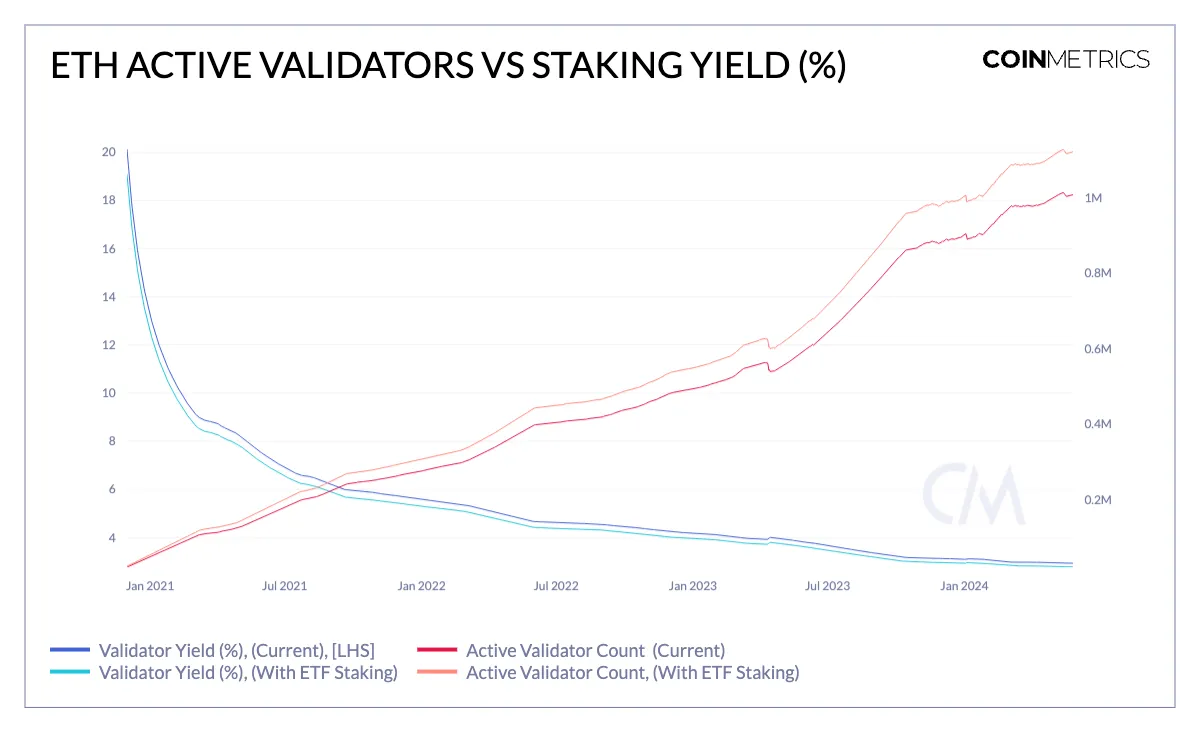
(Source: Coin Metrics Network Data)
The potential impact of consensus rewards (excluding tips and MEV) on validator yields can be seen in the chart above. If ETF issuers acquired 10% of the ETH supply (~12 million ETH) and staked 30% of it, the number of active validators on the consensus layer would increase by 11.25%, rising from 1 million to 1.125 million. Due to the inverse relationship between validator count and yield, this would reduce stakers’ annual percentage yield (APY) from approximately 2.9% to 2.7%. While not a precise calculation, it illustrates the potential downward pressure on staking yields if ETFs were allowed to stake.
Equally important, the maximum effective balance per validator (currently set at 32 ETH) is expected to increase to 2048 ETH in the upcoming Electra upgrade, as proposed, which could reshape validator and network security dynamics.
Moreover, the exclusion of staking in ETH ETFs may positively affect Ethereum’s staking distribution and decentralization. With rapid growth in staking, Lido and Coinbase currently hold 28% and 13% of the staked ETH market share, respectively. If institutional capital entered staking, Coinbase—as a primary ETF custodian—could become a dominant beneficiary, exacerbating centralization risks.
These concerns have sparked discussions within the Ethereum community about adjusting ETH’s issuance rate to mitigate negative effects such as staking centralization, declining competitiveness of solo stakers, and inflationary pressure on non-stakers. In the long run, whether the SEC will allow staking-enabled ETH ETFs remains to be seen. However, by not staking ETH, ETFs may help maintain a balanced staking ratio and promote a healthier staking distribution.
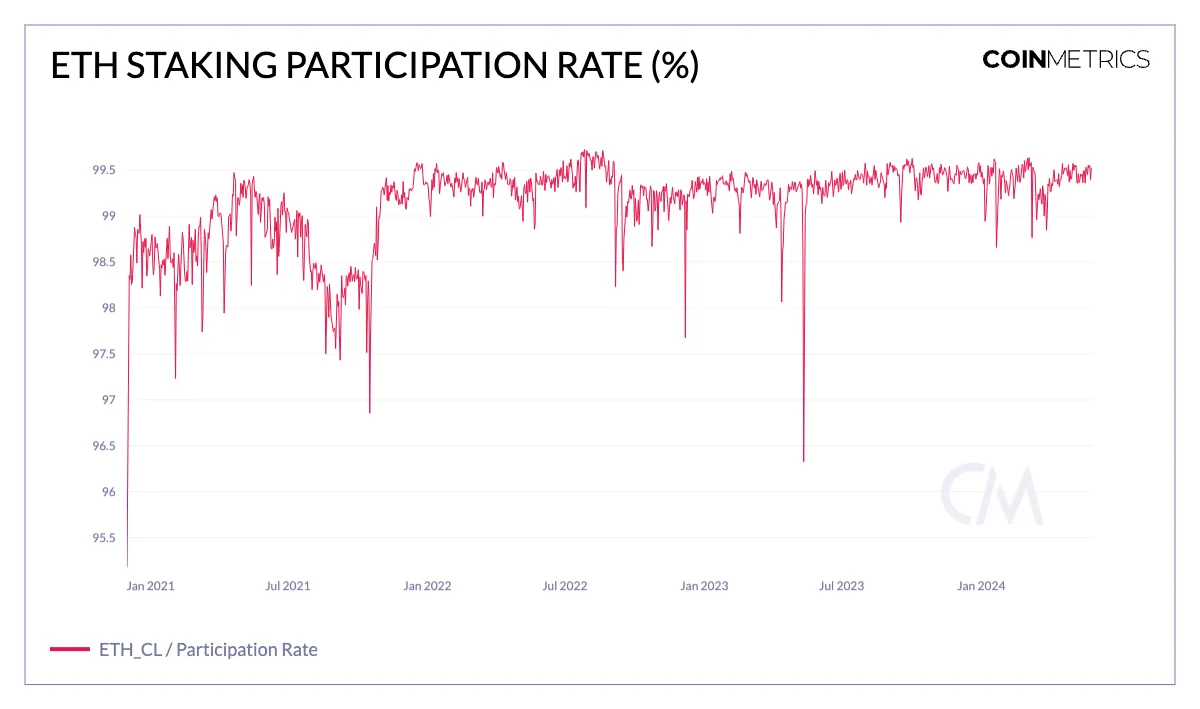
(Source: Coin Metrics Network Data)
Ethereum’s consensus layer has a participation rate of 99.5%, indicating that the vast majority of validators actively contribute to network security through block proposals and attestations. This also means staking rewards are distributed across a larger pool of validators, supporting decentralization. Going forward, proposed changes to issuance and effective balances, combined with the SEC’s stance on staking-enabled ETFs, will shape the future of Ethereum’s staking ecosystem.
Conclusion
The past week marked a significant shift in the U.S. digital asset regulatory landscape, highlighted by the approval of Ethereum ETFs and the passage of the FIT21 crypto market structure bill. Yet many questions remain unanswered: Will Ethereum ETFs attract investment flows comparable to Bitcoin ETFs? How will staking dynamics evolve in light of these developments? And what are the broader implications for other crypto markets? While these remain to be seen, regulatory clarity and increased accessibility are expected to drive broader demand into ETH and its ecosystem.
Network Data Insights
Summary Highlights
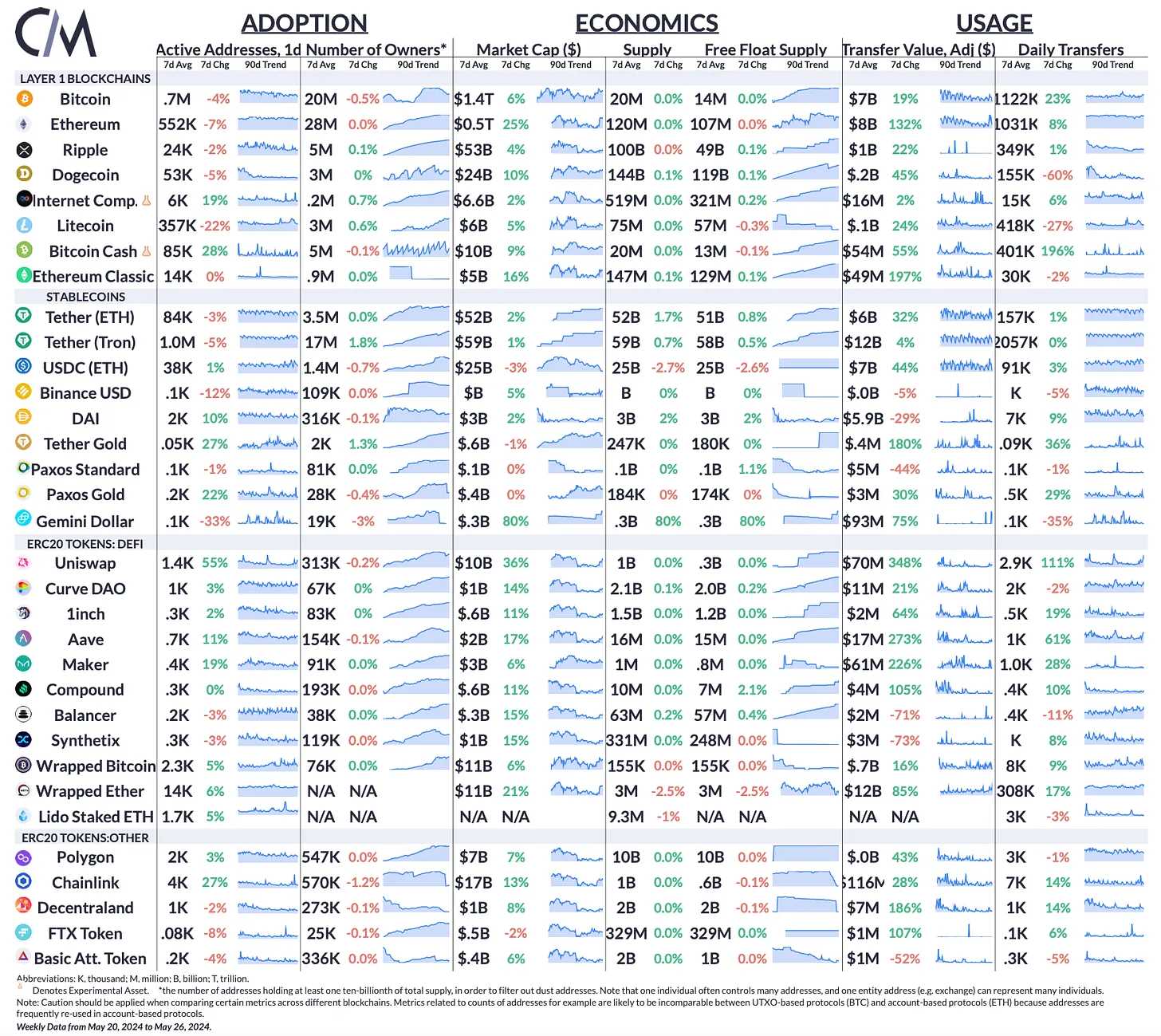
(Source: Coin Metrics Network Data)
Ethereum’s (ETH) market cap rose 25% over the past week, while adjusted transfer value surged 132% to $8 billion. Following ETH ETF approval, activity and valuations for several ERC-20 tokens also increased.
Join TechFlow official community to stay tuned
Telegram:https://t.me/TechFlowDaily
X (Twitter):https://x.com/TechFlowPost
X (Twitter) EN:https://x.com/BlockFlow_News
 @coinmetrics