








Impact of U.S.-China Trade Tensions on the Cryptocurrency Market
TechFlow Selected TechFlow Selected
Impact of U.S.-China Trade Tensions on the Cryptocurrency Market
In the long term, if the U.S. dollar depreciates due to increased debt and money supply, Bitcoin could benefit as an alternative currency.
 Navigating Web3 tides with focused insights
By Greythorn
Global affairs are shifting rapidly. Although you may have already noticed, it's worth sharing some insights from Greythorn.
While our main focus remains the crypto market—especially after confirmation of a bullish rebound following Bitcoin’s halving—the market may now be entering a "do-nothing phase." In this phase, most cryptocurrency holders are already invested, and waiting patiently could be a viable strategy.
For most investors, adopting a long-term perspective can simplify the investment process and reduce the need for frequent adjustments. At present, the best options appear to be either holding long-term or betting on meme coins.
Regardless, this period of calm in the crypto markets also gives us an opportunity to focus on macroeconomic developments, which inevitably influence crypto. After all, Bitcoin and other cryptocurrencies are fundamentally shaped by macroeconomic trends. While the crypto market may currently seem stagnant, the broader macro environment is well worth exploring.
Today, we’ll examine two closely related major news items:
1. China is massively selling off U.S. Treasury and agency bonds.
2. The U.S. has announced significantly increased tariffs on Chinese imports.
Let’s dive deeper into both.
For decades, China steadily accumulated U.S. Treasuries, at one point holding up to 10% of outstanding U.S. government debt through federal bond purchases. Key reasons included:
● U.S. Treasuries were seen as among the safest investments globally, offering reliable returns with minimal risk—ideal for preserving China’s vast foreign exchange reserves.
● China exports heavily to the U.S., earning large amounts of U.S. dollars. Instead of holding idle cash, China invests these dollars in Treasuries to earn interest.
● By purchasing U.S. debt, China helped maintain relative stability in its own currency (the yuan). This stability preserved the competitiveness of Chinese exports, keeping Chinese goods affordable for American consumers.
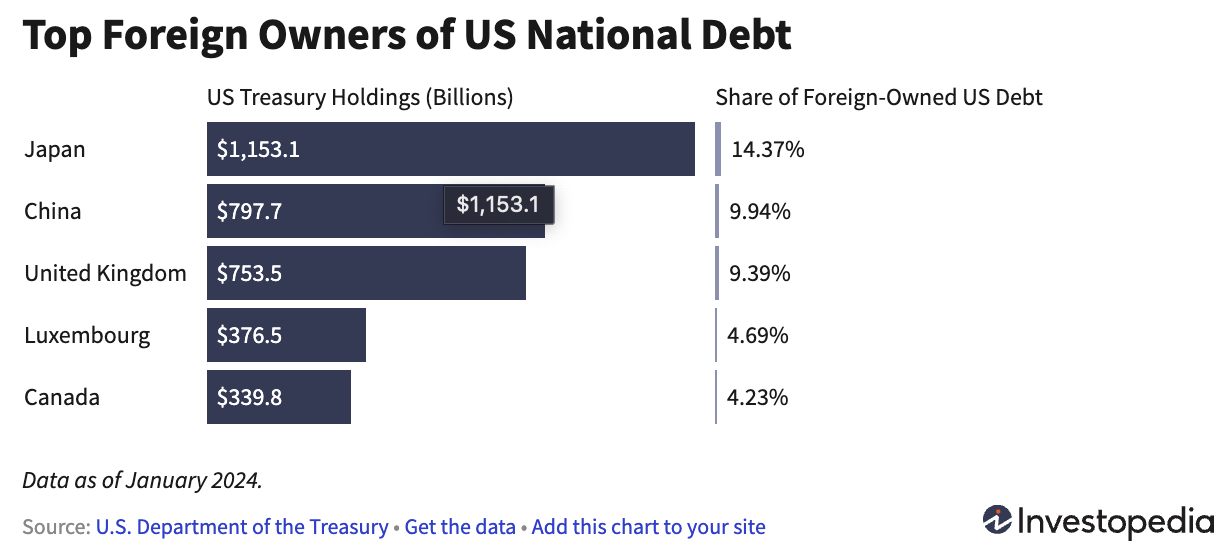
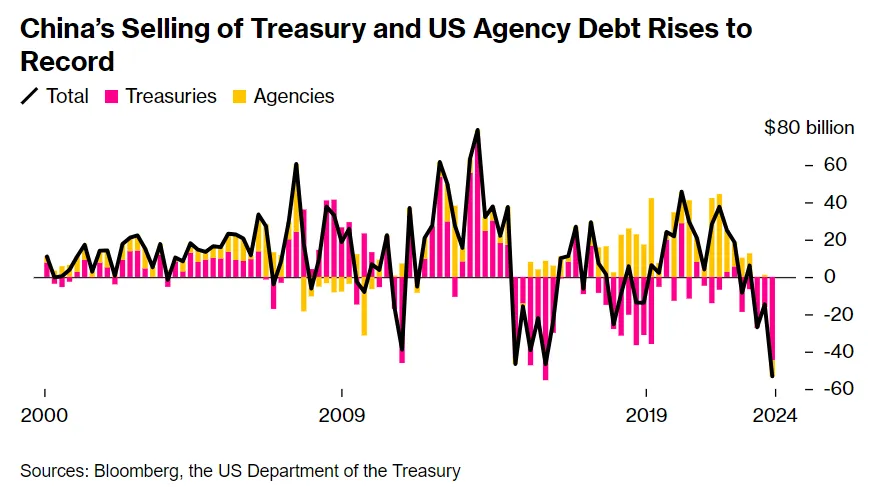
Recently, however, China has been reducing its exposure to U.S. debt. Bloomberg reports that China sold a record amount of U.S. Treasuries and agency bonds in the first quarter. Unsurprisingly, the U.S. is unhappy about this development, for several reasons:
● Large-scale selling increases the supply of U.S. Treasuries in the market, pushing prices down. When bond prices fall, yields rise.
● Rising yields mean the U.S. government must pay more in debt servicing costs. Initially, Treasury sales might strengthen the dollar, as investors move funds into dollars to buy the bonds China is selling. But over time, increased dollar supply could weaken the dollar. Moreover, 10% is a significant gap—who will fill it? Japan? Given Japan’s own struggles with yen depreciation, we’re not counting on that.
● Such moves could also affect the dollar-yuan exchange rate, making Chinese exports more expensive and potentially harming China’s economy. Yet China seems unconcerned, as de-dollarization is now a top priority.
How might the U.S. respond? The Federal Reserve could re-enter the debt market and resume quantitative easing (QE), even with interest rates above 5%. The government could also pressure banks and institutions to purchase more Treasuries.
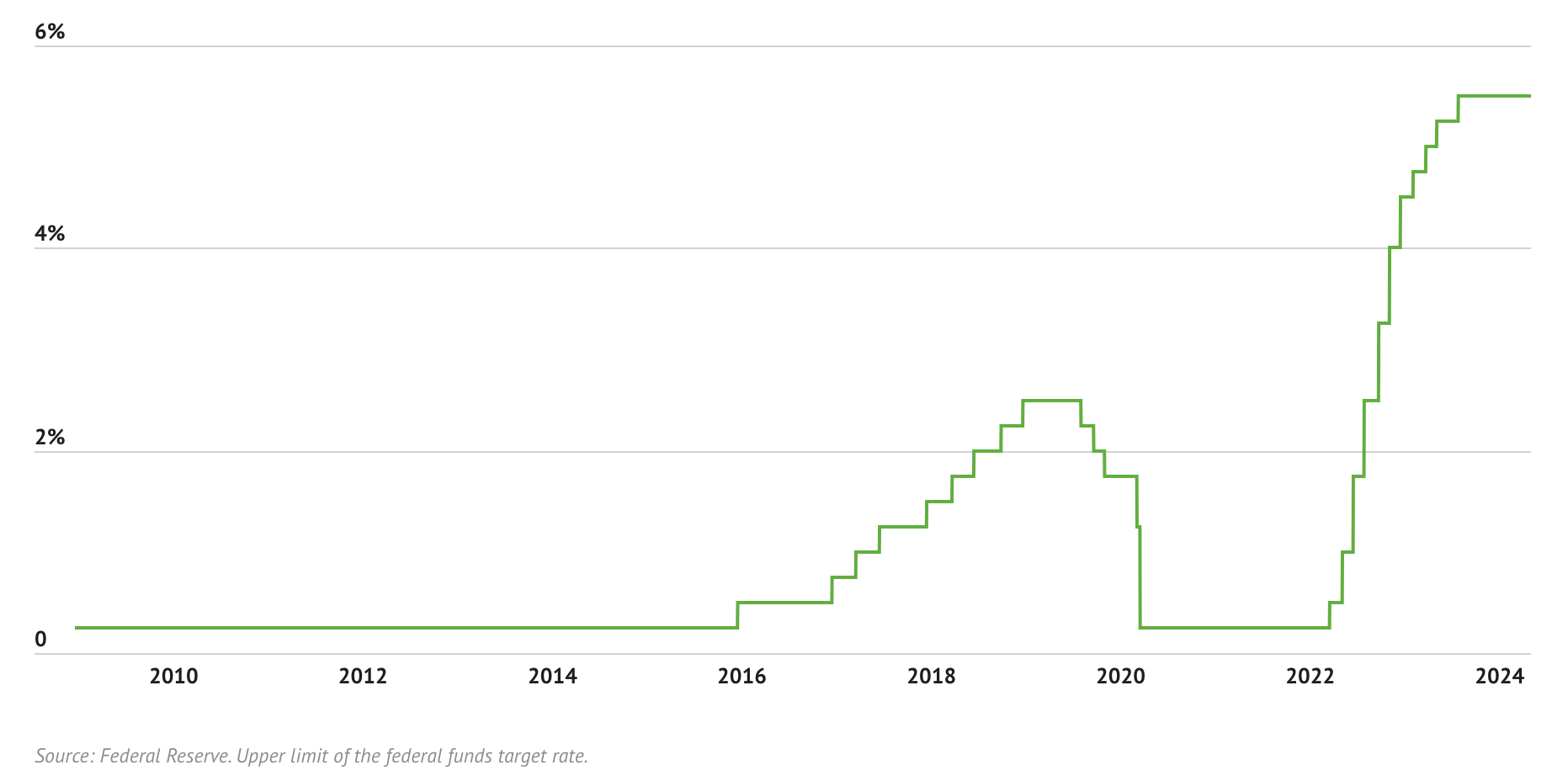
However, banks would demand higher yields as compensation, which could encourage more lending—and potentially fuel inflation.
Now, let’s turn to the second story: the U.S. announcement of sharply increased tariffs on Chinese imports.
In apparent response, President Biden has unveiled new and significantly higher tariffs on Chinese imports. These measures continue the punitive policies introduced under the previous Trump administration—policies that candidate Biden once criticized for burdening American consumers.
Tariffs on electric vehicles have more than quadrupled, reaching 100%; those on lithium batteries and components, as well as certain steel and aluminum products, have more than tripled. Tariffs on semiconductors and solar panels have doubled.
New tariffs have also been imposed on a wide range of critical minerals, magnets, ship-to-shore cranes, and medical products.
The goal is to make Chinese goods more expensive in the U.S., encouraging consumers to shift toward domestically produced alternatives. This strategy is expected to hurt Chinese manufacturers and exporters, possibly leading to reduced income and higher unemployment in China.
But there’s a major challenge: the U.S. currently lacks the domestic production capacity to match China’s scale. Increasing local output requires fiscal stimulus to help businesses build additional capacity to replace now-costlier Chinese supplies. This essentially means more money printing.
To fund these tariffs and "onshore" currently absent industries, the necessary fiscal stimulus would likely come via increased government debt. Given signs of economic slowdown in the U.S., short-term GDP growth cannot be relied upon to cover these costs.
Implications for the Crypto Market
So how does all this affect Bitcoin and the broader crypto market? Beyond the risk of social and political instability from escalating tensions, a global economic slowdown could reduce disposable income available for crypto investments—but this trend is already underway. In fact, the current situation reinforces our belief that further fiscal stimulus and potential monetary expansion will likely follow to support this conflict, and Bitcoin is typically viewed as a hedge against inflation.
Moreover, as governments around the world face mounting economic challenges, the previously widespread assumption that they would crack down heavily on cryptocurrencies—especially Bitcoin—is now fading. If anything, the opposite appears to be happening: growing appreciation for Bitcoin’s role is emerging. In the long run, if the dollar weakens due to rising debt and expanded money supply, Bitcoin could benefit as an alternative form of money.
In the meantime, good luck navigating market volatility.
At TechFlow, we’ll keep you updated through monthly reports and ongoing crypto research.
Don’t forget to follow us on social media!
Join TechFlow official community to stay tuned
Telegram:https://t.me/TechFlowDaily
X (Twitter):https://x.com/TechFlowPost
X (Twitter) EN:https://x.com/BlockFlow_News
 Greythorn








