Greythorn Monthly Market Report: April sees significant crypto market volatility, with muted investor interest in altcoins
TechFlow Selected TechFlow Selected
Greythorn Monthly Market Report: April sees significant crypto market volatility, with muted investor interest in altcoins
With the end of April, BTC is currently at the lower end of its price range, showing significant market weakness and potentially leading to more interesting developments.
 Navigating Web3 tides with focused insights
Author: Greythorn

Introduction
Welcome to Greythorn Asset Management's monthly market update for April 2024. We are pleased to share insights and analysis that will help you understand our work and the market trends we observe. Our mission is to invest in breakthrough technologies and asset classes that generate significant value and positively impact the world.
At Greythorn Asset Management, we are committed to providing monthly updates on the cryptocurrency market. These updates include in-depth analysis of market dynamics, regulatory developments, and macroeconomic factors affecting digital currencies.
To learn more about our work and additional information about us, please visit our website.
Market Analysis
April 2024 Market Dynamics
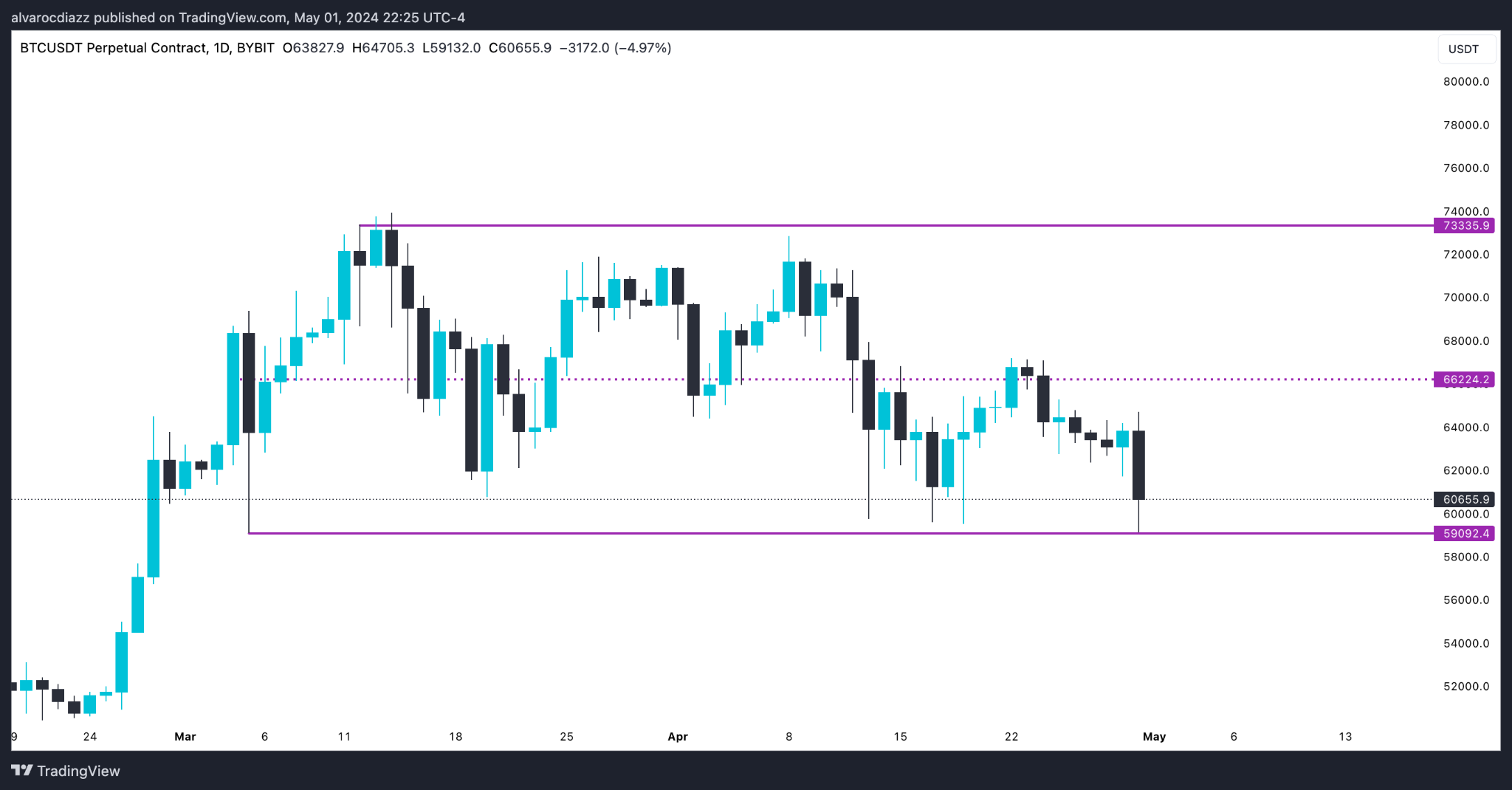
The cryptocurrency market experienced notable volatility in April, marked by significant events as Bitcoin prices fluctuated sharply after reaching record highs in March. At the beginning of the month, Bitcoin’s price dropped over 5%, falling below $66,000. Throughout the month, prices saw multiple swings, primarily driven by macroeconomic factors and shifts in market sentiment. These movements aligned with changes in U.S. interest rate expectations, highlighting Bitcoin’s sensitivity to global economic trends.
Source: TradingView
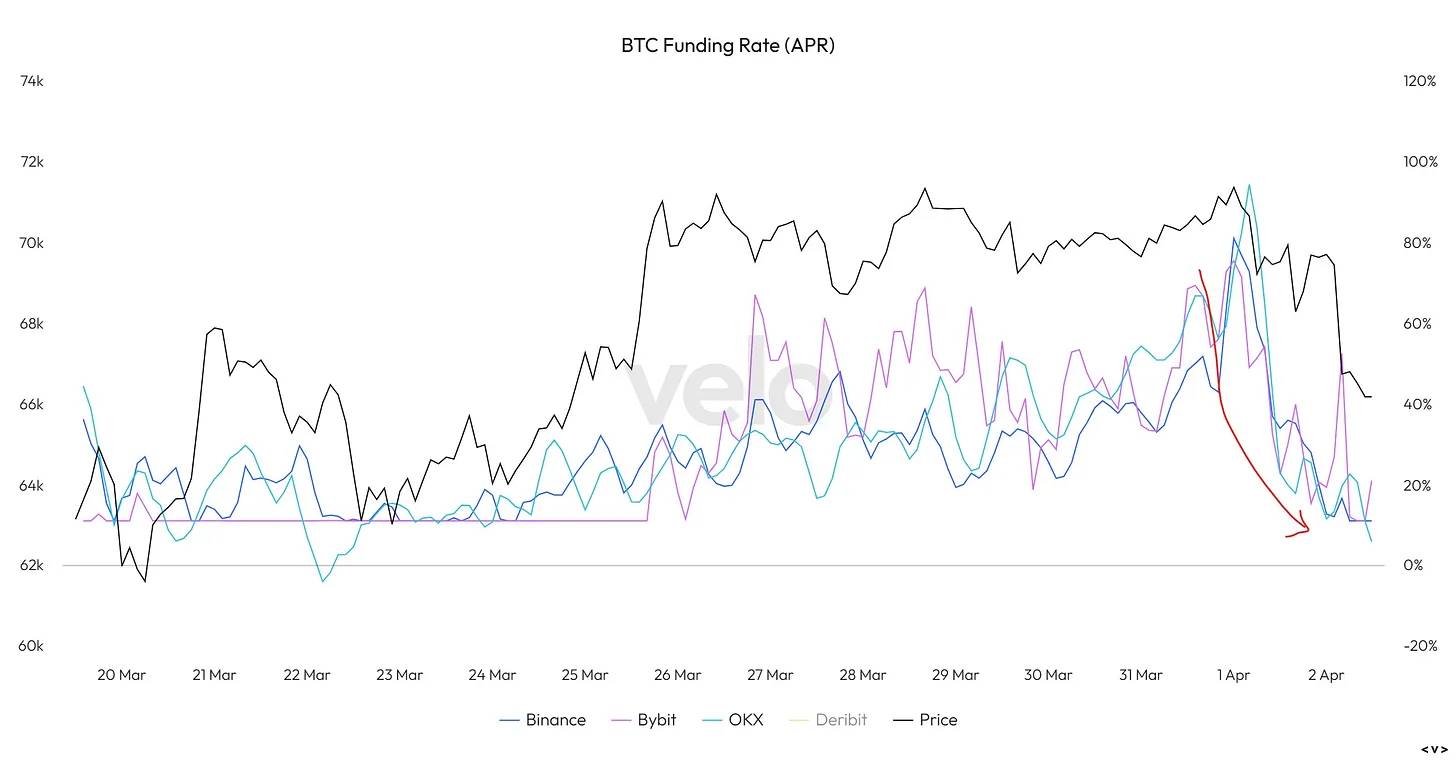
Derivatives markets anticipated this decline, as evidenced by a drop in Bitcoin perpetual futures funding rates signaling an upcoming correction. For many observers, the shift in market sentiment made such a correction seem inevitable, culminating in a significant liquidation event occurring outside U.S. ETF trading hours.
Source: VeloData
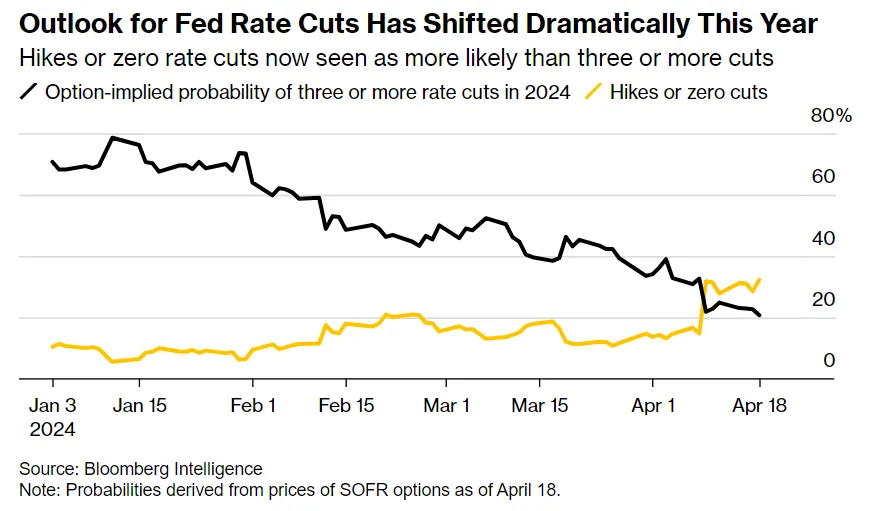
Another factor possibly contributing to the shift in BTC sentiment could be changes in U.S. interest rate expectations, which may have contributed to the recent decline. This serves as a reminder that while many view BTC as a “store of value,” it remains sensitive to macroeconomic changes.
Source: Bloomberg
Throughout the month, BTC prices fluctuated between $73,000 and $60,000. This stability may be attributed to several factors. A notable influence was the unexpected decline in the U.S. Dollar Index (DXY). A weaker dollar can make BTC prices more attractive, thus supporting BTC’s valuation.
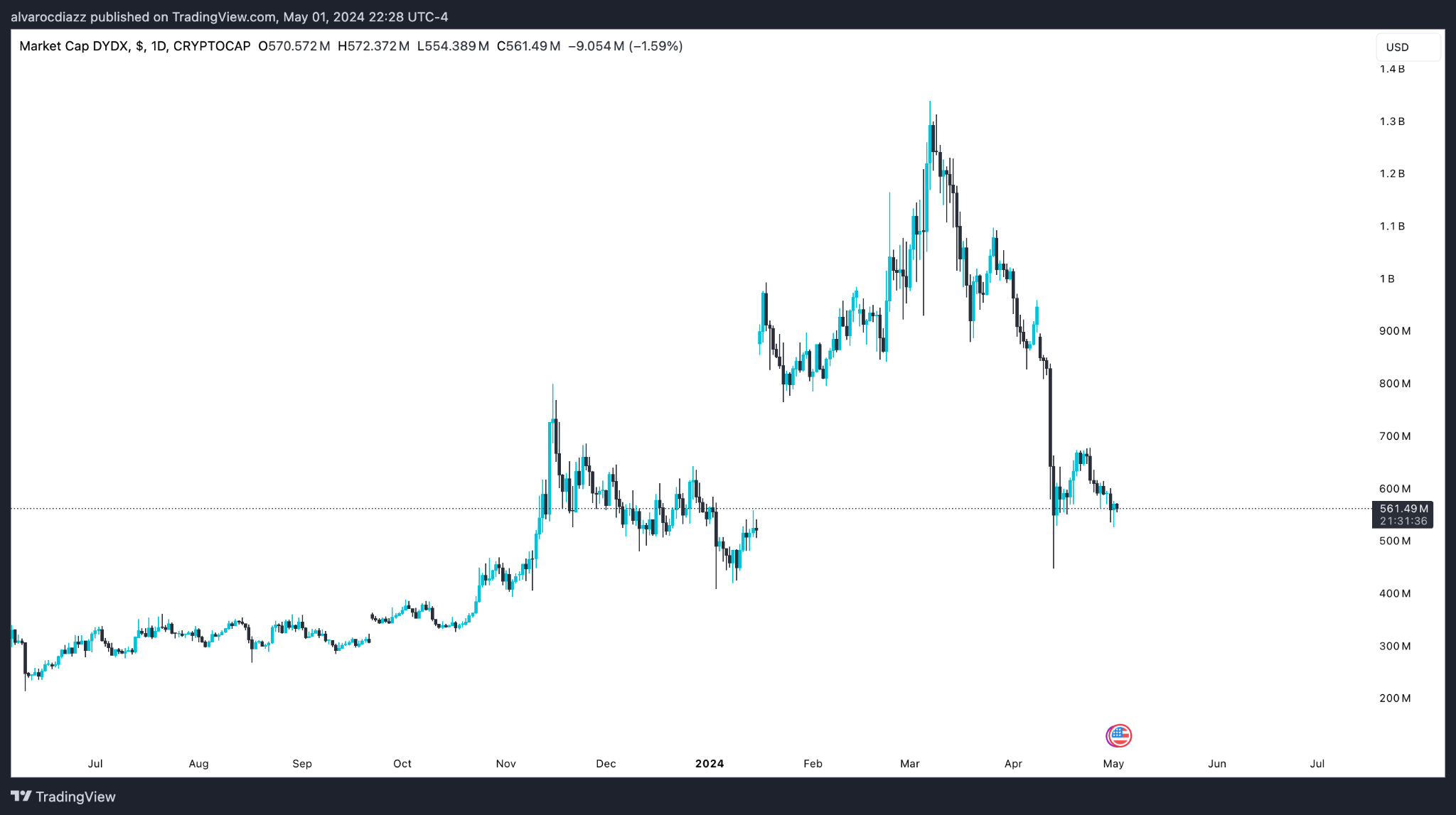
Source: TradingView
Investor attitudes toward the BTC halving event may have fueled expectations of a price surge—a factor that could have influenced market sentiment. However, these expectations failed to materialize, and BTC’s price remained unaffected.
Additionally, ETF inflows continued to support the market, albeit at a slower pace.
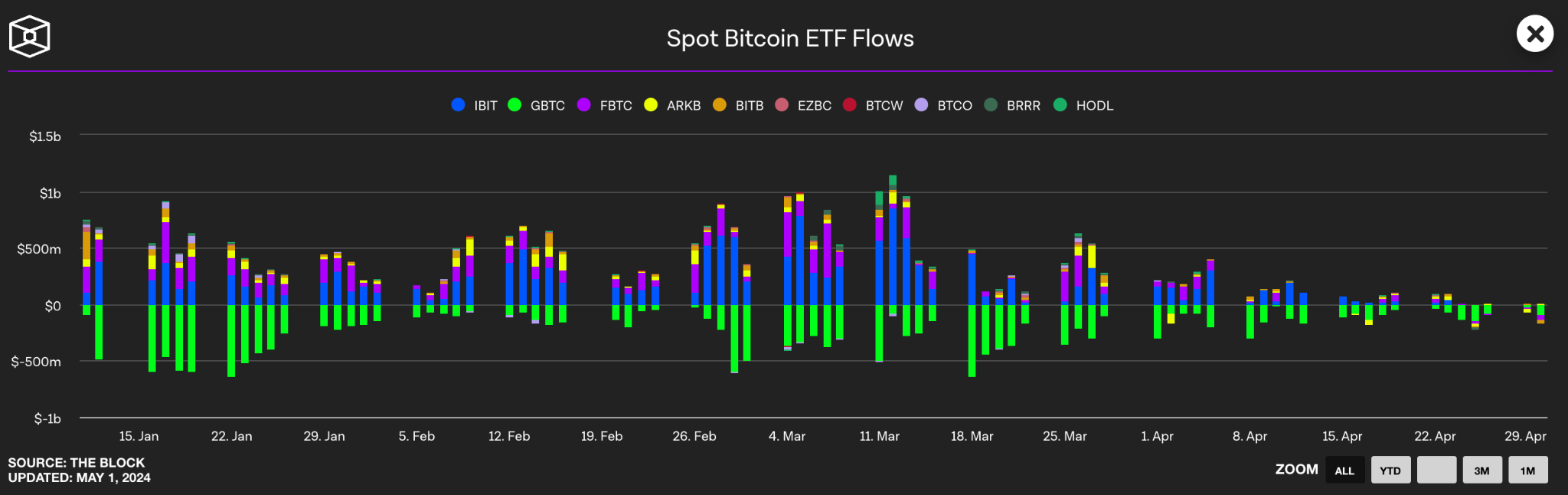
Source: The Block
As April concluded, BTC remained near the lower end of its price range, showing clear signs of market weakness and potentially setting the stage for further developments.
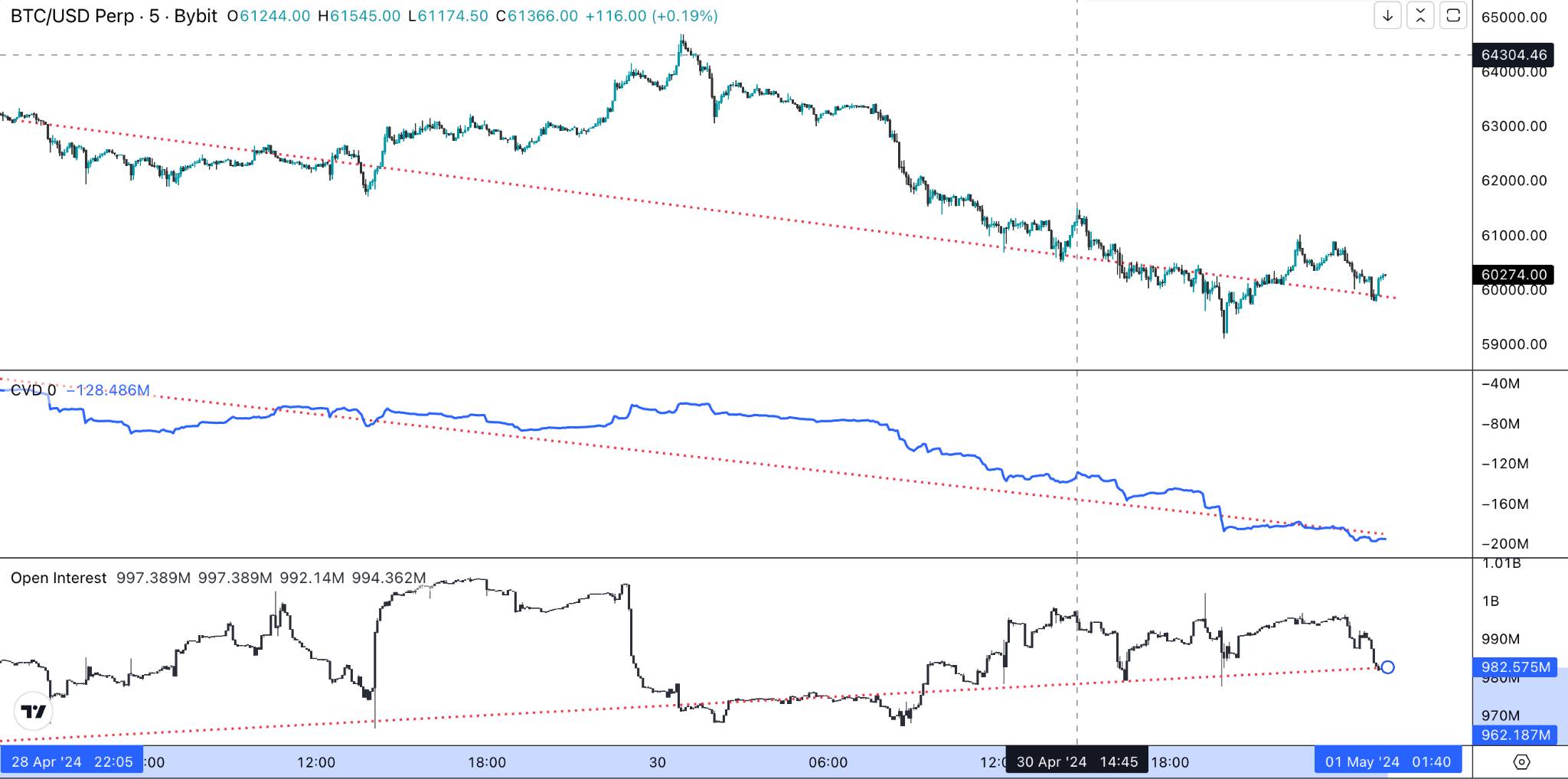
Source: Coinalyze
Innovation and Transformation in Crypto Investment Products
A key development Greythorn focused on in April was the ongoing exploration of asset tokenization, particularly with BlackRock launching the BlackRock USD Institutional Digital Liquidity Fund. Represented by the $BUIDL token on Ethereum, this fund is available exclusively to accredited investors meeting substantial minimum investment thresholds. It primarily invests in secure, income-generating assets like U.S. Treasuries and repurchase agreements, with dividends paid in $BUIDL tokens. This innovative model not only offers a new investment option but also demonstrates how blockchain can enhance liquidity and accessibility of traditional financial assets.
The fund manages over $375 million from just 10 holders, underscoring major progress in integrating real-world assets with blockchain technology.
Furthermore, the $BUIDL token has been enhanced through collaboration among BlackRock, Securitize, and Circle. This collaboration links the token to USDC smart contract pools, enabling direct redemptions and continuous liquidity. As a result, investors can convert their $BUIDL holdings into USDC at any time, facilitating instant global transactions. This feature is especially beneficial for crypto companies managing large treasuries, offering seamless access to funds as stablecoins gain prominence in international payments. This integration marks a significant advancement in liquidity management within the financial sector.
Regulation and Geographic Expansion
Regulatory actions in April were particularly significant for the crypto space, especially the Hong Kong Monetary Authority’s approval of spot Bitcoin and Ethereum ETFs. This approval is a game-changer for Asian markets, particularly Hong Kong, although it should be noted that access for mainland Chinese investors remains significantly restricted due to strict regulations. The decision involves three major investment groups, highlighting the growing importance of incorporating cryptocurrencies into the broader financial ecosystem.
In Europe, the crypto landscape is also advancing. Baden-Württembergische Bank (LBBW), one of Germany’s largest banks, announced it is preparing to offer crypto trading and custody services. This move by a traditionally conservative financial institution highlights the growing acceptance of cryptocurrencies as legitimate, investable assets. LBBW’s approach is particularly noteworthy as it focuses on integrating crypto services as part of its business model rather than merely chasing speculative gains. This reflects deeper, more practical applications of blockchain technology in corporate finance.
Developments in Ethereum and Regulatory Challenges
Ethereum’s trajectory mirrored Bitcoin’s but faced even more intense regulatory scrutiny. The SEC’s delayed response to spot Ethereum ETF applications, requesting public comments on proposed amendments, indicates regulators’ cautious stance and ongoing uncertainty in the regulatory environment.
Notably, Consensys, the Ethereum lab, sued the SEC, challenging the classification of ETH as a security. This lawsuit could clarify Ethereum’s regulatory standing and impact other cryptocurrencies. A favorable outcome might influence market dynamics and boost investor confidence.
This legal action strongly suggests issuers are operating under the assumption that approval will eventually come through.
Bitcoin Halving
The Bitcoin halving event occurred this month, cutting miners’ block rewards in half. This change has significant long-term implications for the network’s economics. While we did not see an immediate impact on price, over time, reduced rewards may lead to higher transaction fees as miners rely more on gas to remain profitable. This shift is important for Bitcoin’s future as a transaction network, especially since higher fees could reduce its appeal for small-value transfers. On the positive side, Layer 2 network developments are underway, helping balance security (more critical for larger transfers) and cost (a bigger factor for smaller ones).
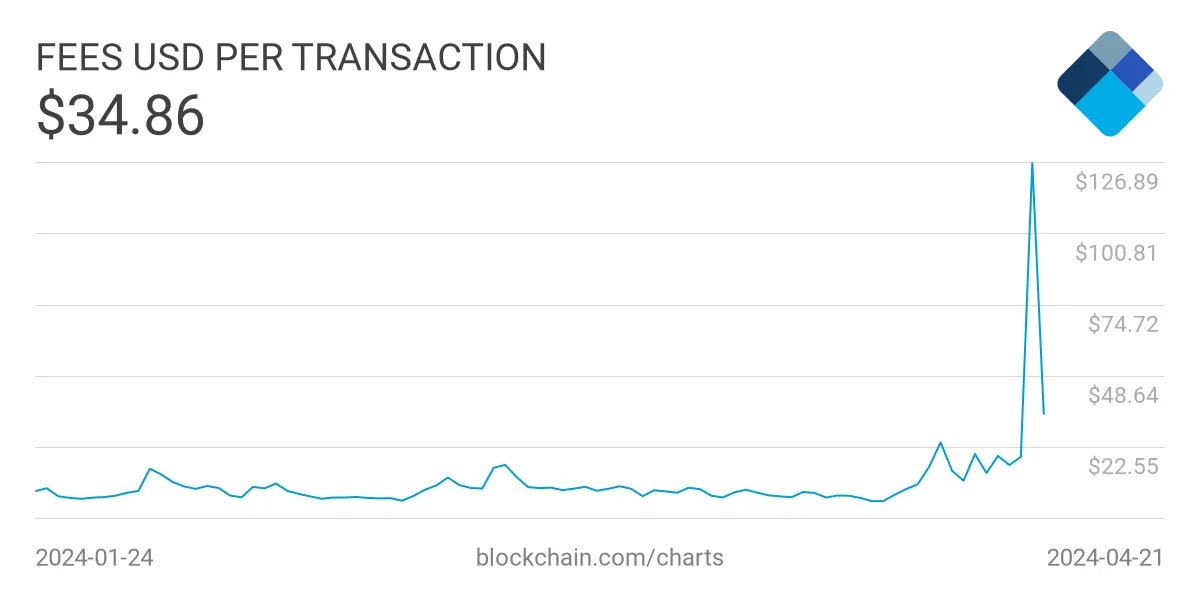
Source: Blockchain.com
Macro Environment
Gold’s Steady Rise and Its Link to Cryptocurrencies
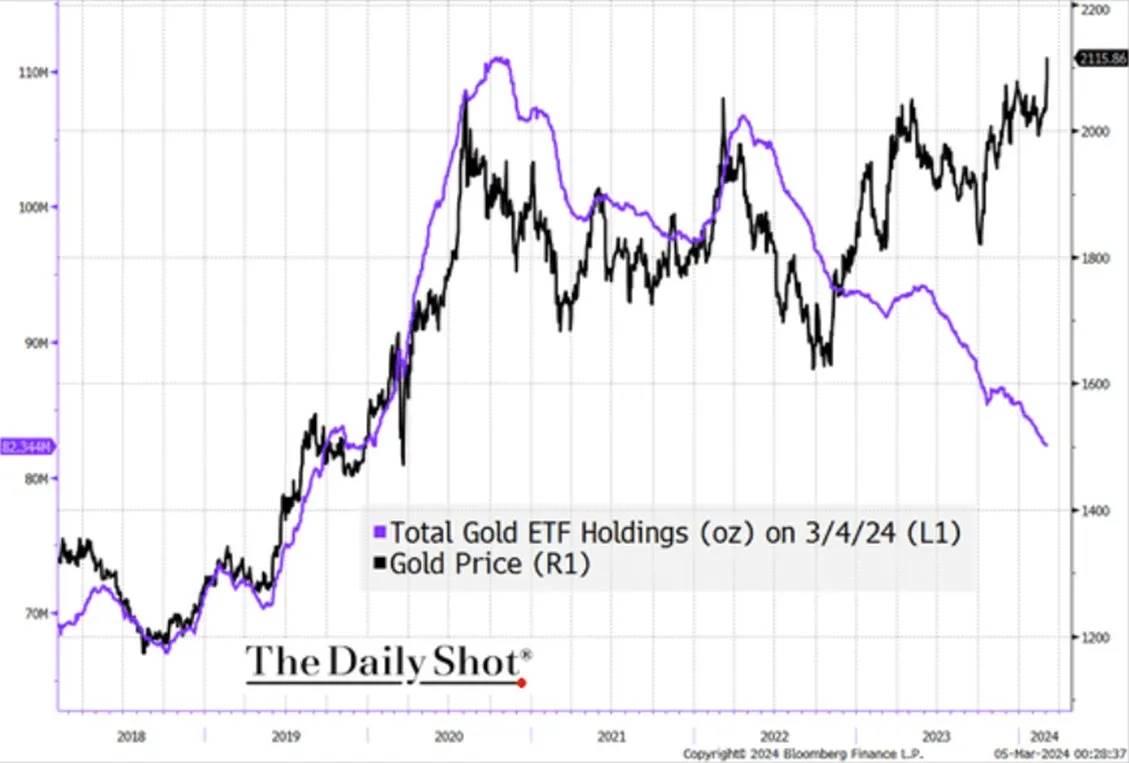
In April, gold remained a focal point. Despite a decline in holdings of the largest U.S. gold ETF, gold prices continued to rise.
Source: @BobEUnlimited
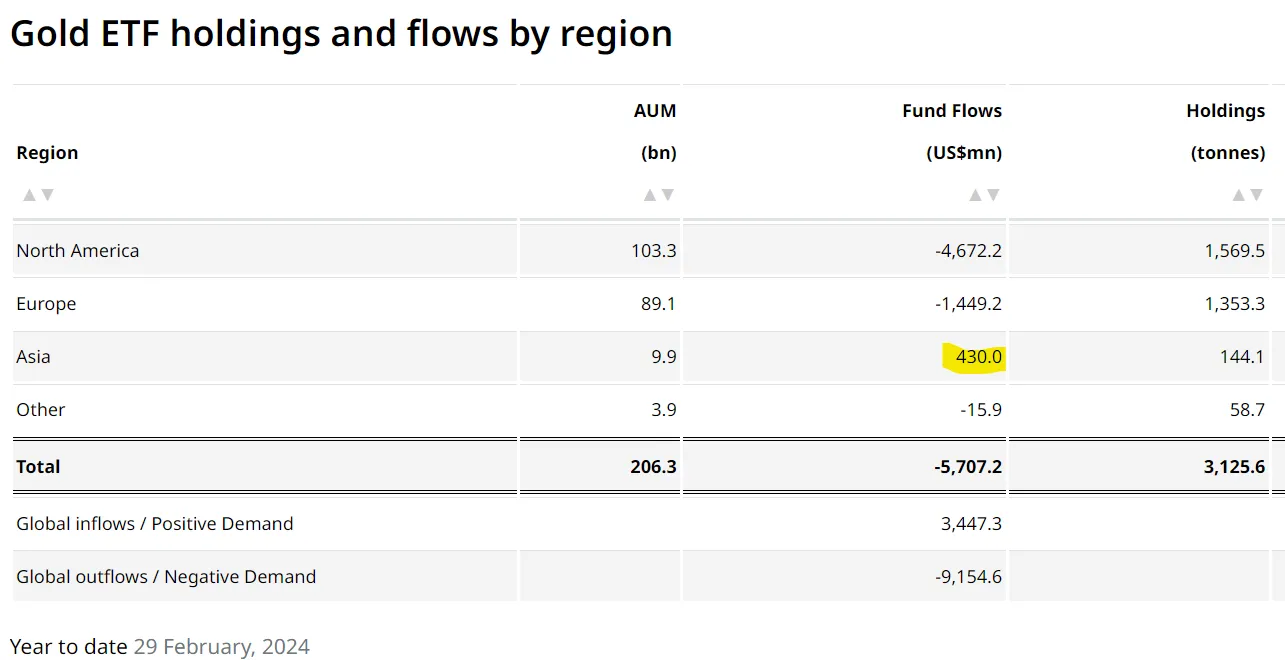
This divergence is notable, especially in Asia, where despite less developed market infrastructure compared to North America and Europe, net inflows into gold ETFs were recorded.
Source: World Gold Council
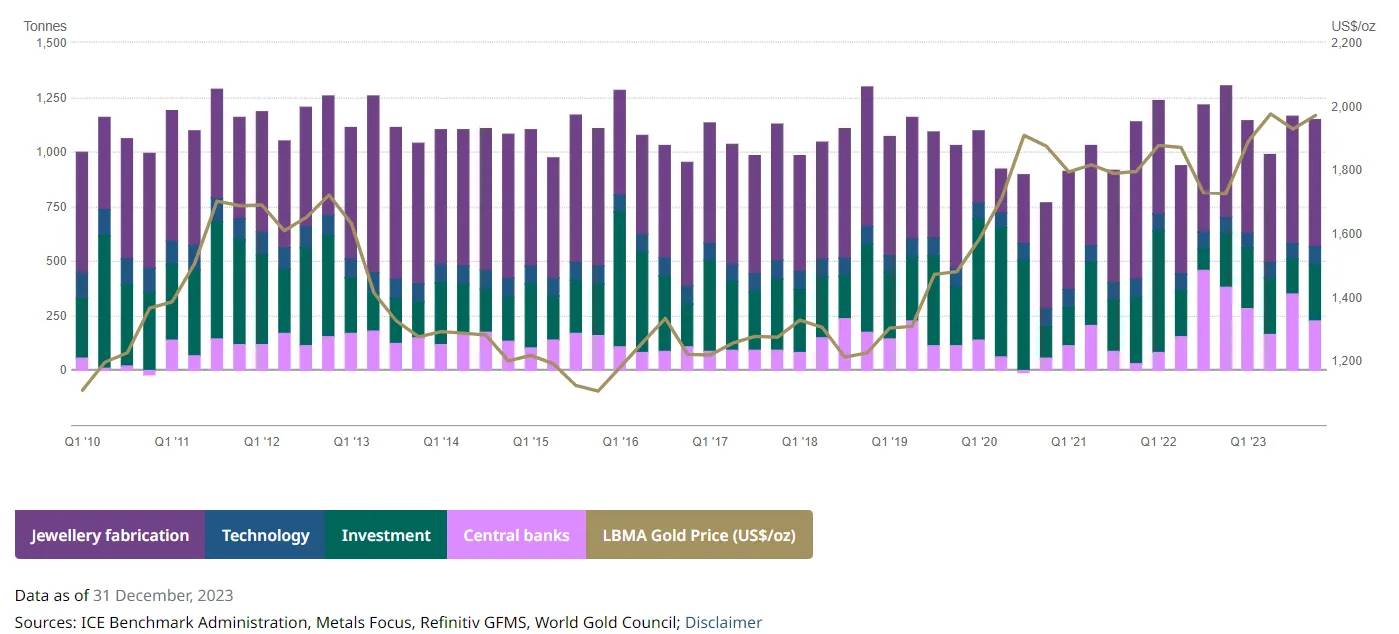
Central banks have also been active buyers of gold, continuing a decade-long trend. Recent data from the World Gold Council shows central banks purchase gold mainly for traditional portfolio diversification and crisis hedging, rather than de-dollarization. The only newly increased motivation last year was gold’s performance during crises, highlighting global geopolitical and economic uncertainties.
Source: World Gold Council
This interest in gold appears to align with discussions in the crypto world about “seeking international payment alternatives beyond the U.S. dollar,” reflecting broader market demand for reliable alternatives outside conventional financial systems.
Interest Rate Expectations and Economic Signals
April began with heightened attention on U.S. financial markets, as expectations of interest rate cuts sparked intense debate. Stronger-than-expected economic data dampened hopes for rate cuts in 2024. It appears the U.S. economy may be more resilient than previously thought.
U.S. Employment and FOMC Developments
There was high anticipation around U.S. employment data, with the ADP payroll expected to reveal slight labor market softening. These figures typically foreshadow official employment statistics released a week later, which also indicated weakening, with unemployment holding steady at 3.8%. JOLTS and Challenger layoff reports provided further insight into hiring and firing trends.
Among these releases, the FOMC press conference was particularly crucial, with Chair Jerome Powell discussing persistent inflation and the Federal Reserve’s interest rate strategy.
Treasuries Market Tensions and U.S. Fiscal Quarterly Report
This month, the Treasury’s quarterly report revealed key financial strategies, detailing upcoming bond issuance plans and adjustments to overall fiscal policy, directly impacting market liquidity. This update was mirrored in the Treasury market, where reduced liquidity and increased volatility since late 2021 have drawn close investor scrutiny. Additionally, the report highlighted second-quarter borrowing adjustments, now $41 billion higher than previously projected, totaling $243 billion. While this increase seems substantial, it remains relatively small compared to the massive U.S. national debt (currently over $34.5 trillion and rising).
Global Perspective
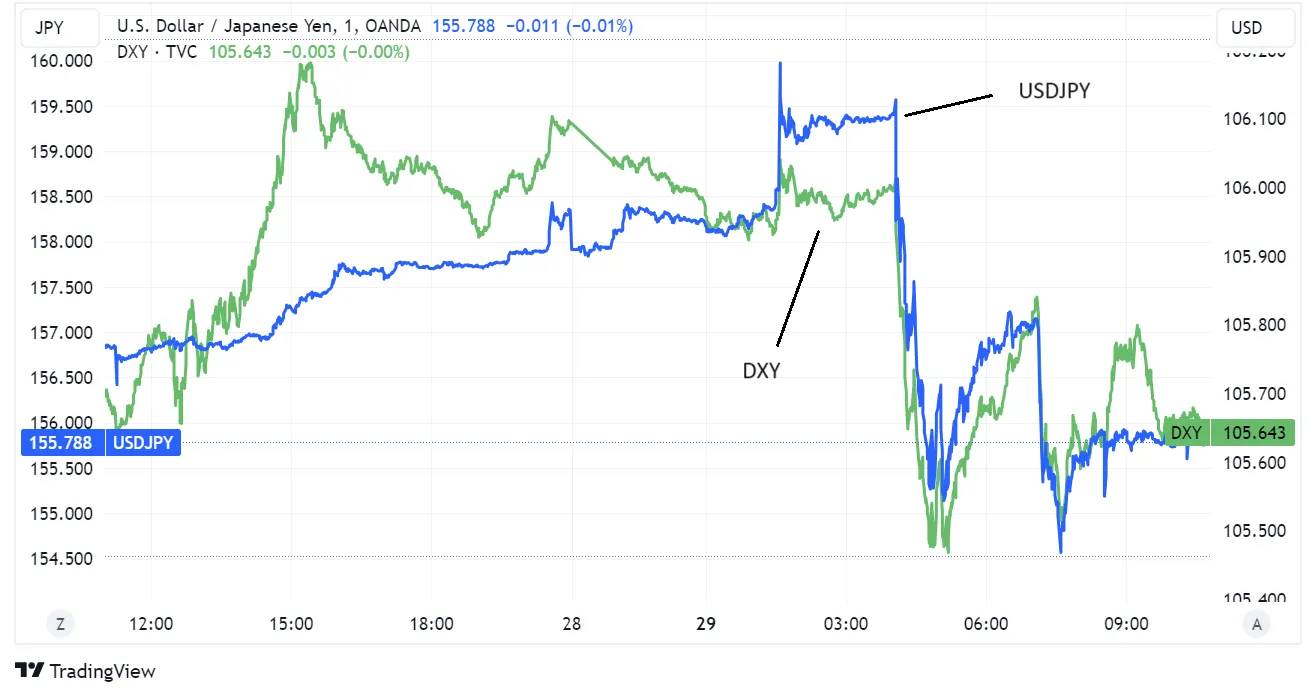
The global economy also warrants attention. Japan’s monetary operations suggest the government may intervene to support the yen. Essentially, the “yen bounce” (a sudden rise in yen value) coinciding with a drop in the DXY dollar index has led to speculation that the Bank of Japan may have intervened in currency markets to influence the yen’s value.
Source: TradingView
Meanwhile, South Africa is taking steps to regulate cryptocurrencies, indicating growing institutional interest in digital assets there. In contrast, Venezuela faces challenges using USDT (a digital currency) in oil transactions due to sanction risks.
Highlights of the Month
● Former Binance CEO Changpeng Zhao sentenced to four months in prison for anti-money laundering violations, highlighting regulatory enforcement in the crypto space.
● BlackRock’s USD Institutional Digital Liquidity (BUIDL) Fund: BUIDL manages over $375 million in assets, signaling strong institutional interest in digital assets.
● Hong Kong’s Bitcoin and Ethereum Spot ETFs: Hong Kong launched six new Bitcoin and Ethereum ETFs, significantly expanding regulated crypto investment options in Asia, reflecting a trend toward regulatory-approved crypto investments.
● MicroStrategy expands its Bitcoin holdings: MicroStrategy continues its Bitcoin investment strategy, increasing its total holdings to 214,400 BTC through additional purchases.
● Consensys and SEC Legal Developments: Consensys faces regulatory challenges from the SEC, which could affect Ethereum’s legal classification and broader crypto regulation.
● Potential Spot Bitcoin ETF in Australia: Australia plans to list its first spot Bitcoin ETF by year-end, potentially expanding the region’s crypto investment market.
● Tether’s expansion on TON blockchain: Tether launched USDT and XAUT stablecoins on the TON blockchain to enhance liquidity and access for decentralized applications.
● Hong Kong’s crypto leap forward: Hong Kong plans to launch additional Bitcoin and Ethereum spot ETFs, further expanding regulated crypto investment options in Asia.
● Rise of crypto in Korea: The Korean won surpassed the U.S. dollar as the most traded currency in crypto transactions during Q1 2024, showcasing Korea’s growing influence in the crypto space.
● Bored Apes NFT prices plummet: Prices for Bored Ape Yacht Club NFTs crashed, marking a major downturn in the once-booming digital collectibles market.
● Bitcoin miner activates long-dormant BTC: A Bitcoin miner moved $3 million worth of long-dormant Bitcoin, sparking speculation that early miners may be cashing out.
● Surge in BlackRock’s spot Bitcoin ETF: BlackRock’s IBIT spot Bitcoin ETF attracted $15 billion in inflows within just three months of launch, indicating growing investor confidence.
● Solana developers address network congestion: Solana developers are resolving network congestion issues to improve transaction processing and alleviate bottlenecks.
● PayPal introduces PYUSD stablecoin for international payments: PayPal launched an international money transfer service using its PYUSD stablecoin for U.S. customers, waiving transaction fees.
● Sony Bank pilots stablecoin on Polygon blockchain: Sony Bank launched a stablecoin pilot on the Polygon network, integrating digital currencies into gaming and sports ecosystems, reflecting Japan’s evolving regulatory environment.
On-Chain Analysis
- Despite Bitcoin’s strength, overall interest in cryptocurrencies remains subdued, particularly for altcoins.
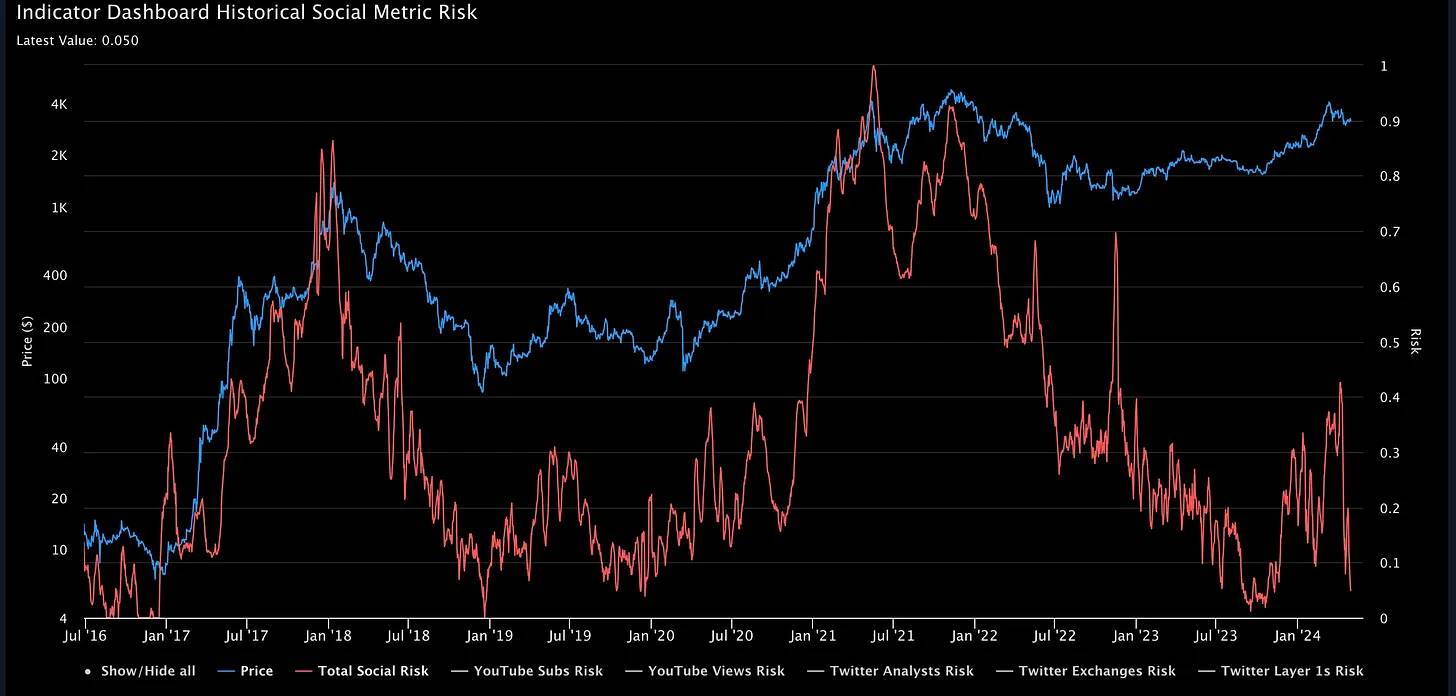
Source: Benjamin Cowen
- Despite market challenges, major Bitcoin miners show no clear signs of giving up, as those with efficient equipment and low-cost electricity remain profitable. However, retail miners using older hardware and facing higher electricity costs are struggling.
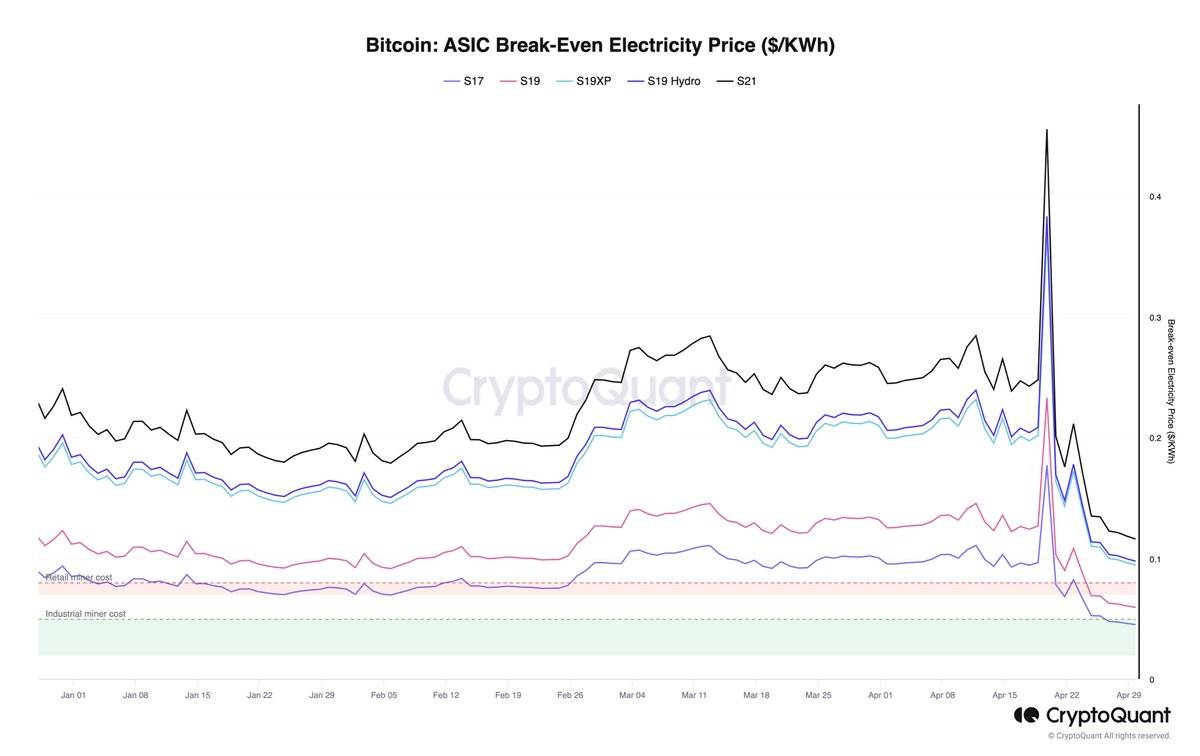
Source: CryptoQuant
- The surge in crypto projects has increased market complexity. A recent CoinGecko report shows that as of April 2024, the number of cryptocurrencies has risen to approximately 2.5 million—up 570% from 2022—though many projects and tokens may lack active maintenance or credibility.
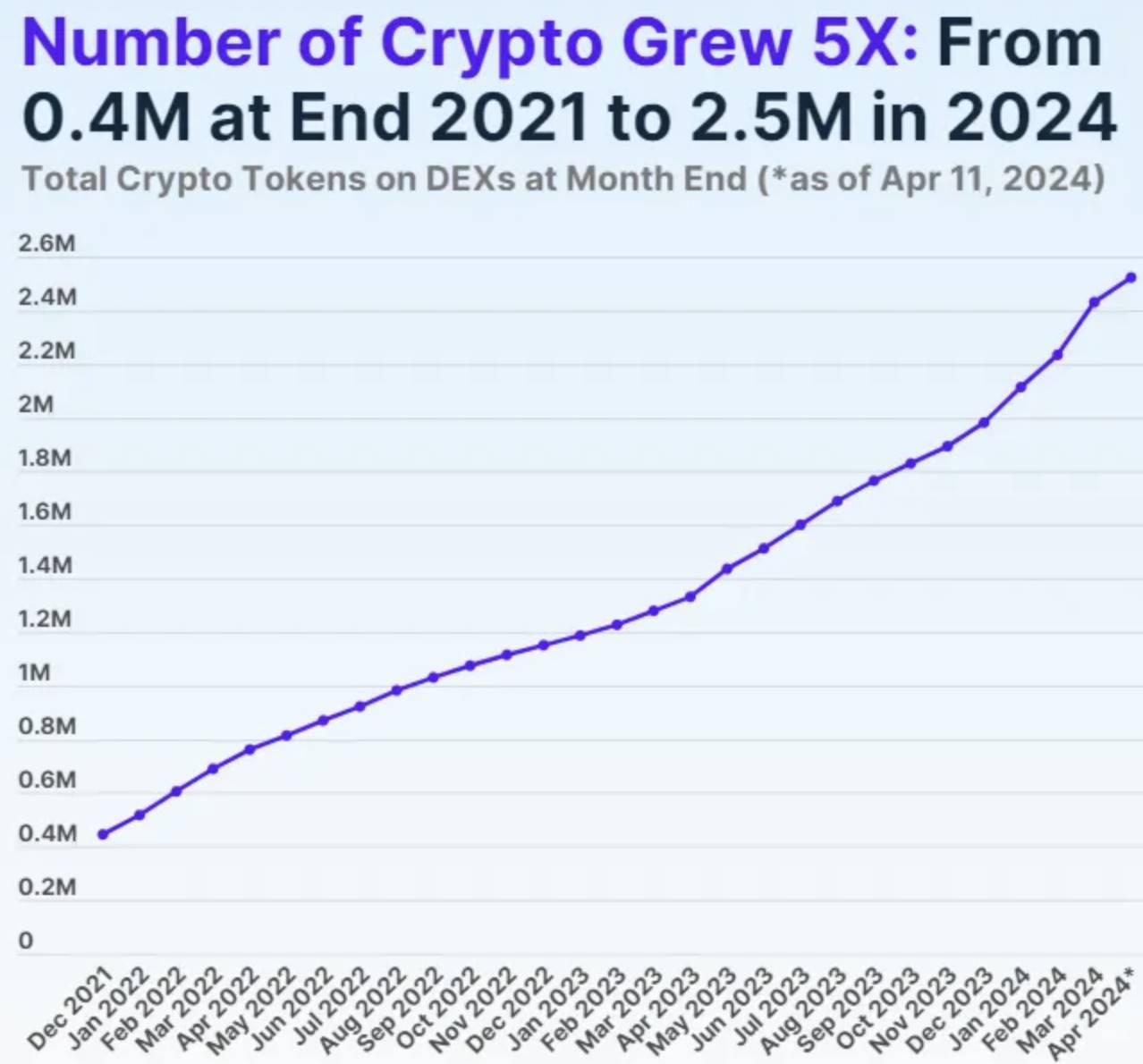
Source: Cpinguecko
- Reports from Glassnode indicate that Bitcoin’s “mania phase” is cooling following market reorganization. Selling dominated by newer investors suggests the market may be nearing a local bottom as selling pressure approaches its end. The report also notes that March’s local distribution pattern resembles previous bull runs.
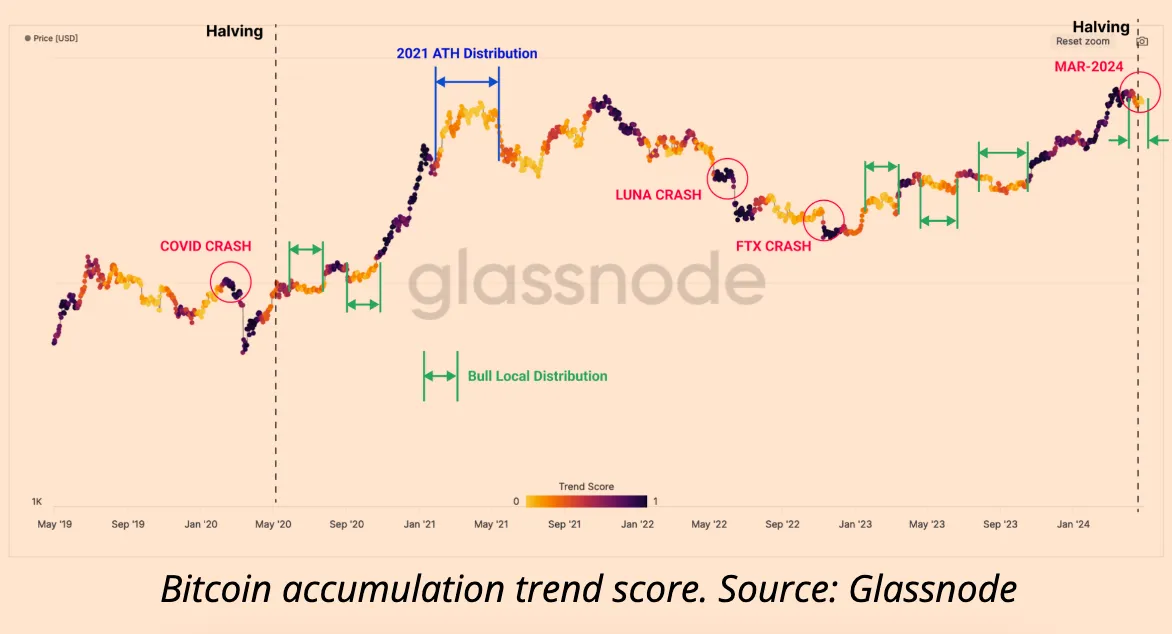
Source: Glassnode
- Amid current market weakness, Coinbase’s Base Layer 2 (L2) stands out as a platform with strong on-chain performance. The platform attracts 50,000 to 100,000 new crypto users daily, with a total user base approaching 9 million.

Source: Dune Analytics
- Short-term holders are selling at a loss. Investors who bought at higher prices within the past six months are currently underwater and may panic sell below SOPR, suggesting the market may be approaching a local bottom.
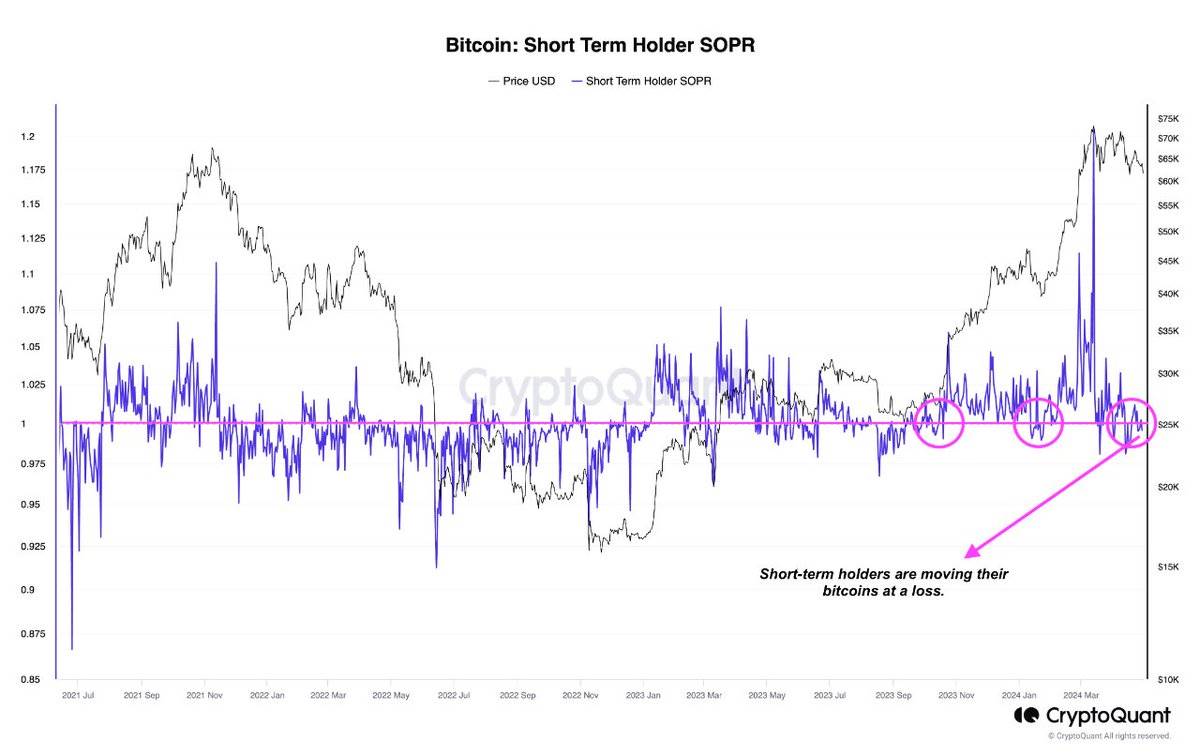
Source: CryptoQuant
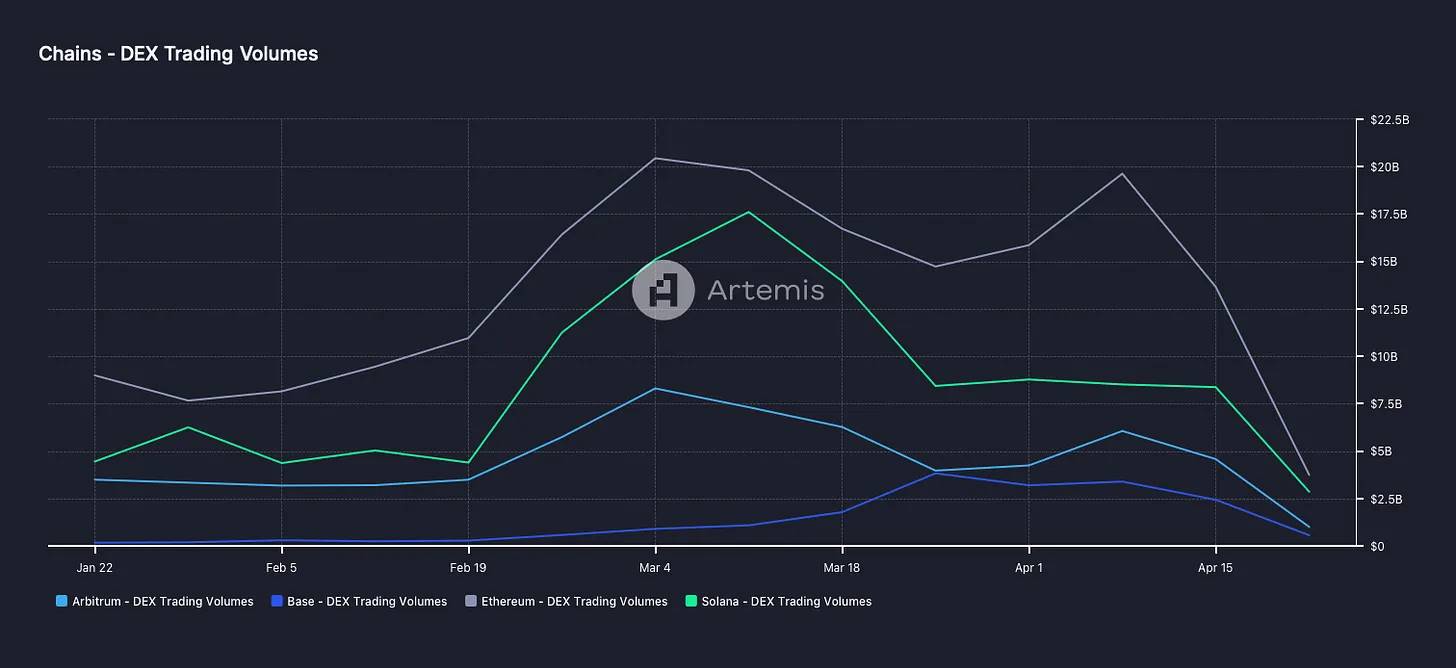
- On-chain activity remains mostly quiet, with only a few exceptions drawing attention, as shown. Transaction volumes are trending downward as caution persists. Typically, the impact of a Bitcoin halving is delayed by 1–2 months.
Conclusion
April highlighted the delicate balance maintained across the global economy, as central banks navigate inflation and growth challenges, and markets adapt to regulatory changes and geopolitical uncertainties. This ongoing challenge tests the flexibility and resilience of global economic strategies.
As April ends, Bitcoin prices stabilize, but Greythorn’s research team believes BTC remains sensitive to broader economic indicators and shifts in investor sentiment. Hong Kong’s launch of Bitcoin and Ethereum spot ETFs aims to broaden market access and enhance crypto knowledge and investment opportunities in Asia.
Potential drivers of positive trends in the crypto market include:
● Easing of SAB 121, the SEC rule restricting major U.S. banks from offering crypto custody services
● Reports that sovereign wealth funds are investing in cryptocurrencies
● More companies and investment institutions incorporating Bitcoin into their treasury reserves
Join TechFlow official community to stay tuned
Telegram:https://t.me/TechFlowDaily
X (Twitter):https://x.com/TechFlowPost
X (Twitter) EN:https://x.com/BlockFlow_News
 Greythorn