









SPAM Mining Transactions Help Sui Surpass Solana in Trading Volume, But Is It Just a Flash in the Pan?
TechFlow Selected TechFlow Selected
SPAM Mining Transactions Help Sui Surpass Solana in Trading Volume, But Is It Just a Flash in the Pan?
Does the surge in data mean that Sui has truly experienced an explosion in its ecosystem?
 Navigating Web3 tides with focused insights
Author: Frank, PANews
Amid criticism from Cyber Capital's founder over its token model, Sui has suddenly surged in data metrics. On May 3, the number of transactions on the Sui mainnet surpassed 40 million—up 20-fold from 1.85 million on May 1—exceeding active blockchains including Solana. In the following days, Sui consistently maintained over 30 million daily transactions, continuing to lead across major blockchains.
Does this spike in data mean Sui is truly experiencing an ecosystem breakout?
SPAM Has Generated Over 100 Million Transactions
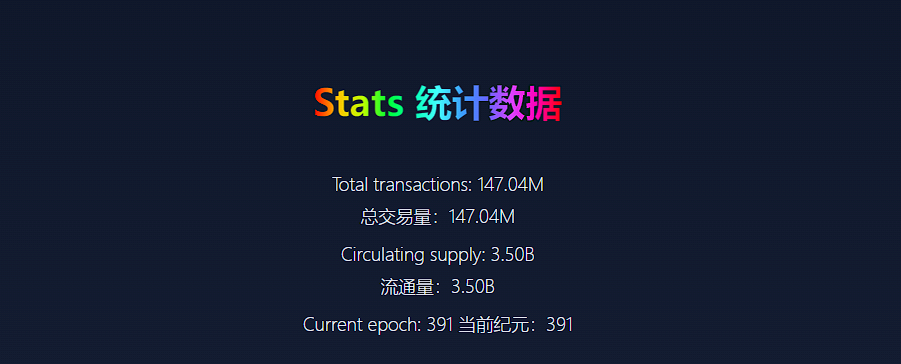
According to PANews' investigation, the surge in Sui’s data primarily stems from SPAM (an acronym meaning "Spamming Protocol for Airdrop Mining"), a transaction-volume farming project within its ecosystem. The project officially launched on May 2 and immediately generated 38 million transactions on its first day. As of May 8, SPAM had produced a total of 147 million transactions, contributing approximately $120,000 in fee revenue to the mainnet.
Beyond transaction volume, SPAM also significantly boosted Sui’s number of active addresses. On April 29, Sui had around 12,000 daily active addresses; by May 6, that figure had risen to 73,000.
Clearly, SPAM and the Sui Foundation are engaged in a mutually beneficial relationship. Initiated by Juzy, founder of Polymedia, SPAM received promotional support from Sui’s official Twitter account on May 5, which shared two posts introducing the project and drove significant traffic. In return, SPAM’s frequent transaction-spamming behavior dramatically inflated Sui’s transaction volume and TPS.
In subsequent discussions about surpassing 800+ TPS, Sui stated it could fully support the TPS demands required by SPAM.
Users Keep Losing Money Mining
However, in the SPAM mining frenzy, the biggest winners may only be Sui itself and RPC node operators.
According to PANews’ practical testing, participating in this mining activity is entirely unprofitable.
SPAM claims users can earn SPAM tokens on Sui through a mechanism that mints 1 billion SPAM tokens per day. Users simply send SUI transactions to earn SPAM—the more transactions sent, the more tokens earned. According to PANews statistics, since launch, SPAM has completed 147 million transactions and mined 3.5 billion tokens—an average of 23 SPAM tokens per transaction.
PANews analysis shows that mining rewards have consistently been lower than gas fee costs since the token’s launch. For miners, this means they’re merely helping boost Sui’s mainnet transaction volume and fees without any profit.

(Note: Since SPAM launched on May 5, prices from May 3–5 were calculated using the closing price on May 5.)
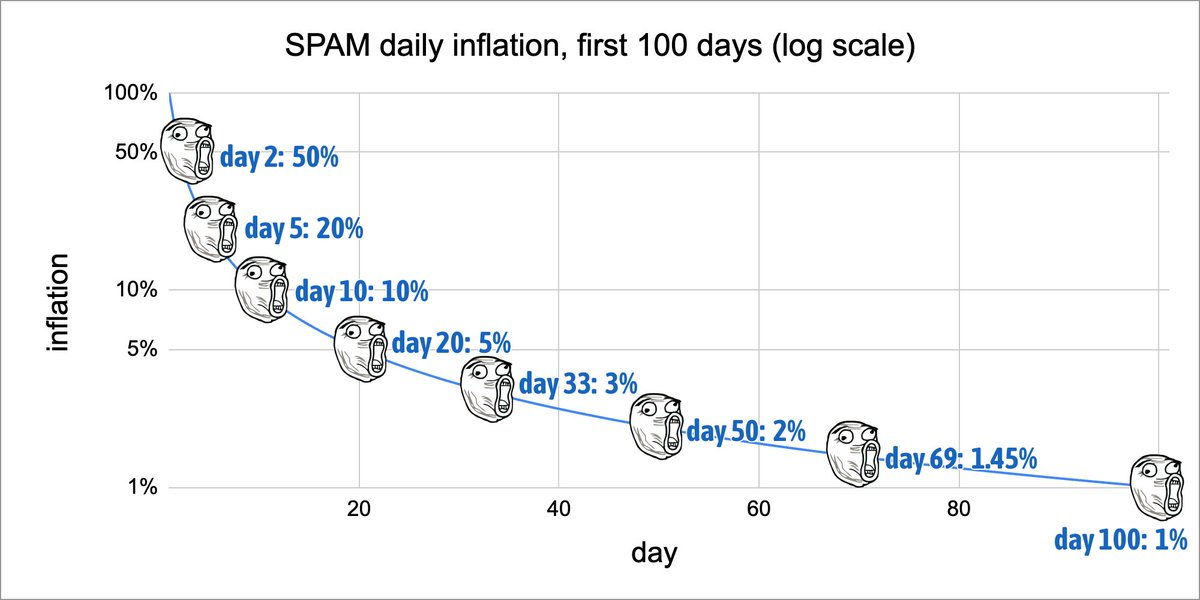
Due to SPAM’s issuance mechanism—adding 1 billion new tokens daily—many users believe this will cause massive inflation and drive prices down long-term. However, SPAM’s founder offered what can only be described as a statistical sleight-of-hand explanation: “Although SPAM supply increases daily, the amount added each day is fixed. On Day 10, there’s 10B supply with 1B minted (10% daily inflation). On Day 100, there’s 100B supply with 1B minted (1% daily inflation).” His argument is that while the total supply grows, the inflation rate actually decreases over time. Juzy even posted an inflation rate chart to illustrate this point.
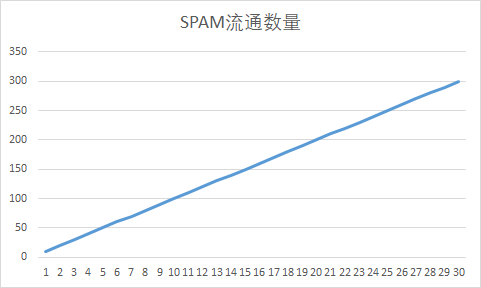
However, PANews created a chart based on actual inflation trends, which turns out to be exactly opposite to Juzy’s curve.
Interestingly, SPAM’s price chart perfectly aligns with Juzy’s inflation curve—steadily declining since launch, falling from a high of 0.0002113 to just 0.00001532—a maximum drop of 92.7%. Based on pricing as of May 7, its circulating market cap stands at only $63,700, with liquidity pool (LP) reserves totaling just $26,000.

Mining Project Falls Into One-Wave Traffic Trap
Of course, for blockchains, true measures of ecosystem vitality and technical capability go beyond just transaction count and TPS. As of May 7, Sui had issued 10,811 tokens. By comparison, Solana saw 13,642 new tokens created on May 5 alone. In terms of active users, Sui’s highest weekly active address count recently reached 73,000, whereas Solana consistently maintains over 800,000 weekly active addresses.
Regarding TVL, Solana currently holds around $4 billion, compared to Sui’s approximately $640 million. Across multiple metrics, Sui still lags behind Solana by nearly an order of magnitude.
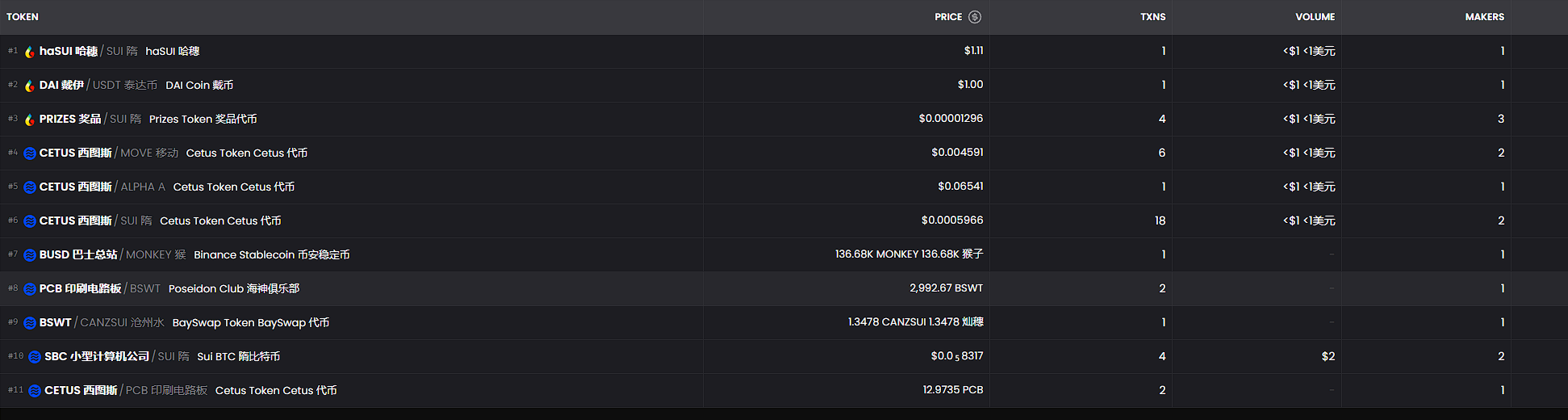
Within a 24-hour window (from 5:00 PM May 6 to 5:00 PM May 7), among 11 newly launched trading pairs on Sui, each pair saw only 1–2 participants. Clearly, despite SPAM’s viral success, it hasn’t catalyzed genuine ecosystem growth on Sui.
For the Sui Foundation, perhaps it’s time to consider supporting projects that are genuinely innovative and capable of sustainable, positive-feedback-driven development.
Join TechFlow official community to stay tuned
Telegram:https://t.me/TechFlowDaily
X (Twitter):https://x.com/TechFlowPost
X (Twitter) EN:https://x.com/BlockFlow_News
 PANews








