
Crypto Gaming Investment Review: Emerging from the Bear Market, with Cautious Optimism in the Primary Market
TechFlow Selected TechFlow Selected
Crypto Gaming Investment Review: Emerging from the Bear Market, with Cautious Optimism in the Primary Market
The industry is currently in a foundational phase aimed at enriching the Web3 gaming ecosystem.
 Navigating Web3 tides with focused insights
By Zen
In the first quarter just passed, as cryptocurrency prices rose, the primary market also gradually warmed up. According to PitchBook, the cryptocurrency and blockchain sector raised a total of $2.52 billion in Q1 2024, a 25% increase quarter-on-quarter, with investments mainly involving L1/L2, DeFi, AI, DePIN, and Web3 gaming. However, according to the Q1 2024 Blockchain Gaming Report jointly released by DappRadar and the Blockchain Game Alliance (BGA), investment in the Web3 gaming vertical has actually shown a downward trend. This reflects a correction following the inflated investment boom in the metaverse and gaming sectors during the pandemic—not only for Web3 gaming, but also for the traditional gaming industry.
Early Bull Market in the Primary Market: Cautious Yet Optimistic
The quarterly report on blockchain gaming noted that investor sentiment toward the Web3 and blockchain gaming space remains cautious yet optimistic. The sector raised $288 million in funding during the quarter, a significant decline compared to previous quarters. The report attributes this caution to the challenging conditions over the past year, with many companies waiting to see outcomes from early-stage investments. Moreover, investment focus has primarily shifted toward Web3 gaming and infrastructure, indicating the industry is currently in a foundational phase aimed at enriching the Web3 gaming ecosystem.
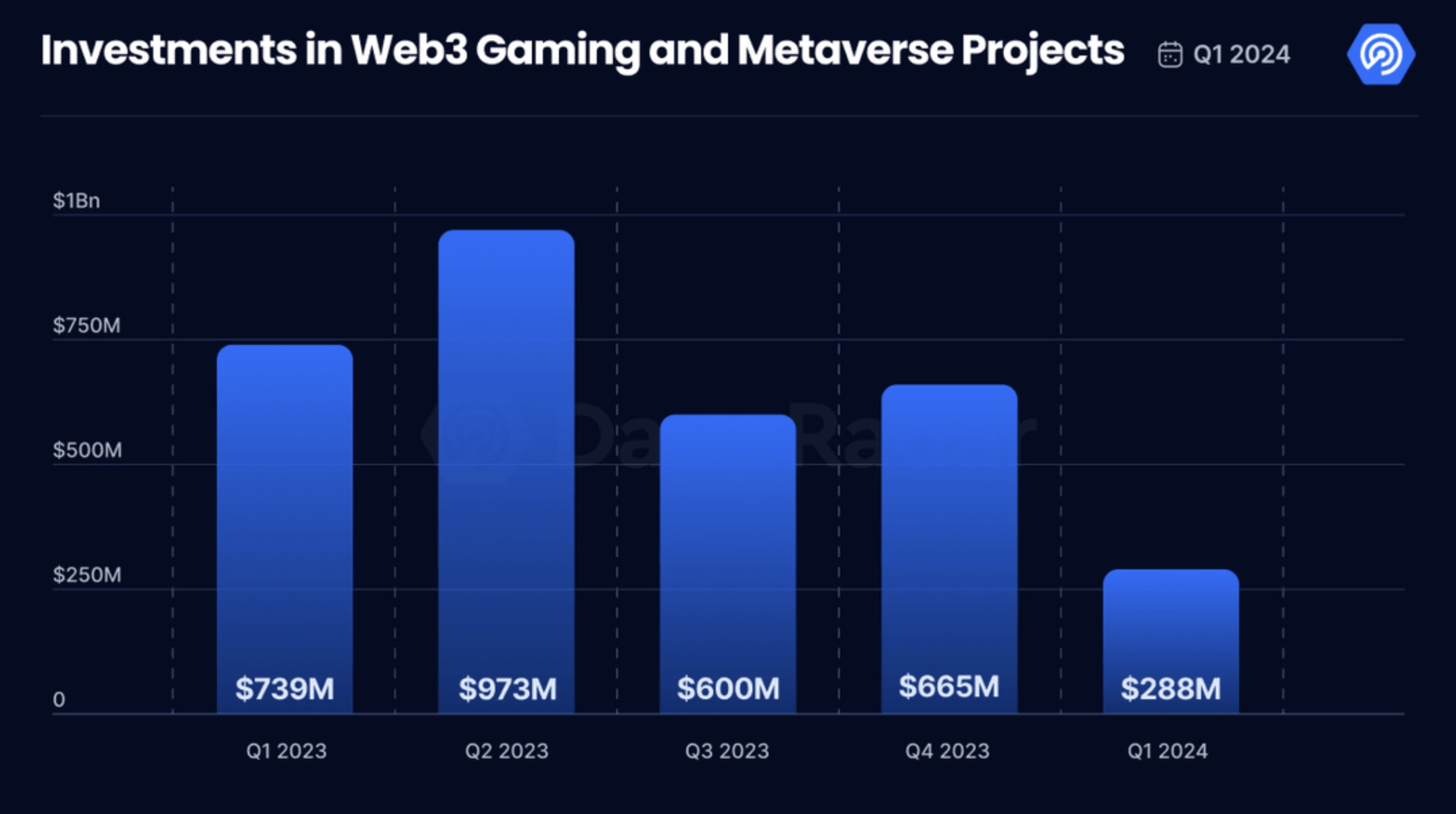
Considering Bitkraft Ventures announced a $275 million gaming fund in early April, and PANews' "Funding Weekly" reported nearly $40 million raised in the first week of the month alone within the blockchain gaming sector, overall performance in the primary market for Web3 gaming since the beginning of the year has remained roughly on par with the second half of last year, showing signs of an upward surge in the past month.
In March, large-scale fundraising rounds by the NFT card game Parallel and AAA game developer Gunzilla Games stood out. Parallel secured $35 million in a new funding round at the end of the month, with participation from Solana Ventures and Amber Group. In the previous cycle, Parallel raised $50 million from Paradigm at a $500 million valuation back in October 2021. The studio’s current strategy focuses on expanding its player base through initiatives such as the Parallel Ambassador Program and leveraging influential partnerships. Notably, endorsements from well-known Hearthstone streamers like Thijs recently sparked community backlash. Decrypt commented: “Much of the hostility from traditional gaming communities seems rooted in crypto games attempting to compete with their favorite ‘Web2’ games, along with the skepticism that follows.”
Gunzilla Games also raised $30 million at the end of the month in a round led by Avalanche Blizzard Fund and CoinFund. The company previously secured $46 million in August 2022, led by Republic Capital and joined by Griffin Gaming Partners, Animoca Brands, Jump Crypto, CoinFund, and Shima Capital. Additionally, Gunzilla had already raised $25 million at its founding in 2020, bringing its total funding to over $100 million. Gunzilla is set to launch its battle royale game Off the Grid, a free-to-play third-person shooter available on Sony PlayStation, Microsoft Xbox, and PC platforms.
These investments highlight a strategic shift in the blockchain gaming world toward creating immersive, player-centric experiences. As the industry continues its post-challenge recovery phase, building and enhancing Web3 gaming and infrastructure remain top priorities, laying the groundwork for future growth and innovation.
However, project failures and bankruptcies are common in the gaming industry. According to a survey by game services company SuperScale of over 500 mobile game developers, 83% of mobile game projects fail within three years, nearly half (47%) die within 12 months of launch, and 17% have lifespans shorter than six months. Web3 gaming, currently a niche market, faces similar challenges. According to CoinGecko, out of 2,817 Web3 games launched between 2018 and 2023, 2,127 have already failed—representing 75.5%.
Post-Pandemic Investment Correction: The Gaming Industry’s Funding Market Enters a Downturn
In 2023, the global gaming industry’s investment and financing market performed weakly. According to Crunchbase data, investments across all stages—from seed to growth—hit multi-year lows. No digital game company received over $100 million in late-stage venture capital throughout the year, large pre-IPO funding rounds disappeared, and early-stage financing remained lukewarm. Based on Crunchbase’s analysis of global gaming market investments over the past six years, total funds raised in 2023 dropped 79% year-on-year. By region, the U.S. market saw an even steeper decline of 86%.
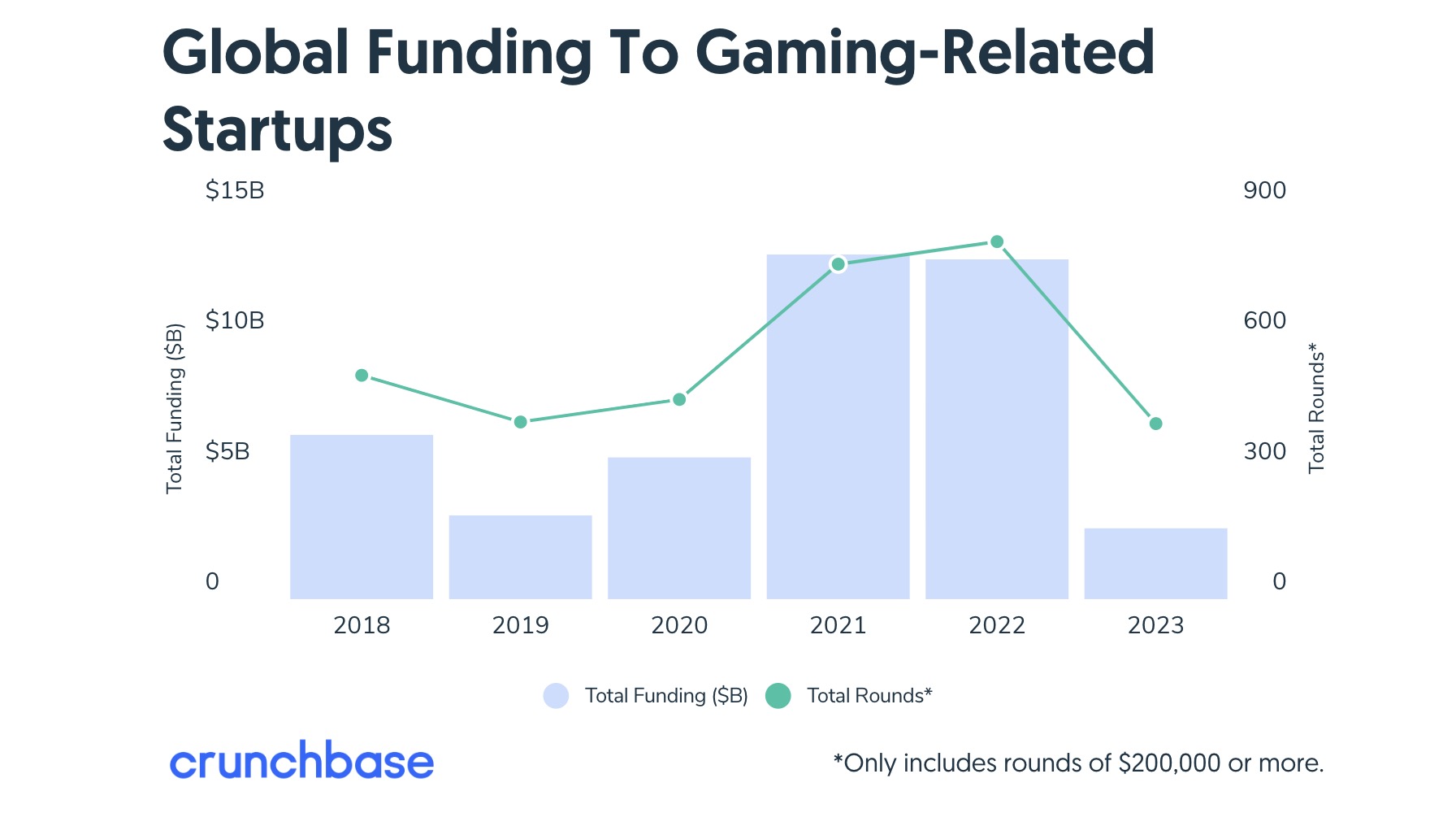
In specific figures, according to game investment analytics firm Investgame, venture and private investment totaled $2.7 billion in 2023 across 403 funding events. Compared to $10.7 billion raised in 2022, this represents a 75% drop. Notably, however, the number of funding events did not decrease as sharply—declining only 21%, from 551 to 403. This caused the average deal size to shrink by two-thirds, falling from $19.4 million in 2022 to $6.7 million in 2023. InvestGame describes this market slump as a correction following the inflated funding activity during the pandemic. While the number of deals remains above pre-pandemic levels, fewer late-stage financings mean total capital raised cannot rebound.
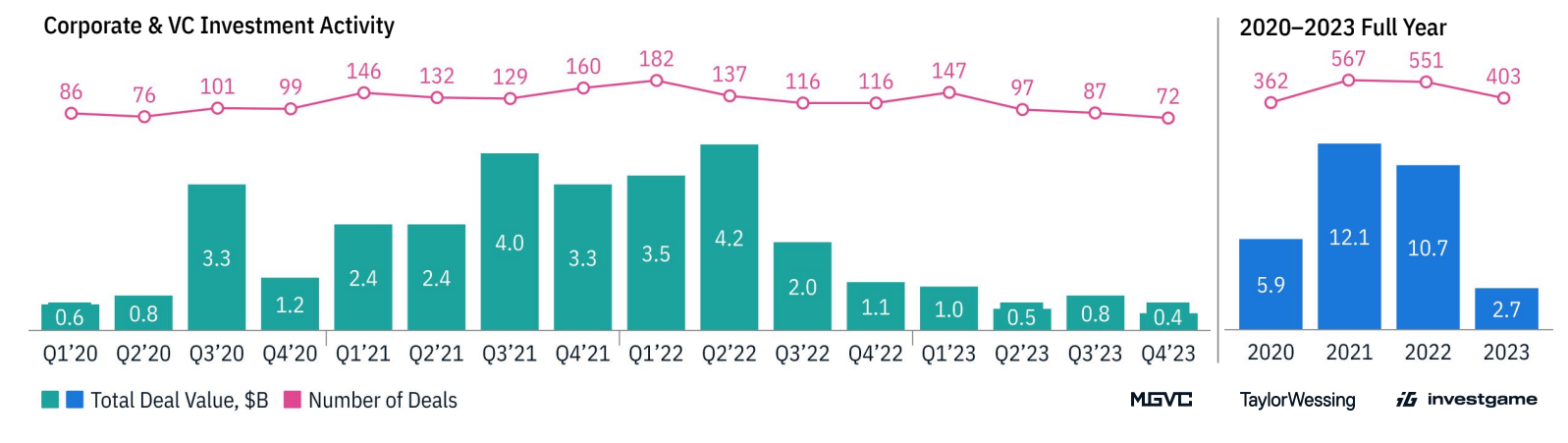
Joanna Glasner, business and technology columnist at Crunchbase News, believes the chill in the primary market may stem from changing consumer habits. During the peak of the global pandemic, homebound consumers spent more time and money on video games. Today, spending is increasingly shifting toward activities outside the home. She notes that declines in adjacent categories like Web3 and the metaverse have also spilled over into gaming. Integrating plug-in products such as NFTs into games or metaverse experiences was popular in 2021 and 2022 but is now far less trendy.
Josh Chapman, co-founder and managing partner at game-focused VC Konvoy Ventures, believes the gaming boom triggered by the pandemic attracted speculative investors and predicts the industry will return to normal growth in 2024. Chapman adds that the downturn in the Web3 gaming sector in 2023 contributed significantly to the overall decline in deal volume: “A lot of the Web3 and crypto tech in gaming disappeared last year. With few Web3 gaming companies entering the market, transaction flow declined overall. It's a sub-sector of gaming; other areas have maintained relatively strong momentum.”
Notably, Konvoy Ventures announced a $150 million new fund in July 2022, stating that part of the capital would be allocated to blockchain and crypto-related gaming. Prior to that, Konvoy had invested in Sky Mavis, the developer of Axie Infinity, NFT sports game Genopets, and NFT avatar platform Ready Player Me. As the Web3 gaming sector entered a bear market alongside the broader crypto industry, even star projects like Axie Infinity fell to lows, and Konvoy appears to have paused further investment in the space.
Web3 Gaming Funding Returns to Square One
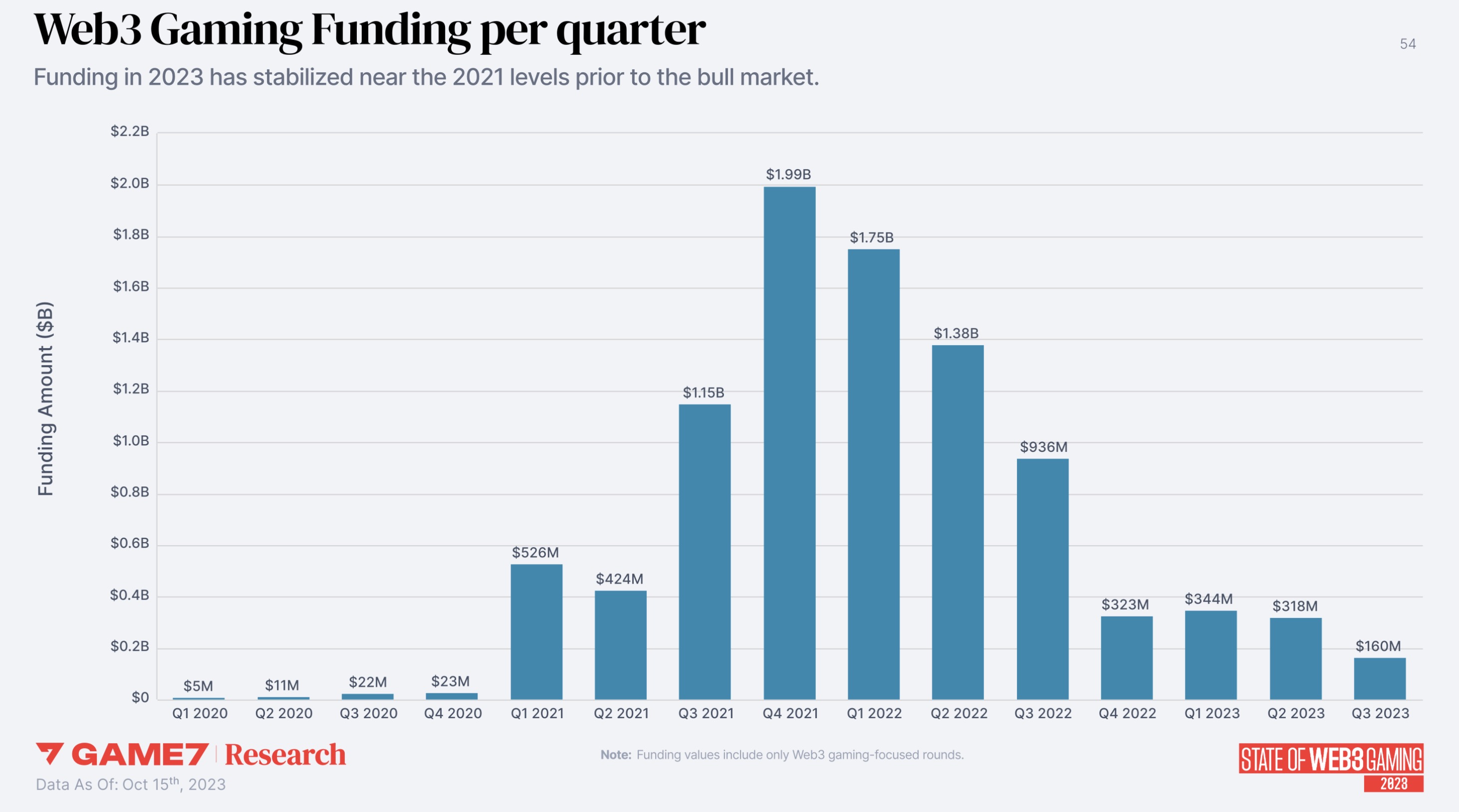
Against the backdrop of a sluggish overall gaming market and a prolonged crypto winter, Web3 gaming investment showed significant weakness in 2023. According to game7, a decentralized organization focused on blockchain gaming, the Web3 gaming sector experienced continuous decline across the first three quarters of 2023, dropping from $344 million in Q1 to $160 million in Q3—a halving of quarterly funding—and stabilizing below pre-bull-run levels seen in 2021.
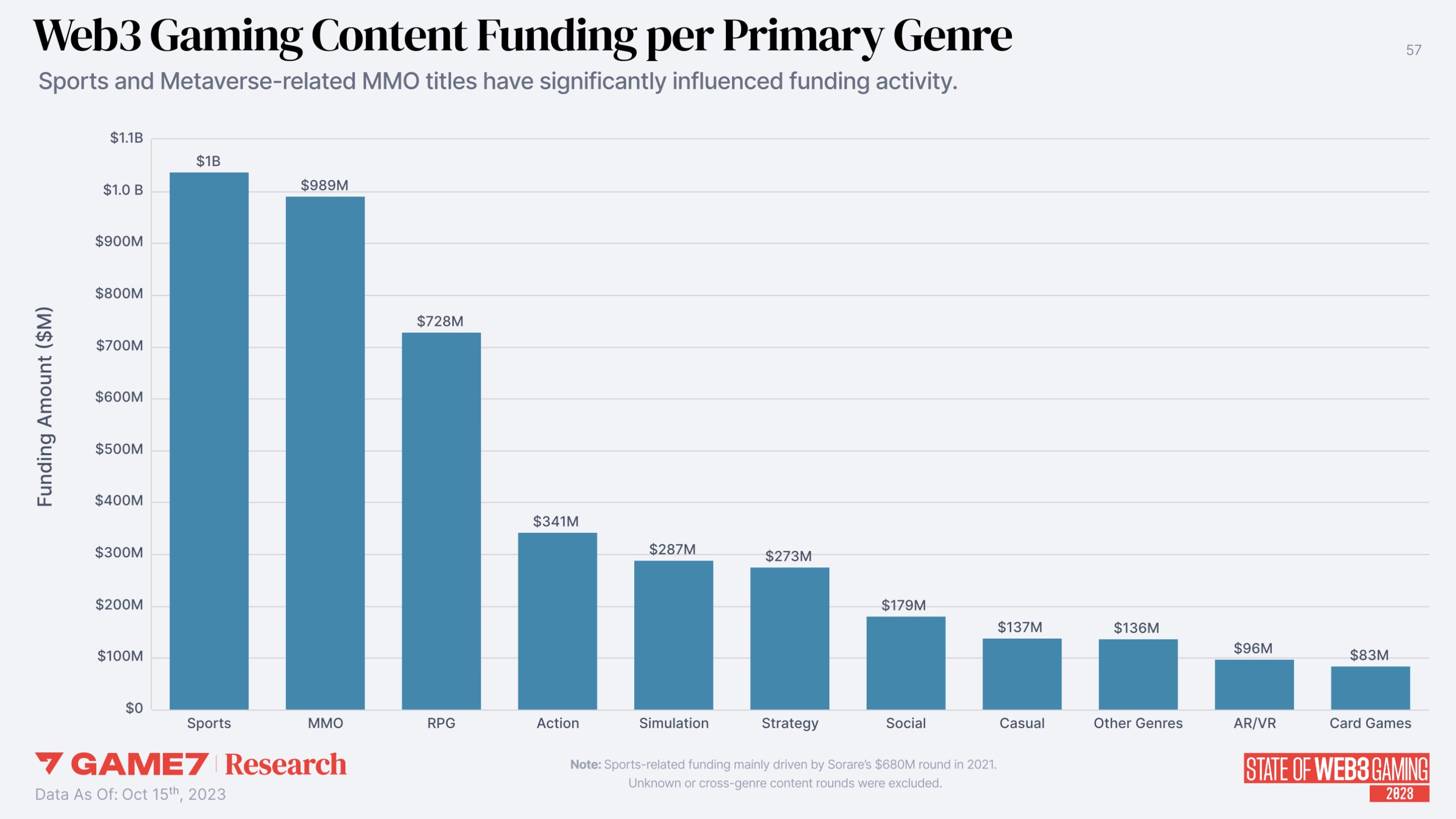
Furthermore, after categorizing games by genre, game7 found that sports, MMO (massively multiplayer online), and RPG (role-playing games) consistently attracted the most funding in recent years, ranking first, second, and third respectively and significantly outpacing other genres. It should be noted that Sorare, the football-based NFT game, accounted for nearly 70% of funding in the sports category after raising $680 million in a Series B round at a $4.3 billion valuation in 2021. Action, simulation, and strategy games have also received moderate market attention.
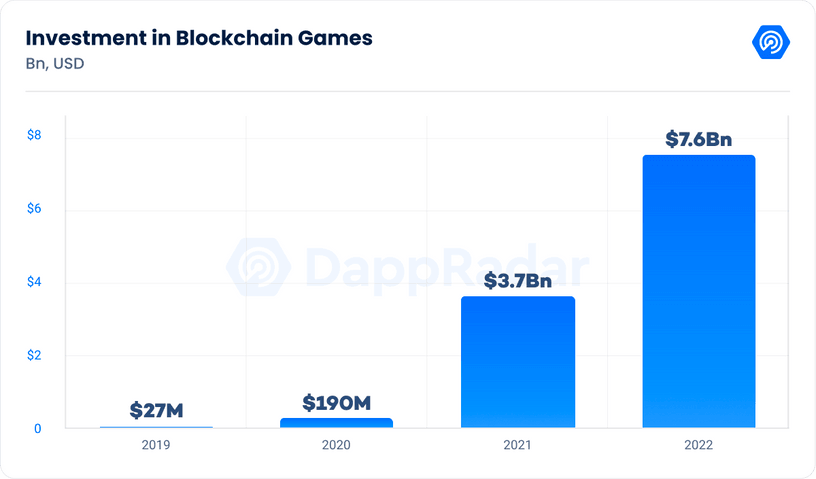
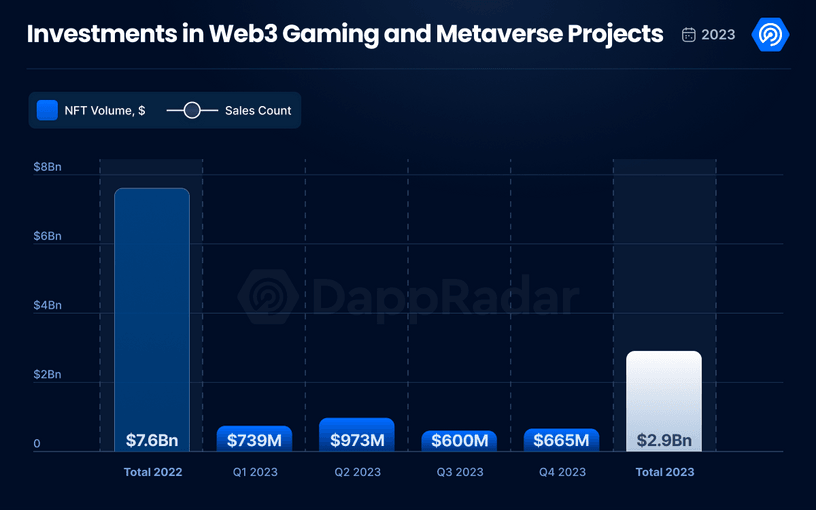
Although there are slight discrepancies in data, the report jointly published by DappRadar and the Blockchain Game Alliance (BGA) similarly reflects the primary market’s downturn in 2023. The report includes capital raised by VCs specifically focused on gaming and actively investing in Web3 gaming. According to the report, $2.9 billion flowed into the Web3 gaming and metaverse industries in 2023, down 61% from $7.6 billion in 2022 and also below the $3.7 billion recorded in 2021.
The report points out that within capital flowing into Web3 gaming and the metaverse, funding is roughly balanced among three pillars: game infrastructure, games and metaverse applications, and gaming investment firms. This distribution indicates strong focus on core aspects of blockchain gaming and metaverse development, particularly in gameplay experience and supporting infrastructure. The report interprets this as a positive signal, suggesting the industry is concentrating efforts on delivering high-quality games. This quality-over-quantity strategy aims to elevate standards and public perception of blockchain gaming, paving the way for broader adoption and long-term market success.
Join TechFlow official community to stay tuned
Telegram:https://t.me/TechFlowDaily
X (Twitter):https://x.com/TechFlowPost
X (Twitter) EN:https://x.com/BlockFlow_News
 PANews