
After the hype ends, the KOL becomes the scapegoat
TechFlow Selected TechFlow Selected
After the hype ends, the KOL becomes the scapegoat
As the market cools, "KOL sell-off" has become the excuse for several new AI projects to exit scam.
 Navigating Web3 tides with focused insights
By Joyce
Recently, the AI sector has cooled down, with most tokens experiencing significant pullbacks. Several AI meme projects have met their end amid this downturn. While the community generally understands that many newly launched AI projects are driven by MEME-style speculation, few expected project teams to openly admit it. One day they update project progress; the next, they announce a rug pull—most commonly blaming it on excessive KOL selling: "Too many KOLs dumped, couldn't sustain the price."
Earlier this week, Tensor Space—an AI project already down nearly 80% from its peak—delivered the final blow to its token TPU’s collapse with a tweet.
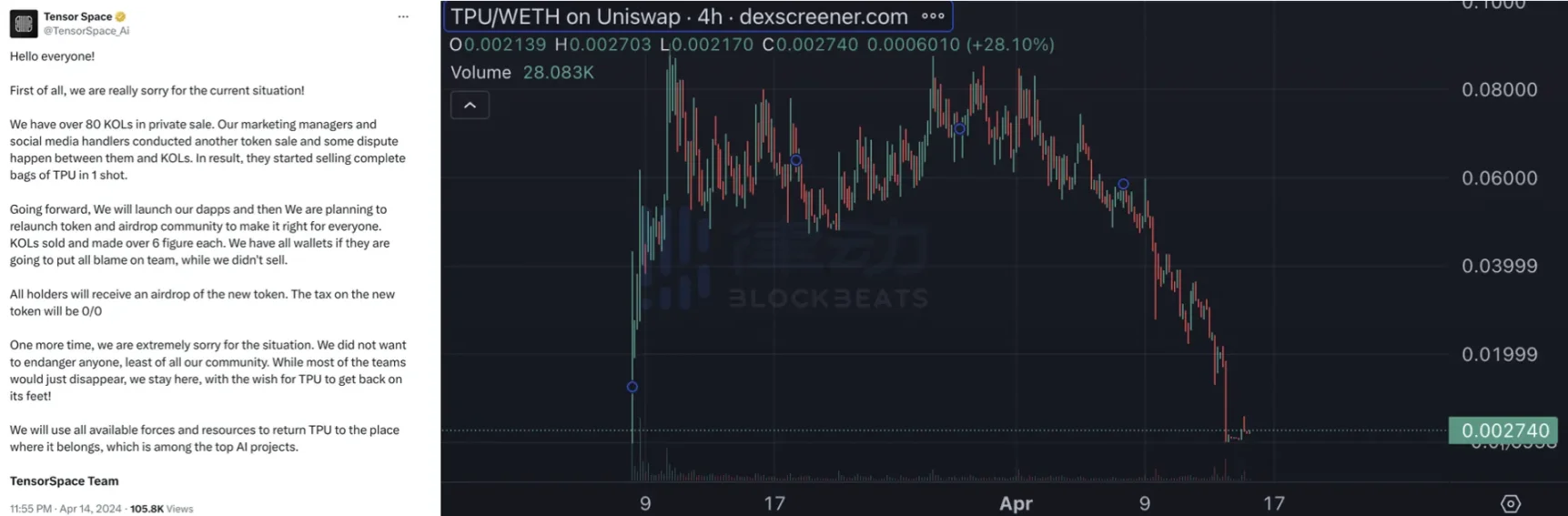
The tweet read: "Over 80 KOLs participated in our private token sale. Recently, our marketing manager and social media administrator conducted another token sale, but disputes arose between them and the KOLs. As a result, these KOLs began dumping large amounts of TPU tokens all at once."
From the token's price chart, TPU launched at $0.002. Assuming KOLs held tokens at listing price (in reality likely lower), they could have realized over 26x gains within four days. Tensor Space stated in the tweet: "These influencers have already earned six-figure profits from selling tokens."
Tensor Space maintained a relatively sincere tone, announcing plans to launch a decentralized application and reissue its token. All TPU holders would receive new tokens with zero transaction tax. "We’re truly sorry for this situation. While most teams might choose to disappear, we’ve decided to stay and hope TPU can rise again!"
Within three hours of the tweet, TPU plunged over 80%.
As BlockBeats previously noted in “20x Gains in a Weekend—Is the Crypto AI Summer Here?” recent AI projects have been flooded with collaboration requests from alpha-seeking KOLs in their comment sections. Early visibility for these projects heavily relies on promotional support from KOLs. Now it appears that KOLs don’t just help launch projects—they can also swiftly terminate them.
Scalia, which brands itself as an AI, DePIN, and RWA project while also attempting to build an L1 chain, surged 37x in one month before rapidly entering a death spiral, losing over 90% of its value in the past two weeks. Earlier this week, Scalia’s official Twitter announced it had repurchased $100,000 worth of tokens to support price growth. However, such measures proved negligible against the market cap shrinking from $70 million to just $3 million.
After failing to reverse the downward trend, the Scalia team published a detailed statement yesterday, subtly attributing the collapse primarily to KOL dumping.
"Many KOLs received tokens early in the Scalia project as rewards for long-term support. Unfortunately, believing other projects were scams, they sold off their holdings in those projects—and simultaneously dumped their Scalia tokens. Given that Scalia remains an emerging capital market with insufficient liquidity, these actions had a substantial impact."
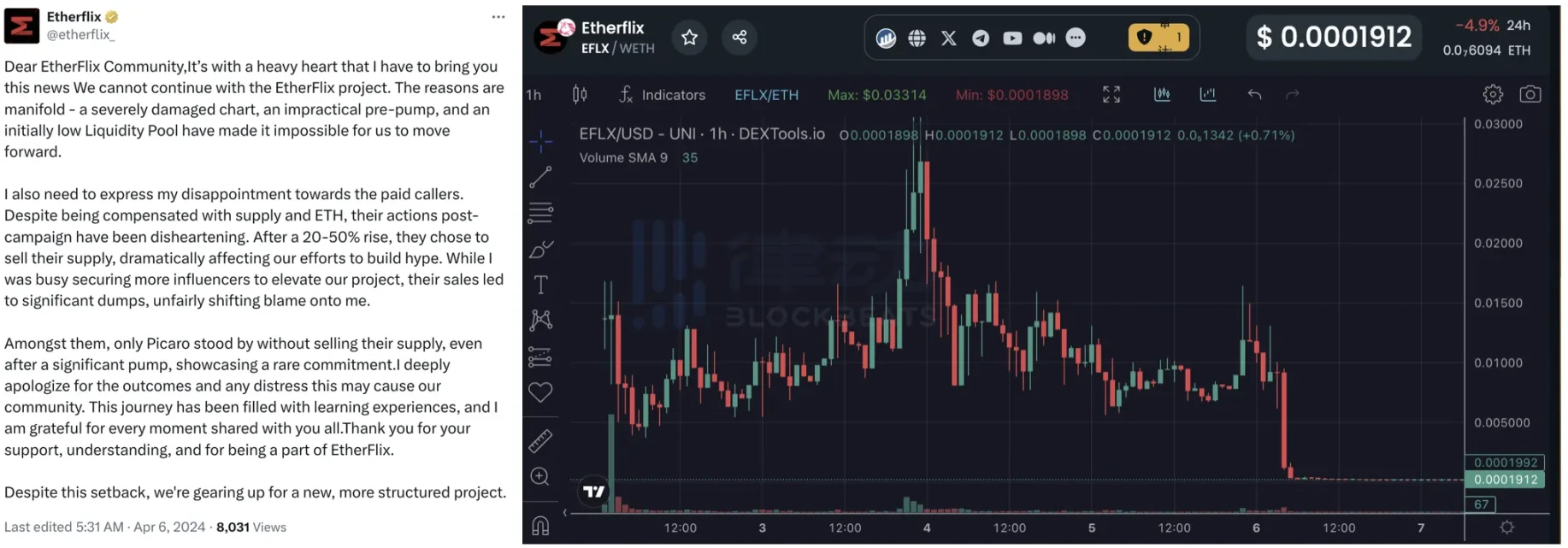
Two weeks ago, another AI streaming project, EtherFlix, cited KOL selling as the reason for shutting down in its “farewell statement.”
"I must express my disappointment toward the paid promotional KOLs. Despite having received tokens and the ETH payments, their subsequent actions were disheartening. After prices rose 20–50%, they chose to sell their tokens, severely undermining our efforts to boost project momentum. While we were busy seeking more influencers to promote the project, their selling triggered further dumps by other holders, unfairly shifting blame onto me."
Just one day before this tweet, EtherFlix was still hyping its product: "Etherflix is coming soon—we will bring transformation to AI creators." After EFLIX went to zero, no endorsements or mentions of the EFLIX token remain searchable on Twitter.
The "soft rug pulls" of several projects have triggered sharp declines across other new AI tokens. For affected projects, this provides a convenient excuse for their downturn. Yesterday, zKML—a newly launched AI-adjacent project—tweeted: "Shameless developers (peers) have caused panic for many projects, including zKML." Its token ZKML has dropped over 90% from its peak.
Who is to blame for these crashes? On-chain investigator ZachXBT tweeted recently: "Unfollow and block these KOLs who pitch you worthless projects." Among the four KOLs called out, three have since changed their names and continue posting new content.
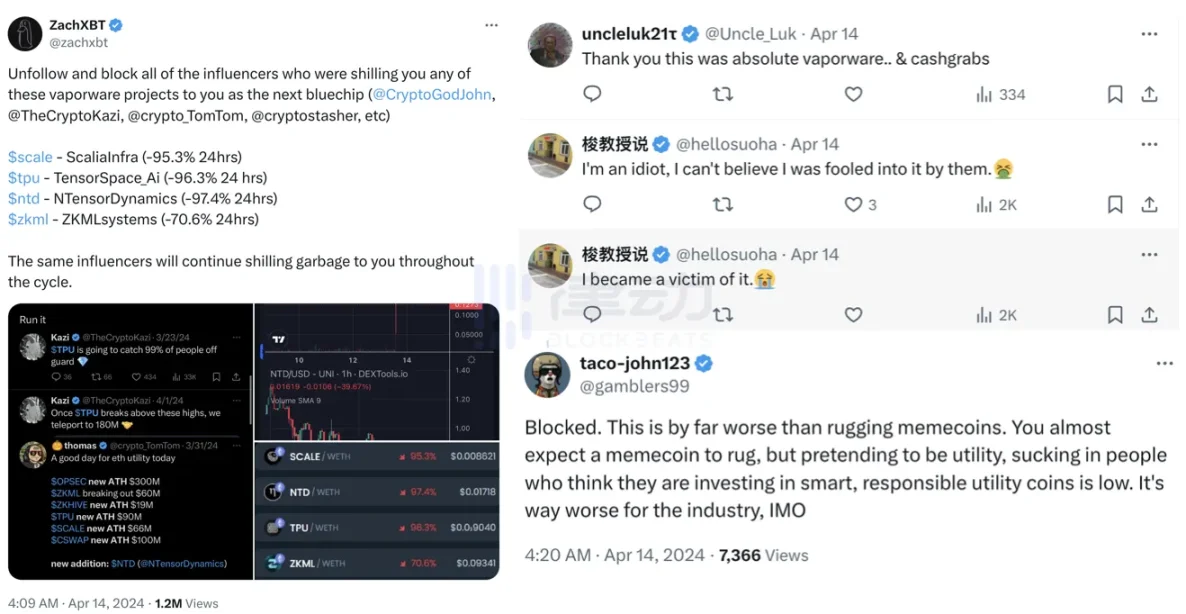
Regardless of what transpired between KOLs and project teams—from mutual cooperation to betrayal—the real victims are always investors who put in real money. As one comment pointed out, you might even prefer a straightforward meme coin team rug pull. Projects pretending to build something legitimate are worse—they lure in those who believe they’re investing in alpha, making the damage far more insidious than a simple meme rug.
AI is widely seen as this year’s “wealth code.” Given the technical complexity of AI projects and the challenges of integrating them with crypto, small-time teams now have ample opportunity to absorb liquidity from investors who lack AI expertise but crave alpha returns. That “KOL dumping” has become an acceptable public justification for an “AI” project’s failure may simply expose the brutal PvP nature of crypto investing.
Join TechFlow official community to stay tuned
Telegram:https://t.me/TechFlowDaily
X (Twitter):https://x.com/TechFlowPost
X (Twitter) EN:https://x.com/BlockFlow_News
 BlockBeats