Don't Call It 'Cryptocurrency': How Blockchain and NFT Projects Are Rebranding Their Image
TechFlow Selected TechFlow Selected
Don't Call It 'Cryptocurrency': How Blockchain and NFT Projects Are Rebranding Their Image
For ordinary people, Web3 is like the term "HTML."
 Navigating Web3 tides with focused insights
Text by: Stephen Graves
Translated by: Lulu Lu
As the bear market sets in, cryptocurrency projects are moving away from terms like NFTs and Web3. Here's how branding experts think they should respond to this challenge.
It’s a technology that dares not speak its name.
Looking for NFTs on Reddit or Instagram? You're more likely to find "digital collectibles" than NFTs on these platforms. Remember when blockchain was all the rage? Bitcoin mining company Riot Blockchain recently rebranded itself as Riot Platforms. Brynly Llyr, head of blockchain and digital assets at the World Economic Forum, has even suggested a full industry-wide rebranding around “decentralized systems” instead of crypto.
NBA All-Star Baron Davis says we absolutely don’t want to call them NFTs right now. His image and video rights management platform, SLiC Images, avoids mentioning the controversial technology altogether.
Crypto and its associated jargon have become toxic words. Once upon a time, simply adding the word "blockchain" to your company name could boost its valuation. Now, however, crypto, Web3, NFTs, and other buzzwords evoking a brave new world have, in Charlie Munger’s words, become poison pills.
Even the term "metaverse"—originally meant to define the ultimate evolution of decentralized networks—has been co-opted by Mark Zuckerberg in an attempt to reposition Facebook (with mixed results).
Katie Baron, retail director at trend intelligence firm Stylus, believes that while crypto remains a favorite among younger generations who are clearly cautious about unconventional investments, the industry needs “careful refocusing.”
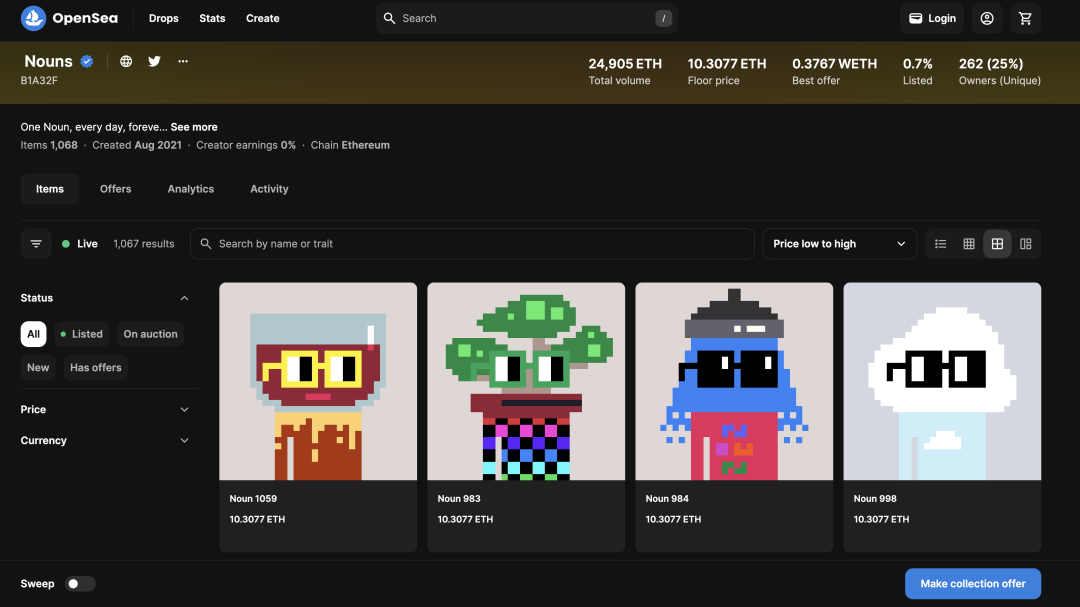
Image source: OpenSea
She added: “I do think these terms have become somewhat toxic, especially cryptocurrency and NFTs, partly because the initial hype was framed as synonymous with a radically democratized new world where anyone could get rich investing in or creating digital assets.”
Deacon Raus, Global Head of Innovation Services at advertising agency Ogilvy, believes terms like “cryptocurrency” and “Web3” have become toxic not only due to bad actors in the space but also because of “poor product-market fit.”
He said: “Nobody has connected Web3 with the general public or made Web3 accessible. Nobody has really taken the time to understand how Web3 solves problems for the mass market or improves consumers’ lives.”
Raus said the past few years of crypto “gold rush” failed to resonate with mainstream audiences because it didn’t address issues that your neighbors, family, friends, gym buddies, or dog-walking acquaintances could understand or relate to.
According to Raus, brands and businesses “didn’t conduct due diligence in their investments,” meaning they lacked long-term plans to support their blockchain investments, further complicating matters. “So while headlines boasted ‘world firsts,’ they didn’t explain to stakeholders where their money went or what impact it had—meaning growth and sustained investment—a good thing turning bad—is a very tricky issue.”
In particular, NFTs, when not mocked as environmental hazards (an issue later resolved after Ethereum switched to proof-of-stake), were associated with the less savory, quick-rich-get schemes surrounding cryptocurrencies.
National Geographic abandoned its NFT plans after widespread criticism on social media, while the gaming industry struggled amid continuous fan backlash, forcing publishers of games like Ant Nation and S.T.A.L.K.E.R. 2 to drop plans to integrate NFTs.
Should Rebranding Happen?
So far, renaming NFTs as “digital collectibles” seems to be working; millions of Reddit users snapped up their “collectible avatars.”
Alexander Zhydenko, founder of NFT Paris, said: “Everyone says ‘digital collectibles’ works. Is it better branding than NFTs? I don’t know.”
Zhydenko added: “Every six months people find a new word. NFTs were once hot, then came metaverse. But now Facebook is rebranding itself as Meta, so we need to change too.” He believes the crypto space needs to wait for “things to calm down before NFTs can go mainstream—even if most people don’t know what an NFT actually is.”
So should all crypto companies consider rebranding to avoid using potentially offensive terms in their names?
Katie Baron thinks it’s definitely worth considering: “I’d suggest either burying it in [company] communications or dropping it altogether. Many of the most compelling metaverse-building companies don’t include it—look at Journee or AnamXR. Especially blockchain—naming a company after a shared immutable ledger isn’t exactly appealing!”
Yet some major players in the gaming industry are ignoring the backlash and pushing forward; the NFT game Blankos Block Party recently launched on the Epic Games Store, and Square Enix, publisher of Final Fantasy, remains committed to blockchain, launching the blockchain-based NFT game Symbiogenesis on Polygon in February 2023.
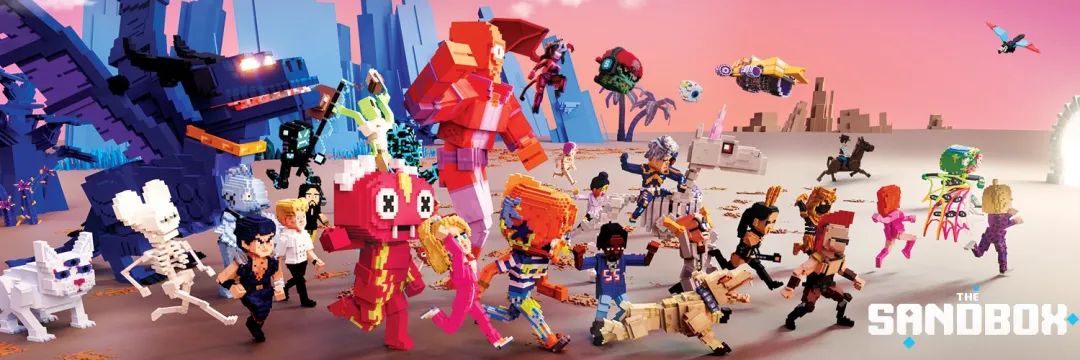
Ubisoft, publisher of Assassin’s Creed, is increasing its blockchain investments with no signs of stopping. Just this week, Ubisoft launched NFTs of its popular “Raving Rabbids” series within the metaverse game The Sandbox. In a 2021 interview, Ubisoft’s blockchain technology director Didier Genevois said: “We understand why negative sentiment exists around this technology, and we need to consider those factors at every step of our journey.”
He described the company’s blockchain push as an experiment to “understand how the value proposition of decentralization is received and embraced by our players.”
Pressing Onward
In the long run, Martin Raymond, co-founder of The Future Laboratory, said the names we give to technologies ultimately won’t matter.
“I suspect much of what we’re seeing now is just bias against the new,” Raymond said. “I think this happens in every innovation cycle or technological wave; look back at biotech—it was seen as Frankenstein’s monster the first time around, and the next time it might be saving the planet.”
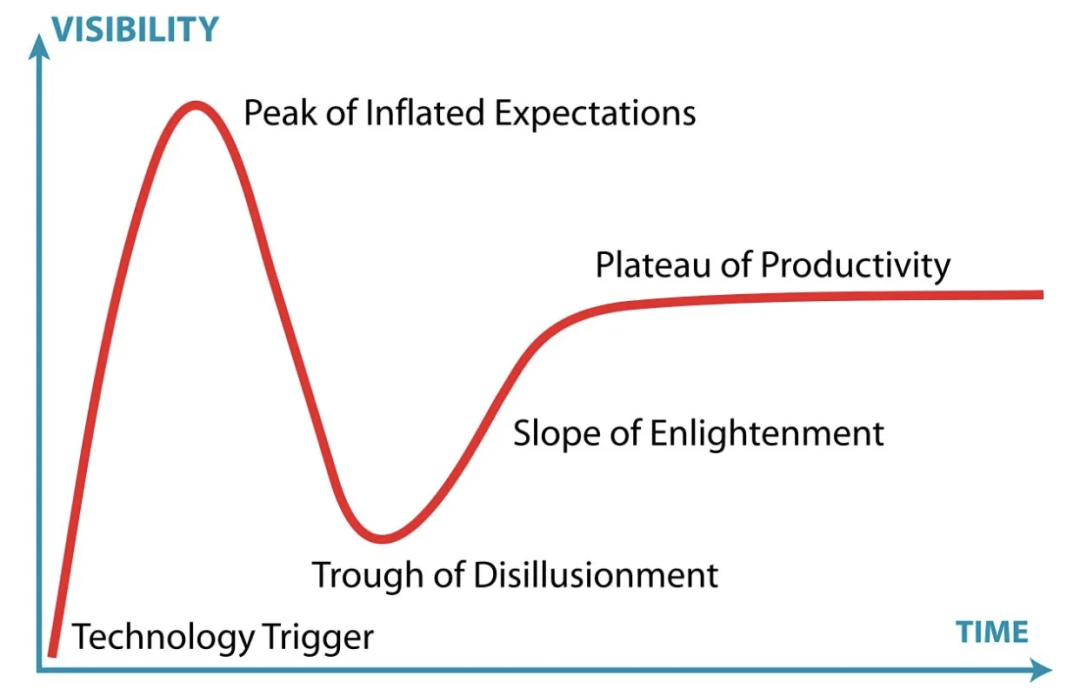
Image source: Wikipedia
The Gartner Hype Cycle is a commonly used model for measuring the adoption of new technologies.
Raymond believes the terminology used in Web3 doesn’t necessarily need renaming. “I think they just need to shed their negative connotations,” he said. That task falls to advocates using the technology, journalists covering it, and financial and banking institutions trying to leverage it.
Raus agrees. “To the average person, Web3 is like the term ‘HTML,’” he said. “It’s a crucial technological advancement, but do we need to know what Web3 means? Just like most people don’t need to know what HTML means.”
Users don’t care whether a tool is an app, a decentralized application (dapp), an NFT, a smart contract, or an IoT system.
“They care about the benefits it brings,” he said.
Join TechFlow official community to stay tuned
Telegram:https://t.me/TechFlowDaily
X (Twitter):https://x.com/TechFlowPost
X (Twitter) EN:https://x.com/BlockFlow_News