900 million users, valued at $30 billion, the "dark version of WeChat" decides to go public
TechFlow Selected TechFlow Selected
900 million users, valued at $30 billion, the "dark version of WeChat" decides to go public
Fear not the official, but fear the supervisor.
 Navigating Web3 tides with focused insights
Author: Tang Yitao
Editor: Jing Yu
Source: GeekPark
Since 2017, Pavel Durov, the founder of Telegram, had not given any public interviews—until recently, when this reclusive billionaire sat down with the UK's Financial Times. In doing so, he sent a clear signal to the world: Telegram is preparing for an IPO.
According to Durov himself, after 11 years of operation and serving 900 million users globally, Telegram is now valued at approximately $30 billion.
As a globally recognized platform and a hidden tech giant seeking to go public, Telegram stands out as an anomaly.
It is frequently mentioned, yet little is known about its internal operations; it has only around 50 core employees but supports 900 million monthly active users; for most of its existence, Telegram relied heavily on funding from its founder Durov, showing almost no commercial ambition until just two years ago when monetization efforts began; it positions itself as a champion of free speech and resistance against authoritarianism, conducting almost no content moderation except during major public controversies.
In nearly every respect, Telegram does not resemble a "normal" commercial company. To understand this abnormality, one must first understand VK.
01 Without VK, There Would Be No Telegram

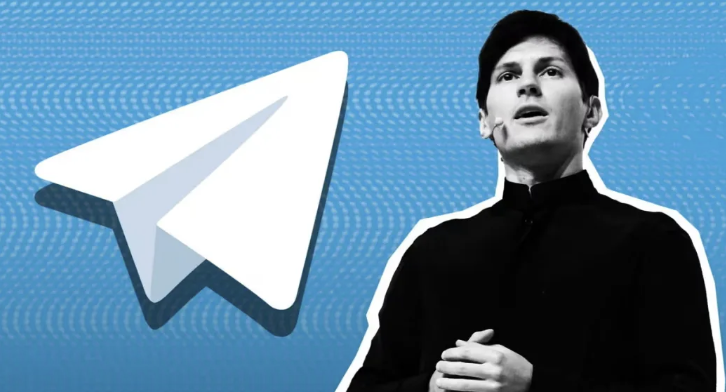
Pavel Durov | Image source: Wired
Durov is often called the "Zuckerberg of Russia," a nickname stemming from his first major venture, VK. Launched in 2006 as a Facebook clone, VK rapidly gained traction in Russia’s large, unified market. By 2010, it had surpassed 100 million registered users.
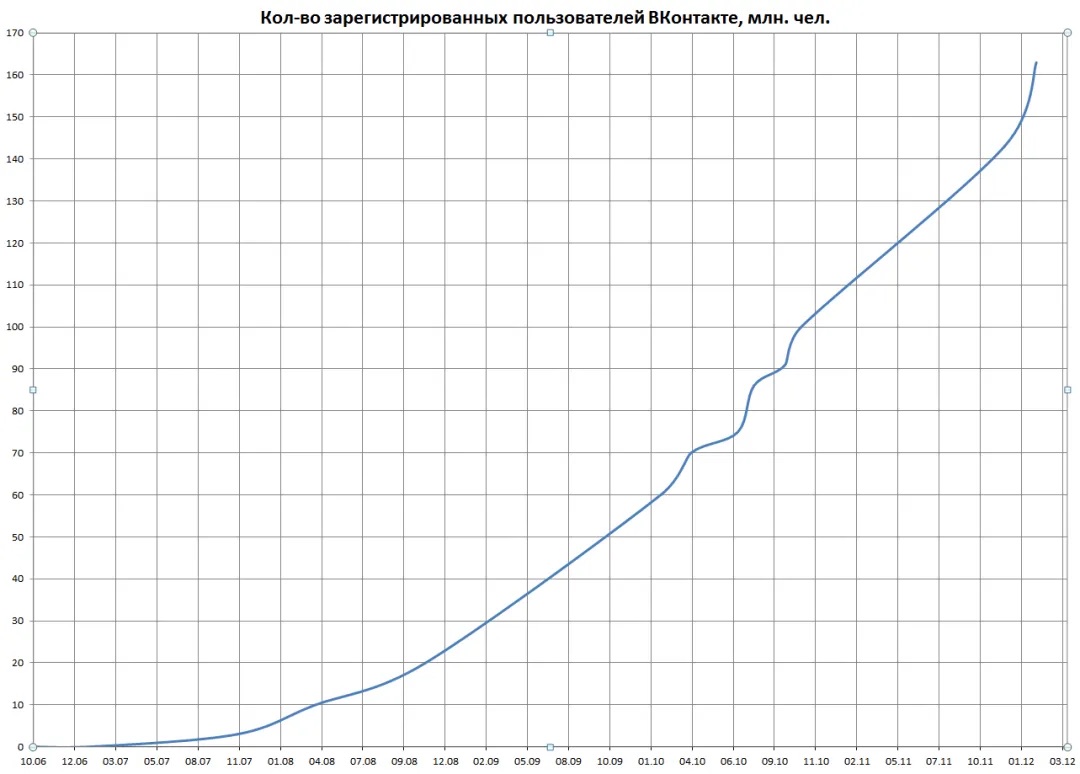
VK registered users between 2006–2012 | Image source: Wikipedia
Today, VK no longer belongs to Durov. The story of how he left both VK and Russia remains shrouded in controversy, though it is closely tied to VK’s immense social influence. A key backdrop was Russia’s disputed 2011 parliamentary elections, in which Putin’s United Russia party dominated, sparking widespread protests.
The protests unfolded not only in city squares but also on VK. The FSB—the successor to the KGB—pressured VK to shut down opposition groups. Durov responded by publicly posting the FSB’s letter on Twitter, along with a photo of a husky in a blue hoodie sticking out its tongue.

Image source: twipic
This clash with the Kremlin boosted Durov’s public image, casting him as a hero to some. However, his relationship with Russian authorities wasn’t purely adversarial. According to Russia’s Novaya Gazeta, Durov routinely provided officials with data on thousands of users—including IP addresses, phone numbers, and other identifying information.
Around the same time, Durov became involved in a hit-and-run incident, while Russian police began raiding VK’s offices. Soon after, reports emerged that VK’s two other co-founders had sold their stakes to United Capital Partners, a Kremlin-linked investment firm. Durov fled to the U.S., where he began building a new social network.
Then, on August 14, 2013, an app with a blue paper plane icon appeared on iTunes—Telegram. In a New York Times interview, Durov said the idea came after a Russian special forces unit raided his apartment just as he was about to call his brother: “I realized I had no secure way to communicate with him. That’s how Telegram began.”
02 The 'Notorious' Commitment to Privacy
Durov’s experience at VK profoundly shaped Telegram’s ethos. At least outwardly, Telegram has always projected an image of “fighting to the death” to protect user data. In a 2014 New York Times interview, Durov reiterated that Telegram was inspired by the 2011 raid on his home by Russian special forces: “I realized I had no secure way to communicate with my brother. That’s how Telegram began.”
In the interview, Durov described Telegram as a decentralized company, operating beyond the jurisdiction of any single nation or security agency. To achieve this, Telegram distributed its servers globally, making it difficult for any government to force the company to hand over data.
Telegram developed a “Secret Chats” feature using end-to-end encryption, meaning server administrators cannot access message content. Strangely, however, this feature is disabled by default and requires navigating four layers of menus to activate. Moreover, it only applies to one-on-one chats, not group conversations.
Although cryptography experts like Nadim Kobeissi, founder of Symbolic Software, argue that Telegram’s encryption falls short compared to rivals like WhatsApp, Telegram remains the first app many think of when it comes to encrypted messaging—especially after WhatsApp was acquired by Facebook.
In the social media ecosystem, Telegram occupies a rebellious, anti-establishment niche. WhatsApp’s acquisition meant changes to privacy policies and increased data collection to feed Facebook’s primary revenue engine: targeted advertising. Many inherently distrustful of big tech thus migrated to Telegram.
Another wave of growth came from users banned from Twitter or Facebook due to hate speech or misinformation. Within 72 hours of the U.S. Capitol riot in 2021, Telegram added 25 million new users. For a time, it was the most downloaded app on Google Play.
Telegram’s official policy explicitly prohibits content promoting violence, obscenity, crime, or spreading false information. In practice, however, enforcement is extremely lax.
Freedom’s flip side is chaos. While everyone can speak freely, the most attention-grabbing content tends to be violent, pornographic, or criminal. The infamous 2020 “Nth Room” case occurred in Telegram chat rooms, where 74 women were coerced into sharing nude photos, videos, and even more extreme material.

Images from the Nth Room case | Source: Hong Kong 01
Telegram appears to be evolving into a new dark web.
According to data from cybersecurity firm Cyberint, mentions of “Email:pass” and “Combo” (hacker slang for leaked email credentials) on Telegram quadrupled in 2021, reaching nearly 3,400 instances.
Terrorists also favor Telegram. ISIS members behind the 2015 Paris attacks used Telegram for propaganda. The group recruited the perpetrator of the 2016 Berlin Christmas market attack via the app. In 2017, a Turkish prosecutor discovered that the gunman responsible for the Reina nightclub attack in Istanbul on New Year’s Eve had received instructions directly from ISIS leaders through Telegram.
From a product design perspective, these issues stem from Telegram’s deliberate amplification of content reach. Public channels can have unlimited subscribers; private groups can grow to 200,000 members—far exceeding WhatsApp’s 1,024-member limit. Additionally, users can upload individual files up to 2GB in size.
Telegram seems unwilling to address these problems proactively. It typically only bans accounts under intense government or public pressure. Palestinian digital rights activist Nadim Nashif believes this is part of Telegram’s business model: “Leaders of companies like Telegram aren’t stupid… they’ve made a calculated decision—that controversy might actually be beneficial, driving greater engagement.”
Telegram may also lack the capacity for effective content moderation. With only about 50 core staff, it pales in comparison to Facebook, which employed 7,500 moderators as of 2023.
03 900 Million Monthly Users, But Not Profitable
No matter how unconventional Telegram may be, as it moves toward an IPO, it must begin to resemble a conventional company. The most critical metric? Commercial viability.
Internet companies are typically asset-light, with salaries being a major expense. On this front, Telegram excels—employing only about 50 people.
The other major cost is server bandwidth, especially with 900 million monthly active users. Durov revealed that the annual cost per user is less than 70 cents. Based on this, Telegram’s total operating cost over the past year would be under $630 million (approximately 4.55 billion RMB).
In its early days, Telegram had no monetization plans and relied entirely on Durov’s personal wealth. According to the Wall Street Journal, by April 2021, Telegram had accumulated $700 million in debt. One response was issuing bonds in excess. But for a company unable to generate its own revenue, growing user numbers only accelerate cash burn.
In fact, despite having 900 million monthly active users, Telegram’s profitability remains extremely weak.
From a data standpoint, Telegram’s strong privacy stance makes traditional online advertising—an industry standard revenue model—nearly impossible. Take Meta and Alphabet: in Q4 2023, Meta earned $40.1 billion in revenue, over 96% from ads; Google brought in $86.3 billion, with over 75% from advertising. Since Telegram does not collect user data and promises not to display ads in one-on-one chats, it forfeits the lucrative targeted ad business.
Additionally, the prevalence of hate speech, violence, and criminal content on Telegram deters brand-conscious advertisers. After Elon Musk acquired Twitter in 2022, major advertisers including IBM, Apple, Disney, Comcast, and Warner Bros. pulled out. The New York Times estimated this caused around $75 million in losses.
Product-wise, Telegram lacks a news feed interface, further limiting ad placement opportunities.
Culturally, Telegram’s reputation hinges on its commitment to privacy—a value deeply cherished by its user base, who are naturally averse to advertising.
In fact, Telegram has begun exploring monetization over the past two years, but due to its core values, these efforts feel somewhat awkward. For example, ads are allowed only in specific channels with over 1,000 subscribers, limited to 160 characters. Alternatively, users can pay 33 RMB ($4.50) per month for a premium subscription offering 4GB file uploads, richer emoji sets, and—ironically—ad-free browsing.
The good news is that Durov claims Telegram is nearing profitability and could turn a profit this year. However, for a company aiming for an IPO, going public means greater transparency, stricter compliance with content regulations, and heightened expectations for sustained profitability. Whether Telegram can uphold its founding principles under such pressures remains to be seen.
Join TechFlow official community to stay tuned
Telegram:https://t.me/TechFlowDaily
X (Twitter):https://x.com/TechFlowPost
X (Twitter) EN:https://x.com/BlockFlow_News
 极客公园
极客公园