
Why did Ethereum's Dencun upgrade benefit high-performance L1s like Solana?
TechFlow Selected TechFlow Selected
Why did Ethereum's Dencun upgrade benefit high-performance L1s like Solana?
In the competition with high-performance L1s in the application-layer market, Ethereum Rollup L2s are currently at a disadvantage.
 Navigating Web3 tides with focused insights
Author: NingNing
After Ethereum's Dencun upgrade, high-performance L1 blockchains such as Solana, Sui, Aptos, and Sei collectively saw price increases in the secondary market. This has left many builders and community members within the Ethereum ecosystem puzzled, feeling that the market’s reaction to the Dencun upgrade is absurd or even irrational.
However, if we share Vitalik’s belief in prediction market theory, then secondary market prices formed under conditions of ample liquidity are more effective at pricing the Dencun upgrade than mathematical models or our own entrenched beliefs and biases.
In other words, whatever exists is reasonable. Rather than debating whether things should be otherwise, it's better to calmly understand the underlying logic behind this market phenomenon. In my humble opinion, this logic can be summarized into two key points:
1. In application-layer competition against high-performance L1s, Ethereum Rollup L2s are currently at a disadvantage
The Ethereum Dencun upgrade, also known as Proto-Danksharding, represents the prototype phase of Ethereum's modular sharding solution.
In the post-Dencun era, Ethereum’s mainnet will primarily serve consensus, data availability (DA), and data settlement layers, while offloading execution to various Rollup L2s such as Arbitrum, Optimism, ZkSync, Starknet, Linea, and Scroll.
Moreover, Vitalik has already proposed on the Ethereum forum increasing the gas cost for non-zero-byte transactions on the mainnet by four times.
As a result, Ethereum will gradually withdraw from direct competition at the application layer, leaving its L2 rollups to face off directly with alternative L1s.
If we were back in March 2023 during the "Arbitrum Season," when Arbitrum was aggressively siphoning users, capital, and developer resources from Avalanche and Polygon, the market would have been full of optimism about Rollup L2s overtaking alt-L1s.
But now, in a shifted landscape, flagship high-performance L1s like Solana are reversing the trend—now drawing resources away from Rollup L2s.

Using DEX trading volume as an indicator, in the spring 2024 market cycle we're currently experiencing, apart from Arbitrum—which still moves in sync with broader market trends—other L2s show minimal DEX activity, whereas Solana’s DEX volume has skyrocketed.
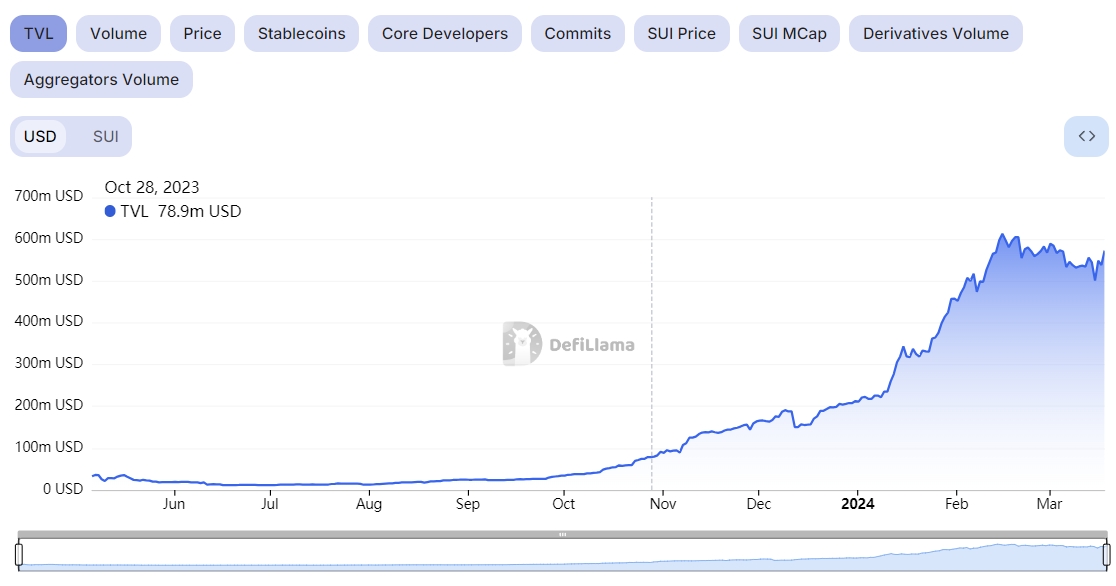
Meanwhile, Sui’s ecosystem TVL has quietly achieved exponential growth—approximately 20x—from October 2023 through the present rally.
This situation has arisen because, during the bear market, Rollup L2s became overly reliant on “Odyssey-style” growth strategies aimed at facilitating token launches and exits. They colluded with yield farmers and grant-focused developers, leading to inefficient allocation of blockspace and community resources, ultimately harming the experience of genuine users.
Real users on Rollup L2s not only pay higher gas fees due to farmer activity but also miss out on the bull market entirely due to the lack of wealth-generating assets on these platforms.
These factors have contributed to the current dominance of high-performance L1s over Ethereum’s Rollup L2s.
2. Ethereum’s business model is becoming rent-based, while high-performance L1s resemble tech companies
The research firm @MessariCrypto, self-described Ethereum skeptics, first introduced this idea in their annual report. From the perspective of blockspace economics, the business model of Ethereum L2s amounts to reselling Ethereum mainnet blockspace to dApps and end users.
Within the emerging Web3 tech industry, Rollup L2s are essentially operating like traditional retail wholesalers. The difference is that while traditional wholesalers profit from product markups, Rollup L2s make money from gas fee spreads.
The Dencun upgrade, which reduces blockspace prices by an order of magnitude, deals a significant blow to Rollup L2s whose core business model relies on gas fee arbitrage. Their only remaining path is issuing native tokens. However, due to prolonged tolerance of mercenary farming behavior, the ecosystems of many L2s have become barren—so degraded that even meme coins, typically the easiest assets to bootstrap, struggle to survive there.
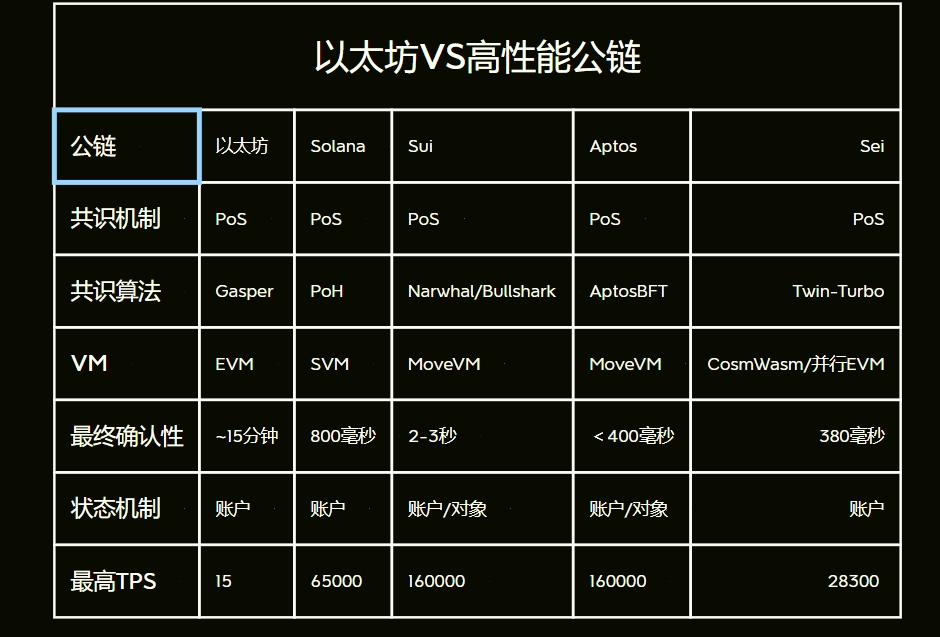
In contrast to Ethereum’s ecosystem, high-performance L1s like Solana, Sui, Aptos, and Sei operate more like technology companies. They enhance blockspace efficiency through next-generation consensus algorithms, parallel-processing VMs, and account/object-based smart contract programming languages, effectively addressing real user pain points such as high gas fees and long confirmation times in Web3.
Of course, the current dominance of high-performance L1s over Ethereum Rollup L2s in application-layer competition may simply be a cyclical phenomenon occurring at the tail end of this bull run. Whether this trend persists remains to be seen and will require longer-term validation.
Even if Ethereum Rollup L2s eventually stage a comeback, it will most likely be driven by next-generation rollups featuring new primitives such as RollAPPs, chain abstraction, and parallel EVM execution engines—not by today’s sluggish general-purpose L2s.
Join TechFlow official community to stay tuned
Telegram:https://t.me/TechFlowDaily
X (Twitter):https://x.com/TechFlowPost
X (Twitter) EN:https://x.com/BlockFlow_News
 @0xNing0x