









Greythorn Monthly Market Report: The crypto market appears to be entering an exciting phase of expansion
TechFlow Selected TechFlow Selected
Greythorn Monthly Market Report: The crypto market appears to be entering an exciting phase of expansion
In February, the interplay of economic signals, regulatory actions, and market sentiment shaped Bitcoin's market landscape.
 Navigating Web3 tides with focused insights
Author: Greythorn
Introduction

Welcome to Greythorn’s market report for February 2024. As cryptocurrencies become increasingly significant in finance, we will continue to provide readers with the latest trends and cutting-edge insights into digital assets and blockchain technology.
Greythorn will continue providing monthly analysis reports on the cryptocurrency market, including detailed analyses of market trends, updates on regulatory developments, and macroeconomic factors influencing these digital currencies.
To learn more about us, please visit our website.
Bitcoin Analysis
February Market Dynamics
In February, the Bitcoin market landscape was shaped by a complex interplay of economic signals, regulatory actions, and market sentiment. At the beginning of the month, Federal Open Market Committee (FOMC) press conference saw Chair Powell adopt a markedly different tone compared to previous meetings—no longer emphasizing the resilience of the U.S. banking system. This shift triggered ripple effects across financial markets, impacting various asset classes, including Bitcoin, in distinct ways.
Powell’s comments implied that a March rate cut was unlikely, leading to declines in both stock and bond markets. Bitcoin’s value dropped from $43,600 to around $41,800—a contrast to March 2023, when Bitcoin prices rose during the banking crisis, serving as a safe haven amid traditional banking instability.
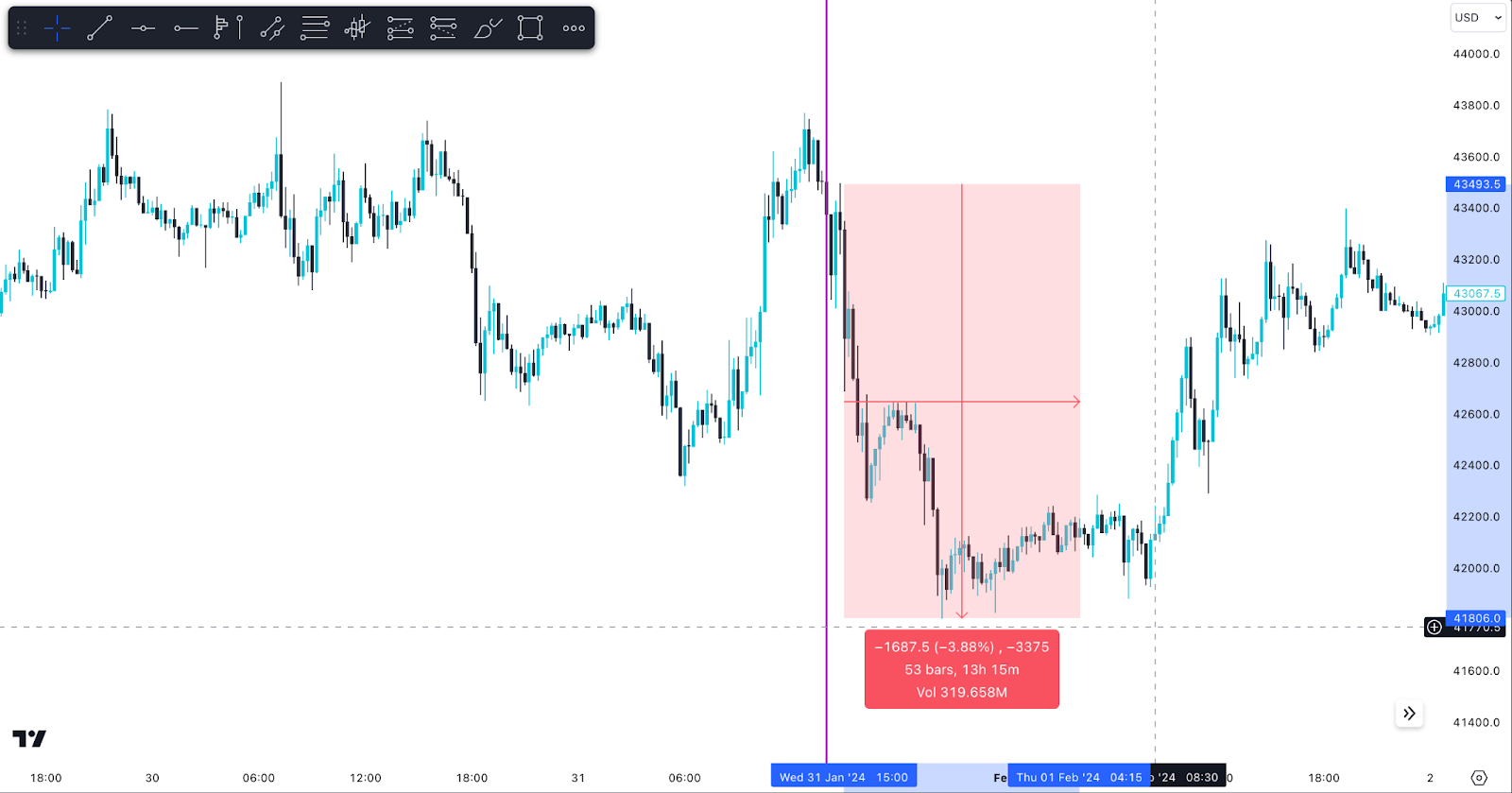
This highlights a defining characteristic of Bitcoin market behavior: it can align with broader financial markets as a risk asset, yet also act as a hedge during periods of economic uncertainty.
Despite the initial drop, BTC quickly rebounded, demonstrating strong demand in today’s market. This recovery was significantly driven by sustained interest from both institutional and retail investors.
Environmental Concerns and Bitcoin Mining
The U.S. Energy Information Administration (EIA) announced that Bitcoin miners operating within the United States must complete a survey detailing their energy consumption. A concurrently released report indicated that Bitcoin mining accounts for approximately 0.6% to 2.3% of the nation’s total electricity usage. This finding sparked widespread discussion about the environmental impact of Bitcoin mining. However, it is important to note that the report overlooked two critical aspects: first, over half of Bitcoin mining operations utilize green, renewable energy sources; second, the role of Bitcoin mining in enhancing grid stability and reducing pollution remains underappreciated.
Regulatory Developments and Legislative Pushback
Additionally, this month witnessed pushback against regulatory overreach in U.S. digital asset legislation, such as the bill introduced by Representatives Wiley Nickel and Mike Flood, along with Senator Cynthia Lummis, aiming to prevent federal agencies from imposing excessive capital requirements on custodians holding crypto assets. This reflects growing recognition of the importance of clear and fair regulatory frameworks in fostering innovation and investment within the crypto sector.
This legislative move challenges the U.S. Securities and Exchange Commission’s (SEC) 2022 SAB121 guidance, which mandates that banks record the value of custodied crypto assets as liabilities on their balance sheets and maintain corresponding capital reserves. Critics argue this requirement is flawed because these assets do not belong to the custodian and should not be classified as liabilities. If passed, the bill could significantly impact the crypto industry by enabling regulated banks to custody crypto assets, potentially boosting institutional investment in the sector.
Price Volatility, Investor Sentiment, Liquidity, and Institutional Interest in Cryptocurrencies
Despite concerns over regulation and volatility, sentiment toward Bitcoin remained resilient in February, as evidenced by CoinShares’ quarterly fund manager survey, showing continued investor preference for Bitcoin over other cryptocurrencies. Crypto assets are gaining increasing popularity among institutional investors, with Bitcoin leading the preference rankings.
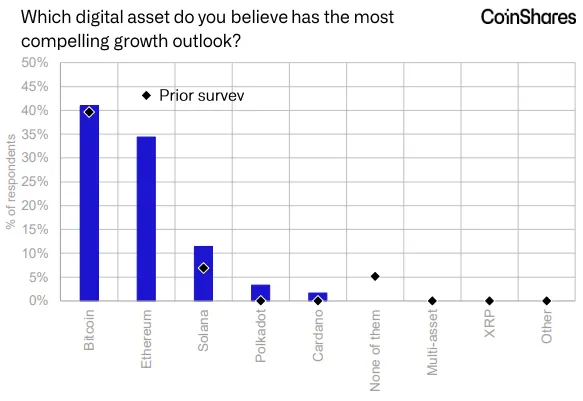
Source: CoinShares
Although Ethereum’s market liquidity improvements did not directly benefit from ETF-related inflows, the substantial inflows into spot BTC ETFs indicate growing institutional interest and confidence in the crypto market. This is further supported by the resilience of BTC holders, with 90% of BTC currently held in addresses that have not moved their holdings, indicating strong conviction.
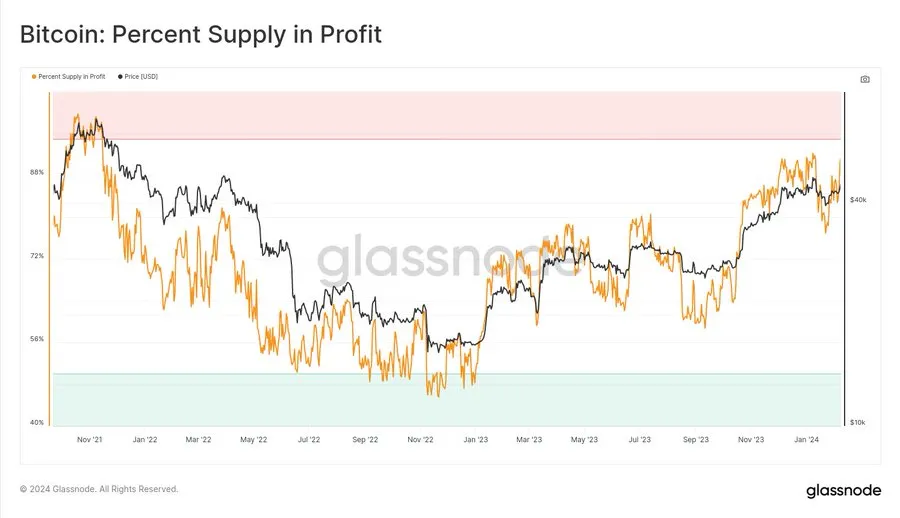
Source: @Checkmatey
As February progressed, Bitcoin experienced significant price movements, breaking through the symbolic $50,000 threshold on the 14th—an indication of rising buying pressure and diminishing selling pressure. The release of January’s CPI data revealed persistent inflation challenges, initially causing a sharp decline in BTC prices. However, Bitcoin quickly decoupled from traditional risk assets, rapidly recovering and even reaching new year-to-date highs, once again demonstrating its dual role as both a risk asset and a hedge against economic uncertainty.
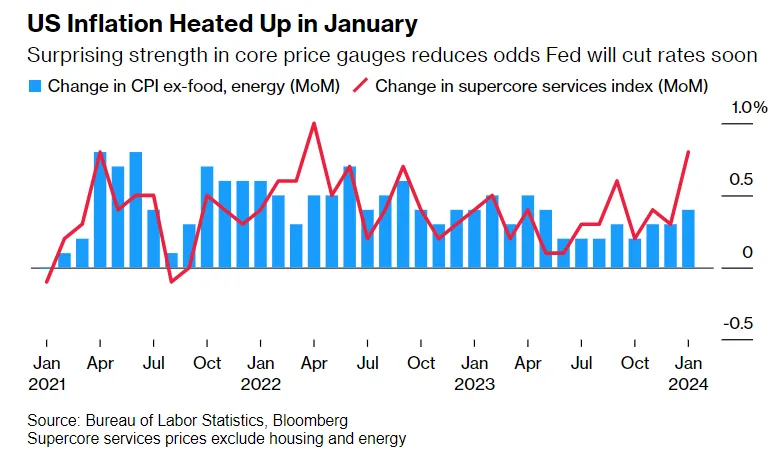
Source: Bloomberg
Furthermore, signs emerged in February that the launch of spot BTC ETFs has positively impacted market liquidity. This is evident from increased BTC spot trading volume and the significant contribution of the U.S. to overall market depth. These trends suggest that spot BTC ETFs are having a major influence on the market, with deepening institutional participation reflected in larger average BTC trade sizes, signaling growing institutional interest.
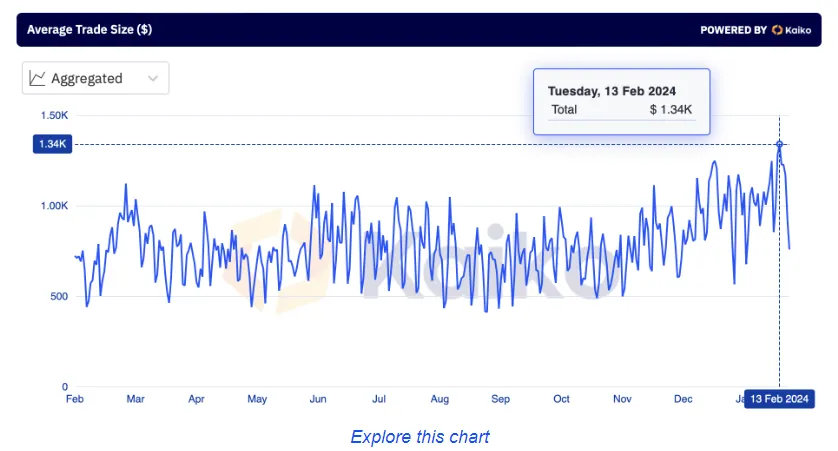
Source: Kaiko
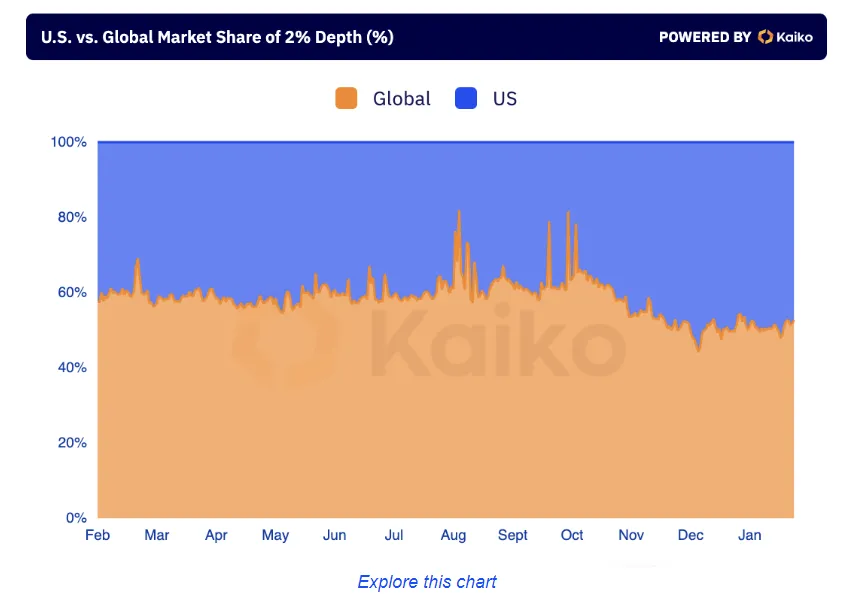
Source: Kaiko
Ethereum Market Liquidity Discussion in February
As February drew to a close, Ethereum began attracting significant attention. As the second-largest cryptocurrency by market cap, Ethereum had recently been the focus of numerous investments and analyses due to its underperformance relative to Bitcoin. However, this trend appears to be shifting, with several factors suggesting potential breakout momentum: its prolonged underperformance, market anticipation of a possible spot ETF approval later this year, and an upcoming major upgrade scheduled for March 13 that could reshape its market positioning.
Bitcoin Price Breakout at End of February
After a period of relative quiet, Bitcoin surged dramatically at the end of February despite gains in Ethereum, breaking through the $60,000 mark. This momentum was primarily driven by a surge in ETF investments and active participation from Asian investors. For example, BlackRock’s IBIT product recorded nearly $1.3 billion in daily trading volume. While this does not fully represent net inflows, much of it likely reflects new capital entering the market.
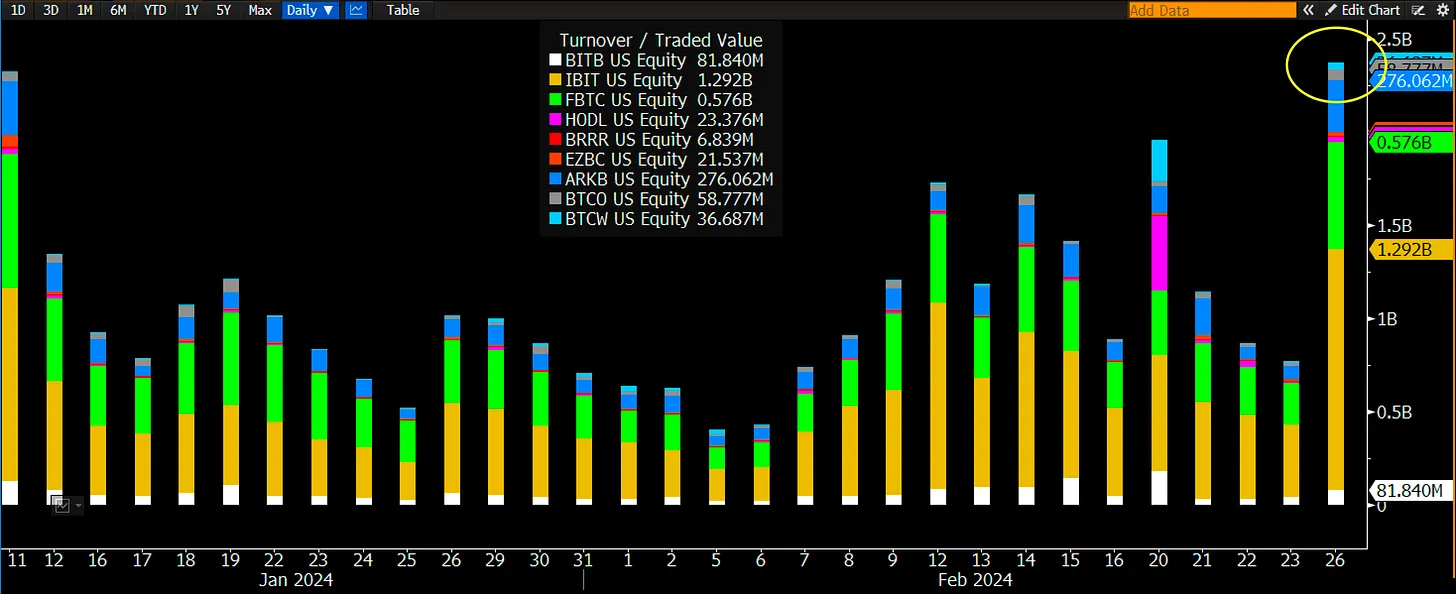
Source: Eric
Notably, factors like ETF investments make this market cycle particularly distinctive, expected to solidify the market foundation. Any price pullbacks may be viewed by various investors as entry opportunities, with many believing there is still upside potential.
Equally important, even with Bitcoin’s price surge, weekend trading volume as a proportion of total volume remains only half of what it was six years ago.
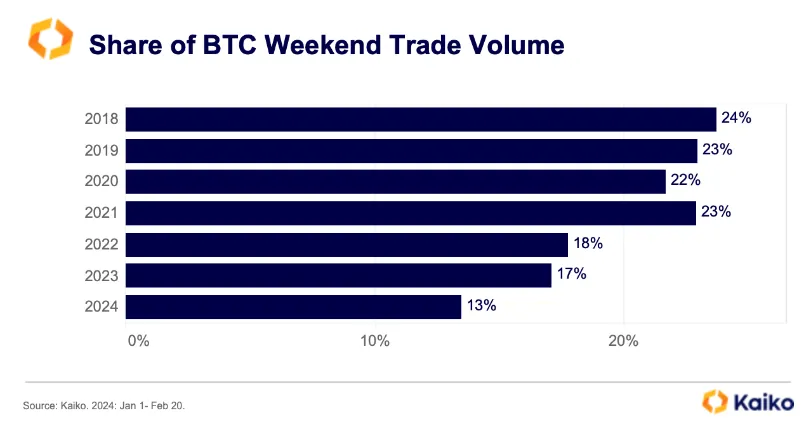
On-Chain Analysis
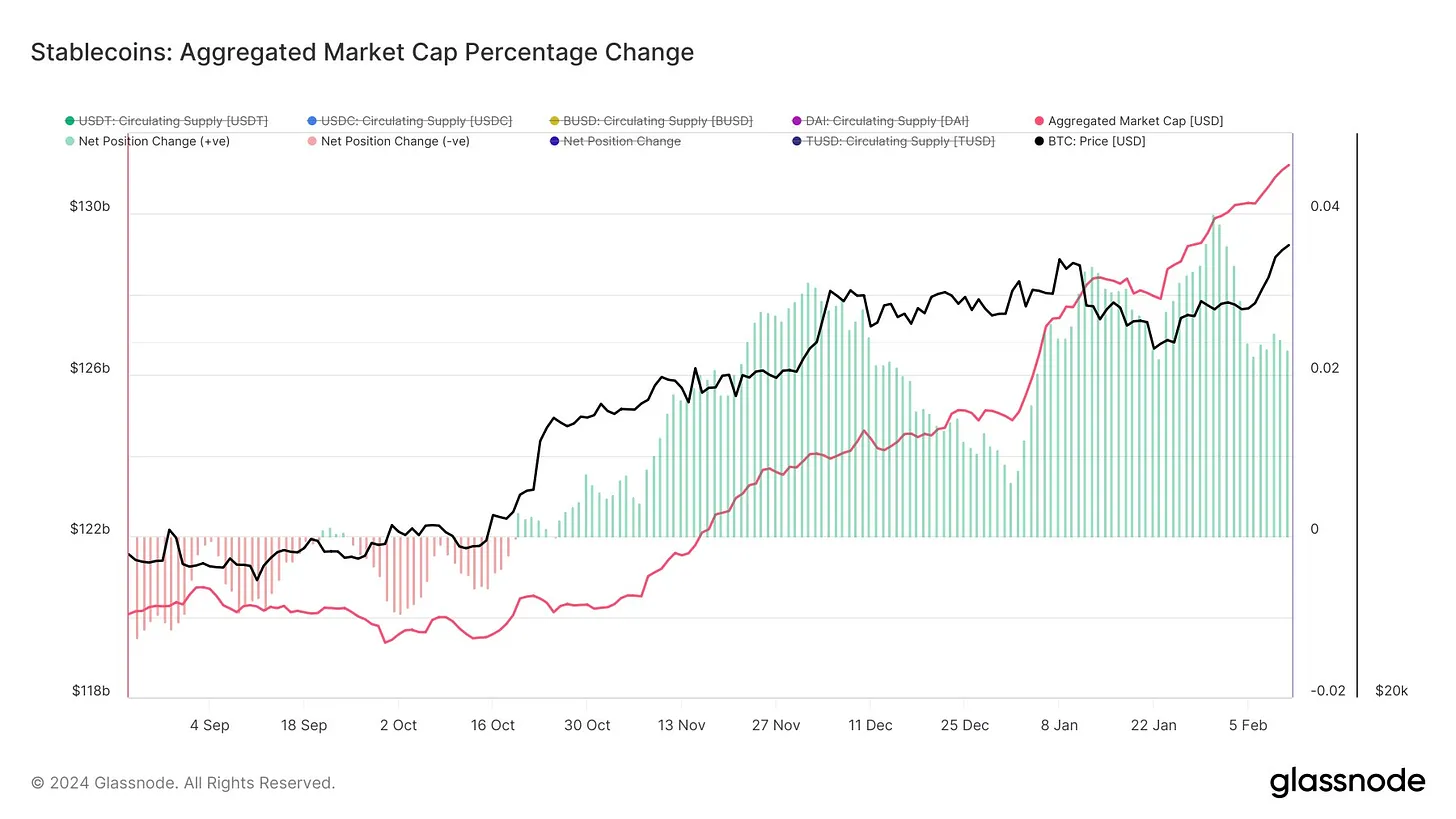
In February, stablecoin supply surged sharply. This development far exceeded normal market fluctuations, signaling renewed investor confidence in the crypto space, reflected in substantial new capital inflows.
As Bitcoin approached historical highs, public curiosity surged. Google search trend data shows that searches for “Bitcoin” reached their highest level since June 2022.
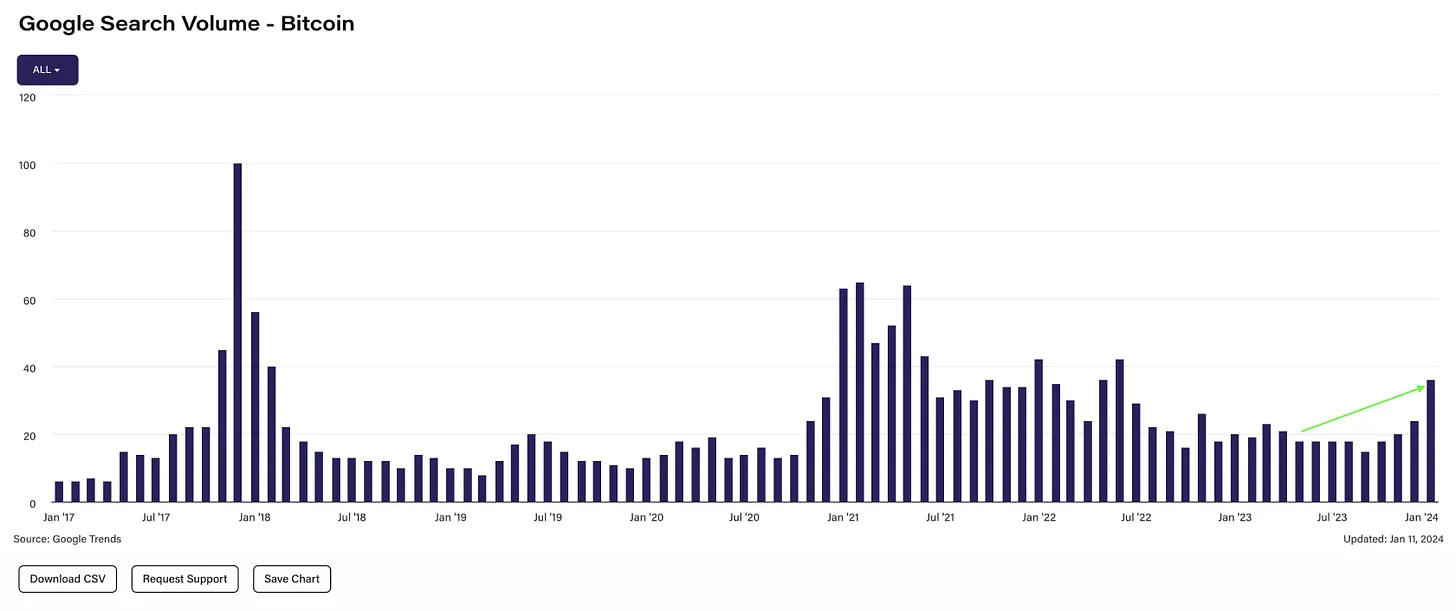
Source: Google Search Volume - Bitcoin
When comparing Bitcoin futures open interest on CME to other exchanges, CME’s dominance underscores strong interest from U.S. institutional investors. Currently, CME leads in Bitcoin futures open interest, even surpassing Binance, indicating rising institutional participation. However, this trend does not extend to Ethereum, where CME ranks only fifth in Ethereum futures open interest.
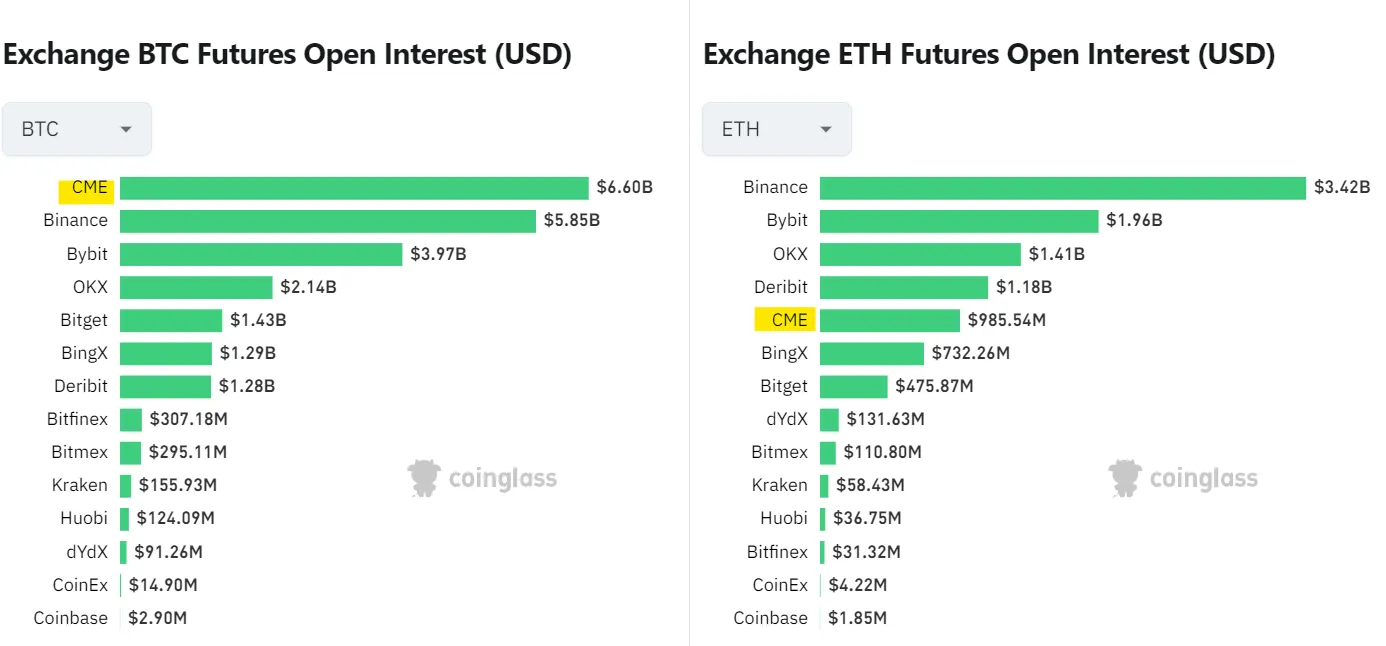
Source: Coinglass
Despite a slow start in early 2023, Ethereum quietly achieved a notable rebound, outperforming Bitcoin, Solana, Avalanche, and leading Layer-2 solutions like Arbitrum and Optimism year-to-date.
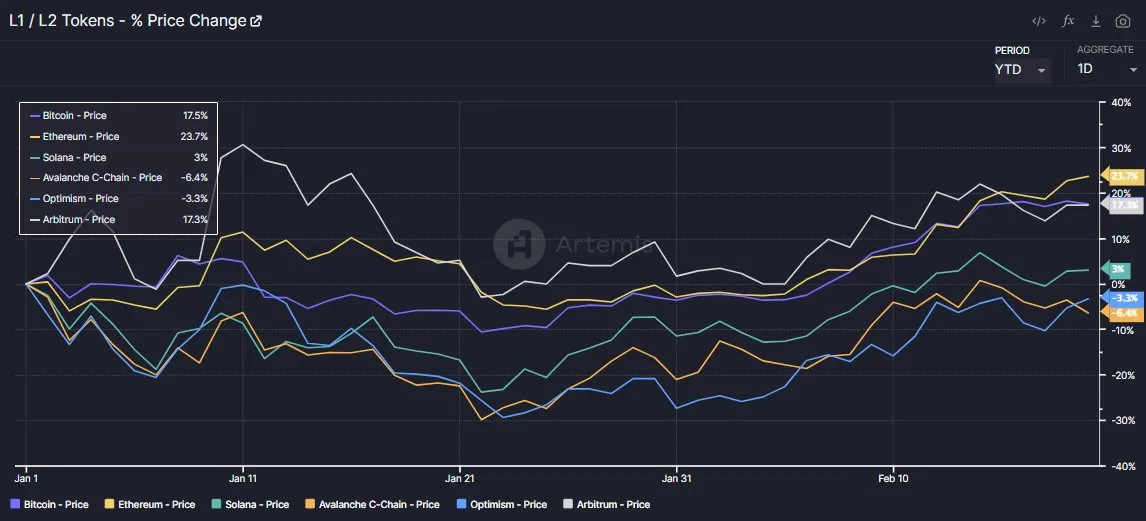
Source: Artemis
All spot Bitcoin ETFs saw increased investment, setting unprecedented records for the ETF industry in the first few weeks of the year.
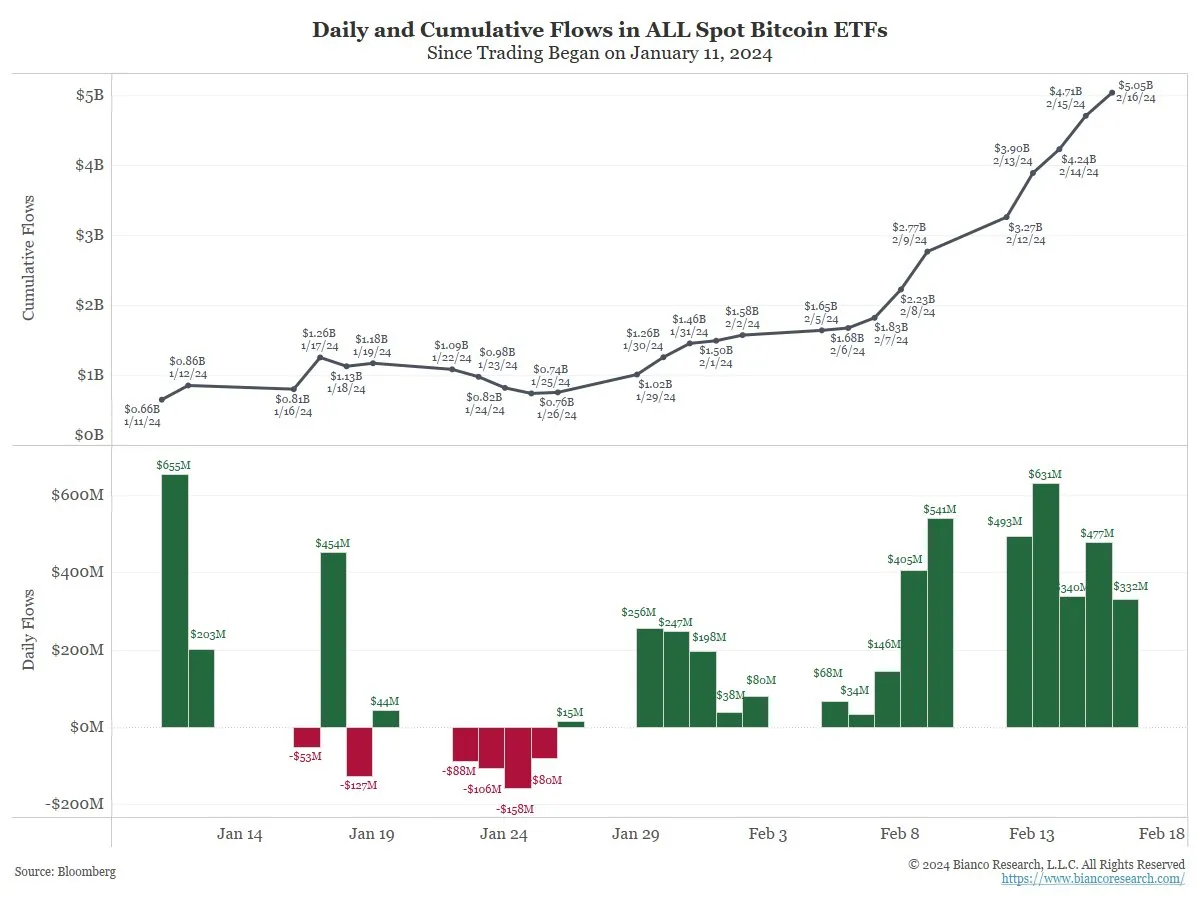
Source: @BiancoResearch
Given the influx of new capital, Bitcoin appears to be entering a new phase. Currently, funds contributed by short-term investors account for 35% of total realized value.
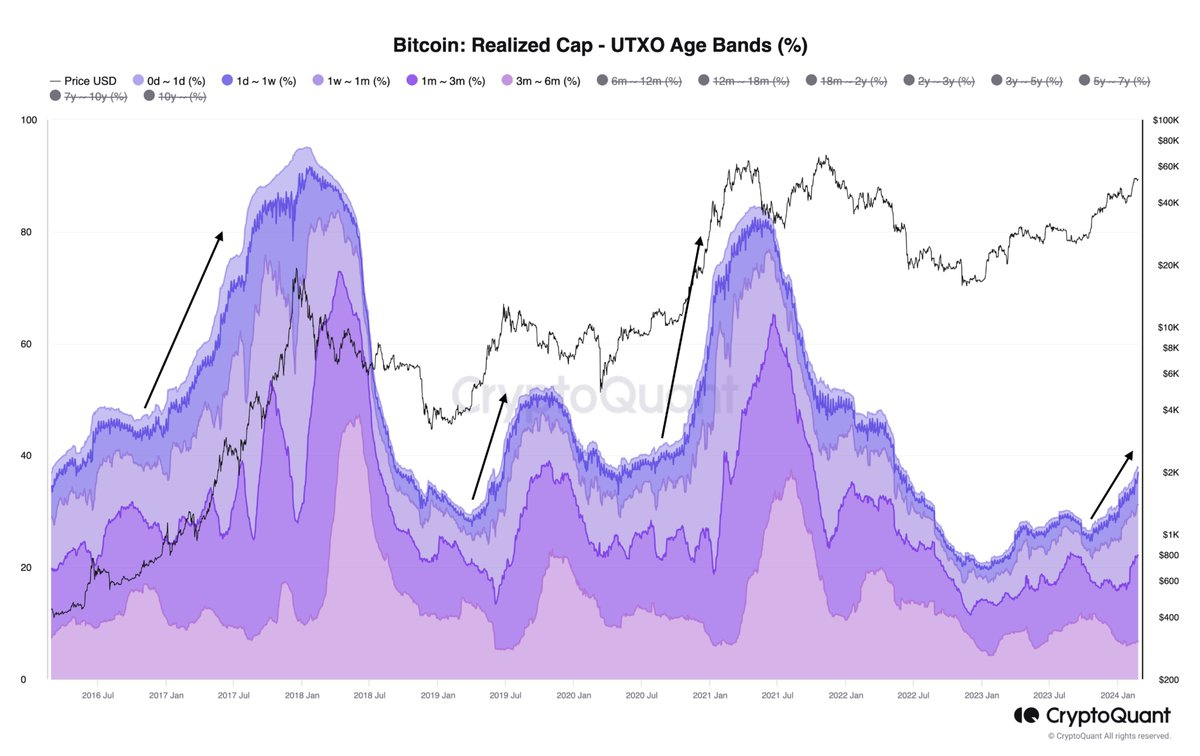
Source: CryptoQuant
Despite favorable market trends, short sellers continue to bet on a downturn and face liquidations as positions move against them. It seems bearish traders are largely ignoring on-chain indicators.
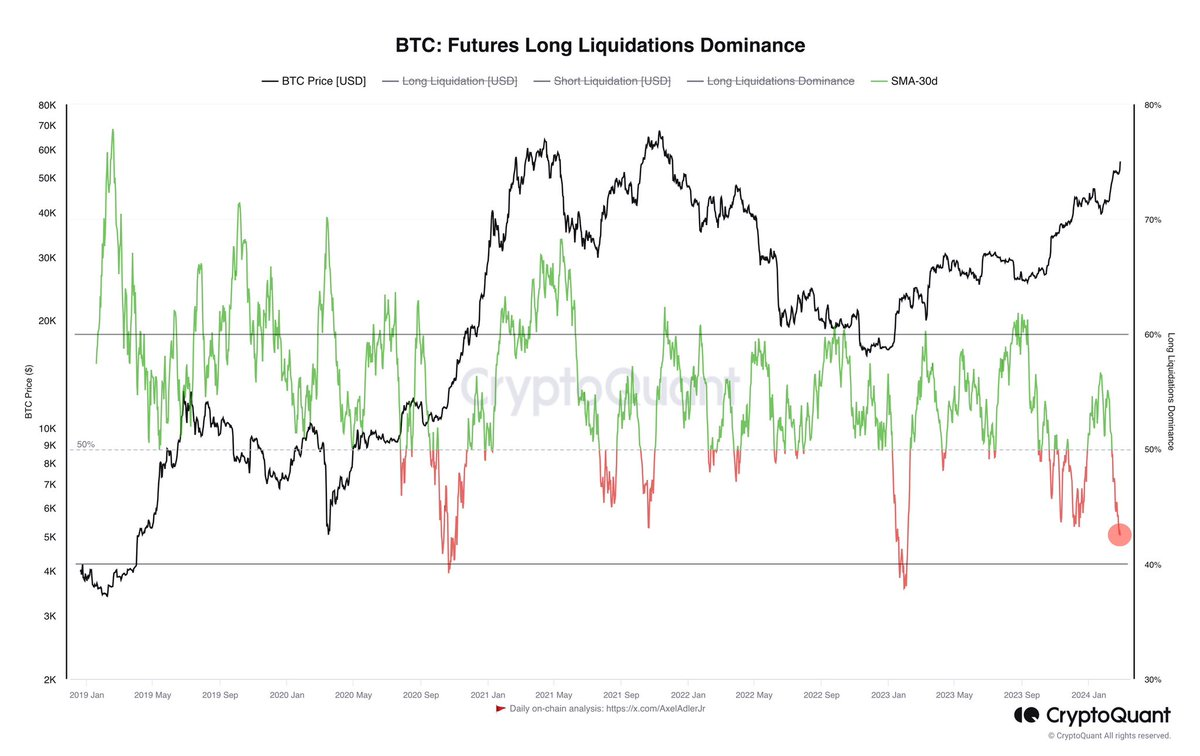
In particular, over the past week, capital that initially flowed into Sui and Solana at the start of the month appears to be returning to Ethereum.
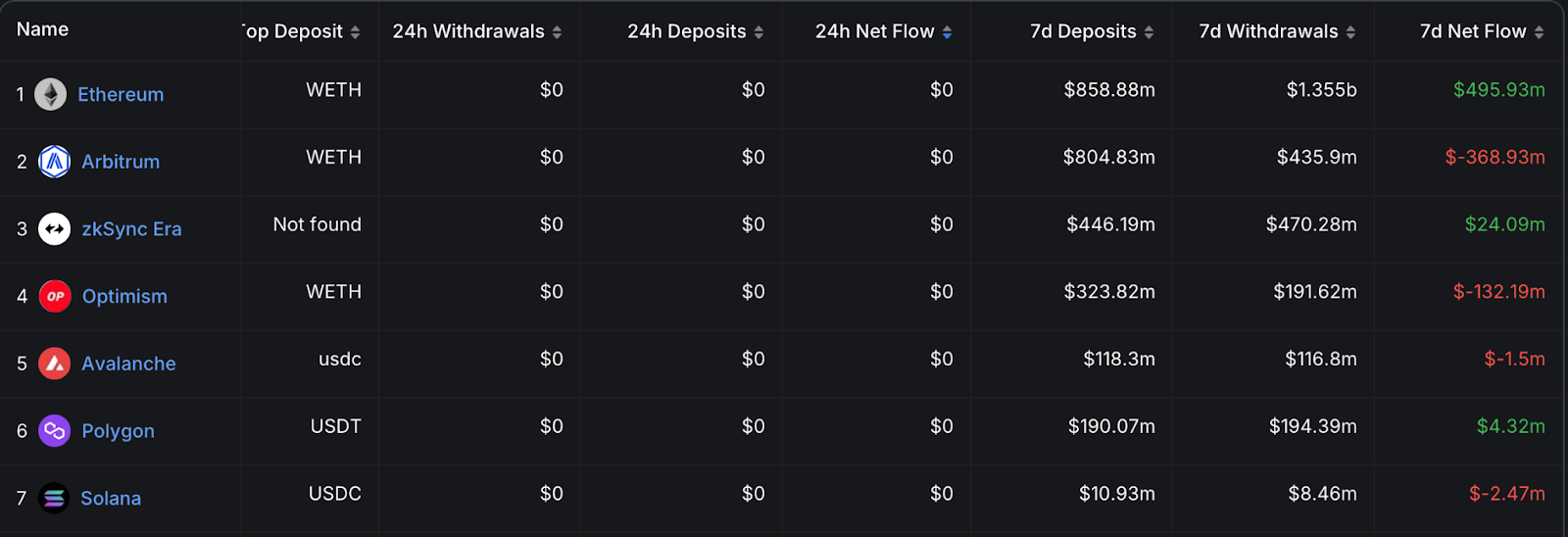
Source: DeFiLlama
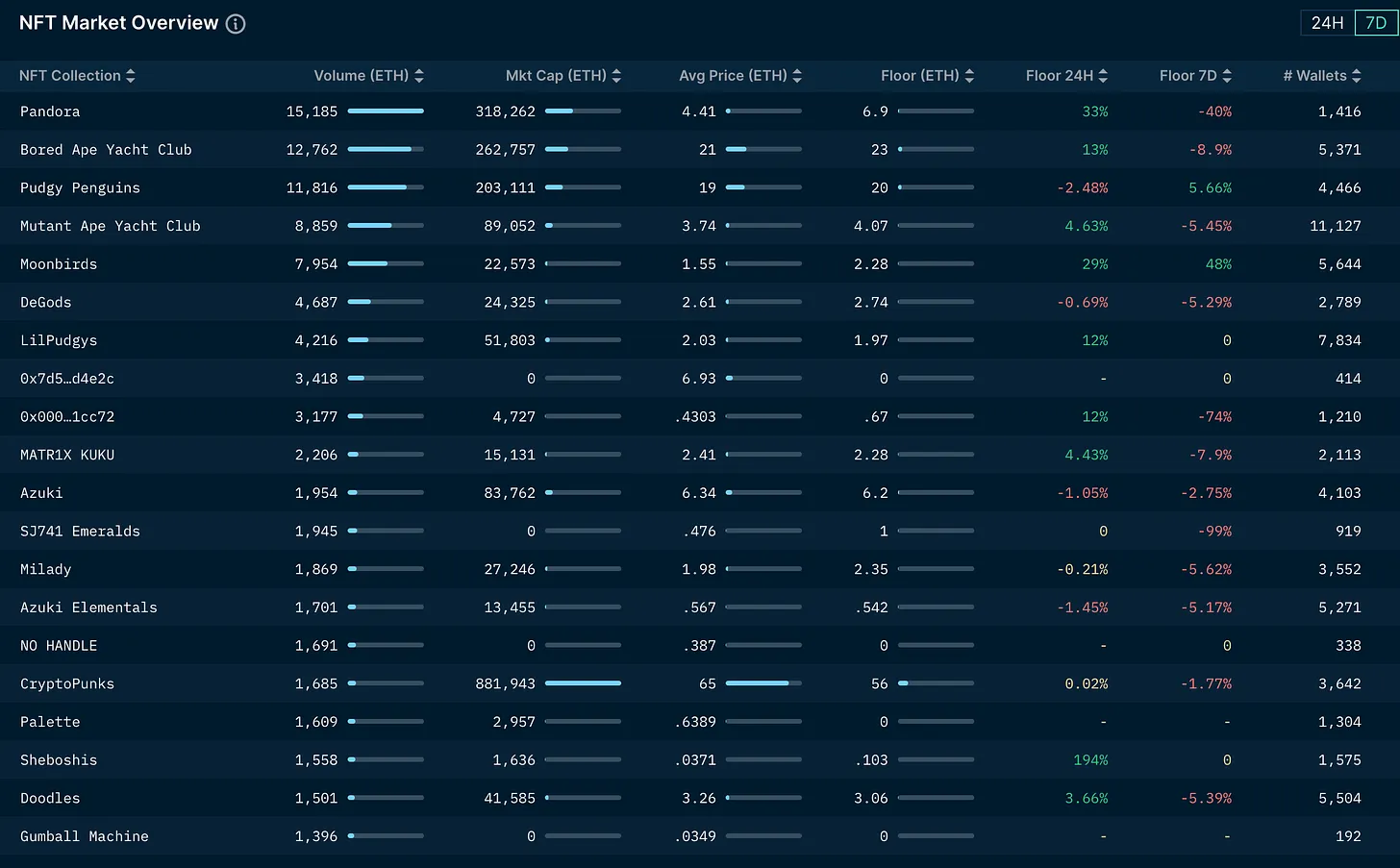
Pandora NFT is rebounding, suggesting ERC404 could have long-term staying power. Meanwhile, Pudgy Penguins NFT remains strong with a floor price of 20 ETH. However, notable series such as Sappy Seals and Kanpai Pandas were absent, both seeing significant value increases—Seals exceeding a 1.7 ETH floor and Pandas surpassing 2.5 ETH.
Disclaimer: The cryptocurrency ecosystem is vast and continuously evolving, with numerous metrics to monitor daily. This overview aims to highlight selected monthly metrics for brief insights and is not intended as a comprehensive report.
Selected Highlights
As Bitcoin surpassed the $60,000 mark, MicroStrategy’s Bitcoin portfolio reached $12.4 billion.
The U.S. Securities and Exchange Commission (SEC) accused HyperFund’s founder of a $1.7 billion fraud scheme.
Tether reported a $2.9 billion profit in Q4 and increased its reserves to $5.4 billion.
FTX paused its relaunch plans, committing to full repayment of user funds.
Celsius Network began distributing over $3 billion in assets to creditors post-bankruptcy and established a new Bitcoin mining company.
Ethereum reached a key milestone with 25% of ETH staked.
Bitcoin mining difficulty surpassed 80 trillion, hitting a new all-time high.
Cumulative trading volume of spot Bitcoin ETFs exceeded $50 billion.
Ethereum’s Dencun upgrade successfully deployed on the Sepolia testnet, with mainnet launch planned.
Harvest Fund targets launching Hong Kong’s first spot Bitcoin ETF.
Bitcoin mining firm GRIID made its Nasdaq debut.
Uncorrelated Ventures launched a $315 million fund focused on startups in crypto and software.
Vitalik Buterin highlighted synergies between cryptocurrency and artificial intelligence, supporting next-generation leadership.
Polygon Labs reduced its workforce by 19% during organizational restructuring.
Ripple co-founder’s account suffered a $113 million security breach, affecting XRP price.
EigenLayer’s total value locked (TVL) surpassed $6 billion, prompting an increase in deposit limits.
Kraken expanded its European operations with Dutch license approval.
Binance decided to delist Monero (XMR), causing a 15% price drop.
Solana network resumed operations after a five-hour outage.
Frax Finance launched its Layer-2 network Fraxtal.
Ethereum NFT trading volume approached annual highs.
Thailand announced exemption of VAT on cryptocurrency gains.
OKX expanded into Argentina, launching exchange and wallet services.
Coinbase exceeded Q4 earnings expectations, with transaction revenue surging.
PlayDapp lost $290 million in tokens due to a double security breach, with Elliptic providing data support.
Pudgy Penguins NFT surpassed Bored Ape Yacht Club in a historic floor price reversal.
Starknet token unlock sparked controversy among investors and community members.
Court approved Genesis’ sale of $1.3 billion worth of GBTC shares.
Ripple expanded its regulatory capabilities through acquisition of Standard Custody.
FTX approved sale of $1 billion stake in Anthropic.
Circle ended USDC support on TRON to strengthen risk management.
AI-related crypto prices surged following OpenAI’s release of Sora text-to-video generator.
Trump softened his stance on Bitcoin during campaign events, hinting at openness.
Gemini settled with New York regulators, agreeing to return $1.1 billion to users.
Macro Analysis
Chinese Market Volatility and Regulatory Response
At the start of February, Chinese equities experienced a sharp downturn. The CSI 1000 index plunged nearly 9% intraday, with 99% of listed companies suffering losses. Even the more selective CSI 300 index was not spared, declining by 2%.
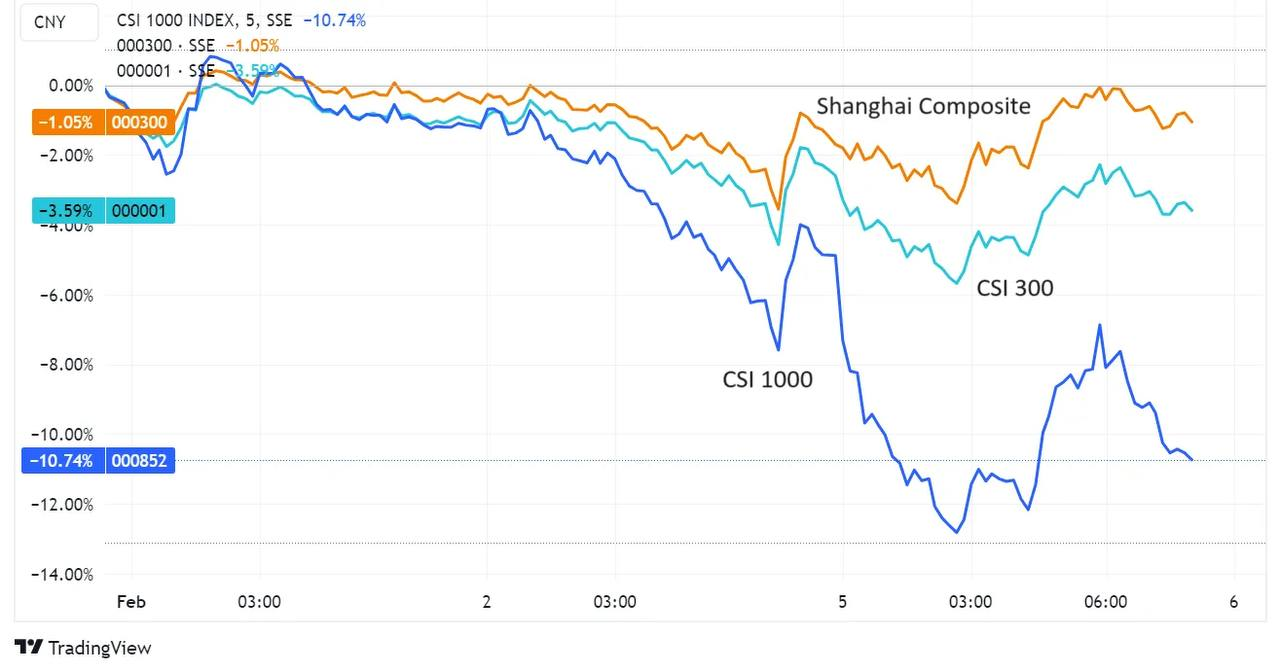
In response to the rapid market slide, China’s Securities Regulatory Commission (CSRC) swiftly intervened to stabilize markets, pledging to crack down on "abnormal fluctuations" and inject more medium- and long-term capital. This intervention triggered a strong market rebound—the CSI 1000 index surged nearly 7%, helping the CSI 300 close slightly positive and reducing earlier losses, though it ultimately closed down 6%, marking a nearly 30% year-to-date decline.
Additionally, CSRC implemented further measures to stabilize markets, introducing stricter short-selling rules, banning certain quantitative hedge funds from placing sell orders, and instructing other funds to maintain their equity positions.
Authorities also announced Wu Qing, known for his strong stance against financial risks and corruption, as the new CSRC chairman. Wu previously led the Shanghai Stock Exchange.
It should also be noted that China’s ability to deploy monetary stimulus may be constrained by vulnerabilities in the yuan and inflation risks. Rate cuts could exacerbate these issues and negatively impact bank profitability. Fiscal stimulus is similarly limited by high local government debt levels.
Despite these challenges, Chinese investor interest in crypto assets is growing. The anticipated launch of Bitcoin ETFs in Hong Kong could facilitate this shift.
U.S. Economic Outlook: Easing Policy and Inflation Concerns
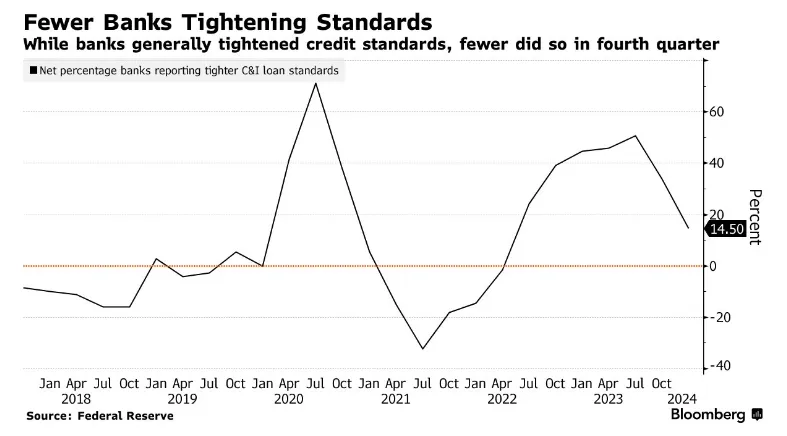
The Federal Reserve’s latest survey—the Senior Loan Officer Opinion Survey (SLOOS)—shows banks beginning to ease lending standards. This loosening trend is also reflected in the Chicago Fed’s Financial Conditions Index, indicating the most accommodative financial conditions since November 2021. This shift may signal a change in economic policy approach, especially given current uncertainties.
Source: Bloomberg
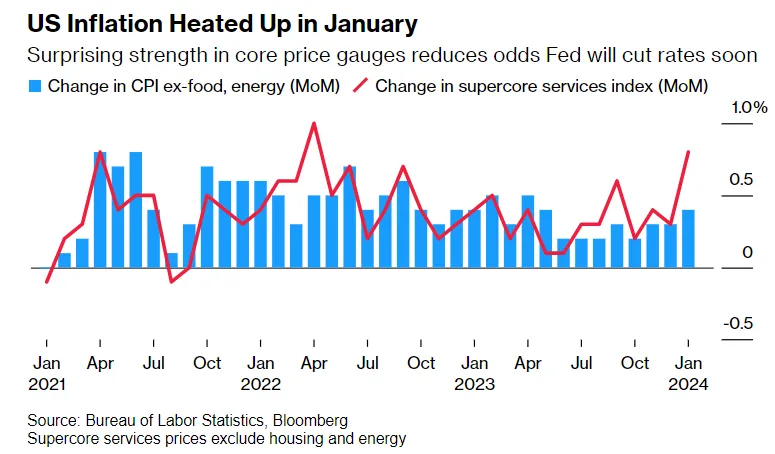
In contrast, inflationary pressures are building. Reports from the Institute for Supply Management (ISM) and the Bureau of Labor Statistics paint a picture of rising costs for both businesses and workers. Latest ISM data show business cost increases unmatched since 2012. Simultaneously, rising wages and labor costs have raised inflation alarms.
Employment data further underscore this trend, with significant increases in average hourly earnings and unit labor costs heightening inflation concerns.
These mixed signals have prompted markets to reassess near-term rate cut expectations. Rising yields on the U.S. 10-year Treasury reflect market reactions to these economic signals, particularly concerns over rising service-sector inflation and the Fed’s focus on persistent inflation trends.
Thus, we find ourselves in a delicate situation. On one hand, easing credit conditions create more room for economic activity. On the other, rising inflation poses real concerns. This balancing act between encouraging growth and controlling inflation illustrates the complexity of the current economic environment.
Moreover, the Congressional Budget Office (CBO) released a report offering troubling projections for the U.S. economy over the next decade. The report states that government spending on debt interest will soon exceed defense spending, and by 2034, interest payments could surpass the entire 2023 budget deficit. Additionally, the U.S. debt-to-GDP ratio could double compared to recent decades. The CBO also warns that rising borrowing costs could slow economic growth and worsen the debt situation.
However, growing concern over rising U.S. debt insurance costs is increasing interest in cryptocurrencies as alternatives to conventional money. This suggests the dollar may depreciate relative to solid stores of value like gold or Bitcoin.
On February 14, we saw the release of January’s inflation report, confirming rising inflation in the U.S. Markets reacted strongly—Nasdaq fell 1.8%, while the S&P 500 and Dow Jones Industrial Average each declined nearly 1.4%. Bond yields, such as on the 10-year U.S. Treasury, jumped 15 basis points. Initially, Bitcoin fell alongside stocks and bonds but quickly rebounded.
Source: Bloomberg
Global Economic Overview
Japan has entered a technical recession, with GDP declining in Q4, raising concerns about the world’s third-largest economy.
The UK also faces recession, with Q4 contraction exceeding expectations, highlighting widespread economic difficulties among major economies.
EU Q4 GDP growth was nearly zero, narrowly avoiding contraction. With 2024 growth forecasts downgraded, the EU teeters on recession, exacerbated by Germany’s weak economic outlook.
The European Central Bank is managing expectations around rate cuts, emphasizing the need for more data before considering policy easing. This cautious stance contrasts with eurozone economic challenges, such as inflation and interest rate adjustments, illustrating how central banks navigate tricky balances during uncertain times.
Nigeria took steps to prevent currency depreciation of the naira by restricting access to crypto exchanges to reduce capital outflows and speculative trading.
Conclusion
Despite some uncertainties in the broader macroeconomic environment, February marked a notably successful period for Bitcoin and the wider cryptocurrency market. The crypto industry appears to be entering an exciting phase of expansion, with compelling narratives emerging that could lay a strong foundation for growth in the coming months. To stay informed on these developments, follow us at Greythorn on Medium and X for comprehensive insights into the evolving crypto landscape.
Disclaimer
This document has been prepared by Greythorn Asset Management Pty Ltd (ABN 96 621 995 659) (hereinafter referred to as "Greythorn"). The information contained herein is for general reference only and is not intended to provide investment or financial advice. This document does not constitute advertising or marketing material, nor is it an offer, invitation, or inducement to buy or sell any financial instrument or participate in any specific trading strategy. In preparing this document, Greythorn has not taken into account the investment objectives, financial situation, or particular needs of any recipient. Therefore, individuals or entities receiving this document should assess their own circumstances and seek professional advice from their accountant, legal counsel, or other advisors before making any investment decision.
This document contains statements, opinions, forecasts, and forward-looking statements based on a number of assumptions. Greythorn assumes no obligation to update such information. These assumptions may or may not prove correct. Greythorn and its directors, employees, agents, and advisors make no representation or warranty as to the accuracy or achievability of any forward-looking statement or its underlying assumptions. Greythorn and its directors, employees, agents, and advisors make no representations or warranties regarding the accuracy, completeness, or reliability of the information contained herein. To the maximum extent permitted by law, Greythorn and its directors, employees, agents, and advisors shall not be liable for any loss, claim, damage, cost, or expense arising from or related to the information contained in this document.
This document is the property of Greythorn. Individuals or entities receiving this document agree to keep its contents confidential and not to reproduce, provide, disseminate, or disclose any information from this document in any form without Greythorn's prior written consent.
Join TechFlow official community to stay tuned
Telegram:https://t.me/TechFlowDaily
X (Twitter):https://x.com/TechFlowPost
X (Twitter) EN:https://x.com/BlockFlow_News
 Greythorn








