









When the Web3 narrative enters a winter, can gaming be the spark to ignite it?
TechFlow Selected TechFlow Selected
When the Web3 narrative enters a winter, can gaming be the spark to ignite it?
Ethereum founder Vitalik said in 2019: finance and gaming would be the first scenarios where blockchain is adopted.
 Navigating Web3 tides with focused insights
Author: Jason Jiang, OKLink Research Institute
After DeFi's financial innovation drove the previous cycle, the Web3 gaming sector—quiet for nearly two years—now appears to be reviving. Whether through frequent fundraising rounds or multiple games launching public tests one after another, the Web3 gaming space has been bustling since 2024 began. But as a prized darling in the Web3 primary market, is this current "heat" in gaming genuine or merely superficial? And what notable shifts should we watch for in Web3 gaming this year?
1. Web3 Gaming: Fun Comes First
Since the decline of Play-to-Earn (P2E) games, there has been extensive debate over the future direction of Web3 gaming. Two paths have drawn particular attention: the Web2.5 model aiming for AAA-grade production and playability by delivering high-quality experiences to attract more players; and fully on-chain games, which gained traction in 2023 by emphasizing fairness, transparency, and alignment with the spirit of self-sovereign digital worlds.
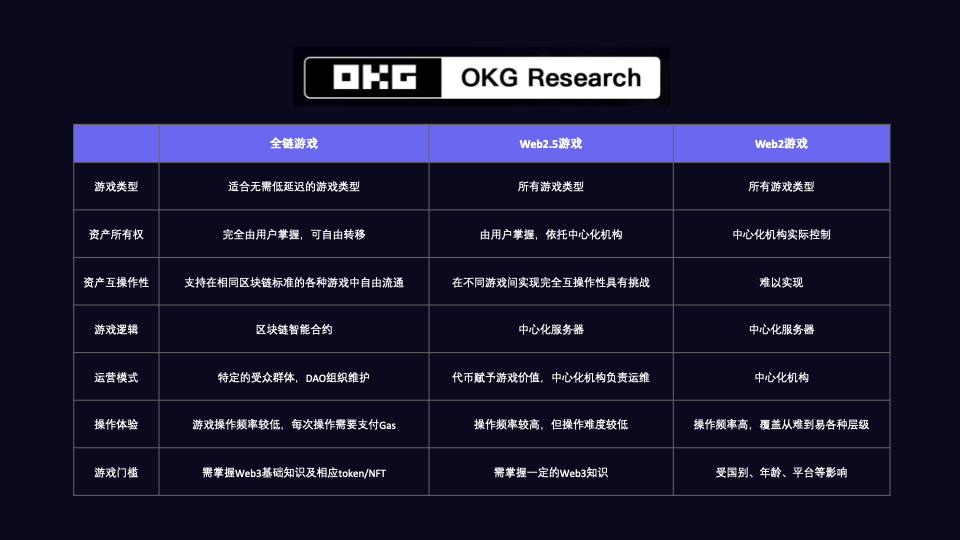
The debate over whether Web2.5 or fully on-chain games are superior remains heated. Despite the rising hype around fully on-chain games, we believe Web2.5 games are more deserving of attention in 2024 and hold greater potential to achieve mass user adoption and conversion in Web3 gaming.
The most straightforward reason is that compared to fully on-chain games, Web2.5 titles resemble what we'd expect from games in the 2020s. On the left of the image below is the interface of a certain fully on-chain game X; on the right is gameplay footage from the recently popular Web2.5 game Y—the visual disparity is obvious. While both may feature unique game worlds, in terms of production quality, operational smoothness, and overall playability, the latter typically holds a clear advantage.
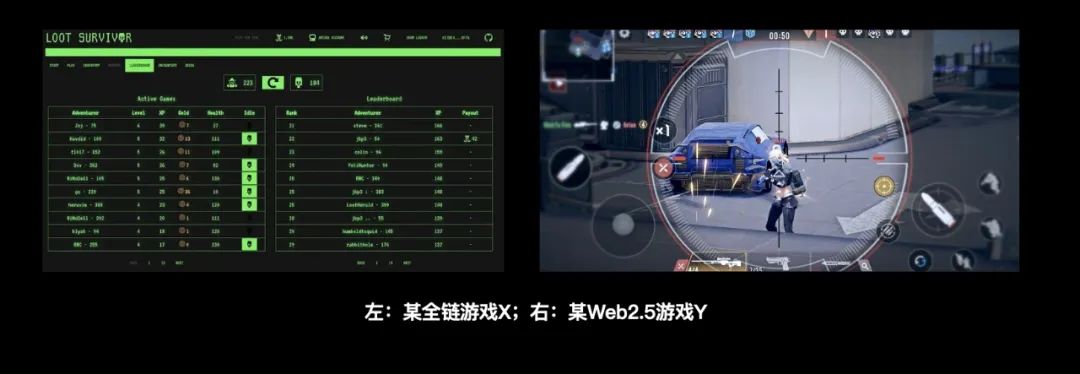
Poor playability has long been the key weakness preventing Web3 games from attracting broad audiences. Monotonous mechanics and crude graphics often make players feel like they’ve stepped back decades, with the only real draw being the ability to earn money. But for ordinary gamers, the ultimate benchmark for judging a game has always been simple: Is it fun? Overemphasizing “Fi” (finance) in Web3 gaming can only attract gold farmers, not drive mass conversion from Web2 users.
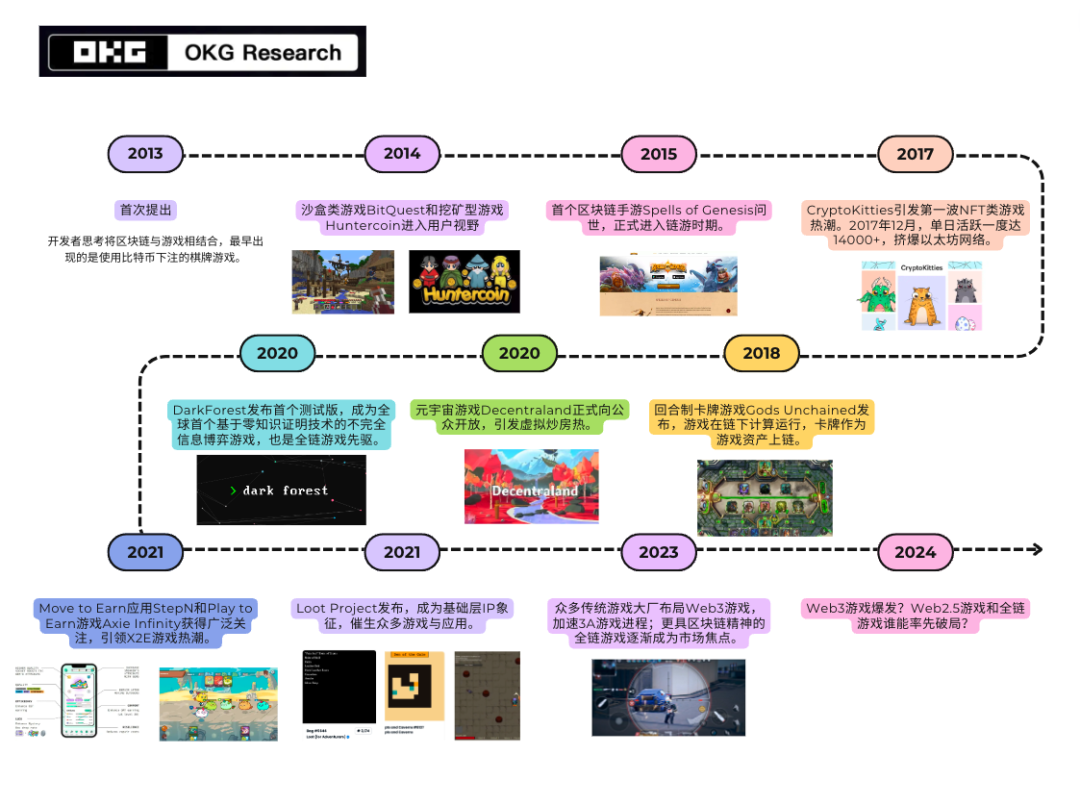
Fairness, transparency, and autonomy promoted by fully on-chain games may point toward the future evolution of gaming. However, in the short term, technical limitations prevent complex game environments, restricting such games to low-computation, non-latency-sensitive genres, making it difficult to attract substantial real-player engagement. Unless you’re a hardcore enthusiast, most players would naturally choose a AAA blockbuster over a pixel-art title. Today’s fully on-chain games resemble DeFi around 2018—conceptually rich but lacking in practical maturity—and still require time for iteration and accumulation.
Therefore, looking solely at 2024, if Web3 gaming sees an explosion, the driving force will primarily come from Web2.5 games.
Moreover, the Web2.5 gaming segment may witness several developments in 2024:
1. Continued convergence with Web2 in playability and game design
We maintain that the ideal state of Web3 technology integrating into reality is “invisible”—seamless and unobtrusive. Although Web2.5 games complement rather than replace traditional Web2 games, refining economic systems and backend infrastructure to incorporate Web3 elements without compromising gameplay could be the optimal path forward. In 2024, Web2.5 games will continue accelerating their integration with Web2 standards in content and user experience, gradually embedding Web3 token models into gameplay, enabling native in-game transactions, and merging internal and external marketplaces for smoother asset circulation.
2. Integration with AI will become the dominant narrative for Web2.5 games in 2024
Whether training NPCs using AI, enhancing realism through AI-powered features, or rewriting game logic to introduce unpredictability and randomness, the fusion of Web2.5 games with AI promises exciting new possibilities. As Tan Qunzhao, former co-founder of Shanda Games, noted in a media interview, technological transformation is the true engine behind game industry advancement. With Web3 and AI now reshaping the landscape, the next two years could mark a golden era for gaming.
3. Web2.5 gaming projects will accelerate their evolution toward platformization and ecosystem development
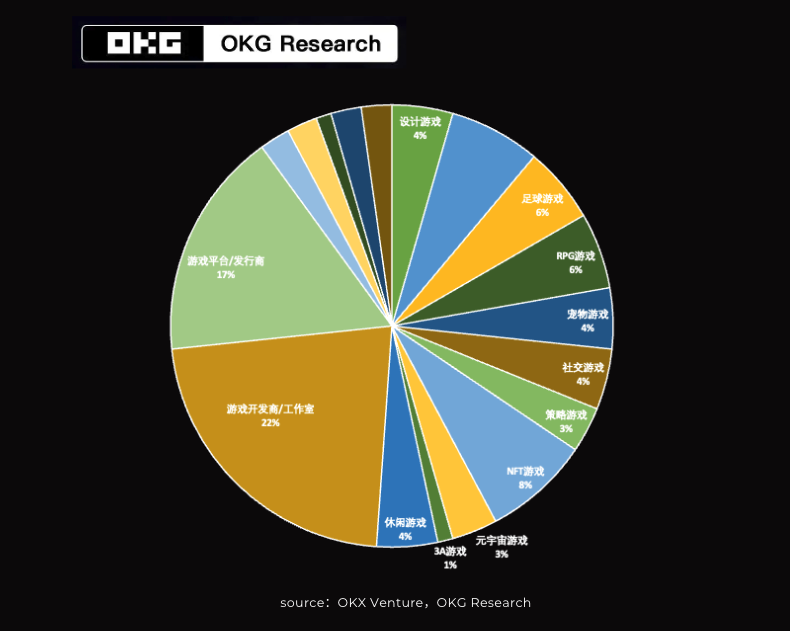
Every game has a lifecycle, and Web2.5 games are influenced not just by their own trajectory but also by broader Web3 market trends. Compared to standalone titles, gaming platforms and ecosystems offer stronger risk resilience, longer lifespans, and greater room for experimentation and growth. Many Web3 gaming platforms are actively building out ecosystems, transitioning into full-fledged platforms to reduce reliance on individual games. This trend is evident in 2023’s funding landscape: over 40% of investments in the Web3 gaming sector went to game studios and service platforms, while funding for single-game projects became increasingly cautious.
Perhaps fully on-chain games will eventually dominate the Web3 gaming scene—but standing in 2024, we believe Web2.5 games represent the answer we’re looking for today.
2. Has the Narrative “Ice Age” Arrived? Can Web3 Gaming Be the Spark in Winter?
Setting aside the debate between Web2.5 and fully on-chain games, let’s examine the fundamental metrics of Web3 gaming to assess how hot this current wave truly is.
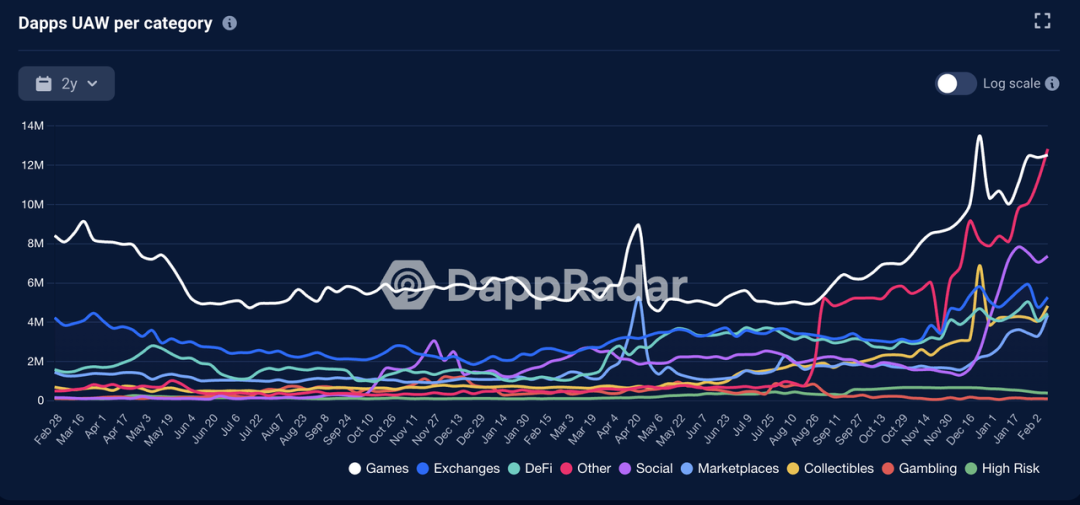
Following the热潮 sparked by P2E innovations like Axie and Stepn, the Web3 gaming sector remained lukewarm over the past two years. Yet from an on-chain data perspective, gaming remains the most active domain within Web3: daily unique active wallets (UAW) hover around 6 million, with daily on-chain transaction volume averaging about $100 million—outpacing DeFi and other sectors. Starting in August 2023, the gaming sector saw a sharp rise in UAW, surpassing 12 million by February 2024—an increase of over 142.44% compared to the same period in 2023.
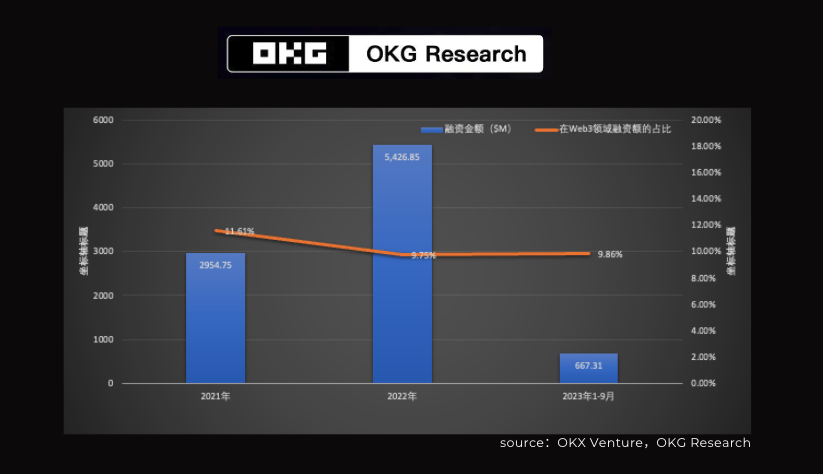
In the primary market, Web3 gaming also performs strongly. According to incomplete statistics from OKX Ventures, the Web3 industry recorded 923投融资 events in the first three quarters of 2023, with 91 occurring in the gaming sector—accounting for 9.86%. Although total funding amounts declined significantly due to market downturns compared to earlier years, the proportion of gaming-related deals remained stable at around 10%, indicating sustained investor confidence. Active participation from top-tier investment firms reflects long-term optimism toward the Web3 gaming space.
However, beyond strong on-chain and primary market performance, investors are hoping for a broader breakout in Web3 gaming in 2024. Compared to other segments, we believe Web3 gaming has the potential to emerge as a focal point in the next cycle. The reasons are as follows:
From a narrative standpoint, Web3 gaming carries sufficient momentum to break into the mainstream and fuel growth. Arthur Hayes, co-founder of BitMEX, recently wrote that in crypto markets, narratives often outweigh technology itself. While we don’t entirely agree, we acknowledge the power of storytelling. The Web3 industry is entering a narrative “ice age,” where capital and projects are concentrated on infrastructure, lacking fresh narratives for mass adoption. Whether reimagining the gaming industry with Web3 tech or leveraging games to bring Web3 into the mainstream, the combined base of nearly 3 billion Web2 gamers and nearly 600 million Web3 users provides a robust foundation for compelling narratives.
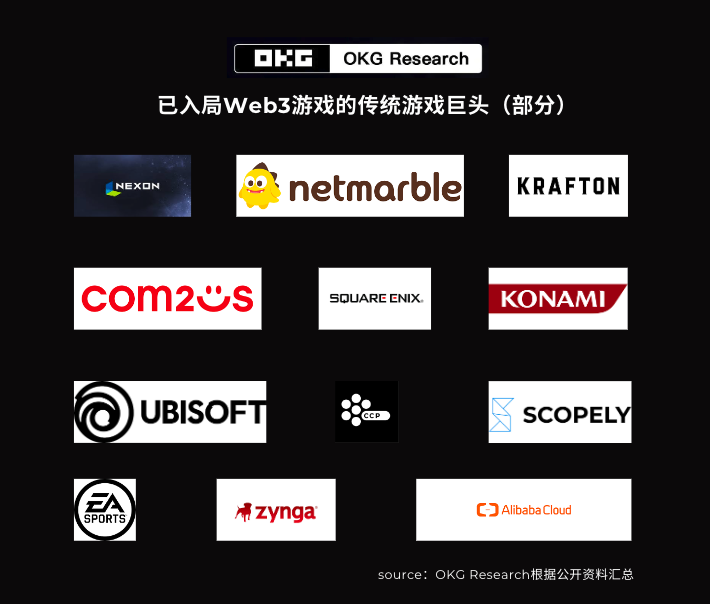
Though P2E pioneers like Axie Infinity and StepN ultimately failed due to Ponzi-like economic models, the broader picture shows that many native Web3 teams are learning from these predecessors and exploring products better aligned with market demand. Increasingly, seasoned traditional gaming giants are entering the space and developing AAA blockchain games, potentially bringing transformative improvements in playability—making the gaming sector impossible to ignore. According to a report by market research provider Markets and Markets, the global blockchain gaming market was valued at $4.6 billion in 2022 and is projected to reach $65.7 billion by 2027.
On a practical level, gaming is an extremely capital- and time-intensive industry, requiring the confluence of funding, time, and technology to ignite. As we enter 2024, these elements appear to be aligning. Advancements in modular blockchains, account abstraction (AA) wallets, zero-knowledge (ZK) proofs, and Layer 2 solutions provide stronger technical foundations for Web3 games. Meanwhile, years of strong fundraising performance in the primary market have given many project teams the resources and runway needed to refine and test their products.
All of this heightens market expectations for Web3 gaming’s performance in the new cycle. After years of development and multiple funding rounds, many Web3 games seem ready to deliver their results.
Note 1: AAA games refer to an informal category in the video game industry, typically denoting titles with high budgets, high production values, and high sales expectations.
Join TechFlow official community to stay tuned
Telegram:https://t.me/TechFlowDaily
X (Twitter):https://x.com/TechFlowPost
X (Twitter) EN:https://x.com/BlockFlow_News
 @OKGResearch








