New York Times: Uncovering the Chinese Owners Behind U.S. Bitcoin Mining Farms
TechFlow Selected TechFlow Selected
New York Times: Uncovering the Chinese Owners Behind U.S. Bitcoin Mining Farms
A 23-year-old Chinese college student acquired a Bitcoin mining facility in Texas last year for over $6 million.
 Navigating Web3 tides with focused insights
By Michael Forsythe, Gabriel J.X. Dance, The New York Times
Translated by Carl, Techub News
A legal dispute in a small Texas town has unexpectedly revealed the mysterious owner behind a local bitcoin mining operation: a Chinese college student.
Jerry Yu, a 23-year-old New York University student, is a classic example of a wealthy Chinese second-generation heir. He attended a prep school in Connecticut and lives in a Manhattan apartment he purchased for $8 million from former General Electric CEO Jeffrey R. Immelt.
He is also the primary owner of a bitcoin mine in Texas, which he acquired last year for more than $6 million—not in U.S. dollars, but in cryptocurrency.
Cryptocurrency offers anonymity, and transactions conducted through offshore exchanges can obscure the source of funds. This allows Chinese investors to bypass oversight from U.S. banks and federal regulators. In traditional financial transactions, receiving banks are required by law to report any suspicious activity to the U.S. Treasury Department.
None of this would have come to light if Jerry Yu’s company, BitRush Inc. (also known as BytesRush), hadn’t run into trouble in the Panhandle town of Texas. The company fell behind on payments to contractors, and ensuing lawsuits exposed what would otherwise have remained private transactions.
After China banned bitcoin mining in 2021, many Chinese investors moved their operations to the United States, spending hundreds of millions of dollars building or operating cryptocurrency mines.
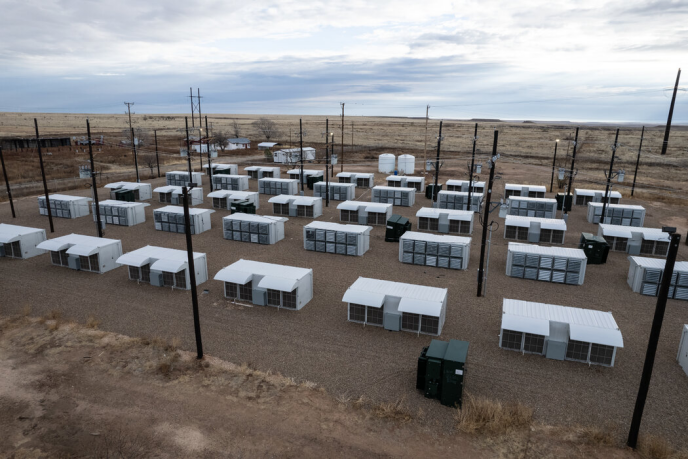
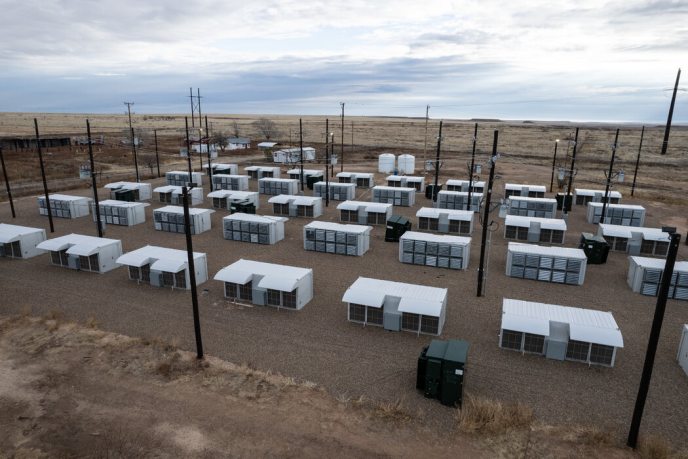
These mining facilities allow Chinese investors to produce cryptocurrencies—primarily bitcoin—which they can then cash out for U.S. dollars via exchanges. Jerry Yu’s mine sits on an open plot of land and consists of dozens of buildings housing 6,000 specialized mining machines. These computers operate around the clock, solving complex mathematical problems to earn bitcoin, each now worth over $40,000. According to The New York Times, such large-scale operations may strain regional power grids, and the Chinese ownership of these facilities has drawn scrutiny over U.S. national security implications.
In litigation against Jerry Yu, a U.S. citizen and resident, contractors claimed that Yu “is not only a Chinese national but also one with high-level political influence and significant commercial standing.”
The lawsuit provided no concrete evidence about his affiliations, and the money trail ultimately leads to the crypto exchange Binance. By using USDT on Binance’s offshore platform, the investors behind Jerry Yu’s operation remain untraceable. U.S. government officials say Binance’s offshore business does not comply with U.S. banking regulations.
Last month, Binance admitted to violating anti-money laundering rules and agreed to pay over $4.3 billion in penalties. At the heart of the case was Binance’s failure to comply with laws including the Bank Secrecy Act, which requires financial service providers to verify customer identities and flag suspicious transactions.
Gavin Clarkson, BitRush’s lawyer, said in an email that the company complies with all applicable federal, state, and local laws, including the Bank Secrecy Act. He dismissed the contractors’ claims—including allegations of unpaid bills—as baseless. “BitRush is owed money, not the other way around,” he said.
In its countersuit against the contractors, BitRush alleges “gross negligence” in their work and is seeking $750,000 in damages.

Brent Loudder, who oversaw electrical and plumbing work at the site, says contractors were left unpaid.
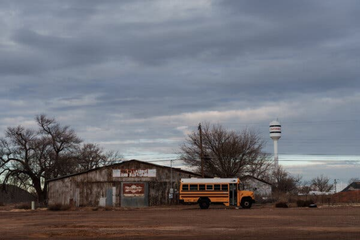
The town where the mine is located has a population of just 281.
BitRush’s arrival generated considerable attention in the small town, with some residents finding jobs in the construction of the facility.
Brent Loudder, who supervised electrical and plumbing work, said contractors only received payment after staging a work stoppage protest. Another electrical contractor has also filed a lawsuit against BitRush over unpaid wages.
Documents shared by the contractors’ attorney, David Huang, reveal how BitRush planned to acquire the mine: Outlaw Mining, the seller, was to receive $6.33 million in USDT. The purchase agreement listed a wallet address where the funds would be sent.
Transaction records show that the wallet address belongs to FalconX, a cryptocurrency brokerage. The final payment amounted to $5.077 million, completed last year. Prior to that, a $500,000 deposit in USDT was made, followed by an additional $750,000 in USDT paid once BitRush took possession of on-site equipment, supplies, and materials.
However, the origin of the funds remains unrecorded, and the agreement did not specify who made the payments—information reportedly known only to Binance, which processed the transactions. Gavin Clarkson, BitRush’s lawyer, stated that BitRush never sent or received any funds through Binance.
Purvi Maniar, FalconX’s deputy general counsel, said in a statement that the company “has no knowledge of the source of the funds.”
Madeleine Kennedy, a spokesperson for Chainalysis, said that once funds are sent to a centralized service on the blockchain, it becomes impossible to trace the individual who sent them to the exchange without legal procedures such as a court order.
Jessica Jung, a Binance spokesperson, said the exchange has strict procedures in place to verify customer identities. Three Binance accounts were used to send USDT payments, but these accounts belong to non-U.S. residents. “Binance does not provide services to any U.S. customers,” she said.
Using USDT for payments is common in the bitcoin mining industry.
Miners in Arkansas and Wyoming both said they use USDT to purchase specialized computers made by Chinese manufacturers, noting one benefit is avoiding sales tax and capital gains tax.
A document shared by the contractors’ attorney, David Huang, confirmed the identities of some BitRush shareholders. After Jerry Yu, the largest investor is linked to IMO Ventures, a venture capital firm based in San Mateo, California, focused on China. Another shareholder is referred to as “Lao Yu.”
Records from WireScreen show that Yu Hao and Sun Xiaoying signed the mortgage documents for Jerry Yu’s Manhattan apartment—names matching those of a married Chinese couple who hold shares in companies worth over $100 million. Sun Xiaoying is also listed as a director of BitRush.
Jerry Yu’s lawyer, Gavin Clarkson, declined to confirm the identities of BitRush’s shareholders or their relationship to Jerry Yu.
Josey Parks, founder of Outlaw Mining, said in a phone interview that due to a confidentiality agreement, he could not comment on the financial arrangements with BitRush.
Later in a text message, Parks added: “As far as I know, Jerry Yu is a college student in the U.S. His family is very wealthy. I don’t know any of his investors, nor do I know of any connection he may have with foreign entities.”
Join TechFlow official community to stay tuned
Telegram:https://t.me/TechFlowDaily
X (Twitter):https://x.com/TechFlowPost
X (Twitter) EN:https://x.com/BlockFlow_News
 @News_Techub