









"Digital Beggar" Sparks Outrage, Starknet and Scroll Face Back-to-Back Public Backlash
TechFlow Selected TechFlow Selected
"Digital Beggar" Sparks Outrage, Starknet and Scroll Face Back-to-Back Public Backlash
It's truly unnecessary for the project team to verbally attack yield farmers.
 Navigating Web3 tides with focused insights
Author: Azuma, Odaily Planet Daily
Recently, Starknet has once again found itself in the midst of controversy.
The incident began when Abdelhamid Bakhta (abdel.stark.eth), a core developer at Starknet, publicly referred to community members asking about airdrop status as "e-beggars" on social media. Another developer, od1n, was also accused of using memes to insult Chinese-speaking users. Additionally, Starknet created a new sub-channel titled "e-beggar" within its official Discord server, complete with a bug icon.
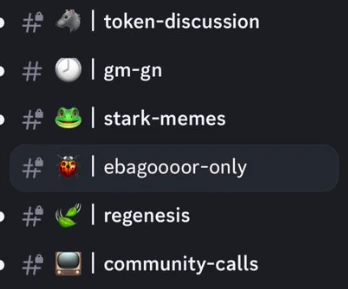
The "e-beggar" sub-channel in Starknet's official Discord
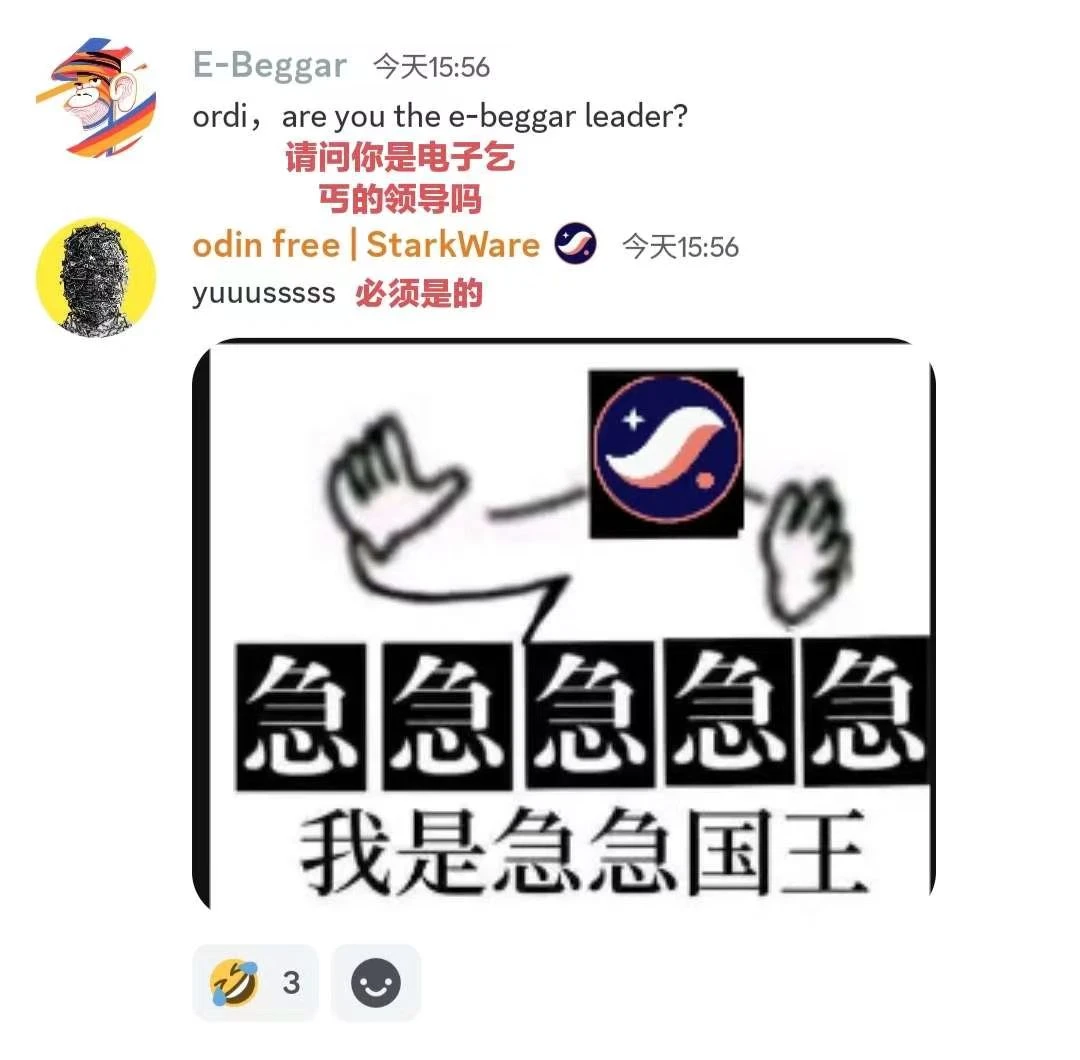 od1n's alleged record of insulting Chinese-speaking users
Given that Starknet has recently been rumored to be preparing an airdrop—yet no concrete action has materialized—users who have waited years for rewards were already nearing their breaking point emotionally. Unsurprisingly, Abdelhamid’s remarks and the team’s actions ignited outrage among parts of the user base.
As the situation escalated, numerous users began sending "polite greetings" to Abdelhamid and Starknet; others created memes mocking the project. Most amusingly, some users unearthed old posts by od1n on X (formerly Twitter) where he frequently speculated about potential airdrops across various projects—an apparent case of “reborn as a project team member,” now turning his back on past behaviors.
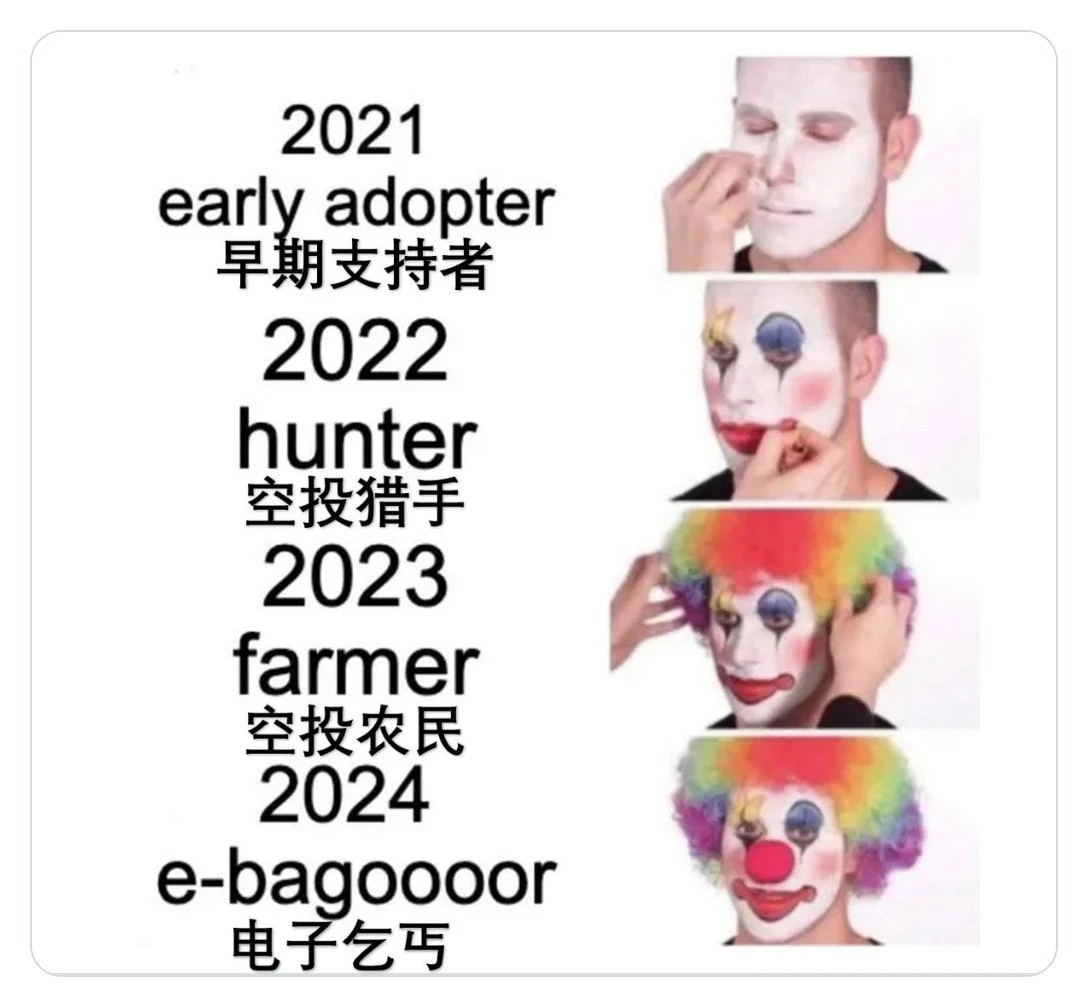
Memes created by the community
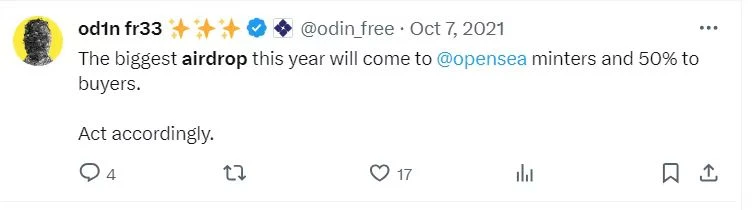
One example of od1n’s earlier discussions about potential airdrops
Seeing public sentiment spiral out of control, Abdelhamid issued an emergency apology last night, admitting that using the term "e-beggar" was inappropriate. He explained it had initially seemed like a joke, without considering the consequences, and added that Uri's recent resignation from StarkWare due to family health issues had further impacted his emotional state, leading to an overreaction.
Following this, Starknet deleted the "e-beggar" sub-channel from its official Discord server.
While many users expressed understanding after Abdelhamid’s apology, a significant number remained unconvinced and continued voicing criticism beneath his apology post.
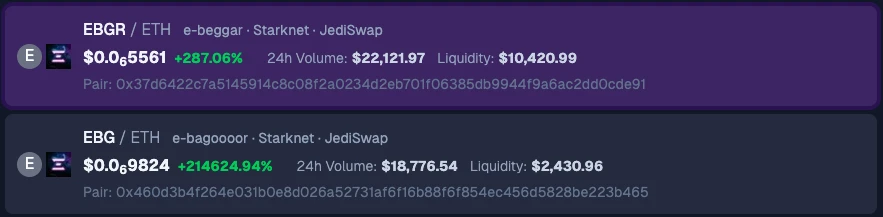
Notably, following this controversy, meme tokens EBG and EBGR linked to the "e-beggar" concept on Starknet surged dramatically, potentially becoming emblematic memes within the ecosystem...
Interestingly, Starknet isn’t the only project recently facing backlash over use of the term "e-beggar." Scroll has also faced similar fire. Toghrul Maharramov, a senior researcher at Scroll, recently called a user an "e-beggar" during an argument, even using explicit language such as "fxxk" when mocking users chasing airdrops.
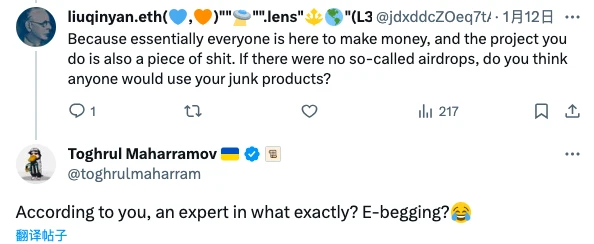
As with Starknet, Toghrul’s comments quickly drew anger from the community toward Scroll.
These repeated incidents reflect deeper tensions between project teams and users—including so-called "airdrop farmers"—rooted in fundamental philosophical differences.
Defining the line between "genuine users" and "airdrop farmers" is inherently difficult. Even if many users engage with a project primarily for airdrop incentives, most still perform purposeful, goal-oriented interactions along the way—actions that leave tangible traces in network data. Conversely, few users are truly willing to forgo airdrop rewards and contribute entirely altruistically.
For project teams, wanting to distribute tokens to more "genuine users" to maintain post-launch fundamentals is understandable. However, they could quietly apply their own criteria to filter sybil behavior rather than openly criticizing users—a practice that risks alienating legitimate participants without meaningfully improving overall engagement metrics.
Moreover, after years of Web3 development, the implicit understanding—"you take my data, I want your airdrop"—has become industry norm. While perhaps not politically correct, both sides are interdependent in complex ways. In such entangled relationships, emphasizing divisions excessively is unwise.
In this case, Starknet and Scroll repeatedly calling out users’ airdrop motivations can be seen as major PR missteps. From a project development perspective, while technical innovation remains crucial, operational approach matters just as much. We appreciate the innovations Starknet and Scroll bring—Starknet in non-EVM Rollup environments and Scroll in EVM-equivalent Rollups—and hope neither gets sidelined by such avoidable mistakes that push them into opposition against their communities.
The journey of Web3 is long, and internal disagreements should not yet become the primary conflict. Everyone involved remains part of the "force that can be united."
Join TechFlow official community to stay tuned
Telegram:https://t.me/TechFlowDaily
X (Twitter):https://x.com/TechFlowPost
X (Twitter) EN:https://x.com/BlockFlow_News
 Odaily








