Ethereum's New Narrative: Liquid Restaking
TechFlow Selected TechFlow Selected
Ethereum's New Narrative: Liquid Restaking
Overview of four live but non-tokenized projects in the liquid restaking sector.
 Navigating Web3 tides with focused insights
Author: dt, DODO Research
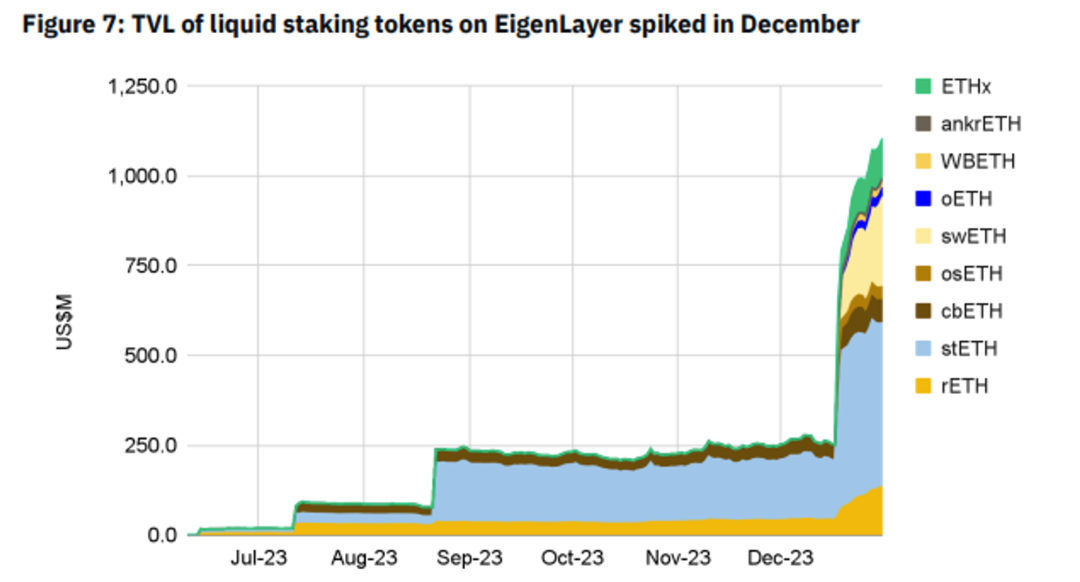
The long-weak Ethereum ecosystem is finally about to welcome a new wave of narratives. In addition to the highly anticipated Cancun upgrade (DenCun upgrade), which benefits numerous Layer 2s, restaking has become a focal point in the Ethereum ecosystem following EigenLayer’s decision late last year to open additional LST deposit capacity. Within just one month, EigenLayer attracted over 500,000 $ETH in TVL, surpassing $1 billion and reaching $1.4 billion—making it currently the 12th largest project by TVL on Ethereum. The AVS built on EigenLayer, EigenDA, is also即将 launching soon. Data availability (DA) services have drawn significant market attention, especially amid the surge in Celestia's token $TIA. Beyond its own success, EigenLayer has catalyzed an entirely new sector: Liquid Restaking DeFi (LRD) / Liquid Restaking Tokens (LRT), liquidity-enabled restaking protocols. As the name suggests, LRD projects aim to unlock liquidity for LSTs (such as stETH, swETH, ETHx) locked within EigenLayer by issuing liquid restaking tokens (LRTs), thereby enabling users to maintain exposure while freeing up capital—sparking a fresh cycle of token composability.
Today, Dr. DODO will walk you through the most promising projects in the liquid restaking space worth your attention, focusing specifically on four projects that have launched products but have not yet issued tokens.
What Is Restaking?
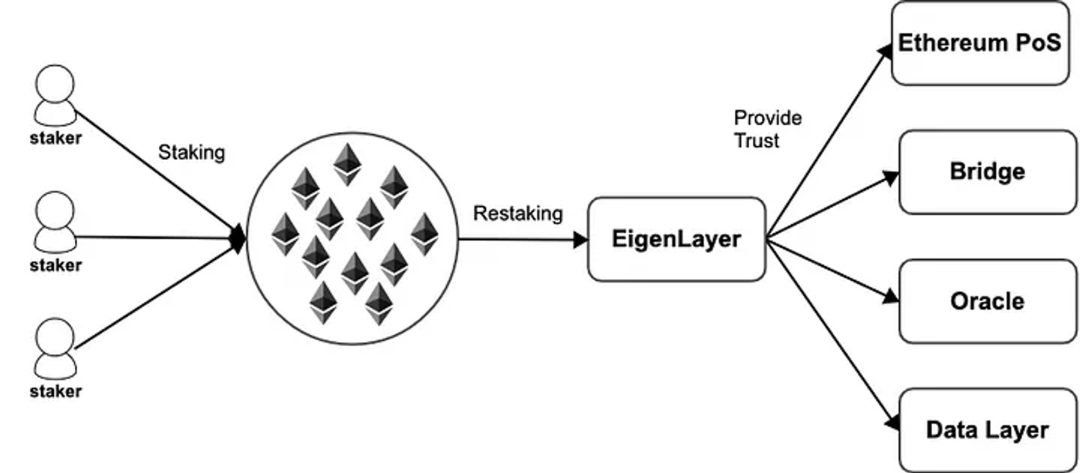
Half a year ago, Dr. DODO already introduced EigenLayer and the concept of restaking. Simply put, restaking allows you to earn additional yield on top of your existing POS-staked Ethereum.
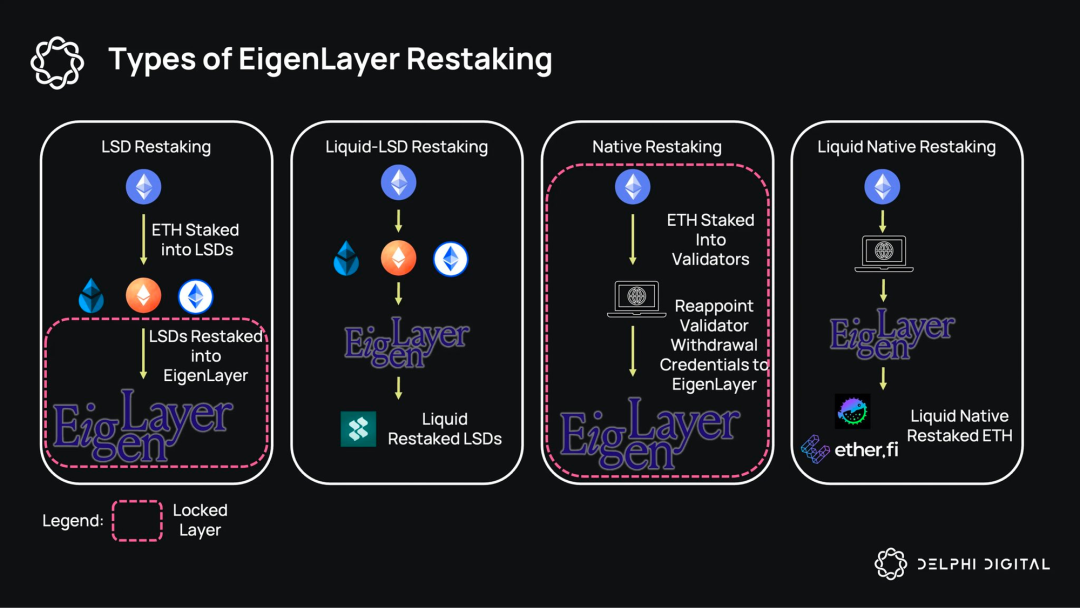
Now that we understand EigenLayer, let’s explore derivative projects under the restaking narrative. Using Delphi Digital’s framework, we can clearly identify four types of restaking:
-
LSD Restaking: Deposit your LSTs (e.g., stETH, swETH) obtained from LSD protocols into EigenLayer for restaking.
-
Liquid-LSD Restaking: Use LRD protocols such as KelpDAO to delegate your LSTs to the protocol, which then deposits them into EigenLayer. Users receive a liquid restaking token (LRT) as a receipt.
-
Native Restaking: Native validators who operate their own nodes can also commit their staked ETH to EigenLayer for restaking.
-
Liquid Native Restaking: Projects like ether.fi or Puffer Finance offer node services for small amounts of ETH and allow those ETH holdings to be restaked via EigenLayer.
KelpDAO
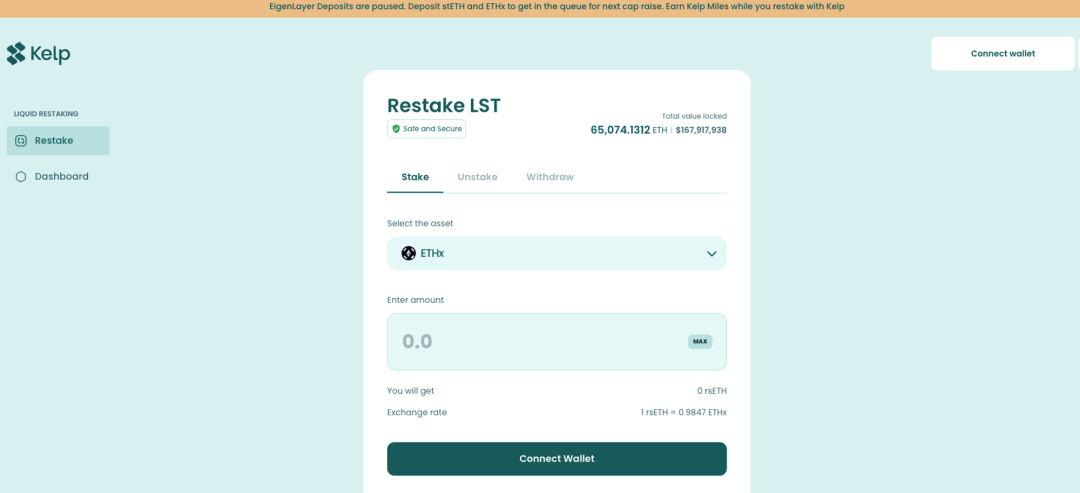
KelpDAO is a restaking ecosystem project developed by Stader Labs, the team behind the LSD protocol Stader. It falls under the Liquid-LSD Restaking category. Currently, users can deposit Lido’s stETH and Stader’s ETHx into KelpDAO. However, due to EigenLayer’s LST deposit cap being reached, deposits are currently paused. The official team has confirmed that users depositing into KelpDAO will be eligible for EigenLayer points rewards. With a current protocol TVL exceeding $160 million, KelpDAO leads the LRT sector in terms of total value locked.
Renzo
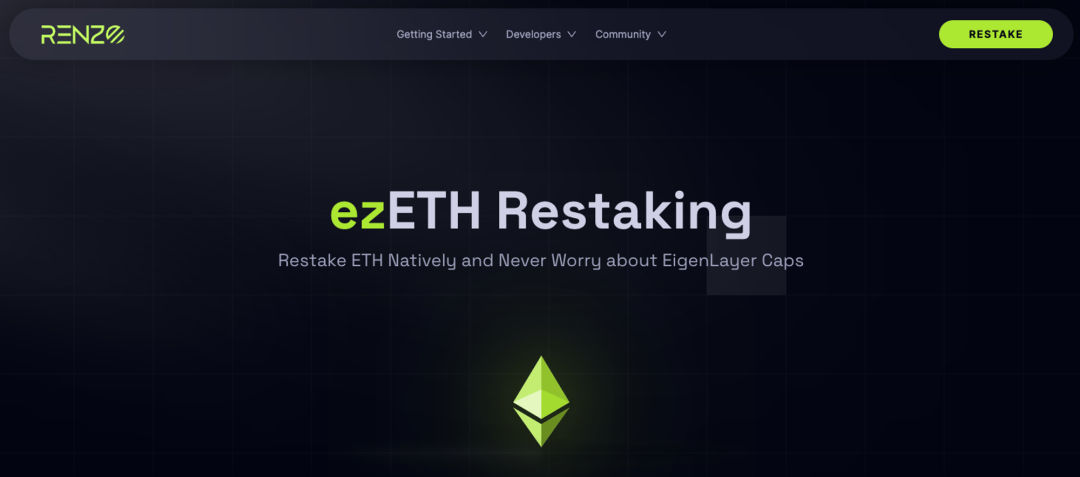
Unlike KelpDAO, Renzo belongs to the Liquid Native Restaking category. This means it is not subject to EigenLayer’s LST deposit limits and thusstill accepts deposits. However, note that ETH deposited into Renzo cannot currently be withdrawn, and the receipt token ezETH is non-transferable in the short term—effectively locking funds. Similar to KelpDAO, the team has indicated that users will qualify for EigenLayer points. That said, details regarding the founding team and funding remain undisclosed, so early-stage risks should be carefully considered.
Swell
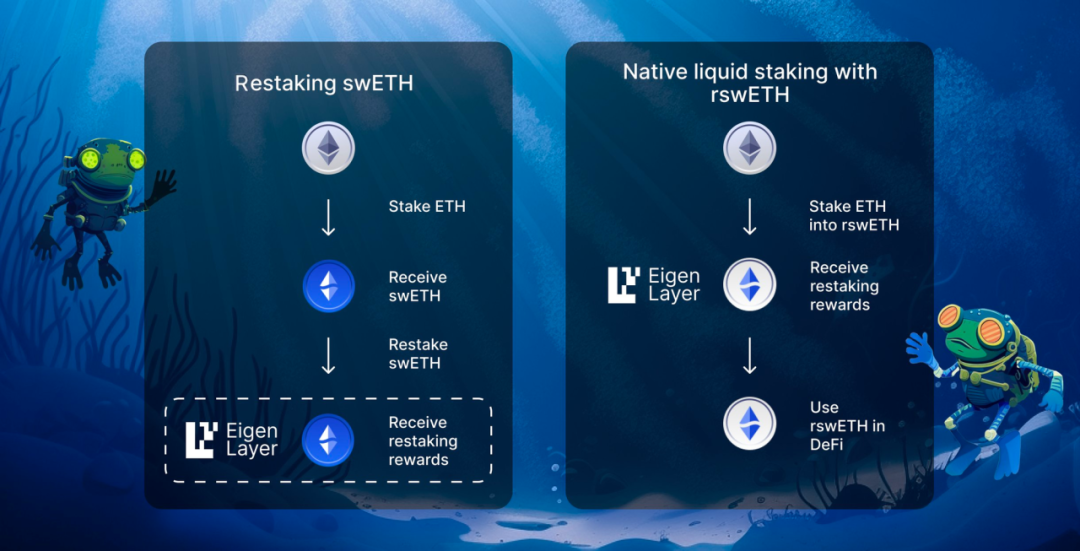
Swell Network is a well-established LSD protocol that recently announced its expansion into the Liquid Restaking space. Also categorized as a Liquid Native Restaking product, it is不受 EigenLayer’s LST quota restrictions. Since Swell has not yet launched a token, there is strong airdrop anticipation, making its LST token swETH particularly popular among airdrop farmers. Currently, swETH ranks as the second-largest staked asset within EigenLayer.
Currently, only the LSD portion is live—users can stake ETH to receive swETH. The Liquid Native Restaking product, which would issue rswETH upon ETH staking, has not yet been launched.
ether.fi
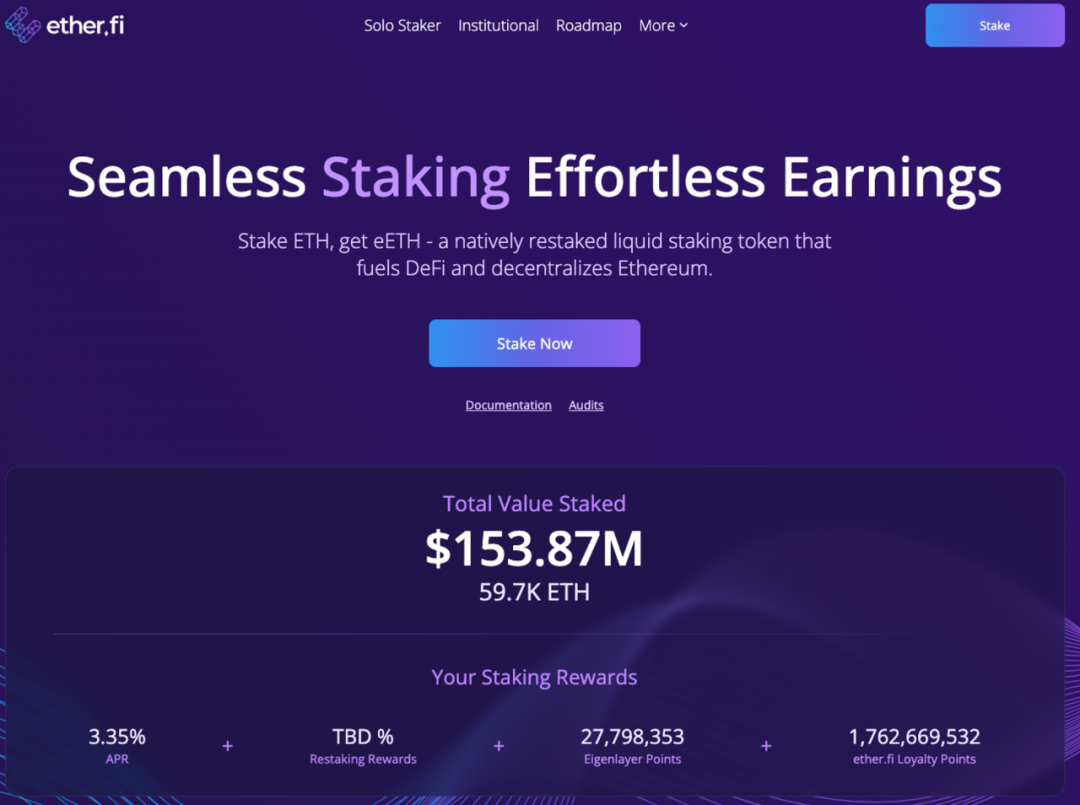
Like the two projects above, ether.fi is also a Liquid Native Restaking protocol. It previously raised a $5.3 million seed round from BitMEX founder Arthur Hayes. Unlike Lido, ether.fi employs a decentralized, non-custodial approach to ETH staking and has announced support for restaking. Because it uses native ETH restaking, it remains unaffected by EigenLayer’s LST deposit caps and continues accepting deposits. Its receipt token eETH (wrapped as weETH) is one of the few LRTs with existing liquidity in the market.
Author’s View
In my view, after the approval of spot Bitcoin ETFs in Q1 2024, the Ethereum ecosystem stands poised for a rebound. Three key narratives are likely to dominate Ethereum this year: first, the Layer 2 ecosystem boosted directly by the Cancun upgrade; second, the EigenLayer restaking ecosystem discussed today; and third, Web3 applications targeting mass adoption (e.g., gaming, payments). Among these, participating in Liquid Restaking protocols offers one of the most efficient ways to engage with the EigenLayer restaking narrative—simply deposit ETH into these protocols to achieve multi-layered yield generation ("one fish, multiple meals").
Beyond the four projects highlighted here, many others are preparing to enter the space. For example, Puffer Finance, previously covered by Dr. DODO, has recently announced plans to support restaking. However, since its product is not yet live, it won’t be detailed in this article. Still, readers are encouraged to keep an eye on emerging players in this sector and consider prudent participation where risk is manageable—potentially reaping rewards when these protocols eventually launch their tokens.
Join TechFlow official community to stay tuned
Telegram:https://t.me/TechFlowDaily
X (Twitter):https://x.com/TechFlowPost
X (Twitter) EN:https://x.com/BlockFlow_News
 Dr.DODO