








Apple Vision Pro is即将 launched—Which VR/AR crypto projects are worth watching?
TechFlow Selected TechFlow Selected
Apple Vision Pro is即将 launched—Which VR/AR crypto projects are worth watching?
In a narrative-driven market environment, synchronization doesn't matter—only aligned direction does.
 Navigating Web3 tides with focused insights
Author: TechFlow
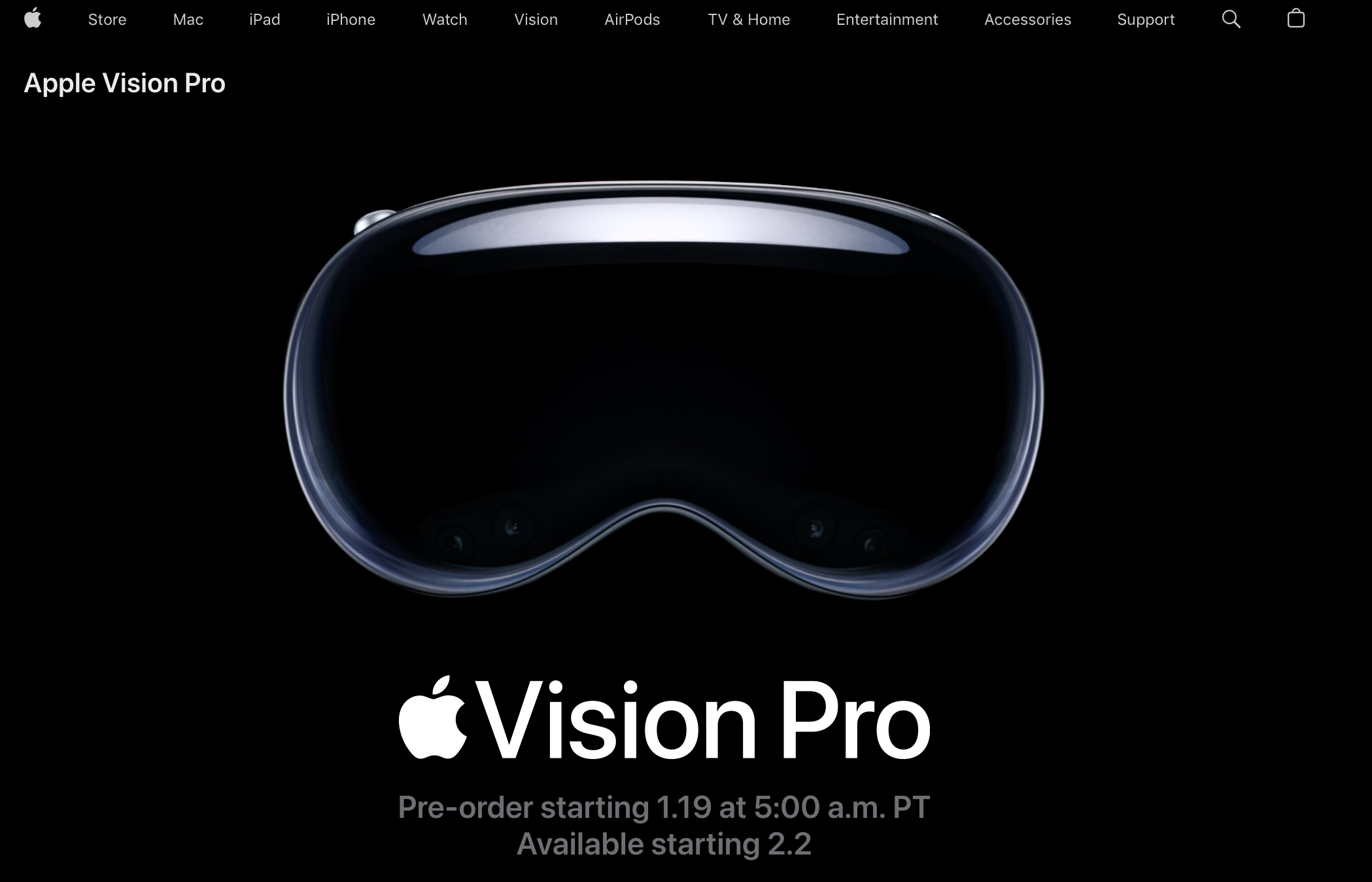
Apple's Vision Pro is finally arriving.
According to Apple's official website, the Vision Pro will be available for sale in all Apple physical and online stores in the U.S. starting February 2, with pre-orders opening on January 19.
The Vision Pro is a device that combines AR and VR capabilities. Users can fully immerse themselves in gaming, movie watching, or working—leveraging VR functionality—while also using sensors on the headset’s surface to project real-world people and objects into the virtual environment, enabling AR experiences.
As a leader in the tech industry, Apple’s product updates often influence component suppliers, stock prices in capital markets, and even consumer behavior to varying degrees—and they’re also seen as indicators of technological trends.
And naturally, the crypto market—which thrives on narratives—will also feel the ripple effects of this AR/VR wave.
With less than a month before the product launch, and given the tendency of crypto projects to front-run hype cycles, it’s time to start paying attention to projects tied to AR/VR concepts.
Below, we’ll explain how AR/VR connects with crypto projects and highlight some worth watching.
Why Could Vision Pro Be a Narrative Catalyst?
In theory, Apple's hardware products don’t directly connect with most crypto projects in the short term.
Indeed, crypto projects aren't involved in the Vision Pro’s hardware supply chain, nor do they have the resources or bandwidth to release compatible software at launch. Fundamentally, there’s little direct linkage.
But in a narrative-driven market, timing doesn’t matter—only direction does.
If you're working on AR/VR, that’s enough alignment. And if you happen to have any other ties to Apple, it becomes even easier to attract investor attention.
You might think this sounds stretched, but history offers a precedent.
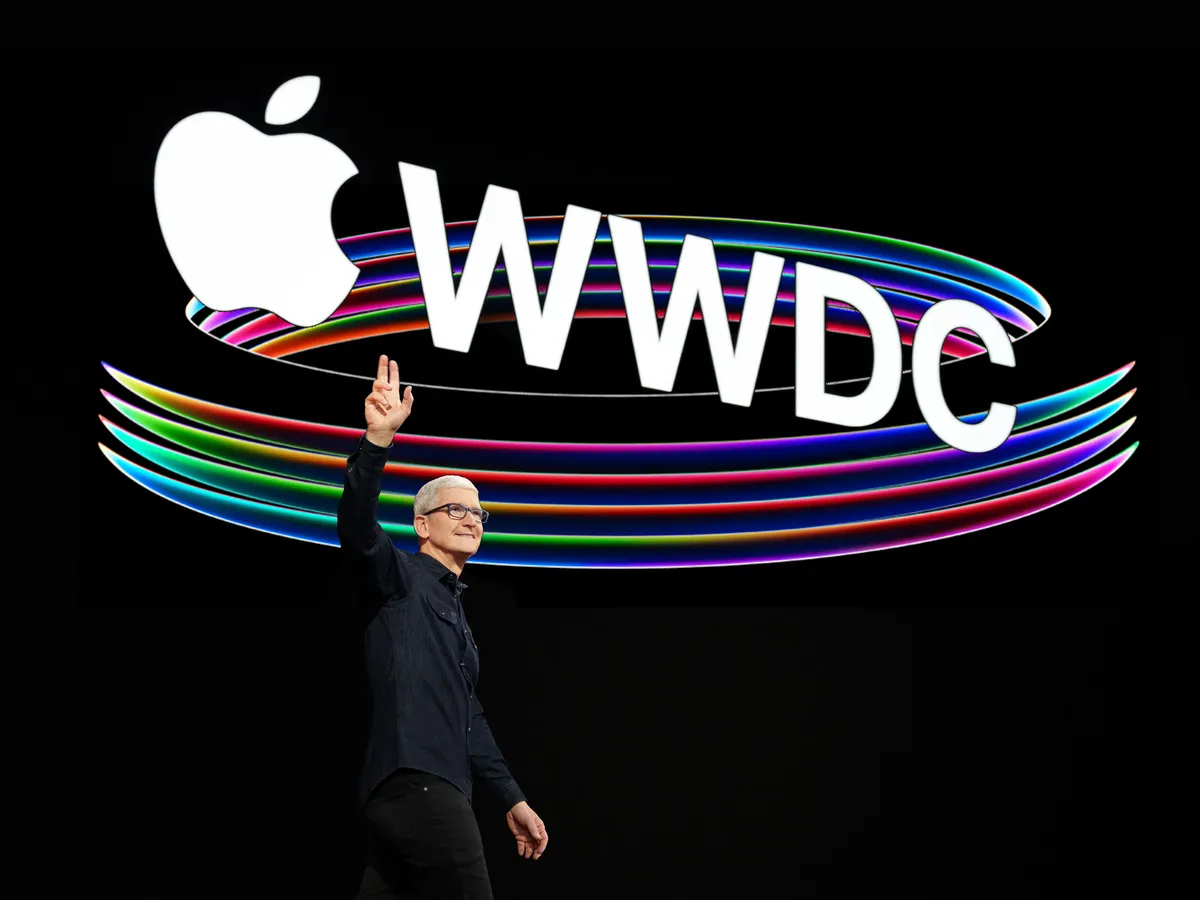
On June 5 last year, Apple held its WWDC developer conference, announcing multiple software and hardware updates including the Apple Vision Pro, new MacBook Air, and iOS 17.
In the weeks—or even months—leading up to the event, rumors about an upcoming VR device had already been circulating, with major media outlets covering the speculation extensively.
Given that high-quality VR/AR requires substantial computing power for rendering, this anticipation fueled strong interest in RNDR, a project directly tied to decentralized rendering.
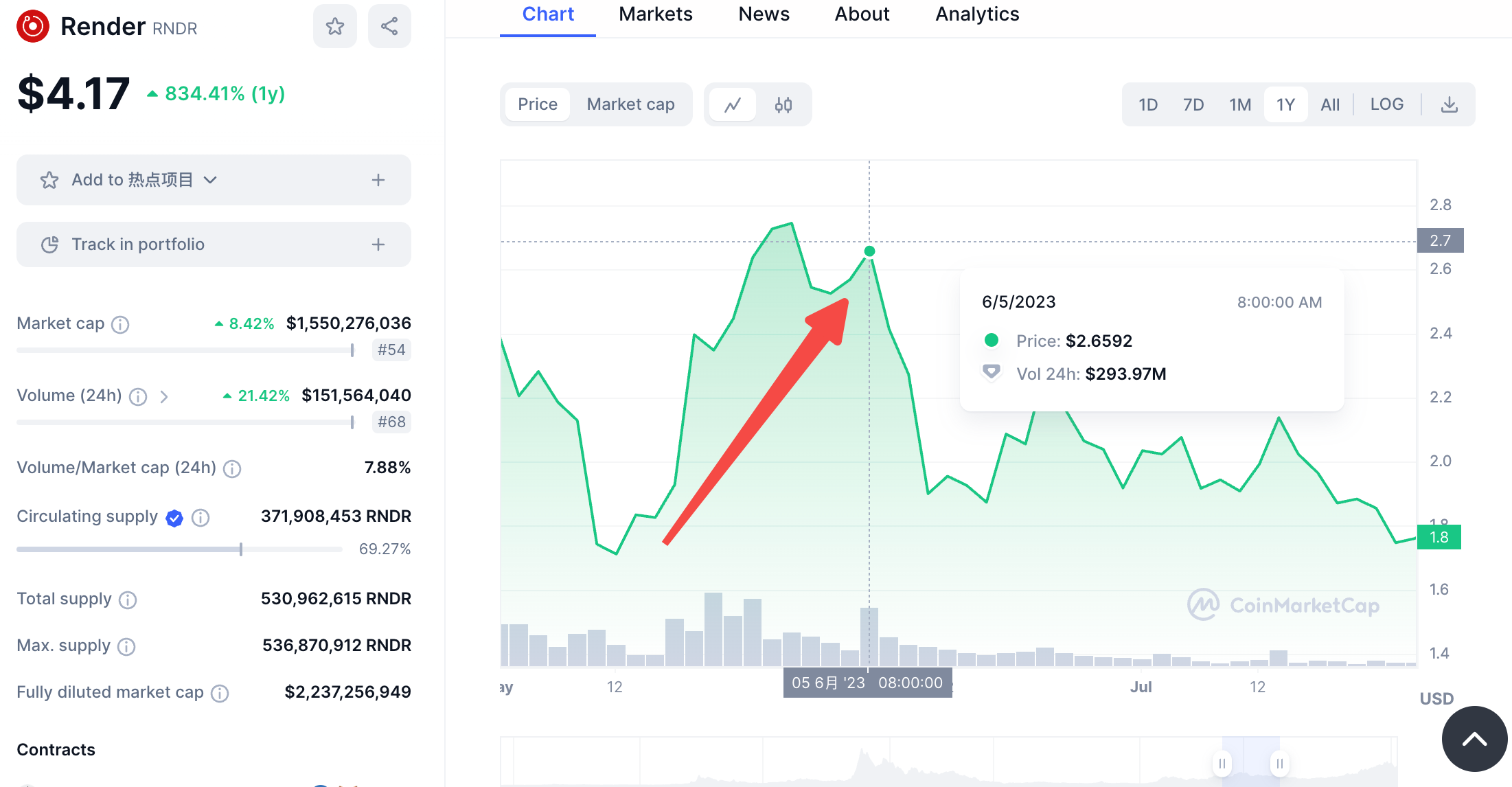
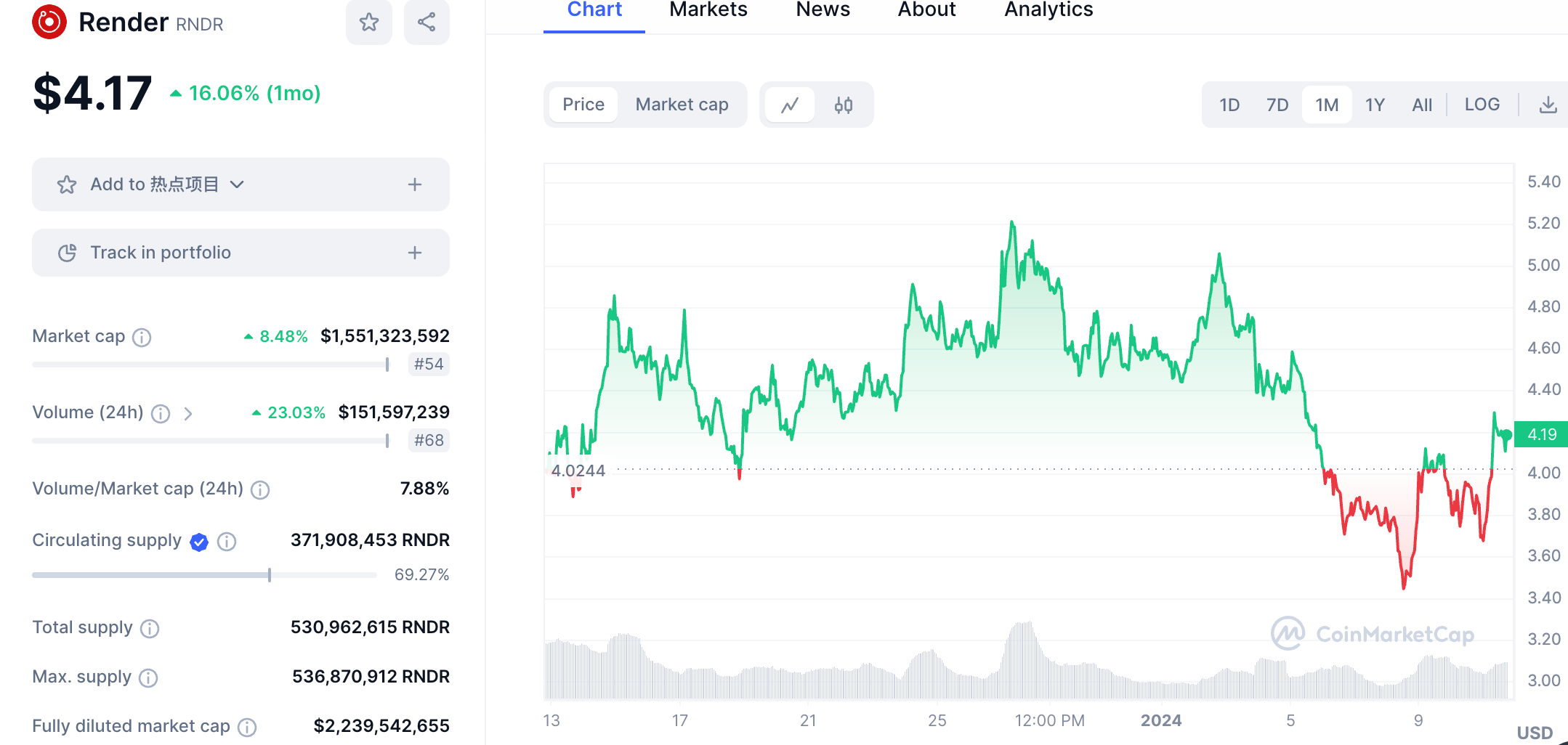
According to data from CMC, from May 12 last year through the day of Apple’s announcement, RNDR’s token price surged from around $1.70 to $2.70—a classic case of “buy the rumor, sell the news.”
History doesn’t repeat itself exactly, but it often rhymes.
If last May was about anticipating a product launch, now—with Bitcoin spot ETF approvals, lingering bull market sentiment, and the imminent release of Vision Pro—...
Tokens linked to related narratives may see another round of short-term speculation.
So which projects are most likely to benefit from Apple’s AR/VR push? We’ll evaluate potential candidates based on one or more of the following criteria:
-
Projects with direct partnerships with Apple and aligned business focus;
-
Projects expected to provide AR/VR content such as games (metaverse), video, and other media;
-
Projects offering support in AR/VR hardware, supply chains, or ecosystem development;
-
Loose connections to Apple, such as being listed on the App Store or integrating Apple Pay.
Render Network ($RNDR): The Rendering-Focused Veteran
The Render Network behind the previously mentioned RNDR naturally deserves first mention.
In fact, two years ago, we even made a dedicated video introducing Render Network, back when RNDR wasn’t nearly as well-known and the token was trading at much lower levels.
Although RNDR has since been widely recognized, its core mission remains unchanged:
It addresses massive global demand for image rendering by using blockchain and smart contracts to match those needing rendering services with individuals worldwide who have idle GPUs. These spare graphics cards take on rendering tasks, completing jobs via a shared economy model.
This is the familiar concept of “decentralized GPU rendering.”
Its alignment with Vision Pro’s AR/VR rendering needs is clear. After benefiting from the pre-launch hype last May, it remains relevant today—and arguably the most closely tied project under this narrative.
Moreover, Apple is actually a client of Render Network, which provides distributed GPU network services supporting Apple’s AR content creation—an additional point of commercial synergy. Additionally, Render Network’s Octane X rendering app is available on the Apple App Store.
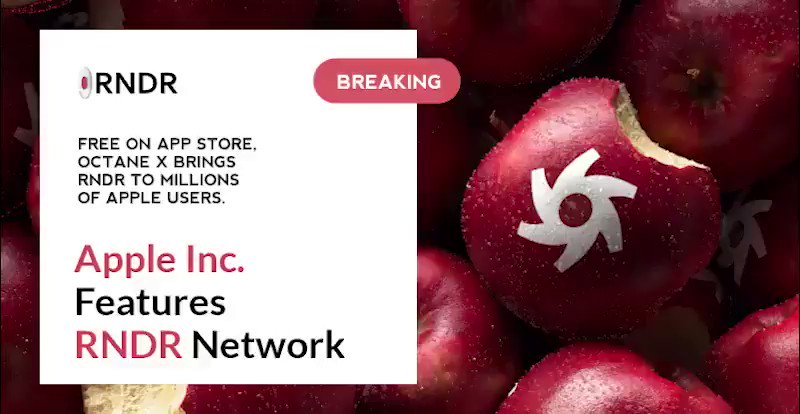
A lesser-known fact: OTOY, the parent company of Render, shares its home state of California with Apple.
Shared location, complementary expertise, existing business relationship—RNDR checks many boxes. However, given its current $1.5 billion market cap and relatively stable token price over the past month, it should be viewed more as a beta play rather than a high-leverage speculative bet.
CEEK VR ($CEEK): A VR Streaming Platform with Content and Hardware
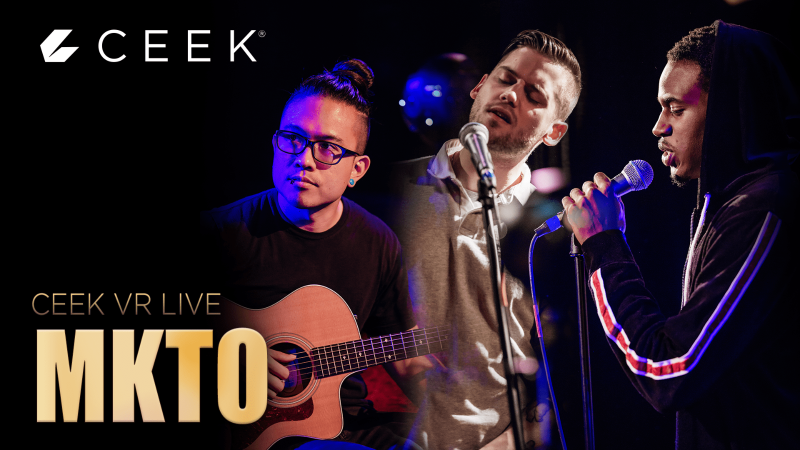
Founded in 2015, CEEK VR is a streaming platform built on Ethereum and BNB Chain.
The platform primarily focuses on artist-created content. Creators upload their work to CEEK VR, protected and managed via blockchain-based rights control, connecting directly with fans globally. Fans pay in CEEK tokens to access or collect this content.
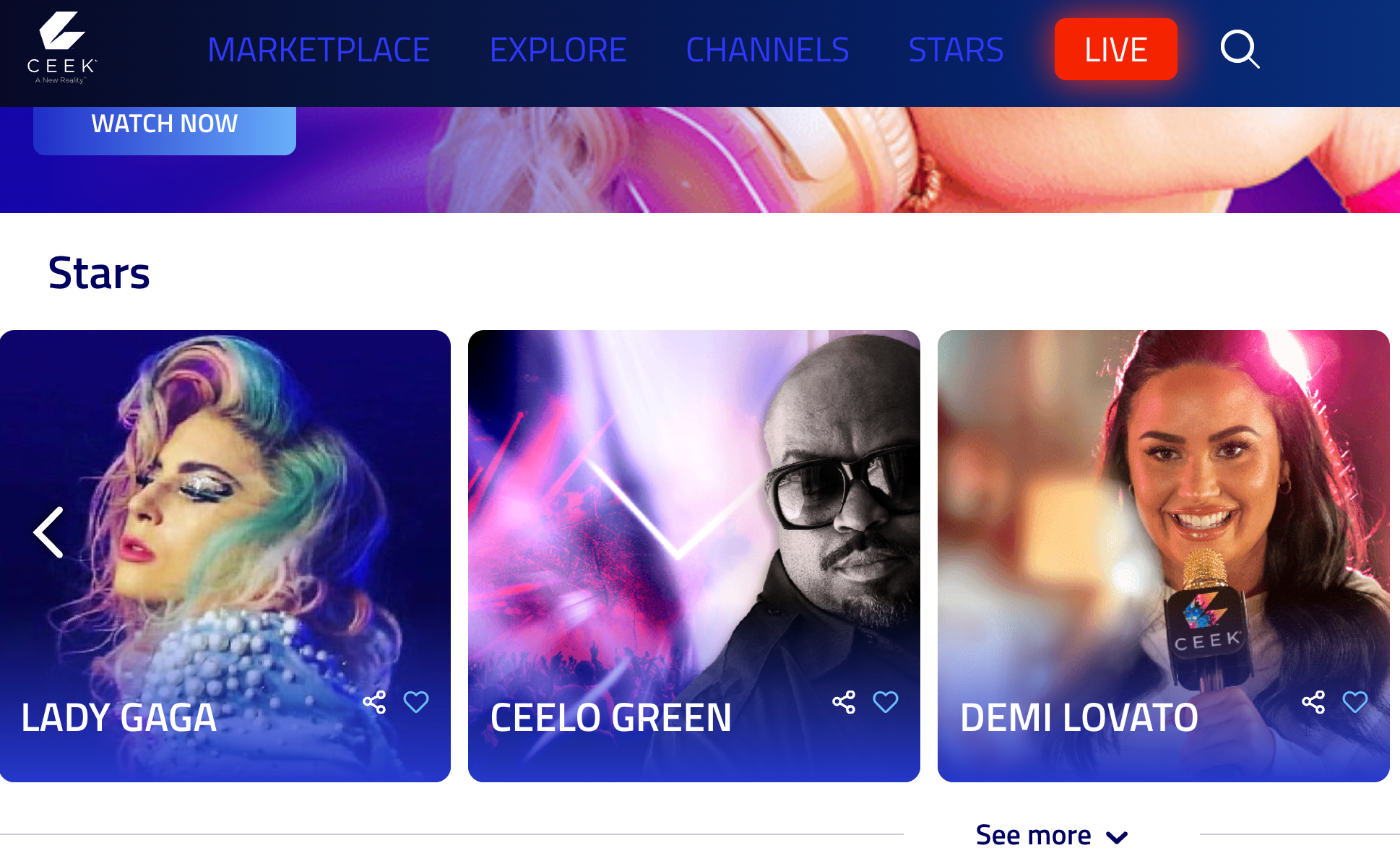
The platform also hosts top-tier celebrities like Lady Gaga, leveraging star power to boost visibility and credibility.
Notably, CEEK also sells its own VR headsets. Users can order devices directly from their website to consume platform content—a move toward vertical integration of hardware and software.

Originally launched on Ethereum, CEEK integrated BNB Chain in 2022. It also partners with Deutsche Telekom, Apple, and Universal Music on streaming services, giving it strong alignment with AR/VR narratives both technologically and commercially.
In terms of token performance, CEEK has seen little price movement over the past month, maintaining a market cap around $45 million. Compared to RNDR’s infrastructure role, CEEK targets end consumers more directly—making it an application-layer product.
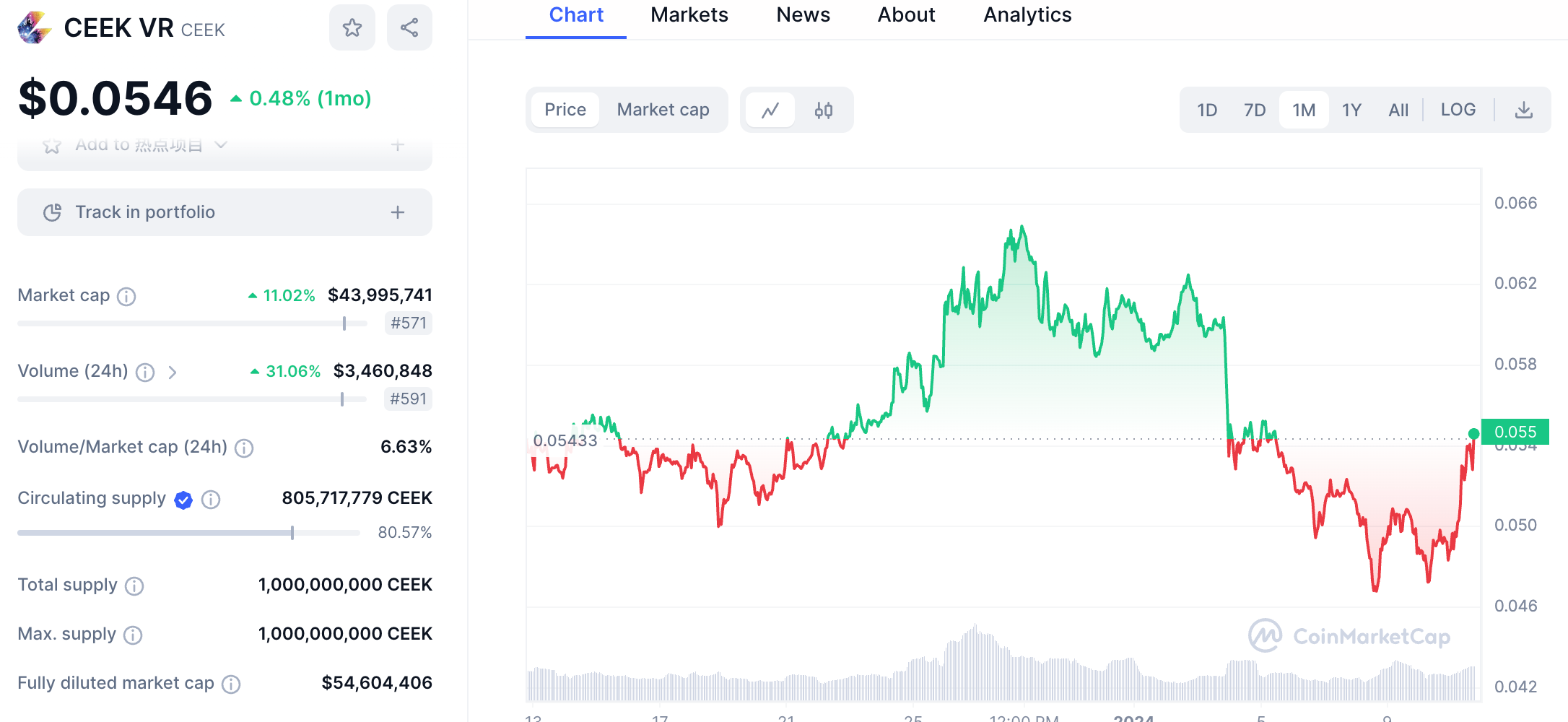
In crypto, infrastructure projects typically command higher valuations than applications. Still, given that CEEK’s market cap is just one-third of RNDR’s and its direct relevance to VR, it remains a compelling candidate within the Vision Pro narrative.
OVER ($OVR): AR + Real-World Mapping
OVR is an AR and virtual reality (VR) platform built on the Ethereum blockchain, merging the physical and digital worlds.
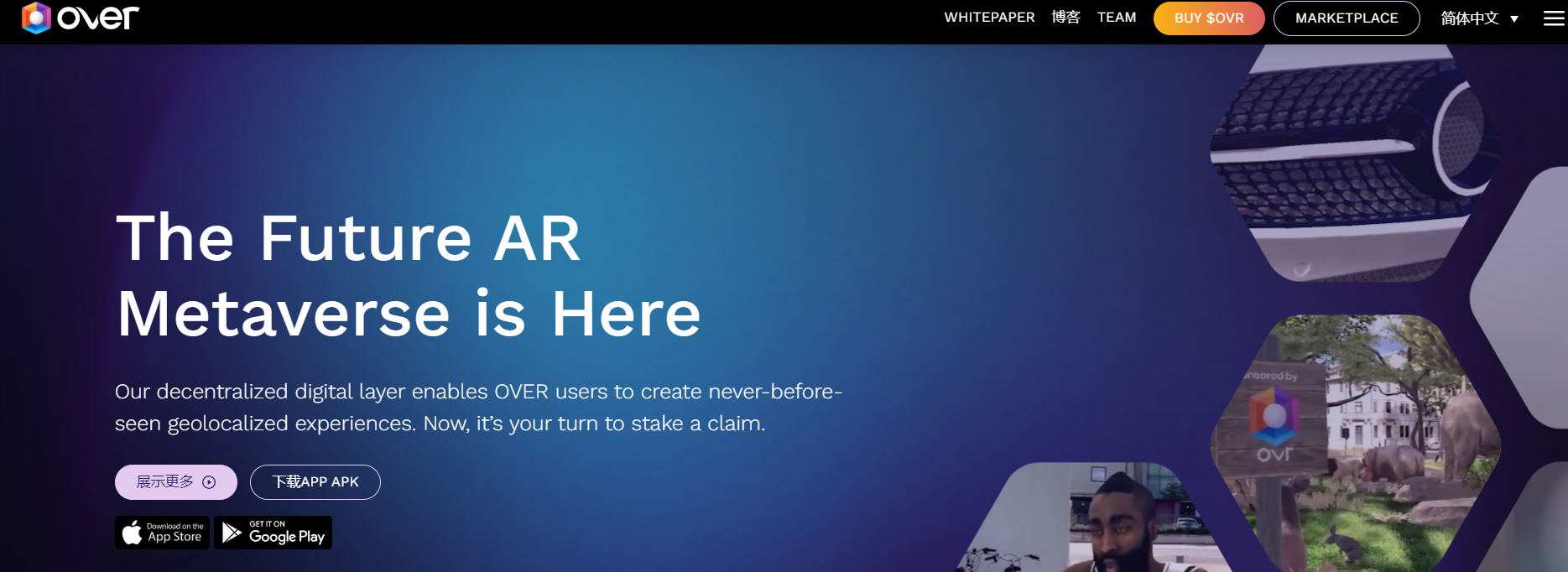
The platform enables creators and brands to come together and build the next-generation internet by enhancing physical spaces with AR technology for gaming, socializing, and commerce.
OVR uses community-driven 3D mapping to offer users and builders ownership of AR metaverse real estate, exploring new frontiers in Web3. Specifically, OVR offers an innovative 3D geolocation framework called “map2earn,” allowing users to create 3D maps of physical locations (OVRMaps) using only smartphone photos. Each OVRMap is owned by its creator and represented as an NFT.
Users can host various activities on these maps—such as marketing campaigns or gatherings—similar to land usage in other metaverse projects.
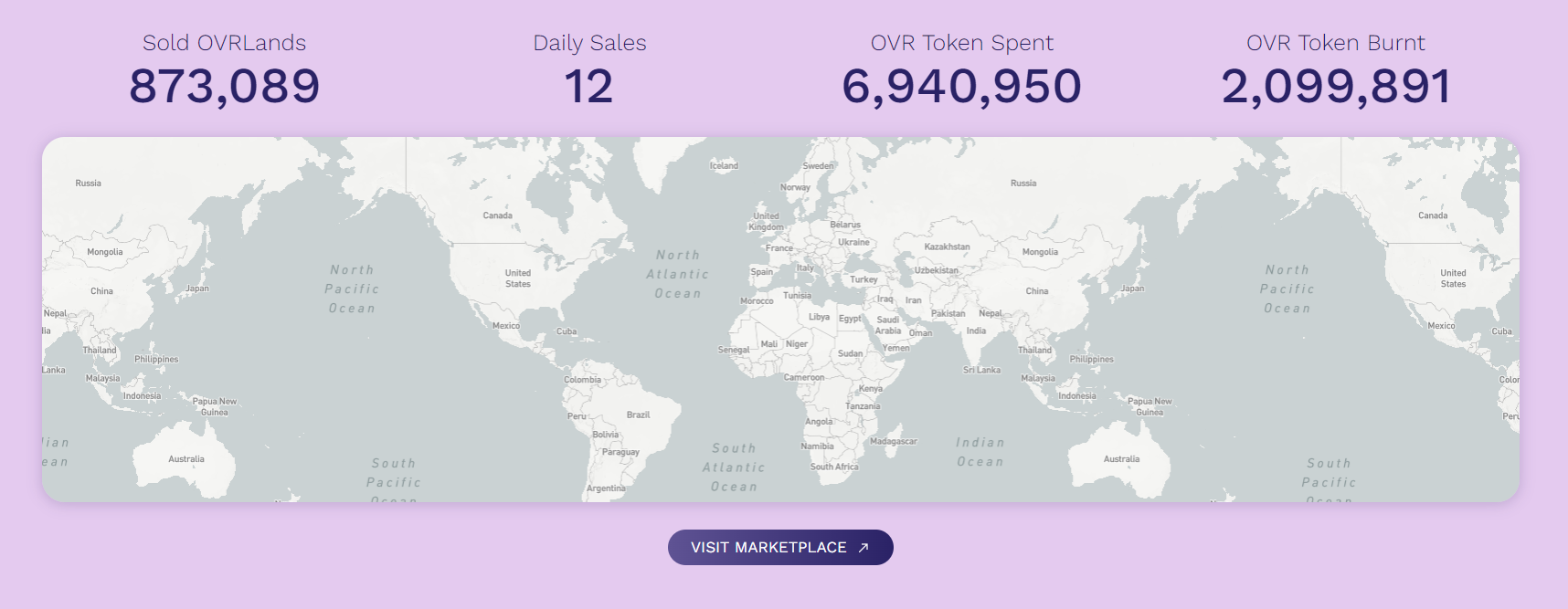
Additionally, the platform is user-friendly, enabling simple and intuitive AR content publishing. For developers wanting richer interactive AR experiences, the OVER Unity SDK allows full use of Unity Engine features to build dynamic content.
OVR also supports real-time AR, AI avatars, motion-capture interaction, and surreal NFT assets. It even offers gamified experiences like “OVR Treasure Hunt,” reminiscent of popular AR games such as “Pokémon Go.”
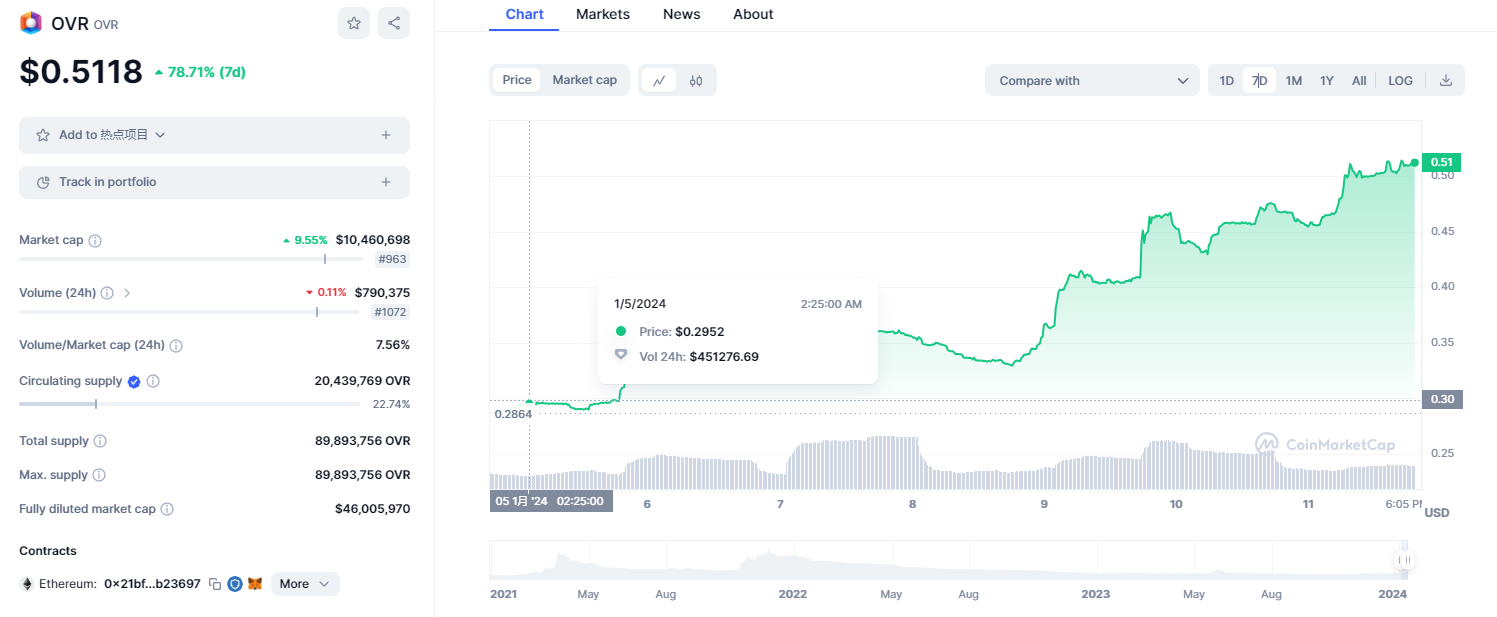
Notably, the OVR token appears to have already entered a hype phase, gaining nearly 80% over the past seven days, though its market cap remains around $10 million. Public data shows less than a quarter of the total token supply is currently in circulation, suggesting significant long-term dilution pressure.
However, for those focused on short-term AR-related narratives, OVR—with a market cap dwarfed by RNDR—represents a relatively degenerate (high-risk, high-reward) option.
Somnium Space CUBEs ($CUBE): A Virtual World Supporting Mainstream VR Devices
Somnium Space is an open-source platform where users can purchase digital land, homes, buildings, and various in-game assets. It delivers immersive VR experiences, allowing players to build, program, monetize environments, and explore creations made by others.
Unlike traditional multiplayer VR games, Somnium Space hosts all users within a single expansive VR universe, where each user can create fully programmable, customizable, standalone VR environments.
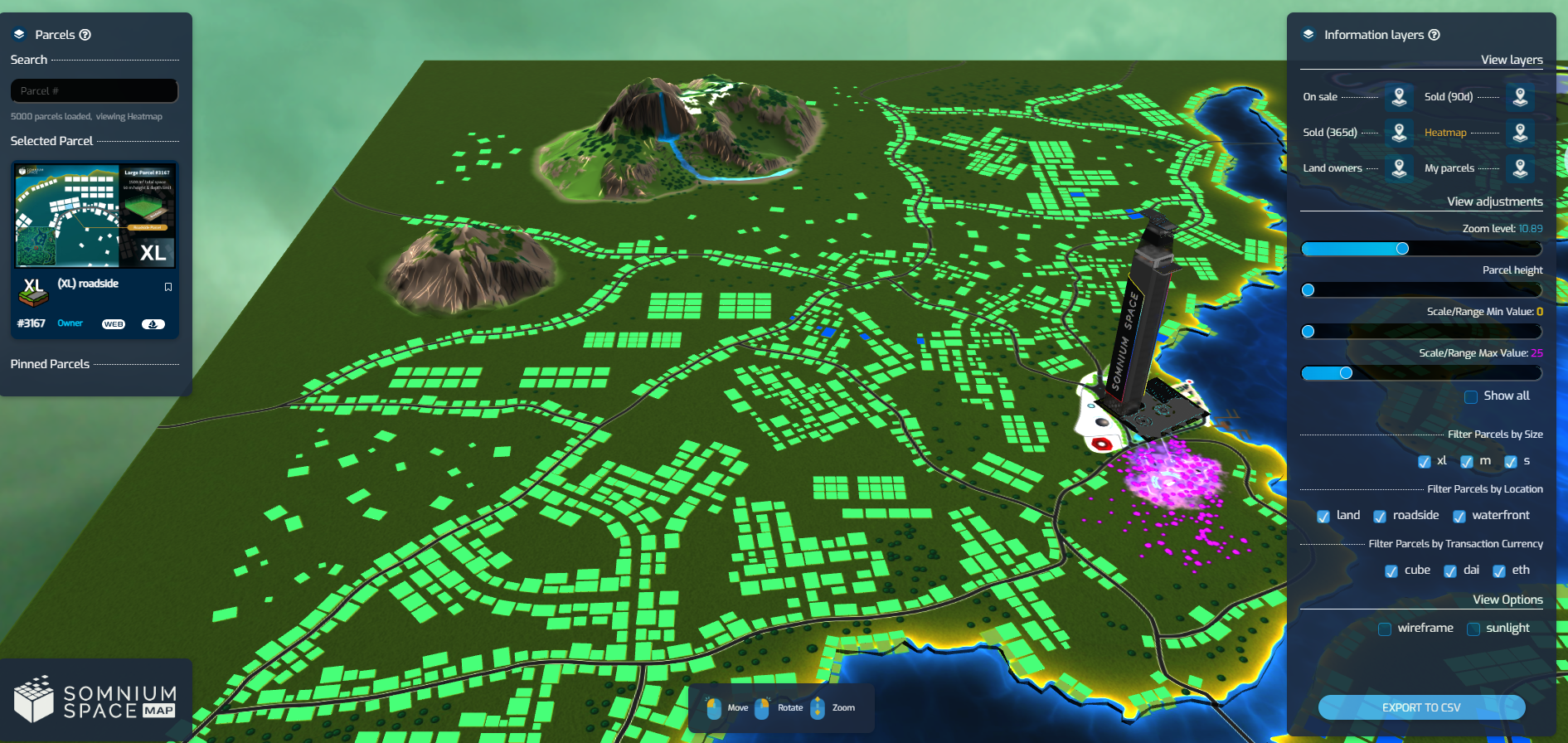
Looking only at land plots on the website, it might seem indistinguishable from typical metaverse projects.
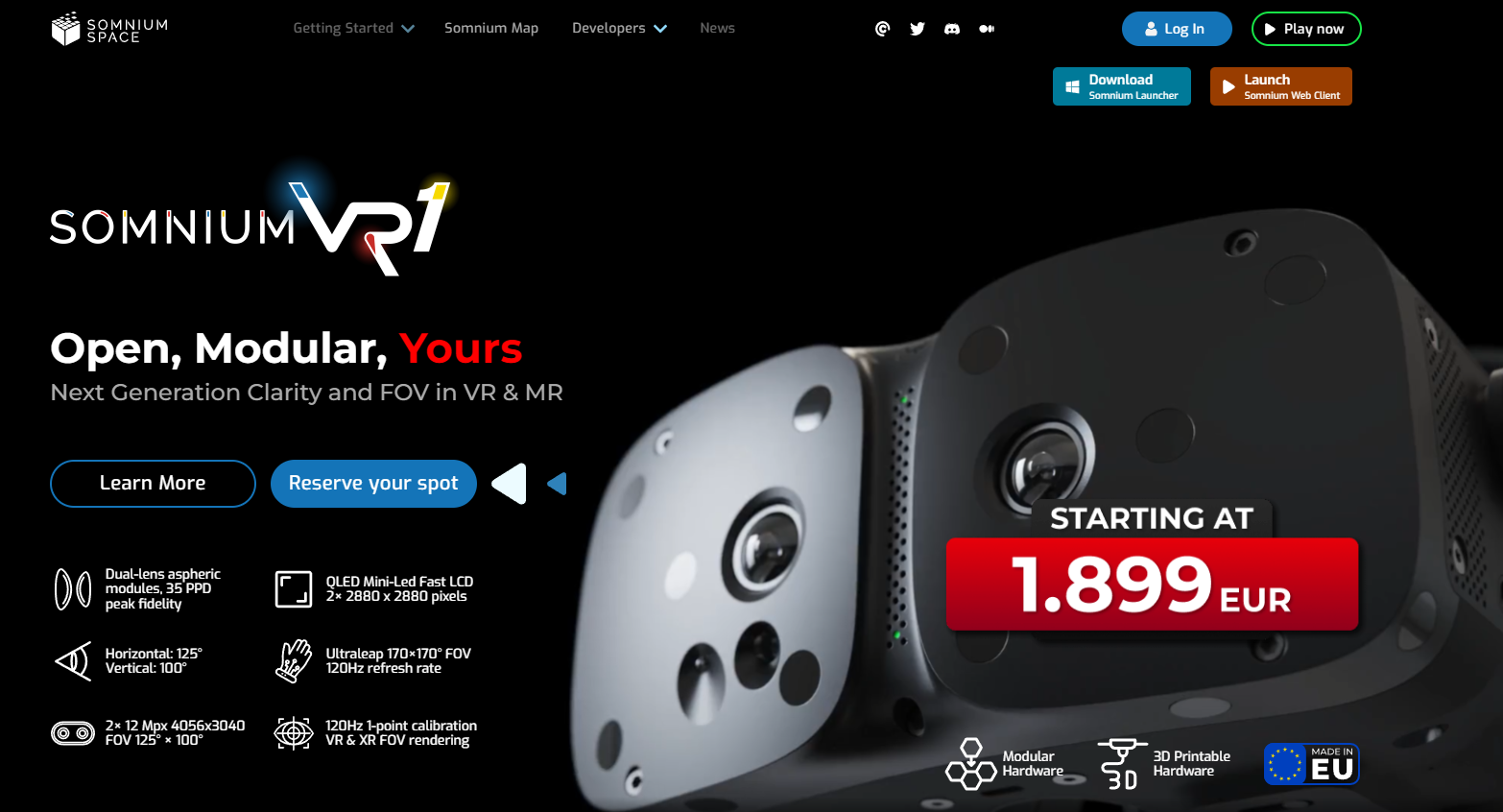
But the project also sells its own VR headsets. When paired with the platform’s software, users can experience property content in full VR mode.
Notably, Somnium Space’s hardware comes with high-end specs and premium pricing, supports 3D printing, and is also compatible with mainstream VR devices like Oculus and VIVE.
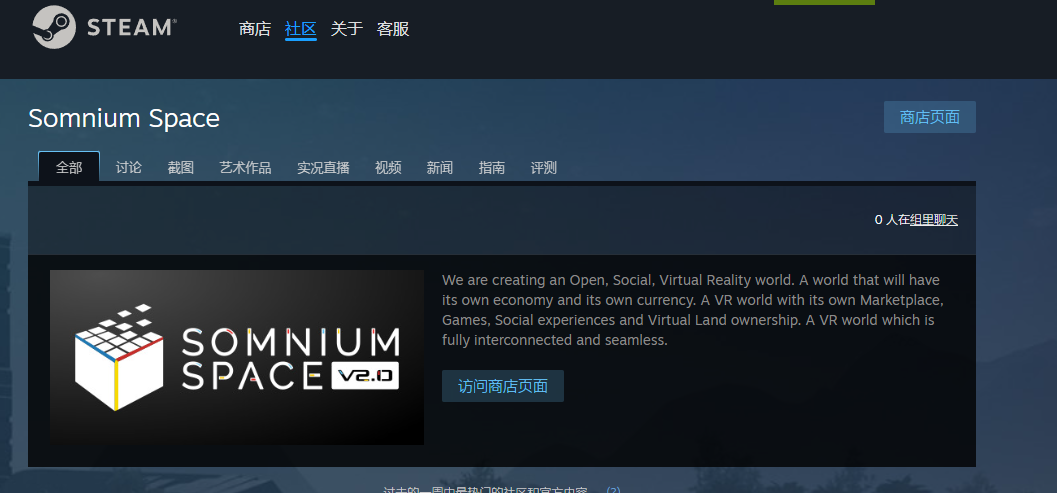
On the software side, the client is also available on Steam, expanding its audience and gaining exposure among mainstream gamers.
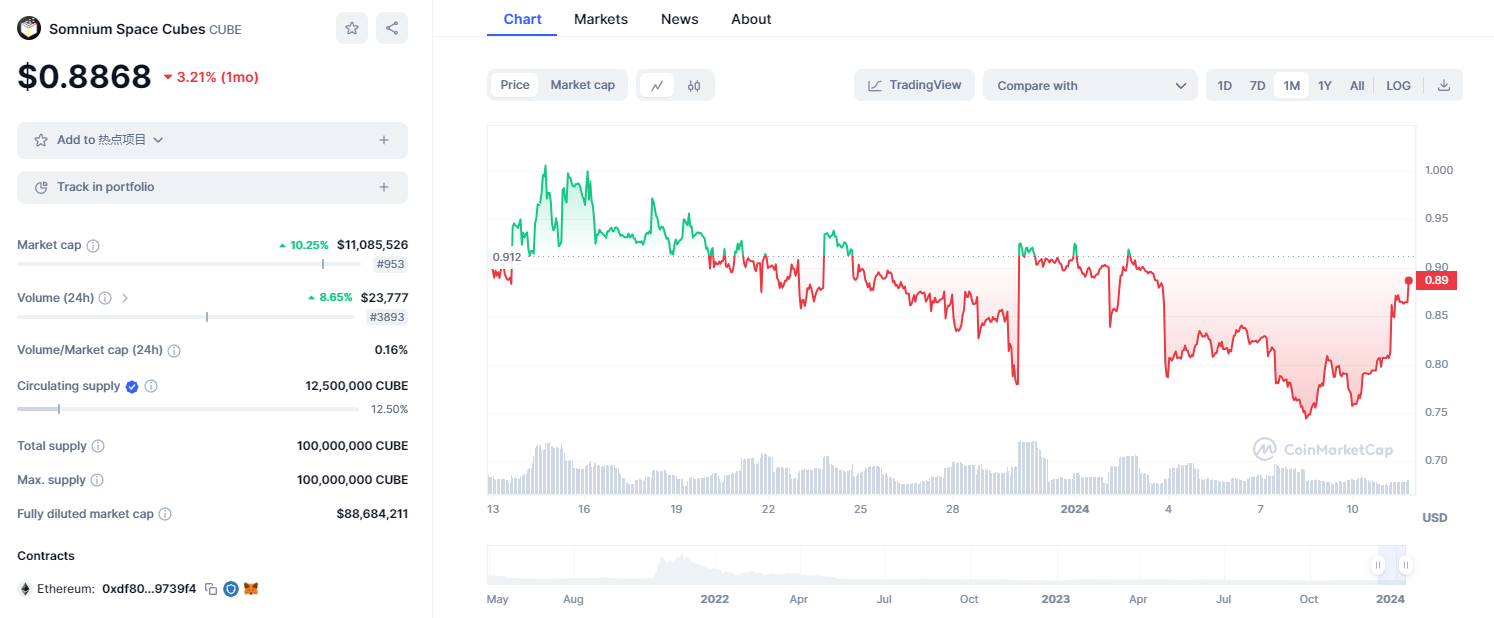
Contrasting its relatively robust fundamentals, the CUBE token has shown little price movement over the past month or year. With a market cap similar to OVR—around $10 million—it could still experience sharp volatility boosted by Apple’s short-term narrative.
Other Notable Gaming Projects
The above projects have strong links to AR/VR hardware, but others originate from gaming or metaverse backgrounds and are beginning to adopt VR capabilities—or loosely align with Apple’s theme, albeit with weaker connections.
Due to space constraints, below we briefly list several based on market cap, along with possible reasons for relevance:
$APE: The parent company Yuga Labs is legendary in the space, but an often-overlooked detail is its collaboration with Improbable—a tech firm that shifted its strategic focus to AR/VR and metaverse gaming in 2022—to develop the metaverse game Otherside.
$VR: The token name literally is "VR." Its full name is Victoria VR, a VR-based MMORPG developed using Unreal Engine. An early access version launches this April, but VR demos of certain game scenes are expected in January—perfectly overlapping with the current narrative window.
$REVO: Revomon, a monster-battling game supporting both VR and mobile devices, similar to Pokémon Go. Recently, staking activity for REVO hit an all-time high, with 15% of the total supply locked up—a potential catalyst for price movement.
Furthermore, the metaverse gaming concept inherently overlaps with AR/VR, and there are countless such projects. The above are just a few representative examples. Readers interested in this narrative can refer to CoinMarketCap’s thematic list for more tokens.
Additionally, prominent Twitter user @layerggofficial published a list of related projects ahead of last year’s Apple developer conference, including some not covered here.
Half a year later, with the same narrative resurfacing, most tokens from that list—aside from valuation changes—remain positioned to benefit once again.
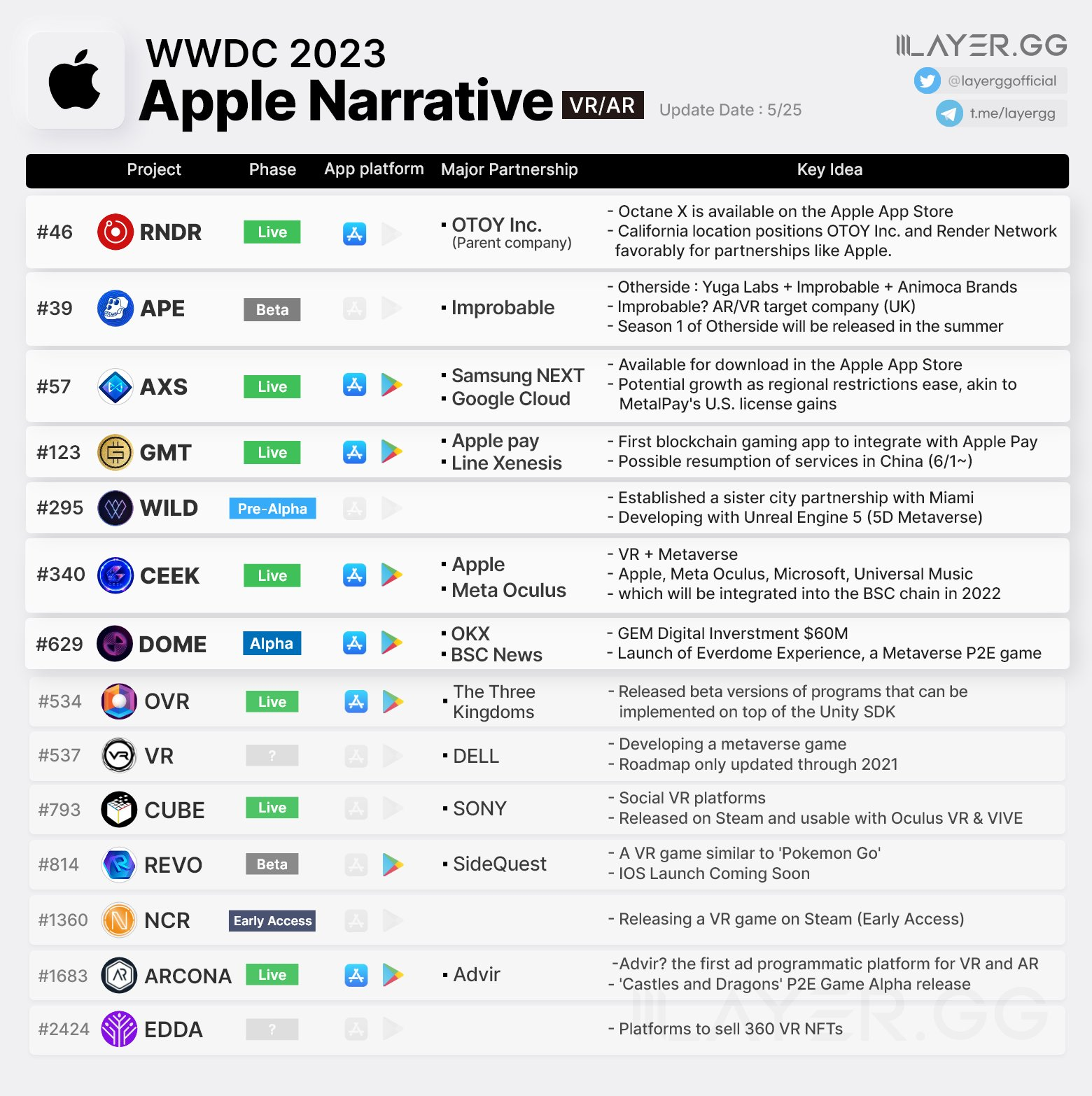
Finally, a reminder: AR/VR narratives are highly sensitive to timing. Low-market-cap projects may experience extreme volatility, so please do your own research before participating.
Join TechFlow official community to stay tuned
Telegram:https://t.me/TechFlowDaily
X (Twitter):https://x.com/TechFlowPost
X (Twitter) EN:https://x.com/BlockFlow_News
 深潮TechFlow


