
1.5 BTC Stored in Gibberish, Has Satoshi Nakamoto Returned? Unraveling the Truth
TechFlow Selected TechFlow Selected
1.5 BTC Stored in Gibberish, Has Satoshi Nakamoto Returned? Unraveling the Truth
The world has gone crazy—inscriptions are serving as bridesmaids for the SEC.
 Navigating Web3 tides with focused insights
Author: Zuo Ye
1.5 BTC Spent on Gibberish Data, Unraveling the Truth
No madness, no triumph.
With Bitcoin spot ETFs still awaiting final approval, enthusiasts are already staging stunts—though the cost might be steep.
First someone sent millions of dollars worth of Bitcoin to Satoshi Nakamoto’s address, prompting public exclamations that the prophet had returned. Then on January 7, an unknown wealthy individual spent 1.5 BTC—about $66,000—to inscribe 8.93 MB of garbled data onto the Bitcoin mainnet.
The world has gone mad—inscriptions are now serving as SEC's bridesmaid.
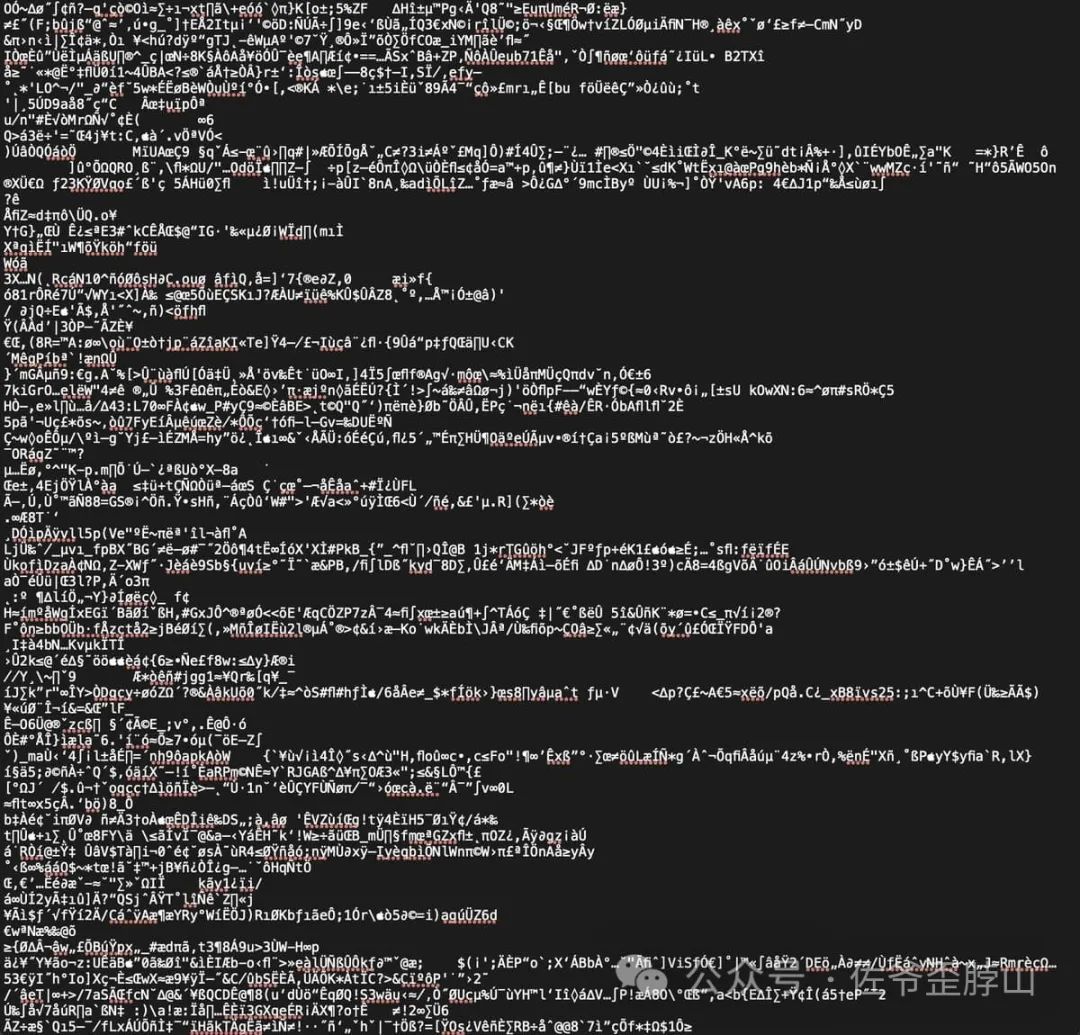
Caption: The gibberish inscription costing 1.5 BTC
Image source: https://twitter.com/ord_io/status/1743768753991500155
Data Endures Forever? Arweave's Killer Feature Lacks Market Validation
While spectators were stunned, many began speculating about the purpose behind this act. Sam, founder of Arweave, seized the moment to point out that storing an equivalent amount of data on Arweave would cost only $0.06—just one-millionth of the Bitcoin cost—and emphasized that Arweave has operated successfully for five years, proving its market viability.
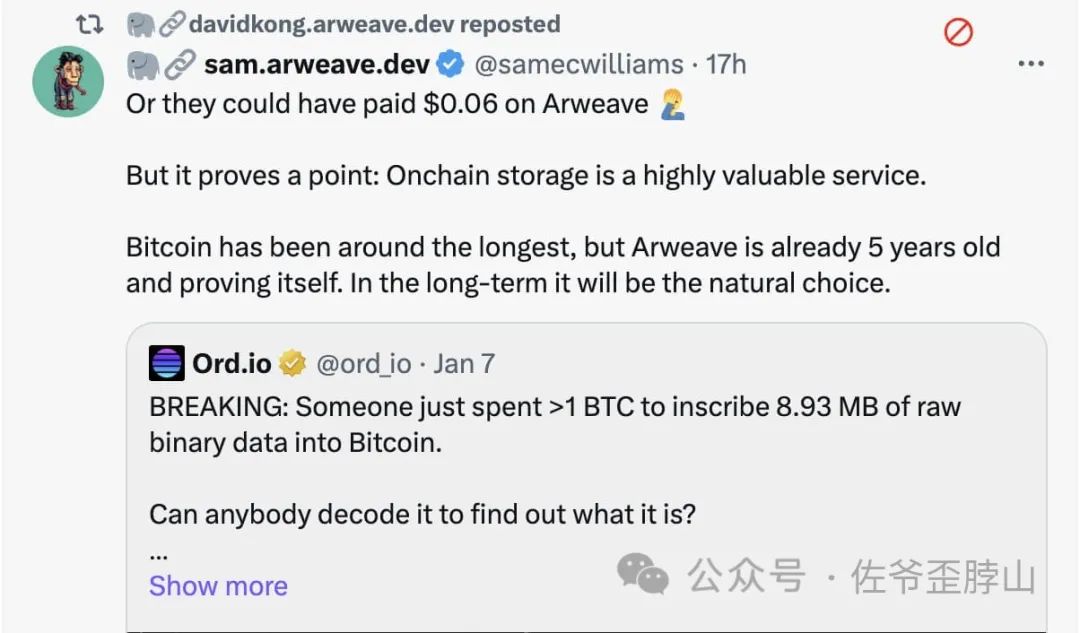
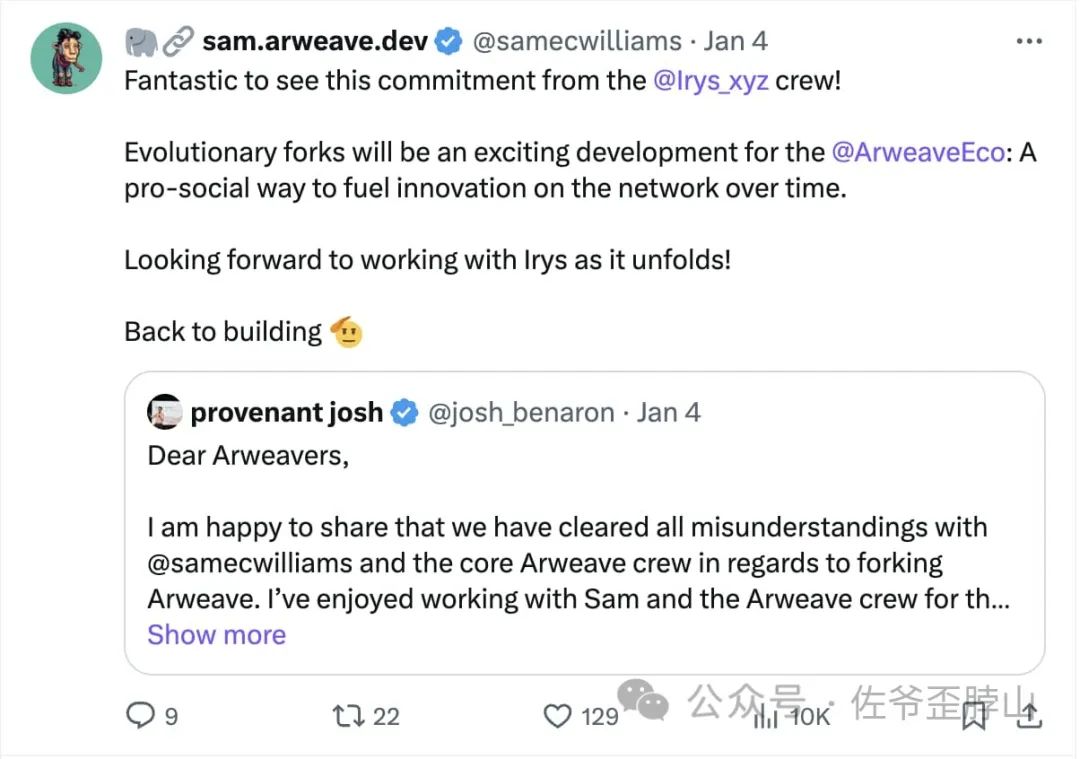
To be fair, Sam wasn't merely chasing attention. Arweave initially gained fame for its "permanent storage" concept. However, its network remains relatively small, and internal community cohesion is lacking. Just days ago, Irys was pushing for a fork—a situation detailed in my earlier article: Fork Equals Split: Irys, Arweave’s Ecosystem Leader, Declares Independence.
As a follow-up note, Sam and Irys have since reconciled—they’re staying together. But such public internal conflicts being hastily resolved leaves me speechless. At minimum, Arweave needs longer testing for stability, especially ensuring data itself won’t be lost during forks.
Thus, Bitcoin’s permanence is paradoxically reinforced. Few believe Arweave can guarantee 200-year data retention, yet most trust Bitcoin will easily survive until 2140. After all, five full market cycles and a trillion-dollar market cap aren’t things to scoff at.
Before the final Bitcoin spot ETF decision arrives, such stunts won’t stop. Can anyone really believe someone spent 66,000 × 7.17 = 473,220 RMB just for a joke?!
Reasonably speaking, I believe this was likely a publicity stunt by ORDI. As Conan said, there’s always only one truth. Of course, Sherlock Holmes also said, “When you have eliminated the impossible, whatever remains, however improbable, must be the truth.”
Behind the Stunt: A Potential Second Wave of Inscription Hype?
Flowing water carries intention; evening birds return together.
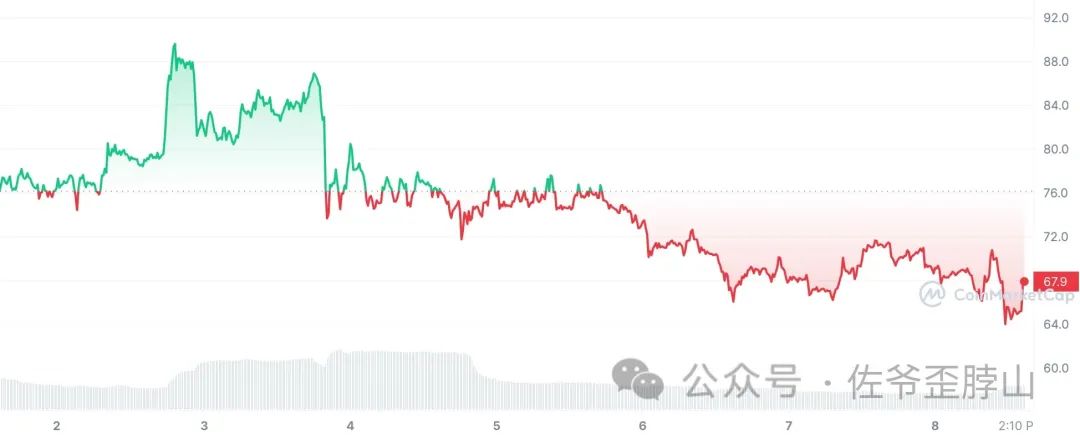
The current inscription market appears to have reached a turning point. According to CMC data, inscription prices have been declining over the past week, with the dream of hitting $100 seeming increasingly distant. How can it attract more attention?
One option: pull off a shocking move. $66,000 is a lot for individual retail users, but for a project team or whale, it may not be an exorbitant PR budget—yet it landed headlines across major media outlets, achieving unmatched breakout visibility.
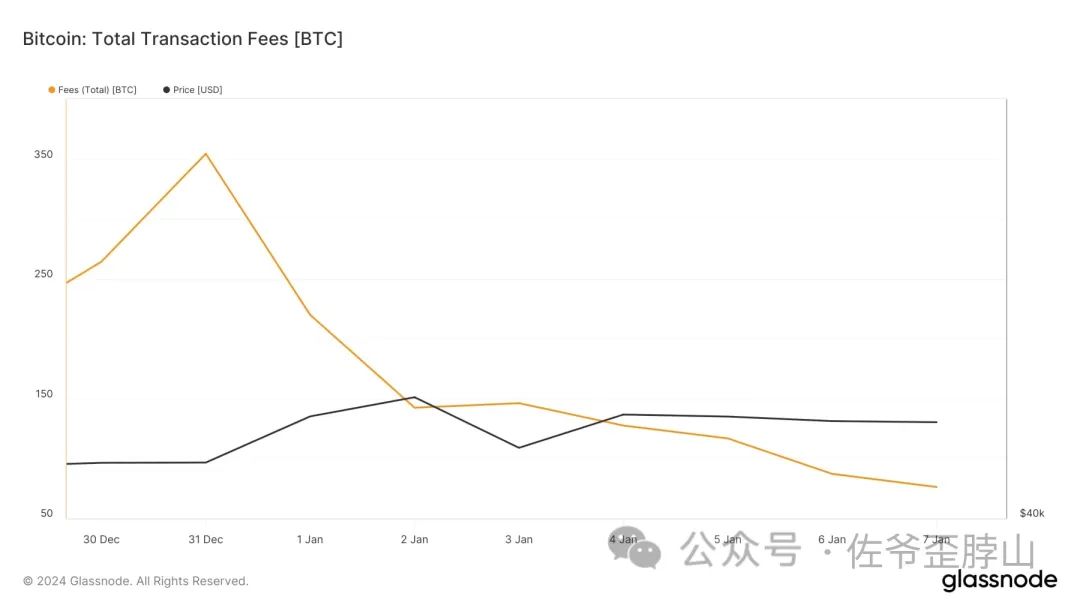
Moreover, Bitcoin mainnet transaction fees have plunged nearly 80% within a week. Compared to over 300+ BTC per day last week, January averages around only 150 BTC daily—nearly halved. On the 7th, fees dropped further to just over 70 BTC. If this continues, not only will we miss out on a price surge from the spot ETF approval, but even the once-reliable inscription fee revenue could dry up.
Extraordinary claims require extraordinary evidence. Currently, there’s no concrete proof—only speculation:
-
Anonymous address
-
Useless information (gibberish data)
-
Used inscription protocol instead of standard Bitcoin block engraving
-
Occurred during a weak phase in the inscription ecosystem
After analyzing the above, the possibility of individual error is largely ruled out. Seasoned OG inscription users wouldn’t repeatedly make operational mistakes. Nor is it likely someone preserving important personal data—because the visible content is pure gibberish, and genuine encrypted data wouldn’t appear so sloppy.
After eliminating these possibilities, only two plausible explanations remain:
-
Artistic performance—money unused is money wasted;
-
Public relations campaign—veteran crypto users who lived through the NFT craze should remember well: Beeple’s artwork sold for $69 million in 2021, becoming the perfect symbol of the previous bull market.
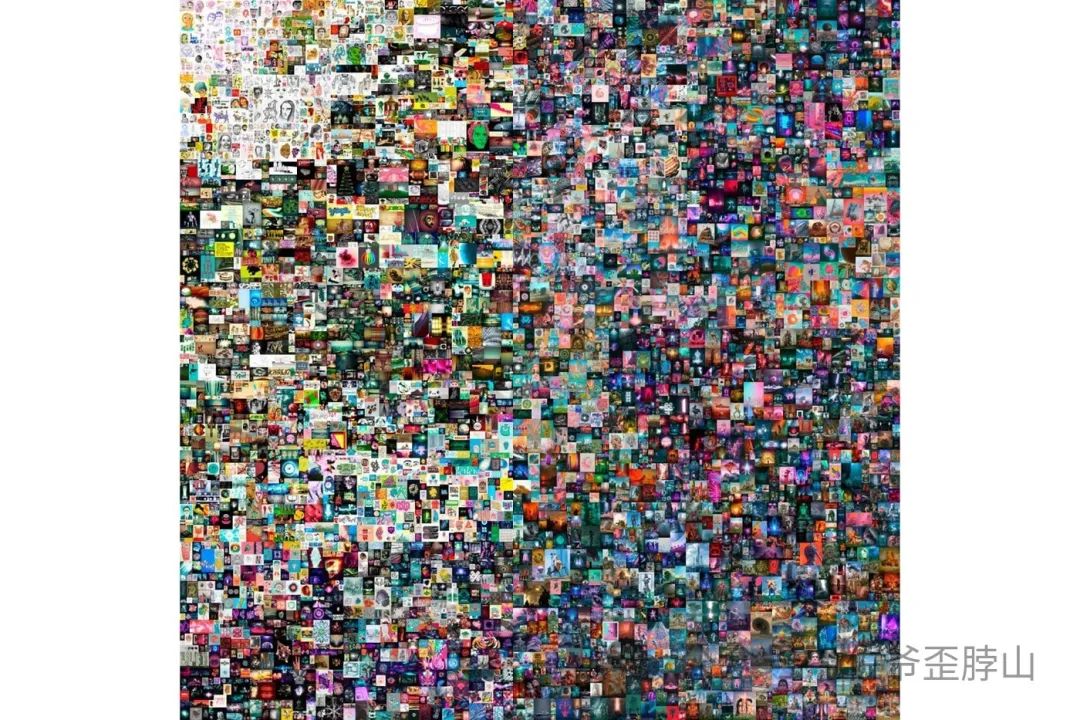
A high enough price grabs attention. Within this logic, this explanation seems most likely. Of course, if it was truly someone heartbroken and going crazy, that’d be understandable too—even if I’m wrong.
Conclusion
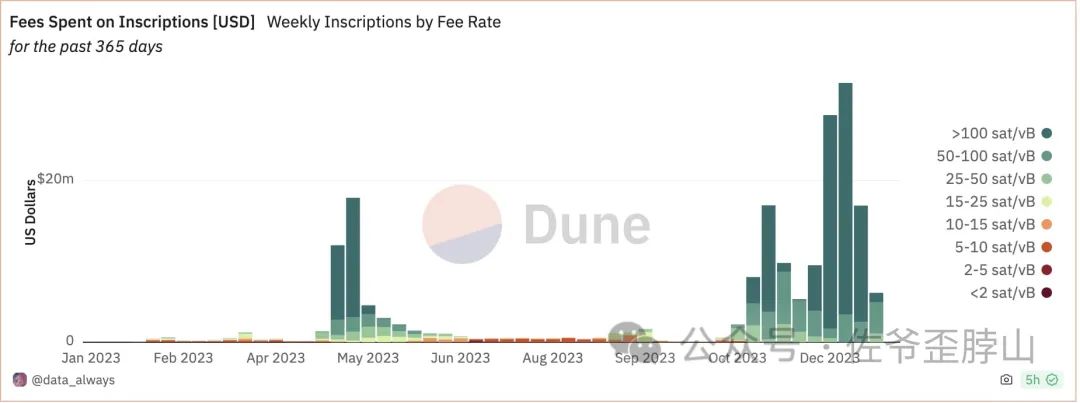
The popularity of inscriptions has always existed in a fluctuating quantum superposition state. It has already gone through three mini-cycles, with a particularly smooth transition since October 2023. Yet today’s inscription activity is visibly sluggish. Adding fresh fuel now might just spark another small spring rally.
All comments above are mere speculation. Any disagreement? I’m still right 😼
Join TechFlow official community to stay tuned
Telegram:https://t.me/TechFlowDaily
X (Twitter):https://x.com/TechFlowPost
X (Twitter) EN:https://x.com/BlockFlow_News
 @zuoyeweb3