
RSTK doubles in a day: A look at the restaking sector's ecosystem projects
TechFlow Selected TechFlow Selected
RSTK doubles in a day: A look at the restaking sector's ecosystem projects
Ethereum's most familiar "matryoshka" is making a comeback.
 Navigating Web3 tides with focused insights
Text by: BlockBeats
Even though Ethereum still faces challenges from other public chains in 2024, as well as threats to its mainnet from data availability (DA) platforms, it remains the most developer-rich and innovative crypto platform. If spot Bitcoin ETFs are approved, smart money in the market will vote with their feet for the next potential spot ETF candidate—and Restaking is the rising star within the Ethereum ecosystem.
Although EigenLayer—one of the key players discussed here—also poses a threat to Layer 2 DA adoption on Ethereum’s mainnet, protocols born and raised within Ethereum inevitably contribute positively to the network—even spawning an entirely new narrative through a single protocol: Restaking.
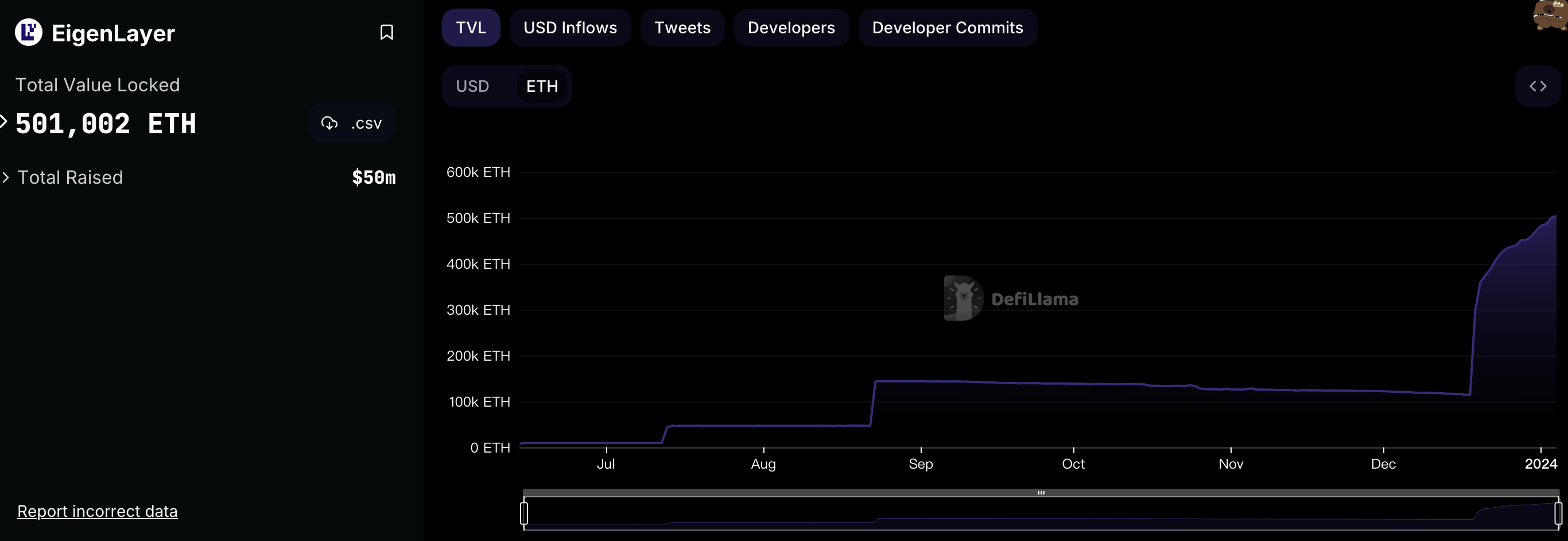
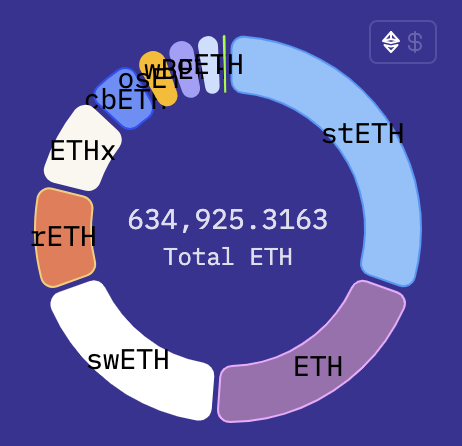
The market has shown considerable optimism toward this narrative. As of writing, according to official data, 634,000 ETH are staked on EigenLayer, worth over $1 billion, surpassing the TVL of many mainstream public blockchains.
Regarding EigenLayer, this article draws upon Mint Ventures’ report titled “Overview of the Restaking Leader: EigenLayer's Business Logic and Valuation Analysis”:
“As a platform, EigenLayer raises assets from holders of LSD (Liquid Staking Derivatives), while using these pooled LSD assets as collateral to offer convenient and low-cost AVS (Actively Validated Services) to middleware, sidechains, or Rollups that require such services. EigenLayer itself acts as a matching intermediary between LSD providers and AVS demanders, with dedicated staking service providers ensuring the security of staking operations.”
Much like how BRC-20 tokens relate to the Bitcoin ecosystem and launchpad platforms, in this era of one-click chain deployment, DA has become a kind of 'wealth code' for project teams seeking second ventures. Currently, aside from Ethereum’s mainnet, Celestia is the most widely adopted and celebrated DA solution among developers. According to reports, EigenLayer’s highly anticipated DA service, EigenDA, is also backed by Restaking, offering L2s low-cost, ultra-scalable data services. The market generally expects significant competition between EigenDA and Celestia.
Just as Yearn, Convex, and StakeDAO initiated the Curve Wars; and just as Lido and Rocket Pool kicked off the era of LSD stacking on Ethereum—now, faced with Restaking, another form of recursive leverage combining over $1 billion in assets with a fresh new narrative, Ethereum’s favorite playbook returns: recursion upon recursion. EigenLayer has already sparked the LST War, with major liquid staking protocols rushing to join EigenLayer’s Liquid Restaking pools. In the near future, a new battle centered around the EigenLayer token is all but inevitable.
Currently, EigenLayer has reached its hard cap limit. Users are advised to carefully verify the rights and benefits they receive when participating in Restaking protocols. This article aims to compile various projects across the Restaking landscape. Given that EigenLayer is still evolving, project quality varies significantly, and there is no technical barrier to entry for Restaking. Additionally, since LSDfi overlaps with Restaking in terms of use cases, users must exercise due diligence in evaluating individual projects.
Kelp DAO
Kelp DAO was founded by Amitej G and Dheeraj B, who previously launched the multi-chain liquid staking platform Stader Labs. Kelp DAO offers an LRT (Liquid Restaked Token) solution built on EigenLayer using rsETH.
The mechanism of rsETH (which also applies to most Restaking projects) works as follows:
-
Deposit LSTs (such as stETH) into the protocol to mint rsETH tokens;
-
The rsETH contract distributes deposited LSTs to node operators partnered with Kelp DAO;
-
rsETH holders earn rewards from multiple sources, including the underlying LST protocol and the Restaking protocol itself.
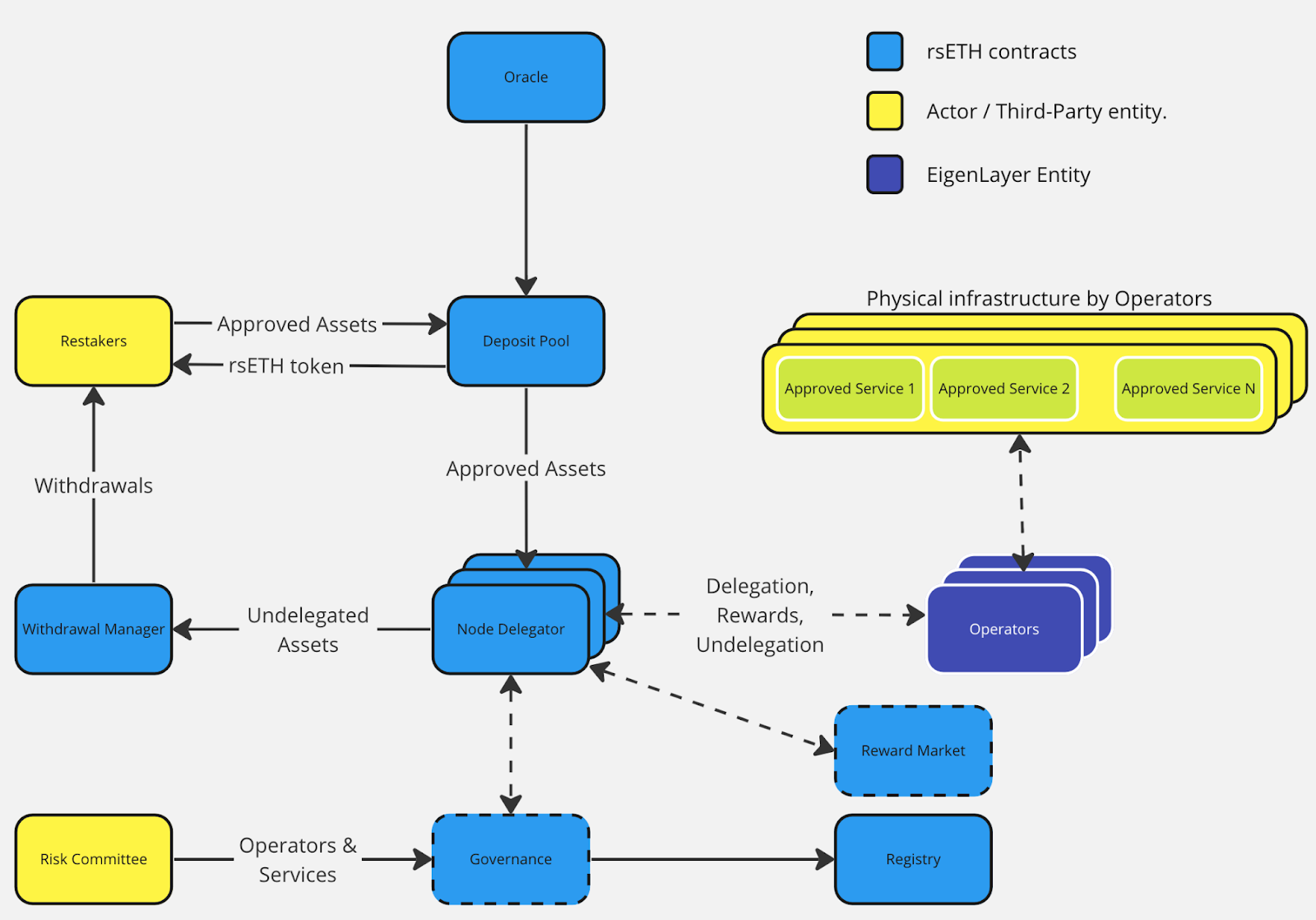
Additionally, rsETH holders can swap their rsETH for other supported tokens via AMMs or redeem the underlying assets directly through the rsETH contract. Finally, and perhaps most importantly, rsETH holders can further utilize their rsETH tokens within DeFi applications.
If you find Kelp DAO’s model too simple or unexciting, consider two unique features: First, users staking through Kelp earn Kelp points, suggesting that Kelp may launch its own token in the future. Second, the Kelp team stakes its treasury ETH into EigenLayer and shares the earned EigenLayer points with community members. This means that even when staking the same amount of ETH, users going through Kelp receive not only EigenLayer points but also additional Kelp DAO points.
This explains why deposits made via Kelp account for more than 10% of all deposits on EigenLayer.
Swell
Originally launched as an Ethereum staking protocol similar to Lido, Swell has gradually shifted focus toward Restaking. By integrating token incentives with Restaking, its derivative LST token swETH ranks third in TVL on EigenLayer after stETH (from Lido) and native ETH, with over 110,000 ETH staked. The Restaking-focused version of swETH, known as rswETH, is driving expansion into the Restaking space. Its newly formed Liquid Restaking Committee already includes participants like AltLayer and InfStones.
The Swell protocol currently holds over 140,000 ETH.
ether.fi
Like Swell, ether.fi transitioned from an LSD protocol to enter the Restaking space. However, unlike Swell, ether.fi now focuses exclusively on eETH—its token representing ETH directly restaked into EigenLayer, without accepting other LSD tokens.
According to ether.fi, because eETH is natively restaked via EigenLayer, there is no hard cap on ETH staking. Holders of eETH earn rewards from three sources: base ETH staking yield, ether.fi points, and EigenLayer points.
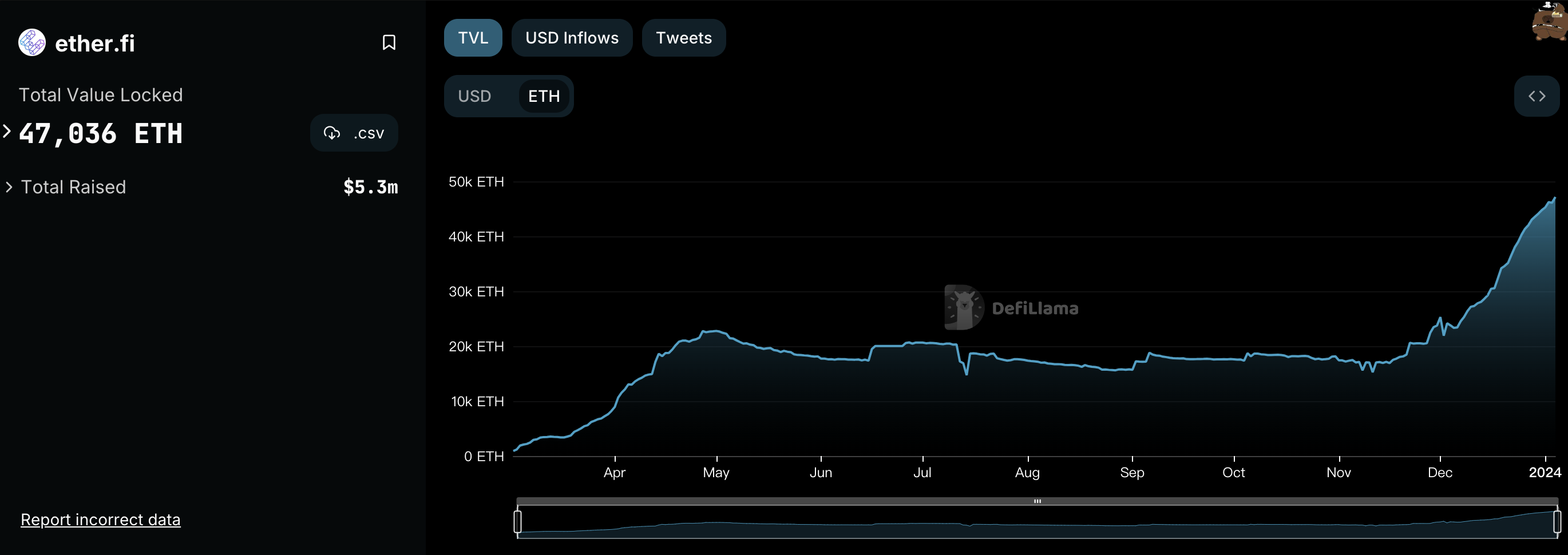
As of writing, ether.fi has accumulated over 47,000 ETH on its platform.
Restake Finance
According to official information, Restake Finance is the first protocol to introduce modular liquid staking for EigenLayer.
Restake’s rstETH is a decentralized 1:1 rebasing token pegged to stETH. As a yield-bearing asset, rstETH enables re-staking of users’ stETH via EigenLayer. Its modular infrastructure allows holders to select specific modules (AVSs) from which they wish to earn rewards. Currently, Restake Finance manages 2,073 rstETH.

Notably, Restake Finance is one of the few projects that has already launched its token. It conducted an LBP IDO through Fjord Foundry, during which the RSTK token price ranged from a low of approximately $0.21 to a high of $0.55. As of writing, RSTK trades at $1.79.
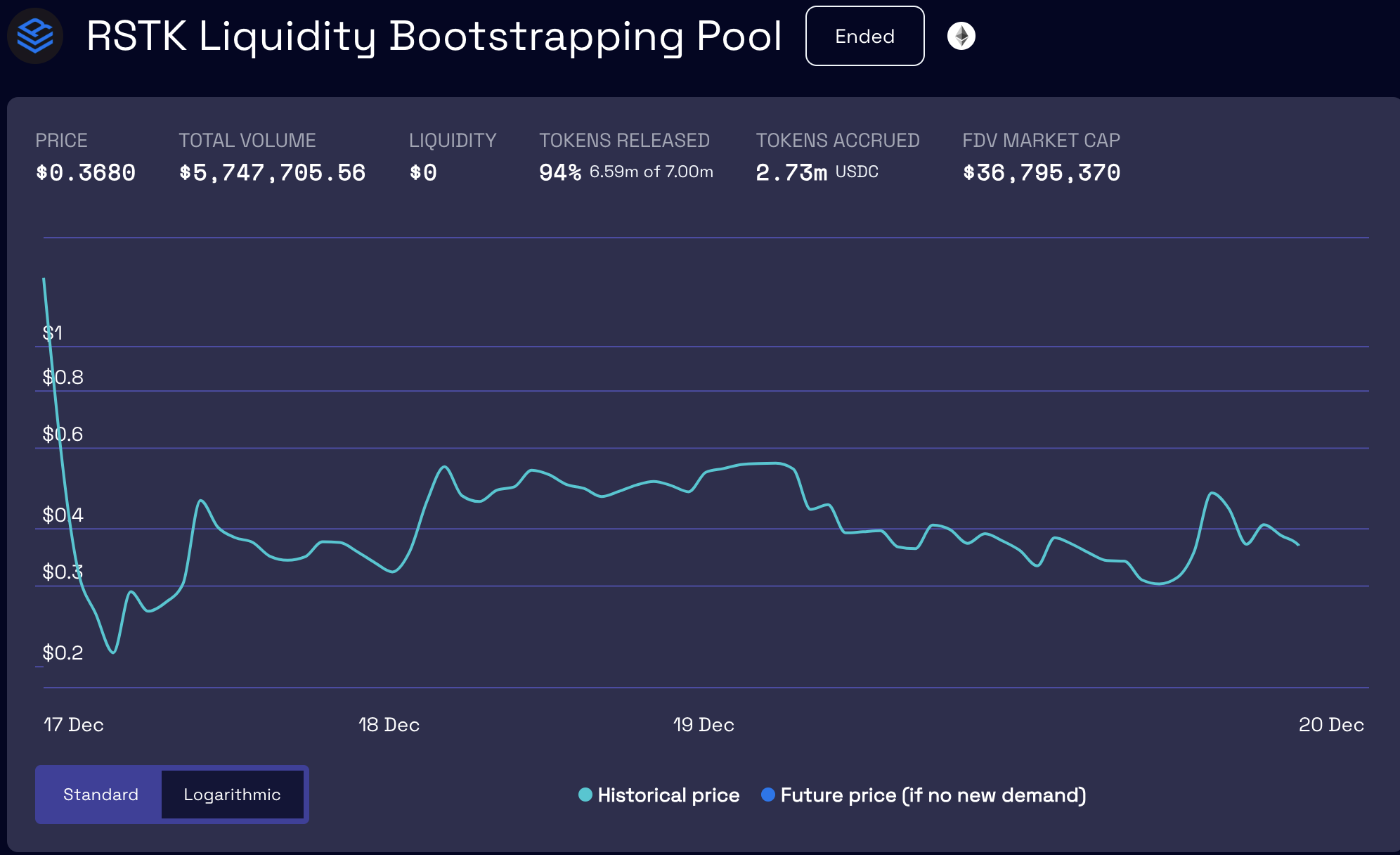
LBP data for Restake Finance
RenzoProtocol
According to official sources, Renzo is an LRT and strategy management platform for EigenLayer. Serving as one of the gateways into the EigenLayer ecosystem, it secures AVS (Actively Validated Services) and offers higher yields than standard ETH staking.
Its operational mechanism is similar to Kelp DAO, but Renzo supports a wider range of LSD tokens. Like others, it provides native ETH yield, EigenLayer points, and its own reward points called ezPoints.
In the highly competitive and audit-sensitive Restaking and LSD space, where business partnerships matter greatly, Renzo boasts collaborators such as Figment, Gauntlet, Biconomy, Balancer, and Wormhole—likely contributing to its recent surge in staking volume.
Others
Beyond the above-mentioned projects, the Restaking space includes Puffer Finance—a $5.5 million-funded project long favored by Bankless co-founders—exocore, which emphasizes cross-chain Restaking, and lending platforms like Ion Protocol and Astrid, designed specifically for staked and restaked assets. Many of these remain in testing phases.
Conclusion
Currently, the vast majority of Restaking projects operate by depositing either LSDs or ETH into EigenLayer, enabling users to earn base Ethereum staking yields, EigenLayer points, and native project tokens.
On a broader scale, Restaking represents a new sector, model, and narrative. On a smaller scale, it resembles a novel wealth management strategy primarily appealing to whales. With so many Restaking protocols emerging, it feels somewhat like using anti-aircraft guns to kill mosquitoes. Yet, the community’s ETH needs an outlet.
Since EigenLayer’s products are still in early stages, whether restaking under AVS is a breakthrough innovation or an unnecessary complication in PoS remains unknown. The economic models await real-world validation. For now, the market appears to be channeling enthusiasm for EigenLayer through growing support for its ecosystem projects.
We look forward to EigenLayer’s evolution throughout 2024.
Join TechFlow official community to stay tuned
Telegram:https://t.me/TechFlowDaily
X (Twitter):https://x.com/TechFlowPost
X (Twitter) EN:https://x.com/BlockFlow_News
 BlockBeats