









What can we expect from Ethereum's 2024 development roadmap?
TechFlow Selected TechFlow Selected
What can we expect from Ethereum's 2024 development roadmap?
The roadmap focuses on redefining how users interact with Ethereum, shifting from EOA accounts to more flexible smart contract wallets.
 Navigating Web3 tides with focused insights
Author: FRANCESCO
Translation: TechFlow
In the world of digital currencies, Ethereum has consistently evolved as a pivotal platform through continuous innovation. This article delves into key aspects of Ethereum’s 2024 development roadmap, including major technical proposals such as ERC-4337, EIP-4844, EIP-3074, and EIP-5003, exploring how they enhance scalability and user experience on the Ethereum network.

On Twitter, I’ve never seen so much anti-Ethereum sentiment.
Almost every other day, a new Layer 1 (L1) blockchain suspected to be an “Ethereum killer” emerges, yet Ethereum remains unfazed—steadfastly focused on its own growth and improvement.
Ethereum’s commitment to evolution is evident in its recently released 2024 roadmap, which highlights key developments aimed at improving scalability and user experience.
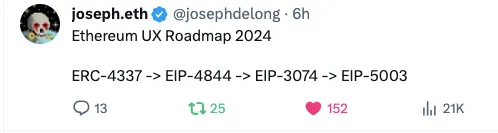
Notably, the timeline for finalizing EIP-4844 has been confirmed, significantly simplifying how Layer 2s publish data on Ethereum. Despite intensifying competition, these new ERCs and EIPs will substantially boost Ethereum's scalability and user experience.
Below, let’s explore these exciting updates—ERC-4337, EIP-4844, EIP-3074, and EIP-5003—in detail.
ERC-4337: Revolutionizing Smart Contract Wallets
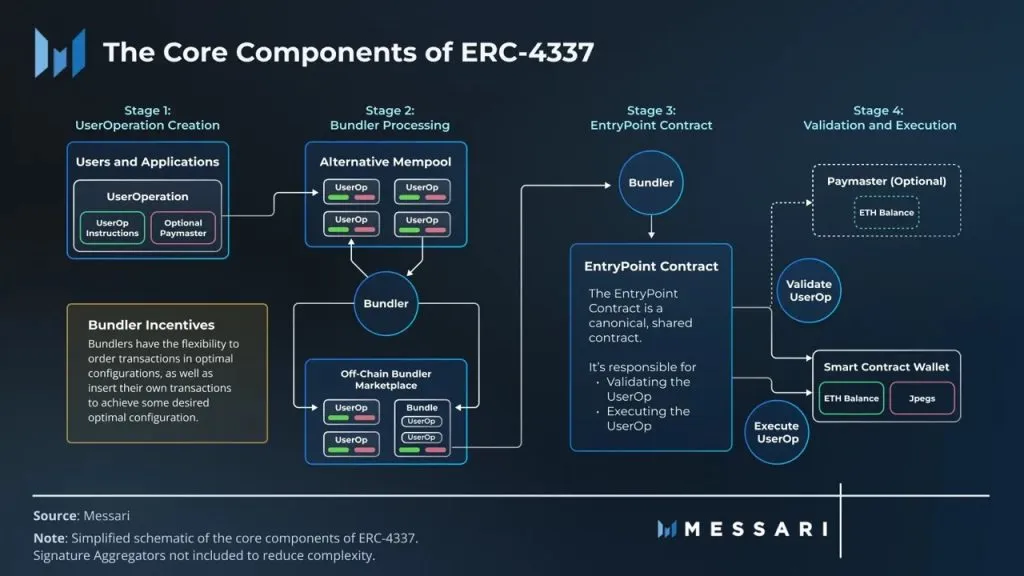
The introduction of the ERC-4337 standard marks a significant leap forward in the evolution of smart contract wallets. This upgrade introduces a novel concept known as "account abstraction."
ERC-4337 is an account abstraction proposal that entirely avoids the need for consensus-layer protocol changes. Instead of adding new protocol features or altering underlying transaction types, it introduces a high-level pseudo-transaction object called UserOperation. For more details on ERC-4337, click here.
Traditionally, Ethereum accounts are divided into externally owned accounts (EOAs) and smart contract accounts. However, user interactions via EOAs often pose challenges in terms of usability and security.
ERC-4337 blurs this distinction, enabling users to interact with smart contracts in a more intuitive manner.
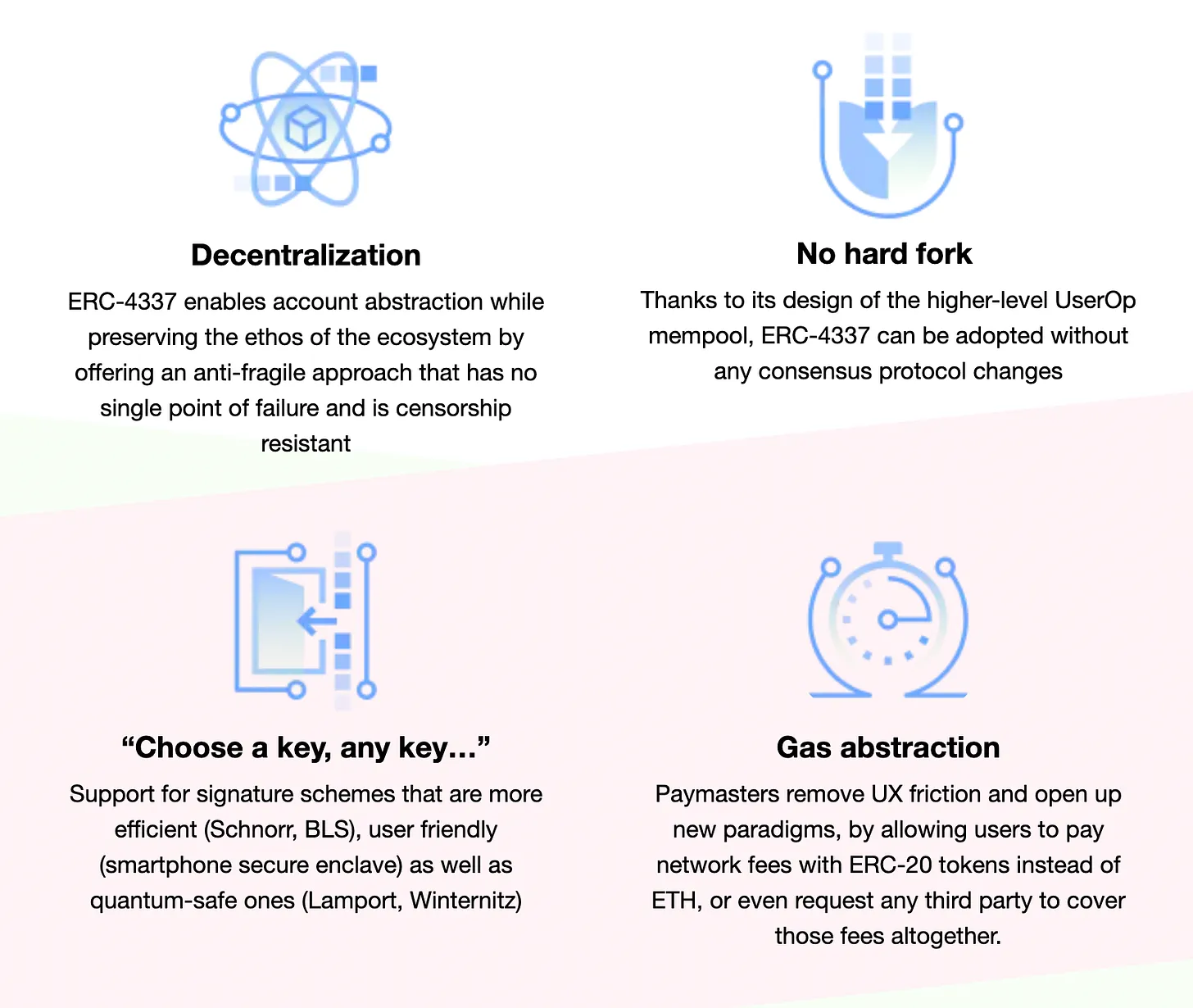
The way users interact with Ethereum needs improvement to keep pace with an increasingly complex ecosystem. We have already seen the emergence of solutions based on account abstraction, such as Creso Wallet and Avocado Wallet.
The adoption of ERC-4337 will lay the foundation for a range of wallet design improvements and reduce complexity for end users.
Beyond that, ERC-4337 greatly enhances the end-user experience and unlocks new possibilities such as gasless transactions, social logins, and password recovery.
Key features of ERC-4337 include:
-
Enhanced Security: By integrating more complex logic into wallets, users can set transaction conditions such as multi-factor authentication or daily spending limits.
-
User-Friendly: It simplifies interactions for non-technical users, making the Ethereum ecosystem more accessible.
-
Gas Fees Paid in Tokens: Users may pay transaction fees using tokens other than ETH, increasing convenience.
EIP-4844: Boosting L2 Efficiency
Why EIP-4844? Its goal is to provide Layer 2 solutions with a low-cost method to post data on Ethereum, significantly reducing overall transaction fees paid by users on L2s.
The Problem: L2s generate increasing amounts of data. If there were a cheaper way to publish this data, it would immediately lower transaction fees charged to users across the network.
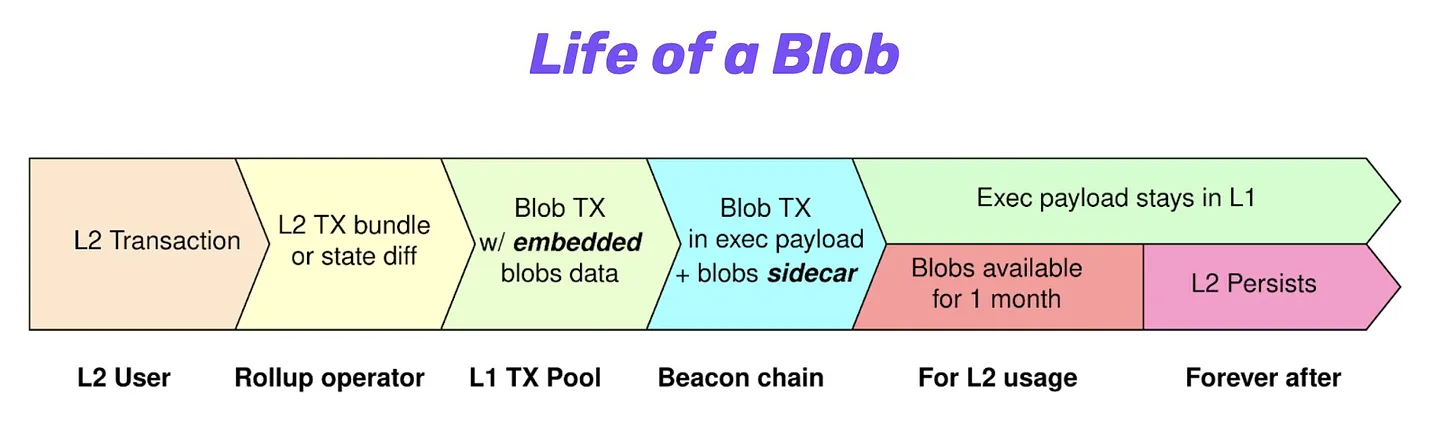
The Solution: Introduce a new transaction format for "blob-carrying transactions." These contain large volumes of data that are inaccessible to EVM execution but whose commitments can be verified. The blob content is not embedded directly in the block but propagated separately as a "sidecar."
EIP-4844, commonly referred to as "proto-danksharding," represents a significant advancement in addressing Ethereum’s scalability challenges. It introduces a new transaction type that allows the use of "shard blobs"—temporary data structures usable by L2 solutions like rollups.
EIP-4844 introduces a new transaction type to Ethereum that accepts "blob" data and stores it temporarily within beacon nodes.
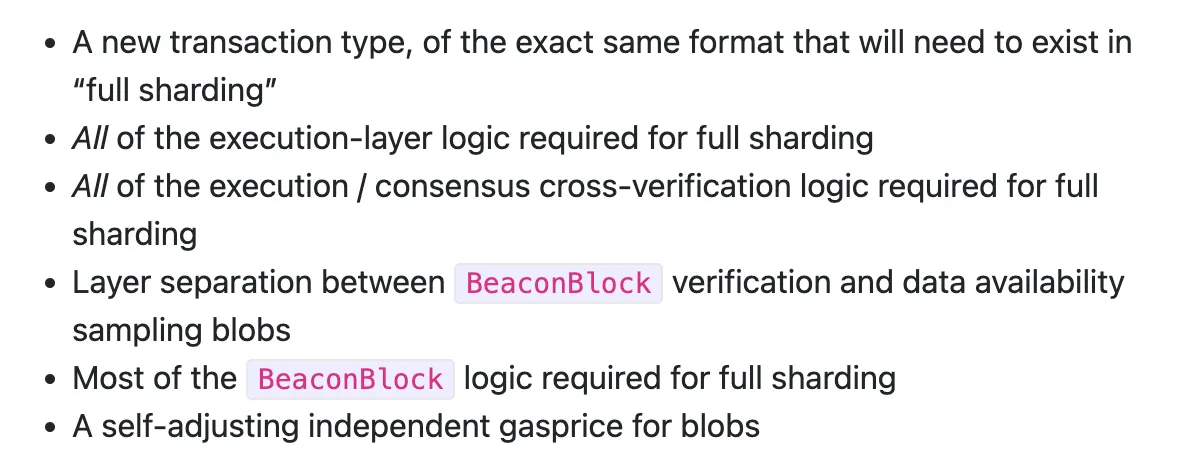
Shard blobs do not contain transactions executed within Ethereum blocks but only "blobs of data," with L2s responsible for utilizing this data space to deliver secure and scalable experiences for users.
The significance of EIP-4844 lies in its direct benefit to users—we will all enjoy lower L2 fees as a result.
Why Will L2 Fees Be Lower?
EIP-4844 separates transaction computation costs from storage costs. L2s will use a different function to submit "Blobs" to Ethereum.
Instead of using "CALLDATA," which permanently stores data, they will use Blobs, which are pruned after a predefined period.
Data blobs don’t need to remain available forever—only for a certain duration (e.g., 1–3 months), long enough for L2s to ensure at least one honest participant can reconstruct the state and challenge or replace a malicious sequencer. Afterward, the data is trimmed.
EIP-4844 initially allows rollups to scale up to 0.25 MB per slot and provides a separate fee market for blobs, keeping costs extremely low and significantly alleviating rollup scaling constraints.
Potential Impact of EIP-4844
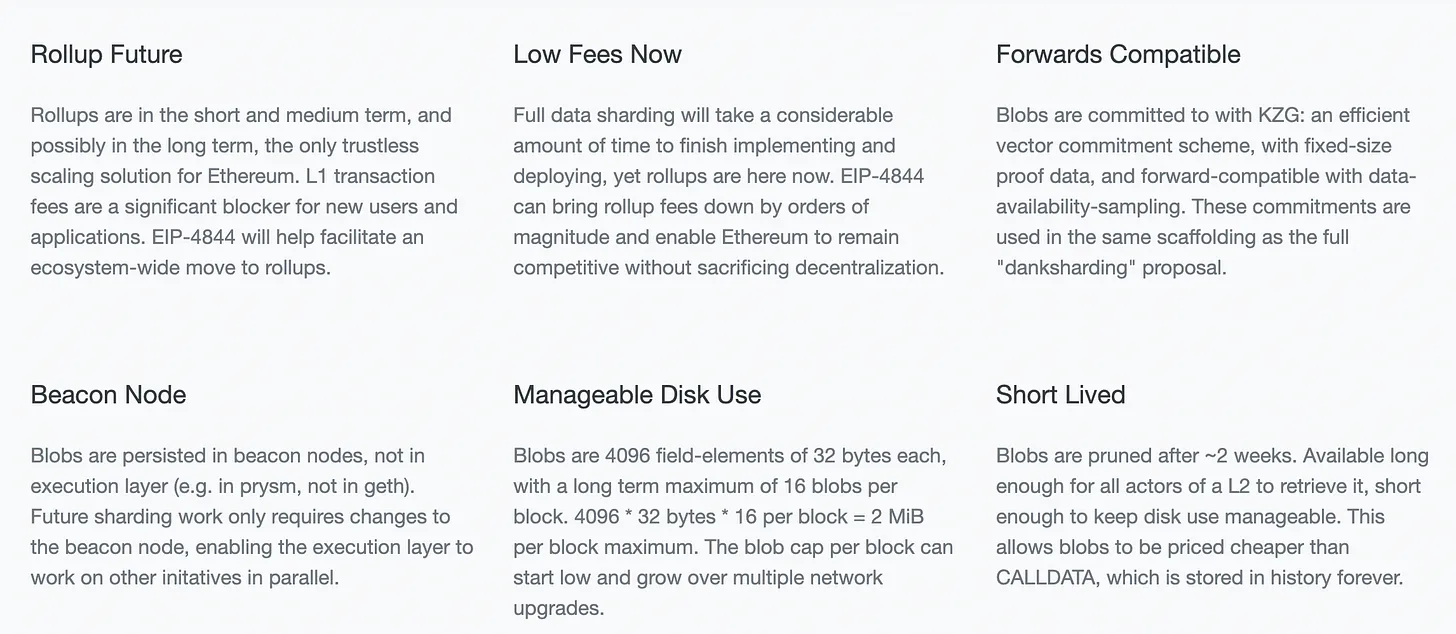
EIP-4844 brings several potential benefits:
-
Reduced L2 Costs: Lower data costs make L2 solutions more economical, encouraging broader adoption.
-
Increased Transaction Throughput: This could lead to a more scalable network capable of handling higher transaction volumes.
-
Improved User Experience: Faster and cheaper transactions greatly enhance the overall Ethereum experience.
I previously wrote a detailed article on this topic—click here to read more.
EIP-3074: Simplifying Transactions
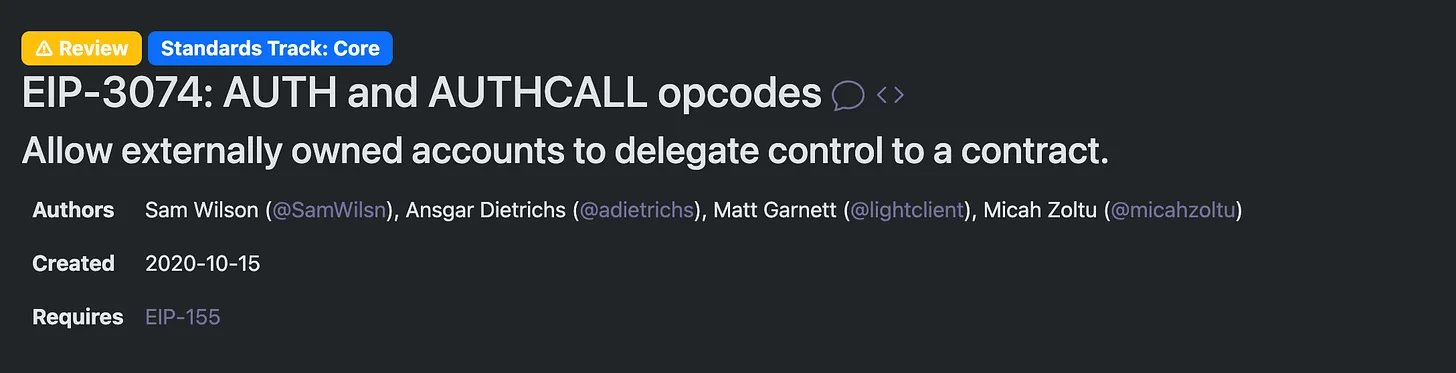
EIP-3074 is a novel concept that opens the door to a more seamless user experience on Ethereum without requiring additional trust assumptions.
EIP-3074 fundamentally changes how transactions are authorized and executed on Ethereum. The proposal allows users to authorize third parties to execute transactions on their behalf using a new type of operation.
EIP-3074 aims to update Ethereum’s EOAs so they can delegate control to smart contracts—enabling smart contracts to approve transactions originating from user accounts.
In practice, EIP-3074 will allow complex operations to be executed with a single signature, eliminating the need for multiple approvals, greatly improving user experience, and enabling seamless execution of sophisticated actions. End users will be able to send batched transactions, time-expiring transactions, and more. For further information on EIP-3074, click here.
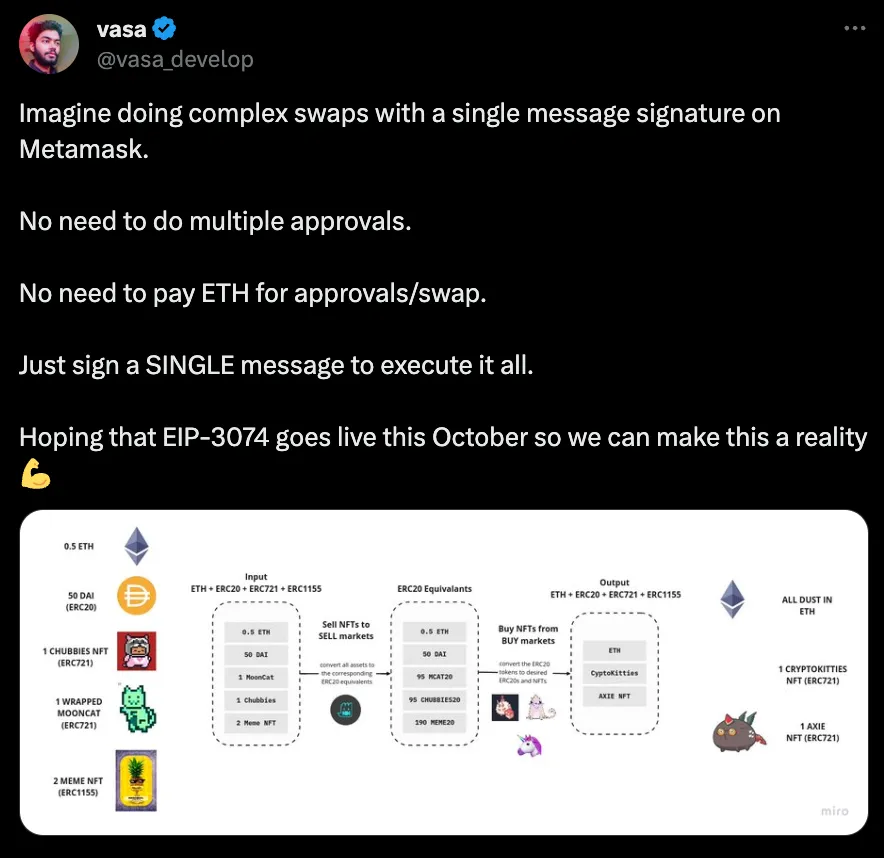
However, achieving this requires modifying the Ethereum protocol by introducing two new EVM opcodes: AUTH and AUTHCALL.
Therefore, compared to other account abstraction proposals like EIP-4337, EIP-3074 is generally less favored. Click here to learn more about concerns regarding EIP-3074.
Nevertheless, EIP-3074 will unlock new use cases, such as:
-
Smart Contract Wallets: With wallet recovery solutions, you’ll never lose funds again
-
Batch Transactions: Save on gas costs
-
Automation: Enable transaction automation via smart contract accounts
Advantages of EIP-3074 include:
-
Simplified User Interaction: Especially beneficial for complex DApp interactions, reducing user steps and gas costs
-
Greater Developer Flexibility: Enables more creative and efficient smart contract designs
-
Potential Security Enhancements: While introducing new security considerations, it also offers opportunities to build stronger security mechanisms
EIP-5003: Network Resource Optimization
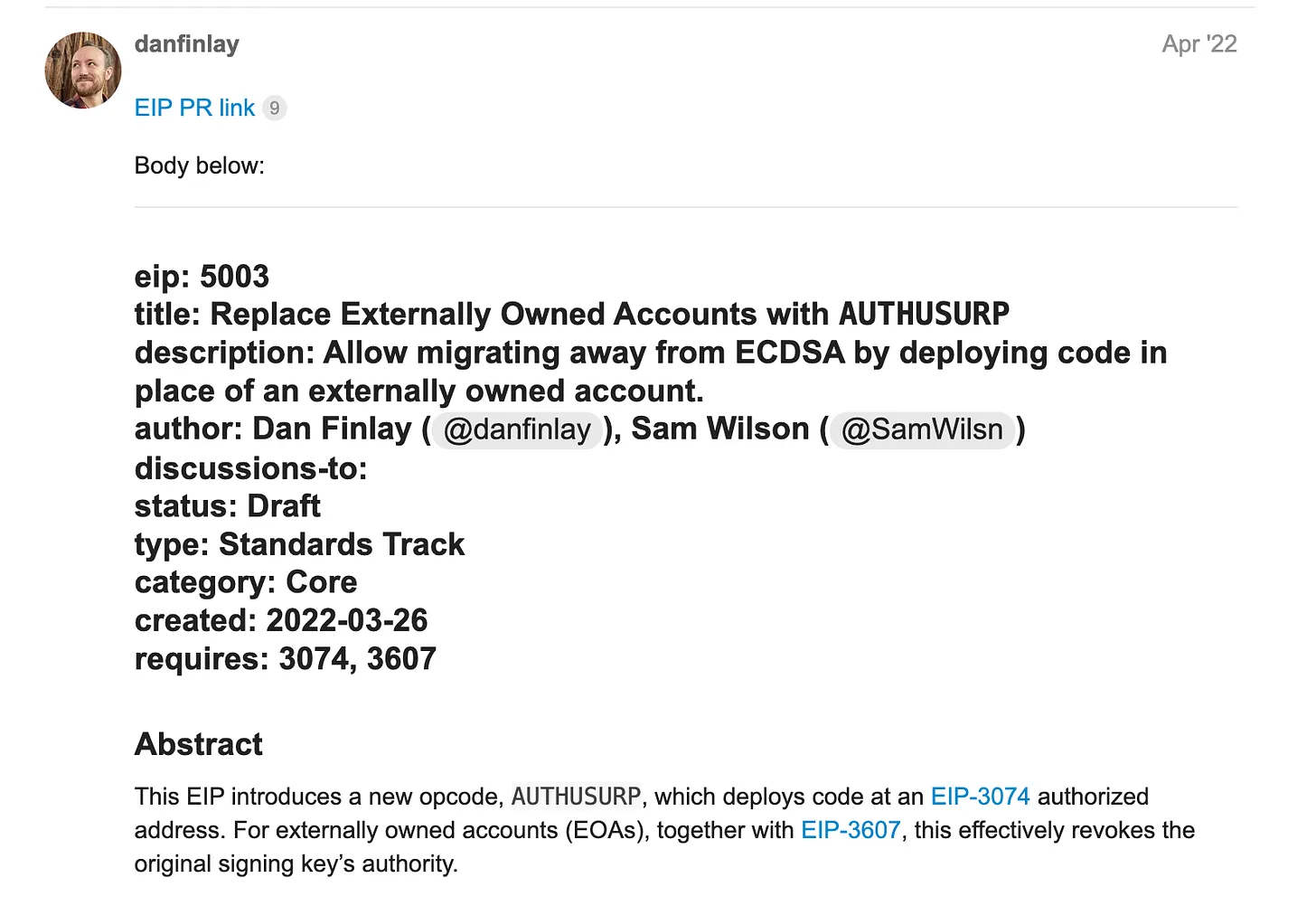
This proposal complements EIP-3074, which provides opcodes allowing EOAs to delegate signing authority to smart contracts.
While EIP-3074 authorizes smart contracts to act on behalf of EOAs, EIP-5003 fully migrates the signing keys of Ethereum EOA accounts to smart contract accounts.
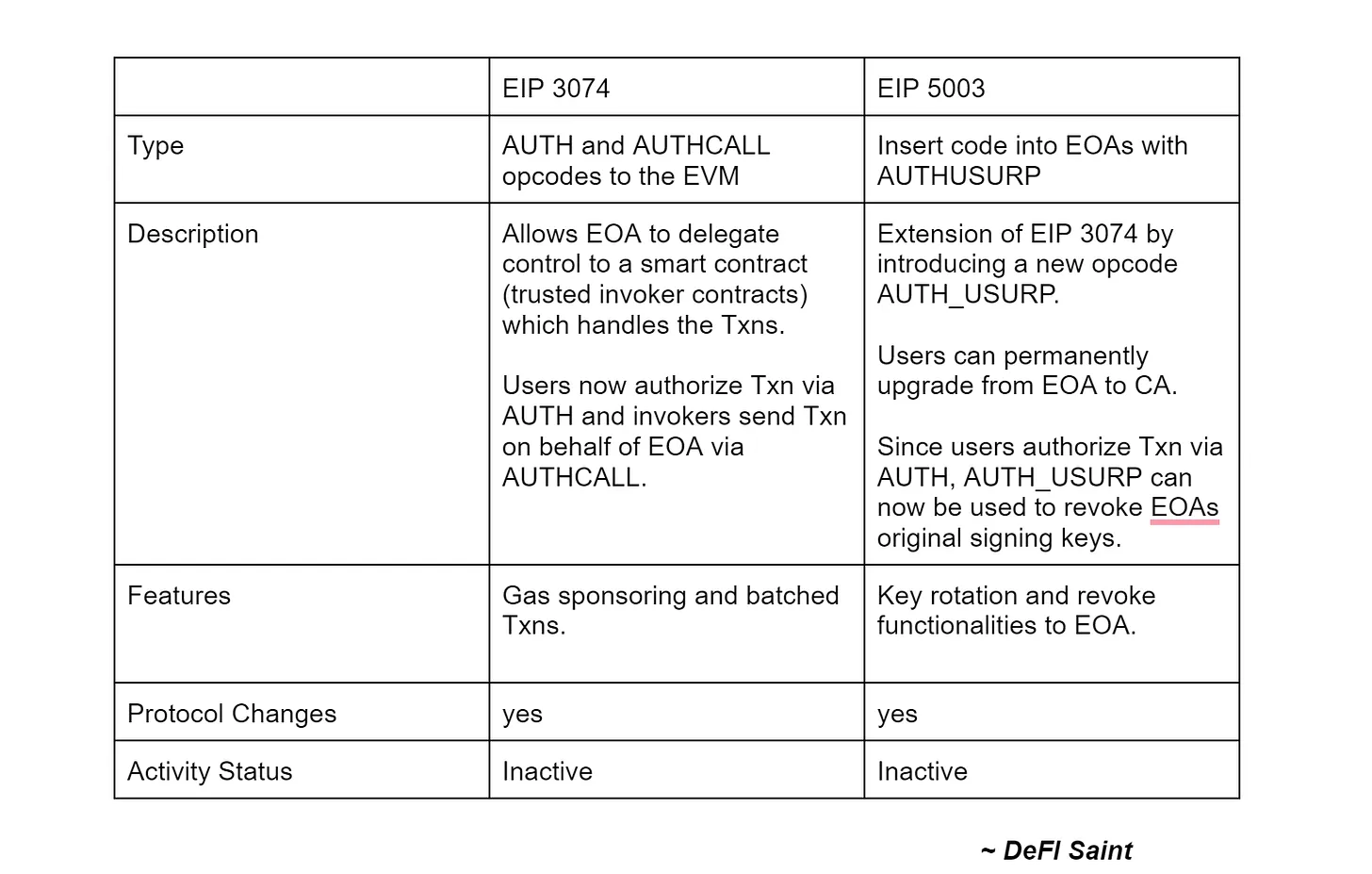
Limiting the scope of EIP-3074 alone creates new attack vectors around delegating permissions to smart contracts.
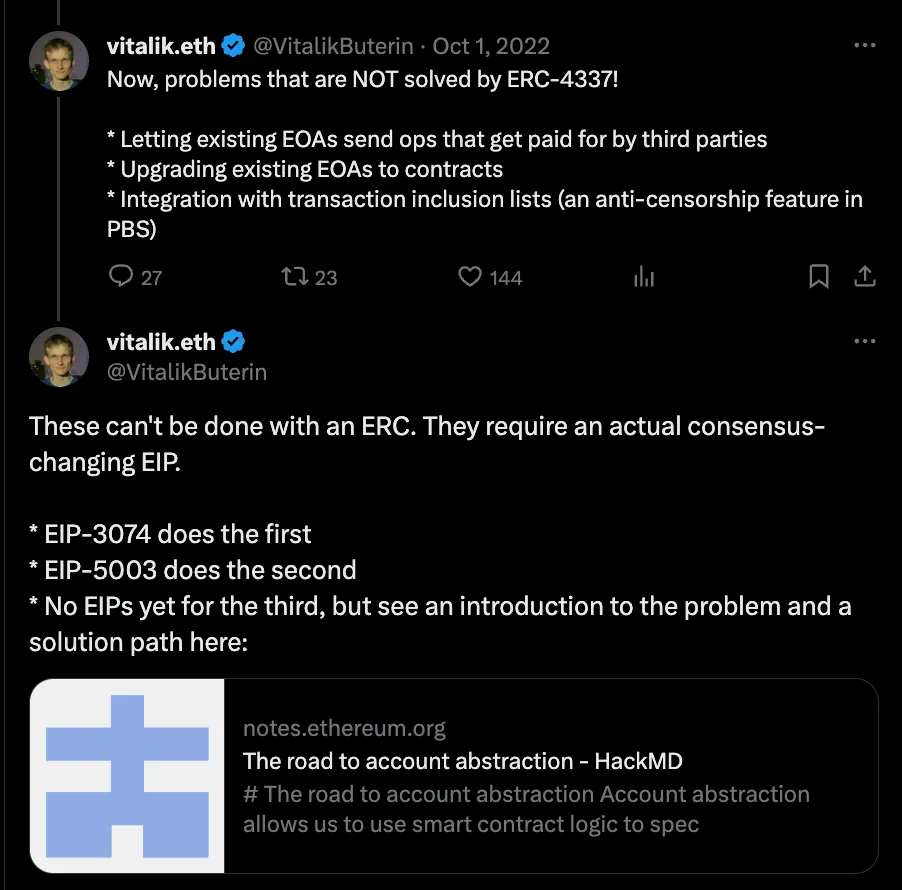
Although EIP-5003 is relatively unknown, it plays a crucial role in enhancing Ethereum’s network efficiency and security.
Expected Benefits of EIP-5003:
-
Improved Security: When combined with EIP-3074, this EIP addresses its shortcomings and ensures that the migration toward account abstraction does not introduce new attack vectors.
-
Migration from EOAs: This EIP represents the final step in migrating away from EOAs.
Conclusion: Ethereum Built for the Future
While Ethereum’s development is often perceived as slow and security-first, it is far from stagnant. Evaluating its technology based on a single point in time is misleading, as it is constantly evolving and improving.
In particular, Ethereum’s 2024 development roadmap reveals a clear vision for the future, promising advancements in scalability, security, accessibility, and usability to ensure the network remains future-ready.
The roadmap emphasizes redefining how users interact with Ethereum—from EOA-based accounts toward more flexible smart contract wallets.
The implementation of ERC-4337, EIP-4844, EIP-3074, and EIP-5003 all play critical roles in this transformation:
-
ERC-4337 revolutionizes smart contract wallets through account abstraction, offering enhanced security and improved usability. The standard aims to significantly simplify user experience and broaden accessibility across the Ethereum ecosystem.
-
EIP-4844, or "proto-danksharding," is a breakthrough in lowering costs and boosting the efficiency of L2 solutions. By introducing a new transaction format for blob-carrying transactions, it promises reduced fees and higher throughput, delivering faster and more affordable transactions for end users.
-
EIP-3074 and EIP-5003 together represent a significant step toward simplifying transactions and optimizing network resources. While EIP-3074 introduces new opcode functionality for transaction authorization, EIP-5003 complements it by transitioning signing authority from externally owned accounts (EOAs) to smart contract accounts, thereby enhancing network security and efficiency.
The primary aim of this article is to encourage readers to view Ethereum as a dynamic, continuously evolving network rather than a static one—actively striving to become the foundational technology for future innovations.
We will continue monitoring the implementation of these EIPs and Ethereum’s progress throughout the year.
Join TechFlow official community to stay tuned
Telegram:https://t.me/TechFlowDaily
X (Twitter):https://x.com/TechFlowPost
X (Twitter) EN:https://x.com/BlockFlow_News
 @francescoweb3








