








Meng Yan: For Web3 to achieve large-scale adoption, it must go beyond blockchain
TechFlow Selected TechFlow Selected
Meng Yan: For Web3 to achieve large-scale adoption, it must go beyond blockchain
Web3 is a trusted internet built on the premise of sovereignty.
 Navigating Web3 tides with focused insights
Author: Meng Yan
A couple of days ago, I published my outlook on the development of Web3 in 2024, in which I proposed moving beyond "fundamentalist decentralization." Since "decentralization" is a widely promoted banner of blockchain, saying we should move beyond decentralization essentially means transcending blockchain itself. Coming from me—a long-time evangelist in the blockchain industry—this view has indeed surprised some people. Due to space limitations in that article, I couldn't elaborate fully, and several friends have since asked me to explain further. The issue isn't complicated, so let me expand on it here.
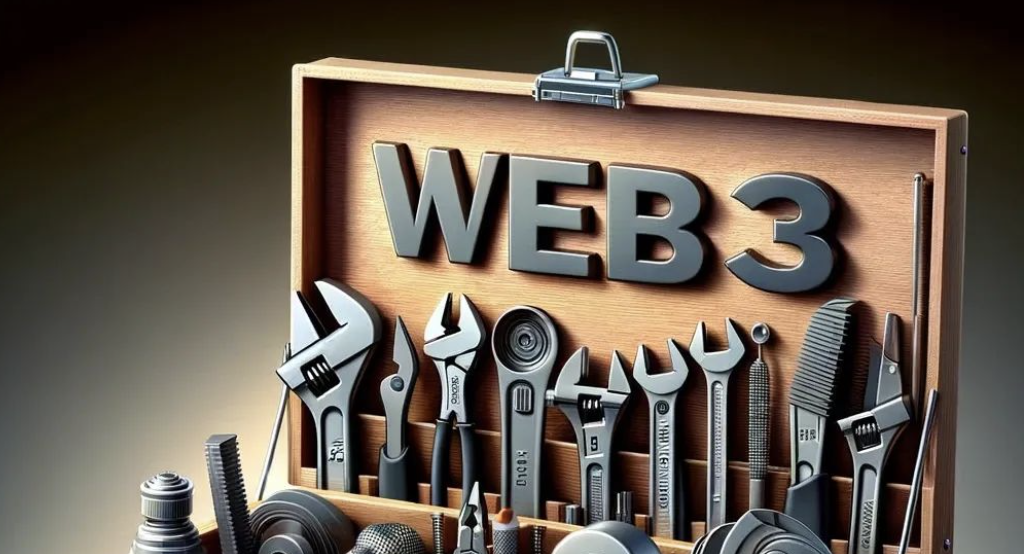
My position is certainly not about abandoning blockchain or returning to centralization, but rather putting both in their proper place. Blockchain is merely one tool in the Web3 toolbox; decentralization is just one viable approach to solving a specific category of problems. They are not the entirety of Web3, but rather specific tools for addressing particular challenges. Treating blockchain and decentralization as two absolute dogmas ("whatever is decentralized must be upheld") has actually constrained innovation and large-scale adoption in Web3.
1. Web3 Is a Trustworthy Internet Built on Sovereignty
The core value proposition of Web1 is interconnected sharing, Web2's is user experience, and Web3's is trustworthiness.
The vision of Web3 is to create a trustworthy internet of value—or a trustworthy digital economy. What does "trustworthy" mean? It means that within this network, any two individuals anywhere in the world can interact according to rules and contracts, whether economically or socially, with everything proceeding orderly. No one can renege, manipulate, or act arbitrarily. People are equal in terms of contractual obligations—no one can breach agreements, deceive, or bully others. Anyone can confidently do business with someone they've just met a second ago.
Web3 emphasizes security and trustworthiness, but this doesn't mean Web2 inherently pursues insecurity and untrustworthiness. In fact, Web2 has spent over thirty years striving toward security and trust as key goals. While Web3’s core value is security and trust, Web2 can also improve its levels of security and reliability. What truly distinguishes Web3 from Web2, however, is the underlying premise.
Web2 is custodial; Web3 is sovereign.
The foundational premise of Web3 is sovereignty—giving you ownership and control over your accounts, assets, social relationships, and data. The security and trustworthiness of Web3 exist under this condition, which is fundamentally different from Web2.
Web2 can also be used to manage and transfer value and strives for security and trust. Alipay, WeChat, and various online banking systems all use the internet to manage value and continuously enhance security and trust. The internet industry has spent two to three decades refining this system into a highly mature infrastructure with excellent user experience. However, these systems are not based on user sovereignty. When using them, you effectively entrust your money, data, social connections, and even your account and identity to third-party custody. Some Web3 enthusiasts argue that because these are held by others, they're unsafe—but that's not entirely fair. Objectively speaking, for most people in most cases, keeping money in a bank is safer than managing it personally.
However, the custodial architecture of Web2 naturally allows, encourages, tempts, or even forces dominant parties to breach agreements, cheat, deceive, or bully weaker parties. The stronger side must exert extraordinary effort, restraint, discipline, and go against human nature to refrain from such behavior. The weaker party must be incredibly lucky—repeatedly and consistently lucky—to avoid being cheated, deceived, or bullied. I used "incredibly lucky" four times intentionally, not by mistake, because in the inherently unequal structure of Web2, the only thing the weaker party can do to avoid betrayal and abuse is pray for luck.
In contrast, the technical architecture of Web3 inherently protects the rights of both parties in a contract equally. Users’ legitimate rights in Web3 are protected not because some entity generously grants them out of goodwill or self-discipline, but because the entire technical architecture inherently ensures it—something no one can refuse or change. Ultimately, this protection stems from cryptography, from mathematics—it is bestowed by nature itself, requiring no reliance on anyone's goodwill or moral restraint.
What exactly does sovereignty in Web3 mean? It means genuine freedom in the digital world. In modern value systems, freedom precedes all other values. If someone emphasizes only safety without considering freedom, then locking oneself in a basement forever would be safest. If a society prioritizes only safety over freedom, imprisoning everyone would be safest. Obviously, that’s absurd. In modern society, without freedom, nothing else holds meaning.
The foundational principle of Web3 is to guarantee every user's freedom under contract through digital sovereignty. This freedom primarily refers to having control over one’s digital private assets (identity, accounts, property, social relationships, data, etc.) under fair contractual terms. But Web2 simply cannot give you this control—it's determined by its technical architecture, human nature, environment, and the need for centralized platforms to reduce operational costs and gain competitive advantage. Could a Web2 platform theoretically achieve the highest standard of user freedom and rights while remaining custodial, by deeply respecting user sovereignty and maintaining impeccable integrity? In an ideal world, perhaps yes—but this would require the platform to embody heavenly principles while suppressing selfish desires: possessing flawless, unmatched technology and security capabilities, mastering economic theories and cultural customs across regions, religions, and nations, having infinite resources, noble character, resisting external power, punishing internal corruption, fearless against authority, honest with all users regardless of age or status, unmoved by wealth or poverty, unyielding under force, capable of superhuman feats for its ideals, sacrificing everything for humanity, ascending to sainthood or divinity—Namo Amitabha. Does such a platform exist? Of course not. Therefore, in reality, every Web2 platform either forces users to sign away their rights or repeatedly violates agreed-upon boundaries, often doing both.
Because traditional internet platforms cannot grant users sovereignty, Web3 had to start anew—not out of boredom or desire for novelty, but out of necessity.
2. The Core Technology of Web3 Is Modern Cryptography
To achieve security and trust on the basis of sovereignty, technological support is essential. The core enabling technology of Web3 is modern cryptography—the entire cryptographic system developed after the advent of asymmetric cryptography.
People only began envisioning Web3 because asymmetric cryptography emerged. Without this technology, we would remain asleep in digital serfdom.
When people hear "cryptography," they often think of spy drama tropes like those in Liu Yunlong’s TV series. But those depict symmetric cryptography, where a secret key is shared among multiple parties. Such cryptography serves only communication encryption. Most ordinary people don’t understand modern cryptography and thus don’t realize its applications have long surpassed mere communication security. Its most important and far-reaching application is serving as an identity authentication and authorization mechanism in the digital world.
In asymmetric cryptography, each person keeps their private key secure and never reveals or shares it. This makes the private key function like a fingerprint, iris scan, or DNA—as a unique identifier of personal identity. Web3 can build a sovereignty-based system precisely because of this function of private keys. What Web3 explores is how, within this sovereignty-based digital framework built on asymmetric cryptography, to achieve secure computation, trusted value management, and subsequently deliver better user experiences, higher performance, scalability, and other goals.
Once you understand this, it becomes clear that the core technology of Web3 is cryptography, not blockchain. As long as a system uses modern cryptographic mechanisms—using private keys to identify and verify identity, and to control accounts, assets, data, and other digital possessions—it ensures user sovereignty. Any application system built on this foundation to achieve security and trust qualifies as Web3.
3. Blockchain Is a Necessary Component of Web3, But Not the Whole Story
If the core of Web3 is cryptography, what role does blockchain play?
Blockchain is an indispensable foundational component in Web3, representing a significant paradigm for Web3 applications, characterized by the following:
-
The core system runs on computing nodes controlled by multiple equal participants, each running identical instances that synchronize and back up each other, achieving macroscopic state consistency.
-
Through maximum redundancy and tamper-proof mechanisms, it ensures permanent, trustworthy data storage.
-
All information is globally disclosed, extremely transparent, and highly symmetrical.
-
All nodes form consensus through equal voting based on identical knowledge and information.
-
Within certain bounds, any third party can audit and supervise based on publicly available information.
This paradigm suits application scenarios with the following characteristics:
-
High data value density, justifying high storage and management costs.
-
High temptation for fraud, requiring extreme transparency and open oversight to prevent cheating.
-
Participants accept equal rights and symmetrical information distribution.
-
The software system is relatively small in scale, with low performance demands, allowing efficiency to be sacrificed for security and fairness.
After ten years of searching and experimentation, the global blockchain industry has found that there aren’t many application scenarios matching these traits—only systems managing high-value digital assets like financial assets, identities, accounts, and critical social relationships are well-suited for blockchain.
This might sound discouraging, but ironically, these very systems are ubiquitous in Web3. To a large extent, Web3 *is* the internet of value—nearly every Web3 application involves some degree of value creation, transfer, or derivation. In essence, high-value digital asset management functions as a protocol layer in Web3. Blockchain alone, by excelling at this single task, has already become an indispensable pillar in Web3 and a groundbreaking innovation in the history of computing technology.
Yet, blockchain is not the whole of Web3. Other technologies that meet Web3 criteria include cryptographic components like ZK (zero-knowledge proofs, related to blockchain), VC (verifiable credentials), and DID (decentralized identifiers). These components can collaborate with blockchain or integrate with centralized systems, solving secure and trustworthy computation problems under the premise of user sovereignty.
4. Web3 Must Transcend Blockchain to Achieve Mass Adoption
Blockchain is suitable only for managing high-value digital assets. Although this alone secures its shining status, it cannot solve all problems. Applying blockchain to issues outside this scope becomes extremely awkward.
Most real-world problems fall outside this category and are ill-suited for blockchain solutions. And this unsuitability isn't due to the world being backward or people being conservative. It wasn't suitable before, isn't suitable now, and won't be suitable even in the age of AI and robotics.
Why is that?
First, in most real-world situations, information is not evenly distributed—and shouldn't be. For any given matter, some people naturally know more, some less. Some must research deeply, draw conclusions, and make decisions, while others only need basic awareness. If everyone eats from the same "information pot," demanding absolute symmetry and equal access to information, there would be no division of labor, no exchange, and no modern economy. Requiring everyone to know everything and vote on every decision—as blockchain does—is incompatible with how most things are handled in the world.
Second, privacy exists in most real-world contexts. Privacy differs from asymmetric information distribution. Asymmetric information means it's unnecessary for everyone to know everything, whereas private information means it's impermissible for everyone to know everything. Market economies rely on competition, which in turn depends on each participant’s right to protect private information from arbitrary disclosure. If, like blockchain, all information must be forcibly public, competition disappears. This contradicts real-world conditions.
Third, in most cases, real-world participants are not equal—authority exists, and efficiency often requires sacrificing absolute fairness and security. People establish order, define roles, recognize authority, and delegate decision-making power to certain individuals within contractual boundaries, enabling action without consulting everyone at every step. If, like blockchain, every action required a vote, the real world would grind to a halt—nothing could get done.
Fourth, in most cases, real-world data lacks high value density, doesn’t need permanent storage, doesn’t require tamper-proof guarantees, and much of it is disposable after use. If, like blockchain, every piece of data were redundantly stored hundreds or thousands of times permanently, the cost would be unbearable for anyone.
Therefore, blockchain is indeed unsuitable for solving most real-world problems. This is the fundamental reason why blockchain applications have largely failed in the real world over the past decade. Blockchain is a diamond-tipped drill, but most tasks in the world aren’t delicate porcelain—they’re hammering all kinds of nails. If Web3 insists on using this diamond drill to hit nails, it will only end up hitting resistance.
Over the past decade, many blockchain projects facing the mismatch between real-world needs and blockchain paradigms have resorted to forcing square pegs into round holes, dogmatically preaching that blockchain's rules represent a "more advanced" or "future paradigm" for the digital economy, blaming non-adoption on people’s outdated thinking. That’s nonsense. This paradigm applies only to high-value digital asset management. For all other domains, as long as basic economic principles hold and humans (and AIs) still require division of labor and collaboration, blockchain was unsuitable in the past, remains unsuitable today, and will remain unsuitable in the future.
If the Web3 toolbox contained only this one diamond drill, then the game would be over—Web3 could never achieve mass adoption in the real world. Fortunately, Web3 has other tools: ZK, VC, DID, and potentially more in the future (MPC? FHE?). These tools apply to broader scenarios, can solve numerous real-world problems, and can serve as bridges connecting real-world applications with the Web3 value layer governed by blockchain. By combining these tools with blockchain, we can address many practical challenges.
Thus, Web3 cannot achieve mass adoption relying solely on blockchain. Cryptographic researchers must keep adding new tools to the Web3 toolbox, and Web3 innovators must continually combine these tools to solve diverse real-world problems.
Our confidence that Web3 will ultimately surpass Web2 comes from this very point. Tools are rapidly evolving, capable of solving more problems and demonstrating increasingly tangible value. We’ve already seen and preliminarily proven this through our innovative practice with ERC-3525 Semi-Fungible Tokens (SFTs)—which is why we remain exceptionally optimistic.
Currently, most governments, academia, and traditional internet professionals still look down on Web3, seeing it merely as a bunch of people speculating on tokens, irrelevant to practical applications. This is regrettable, yet also beneficial. The ultimate rise of Web3 wouldn’t feel nearly as satisfying if it didn’t trigger a chorus of “invisible, dismissive, incomprehensible, too late” lamentations.
Join TechFlow official community to stay tuned
Telegram:https://t.me/TechFlowDaily
X (Twitter):https://x.com/TechFlowPost
X (Twitter) EN:https://x.com/BlockFlow_News
 Yan Meng








