









Flash crash of 10% as a birthday gift? Bitcoin's 15th birthday greets "violent deleveraging"
TechFlow Selected TechFlow Selected
Flash crash of 10% as a birthday gift? Bitcoin's 15th birthday greets "violent deleveraging"
Before the ETF situation settles, as long as market sentiment and trends have not completely reversed, this "flash crash-style" pullback may still fall under the category of "bull markets often experience sharp declines."
 Navigating Web3 tides with focused insights
By Frank, Foresight News
January 3, 2024 marks Bitcoin's 15th birthday—the first block of the Bitcoin network was mined by Satoshi Nakamoto on a small server in Helsinki, Finland’s capital (at around midnight Beijing time on January 4, 2009), earning the initial reward of 50 BTC.
However, the market seemed to celebrate with a flash crash. Starting at 17:00 today, Bitcoin successively broke below key psychological levels of 45,000 USDT and 44,000 USDT (according to OKX data, same below), accelerating rapidly into a steep plunge that hit a low of 40,157.3 USDT, down over 10% within 24 hours.
Meanwhile, ETH dropped from around 2,380 USDT to a low of 2,051.76 USDT, while altcoins experienced widespread snowballing declines, many falling over 20%. According to Coinglass data, total liquidations across the market reached $489 million in just one hour, with long positions accounting for $466 million—over 95%—setting the highest liquidation record since August 18, effectively completing a violent deleveraging of bullish positions (see also: Liquidation Amount Rivals March 12 and May 19—What’s Behind the Market Crash?).
Against the backdrop of the approaching decision on spot Bitcoin ETFs, this sudden market crash has further clouded what had been an increasingly optimistic market outlook.
What Caused the Plunge?
In summary, potential drivers behind this sharp drop can be categorized into two broad dimensions: external factors such as weakening U.S. equities and shifting expectations around Fed rate cuts, and internal triggers including intensified ETF-related fund speculation and sustained losses among longs.
U.S. Equities Start 2024 With a Thud—Crypto Stocks Sold Off
On January 2, the first trading day of 2024, the tech-heavy Nasdaq Composite closed down 1.63%, marking its largest drop in over two months and erasing all gains since December 15, 2023. Apple fell 3.6%, its worst performance since August 4, 2023.
The S&P 500 also declined 0.57%, wiping out gains since mid-December, while the Dow Jones Industrial Average nearly closed flat (+0.07%).
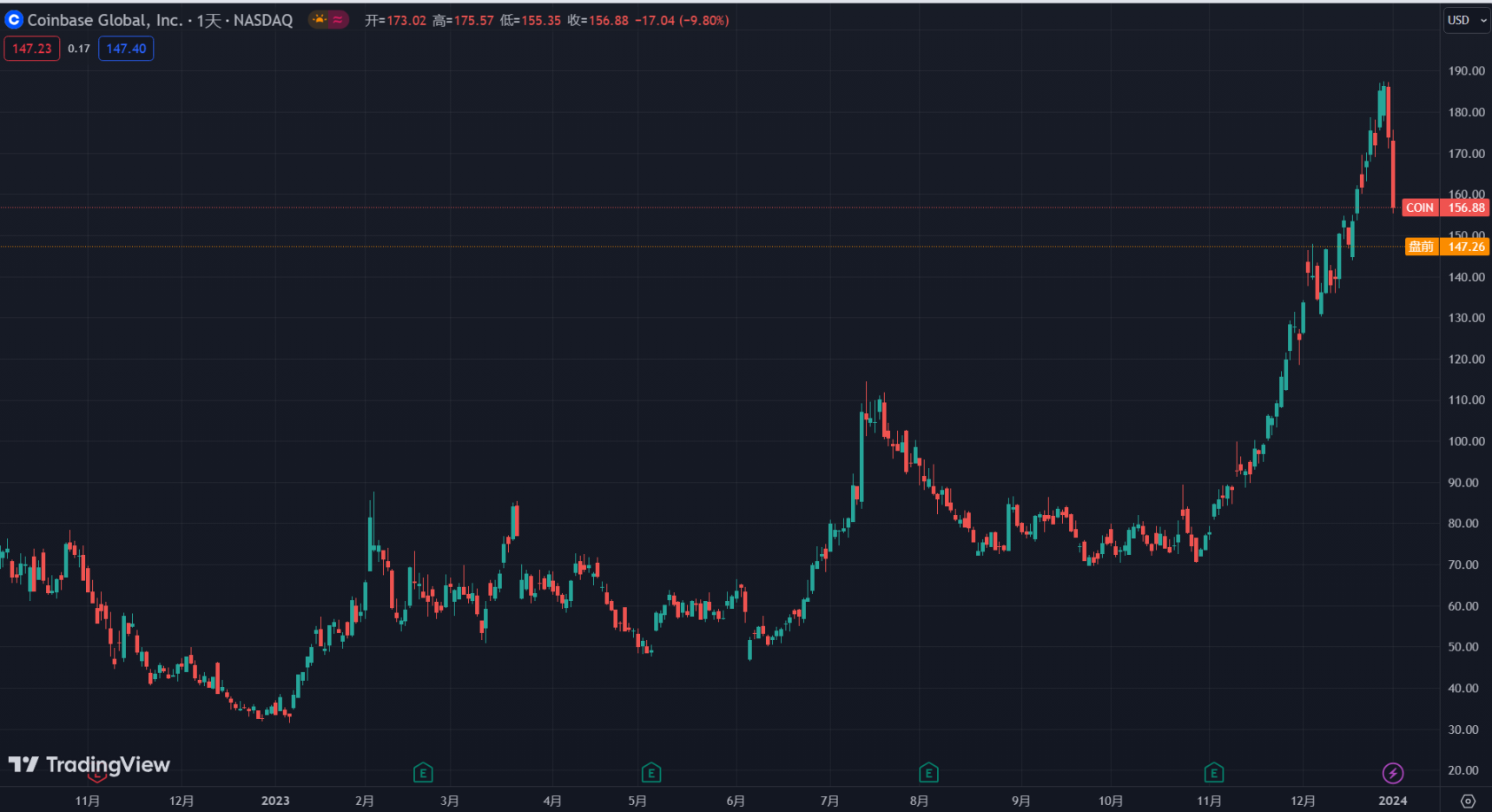
Crypto-related stocks also pulled back sharply: Coinbase shares dropped 9.8%, their worst single-day performance since June last year, declining for two consecutive trading days.
Crypto miners were similarly battered: Bitdeer and Bit Digital fell over 9.9%, Canaan ADR down ~6.5%, Hut 8 off over 5.5%, Bakkt down over 4.9%, Hive Digital down ~3.1%—painting a bleak picture across the sector.
Shifting Expectations on 2024 Fed Rate Cuts
Additionally, Federal funds futures traders have begun to reassess their expectations for Fed rate cuts in 2024. The latest projections suggest 5–7 rate cuts this year, but there has been a slight downward adjustment in anticipation of the first cut occurring in March:
The probability of accommodative policy beginning in March has decreased from 85% last week to 75%, and bets on the magnitude of cuts have also been reduced—now expecting cumulative easing not exceeding 150 basis points in 2024.
At the same time, New York Fed President Williams, often seen as the Fed’s “third-in-command,” cooled rate-cut expectations, stating the Fed isn’t actually discussing rate cuts and must be ready to hike again if needed. He was soon joined by other senior officials including Cleveland Fed President Mester, Chicago Fed President Goolsbee, and San Francisco Fed President Daly—all adopting a hawkish tone.
Tonight at 21:30, Richmond Fed President Barkin will speak on the economic outlook, and early tomorrow morning at 3:00, the Fed will release minutes from its December FOMC meeting.
This week is also packed with key U.S. financial data releases, including tonight’s ISM Manufacturing Index and JOLTS job openings report, followed by Thursday’s initial jobless claims, and Friday’s ISM Services and nonfarm payrolls data.
Given this context, some capital is inevitably adjusting positions to hedge against risk.
ETF Fund Flows Intensify Speculation
Moreover, January 3/4 and January 10–17 remain two critical dates widely watched by market participants, leading to escalating speculative activity around these timelines.
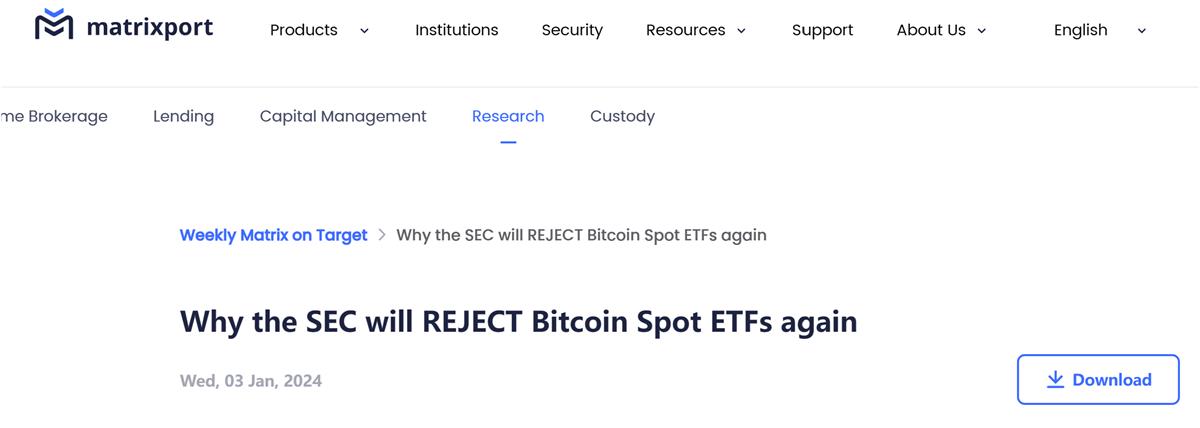
Whether the SEC ultimately approves or rejects spot Bitcoin ETF applications, the market is poised for significant clearing either way—meaning even minor rumors or signals are being amplified, magnifying market volatility. Just before this downturn, Matrixport, which had previously been aggressively bullish for months, issued a timely warning with its report titled "Why the U.S. SEC Will Reject Spot Bitcoin ETFs Again."
As market uncertainty grows amid stalemate, funds that entered during the prior six months may opt to secure profits as key deadlines approach, intensifying market churn during this period.
Longs Continue Bleeding
Notably, perpetual contract funding rates for both BTC and ETH have remained above 30% annualized since December 25, meaning long positions have been paying massive funding fees equivalent to over 30% per year (see also: Ahead of the ETF Decision—What Trading Data Reveals About Market Dynamics?).
Especially starting today (00:00 on January 2), funding rates for both assets surged past 50% annualized, peaking briefly at 65%, indicating longs are heavily subsidizing shorts and continuously losing money.
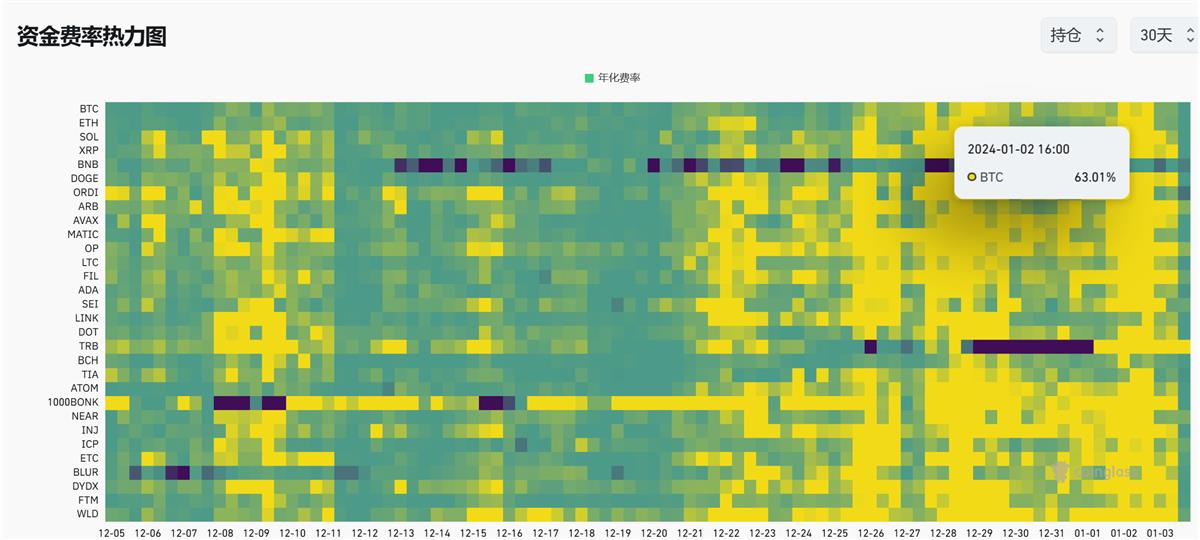
As time passes and the likelihood of ETF approval diminishes without a decisive upward breakout, longs face mounting pressure. Those committed bulls who keep paying high funding fees may be forced to exit quickly.
Once some longs begin closing positions, it can trigger a domino effect—a stampede leading to large-scale leveraged liquidations. This is exactly what happened on December 9–10 (Saturday and Sunday): after several days of bleeding under funding rates above 30%, with prices failing to break higher over the weekend, a sell-off of several thousand dollars began in the early hours of Monday (see also: Longs Massacred—Where Is the ‘Christmas Rally’ Headed?).
Summary
That said, at the time of writing, Bitcoin has already rebounded swiftly to 42,000 USDT, with strong performers like ARB and SEI rapidly recovering lost ground.
Overall, so long as the final outcome of the ETF decision remains uncertain and market sentiment and trends have not fundamentally shifted, this “flash crash” correction may still fall under the classic pattern of “bull markets featuring sharp dips.”
Join TechFlow official community to stay tuned
Telegram:https://t.me/TechFlowDaily
X (Twitter):https://x.com/TechFlowPost
X (Twitter) EN:https://x.com/BlockFlow_News
 Foresight News








