
DWF 2024 Crypto Outlook: The Potential and Challenges of DAI, Pioneering an AI Future through Web3
TechFlow Selected TechFlow Selected
DWF 2024 Crypto Outlook: The Potential and Challenges of DAI, Pioneering an AI Future through Web3
Cooperation, inclusivity, and ethical considerations will be key to shaping a DAI landscape that truly benefits humanity.
 Navigating Web3 tides with focused insights
Author: DWF Labs Research
Translation: Sharon, Luccy, BlockBeats
Editor's Note:
In the past year, the launch of ChatGPT 3.5 has triggered widespread concern and heated discussion about AI. Vitalik also pointed out in his article that many people fear the emergence of a monopolistic version of AI and thus favor delaying its progress. DWF Labs Research dives deep into the breakthrough of ChatGPT 3.5 and its implications for AI in the Web3 era, revealing the challenges facing AI and the potential of DAI (Decentralized AI).
The original article is translated as follows:
At the end of the year, we explore one of the hottest topics of 2023—Artificial Intelligence (AI). Over the past year, AI has become a focal point of discussion following OpenAI’s release of ChatGPT 3.5. This launch showcased the immense economic potential of AI, sparking global conversations about its future, impact, and associated risks.
As optimism grows, so does skepticism, and potential consequences are beginning to draw regulatory attention. The rapid rise of AI, coupled with unclear regulatory frameworks, bears resemblance to the early days of the cryptocurrency space. Comparisons between the two industries highlight how the decentralized nature of Web3 might complement the potentially centralized forces of AI.
Soon, nearly every Q1 Web3 venture capital discussion revolved around the transformative potential of AI (sometimes I wonder whether I'm attending a Web3 event or an AI conference). Throughout the year, we’ve also seen several venture capital firms shift focus toward AI or integrate it into their investment portfolios.
As the initial hype begins to fade, DWF Ventures now seeks to reevaluate the AI landscape from a balanced perspective. This article briefly outlines the evolution of AI and how it reached its current level of prominence. However, our narrative takes a different turn—we move beyond the conventional focus on how AI impacts Web3 to explore the inverse: how Web3 can influence AI. In this exploration, we delve into how decentralization and Web3 principles can act as catalysts in addressing the challenges currently faced by AI.
A Brief Overview of AI and the Breakthrough of ChatGPT 3.5
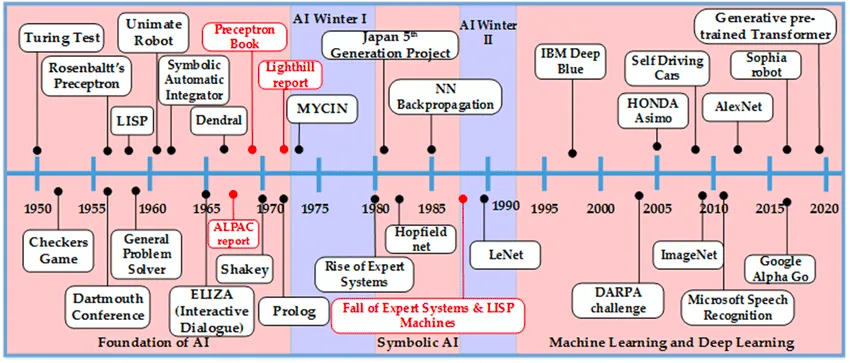
Image source: Khan, Pasha, & Masud, 2021
Contrary to recent waves of AI enthusiasm, its history traces back to the 1930s. Turing’s work in 1950, such as the Turing Test, laid the foundation for AI. Despite early optimism, computational limitations and failure to meet real-time demands led to the “AI winter” of the 1970s. In the 1980s, expert systems revitalized AI by using knowledge databases to simulate human expertise. This era also saw the revival of connectionism and the rise of recurrent neural networks.
However, expert systems struggled with knowledge acquisition and real-time analysis, leading to decline in the 1990s, while increasing PC performance diminished their relevance. Over time, AI evolved rapidly, branching into fields like machine learning, natural language processing, computer vision, and speech recognition. These developments enabled AI to transition from simple problem-solving to deep learning in complex applications.
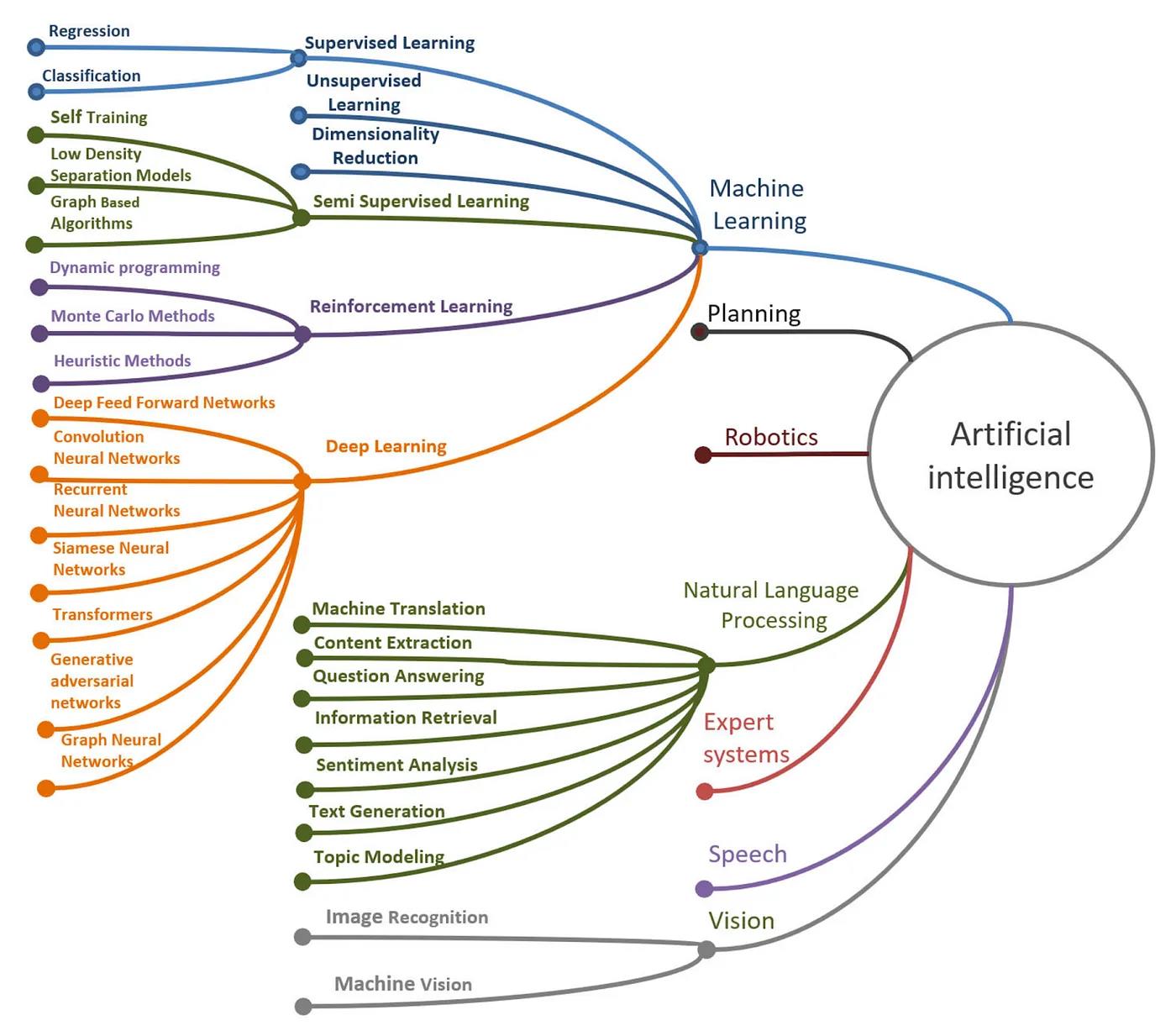
Image source: Mukhamediev et al., 2022
Throughout its development, AI experienced convergence across subfields. Notably, machine learning and large language models (LLMs) made significant strides in vertical transformation. Ashish Vaswani et al.’s paper “Attention is All You Need” clearly inspired the Generative Pre-trained Transformer (GPT) model.
Since then, numerous GPT models have emerged, including bidirectional “BERT” GPT and OpenAI’s own GPT series. Following ChatGPT, open-source alternatives like Falcon and LLaMA2 appeared, intensifying competition for next-generation GPT iterations and bringing us potentially closer to Artificial General Intelligence (AGI).
The GPT-driven hype helped liberate AI from academia, capturing the attention of billions. Within two months of launch, OpenAI achieved the fastest growth ever recorded, reaching 100 million weekly active users. According to a recent McKinsey study, approximately 51% of tech professionals currently use AI in their work.
The Reality of AI: Navigating Societal Perceptions and Limitations of Centralized AI
Vitalik Buterin’s latest survey, discussed in his article, reveals that many worry about the emergence of a monopolistic AI and thus lean toward slowing its advancement.
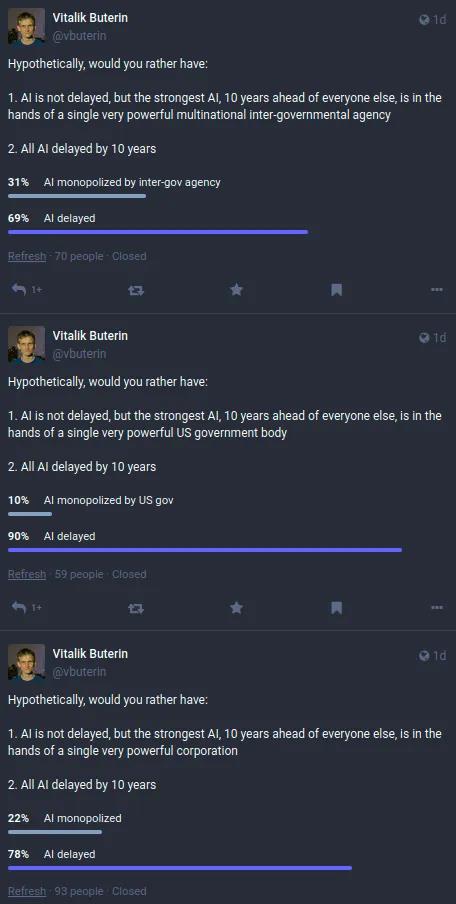
Image source: My techno-optimism
Recent surges in AI concerns trace back to ChatGPT’s rapid popularity, driven by its human-like responses. Yet, most people fail to realize that while GPT mimics human interaction, it is not Artificial General Intelligence (AGI).
Each output generated by GPT is statistically variable, lacking guarantees of consistency or factual accuracy. Moreover, GPT faces other limitations, but its most prominent weakness lies in logical reasoning—particularly evident in mathematical tasks.
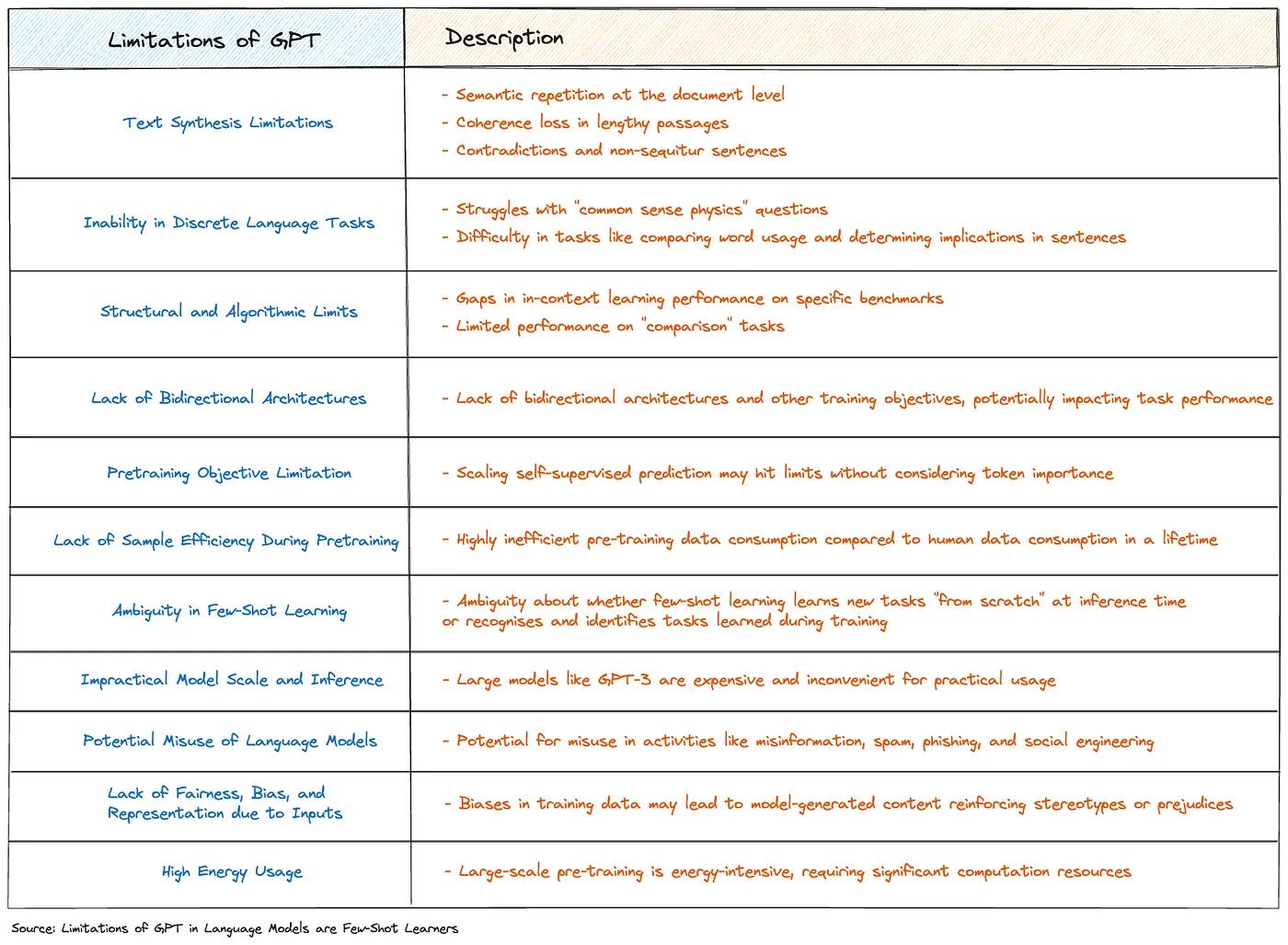
Image source: “Limitations of GPT Language Models Lie in Their Weakness in Few-Shot Learning”
Given the numerous concerns surrounding AI and the existing challenges in efficiently managing large AI models, integrating Web3 with AI emerges as a potential pathway to mitigate these issues. Leveraging the inherent principles of decentralization and distributed computing in Web3 offers promise in addressing current shortcomings of AI systems.
The Path to DAI (Decentralized AI): Overview, Potential, and Challenges
The concentration of AI capabilities within centralized systems raises concerns about data access, model relevance, and the overall sustainability of AI applications. Centralized AI systems face significant barriers, particularly regarding proprietary large datasets.
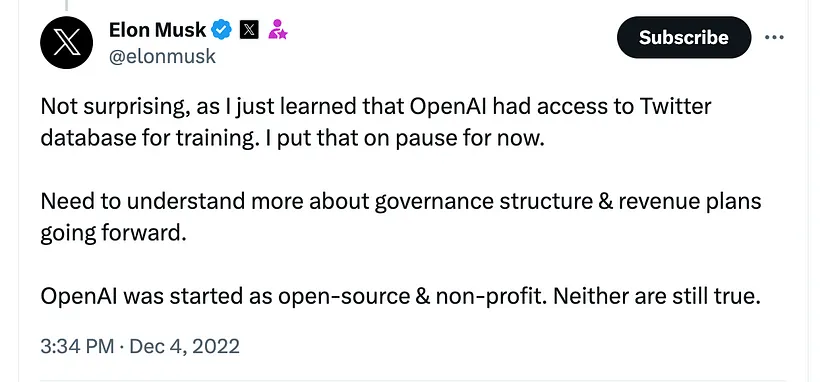
Source: Elon’s tweet
This has led to pay-per-query pricing models, with X imposing daily limits on post views. Shortly after, the release of Grok and X GPT allowed users real-time access to X’s data. This model creates economic barriers and raises questions about accessibility and inclusivity in AI benefits.
Furthermore, due to the rapid obsolescence of released models, maintaining relevance and accuracy becomes a major challenge without continuous data updates. Currently, ChatGPT 3.5’s training data includes information up to January 2022. Llama 2 was trained on data from January 2023 to July 2023.
In response to these challenges, Decentralized AI (DAI) has emerged as a potential solution to the limitations of centralization.
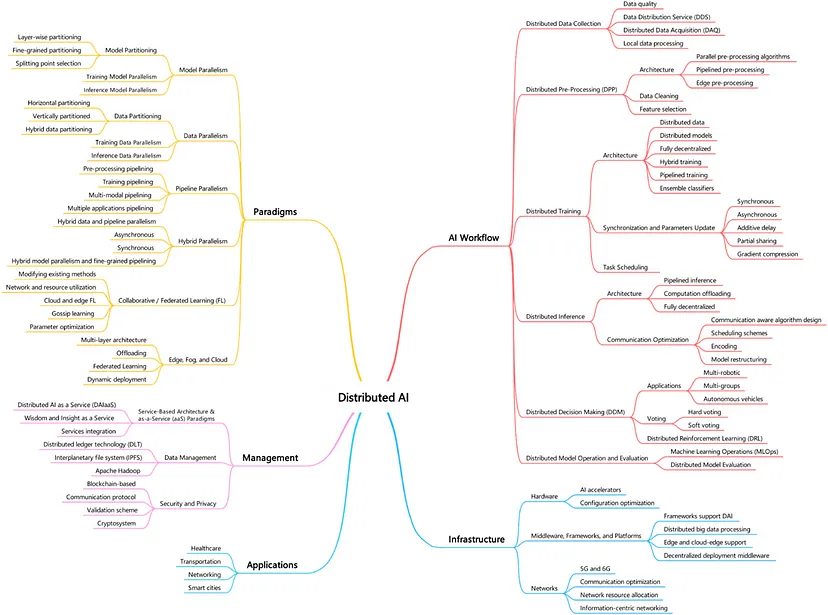
Source: (Janbi et al., 2023)
DAI presents an alternative trajectory to address the inherent challenges of centralized models. A recent meta-analysis paper by Janbi et al. serves as a comprehensive guide, detailing five key domains of DAI.
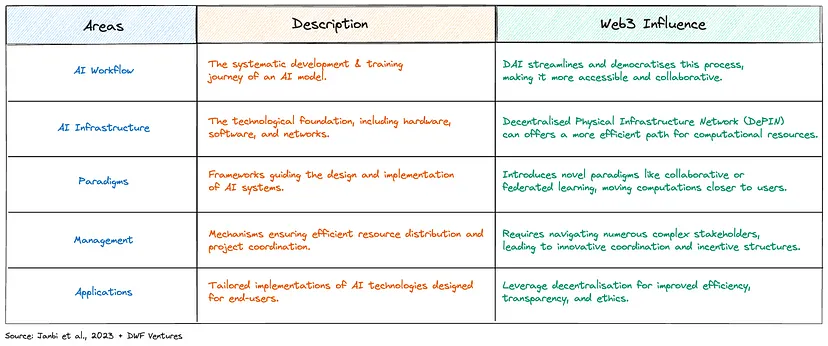
Source: (Janbi et al., 2023) + DWF Ventures
Challenges of DAI
DAI brings an exciting transformation to AI development, offering numerous advantages. However, it is crucial to recognize the challenges that accompany these advancements.
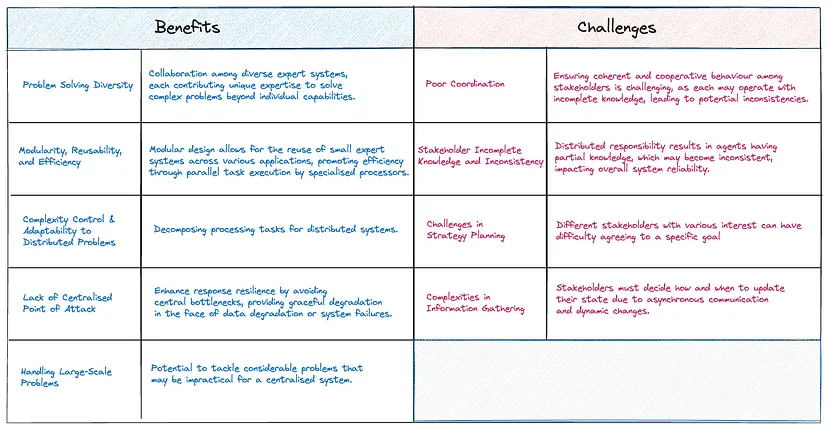
Source: (Eduardo, L., & Hern, C., 1988) + DWF Ventures
Conclusion
Overall, the journey toward DAI holds immense potential. Realizing the full potential of DAI depends on achieving critical mass, driven by the existing user base of AI. Due to limited suppliers and users, open-source alternatives face certain barriers, while the ChatGPT API offers a practical and cost-effective option for the mass market, providing convenience and reliability.
However, considering the potential consequences of monopolistic general-purpose AI, individuals should reconsider the trade-offs between convenience and decentralization in their choices and actions. On a broader scale, innovators in the Web3 and AI communities can address these challenges by redefining AI workflows, reimagining infrastructure, embracing innovative paradigms, enabling efficient management, and developing applications aligned with decentralized principles. As we continue along this path, collaboration, inclusivity, and ethical considerations will be key to shaping a DAI landscape that truly benefits humanity.
Join TechFlow official community to stay tuned
Telegram:https://t.me/TechFlowDaily
X (Twitter):https://x.com/TechFlowPost
X (Twitter) EN:https://x.com/BlockFlow_News
 @DWFLabs