








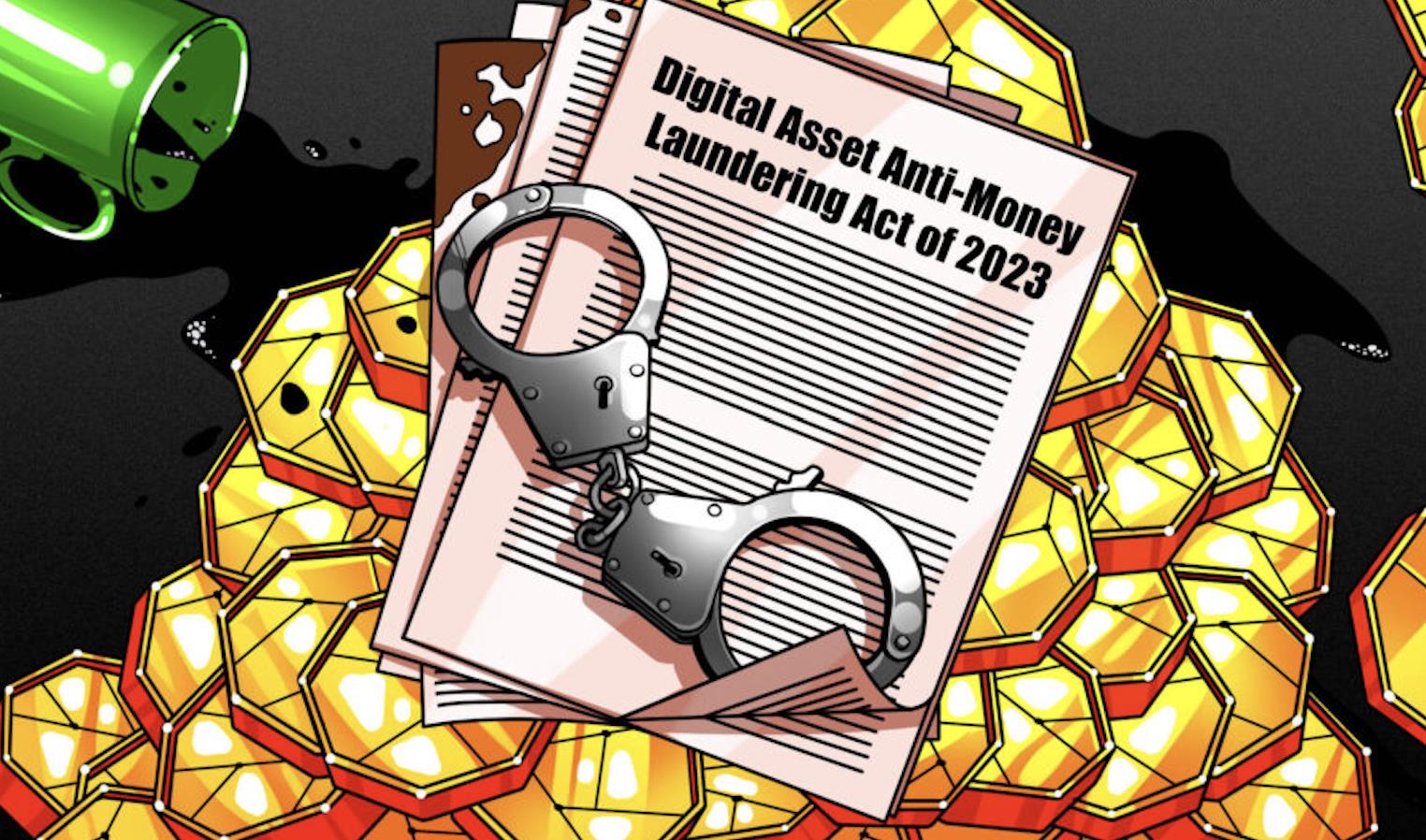
U.S. New Proposed Digital Asset Anti-Money Laundering Act: VASPs May Be Treated as Financial Institutions
TechFlow Selected TechFlow Selected
U.S. New Proposed Digital Asset Anti-Money Laundering Act: VASPs May Be Treated as Financial Institutions
If the Digital Asset Anti-Money Laundering Act becomes law, many cryptocurrency providers will have to learn how to comply with the same regulations as traditional financial institutions.
 Navigating Web3 tides with focused insights
By: Mitch Eiven
Translation: TaxDAO
True bipartisan legislative cooperation is rare in Washington, D.C., these days — but Democratic Senators Elizabeth Warren and Joe Manchin, along with Republican Senators Lindsey Graham and Roger Marshall, have successfully co-sponsored a proposal targeting cryptocurrency-related crime.
The senators say the 2023 Digital Asset Anti-Money Laundering Act aims to close gaps in the nation’s anti-money laundering rules. The proposal would amend the Bank Secrecy Act and treat certain digital asset providers as financial institutions.
The Bank Secrecy Act establishes procedures, recordkeeping, and reporting requirements for national banks, federal savings associations, federal branches, and foreign bank agencies. Under the proposed legislation, digital asset providers would be required to comply with many of the same regulations that apply to traditional banks.
Warren introduced the bill on July 27, 2023, on behalf of herself and Senators Joe Manchin, Roger Marshall, and Lindsey Graham, in the U.S. Senate. It was then referred to the Senate Committee on Banking, Housing, and Urban Affairs. The bill has not yet been voted on by the full Senate, nor sent to the House of Representatives. President Biden has not signed it, and it is not currently law.
The proposal would add several types of cryptocurrency providers to the list of financial institutions regulated by U.S. authorities. These include non-custodial wallet providers, digital asset miners and validators (or other nodes validating third-party transactions), miner extractable value searchers, other validators or network participants with control over network protocols, and anyone facilitating or providing services related to digital asset trading, sales, custody, or lending.
All such organizations and individuals would be subject to the same regulatory framework currently applied to U.S. financial institutions. The proposal includes an exception for those using distributed ledger, blockchain technology, or similar systems solely for internal business purposes.
Cryptocurrency under federal scrutiny
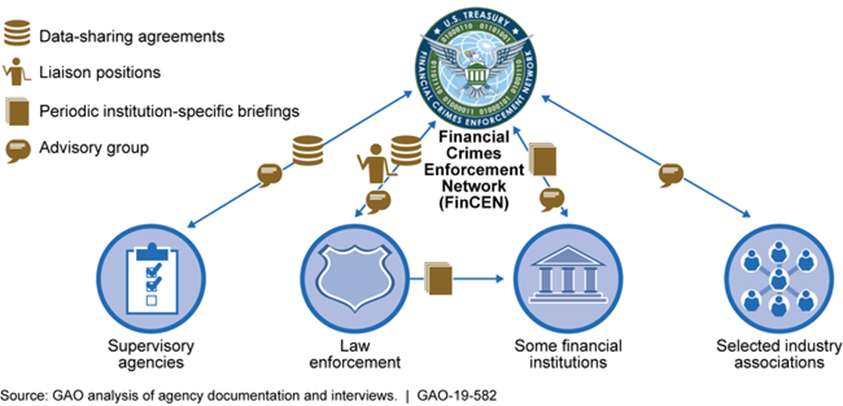
If enacted, the Financial Crimes Enforcement Network (FinCEN) at the U.S. Treasury Department would require any American possessing $10,000 or more in digital assets, or holding one or more digital assets overseas, to file a report within 18 months of the law taking effect. Meanwhile, the Treasury Department would establish controls to mitigate illegal financial risks associated with digital asset mixers and privacy-enhancing cryptocurrencies.
Within two years of enactment, the Treasury Department would consult with banking regulators to create a risk-focused inspection and review process for newly designated digital asset participants. They would assess whether anti-money laundering and counter-terrorism financing efforts are sufficient and whether crypto providers and service providers are complying with new rules. At the same time, the Securities and Exchange Commission (SEC) and Commodity Futures Trading Commission (CFTC) would consult with the Treasury on identical matters.
Regulating digital asset kiosks
The next section of the proposal focuses on digital asset kiosks. Within 18 months of passage, FinCEN would require owners and operators of digital asset ATMs to submit and update their physical addresses every 90 days. Kiosk operators would also need to verify each customer’s identity using government-issued identification and collect the name and physical address of each counterparty involved in every transaction.
FinCEN would issue a report within 180 days regarding any unregistered digital asset kiosks. This report would estimate the number and locations of unregistered kiosks and assess the additional resources FinCEN might need to investigate them.
One year after enactment, the Drug Enforcement Administration (DEA) would publish a report proposing recommendations to reduce drug trafficking and money laundering activities linked to digital asset kiosks.
Impact on the crypto industry
Grant Fondo, co-chair of Goodwin’s Digital Currency and Blockchain practice and former Assistant U.S. Attorney, told the magazine, “This proposal attempts to bring more participants in the digital asset industry under regulatory oversight to fill what some in Congress perceive as gaps not covered by existing regulations.”
Fondo believes that if passed, the proposal would impose impractical requirements on DeFi protocols, potentially stifling decentralized finance in the United States. He argues the legislation burdens validators and miners and questions whether imposing bank-like obligations on software companies that validate blockchain transactions is realistic.
Hadas Jacobi, a lawyer with Reed Smith’s Financial Industry Group who previously worked at a New York State financial enforcement agency, agrees. According to Jacobi, the proposal applies Bank Secrecy Act requirements to non-financial crypto participants on a case-by-case basis.
“The bill could be interpreted as applying to programmers and other technology providers who build the infrastructure for financial services operations without directly offering those services themselves,” Jacobi said.
While Jacobi acknowledges the need for legislative regulation in this space, she questions the relevance of the bill’s central premise — that the crypto industry poses a threat to national security. She says targeted regulation of cryptocurrency and digital asset service providers is necessary, but digital assets themselves do not threaten national security. “Broad claims that digital assets pose a threat to U.S. national security are both inaccurate and short-sighted. From the perspectives of national security and financial stability, bad actors within the digital asset space pose global risks — but the digital asset industry and its underlying technologies do not.”
What politicians are saying
Senator Marshall stated in a written release that the proposal addresses U.S. national security concerns.
“This legislation is about national security. Hackers from adversarial nations like Iran, Russia, and North Korea are targeting the United States with cybercrimes causing billions in damages, and they must be held accountable. The reforms outlined in our bill will help us fight back by protecting our digital assets using proven methods that domestic financial institutions have followed for decades.”
Marshall said the legislation would expand Bank Secrecy Act responsibilities to include “know your customer” obligations for affected parties; address the “significant gap” posed by non-custodial digital wallets; direct FinCEN to issue guidance for financial institutions to mitigate digital asset risks; strengthen enforcement of BSA compliance; extend BSA foreign bank account rules to include digital assets; and reduce illicit financing risks associated with digital asset ATMs.
Warren noted that U.S. authorities have warned that cryptocurrencies are being used in various crimes and leveraged by adversarial nations to evade U.S. sanctions. “Countries like Iran, Russia, and North Korea use digital assets to launder money, circumvent U.S. and international sanctions, and fund illegal weapons programs.”
Warren suggested the proposal would help eliminate these threats, focusing particularly on North Korea’s missile program. “For example, it’s estimated that nearly half of North Korea’s missile program is funded through cybercrime and digital assets. In 2022, illicit digital asset transactions reached at least $20 billion — a record high.”
Manchin called on Democrats and Republicans to come together and vote for the bill. “Our bipartisan legislation will reduce these security risks and require cryptocurrency platforms to follow the same anti-money laundering rules that banks must obey. I urge my colleagues on both sides of the aisle to support this legislation and protect Americans by preventing bad actors from funding criminal activity with cryptocurrency.”
Fondo does not believe the Anti-Money Laundering Act can fully mitigate national security risks, though he acknowledges it may address issues related to privacy-enhancing cryptocurrencies.
Still, he hopes this legislative effort receives careful consideration before passage. “No one wants terrorists and criminals hiding their financial transactions. But conversely, privacy is a rare commodity, so striking the right balance between privacy and national security is crucial.”
Jacobi worries that overregulation could lead to redundancy and excessive costs, draining the entire industry. She notes the proposal would direct FinCEN to regulate digital service providers as money transmission businesses, even though she believes they’ve already been doing so since 2013. Moreover, most state regulators have been examining and registering them for nearly as long. “The proposal risks disrupting the balance of the existing dual state-federal regulatory system in the United States by creating redundant oversight and examination of money transmission activities — not to mention exposing the digital asset industry to resource depletion and duplicative enforcement actions.”
Will the proposal become law?
That remains uncertain. On Capitol Hill, the House of Representatives has only just resumed functioning after weeks of struggling to elect a new Speaker. The U.S. Senate still requires a supermajority to pass nearly all legislation, while lawmakers and President Biden remain heavily focused on geopolitical issues like the Israel-Hamas conflict and the war in Ukraine.
Additionally, most U.S. federal politicians are entering the 2024 election season, with fierce battles expected over control of the Senate, House, and presidency. Controversial legislation will almost certainly be delayed until after the elections — but a potentially popular crypto bill could gain bipartisan candidate support and ultimately land on the president’s desk. If the Digital Asset Anti-Money Laundering Act becomes law, many cryptocurrency providers will have to learn how to comply with the same regulations that govern traditional financial institutions.
Join TechFlow official community to stay tuned
Telegram:https://t.me/TechFlowDaily
X (Twitter):https://x.com/TechFlowPost
X (Twitter) EN:https://x.com/BlockFlow_News
 @Cointelegraph








