
How to cope with the hidden risks amid the AI boom?
TechFlow Selected TechFlow Selected
How to cope with the hidden risks amid the AI boom?
2023 was a turning point, poised to be remembered for profound technological transformation and public awakening.
 Navigating Web3 tides with focused insights
Text: Mainichi Japan
Translation: Metaverse Heart
Artificial intelligence went mainstream in 2023—the technology has been around for a long time, but there remains a long way to go before reaching the science-fiction vision of human-like machines.
ChatGPT undoubtedly led the AI boom this year. This chatbot revealed the latest advances in computer science to the world, even though not everyone knows how it works or exactly how to use it.
Fei-Fei Li, a pioneering scientist in artificial intelligence, said: "I believe this is a turning point moment. Historically, 2023 may be remembered for its profound technological transformation and public awakening. It also shows just how astonishing this technology really is."

"This year, people have been obsessed with understanding 'What is this? How do we use it? What are the implications?'—including all the good, bad, and even terrifying impacts," she said.
01. The Panic Around Artificial Intelligence
Early in 2023, shortly after the new year began, the first wave of AI panic started. As classrooms reopened, schools from Seattle to Paris began banning ChatGPT.
Students had already begun "consulting" the chatbot, released at the end of 2022, asking it to help write essays and complete homework assignments.
The large language models behind technologies like ChatGPT work by repeatedly guessing the next word in a sentence after having "learned" patterns from vast amounts of human-created content.
They often confidently provide incorrect "facts." Yet their outputs appear so natural that they spark curiosity—and concern about what AI might do next, including potential for deception and manipulation.
As a new wave of generative AI tools emerged—capable not only of writing text but also generating novel images, music, and synthetic voices—concerns escalated.

This threatened anyone whose livelihood depends on writing, drawing, composing, or coding, even sparking strikes among Hollywood writers and actors, as well as lawsuits from visual artists and best-selling authors.
Respected scientists in the field warned that unrestrained development of this technology could surpass human control and potentially threaten humanity's survival; others countered that such fears were exaggerated, or urged attention to more immediate risks.
By year’s end, the AI crisis had shifted to ChatGPT’s own creator—San Francisco startup OpenAI—where its CEO triggered a dramatic internal upheaval.
The crisis also moved to a government meeting room in Belgium, where political leaders from EU countries reached an agreement after days of tense negotiations—establishing the world’s first major legal framework for regulating artificial intelligence.

The new AI law will take years to fully take effect, while other legislative bodies—including the U.S. Congress—are still far from enacting their own regulations.
02. Overhyped?
Undoubtedly, the commercial AI products launched in 2023 represent technological achievements unattainable in earlier stages of AI research, which dates back to the mid-20th century.
Market research firm Gartner has tracked the "hype cycle" of emerging technologies since the 1990s. Imagine a wooden rollercoaster slowly climbing toward its peak, about to plunge into what Gartner calls the "trough of disillusionment," before eventually rising again into reality.
Gartner analyst Dave Micko said: "Generative AI is currently at the peak of inflated expectations, with vendors and developers heavily promoting its capabilities and benefits."
Google recently edited a video demonstration of its most advanced AI model, Gemini, to make it appear more impressive and human-like—drawing widespread criticism.
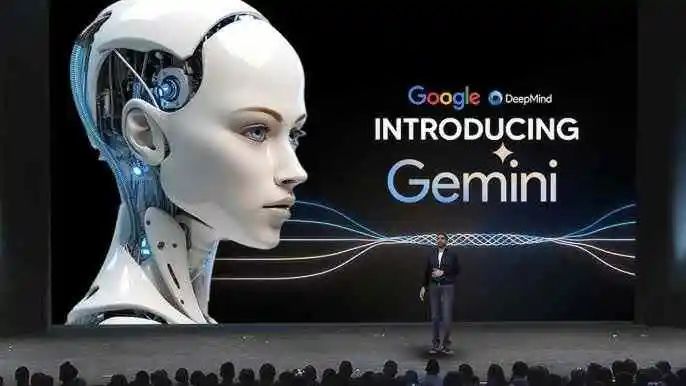
Micko noted that leading AI developers are pushing specific applications of the latest technology—most of which align closely with their current product lines, whether search engines or workplace productivity software. But that doesn't mean the rest of the world will adopt them in the same way.
"Although Google, Microsoft, Amazon, and Apple all want us to adopt their approach to technology and delivery, I think adoption is actually bottom-up," he said.
03. What's Different About This Wave of AI Commercialization?
It's easy to forget that this isn’t the first wave of AI commercialization.
Computer vision technologies developed by scientists like Li Yanhong (Robin Li) helped organize massive photo databases, recognize objects and faces, and assist in guiding self-driving cars. Advances in speech recognition made voice assistants like Siri and Alexa staple tools in many people’s lives.
Tom Gruber, co-founder of Siri Inc., said: "When we launched Siri in 2011, it was the fastest-growing consumer app at the time, and the only major mainstream AI application people had ever experienced."
Gruber believes that what’s happening now is the “biggest wave in the history of artificial intelligence”—bringing both new possibilities and new dangers.
"We were surprised that by training machines to play a kind of ‘word ladder’ game on the internet, we accidentally stumbled upon this remarkable language ability," Gruber said.
A crisis may arrive rapidly in 2024, as major national elections in the U.S., India, and elsewhere could be flooded with AI-generated deepfakes.
In the long run, Gruber believes rapid improvements in AI’s language, visual perception, and step-by-step planning abilities could revitalize the dream of digital assistants—but only if they can access the "inner loop of our digital life streams."
"They could manage your attention—telling you which video to watch, which book to read, or which message to reply to. That’s what a true personal assistant should do. We can achieve this, but it comes with enormous risks to personal data and privacy," Gruber said.
Join TechFlow official community to stay tuned
Telegram:https://t.me/TechFlowDaily
X (Twitter):https://x.com/TechFlowPost
X (Twitter) EN:https://x.com/BlockFlow_News