









Bankless: Exploring Potential Opportunities in Four "AI + Crypto" Sectors
TechFlow Selected TechFlow Selected
Bankless: Exploring Potential Opportunities in Four "AI + Crypto" Sectors
As a new crypto bull market emerges, the thriving AI sector within the crypto economy appears poised to shine in this cycle.
 Navigating Web3 tides with focused insights
Authors: William M. Peaster, Jack Inabinet
Translation: Luccy, BlockBeats
Editor's Note: With the arrival of a new bull market in crypto, the topic of AIxCrypto is gaining momentum.
Jack Inabinet, an analyst at Bankless, and William M. Peaster, senior writer at Bankless, analyze four key AIxCrypto domains—AI monetary agents, decentralized AI computing, AI output markets, and intelligent entertainment—delving into their potential opportunities. They believe the convergence of AI and cryptocurrency will redefine industries from finance to entertainment, challenging traditional paradigms and empowering individuals and small entities.
With the onset of a new crypto bull market, the rapidly growing AI sector within the crypto economy appears poised to shine in this cycle. But why?
AI is a potentially era-defining technological innovation capable of driving progress across multiple fields. Therefore, it’s no surprise that investment narratives around this technology carry immense expectations.
Within the crypto economy, there is a growing group of optimists who are highly bullish on the intersection of AI and blockchain, believing in a fundamental alignment between the two, leading them to invest and work accordingly. While many projects today may seem basic or overly hyped, we will focus on tangible opportunities by highlighting four critical "AI+Crypto" areas worth watching now.
AI Monetary Agents
Robots have always existed in crypto. With the emergence of AI, these bots are expected to evolve from simple task managers into autonomous monetary agents capable of executing complex financial operations on-chain independently.
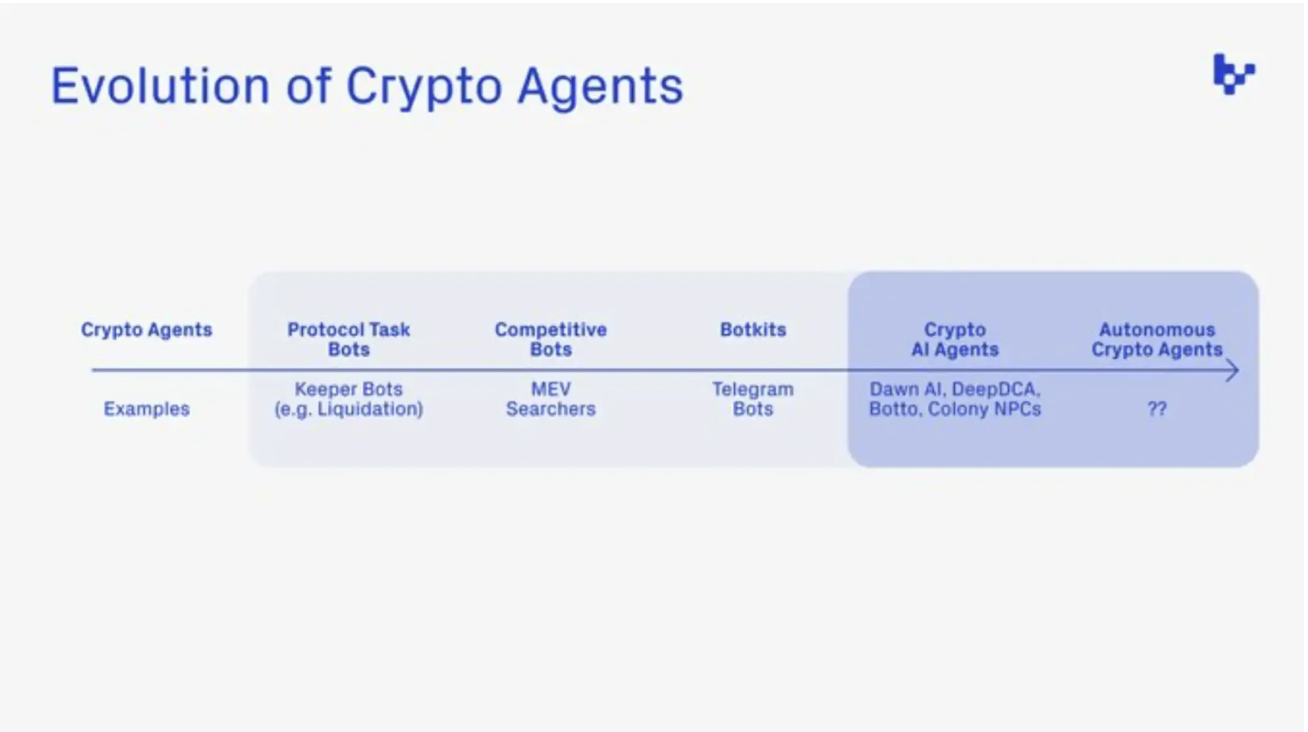
Image source: Variant
Certainly, AI agents could use funds outside of cryptocurrency, but mainstream financial systems are fragmented and inefficient. In contrast, blockchains like Ethereum are always online, borderless, and filled with composable, fully ownable "money Legos," allowing AI agents’ efforts to go much further on-chain.
This scenario is still very early-stage, but we’re already seeing experiments pointing toward the future. For example, Rocky AI, an experimental trading bot created last year, relied on zero-knowledge cryptography to prove the validity of its off-chain operations on-chain—and was profitable during its run.
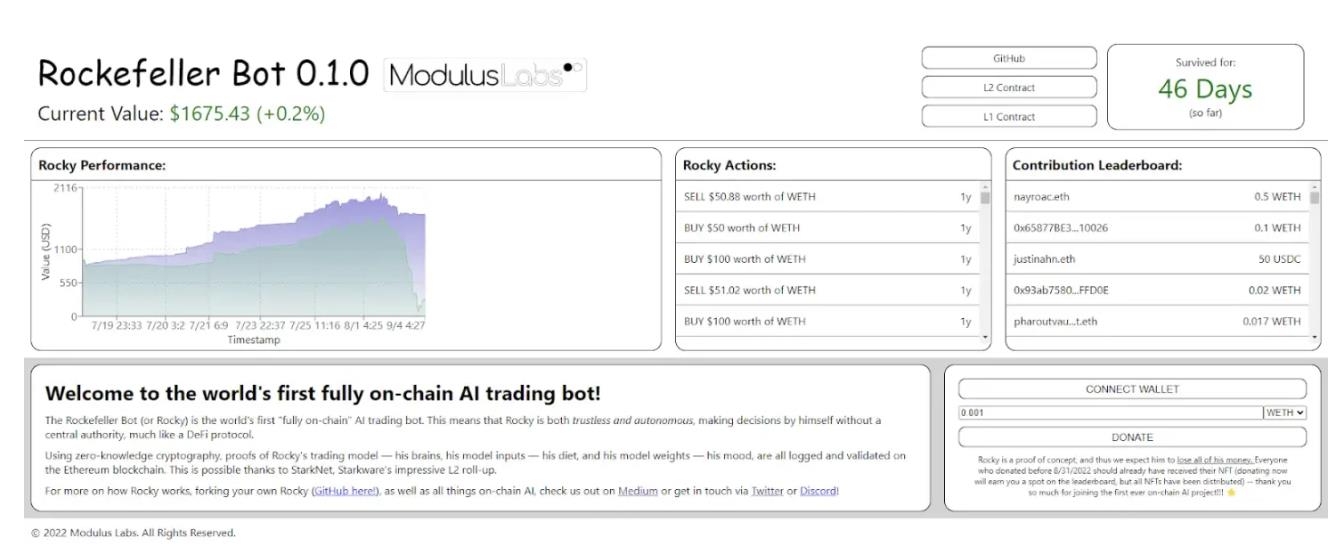
While this experiment was just a glimpse of what’s possible, it’s clear that combining AI’s analytical power with blockchain’s immutable infrastructure could lead to an explosion of innovative financial applications, reshaping how we think about and interact with money.
Although crypto may become the preferred transaction layer for hierarchical AI, computationally intensive AI algorithms don’t pair well with blockchain gas limits! The computation required for AI-driven crypto applications will need to happen off-chain.
Crypto companies like Modulus, the developer behind Rocky AI, are using zero-knowledge technologies to verify these off-chain computations, preserving the trustless nature of the intersection between cryptography and AI.
Decentralized AI Computing
Creating AI models, especially advanced ones like GPT-4, requires massive GPU (Graphics Processing Unit) computational power.
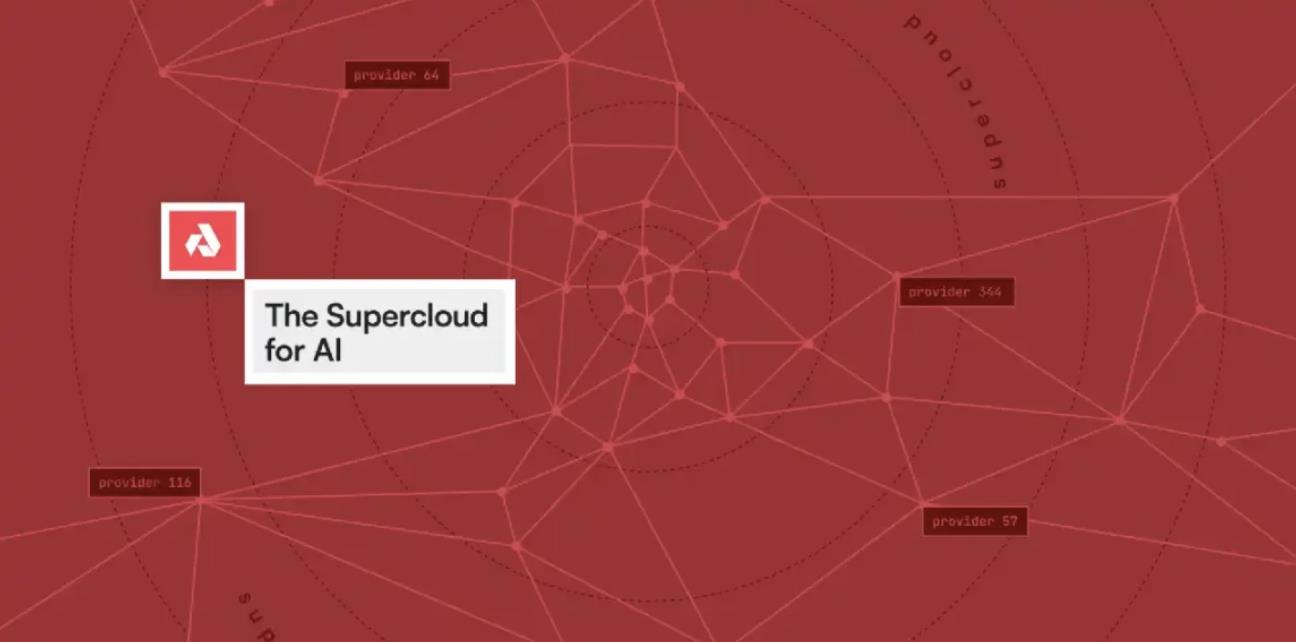
Decentralized markets such as Akash Network and Render Network help democratize access to computing, enabling anyone to build AI models. You don’t need to launch your own large-scale GPU farm—just pay to leverage existing computing networks provided by Akash and Render.
Through these networks, individual developers and smaller organizations gain the ability to participate in building advanced AI models, fostering a more inclusive and diverse development environment. As demand for specialized AI grows, decentralized computing networks are poised to symbolically sell shovels in a new kind of gold rush.
AI computing markets have already succeeded in creating open markets for various GPU types. Decentralized platforms allow anyone to offer any amount of computing at any price, meaning Akash and Render can provide users with the latest chips not yet offered by centralized providers. However, these networks still struggle to attract resource-rich clients who are squeezing every bit of performance out of today’s top-tier chips.
Native tokens are used to incentivize compute providers. This token distribution helps make decentralized network pricing competitive compared to centralized alternatives and aligns the incentives of compute suppliers with those of the network.
AI Output Markets
While well-funded startups like OpenAI are making waves with their large language models (LLMs) and being chased by tech’s biggest centralized giants, some crypto projects are focusing on training their own models within a specific context—decentralized capability.
Whereas blockchains like Ethereum and Bitcoin sell immutable block space, projects like Bittensor focus on creating decentralized intelligence markets, aiming to collectively train decentralized, incentive-driven language models via node networks that improve over time.
Similarly, the optimistic thesis behind such projects is that over time they can democratize and open up access to AI services while leveraging token incentives to direct resources toward their own models.
OpenAI has already held a multi-year lead over its tech giant competitors, so the question remains whether decentralized alternatives stand a chance in what many see as a winner-take-all market.
The market is clearly bullish—Bittensor’s TAO token currently has an FDV of $8.1 billion—but how much of this reflects genuine future promise versus investor hype remains unclear. Still, it’s an ambitious project positioned squarely in a hot area of crypto investing.
Intelligent Entertainment
When it comes to synergy between crypto and AI, it’s far from all work and no play. Another area ripe for innovation is AI+Entertainment. When this interaction occurs atop blockchain rails, I refer to it as the foundation of intelligent open metaverses.
As mainstream games like Grand Theft Auto VI grow increasingly complex and expensive, the world’s largest game publishers themselves may soon begin funding AI-driven environments. Web3 developers placing these experiences on crypto rails will be able to leverage decentralized networks to curate and enforce quality control.
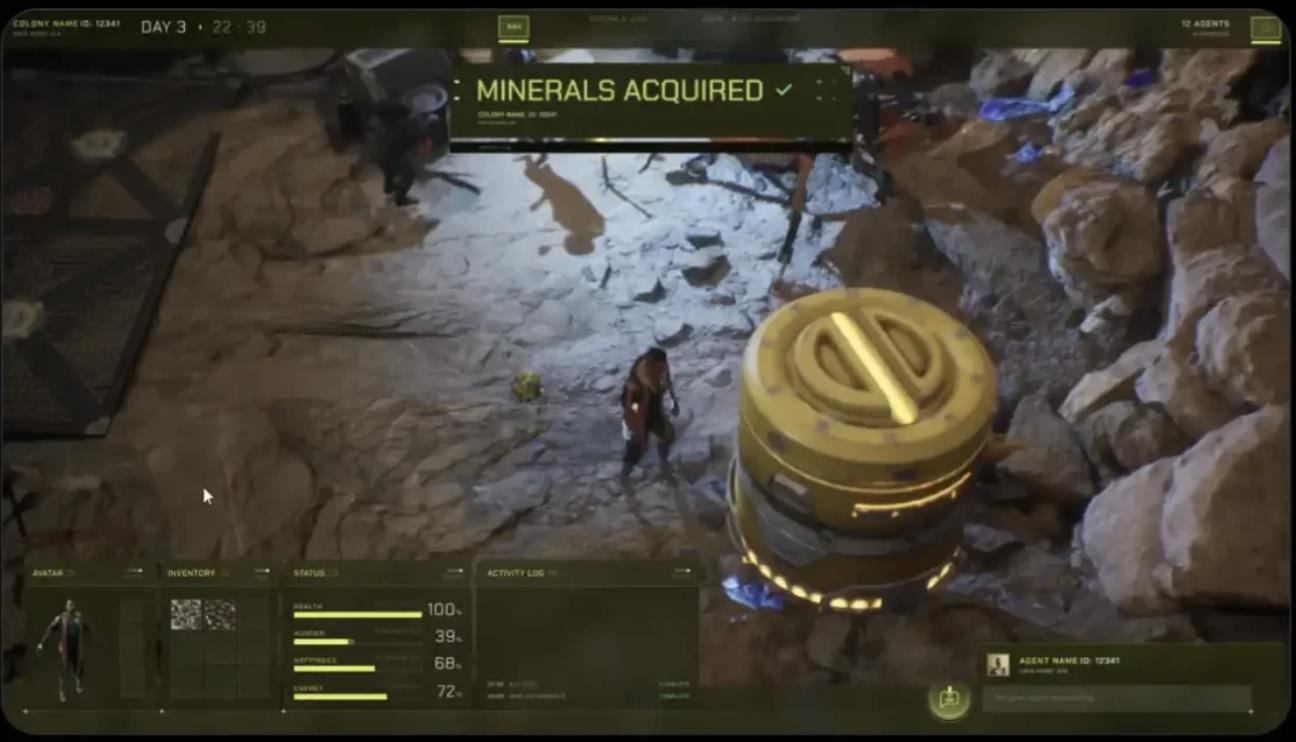
This fusion will push interactivity and personalization in entertainment virtual spaces to new levels. These are evolving into places where AI can create autonomous, dynamic, and responsive characters and environments, delivering unique experiences for each user. Here, we think of Parallel Colony, a new type of “1.5-player game.”
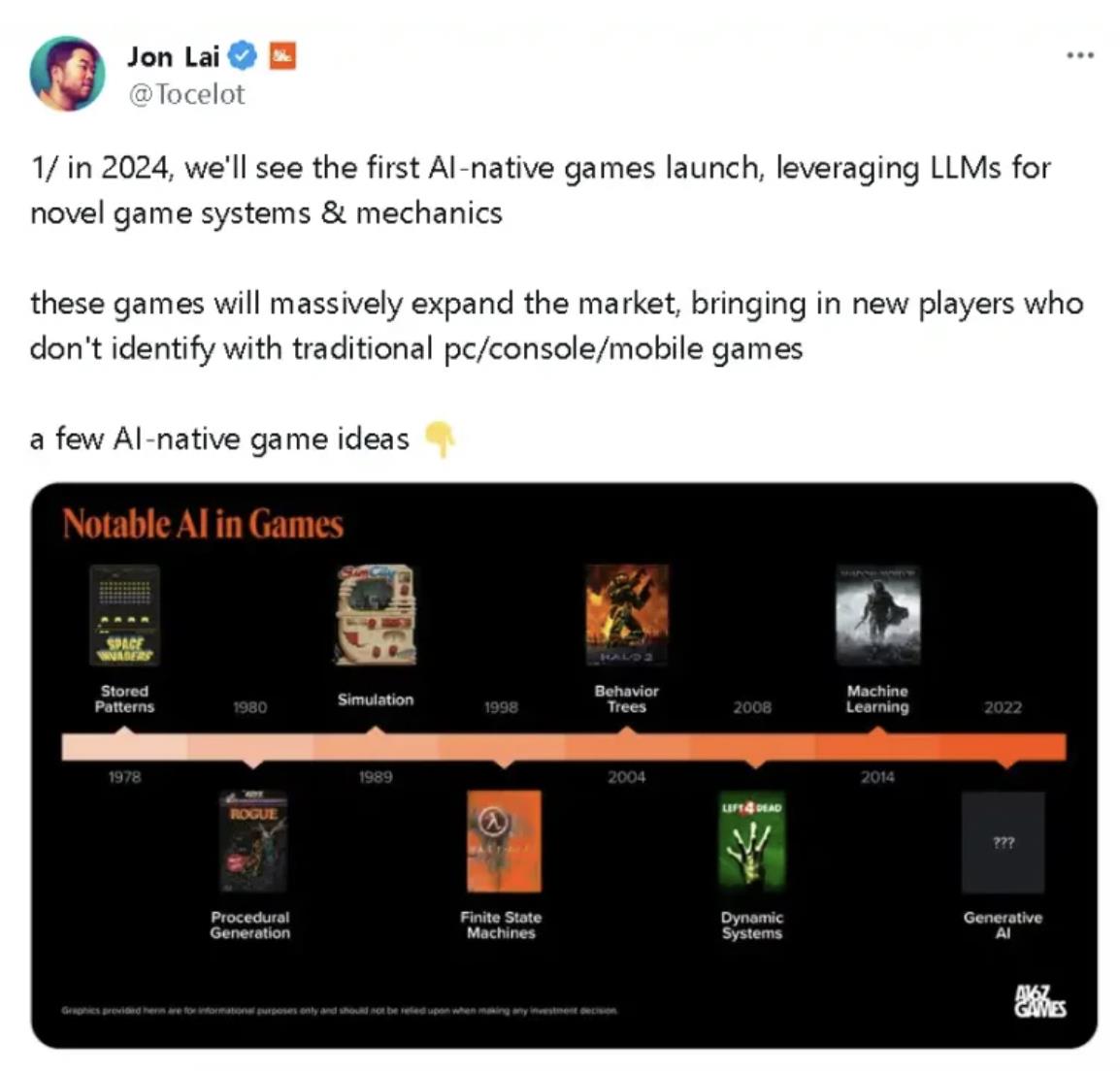
The shift toward AI-driven characters marks a significant transformation in entertainment—from static, pre-designed virtual worlds to ever-evolving, intelligent environments filled with memory and emotion. This transformative approach paves the way for deeper immersion and more engaging virtual experiences.
Conclusion
As we delve deeper into AI-driven crypto economies in the coming years, the convergence of AI and cryptocurrency is not merely a novelty—it may be a harbinger of systemic transformation.
This runs counter to mainstream technology’s centralized, top-heavy dynamics, heralding a more democratized and decentralized future for AI. This convergence will redefine industries from finance to entertainment, challenge traditional paradigms, and empower individuals and small entities.
For many reasons, betting on transparent incentives and decentralized control over the technologies reshaping our world is worthwhile.
Join TechFlow official community to stay tuned
Telegram:https://t.me/TechFlowDaily
X (Twitter):https://x.com/TechFlowPost
X (Twitter) EN:https://x.com/BlockFlow_News
 Bankless








