








Binance's New CEO's First Chinese AMA: Three Major Promises, Insights into Future Strategy and Compliance Approaches
TechFlow Selected TechFlow Selected
Binance's New CEO's First Chinese AMA: Three Major Promises, Insights into Future Strategy and Compliance Approaches
Compliance, investment, market trends, and more—covering all areas in the inaugural AMA.
 Navigating Web3 tides with focused insights
Editor: Loopy Lu
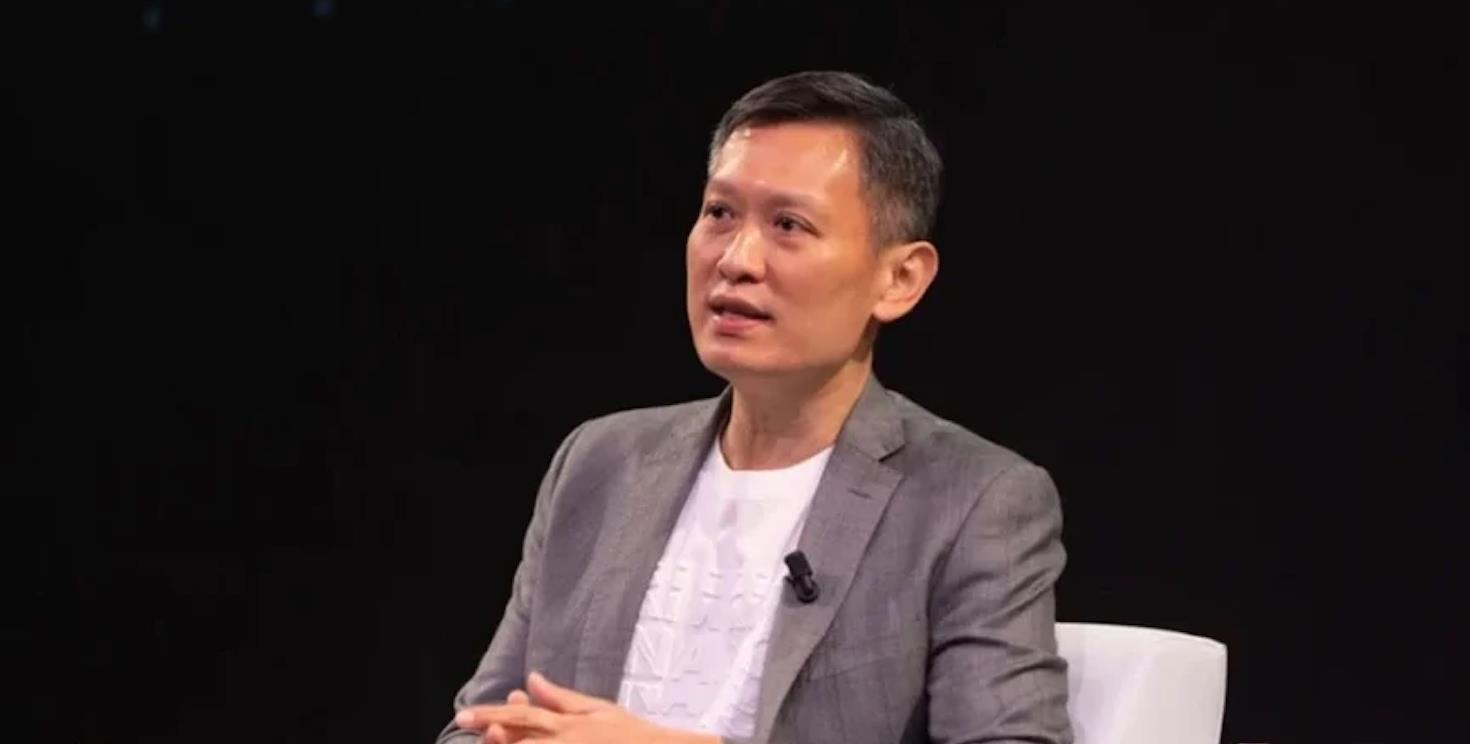
Last night, Binance CEO Richard Teng and co-founder He Yi hosted a joint Chinese-language AMA—the first time Richard Teng has participated in a Mandarin AMA.
During this online event, Richard and He Yi shared comprehensive insights on topics including Binance’s perspective on its resolution with U.S. authorities, progress in compliance, future investment strategies, and their outlook on the cryptocurrency market. This AMA covered a wide range of areas, offering an in-depth discussion on various aspects of the crypto world.
Richard emphasized that the growing trend of cryptocurrency regulation across more countries, along with institutional investors actively positioning themselves in the sector, will bring greater confidence and capital inflows to the crypto market.
He Yi expressed optimism about the possibility of reaching a new market peak in the next one or two years. She also stressed her support for long-termism, stating that Binance plans to incubate more projects to empower Web3 entrepreneurs and create sustainable, long-term value.
As one of the world's largest cryptocurrency exchanges, Binance remains committed to delivering high-quality products and services to users while promoting the development of the entire crypto ecosystem.
Odaily Planet Daily has compiled highlights from the AMA session as follows.
Three Key Promises from the New CEO
Richard: I have three key commitments. First, always putting users at the center—we will continue building top-tier products and services that users love, placing user experience and protection as our highest priority. Second, close cooperation with global regulators. Third, collaborating with partners worldwide to drive the growth and adoption of Web3.
"Only Made 2 Million"
When discussing the growth journey of the Binance community, He Yi shared an anecdote that deeply moved her—one that quickly gained traction among listeners and was widely shared across communities. Odaily Planet Daily excerpts and edits the transcript as follows:
Hello everyone, I’m He Yi. I joined Binance shortly after Chinese New Year in 2014—almost ten years ago now. Over these past decade, what moves me most is the growth of the Binance community.
Last night, I saw a young person on WeChat. A few years ago, when he was still in university, he messaged me saying, "I just graduated and feel lost—I don’t know what to do."
I suggested he try Binance’s referral program.
Yesterday, he asked if he could follow me on Twitter, telling me he’s active in referrals. I checked his earnings—he’s made around 2 million RMB. Not bad at all for a recent college graduate.
I’m truly honored that our community includes so many fresh talents and crypto OGs building this industry together with us. I believe the future of this industry isn’t shaped by a few people drawing visions—it’s forged collectively by all of us walking the path forward.
Why Did the Management Choose Richard as the New CEO?
Richard: My background is primarily in traditional finance and regulatory affairs, with about 30 years of professional experience.
I began engaging with the crypto industry in 2017, when I was serving as CEO in Abu Dhabi. I firmly believed then—and still do—that crypto represents a major future trend with profound implications for the financial world. While working in Abu Dhabi, we were among the earliest global regulators to begin overseeing crypto assets. That period gave me deep exposure to the space. Perhaps it was my extensive professional experience combined with this understanding of crypto that earned me the team’s trust.
But I want to emphasize: Binance’s strength doesn’t come from me alone. We have an exceptionally strong core management team—including He Yi and other founding members—as well as partners who’ve contributed greatly to Binance. Over the past two years, we’ve made numerous investments and hired many professionals. As a result, our team is highly capable in both Web3 expertise and talent depth.
He Yi: In our industry, there are really only two things that matter: product and service. I’ve always been dedicated to delivering the best possible service to users.
However, as the industry evolves, we increasingly need professionals who can speak the same language as regulators. I think moving forward with stronger, smoother compliance is a challenge every leading exchange must face.
From a personal standpoint, over the past few years I’ve spent considerable time studying how to build enduring organizations and improve operational efficiency. The most important thing, I believe, is clear division of responsibilities and clearly defined goals. Like Elon Musk mentions in his new book—the concept of entropy, essentially organizational uncertainty. How do you reduce uncertainty? By ensuring no one in the team has ambiguous roles. For Binance, the optimal arrangement is for me to focus on serving users, while Richard is better suited to serve as CEO.
Is Binance Launching Projects at Overpriced Valuations?
He Yi: Honestly speaking, there’s always room for improvement in every area. Specifically, we have dedicated teams iterating on product development—for example, issues users often raise about the Web3 wallet. We previously underinvested in certain areas, but we’re continuously optimizing based on user feedback.
For me, the key is listening to user needs and complaints and consistently improving. Whether it’s criticism of Binance or concerns about specific projects—such as secondary market prices being too high—we recognize these are real issues and are actively seeking solutions. Stay tuned—we’ll strive to live up to your expectations.
Will Wallet Support Inscriptions?
He Yi: Although Binance has grown successfully over the years, we’ve constantly faced challenges head-on. In 2018, Binance lacked futures contracts and P2P trading, while competitors already had them. Today, our futures trading ranks among the largest globally, and our P2P market is well-established. So even though we started late, we aim to seize opportunities as they arise.
He Yi: A Web3 wallet should offer users an easy-to-use alternative to centralized exchanges. Our peers are going all-in on inscriptions; earlier, the “airdrop farming” craze was similar. But I don’t think Binance needs to fully replicate such models. We must look not only at the present but also toward the future.
What we truly care about is whether there are serious projects capable of building great business models or making meaningful changes to the world?
One benefit of inscriptions is their anti-VC nature—fair mints. But after fair minting, thousands of inscription projects conduct large-scale mints, each requiring someone to absorb supply. Yet not every project finds buyers. The current state remains somewhat unclear, and it’s uncertain whether this trend will evolve into a sustainable Bitcoin ecosystem. We’re still observing and learning.
New trends constantly emerge in the industry, but a downside is persistent uncertainty. From a wallet perspective, Trust Wallet remains the largest globally in terms of user base and daily active users. However, whether it’s airdrop farming or inscriptions, Binance hasn’t yet optimized user experience or use cases. We plan further iterations to fill the gaps left by CEX offerings in the wallet space. I’m not sure if my view aligns with others, but I know our wallet currently falls short in UX and lacks effective support for farming or inscription activities. Still, I believe these issues will be resolved step by step.
He Yi: Regarding which chains we’ll prioritize supporting, our guiding principle is to support chains with substantial user adoption. Fundamentally, a trading platform shouldn’t favor any particular blockchain.
Does the Regulatory Fine Threaten Binance’s Financial Health?
Richard: Our business foundation is solid, and our financial health is strong. Our capital structure is debt-free, and we maintain moderate spending. Despite low trading fees, our revenue and profitability remain robust. Paying the regulatory fine is not an issue. Users can rest assured—user assets are always backed 1:1 and fully protected. Users can withdraw their assets from our platform at any time.
I want to emphasize: After conducting a detailed investigation into our operations, U.S. regulators made no allegations or findings regarding misuse of customer funds. This is critically important. Since the resolution with the U.S., user confidence in us has actually increased. There may have been some outflows recently, but funds are now flowing back into Binance significantly.
He Yi: The health of any crypto business and the safety of its funds ultimately boil down to basic arithmetic—addition, subtraction, multiplication, and division within 100. You can calculate spot and futures trading volumes, then compute fee income. Binance’s expenses—mainly personnel and server costs—have never included major expenditures. Regulators wouldn’t impose a penalty that’s impossible to pay, right?
Does the Platform Gamble Against Users?
He Yi: For a trading platform, the most important rule is not to participate in trading itself.
Taking the opposite side of traders’ positions might generate short-term profits, but such gains aren’t sustainable. No one can control this market—it’s inherently unpredictable. We’ve already seen the cautionary tale of FTX.
Binance has weathered ten years in this volatile industry—we would never take the opposite side of our users. When you have enough users, service fees alone are sufficient. There’s no need to take on additional risk. That’s our operational logic.
How to Interpret the U.S. Settlement?
Richard: The resolution with U.S. regulators is a positive development for us. Early on, we prioritized users above all, which may have led to shortcomings in compliance. We’ve taken responsibility for those past missteps.
Such large fines aren’t unique to us—they’ve happened across the industry. Look at the world’s top ten financial institutions: many have faced multi-billion-dollar penalties, some reaching $90 billion or even $40 billion.
From a compliance standpoint, over the past two to three weeks, I’ve engaged extensively with institutional investors, users, VIP clients, partners, and potential partners. In fact, they view our settlement very positively. Some partners were cautious over the past year, but now many are eager to collaborate with us.
Compliance is a global trend—not just a requirement for us. As the largest exchange, we naturally attract regulatory attention. But now we’ve passed this hurdle and put past issues behind us.
“We Welcome Reports of U.S. Users”
He Yi: The fine Binance received means we’ve now experienced treatment akin to that of top-tier U.S. financial institutions.
When people hear “compliance,” they often worry. But we need a full analysis of the U.S. settlement.
After the settlement, we cannot accept U.S. users. But in reality, we removed U.S. users from Binance’s platform two years ago. If anyone discovers U.S. users still trading on our platform, please report them immediately—we welcome such reports.
I believe this is an inevitable direction for the entire industry—not just Binance. Other major platforms aiming to align with regulators are undergoing similar processes. It would be difficult only if Binance chose compliance while others didn’t. Right now, it seems the whole industry is facing challenges together. Overall, however, the sector continues to expand, markets grow stronger, and the trajectory is positive.
Lastly, I believe revenue isn’t the sole goal. This might sound unrealistic, but for me, for CZ, and for Binance, revenue is absolutely not the only pursuit. What we truly seek is to advance the blockchain revolution alongside everyone else—to transform productivity and production relationships and build a new world. Chasing revenue alone is short-sighted. We stand by long-termism, which will make us stronger.
How Does the U.S.-Appointed “Compliance Officer” Operate?
Richard: Let me clarify—the so-called “compliance officer” is not a U.S. government employee, but rather a highly independent supervisor. Think of them like an auditor, focusing specifically on anti-money laundering (AML) compliance. This independent supervisor helps demonstrate our commitment to compliance and AML standards.
He Yi: I’d like to correct a misconception—it’s not that the government sends a compliance officer to become Binance staff. Actually, the settlement requires us to hire an independent third-party lawyer or consulting firm. Their role is to monitor whether we fulfill prior commitments—such as removing U.S. users and implementing proper AML measures. This doesn’t mean they take over Binance’s operations. These details are sometimes misunderstood in public discourse.
How Will Binance Labs Invest Next?
He Yi: Recently, Binance Labs adjusted its strategy—we’ve decided to massively scale up support for blockchain startups, potentially by tenfold compared to before.
We’ve noticed many projects receive early VC funding, launch on secondary markets, and ultimately end up held by retail investors. In this process, true early supporters often don’t get their fair share of returns.
We want to support Web3 founders who genuinely embrace long-termism—enabling ordinary investors and retail holders to share in the rewards of project growth, just like with Bitcoin.
In any industry, ultimately you need to build something, deliver value to users, and push the world forward—even slightly. Along the way, you may earn revenue and profit, while also enabling users and token holders to grow and succeed together. Only win-win outcomes last. Exit scams damage credibility in the end. So while my investment framework and industry thinking may seem traditional, we still want to give it a try.
Outlook on Market Trends?
He Yi: I think the industry may reach a peak in the next one or two years, though this is just my personal view—some say this perspective oversimplifies things.
At the same time, we must recognize that as the industry grows larger, it may approach a ceiling. Cryptocurrencies will increasingly be compared with gold, stocks, and other asset classes. In that context, growth rates may slow. But I still believe market cycles will persist. I remain optimistic that the next peak could arrive in the coming one or two years.
Richard: While there may be market volatility ahead, the overall direction remains positive. First, increasing regulatory clarity across more countries will boost investor confidence. Second, institutional investors are actively allocating to crypto, bringing more capital and investment into the sector. Therefore, I am highly optimistic about the broader trend in the cryptocurrency industry.
Currently, global crypto adoption stands at around 5%. With more countries regulating the space and driving compliance, adoption could rise to 10% or even 20%.
Join TechFlow official community to stay tuned
Telegram:https://t.me/TechFlowDaily
X (Twitter):https://x.com/TechFlowPost
X (Twitter) EN:https://x.com/BlockFlow_News
 Odaily








