








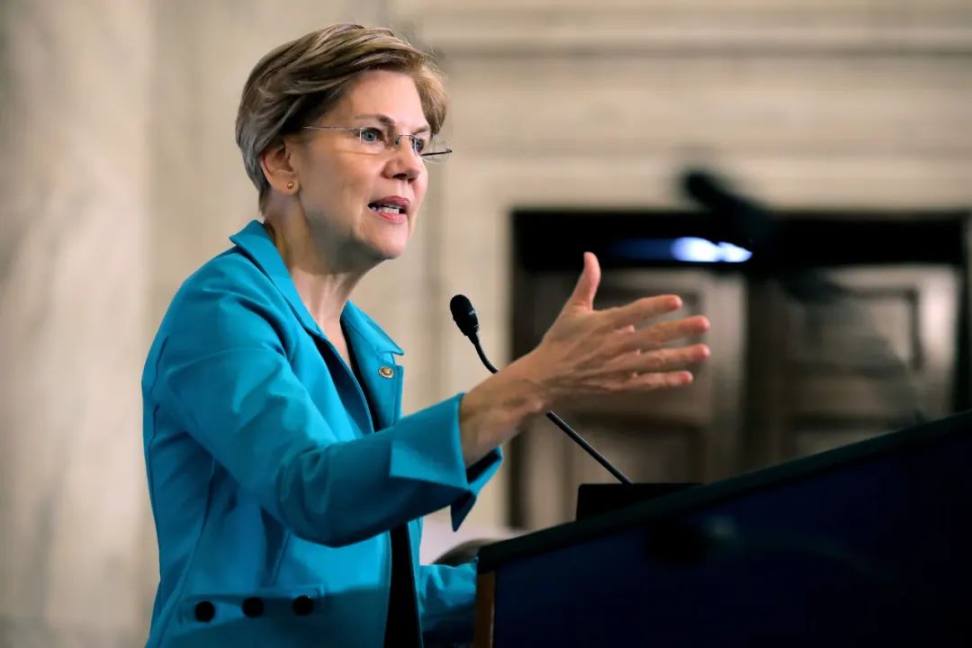
Interpreting the "Digital Asset Anti-Money Laundering Act" jointly introduced by U.S. Senators Elizabeth Warren and four others
TechFlow Selected TechFlow Selected
Interpreting the "Digital Asset Anti-Money Laundering Act" jointly introduced by U.S. Senators Elizabeth Warren and four others
The bill strengthens regulatory oversight of the digital asset ecosystem by closing loopholes.
 Navigating Web3 tides with focused insights
By Aiying
Senator Elizabeth Warren recently announced the expansion of a Senate coalition supporting the Digital Asset Anti-Money Laundering Act, aimed at curbing the use of cryptocurrencies for illegal financial activities such as money laundering, drug trafficking, and sanctions evasion. The bill seeks to close loopholes to bring the digital asset ecosystem under stronger regulatory oversight, reducing illicit financial risks that challenge anti-money laundering and counter-terrorism financing (AML/CFT) frameworks within certain financial systems.
Five new senators have joined as co-sponsors, including three members of the Banking Committee. They join existing co-sponsors such as Senators Roger Marshall, Joe Manchin, and Lindsey Graham.
Senator Warren stated: "The Treasury has made clear that we need new laws to combat how terrorist organizations, rogue nations, drug lords, ransomware gangs, and scammers exploit cryptocurrency to launder money, evade sanctions, and fund illegal weapons programs. I’m pleased that five new senators are joining this effort—including three members of the Banking Committee. Our bipartisan bill is currently the strongest proposal to crack down on illegal crypto use and will provide regulators with more tools."
Senator Van Hollen noted that the lack of basic legal safeguards in cryptocurrency exposes Americans to countless risks, and that digital assets have become the payment method of choice for terrorist groups, drug cartels, and authoritarian regimes funding illegal activities. He emphasized that cryptocurrencies should be subject to the same transparency rules as traditional banking.
Senator Hickenlooper said: "We put protections in place for banks to protect everyone from crime and terrorism. Cryptocurrency should have similar safeguards. These reforms will protect safe, transparent innovation."
Senator Luján stated that cryptocurrency operates with almost no regulation, leaving consumers vulnerable and creating new avenues for bad actors to fund terrorism and drug trafficking. He proudly joined his colleagues’ efforts to protect people from criminal activities stemming from unregulated cryptocurrency use.
The bill is supported by the Institute of International Bankers, Massachusetts Bankers Association, Transparency International USA, Global Financial Integrity, National Association of District Attorneys, Major County Sheriffs of America, Massachusetts Sheriffs’ Association, AARP, National Consumer Law Center (representing low-income clients), and the National Consumers League.
The Treasury Department, the Department of Justice, and other national security and financial crime experts have warned that digital assets are increasingly used for money laundering, drug trafficking, ransomware attacks, theft and fraud schemes, terrorist financing, and other criminal activities. Rogue nations like Iran, Russia, and North Korea use digital assets to launder money, evade U.S. and international sanctions, and fund illegal weapons programs. For example, it’s estimated that nearly half of North Korea’s missile program is funded through cybercrime and digital assets. In 2022, the total value of illicit digital asset transactions reached at least $20 billion—a historic high.
Digital Asset Anti-Money Laundering Act:
-
Expands Bank Secrecy Act (BSA) obligations, including Know-Your-Customer (KYC) requirements, to cover digital asset wallet providers, miners, validators, and other network participants who may verify, secure, or facilitate digital asset transactions.
-
Addresses major gaps posed by "non-custodial" digital wallets, which allow individuals to bypass anti-money laundering and sanctions checks.
-
Directs FinCEN to issue guidance for financial institutions on mitigating risks associated with handling, using, or trading digital assets that employ mixing tools and other anonymity-enhancing technologies.
-
Strengthens enforcement of BSA compliance by directing the Treasury to establish AML/CFT compliance examination and review procedures for MSBs and other digital asset entities with BSA obligations, and instructing the SEC and CFTC to do the same for their regulated entities.
-
Expands the scope of BSA foreign bank account reporting rules to include digital assets, requiring U.S. persons to file a Report of Foreign Bank and Financial Accounts (FBAR) with the IRS when conducting digital asset transactions exceeding $10,000 through one or more foreign institutions.
Summary
If formally enacted, this bill could represent a profound transformation for the cryptocurrency sector. It would require all individuals maintaining public blockchain infrastructure—whether software developers or transaction validators—to register as financial institutions (FIs). This means they would have responsibilities far beyond coding or running nodes; they would need to perform customer identification and recordkeeping like banks, and develop anti-money laundering programs to ensure users of their software or networks are not engaging in illicit financial flows.
Additionally, the bill stipulates that all financial institutions—including banks, custodians of cryptocurrency, and newly classified crypto infrastructure providers—must refrain from processing transactions involving privacy-enhancing tools or privacy-preserving cryptocurrencies.
From a compliance perspective, this legislation presents significant challenges. First, it dramatically expands the roles and responsibilities of software developers and node operators. They would no longer be mere technology providers but would also bear financial regulatory responsibilities. This could undermine the decentralized nature of blockchains.
Join TechFlow official community to stay tuned
Telegram:https://t.me/TechFlowDaily
X (Twitter):https://x.com/TechFlowPost
X (Twitter) EN:https://x.com/BlockFlow_News
 Aiying Compliance








