








After $ORDI, how to position within the BTC ecosystem?
TechFlow Selected TechFlow Selected
After $ORDI, how to position within the BTC ecosystem?
As the Bitcoin halving schedule draws closer, it remains to be seen whether Bitcoin Layer2 will prove to be a valid mid-term investment opportunity.
 Navigating Web3 tides with focused insights
Author: Echo, Infinitas
Guidance: Hong Shuning, Jademont
TL;DR
"Bitcoin's ecosystem presents three time-based opportunities across four tracks. Short-term: inscription赛道 represented by BRC-20. Mid-term: Bitcoin Layer 2 and Nostr + Lightning Network. Long-term: off-chain solutions represented by RGB protocol and BitVM."
—— Jademont
The surge of $Ordi has revealed the short-term potential of the inscription赛道, injecting imagination of 10,000x growth into Bitcoin's ecosystem. From the initial BRC-20-driven inscription market boom, to mid-term opportunities brought by Bitcoin L2 and Nostr with Lightning Network, and long-term revitalization through RGB protocol—Bitcoin’s ecosystem is approaching explosive potential as it faces the 2024 halving and BTC ETF adoption, setting the stage for new market narratives.
Short-Term —— 10,000x Gains Ignited by BRC-20
In the short term, we focus on opportunities brought by BRC-20. Ordinals, the leading project in BRC-20, rose from a mint cost of $0.005 to $28—a 5,600x gain in 60 days—and further to $69 over 270 days, achieving a 13,800x return. The 10,000x rise of $ORDI from mint to open trading has undoubtedly driven massive traffic to BRC-20 and the broader inscription赛道, capturing market attention on the BTC ecosystem and fueling innovation and growth.
• The Ordinals protocol uses Bitcoin L1 to mint NFTs, allowing users to embed data into the Bitcoin blockchain via Ordinals (numbering mechanism for satoshis) and Inscriptions (engraving arbitrary content onto sats), effectively creating native non-fungible tokens on Bitcoin.
• The BRC-20 token standard enables users to write JSON code into ordinals, creating programmable assets and semi-fungible tokens on Bitcoin.
The story of $ORDI continues, but short-term opportunities are typically unsustainable. It may be difficult to witness another 10,000x leader in the inscription赛道. Two main reasons:
1. Inscription projects like Ordinals utilize Segregated Witness (SegWit) space between blocks, which exists only on Bitcoin L1. As such, they can only operate on Layer 1, where development costs are high and efficiency low, making future ecosystem expansion challenging.
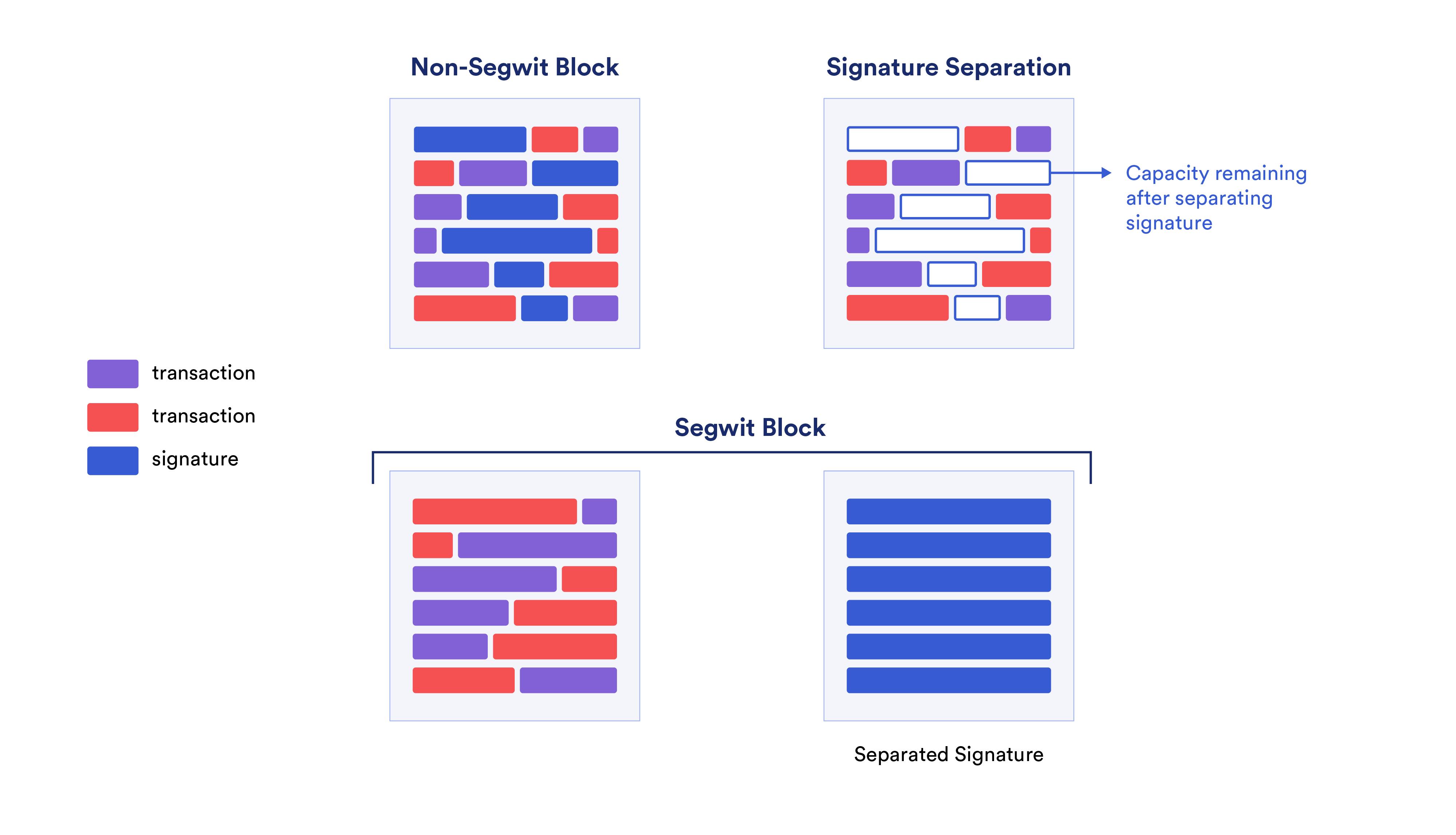 SegWit separates transaction and witness (signature) data, allowing arbitrary data storage in the witness section
2. Colored coin technology causes native Bitcoin transaction congestion and presents an unfriendly technical path, creating barriers to mass adoption. Thus, schemes like BRC-20 represent merely a short-term opportunity.
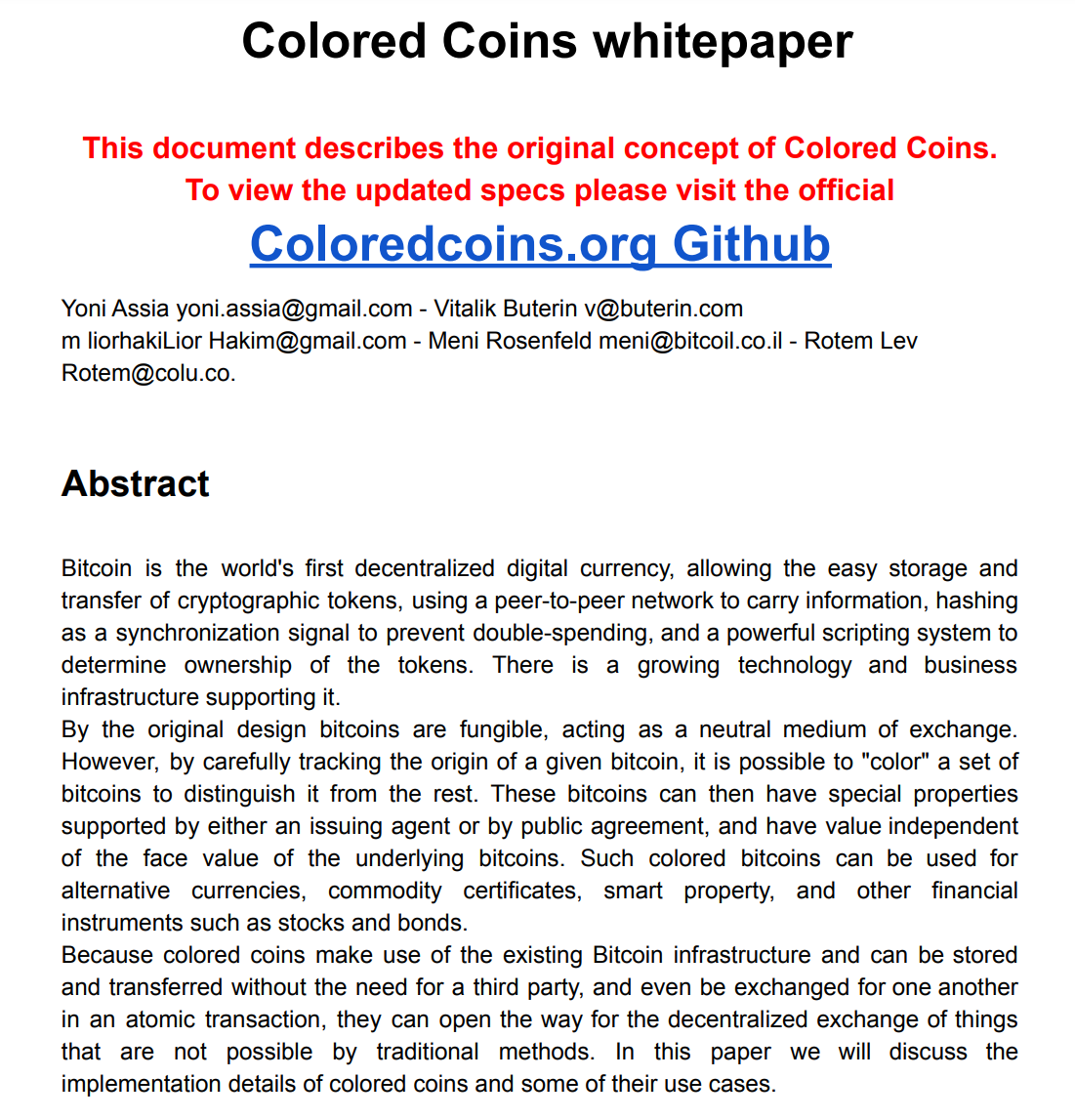
2013 "Colored Coins White Paper" co-authored by Assia, Rosenfeld, and Ethereum founder Vitalik Buterin
Mid-Term —— Transition Opportunity for Ethereum L2 Teams
Mid-term opportunities fall into two tracks: Bitcoin Layer 2, and Nostr + Lightning Network.
Bitcoin Layer 2 Scaling Solutions
Layer 2 scaling solutions (L2), also known as execution layers, are built atop Bitcoin’s main blockchain to address its scalability limitations. In July 2023, Binance announced full integration with the Lightning Network, enabling users to deposit and withdraw BTC directly using this L2 solution.
Users create off-chain transaction channels on the L2 execution layer, processing transactions off-chain to increase scalability and throughput while reducing costs. For example, the Lightning Network uses state channels—users open payment channels off the main chain and conduct multiple transactions within them. Since each transaction doesn’t need to be recorded on-chain, gas fees are significantly reduced.
Other Layer 2 scaling solutions include:
• Stacks: A blockchain protocol that uses Bitcoin as its settlement layer, enabling smart contracts and decentralized applications (dApps) to be built on top of Bitcoin while preserving its security and stability.
• Liquid Network: A Bitcoin solution developed by Blockstream. It creates a separate blockchain pegged to Bitcoin, issuing its own native asset (Liquid Bitcoin, L-BTC), enabling faster and more confidential transactions among exchanges and institutions, enhancing privacy and scalability.
• Rootstock: A smart contract platform powered by a Turing-complete virtual machine, enhancing Bitcoin’s functionality by supporting dApps and enabling more complex programmable transactions on the Bitcoin network.
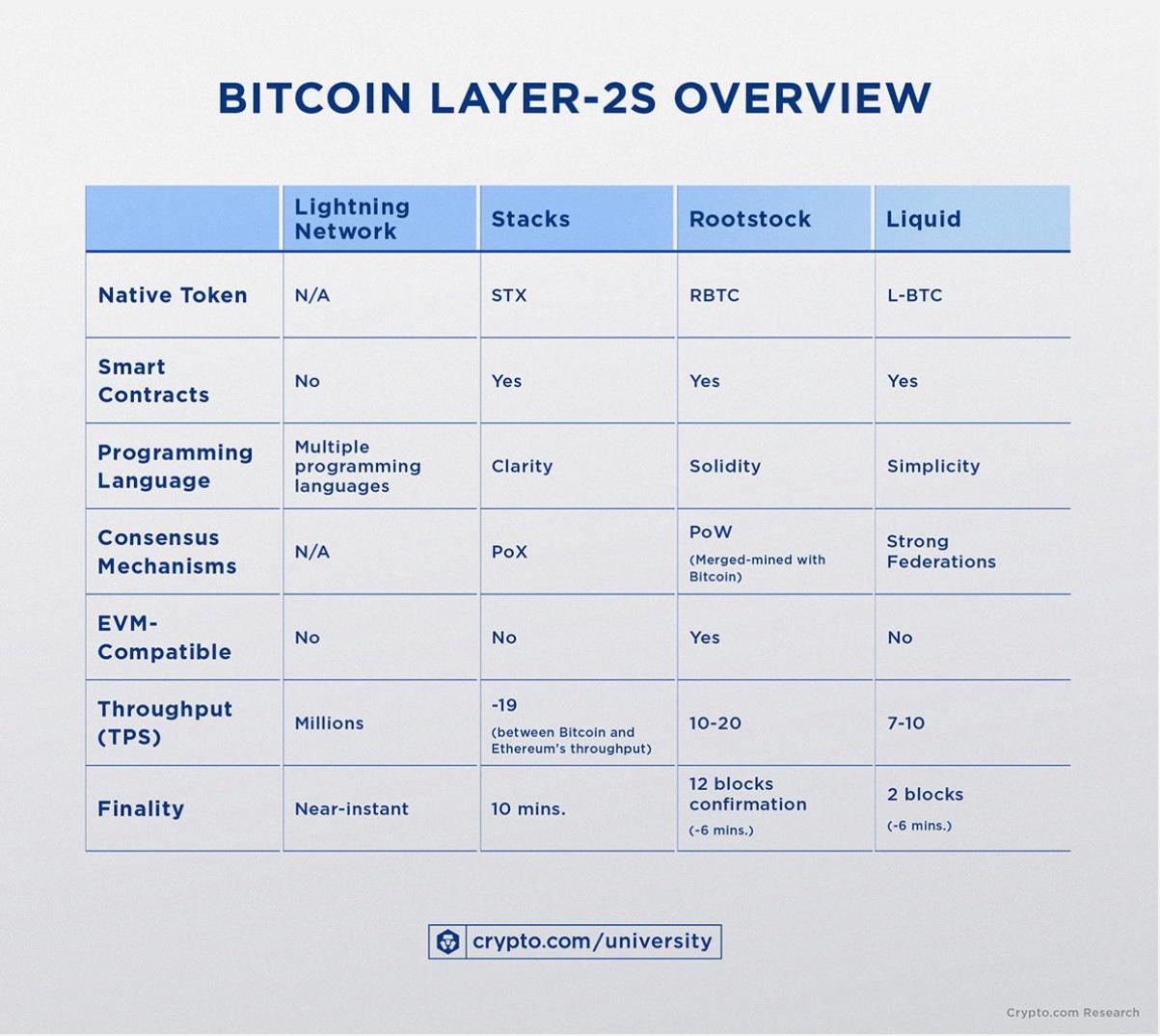 Source: https://crypto.com/university/what-are-bitcoin-layer-2s
More Ethereum L2 teams are shifting to develop on Bitcoin L2. In fact, for L2 teams, whether the anchored Layer 1 is Bitcoin or Ethereum makes little difference in deployment complexity—only the data availability (DA) solution varies, which can be technically managed. What matters more is migrating Ethereum applications. Hence, these teams often identify themselves as L2 or ZK teams. For them, the key decision is choosing the next rising narrative ecosystem—whether to enter Ethereum’s crowded red ocean or Bitcoin’s relatively untapped blue ocean will determine their ceiling in the next bull cycle.
Likewise, Ethereum L2 projects are often valued at over $1 billion, while Bitcoin L2 projects with similar tech stacks are currently valued in the tens of millions—representing a 100x valuation gap. Additionally, BTC L2 benefits from Bitcoin as its underlying asset, theoretically making TVL easier to grow.
As the Bitcoin halving approaches, it remains to be seen whether Bitcoin L2 will prove itself as a viable mid-term investment.
Nostr Combined with Upgraded Lightning Network
The second mid-term opportunity lies in integrating Nostr with the Taproot-upgraded Lightning Network.
Nostr is fundamentally a decentralized messaging protocol designed to enable secure, private, and open communication through an innovative framework. While Nostr and Bitcoin serve different purposes, both share core decentralization principles and can coexist, complement each other, and operate independently.
Core components of Nostr include:
• Nodes (relays): In Nostr’s decentralized network, nodes store and relay messages, each operating independently.
• Public-key cryptography: Nostr uses public-key encryption for secure communication, ensuring privacy and security.
• Protocol rules: As a protocol, Nostr establishes a set of rules for message transmission, including message format, sending/receiving methods, and verification mechanisms.
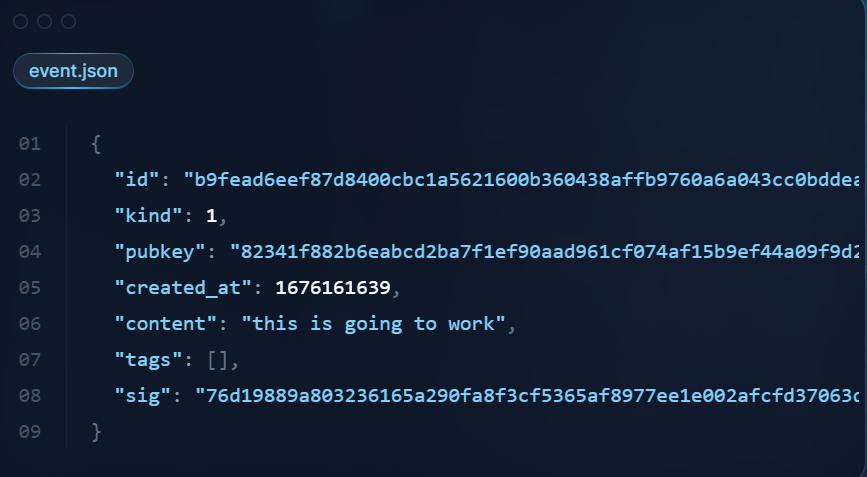
Source: Nostr official website
The Lightning Network has experienced rapid growth and gained broad recognition within the Bitcoin ecosystem. With the Taproot upgrade, Taproot Assets have been introduced, theoretically enabling token issuance on Lightning. However, the overall scale of Lightning remains limited, primarily due to high user entry barriers and lack of decentralized business infrastructure on the network.
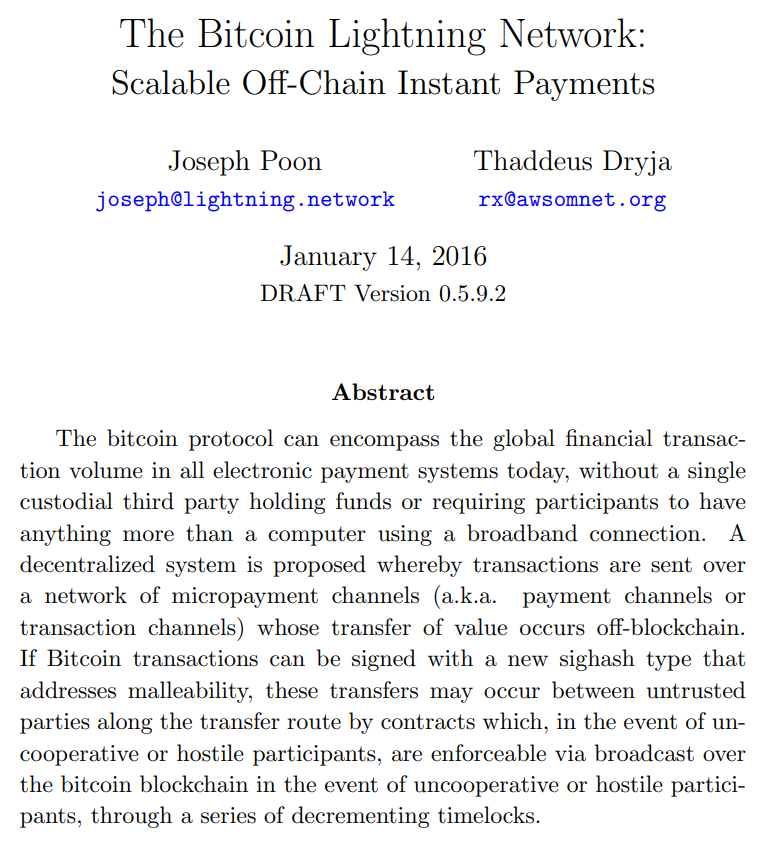
Source: Lightning Network Whitepaper
Integrating Nostr and Lightning Network combines two distinct functionalities—Nostr focuses on messaging, Lightning on financial transactions—creating synergies. Nostr’s efficient, secure messaging complements Lightning’s fast, low-cost transactions. Together, they could provide a unique and powerful toolkit for next-gen decentralized applications and potentially integrate more apps into the Bitcoin ecosystem.
Long-Term —— RGB and the Final Battle for Bitcoin
The long-term opportunity—perhaps Bitcoin’s endgame—has only two contenders: RGB and BitVM. BitVM is a computational paradigm for expressing Turing-complete Bitcoin contracts, proposed just this October. It remains purely conceptual and highly experimental. Therefore, RGB currently appears the most promising.
RGB is a native smart contract protocol for Bitcoin. Its name originally distinguished it from colored coin schemes like BRC-20, hence derived from the primary colors (Red, Green, Blue). RGB is an open-source protocol under development, built atop Bitcoin and the first to run interoperable sidechains anchored to the Bitcoin blockchain. It aims to enhance Bitcoin scripting and bring smart contract capabilities to Bitcoin. RGB requires no changes to Bitcoin’s actual protocol or consensus rules and works across both L1 and L2 networks.
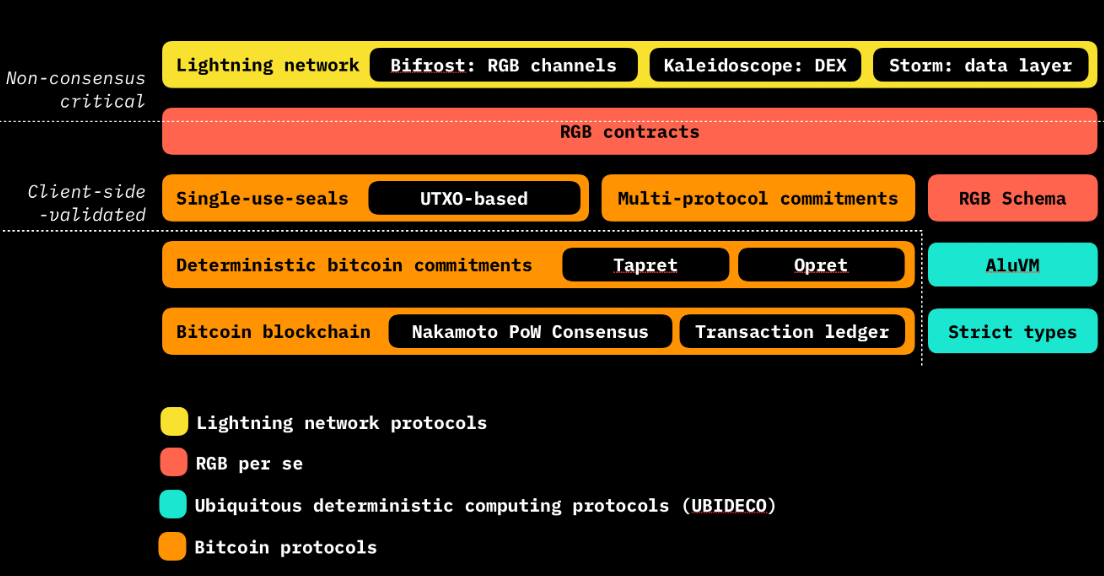
Source: RGB BlackPaper
The RGB system allows users to audit, execute, and individually verify smart contracts anytime, without additional cost. Unlike “traditional” systems such as L1, L2, or sidechains requiring on-chain operations, RGB uses off-chain “client-side validation”—leveraging Bitcoin transactions (and scripts) as ownership control systems for smart contracts, whose evolution is defined entirely off-chain and validated client-side. This bypasses the constraints of the “blockchain trilemma,” offering infinite scalability. RGB can also be viewed as an extension of the Lightning Network, based on off-chain computation, enabling smart contracts with Lightning-like speed.
• Infinitas: An infinitely scalable, Turing-complete BTC application ecosystem. Combines Lightning Network incentives with RGB engineering to achieve large-scale real-world deployment.
• DIBA: The first Bitcoin marketplace using RGB smart contracts and Lightning Network to trade NFTs.
Key features supported by RGB include creating and managing digital assets/collectibles, integrating real-world data via oracles, and executing cross-chain transactions through pegged sidechains. This expands Bitcoin’s utility beyond its long-standing role as “digital gold” and value storage, enabling large-scale commercial applications and value transfer. RGB unlocks smart contracts and DeFi on Bitcoin’s secure base layer, operating as an auxiliary protocol leveraging Bitcoin’s network capabilities.
Conclusion
Colored coin schemes like $Ordi occupy SegWit space, potentially causing Bitcoin mainnet congestion and driving up fees in the long run. Bitcoin L2 improves upon L1 but still cannot support Web3 applications demanding higher speed and efficiency beyond DeFi. The Lightning Network—or RGB-based smart contract platforms built on it—offers innovative off-chain solutions, potentially enabling ultra-fast, immutable, fair, and transparent smart contracts atop Bitcoin scripting, bringing long-term growth and vitality to the Bitcoin ecosystem.
Considering the blockchain trilemma, RGB smart contract platforms offer a path to fill scalability gaps, providing broader application scenarios for decentralized apps while maintaining security. We look forward to RGB-like off-chain solutions becoming the ultimate vision not only for Bitcoin’s ecosystem but for the entire blockchain industry.
References
https://blackpaper.rgb.tech/general-information/2.-protocol-design/2.2.-design-overview
https://chain.link/education-hub/ordinals-bitcoin-nfts
https://trustmachines.co/learn/what-is-the-rgb-protocol-on-bitcoin/
https://bitcoinmagazine.com/guides/a-brief-introduction-to-rgb-protocols
Join TechFlow official community to stay tuned
Telegram:https://t.me/TechFlowDaily
X (Twitter):https://x.com/TechFlowPost
X (Twitter) EN:https://x.com/BlockFlow_News
 @echoindahouse








