









Badger DAO 2.0 Narrative: Launching Censorship-Resistant eBTC, BADGER Weekly Gain Exceeds 60%
TechFlow Selected TechFlow Selected
Badger DAO 2.0 Narrative: Launching Censorship-Resistant eBTC, BADGER Weekly Gain Exceeds 60%
Can the market buy the new Bitcoin narrative from Aging DAO?
 Navigating Web3 tides with focused insights
By 0xAyA, Odaily Planet Daily
The surge in Bitcoin inscriptions has also driven market attention toward cryptocurrencies related to the Bitcoin ecosystem, with Badger DAO (BADGER) being one of them.
According to Bitget data, over the past week, BADGER's price rose from 3.5 USDT to a high of 5.7 USDT, marking a maximum increase of 62%. It is currently trading at 4.69 USDT, with a 7-day gain of 34.7%.
Besides the overall boom in the Bitcoin ecosystem sector, the price rise is also tied to Badger DAO’s recent launch of its 2.0 initiative—an uncensorable synthetic Bitcoin called eBTC.
This project, once dedicated to bringing Bitcoin into Ethereum’s DeFi ecosystem, nearly collapsed after a hacker attack. Now, as it reboots, can its new narrative successfully capture a share of the Bitcoin ecosystem?
The History of BadgerDAO
The importance of DeFi within the Ethereum ecosystem is undeniable, and Bitcoin frequently appears across various protocols as collateral. However, the issue lies in the fact that most blockchains supporting BTC lack mature infrastructure, products, and protocols.
Typically, Bitcoin is held through centralized custodianship and mirrored in equivalent amounts on Ethereum, with only a few large liquidity pools available for trading synthetic BTC. As smart contract infrastructure matures and the DeFi sector evolves, further exploration of BTC’s potential in DeFi and optimization of its underlying infrastructure become increasingly critical.
Thus, Badger DAO was born, aiming to accelerate the use of Bitcoin as collateral across other blockchains and rallying like-minded individuals around this mission. During DeFi Summer, BadgerDAO distributed massive airdrops and quickly gained widespread attention and support. However, this success was short-lived—the DAO gradually descended into disarray and suffered a major hack at the end of 2021, resulting in losses exceeding $120 million.
Following the incident, the team undertook a series of reforms, including halting all product/protocol development, establishing financial management and operational frameworks, building legal and regulatory infrastructure, and reducing DAO expenditures. In July of this year, the team released a Purple Paper introducing eBTC—an uncensorable synthetic Bitcoin—which lies at the heart of the 2.0 upgrade.
What Is eBTC?
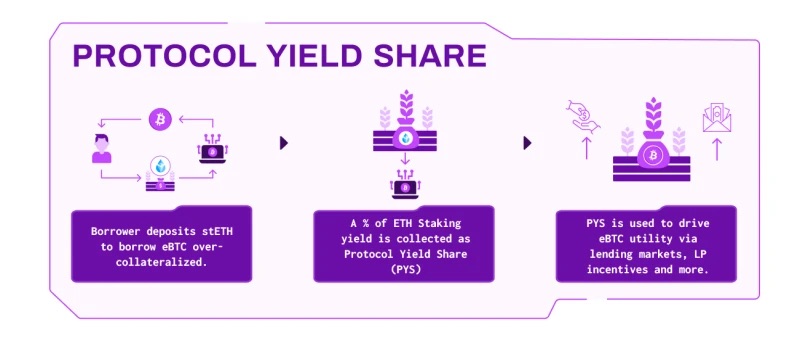
The eBTC protocol allows anyone to use Lido’s stETH as collateral. Users deposit stETH to borrow eBTC without paying any origination or interest fees.
Instead, the protocol generates revenue by taking a portion of the accrued staking yield from the total system collateral, known as the “protocol revenue share.” Initially set at 50% of accumulated yield, this percentage can be adjusted via minimal governance.
The protocol revenue share is processed with every operation involving a collateralized debt position (CDP) and remains continuously updated within the system. Borrowers see the value of their collateral grow through accumulated yield, which is retained by the debt position. As compounding yield positively impacts each position’s collateral ratio, overall health naturally improves over time.
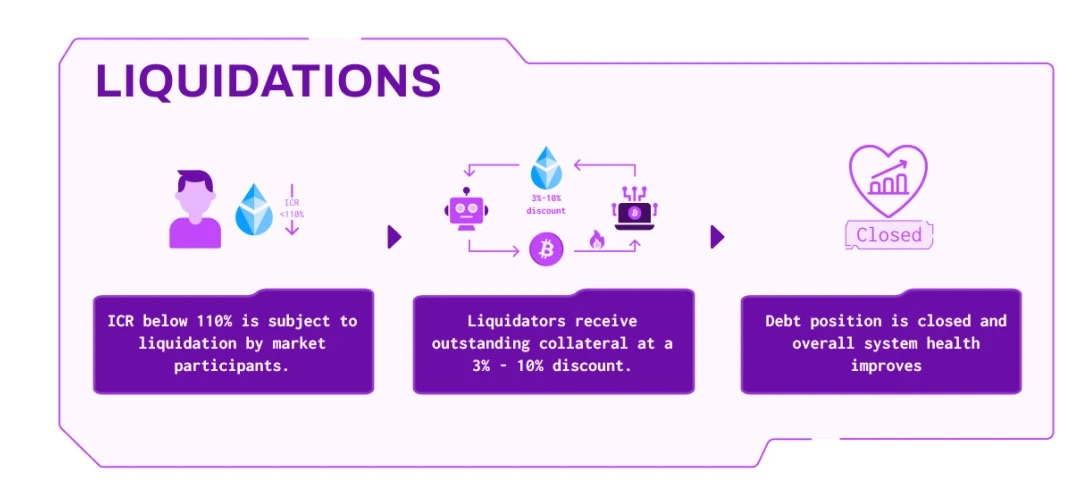
To ensure solvency, eBTC employs a liquidation mechanism: if a CDP’s collateral ratio drops below the minimum threshold of 110%, it becomes eligible for liquidation. The team states: "Any market participant can repay the outstanding debt in exchange for a portion of the remaining collateral plus a gas fee subsidy as a reward."
If a CDP’s collateral ratio falls below 103% and remains unliquidated, the protocol deems it undercollateralized and triggers debt redistribution. Liquidators receive the outstanding collateral at a fixed 3% discount, while any remaining debt is redistributed across active CDPs.
Additionally, eBTC ensures security through a combination of Chainlink’s primary oracle and controlled backup oracles. If the primary oracle becomes unresponsive, the backup automatically activates.
Conclusion
As Badger DAO founder @spadaboom stated, the transformation enabled by Badger 2.0 mirrors how MakerDAO supports DAI through a minimally governed core and sub-DAOs—driving demand for its underlying asset. Similarly, Badger DAO can now leverage eBTC to further promote Bitcoin’s use within the broader DeFi ecosystem.
Timed perfectly as a bridge between the Bitcoin and Ethereum ecosystems, Badger DAO’s eBTC upgrade arrives amid surging interest in Bitcoin-based innovations. Can the project capitalize on this momentum to elevate itself once again? Only time will tell.
Join TechFlow official community to stay tuned
Telegram:https://t.me/TechFlowDaily
X (Twitter):https://x.com/TechFlowPost
X (Twitter) EN:https://x.com/BlockFlow_News
 Odaily








