









ChatGPT One Year Later: The Bottlenecks of Generative AI and the Opportunities for Web3
TechFlow Selected TechFlow Selected
ChatGPT One Year Later: The Bottlenecks of Generative AI and the Opportunities for Web3
Why Generative AI and Web3 Need Each Other?
 Navigating Web3 tides with focused insights
TL;DR:
-
Generative AI swept the globe in 2022, but as the initial excitement fades, some of its current issues are becoming apparent. Meanwhile, the increasingly mature Web3 space—leveraging blockchain’s transparency, verifiability, and decentralization—offers new solutions to these challenges.
-
Generative AI is a recent technological breakthrough based on deep learning neural networks. Diffusion models for image generation and large language models powering ChatGPT have shown immense commercial potential.
-
The architecture of generative AI in Web3 includes infrastructure, models, applications, and data—with data being especially critical when integrated with Web3. On-chain data models, AI agent projects, and vertical-specific applications could become key future directions.
-
Current AI projects in the Web3 market often lack solid fundamentals and weak token value capture. Future growth may depend on renewed hype or improved tokenomics.
-
Generative AI holds great promise in Web3, with exciting opportunities emerging from integration with other hardware and software technologies.
1. Why Do Generative AI and Web3 Need Each Other?
2022 can be called the year generative AI went global. Before then, generative AI was largely limited to tools for professionals. But with the successive launches of DALL-E 2, Stable Diffusion, Imagen, and Midjourney, AI-generated content (AIGC) became a viral tech trend across social media. Then came ChatGPT—a true game-changer that pushed this wave to its peak. As the first AI tool capable of answering nearly any question using only simple text prompts, ChatGPT has become an indispensable assistant for many people. It handles tasks like document writing, homework help, email drafting, essay editing, and even emotional support. Online communities enthusiastically explore “magic” prompts to optimize ChatGPT outputs, giving users their first real sense of artificial intelligence’s “intelligence.” According to Goldman Sachs’ macro team, generative AI could boost U.S. labor productivity, contributing up to a 7% increase in global GDP (nearly $7 trillion) over ten years and lifting productivity growth by 1.5 percentage points.
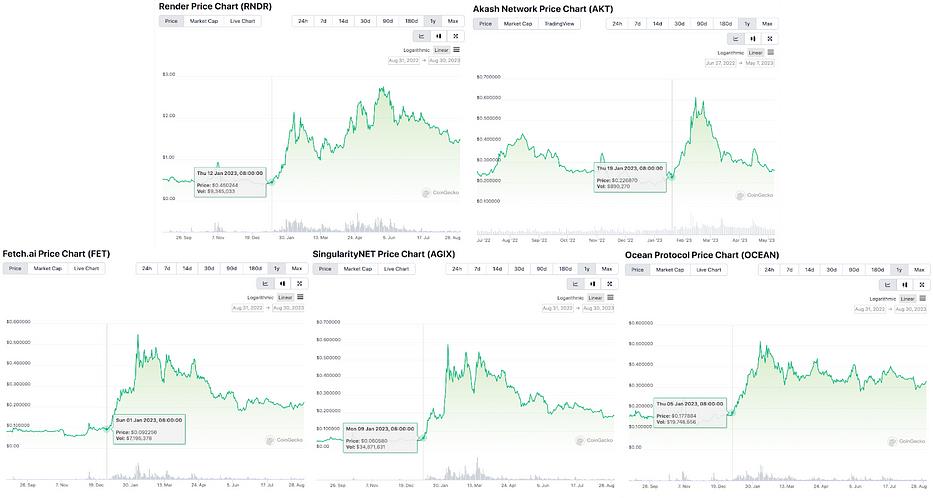
The AIGC wave reached Web3—AI sector surged across the board in January 2023; Source: https://www.coingecko.com/
However, as the novelty wears off, ChatGPT's global traffic declined for the first time since launch in June 2023 (source: SimilarWeb), prompting a reassessment of generative AI’s significance and limitations. Currently, generative AI faces several challenges: First, social media is flooded with unlicensed, untraceable AIGC. Second, high operational costs force OpenAI to reduce output quality to cut expenses. Third, even state-of-the-art models still produce biased results in certain contexts.
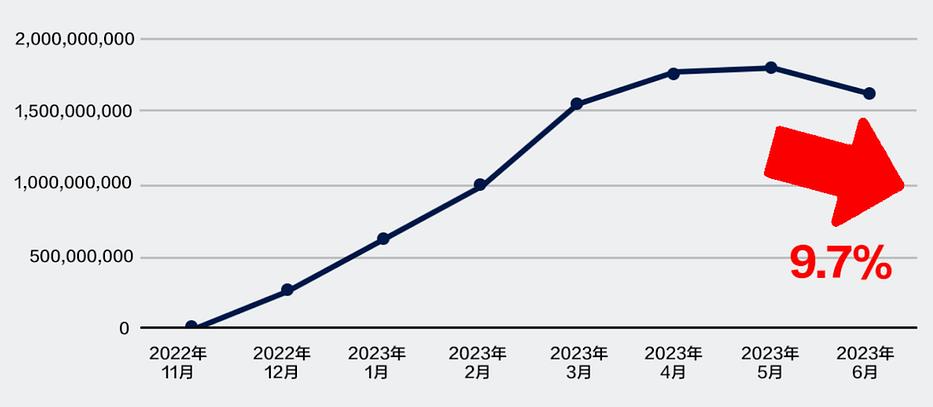
ChatGPT global desktop and mobile traffic; Source: Similarweb
Meanwhile, Web3, now maturing, offers fresh solutions through its decentralization, transparency, and verifiability:
1. Web3’s transparency and traceability can address copyright and privacy issues arising from generative AI. These features allow verification of content origin and authenticity, significantly raising the cost of generating fake or infringing content—such as unauthorized remix videos or DeepFake videos violating personal privacy. Additionally, smart contracts in content management could ensure fair compensation for creators, solving long-standing copyright issues.
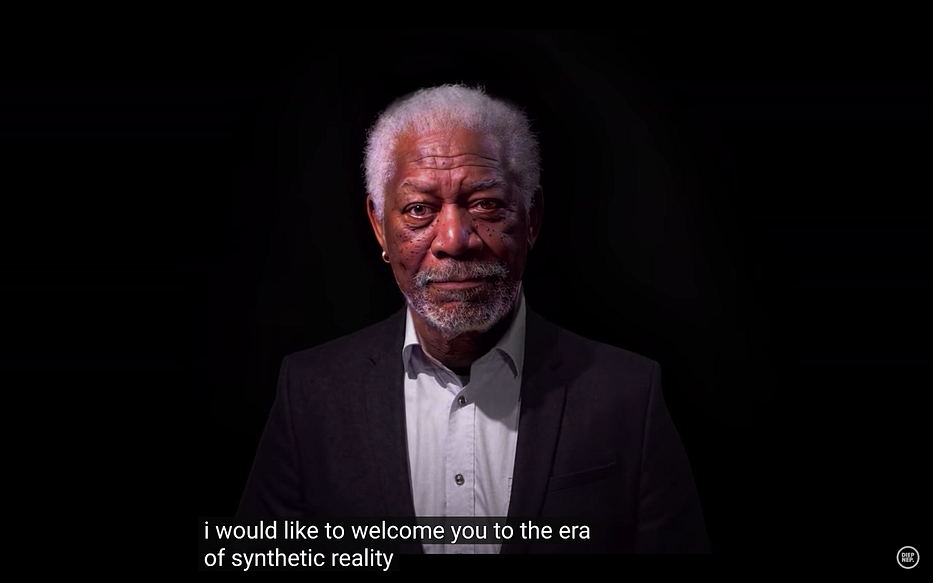
DeepFake Video: This is not Morgan Freeman; Source: Youtube
2. Web3’s decentralization reduces the centralization risk of AI computing power. Training generative AI requires massive computational resources—estimates suggest training a GPT-3-based ChatGPT costs at least $2 million, with daily electricity expenses around $47,000, a figure expected to grow exponentially. Today, computing power remains concentrated in large corporations, leading to high R&D, maintenance, and operational costs and creating barriers for smaller players. While large model training may remain centralized due to resource demands, Web3 enables decentralized inference, community-governed decision-making, and model tokenization via blockchain. Drawing inspiration from successful decentralized exchanges (DEXs), we can design community-owned, decentralized AI inference systems where models are governed collectively.
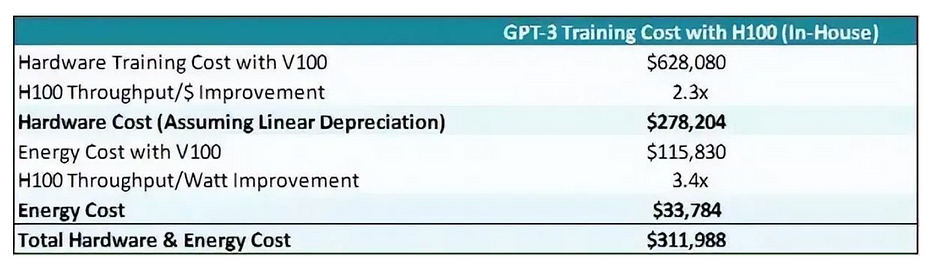
Even with the latest H100 GPUs, GPT-3 training cost per FLOPs remains high; Source: substake.com
3. Web3 can enhance AI dataset diversity and model interpretability. Traditional data collection relies on public datasets or proprietary sources, often limited by geography and culture, leading to biases in AIGC outputs—like altering skin tones in generated images. Web3’s token incentive models enable global, weighted data contributions, improving representativeness. Combined with full traceability, this enhances model transparency and encourages diverse, inclusive outputs.
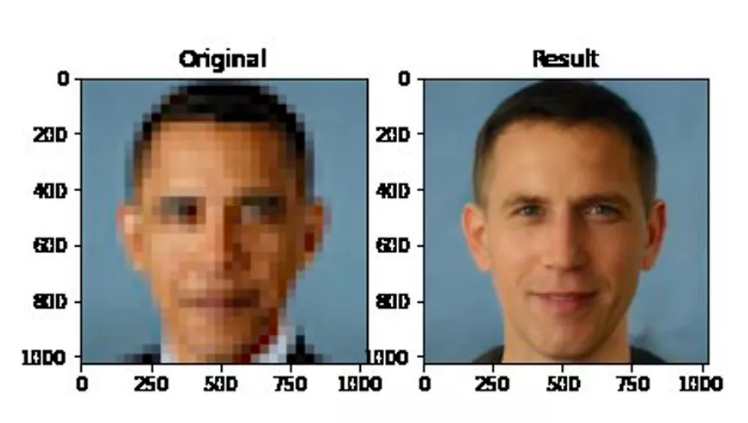
An AI meant to enhance resolution turns Obama white; Source: Twitter
4. Web3’s vast on-chain data can train unique AI models. Current AI models are typically designed for specific data types (text, audio, image, video). A promising future direction is building large-scale on-chain data models inspired by natural language models. Such models could offer novel insights—like tracking smart money flows and fund movements—while outperforming manual analysis in processing massive datasets concurrently.
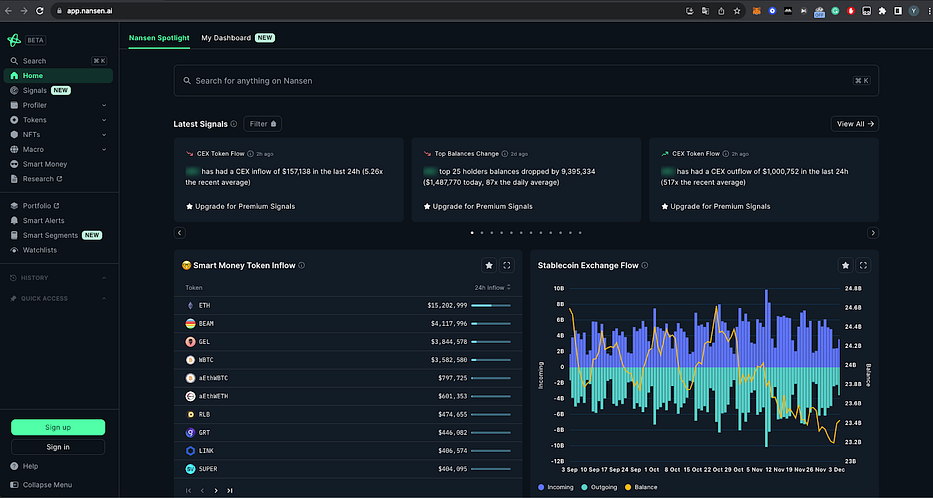
Automated on-chain analytics provide real-time intelligence; Source: nansen.ai
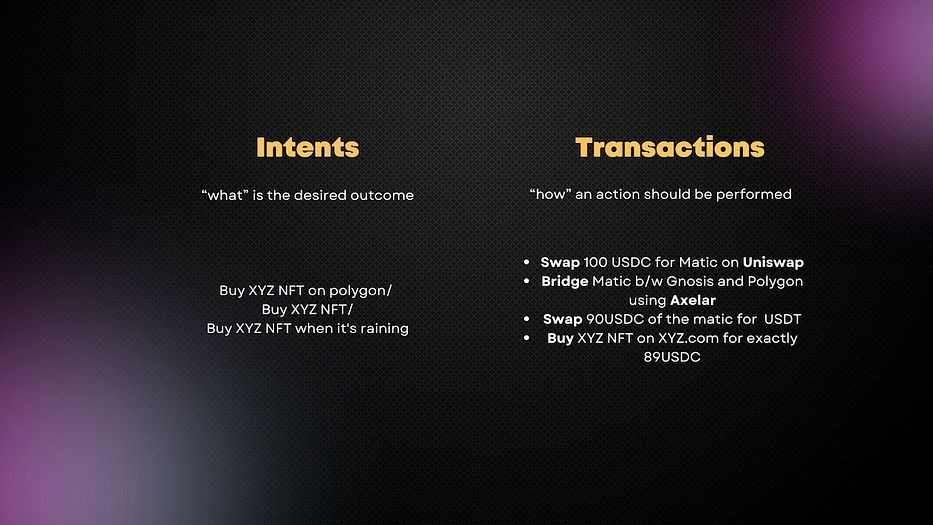
5. Generative AI can lower the barrier to entry into Web3. Current Web3 participation requires understanding complex concepts like wallets and blockchain logic, increasing user learning curves and risks. In contrast, Web2 applications follow the "lazy user" principle, enabling seamless, low-risk onboarding. Generative AI can empower intent-centric projects by acting as an intelligent intermediary between users and protocols, greatly enhancing UX in Web3.
6. Web3 creates massive content demand, and generative AI can fill it. From NFT marketplaces to smart contract documentation, AI-generated articles, images, audio, and videos can drive innovation across decentralized applications.
While both generative AI and Web3 face challenges, their mutual needs and synergistic solutions could shape the future of the digital world. This collaboration will improve content quality and credibility, accelerate ecosystem development, and deliver more valuable digital experiences. The co-evolution of generative AI and Web3 promises an exciting new chapter in the digital era.
2. Technical Overview of Generative AI
2.1 Background of Generative AI
Since the concept of AI emerged in the 1950s, it has gone through multiple booms and busts. Each wave has been driven by key technological breakthroughs—and generative AI is no exception. Emerging as a prominent field within AI over the past decade, generative AI has captured global attention thanks to recent technical and product advancements. Before diving deeper into its architecture, let’s clarify what we mean by “generative AI” and briefly review the core technologies behind today’s most popular models.
Generative AI refers to artificial intelligence systems capable of creating original content and ideas—including conversations, stories, images, videos, and music. Built on deep learning neural networks trained on massive datasets with billions of parameters, recent generative AI products fall into two broad categories: image/video generators (e.g., DALL-E, Midjourney) and text-based conversational models (e.g., ChatGPT). Both rely on the same core technology: Transformer-based large language models (LLMs). Image generators add diffusion models to produce high-quality visuals from text prompts, while ChatGPT-like systems use reinforcement learning from human feedback (RLHF) to align outputs with human reasoning.
2.2 Current Technical Architecture of Generative AI:
Many insightful analyses have examined generative AI’s impact on existing tech stacks. For example, a16z’s article “Who Owns the Generative AI Platform?” provides a comprehensive breakdown of the current architecture:
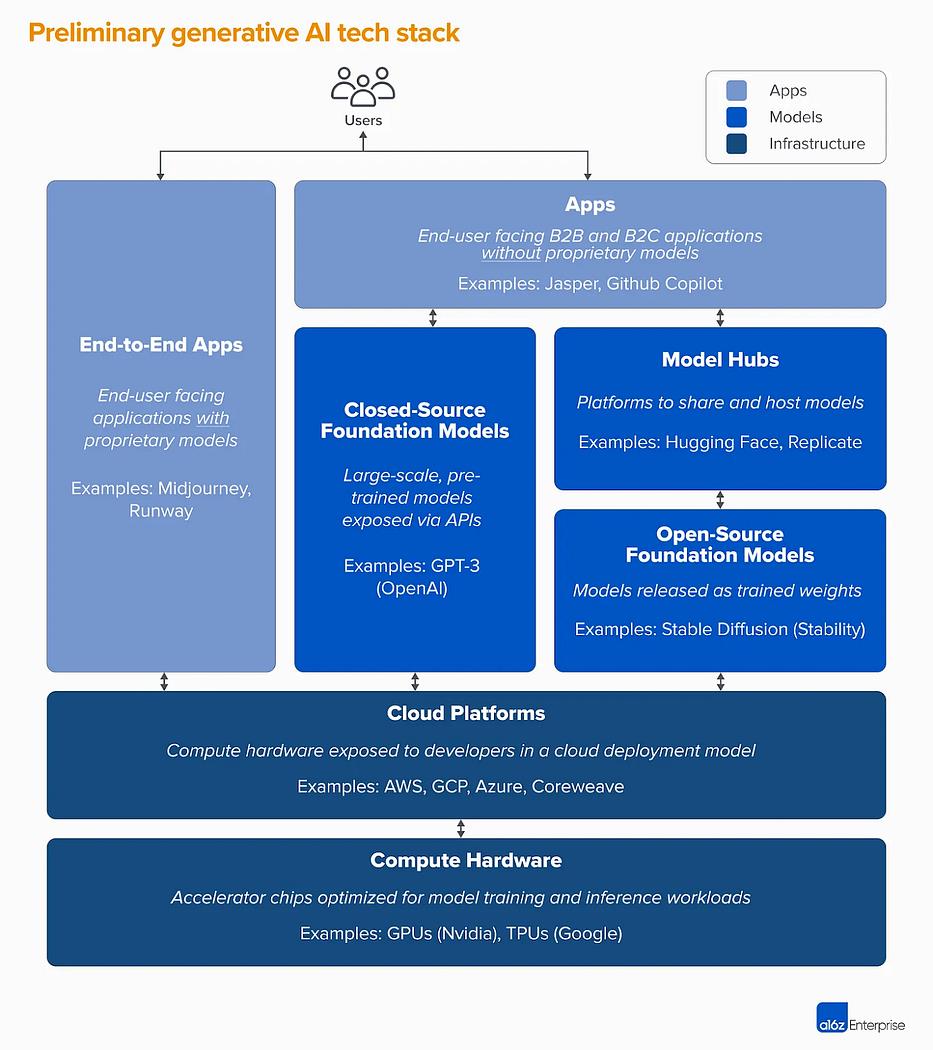
Main components of generative AI architecture; Source: Who Owns the Generative AI Platform?
This framework divides Web2 generative AI into three layers: infrastructure (compute), models, and applications—and assesses each layer’s maturity.
Infrastructure: Still dominated by Web2 logic, dedicated Web3-AI infrastructure remains scarce. Yet, this layer currently captures the most value, with tech giants profiting handsomely by selling compute resources (“picks and shovels”) during the AI gold rush.
Models: Despite being the true innovators, model creators struggle to monetize their work. Few sustainable business models exist to reward them fairly.
Applications: Some verticals have built apps generating tens of millions in revenue, but high operating costs and low user retention make long-term sustainability difficult.
2.3 Use Cases of Generative AI in Web3
2.3.1 Using AI to Analyze Web3’s Massive Data
Data is the cornerstone of competitive advantage in future AI development. To understand why, consider research on the sources of large model performance. Studies show that large models exhibit “emergent abilities”—when model scale crosses a threshold, accuracy jumps dramatically. As shown below, each curve represents a different large model’s performance (accuracy) across various tasks. Experiments consistently show sudden performance leaps once model size exceeds a critical point.
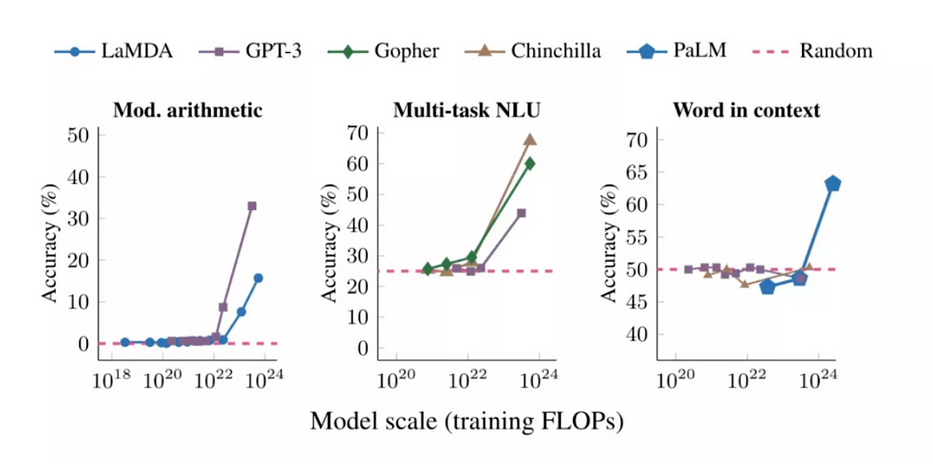
Relationship between model scale and performance; Source: Emergent Analogical Reasoning in Large Language Models
In short, quantitative changes in model scale lead to qualitative improvements in performance. Model scale depends on parameter count, training duration, and data quality. With top companies already optimizing parameters and relying on similar hardware (e.g., NVIDIA GPUs), differentiation comes down to either identifying niche pain points with killer applications—or collecting more comprehensive data than competitors.
This opens a compelling opportunity for generative AI in Web3. Existing large models are trained on domain-specific data, but Web3’s unique on-chain data offers fertile ground for specialized models. Two main approaches exist: First, incentivizing data sharing while protecting ownership and privacy—exemplified by Ocean Protocol. Second, integrating data and services directly—like Trusta Lab, which analyzes on-chain behavior using its proprietary MEDIA score to detect sybil attacks and assess asset risks.
2.3.2 Web3 AI Agent Applications
Another fast-growing area is on-chain AI agents—empowered by large language models to deliver quantifiable, privacy-preserving services. As described by OpenAI researcher Lilian Weng, AI agents consist of four parts: Agent = LLM + Planning + Memory + Tool Use. The LLM serves as the agent’s brain, enabling natural language interaction and knowledge synthesis. Planning and Memory resemble reinforcement learning techniques used in AlphaGo, breaking goals into subtasks and learning optimal strategies through repeated trials and feedback, storing information in different memory types. Tool Use involves calling external modules, retrieving web data, accessing APIs, etc.—capabilities mostly fixed after pretraining.
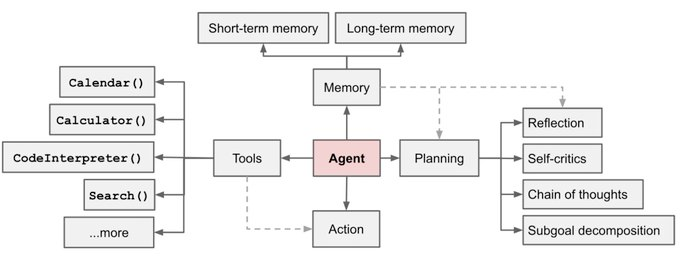
Overview of AI Agent architecture; Source: LLM Powered Autonomous Agents
Given this framework, Web3 + AI agents open vast possibilities:
-
Trading platforms could integrate AI agents offering natural-language interfaces for price prediction, trade execution, stop-loss strategies, dynamic leverage adjustment, KOL copy-trading, and lending.
-
Quant strategies could be decomposed into subtasks handled by multiple collaborative agents, improving privacy and enabling real-time monitoring to prevent exploitation.
-
AI agents are ideal for NPCs in blockchain games. Projects already use GPT to generate dynamic dialogue, but future versions could evolve into fully autonomous, interactive digital beings. Stanford’s “Smallville” project exemplifies this potential.
Though most Web3 + AI agent projects remain in early-stage funding or infrastructure development—with no consumer-facing killer app yet—the combination of blockchain features like decentralized governance, zero-knowledge proofs, model distribution, and enhanced explainability suggests transformative projects lie ahead.
2.3.3 Potential Vertical Applications of Web3 + AI
A. Education
Web3 and AI are transforming education, with generative virtual classrooms as a standout innovation. By embedding AI into online learning platforms, students receive personalized experiences—content dynamically tailored to their learning history and interests. This approach boosts engagement and effectiveness, making education more individualized.
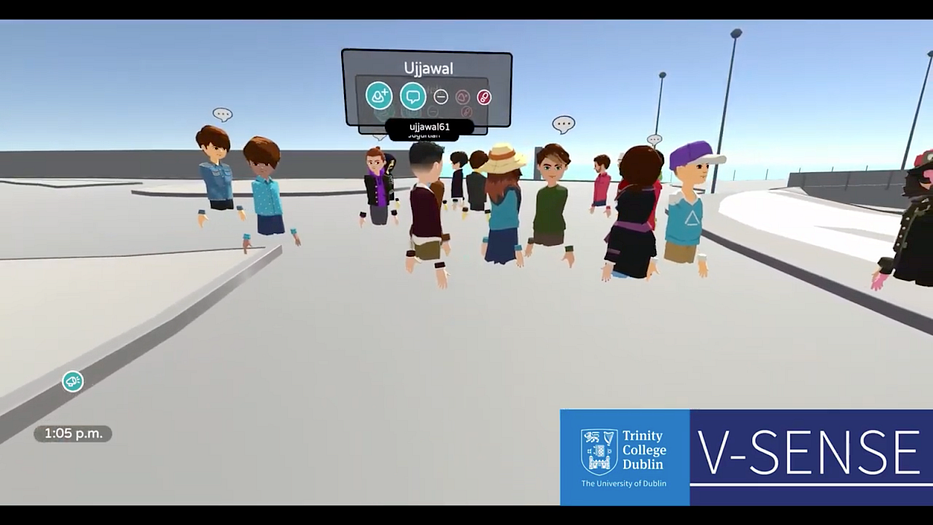
Students engage in VR-powered virtual classrooms; Source: V-SENSE Team
Token-based credit systems also introduce innovative incentives. Blockchain enables academic achievements to be tokenized, creating digital credentials that motivate active participation and foster a more engaging learning environment.
Inspired by SocialFi projects like FriendTech, binding keys to IDs could create peer evaluation systems. Leveraging blockchain’s immutability ensures fairness and transparency in student assessments, promoting teamwork, social skills, and multidimensional performance reviews.
B. Healthcare
In healthcare, Web3 and AI advance federated learning and distributed inference. By combining decentralized computing with machine learning, medical professionals can share data widely, enabling deeper, population-level insights. This collective intelligence accelerates disease diagnosis and treatment development.
Privacy remains paramount. Web3’s decentralization and blockchain immutability enable secure storage and transmission of patient records. Smart contracts control access precisely, ensuring only authorized parties view sensitive data—preserving confidentiality while enabling collaboration.
C. Insurance
Web3 and AI bring smarter, more efficient solutions to insurance. Computer vision enables insurers to assess property values and risks via image analysis—improving pricing accuracy and risk management in auto and home insurance.
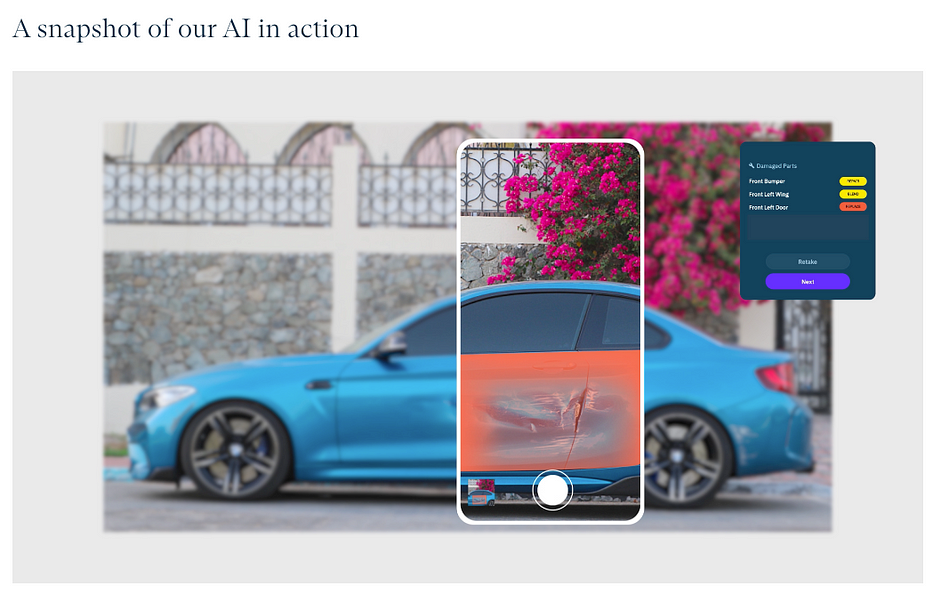
AI-powered claims assessment; Source: Tractable Inc
On-chain automated claims processing brings transparency and efficiency, reducing paperwork and human intervention. This speeds up payouts and lowers operational costs for insurers and customers alike.
Dynamic premium adjustments use real-time data and ML algorithms to personalize pricing based on actual risk profiles. This makes premiums fairer and incentivizes safer behaviors, improving overall risk prevention.
D. Copyright
In copyright, Web3 and AI redefine digital content creation, curation, and code development. Smart contracts and decentralized storage better protect digital IP, enabling creators to track and manage rights easily. Blockchain provides tamper-proof creation records, supporting reliable provenance and authentication.
Token-incentivized collaboration revolutionizes workflows. By linking contributions to token rewards, creators, curators, and developers are motivated to co-create, fostering innovation and shared success.
Tokens as proof of copyright transform profit-sharing. Automated dividend mechanisms via smart contracts ensure all contributors receive real-time revenue shares whenever content is used, sold, or transferred. This decentralized model solves opacity and delays in traditional copyright systems, delivering fairer, faster payouts.
E. Metaverse
In the metaverse, Web3 and AI enable cost-effective AIGC to enrich blockchain gaming. AI-generated environments and characters enhance gameplay diversity and immersion, reducing production time and labor costs.
Digital humans represent another frontier. Combining hyper-realistic appearance generation with LLM-driven cognition, these avatars can interact autonomously in the metaverse—even serving as digital twins in real-world scenarios—enhancing realism in entertainment, education, and beyond.
AI-generated personalized ads based on on-chain user profiles offer intelligent marketing. By analyzing user behavior and preferences, AI crafts highly relevant, engaging ads—boosting click-through rates and participation. This targeted approach benefits both users and advertisers.
Generative interactive NFTs are a groundbreaking application. Merging NFTs with generative design allows users to co-create dynamic, interactive artworks—unlocking new possibilities for digital art and virtual economies.
3. Web3-Related Projects
Here, we examine five representative projects—Render Network and Akash Network as established leaders in general-purpose AI infrastructure, Bittensor as a breakout model-focused project, Alethea.ai as a strong generative AI application, and Fetch.ai as a flagship AI agent project—to understand the current state of generative AI in Web3.
3.1 Render Network ($RNDR)
Founded in 2017 by Jules Urbach, founder of OTOY, Render Network extends OTOY’s cloud-based rendering expertise into Web3. OTOY specializes in GPU rendering and has worked on Oscar-winning films, advised by figures from Google and Mozilla, and collaborated with Apple. Render Network leverages blockchain’s decentralization to connect small-scale rendering and AI demand with distributed resources, helping indie studios avoid expensive centralized providers (e.g., AWS, Azure, Alibaba Cloud), while enabling idle GPU owners to earn income.
With OTOY’s proven Octane Renderer and clear business logic, Render was seen from the start as a fundamentally sound Web3 project. The surge in distributed validation and inference tasks during the generative AI boom perfectly aligns with Render’s architecture—making it a promising future direction. As a perennial leader in Web3 AI, Render has developed meme-like appeal, benefiting from every narrative wave around AI, metaverse, or decentralized computing—making it one of the most versatile projects in the space.
In February 2023, Render announced a new tiered pricing system and a community-voted $RNDR price stabilization mechanism (still pending implementation), along with a migration from Polygon to Solana—upgrading $RNDR to the Solana SPL-based $RENDER token (completed in November 2023).
The new pricing tiers offer three service levels—high, medium, and low—allowing users to choose based on quality and cost requirements.
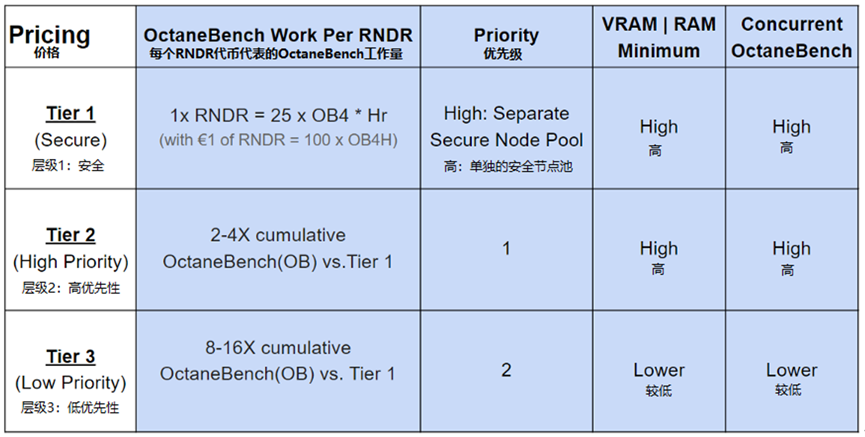
Three-tier pricing structure of Render Network
The community-selected price stability mechanism shifts from periodic buybacks to a “Burn-and-Mint Equilibrium (BME)” model—positioning $RNDR as a stable payment token rather than a long-term holding. A BME epoch works as follows:
-
Product Creation: Providers package idle GPU resources into nodes (products) and list them on the network;
-
Purchasing Product: Customers pay by burning $RNDR tokens (or buying them first on DEXs); transaction fees are recorded on-chain;
-
Mint Token: New tokens are minted according to preset rules and distributed.
Note: Render charges a 5% fee on each transaction for operations.
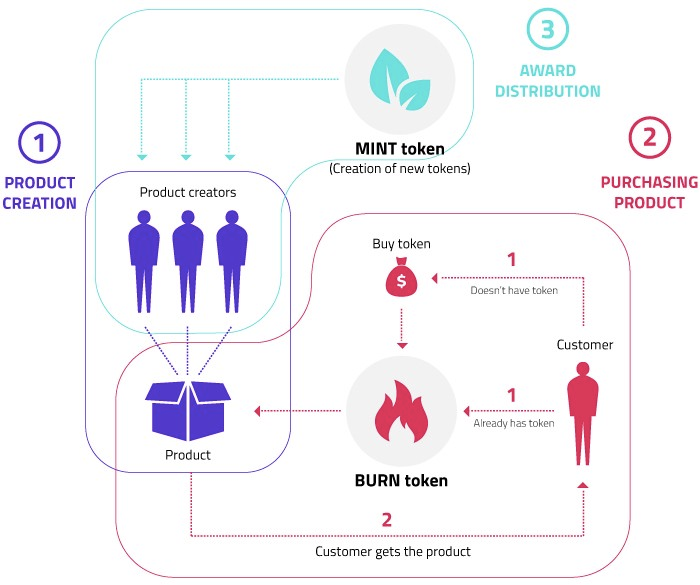
Burn-and-Mint Equilibrium Epoch; Credit to Petar Atanasovski; Source: Medium
During each BME epoch, a predetermined number of new tokens are minted (declining over time) and distributed among three parties:
-
Product Creators: Rewarded based on two factors:
-
Task Completion Reward: Based on number of rendering jobs completed;
-
Uptime Reward: Based on node availability, encouraging continuous participation;
-
Product Buyers: Receive rebate-like returns of up to 100% in $RNDR, encouraging repeat usage;
-
DEX Liquidity Providers: Rewarded based on $RNDR staked, ensuring sufficient liquidity for purchases.
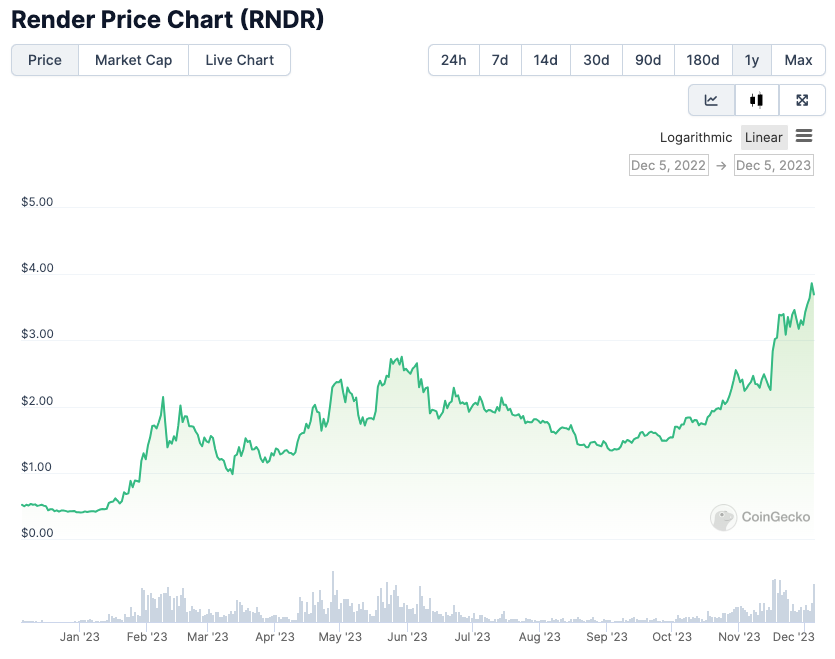
Source: coingecko.com
Looking at $RNDR’s price trend over the past year, as a long-standing leader in Web3 AI, it benefited from the ChatGPT-driven AI hype at the end of 2022 and beginning of 2023. The announcement of new tokenomics pushed prices higher in early 2023. After a flat second half, renewed AI momentum from OpenAI’s events and expectations around the Solana migration drove $RNDR to a new all-time high. Given minimal fundamental changes, investors should exercise caution in position sizing and risk management moving forward.
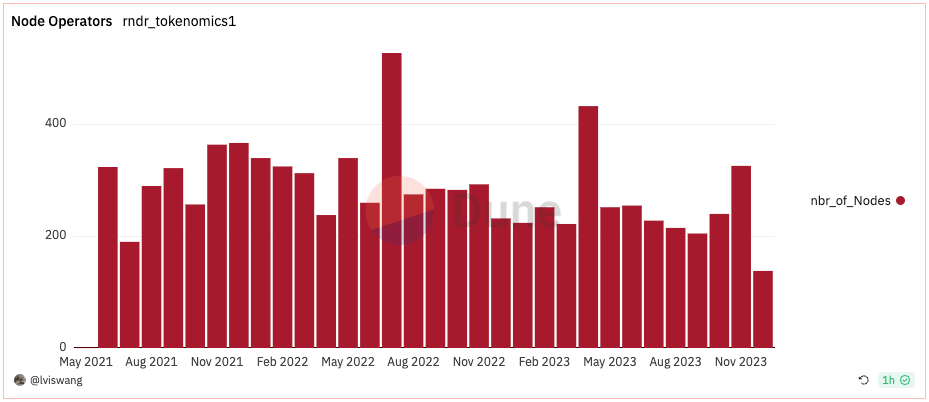
Monthly number of Render Network nodes
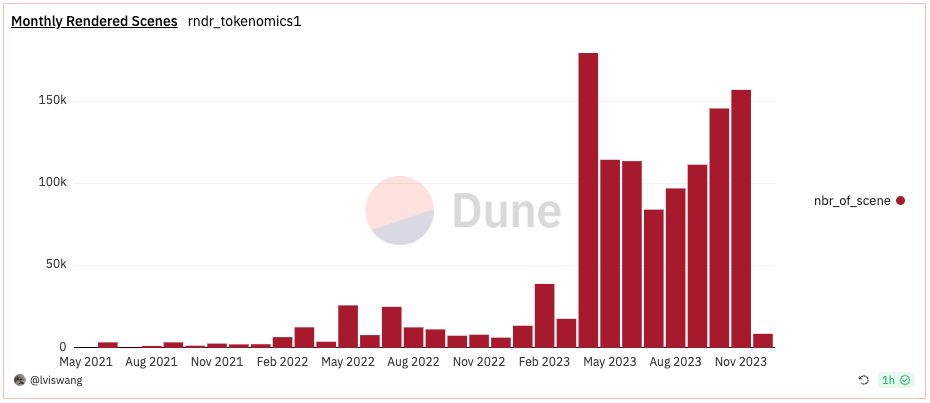
Monthly render scenes on Render Network; Source: Dune.com
Dune dashboard data shows rendering jobs increased since early 2023, but node count remained flat—indicating new users are primarily demand-side. Given the timing, these are likely generative AI-related tasks. Whether this demand is sustainable remains to be seen.
3.2 Akash Network ($AKT)
Akash Network is a decentralized cloud computing platform offering developers and enterprises a more flexible, efficient, and affordable alternative. Its “supercloud” platform, built on blockchain, provides a decentralized infrastructure for deploying and running applications globally, offering CPU, GPU, and storage resources.
Founded by serial entrepreneurs Greg Osuri and Adam Bozanich, who previously launched Overclock Labs (a core contributor to Akash), the team brings extensive experience. Their mission is clear: reduce cloud costs, improve accessibility, and increase user control over compute resources. Through an open bidding system, Akash incentivizes providers to share idle capacity, achieving more efficient utilization and competitive pricing.
In January 2023, Akash launched its Economics 2.0 upgrade to address flaws in its current token economy:
-
$AKT price volatility distorts long-term contract values;
-
Insufficient incentives fail to unlock large-scale compute supply;
-
Weak community incentives hinder long-term growth;
-
Limited $AKT value capture poses stability risks.
Solutions include stablecoin payments, order book fees to increase protocol revenue, enhanced provider incentives, and boosted community rewards. Stablecoin payments and order fees are already live.
$AKT, Akash’s native token, serves multiple roles: staking for security, incentives, governance, and transaction fees. Total supply is capped at 388M, with ~229M (59%) unlocked as of November 2023. Founders’ tokens fully vested by March 2023. Distribution:
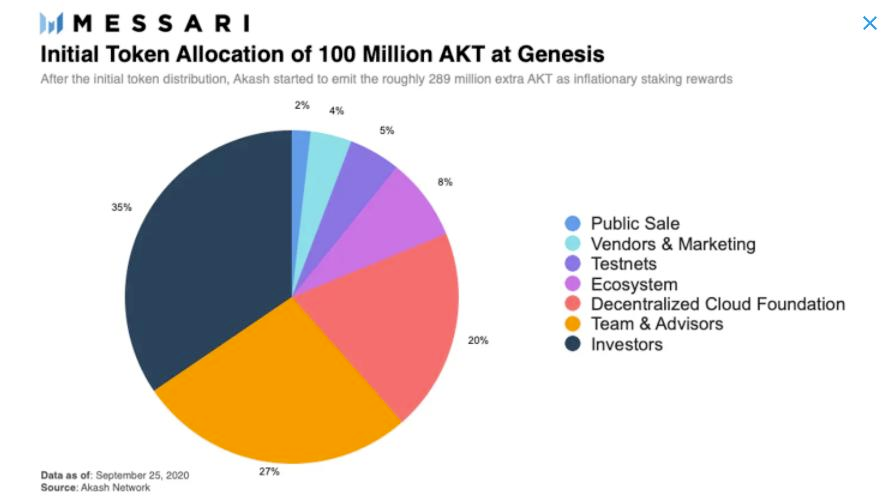
Notably, a proposed (but not yet implemented) feature in the whitepaper would charge a “take fee” on every successful lease, sending proceeds to a Take Income Pool for $AKT holders. Fees would be 10% for $AKT transactions and 20% for others. Long-term stakers
Join TechFlow official community to stay tuned
Telegram:https://t.me/TechFlowDaily
X (Twitter):https://x.com/TechFlowPost
X (Twitter) EN:https://x.com/BlockFlow_News
 @gryphsisacademy








