Coinbase: Stablecoins are a key component of the future of payments
TechFlow Selected TechFlow Selected
Coinbase: Stablecoins are a key component of the future of payments
Americans' dissatisfaction with the use of cash in the financial system lies in its high costs; stablecoins offer all the advantages of cash while avoiding its drawbacks.
 Navigating Web3 tides with focused insights
By Coinbase
Translated by MK, Mars Finance
Americans' primary frustration with using cash in today's financial system is the high cost of depositing, withdrawing, and transferring funds. Stablecoins offer consumers many of the benefits of cash while avoiding its drawbacks—enabling faster and cheaper transfers. Stablecoins are not only a key part of the future of money but are already beginning to revitalize the existing financial system. As their importance grows, clear stablecoin regulation has become an urgent necessity.
Americans’ dissatisfaction with fees is intensifying. Their top complaint about using cash in the current financial system is the sheer number of associated costs. This is especially true among younger generations (ages 18–34), who feel particularly burdened by the current financial system and its array of fees.
At Coinbase, we're committed to modernizing the financial system and bringing one billion people into cryptocurrency. We believe crypto and blockchain technology can increase economic freedom and opportunity. Stablecoins deliver all the advantages of cash to consumers without its shortcomings—offering superior speed, cost efficiency, and accessibility compared to fiat currencies, while maintaining stability and security on par with cash. Stablecoins enable traditional currencies like the U.S. dollar to exist digitally and move freely and efficiently across blockchains, bridging traditional cash payments with the digital world. Stablecoins are a vital part of the future of money—and they’re already here.
Cash Infrastructure Is Outdated
Physical cash no longer meets the needs and expectations of today’s digital consumers. Transferring fiat currency can take days. Today’s consumers expect payments to be as fast as the internet, with internet-like reach across borders, without compromising security.
Keep the Benefits…
There are good reasons why physical cash has remained popular. It ensures privacy, maintains stability during economic turmoil, and supports instant peer-to-peer payments. These distinct advantages are exactly what we want to preserve in future payment systems.
…But Eliminate the Drawbacks
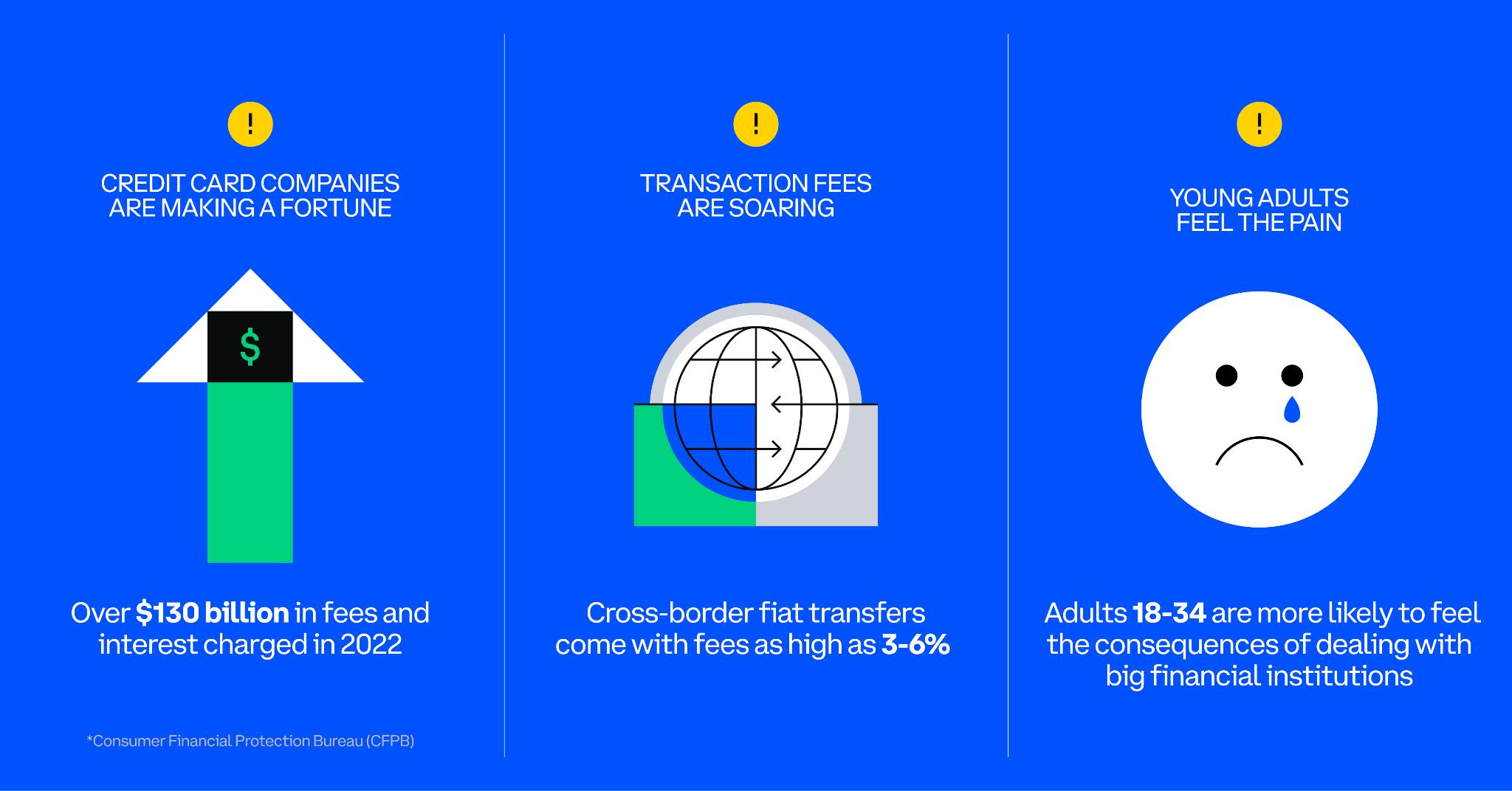
In particular, traditional payment processes are riddled with fees and interest charges that create heavy burdens for people moving their own money. Cross-border fiat transfers can incur fees of 3%–6%. According to data from the Consumer Financial Protection Bureau (CFPB), credit card companies charged consumers over $130 billion in fees and interest in 2022 alone.
Coinbase research shows that fees are not only the top reason Americans object to using cash in the current financial system, but also that Americans aged 18–34 are more likely than older generations to experience daily pain points with the current financial system and its large institutions—especially regarding fees and international transactions.
Stablecoins Are a Critical Part of the Future of Payments
Stablecoins offer consumers all the benefits of cash, without the downsides:
-
They are more cost-effective: Sending stablecoins via blockchain is significantly cheaper than through traditional payment channels—making them attractive to both consumers and merchants.
-
They are just as secure: Stablecoins pegged 1:1 to the U.S. dollar ensure value stability and predictability.
-
They are more efficient: Blockchains enable near-instant settlement for peer-to-peer stablecoin transactions. Recipients can receive funds almost instantly, regardless of location.
-
They are more accessible: More than half of millennial and Gen Z adults (over 50 million people) engage with or completely bypass the traditional financial system. Access to stablecoins is governed by neutral software code rather than financial institutions imposing eligibility requirements.
A Global Perspective Beyond the U.S.
In countries with unstable governments and currencies, stablecoins have become a neutral, decentralized means for citizens to protect savings and conduct cross-border transactions. Emerging markets are already leading in overall crypto adoption (only two of the top 20 countries with the highest crypto adoption rates are classified as “high-income”). For example, Nigeria and Brazil—the sixth and seventh most populous countries globally—are becoming key drivers of global stablecoin and cryptocurrency adoption.
-
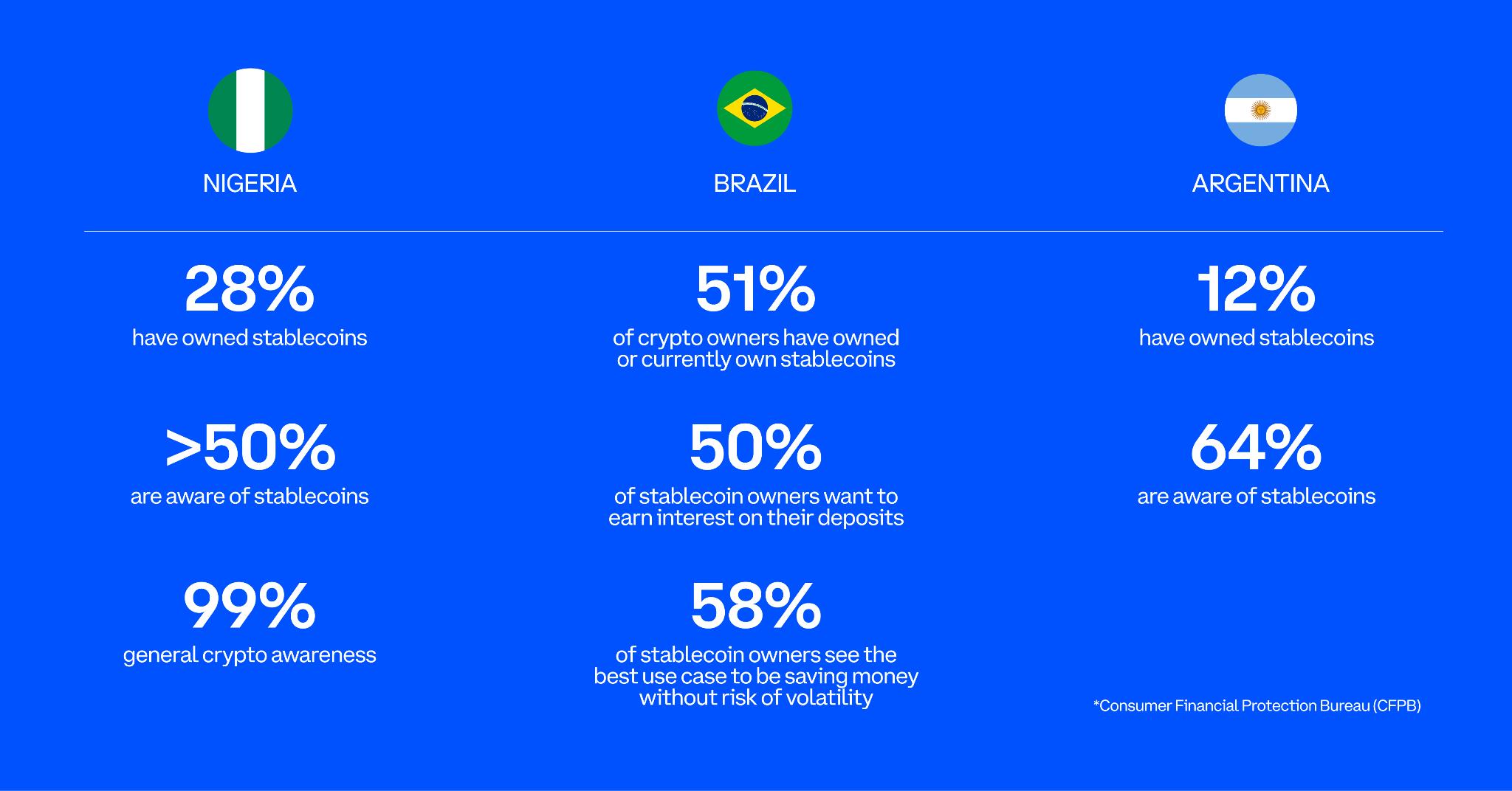
In Nigeria, the main motivation for owning stablecoins is to anchor funds in U.S. dollars and improve the efficiency of international transactions. Nearly all Nigerian adults (99%) are aware of cryptocurrency, over half have some understanding of stablecoins, and nearly three in ten (28%) have owned stablecoins.
-
In Brazil, 51% of cryptocurrency owners have owned or currently own stablecoins. Among current holders, 58% believe their best use is risk-free savings, and half hope to earn interest on deposits.
-
In another early-adopter country, Argentina, combating inflation and currency volatility are the primary drivers behind stablecoin ownership, with 12% of the population having owned stablecoins and 64% aware of them.
Join TechFlow official community to stay tuned
Telegram:https://t.me/TechFlowDaily
X (Twitter):https://x.com/TechFlowPost
X (Twitter) EN:https://x.com/BlockFlow_News