Why is Amazon launching a Bezos stablecoin?
TechFlow Selected TechFlow Selected
Why is Amazon launching a Bezos stablecoin?
A large and loyal customer base gives Amazon the potential to launch its own digital currency.
 Navigating Web3 tides with focused insights
Author: RICHARD HOLDEN
Translation: Block unicorn
Facebook failed, but another tech giant might soon succeed—get ready for corporate digital currencies.
Trading cryptocurrencies is a massive business. Bitcoin alone processed $3 trillion in transactions in 2021—more than double that of American Express. Yet most of these transactions are purely speculative. The proportion involving actual purchases of goods and services is so small it’s nearly impossible to measure.
What development could enable cryptocurrency to replace the U.S. dollar as the primary medium of exchange? It might look very much like Facebook’s (now Meta) proposed Libra stablecoin—later renamed Diem. Although Diem suffered a major setback in 2021 when U.S. Treasury Secretary Janet Yellen refused to support it, this doesn’t mean the model itself cannot succeed. In fact, Yellen’s refusal suggests she sees private digital currencies as potentially serious competitors to the dollar—and thus to the U.S. Treasury.
Here, I outline the rationale behind private digital currencies and explain why one such currency—specifically, a stablecoin modeled on Facebook’s Libra/Diem proposal—could soon emerge in the United States.
Corporate Cash Reserves
The idea of private digital currencies dates back at least to 1994, when the late Edward de Bono proposed the concept of an “IBM dollar.” In de Bono’s vision, “large manufacturing companies” should create their own currencies to buy their products. He saw this primarily as a way to smooth out sales fluctuations and make business more predictable.
Facebook’s Libra proposal ultimately failed. So how could another private digital currency succeed where Libra did not?
Rapidly attracting a large customer base is crucial. This is sometimes called the “bootstrapping flywheel”—achieving enough scale so consumers benefit from network effects. Facebook’s user base might have provided such a group, but there remains a psychological distance between social media and money.
For other potential backers of private digital currencies, that gap may be much smaller. Joshua Gans and Hanna Halaburda, in an influential 2015 paper, noted: “Each currency can be viewed as a platform, and its appeal depends largely on how widely it is accepted.”
The Bezos Stablecoin
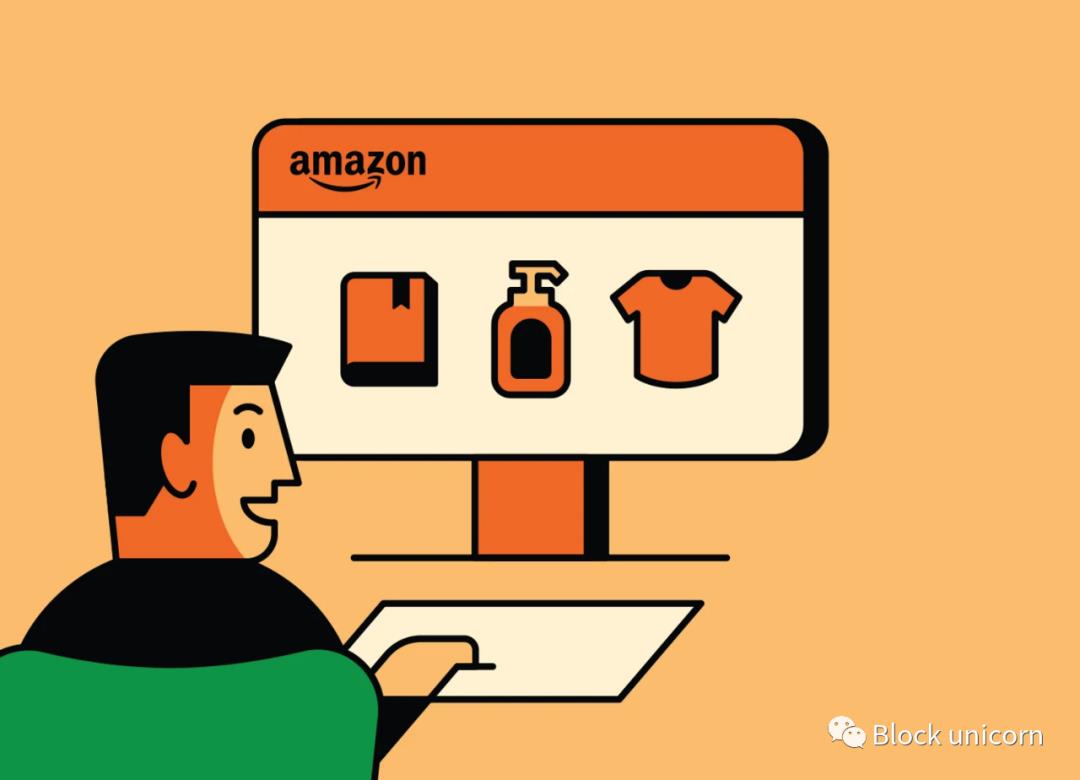
Consider Amazon, which has over 200 million unique visitors per month and annual revenue of about $500 billion. Remarkably, 167 million Americans hold Amazon Prime memberships—a service offering discounts or free shipping for a $139 annual fee—making Amazon their go-to shopping destination. This vast and loyal customer base makes Amazon well-positioned to launch its own digital currency. Drawing inspiration from Libra, such a currency might work as follows:
Amazon’s stablecoin would rest on four pillars:
The first pillar involves the Amazon platform: Amazon would announce that users can continue paying with credit cards—or use a new digital currency called “amazons.” (I like to call them “Bezos Bucks” or BBs, though that might not be entirely fair to Jeff Bezos.) Customers could exchange dollars for amazons and, at least in the short term, redeem them back into dollars at a 1:1 rate, perhaps with a small fee.
Using amazons for purchases would give users a discount—say, 2%—providing an incentive to adopt the currency. In fact, Amazon already offers a virtual currency called “Amazon Coins,” used within its app store for specific apps and in-app purchases. Thus, amazons would be a natural extension of this existing system.
As a platform connecting buyers and sellers, Amazon holds significant market power. In principle, it could require sellers on its marketplace to accept amazons instead of dollars. However, in the short run, such a move may not be feasible since amazons would be useless to retailers who must pay suppliers in dollars—at least initially.
But if amazons become widely used, this issue fades. Amazon’s challenge lies in encouraging adoption without penalizing sellers. A smart approach would be to pay sellers a portion—say, 10%—of their sales in amazons, with the remainder in dollars. Each seller would have a digital wallet where amazons are deposited, and they could easily convert them into dollars.
This setup creates a subtle but useful default for Amazon. While converting amazons to dollars isn’t difficult, having them sitting in a digital wallet—ready to be spent elsewhere on Amazon’s ecosystem—creates an incentive to keep and use them.
Offering interest on deposits in these wallets would further encourage sellers to keep funds in Amazon’s system rather than transferring them to banks where they earn little or no interest. Introducing such features would also open a natural path for Amazon to offer additional financial services to small businesses.
Second Pillar
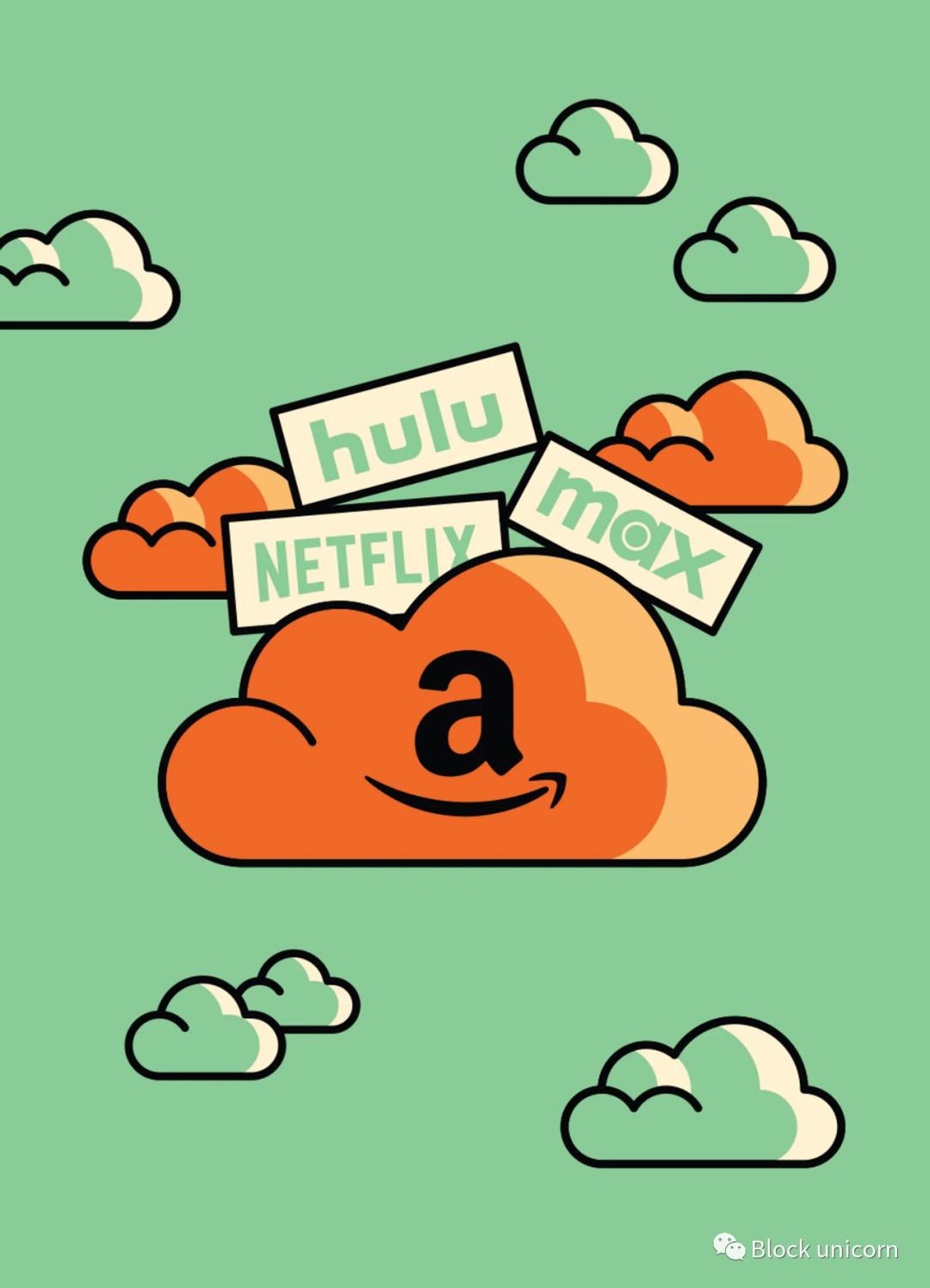
The second pillar involves Amazon Web Services (AWS), the world’s largest cloud computing company. Originally built to run Amazon’s own operations, AWS now provides similar infrastructure to other companies—even university researchers.
Netflix is AWS’s biggest customer in terms of monthly spending, followed by Twitch and LinkedIn. Other major firms using AWS include Baidu, BBC, ESPN, Facebook/Meta (for third-party collaborations with existing AWS users), and Turner Broadcasting. Requiring these large clients to pre-hold a certain amount of Amazon stablecoins—without offering added benefits—would resemble asking them to prepay for AWS services rather than being billed through standard commercial arrangements. This effectively shifts working capital (funds for daily operations) from AWS’s customers to AWS itself—an outcome highly favorable to AWS. Imposing such extra costs unilaterally is unlikely to succeed. But Amazon/AWS could form partnerships with some or all of these big companies, increasing the chances of success for a private digital currency.
But recall what happened a few years ago when key payment companies—including Visa—left Facebook’s Libra Association. These firms had two main concerns.
First was whether the Libra Association would fully comply with regulatory requirements. At a House Financial Services Committee hearing in October 2019, Representative Maxine Waters (D-Calif.) asked Facebook project lead David Marcus whether the company would wait for Congress to consider appropriate regulation. Marcus replied: “I commit to waiting until we’ve received all necessary regulatory approvals and resolved all issues before moving forward.” Waters responded: “That’s not a commitment.” Marcus seemed to imply Facebook would follow existing rules, while lawmakers made clear throughout the hearing that such a major innovation might require substantial new regulations.
Joshua Gans and Hanna Halaburda, in their 2015 paper, observed: “Each currency can be viewed as a platform, and its appeal depends largely on how widely it is accepted.”
The second concern was Facebook’s reputation and past behavior, including its involvement with Cambridge Analytica. That UK-based firm collected vast amounts of personal data from Facebook users during the 2010s without consent, using it for political advertising.
These concerns were most sharply articulated by Rep. Alexandria Ocasio-Cortez (D-N.Y.), who told Facebook founder Mark Zuckerberg: “I think you understand better than anyone the importance of using someone’s past behavior when deciding their future conduct. For us to make decisions about Libra, I believe we need to look deeply at your past behavior—Facebook’s past behavior in our democratic institutions. Mr. Zuckerberg, in what year and month did you personally first learn about the Cambridge Analytica matter?”
Shortly after this exchange, Visa withdrew from the Libra Association, issuing the following statement: “Visa will continue to assess; our final decision will depend on multiple factors, including whether the association can fully meet all necessary regulatory expectations. Visa’s ongoing interest in Libra stems from our belief that well-regulated blockchain-based networks can extend the value of secure digital payments to more people and places, especially in emerging and developing markets.”
This episode underscores the critical role of reputation in persuading major companies to adopt private digital currencies. A strong consumer base may suffice to attract individuals, but large firms like Visa, Netflix, or ESPN need assurance that participation enhances rather than damages their reputations.
Facebook carried too much baggage after the 2016 election, particularly regarding credibility as a steward of digital currency. True to Zuckerberg’s famous motto—“Move fast and break things”—the company moved quickly to monetize personal user data for profit and political advertising.
Nevertheless, private digital currencies could offer significant advantages to companies like Netflix and ESPN. Firms such as AT&T and Microsoft already allow customers to pay via cryptocurrency processors like BitPay. Their reasons vary—whether because it sounds innovative, because customers have philosophical beliefs about crypto, or due to privacy preferences. What matters is that customers appear to want the option. For large corporations, a more stable digital currency would be even more attractive. It might even enable expansion into new product lines—for example, ESPN could enter sports betting, a space it has shown interest in, though such moves would involve regulatory complexity.
Even if some companies hesitate to follow leadership from a competitor like Amazon, they all understand that controlling currency in the U.S. (and possibly beyond) would unlock an extraordinary pool of business revenue streams. Even if Amazon captures the largest share, there would still be enough to distribute among all participants.
Third Pillar
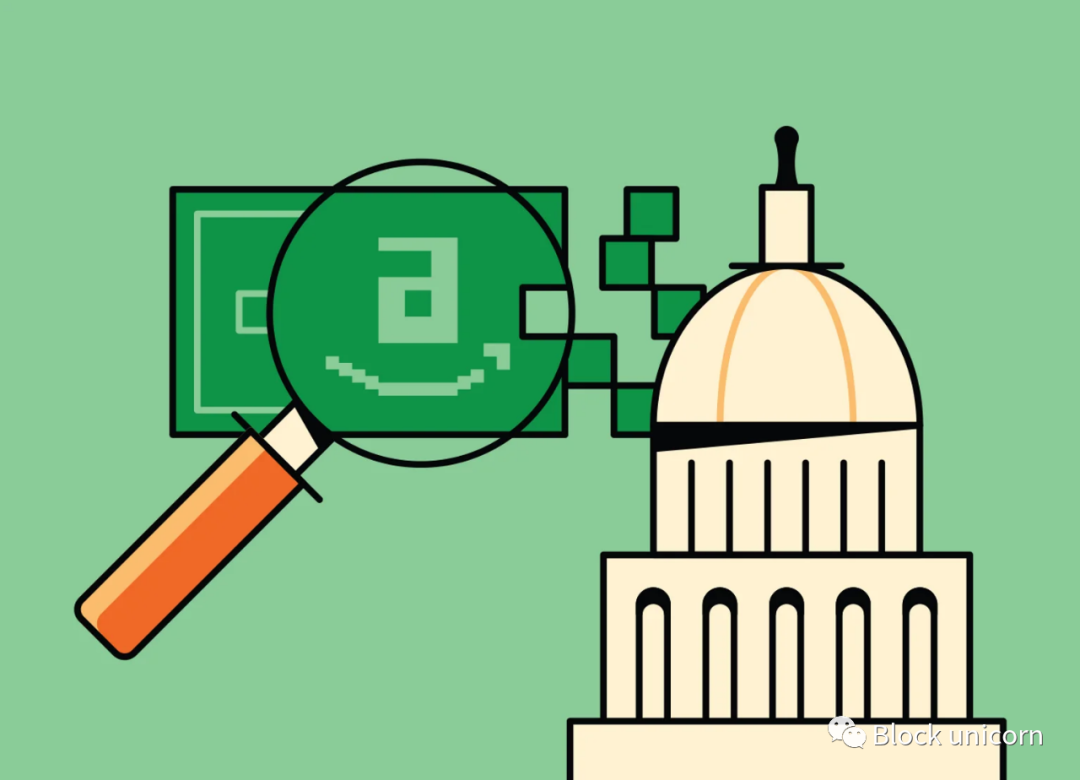
The third pillar is regulation: Amazon would acknowledge that by issuing an Amazon stablecoin, it is effectively operating a money market mutual fund. Therefore, the company would willingly agree to have its currency operations regulated by the U.S. Securities and Exchange Commission (SEC) as a money market fund (MMF).
MMFs are governed under Rule 2a-7 of the Investment Company Act of 1940. This rule sets conditions on MMF portfolios, including the credit quality of allowable investments, portfolio diversification requirements, liquidity thresholds, and maturity structures of held assets. Amazon could agree to meet or exceed all these standards, committing to making its digital currency reserve the cleanest money market fund available.
In doing so, Amazon’s stablecoin might encounter other banking-related regulatory obligations, especially if it begins expanding into additional financial services like lending. However, Amazon’s primary goal would be creating a dominant private digital currency—not profiting from banking or evading regulation. Thus, Amazon could act in good faith while focusing on spinning the network externality flywheel to expand usage of its digital currency.
Regulatory compliance would also give the Amazon stablecoin Libra-like stability characteristics. Unlike Libra’s reserve, this would be an Amazon stablecoin reserve. Holding the entire reserve in U.S. government securities would satisfy regulatory requirements and assure holders they can always redeem their tokens for dollars (or other currencies, given Amazon’s global presence).
Block unicorn note: The Libra-model stablecoin typically involves a digital currency backed by a basket of assets, possibly including fiat currencies, government bonds, and others. The aim is to ensure stability through diversified backing, avoiding sharp price swings. This design intends to make the currency more suitable as a medium of exchange, unlike volatile cryptocurrencies subject to extreme fluctuations.
Amazon would essentially operate a money market fund in each currency it offers for redemption—a benefit for international consumers seeking to avoid exchange rate risk. This could also boost confidence among stablecoin holders, knowing they can redeem into local currency, reducing hedging needs and lowering the risk of a modern bank run on the Amazon stablecoin.
Fourth Pillar

Pillar 4 is financial inclusion: Through its efforts on Libra, Facebook highlighted the plight of those excluded from traditional banking—not just in sub-Saharan Africa, but also in South Los Angeles and Chicago’s South Side. Many in these communities lack bank accounts or pay exorbitant fees for basic services like ATMs. With few alternatives, they may resort to high-cost short-term loans.
Part of the push for private digital currencies could be providing affordable, secure financial services to these populations. While this may not be profitable for traditional banks, a company like Amazon could easily absorb these costs, treating them as a customer acquisition tool.
Some elements of this idea relate to an initially underestimated benefit of blockchain technology—financial innovations known as Initial Coin Offerings (ICOs). ICOs represent a novel financial application of blockchain, raising capital by issuing so-called tokens or coins on a distributed ledger. Tokenization enables a range of financial instruments—some entirely new, some superior—with significant potential in financial markets.
To see how this works, consider Filecoin, which raised $257 million in its 2017 ICO. The project’s core goal was to build a decentralized data storage marketplace. Buyers and sellers must transact using FIL tokens, and Filecoin promised to issue up to 200 million FIL tokens. In principle, the total value of all FIL tokens equals the revenue generated from that segment of the disk storage market, with individual token value being that revenue divided by the number of tokens.
Holders of FIL tokens are effectively purchasing securities tied to the storage market’s income (and betting on its growth). These holders can resell their tokens to others wanting to buy storage space on the network. In the ICO, 10% of tokens were sold to investors, implying a total valuation of Filecoin’s future income at $2.57 billion.
Amazon is not the only company capable of launching a private digital currency that could significantly displace the dollar. Google, with its massive consumer and business user base, is another candidate. Apple is yet another obvious example.
This is not to say such a currency created by a tech giant would generate societal value. In fact, it could raise complex issues involving tax evasion, monetary policy, and illicit activities.
The challenge for the U.S. government is that maintaining the status quo seems increasingly difficult. It may need to take preemptive action by launching a central bank digital currency (CBDC) to prevent a private digital currency from competing with the dollar. But regardless, you’re likely to see such a currency emerge soon.
Join TechFlow official community to stay tuned
Telegram:https://t.me/TechFlowDaily
X (Twitter):https://x.com/TechFlowPost
X (Twitter) EN:https://x.com/BlockFlow_News
 @BlockUnicorn