








A Bull Market That Doesn't Belong to Ethereum and VCs
TechFlow Selected TechFlow Selected
A Bull Market That Doesn't Belong to Ethereum and VCs
If you still cling to old mindsets and stubbornly hold onto assets like Ethereum or L2s, you'll likely miss out on this bull market.
 Navigating Web3 tides with focused insights
Author: The Wandering Squirrel
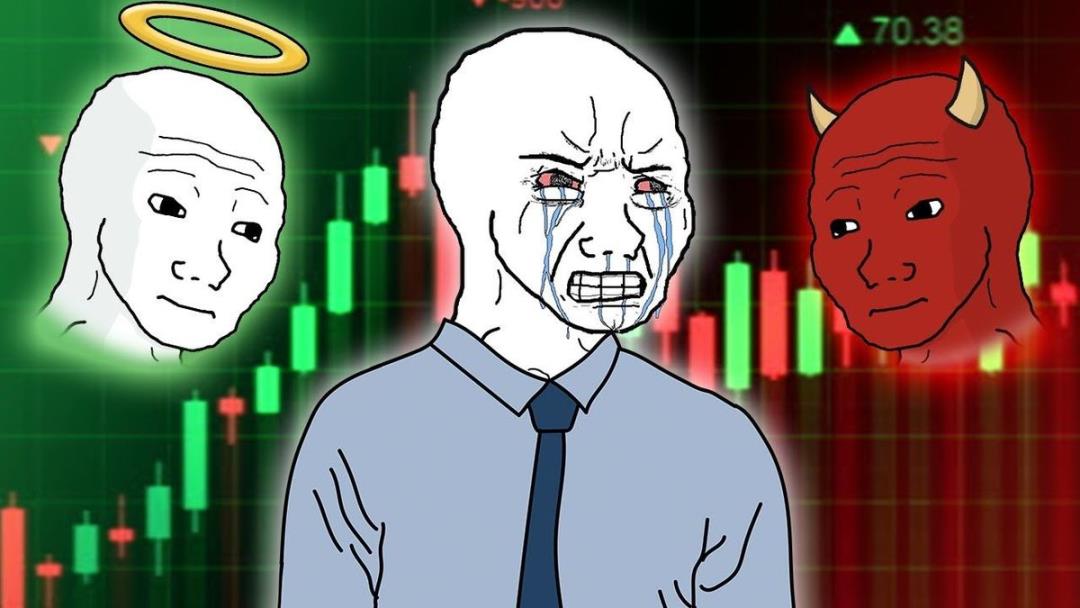
This is a small bull market that caught everyone off guard.
Casually chatting with a few VC friends, I could clearly sense their anxiety. VCs are unusually FOMO and unsettled by this atypical bull market—and for good reason: the market is hot, but it has nothing to do with them.
Whether it’s retail investors going wild over BRC20, ARC20, and other inscriptions; Solana and its ecosystem skyrocketing; or POW assets like KAS, TAO, ZEPH, or Cosmos-based projects such as Kuji and INJ—every major gainer has completely bypassed them, leaving VCs with no opportunity to participate.
On one hand, due to fund structures, most VCs can only invest in the primary market. On the other, the vast majority of VCs are fundamentally Ethereum ecosystem VCs, having previously benefited from its tailwinds. This has strengthened their conviction, tightly binding them to Ethereum's ecosystem train, heavily betting on Layer2, account abstraction, and everything championed by Vitalik.
Thus emerges an absurd scene: VCs gather in Turkey discussing Layer2, omnichain gaming, autonomous worlds—how lively; meanwhile, retail traders rush into various low-cap BRC20 tokens and small-market-cap POW coins, while miners chant “Kas is the next Bitcoin”… Parallel worlds, different kinds of excitement.
This asset "mini-bull market" has nothing to do with the Ethereum ecosystem—and therefore naturally excludes VCs.
Looking at the main theme of this mini-bull run, “MEME” is an unavoidable keyword. In past cycles, MEMEs marked the end of a bull market; today, they’ve become the beginning. When the market lacks compelling new narratives, MEMEs take over as the simplest and most direct engine to kickstart a bull market—except this time, the MEMEs are built on Bitcoin.
What is Ethereum’s greatest narrative?
The simplest answer: token issuance. It was the ICO era that made Ethereum.
In the last bull cycle, new public chains also launched tokens, even faster than Ethereum, attempting to challenge its dominance—but comparatively lacked “orthodoxy” (they weren’t “halal”).
Now, issuing tokens on Bitcoin is slower and more congested, yet carries greater “orthodoxy”—even if they’re just MEMEs.
MEMEs are precisely the nemesis of VCs—they deconstruct the VC narrative. VCs typically write detailed memos analyzing赛道 (sectors), teams, problems solved, etc., to justify investment rationale. MEMEs tear those memos apart entirely—no utility, solving no problems, needing no VC justification…
Whether it’s Bitcoin-based MEMEs or POW assets akin to Bitcoin, these are not VC-led but community-first.
Previously, communities empowered projects; now, in the wave of MEMEs, projects empower communities. Some projects have already chosen to adopt popular community-driven tokens as their native ecosystem tokens instead of issuing their own.
The world seems to have changed overnight.
Teng, a so-called “big player” who runs an investment (speculation) studio, repeatedly warns those around him: If you still cling to old mindsets, stubbornly holding onto Ethereum or L2 assets, you’ll likely miss out on this bull market.
He believes this mini-bull market is driven purely by speculative capital and sentiment, unrelated to fundamentals. The Ethereum ecosystem has become too bloated, already filled to the brim by hundreds of billions in VC capital; entering now means taking bags from VCs—only fools would agree. Instead, opportunities lie in early-stage, fairly launched Bitcoin ecosystems, or thoroughly flushed-out and reborn projects like Solana.
Capital always seeks the weakest point to break through. Speculative funds target projects with highly dispersed holdings and strong liquidity on exchanges like Binance or Upbit—such as TRB, Gas, etc.—where behind-the-scenes manipulation often occurs. Teng follows these flows and has profited handsomely this year.
A friend returning from Devconnect in Turkey lamented: The Ethereum ecosystem is getting increasingly boring, reheating old ideas, nothing new.
Although more people are becoming skeptical of the Ethereum ecosystem, complaining that Vitalik has become an untouchable emperor (either actively or passively), where any project gaining his endorsement instantly receives premium valuation from VCs—like wearing an imperial yellow jacket—the Ethereum space is increasingly about “pedigree (connections).”
Yet in my view, the Ethereum ecosystem still bears the responsibility of achieving large-scale blockchain applications. If MEMEs continue to dominate, they may not only dismantle VCs but also unravel the grand Web3 and blockchain narrative itself:
“After talking so long about a ‘fairer next-generation internet,’ ‘large-scale blockchain adoption’… we eventually realize all people really want is a vehicle for speculation. Everything else is just packaging and hype—be it Ethereum or Bitcoin, AI or blockchain… This market doesn’t need VCs, just gamblers. The end of innovation isn’t Silicon Valley—it’s Shenzhen.”
Let’s hope none of this comes true. And let’s hope that whether it’s Ethereum or Solana, POW or POS, everyone has a bright future ahead.
Join TechFlow official community to stay tuned
Telegram:https://t.me/TechFlowDaily
X (Twitter):https://x.com/TechFlowPost
X (Twitter) EN:https://x.com/BlockFlow_News
 深潮TechFlow


