HTX Ventures Latest Research Report: The Current State and Development Trends of Layer 2
TechFlow Selected TechFlow Selected
HTX Ventures Latest Research Report: The Current State and Development Trends of Layer 2
This article will review the characteristics of various projects in the Layer 2 sector and speculate on future trends for Layer 2.
 Navigating Web3 tides with focused insights
Arbitrum's airdrop in March 2023 kicked off a year of flourishing Layer 2 innovation. Driven by wealth effects, a large number of users flocked to interact with other non-tokenized Layer 2 projects—especially the remaining two "Layer 2 titans" zkSync and StarkNet—while even Goerli testnet projects attracted user participation. In contrast, the new public chain sector appeared exhausted during the bear market, both in terms of user activity and innovation capability. Layer 2 projects competed fiercely, showcasing strengths across technology, ecosystem, and operations. Here, we review key characteristics of various Layer 2 projects and speculate on future trends.
This research report is published by HTX Ventures. HTX Ventures is the global investment arm of HTX (formerly Huobi), integrating investments, incubation, and research to identify the world’s most outstanding and promising teams. As a 10-year industry pioneer, HTX Ventures explores, reveals, and supports cutting-edge technologies and emerging business models, providing funding, resources, and strategic consulting to help grow the blockchain ecosystem.
Established in 2017, HTX Ventures covers full investment cycles and focuses on investing in Layer 1 and Layer 2 solutions. To date, HTX Ventures has achieved a 60x return on investment, expanded across more than 20 countries and regions, built relationships with over 120 fund partners, supported more than 200 cross-disciplinary projects, and helped 60% of its portfolio projects list on HTX.
Since 2013, HTX has been a leading global digital asset exchange, equipped with expert consulting infrastructure and resources, offering extensive network access, liquidity pools, and users to HTX Ventures’ portfolio companies.
The Rise of the Layer 2 Sector
As the crypto space evolves, on-chain networks must support growing numbers of users and transactions. Ethereum mainnet can process only about 15 transactions per second. High demand leads to congestion and expensive fees that exclude many potential users. Ethereum needs scaling solutions to address these issues—this is where Layer 2 comes in. Layer 2 primarily solves scalability, transaction costs, and speed, while maintaining security and decentralization similar to Ethereum by periodically submitting transaction batches to the mainnet.
Technically, Ethereum Layer 2 solutions include state channels, Plasma, Validium, and Rollups. However, as technology evolved, Rollup solutions have proven most effective at improving performance, reducing costs, and enhancing user experience. Today, Rollups are considered Ethereum’s preferred Layer 2 scaling solution.
The Rollup concept was first proposed in 2018 to solve Ethereum’s scalability challenges by moving transaction data off-chain and using different verification methods to improve performance, reduce costs, and enhance security. These technologies have become central to Ethereum’s scaling strategy, laying a solid foundation for decentralized applications and the network’s future. The main types of Rollups include:
-
Optimistic Rollup: Executes transactions and updates state off-chain, then submits results to the main chain. Transactions are assumed valid unless challenged during a dispute window. Representative projects include Arbitrum, Optimism, Base, Metis Andromeda, and Boba Network.
-
ZK-Rollup: Zero-Knowledge Proof Rollup, introduced by Barry Whitehat in 2018, uses zero-knowledge proofs (ZKP) to verify off-chain transaction validity, enhancing security. ZK-Rollup stores transaction data off-chain and submits cryptographic proofs to validate correctness, reducing load on the main chain. Key projects include zkSync, Starknet, Scroll, Loopring, and Polygon zkEVM.
Currently, due to higher technical complexity, most ZK-Rollup-based Layer 2 projects have progressed slowly. Optimistic Rollups still dominate market share. According to L2Beat data, there are currently 33 active Layer 2 projects—11 using Optimistic Rollup and 12 using ZK-Rollup—with another 15 expected to launch soon.
Status of Layer 2 Projects
Since the crypto market entered a bear phase in 2022, Ethereum DeFi TVL still holds 54.06% of market share. While tokens of new public chains like Solana, Avalanche, Cosmos, and Polkadot declined in price, Ethereum rose over 20% during the same period. In 2023, the new public chain landscape underwent major reshuffling. It is now nearly impossible for any new chain to dethrone Ethereum. In contrast, Layer 2 projects have successfully attracted capital, users, and developers from Ethereum, outperforming new public chains during the bear market. Layer 2 not only reinforces Ethereum’s dominance but also creates a flywheel effect, boosting ETH value. The Layer 2 sector is highly likely to become a catalyst for the next bull market.
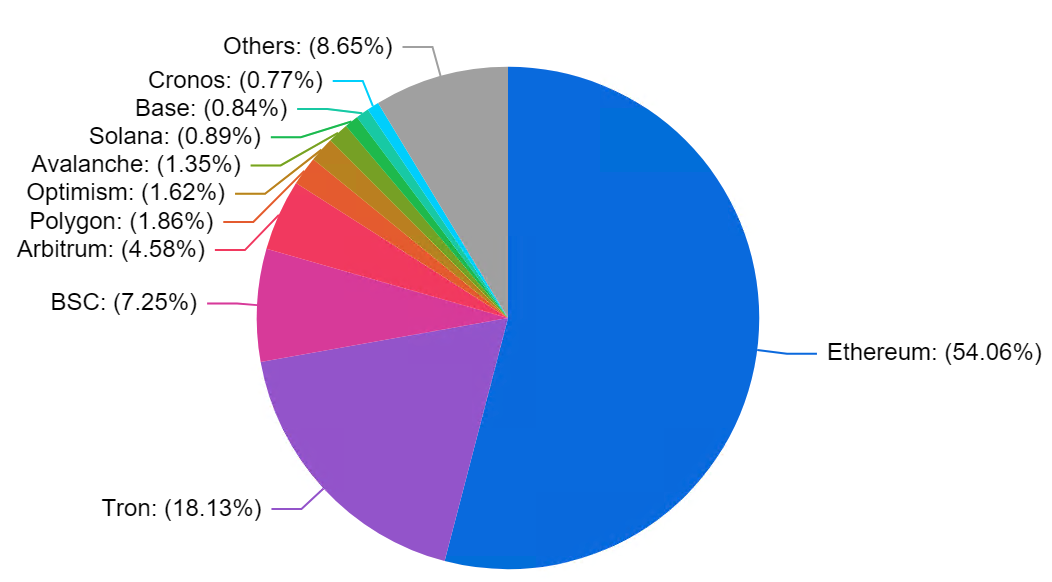
Total Value Locked All Chains (Source: DefiLlama)
Currently, the total market cap of Layer 2 tokens stands at $9.25 billion, with a 24-hour trading volume of $1.13 billion. Both Optimism and Arbitrum approach $1 billion in market cap. However, in terms of developer count, Starknet leads today, while zkSync ranks highest in daily addresses and total transaction volume over the past month.
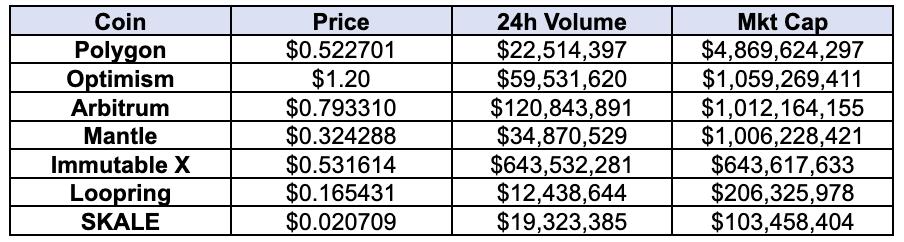
Top 7 Layer 2 projects by market cap (Source: CoinMarketCap, Oct. 17, 2023)
According to L2BEAT, as of October 17, 2023, total Layer 2 TVL reached $10.6 billion—a 136.8% increase since the end of 2022. Arbitrum One leads with $5.80 billion, capturing 54.69% of the Layer 2 market. Optimism follows with 24.98%.
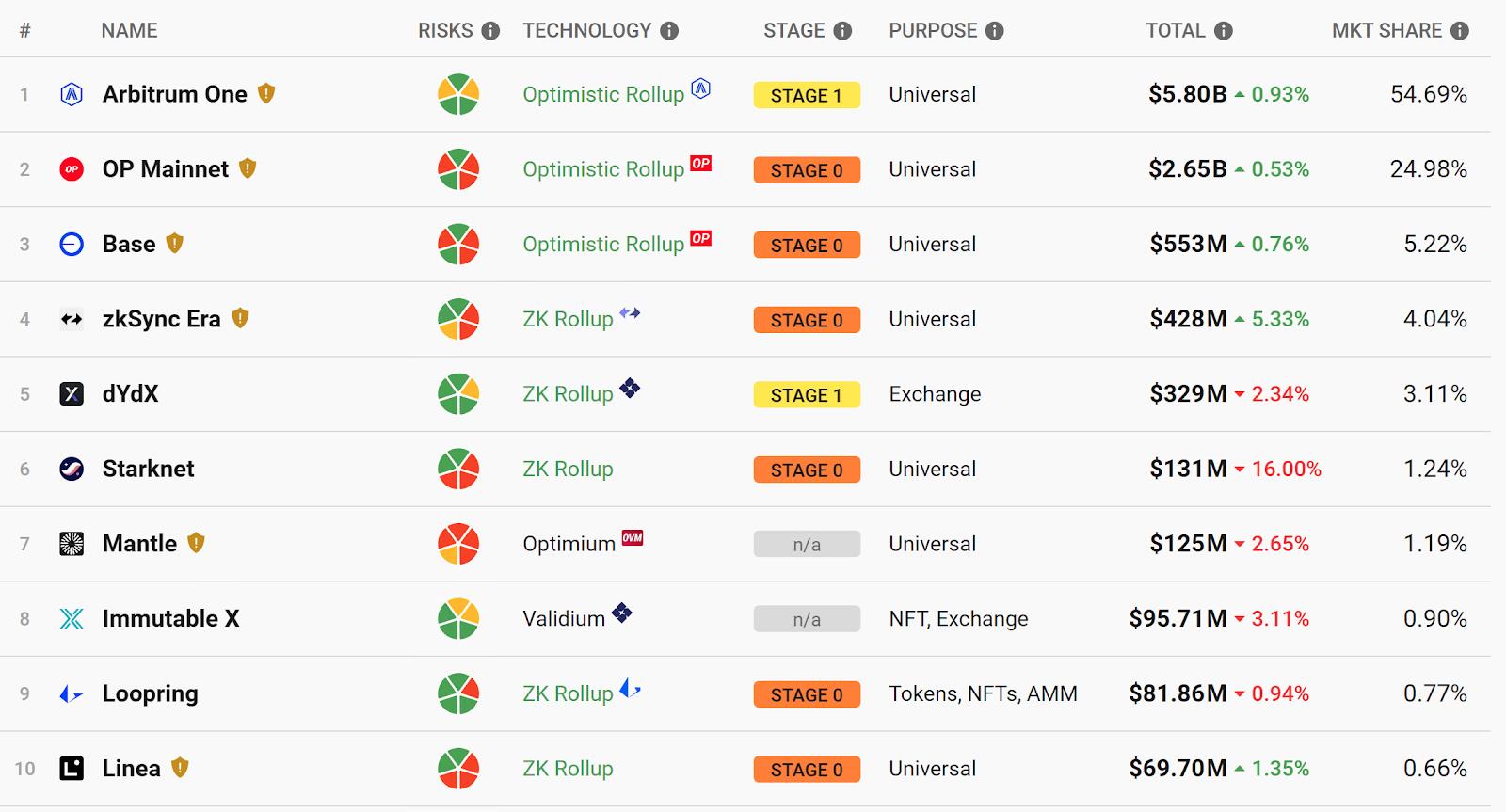
Top 10 Layer 2 projects by TVL (Source: l2beat.com, Oct. 17, 2023)
2.1 Arbitrum
Built by Offchain Labs, Arbitrum uses optimistic rollup technology to scale Ethereum. Arbitrum One employs fraud proofs and ensures on-chain data availability, meaning all transaction data is fully ordered, bundled, and submitted to the mainnet. Because it relies on fraud proofs, withdrawals take approximately seven days.
The most exciting event in 2023 was undoubtedly Arbitrum’s airdrop, which triggered a massive wealth effect. Since announcing its airdrop rules, Arbitrum One’s TVL has surged to $5.80 billion, ranking third after Tron and Ethereum itself. It accounts for 54.69% of total Layer 2 TVL, with over 11 million unique addresses and more than 330 projects deployed.
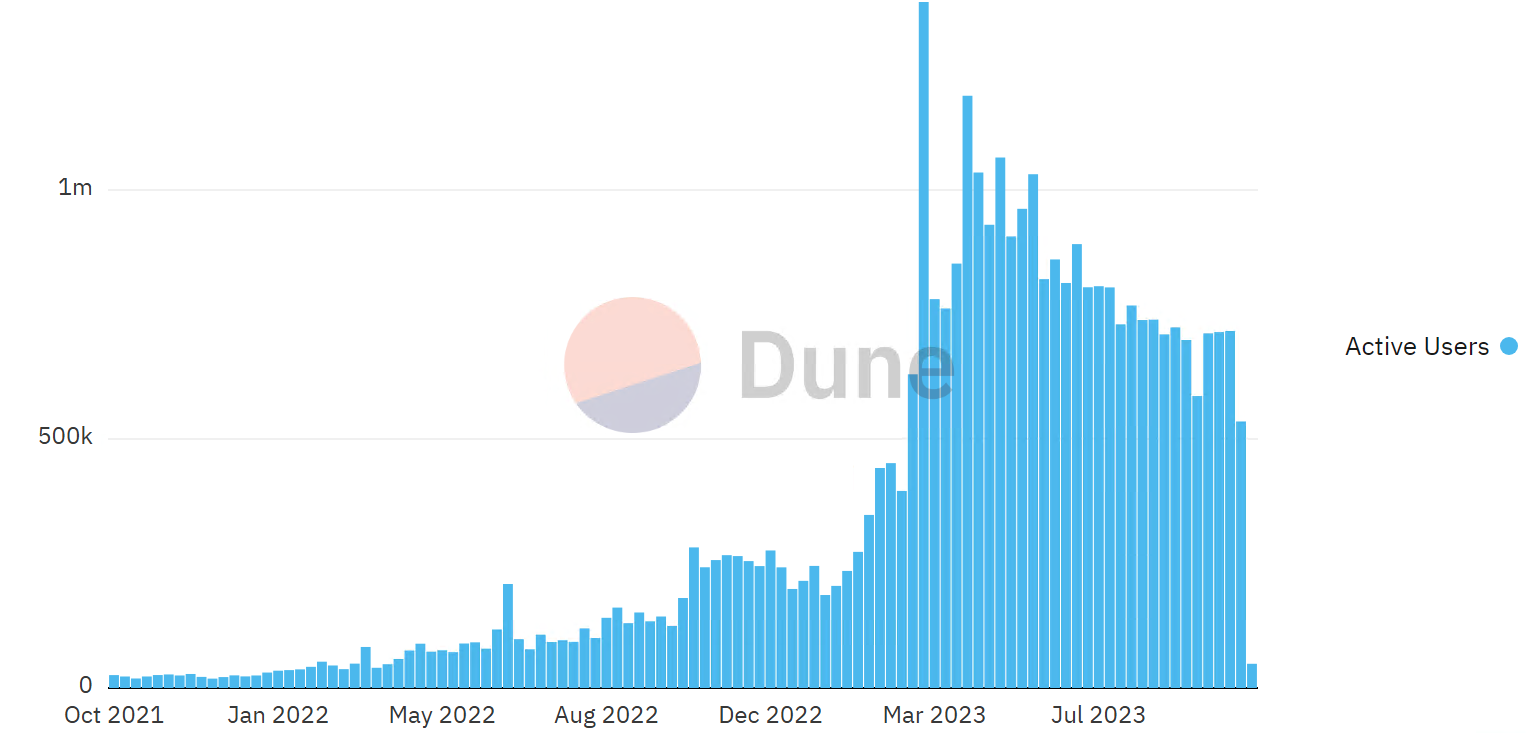 Arbitrum weekly active addresses (Source: Dune, @Henrystats)
Arbitrum Ecosystem Overview
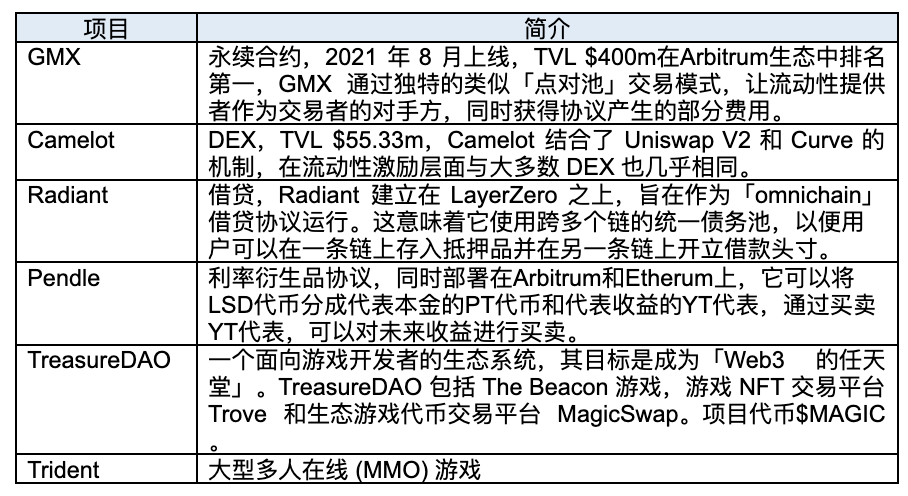
Arbitrum’s application ecosystem falls into two main categories: DeFi and consumer apps. Within DeFi, dominant sectors include DEXs, lending, and perpetual contracts. Four projects have locked over $100 million each: GMX, Uniswap V3, Radiant, and Aave V3.
2.2 Optimism
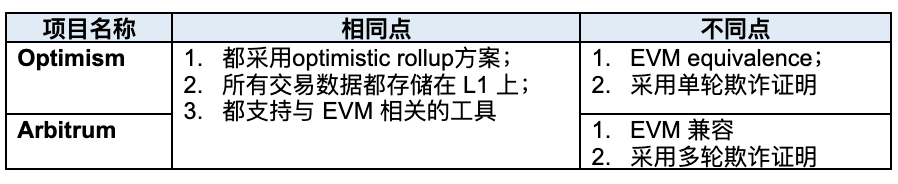
Optimism was created by a group of Ethereum developers, using Optimistic Rollup technology to enable scalable yet secure Layer 2 scaling. However, there are technical differences between Optimism and Arbitrum:
In terms of TVL, Optimism currently ranks second among Layer 2s with $2.6 billion. It hosts 173 protocols and has surpassed 5 million unique addresses.
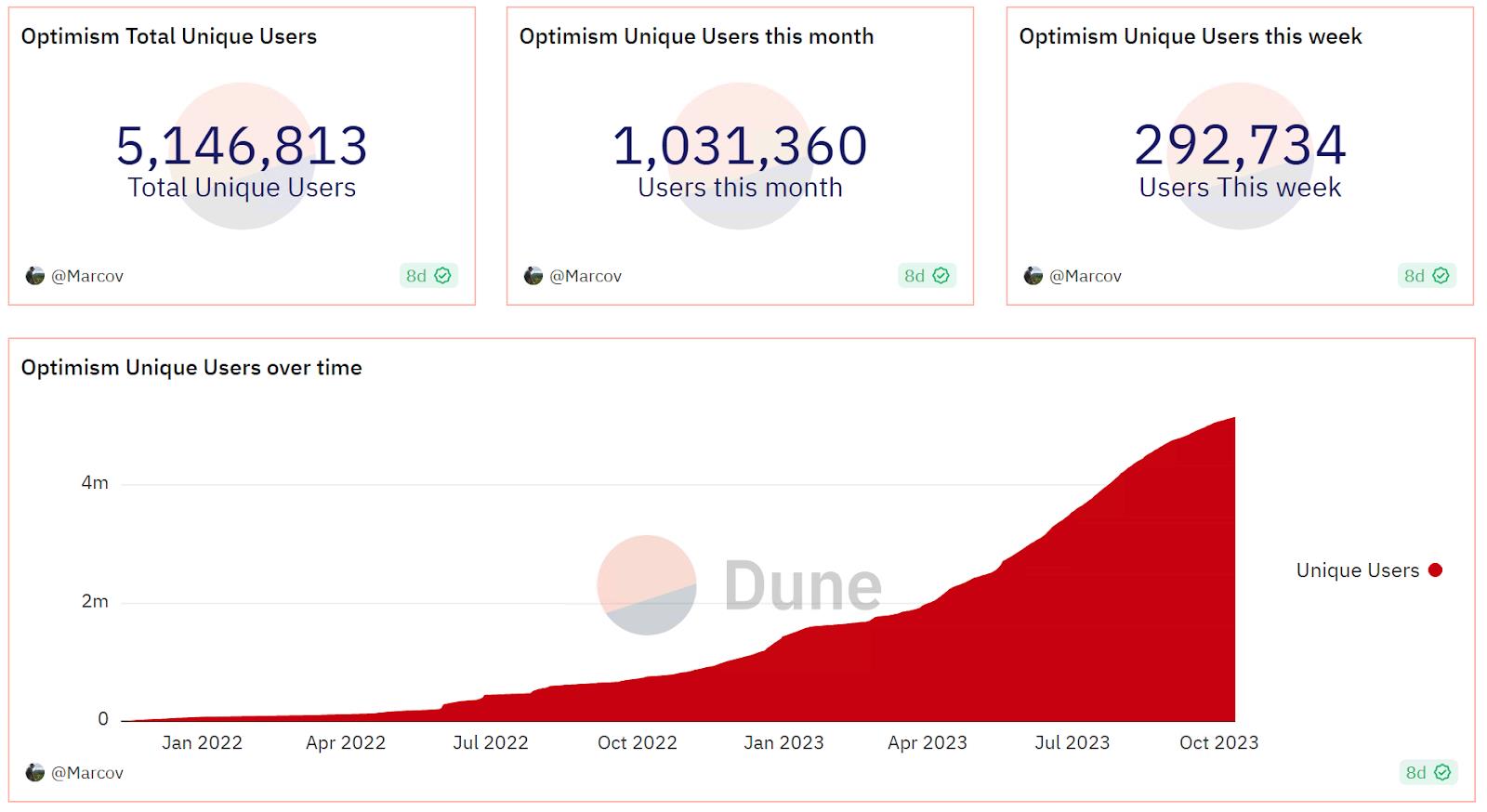 Optimism Unique Users Over Time (Source: Dune, @Marcov)
Optimism Ecosystem Overview
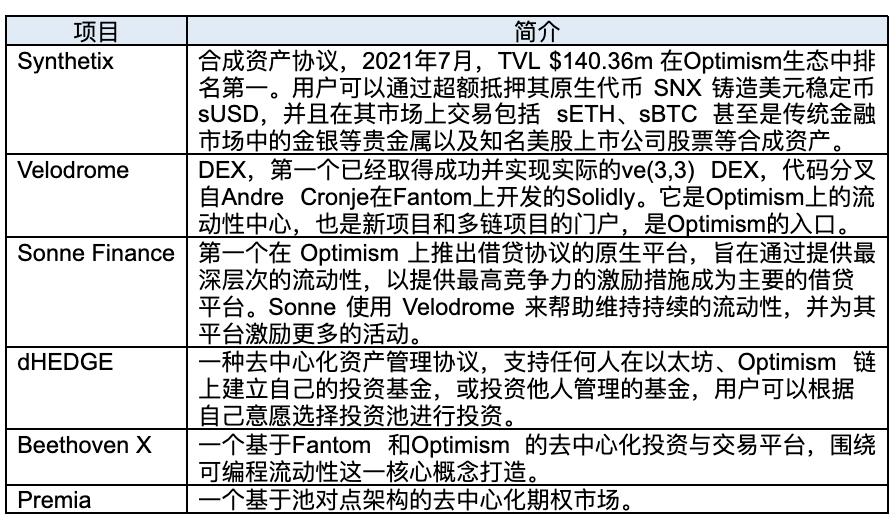
Native projects on Optimism are relatively few, and aside from DeFi, few have gained significant recognition. Only two projects—Synthetix and Velodrome—have locked over $100 million.
2.3 Base
Base is a network announced by Coinbase on February 23 and launched on mainnet in August. Built on OP Stack technology, Base helps Coinbase develop and deploy its own decentralized applications. Combined with Coinbase Wallet and account abstraction via smart contract wallets, Base will allow Coinbase users seamless access to financial services.
Within a month of launch, Base surpassed its Layer 2 competitors and even Ethereum itself in daily transaction volume, exceeding one million on September 14. It now has 2.1 million total users, $548 million in TVL, and over 100 ecosystem projects.
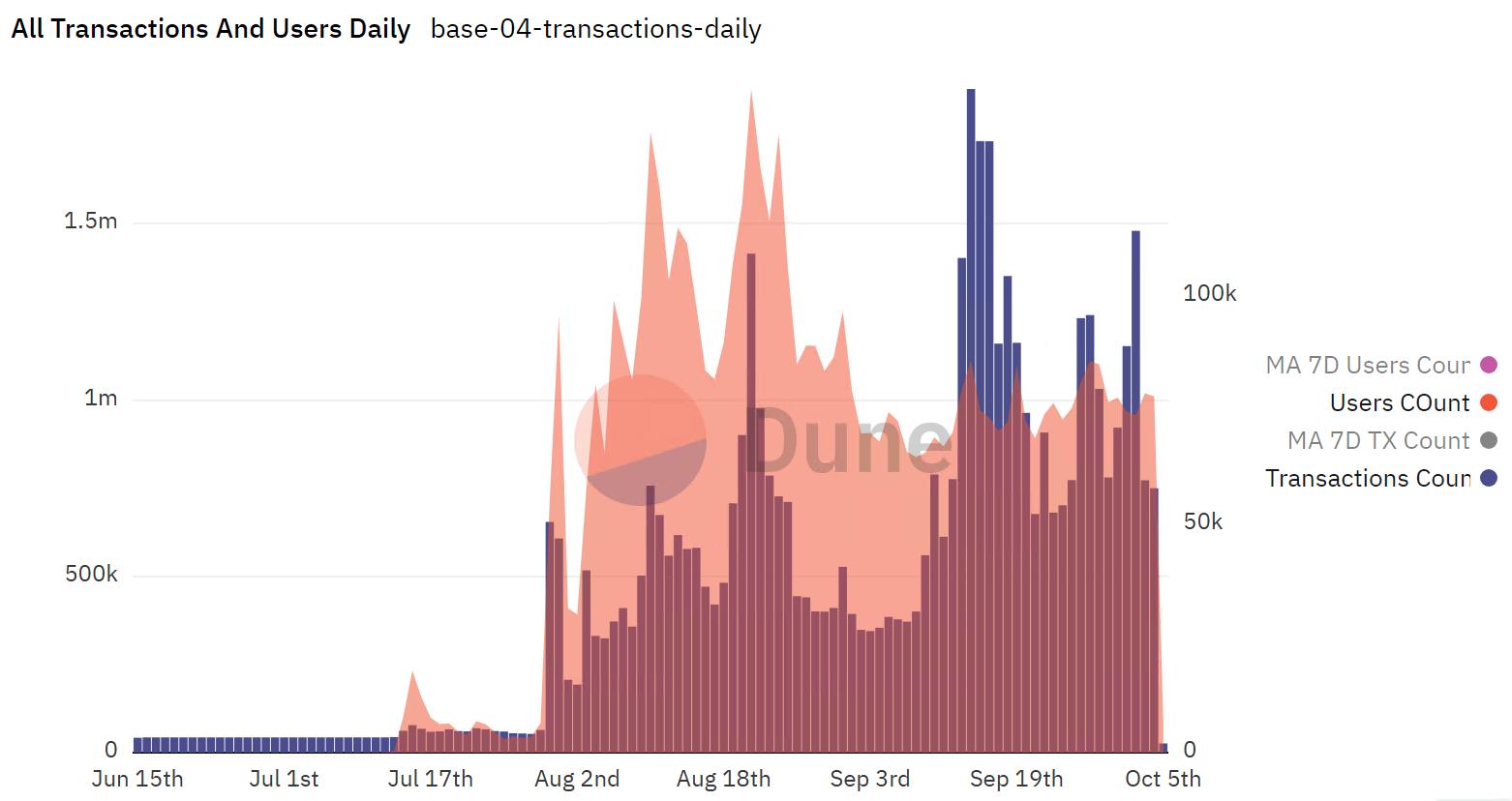
Base Daily Transactions and Users (Source: Dune, @sixdegree)
Base Ecosystem Overview
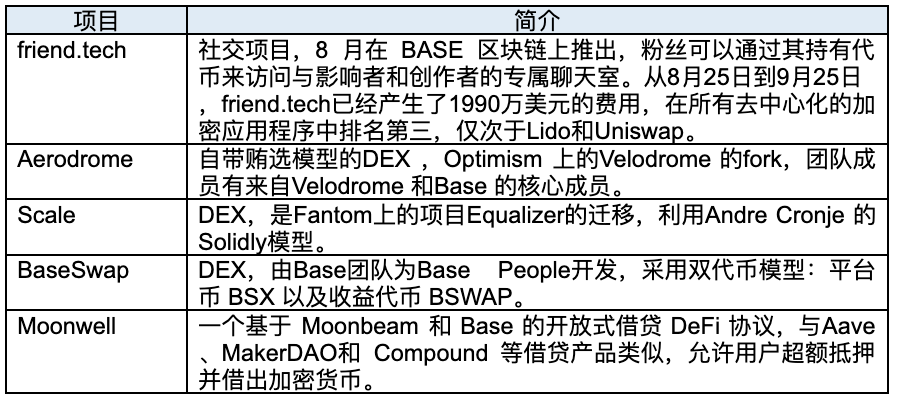
Base’s popularity is largely driven by friend.tech. Other projects are mostly DeFi-focused, many being clones from other chains.
2.4 zkSync Era
Developed by Matter Labs, zkSync uses zero-knowledge proofs to bundle multiple transactions into a single proof, which is then verified on Ethereum. zkSync Lite was version 1.0; zkSync Era is essentially version 2.0. The project has not yet launched its token and is valued around $4 billion.
Currently, zkSync Era’s TVL stands at $428M. According to Dune Analytics, it has reached 1.9 million unique addresses and attracted 1.7 million ETH bridged into the network.
zkSync Ecosystem Overview
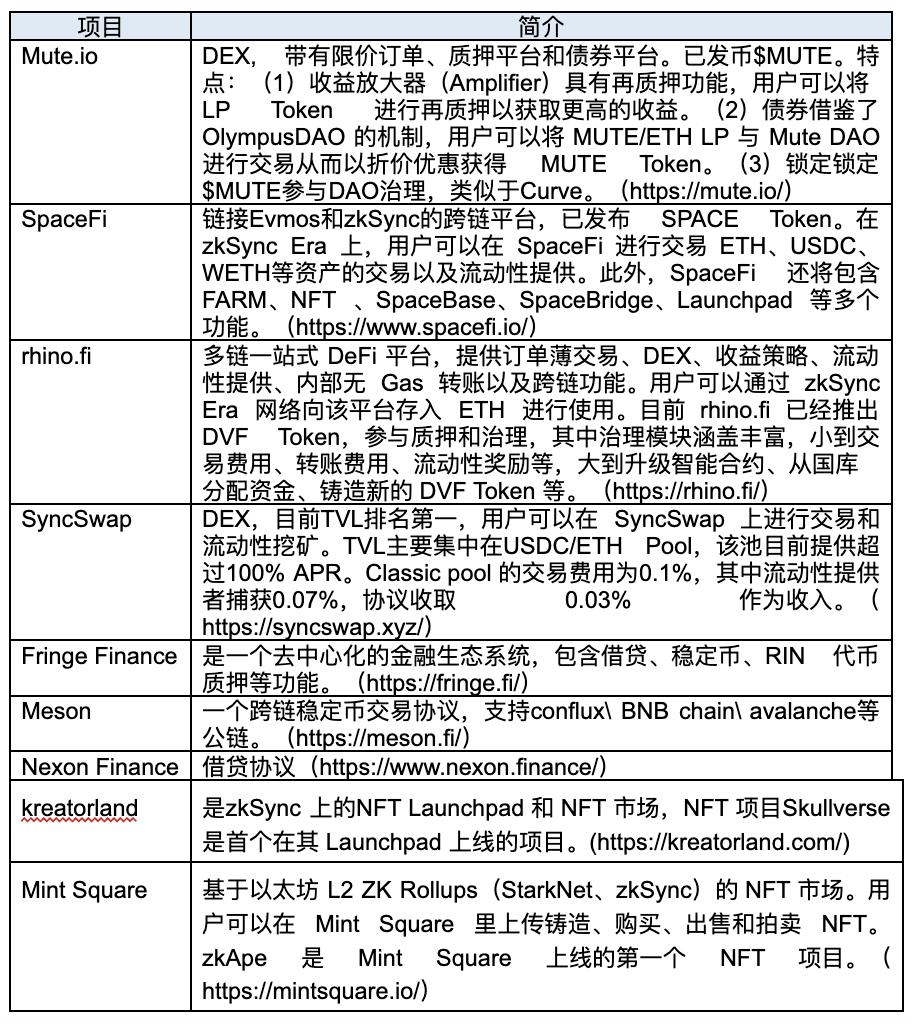
According to DefiLlama, nine DeFi projects are listed, mostly DEXs. Officially launched projects total 34, including wallets, bridges, and NFT platforms, though innovative native projects remain limited compared to OP Stack ecosystems.
2.5 Starknet
StarkNet is a ZK Rollup protocol launched by StarkWare Ltd on Ethereum’s testnet in November 2021. The company specializes in cryptographic proof systems to enhance blockchain scalability and privacy, creating two projects: StarkEx and StarkNet. StarkEx provides dedicated Rollup services for individual apps and officially launched in 2020. Projects built on StarkEx include Sorare, ImmutableX, and dYdX. StarkNet is a general-purpose Rollup supporting arbitrary smart contracts, with over 50 live ecosystem projects. StarkNet’s current TVL is approximately $131 million.
Given StarkWare’s $8 billion valuation, the value of StarkNet’s ecosystem speaks for itself. StarkNet announced deployment of its native token $STRK on Ethereum mainnet on November 16, 2022, used for voting, staking, and fee payments, with token distribution still pending.
Selected Starknet Ecosystem Projects
Thanks to StarkNet’s high throughput and customizability, developers can build innovative, high-performance, tailored dApps. This opens up new possibilities, resulting in novel projects focused on DeFi, NFTs, and gaming.
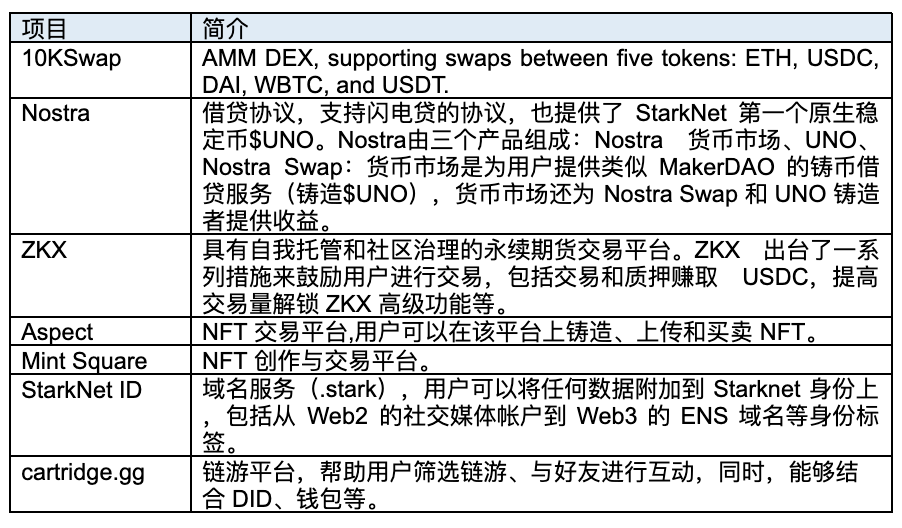
2.6 Others
Beyond the well-known Layer 2 projects, several others deserve attention:
-
Linea: A zk-rollup backed by ConsenSys, now live on mainnet with over 100 projects and $25.5M in TVL.
-
Scroll: Second only to zkSync and StarkNet in zk-rollup热度, recently launched on mainnet. Raised $30M in Series A (April 2022) and $50M in July 2023, valued at $1.8 billion. Scroll aims to build an EVM-compatible zk-Rollup with a team primarily composed of Chinese developers.
-
Polygon zkEVM: A ZK Rollup-based Ethereum Layer 2, formerly Hermez Network, acquired by Polygon for $250 million. Beta mainnet is live with $54.93 million in TVL.
-
Loopring: Supports DEX protocols based on StarkWare. Unlike public networks, external developers cannot build general-purpose protocols on Loopring—they can only use Loopring’s API. Also, because Loopring focuses on building its own products, the protocol functions as a collective rather than just a network.
-
Immutable X: Built on Starkware, tailored for NFT and gaming ecosystems
-
Aztec: Privacy-focused, invented the PLONK proof system
-
Kakarot: Launched in October 2022, a community-driven project written in Cairo and powered by ZK-STARK proofs. Enables developers to deploy EVM applications and allows end-users to interact with them using familiar toolchains.
-
Taiko: Describes itself as a “fully decentralized, Ethereum-equivalent zk-rollup.” Currently in testnet. Taiko accurately replicates all Ethereum behaviors, using the same hash functions, gas pricing, and cryptography. Type 1 ZK-EVMs require long proof generation times, so withdrawing ETH from Taiko L2 back to Ethereum L1 takes several hours.
Additionally, multiple Layer 2 app-specific chains are built on StarkEx, including Sorare, rhino.fi, ApeX, and dYdX. In these setups, data is sent as calldata to Ethereum and published on-chain. In Validium mode, data is stored off-chain, with only hashes stored on-chain. While Rollup mode ensures higher security (users can reconstruct ledger state by interacting solely with Ethereum), Validium offers lower costs and greater privacy.
3. OP vs ZK
Layer 2 projects launched their mainnets this year amid fierce competition. Debate continues over whether Optimistic Rollup or zk Rollup is superior. While ZK Rollups theoretically offer better performance, faster finality, and stronger security, Optimistic Rollups provide better compatibility and lower entry barriers. Moreover, in terms of data performance, Optimistic Rollups hold a first-mover advantage. Therefore, both solutions will coexist in the medium to long term. Below is a comprehensive comparison from technical, user experience, and ecosystem development perspectives.
3.1 Technical Comparison
-
Operating Principle
Optimistic Rollup uses a sidechain connected to the mainnet to process off-chain transactions. The sidechain handles computation and validation, periodically sending state summaries to the mainnet. Under the “optimistic” assumption, all transactions are considered valid unless fraud is detected and challenged.
ZK Rollups batch multiple transactions for execution on the main chain. After processing, operators submit state change summaries along with validity proofs—zero-knowledge proofs (ZKPs)—to confirm correctness without revealing underlying data.
-
Validity Proofs
In Optimistic Rollup, transactions are initially assumed valid and only challenged if fraudulent. Fraud proofs are used to dispute invalid transactions, relying on game-theoretic incentives for security.
In ZK Rollup, transactions are validated via zero-knowledge proofs—cryptographic protocols that verify computation correctness without exposing inputs or outputs. This ensures off-chain processing with strong security and privacy guarantees. Mathematical proofs ensure accuracy in ZK Rollup validity verification.
-
Transaction Finality
Optimistic Rollups require users to wait through a challenge period before withdrawing funds, typically lasting seven days. In contrast, ZK Rollups allow immediate withdrawals upon proof validation, eliminating waiting periods.
3.2 Cost Comparison
Theoretically, Rollups can aggregate hundreds of transactions into a single Layer 1 transaction, reducing gas costs by orders of magnitude. From a user perspective, low fees and fast confirmation are top priorities. Optimistic Rollups publish minimal data and do not require proofs unless challenged, resulting in lower operational costs and potentially better cost efficiency. In contrast, ZK Rollups incur higher overhead due to the computational cost of generating and verifying proofs for each batch. Additionally, creating ZKPs requires high-end hardware, and on-chain verification costs are more expensive.
In practice, gas fees vary across solutions. According to L2Fees.info on October 19, sending ETH on Ethereum mainnet costs ~$0.46, and swaps cost ~$2.31. On Layer 2s, ETH transfers generally cost under $0.02.
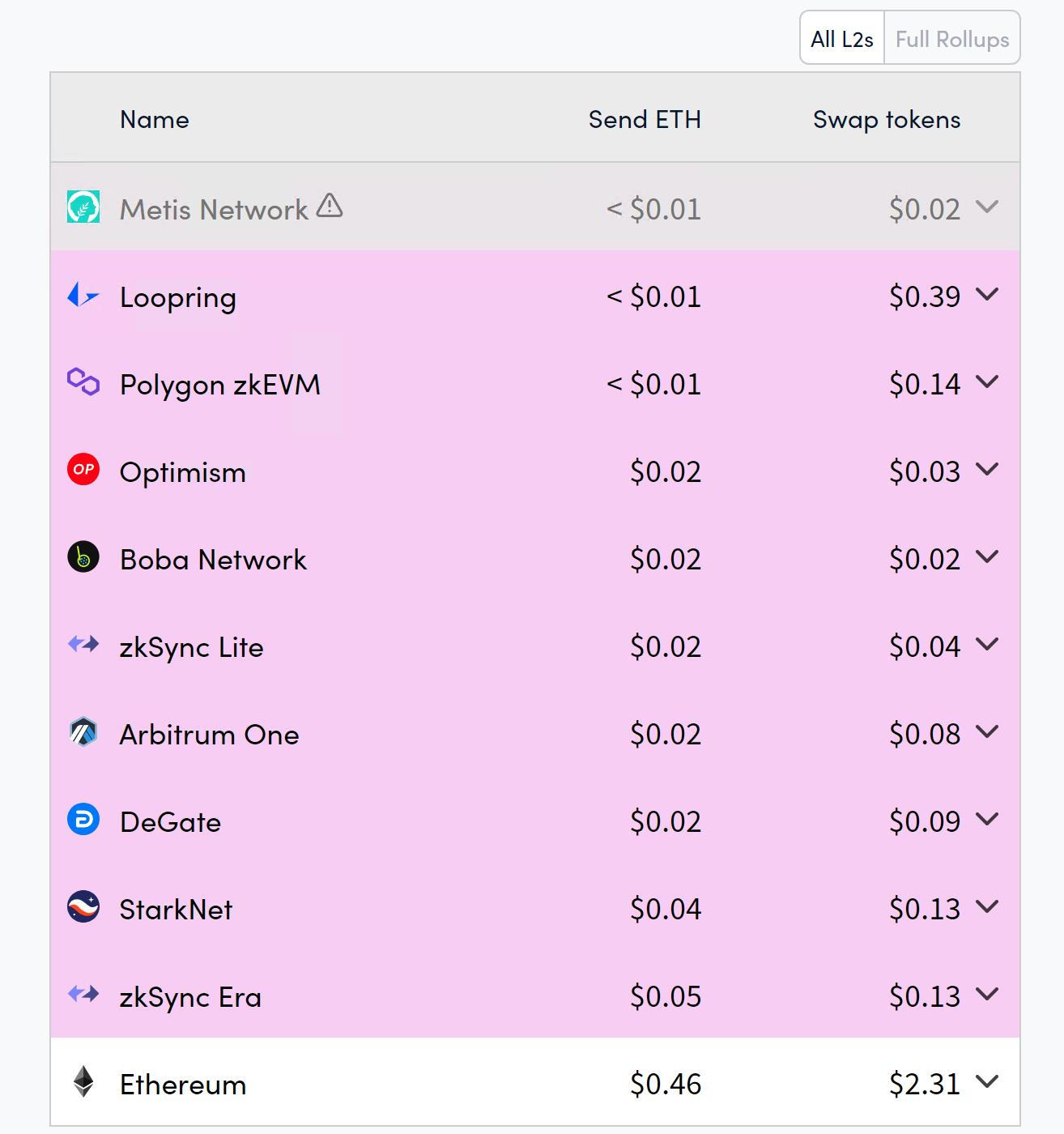
Layer 2 Fees (Source: l2fees.info)
3.3 Ecosystem Development
zk Rollups are strong competitors to OP-based rollups, but due to higher technical barriers, they lag significantly in product launches and ecosystem growth. Arbitrum and Optimism benefit from early mover advantages—earlier launches, more funding, partnerships, and a larger number of projects, including native ones. In 2023, many ZK projects launched mainnets, signaling maturing technology. However, the top five TVL projects in zk Rollup ecosystems are mostly DEXs, severely lacking innovative native projects in areas like gaming and social.
4. New Narrative: Rollup as a Service (RaaS)
As dapps grow and expand into new domains—especially DeFi and gaming—operating as standalone applications no longer meets demands for user experience and profitability. These projects need high-performance, customizable infrastructure to handle massive traffic. Many are adopting app chain models, such as dYdX. App chains became a hot topic in 2022, allowing projects to customize blockchains for specific use cases, enabling dapps to exclusively access chain resources while maintaining interoperability, achieving lower operating costs and higher performance for better user experiences.
For such dapps, options include building a dedicated chain using Cosmos SDK, becoming a subchain of BNB Chain or Avalanche, or launching a Layer 2 chain. A Layer 2 allows access to Ethereum’s vast user base and strong interoperability with existing successful Layer 2 ecosystems. To enable rapid deployment of custom Layer 2 chains, Rollup-as-a-Service (RaaS) emerged—now a battleground for leading Layer 2 projects.
Projects like Optimism, Arbitrum, and zkSync are extending their Layer 2 tech stacks by offering modular frameworks to serve diverse deployment needs and expand their ecosystems—building what could be called “superchains.” The first to break through is Optimism’s OP Stack.
4.1 The Superchain War Ignited by OP Stack
OP Stack, developed by Optimism’s team, is a modular stack designed for highly scalable and interoperable blockchains. It decouples functional layers and combines them into an API-based software stack. Maintained by the op collective organization, OP Stack allows anyone to build their own Layer 2 blockchain on Ethereum using Optimistic Rollup.
Key features of OP Stack:
-
Creates a shared, standardized open-source codebase;
-
Simplifies modular blockchain construction, enabling rapid deployment using pre-built components;
-
Allows developers to abstract blockchain components and modify them by plugging in different modules (e.g., switching from OP Rollup to ZK Rollup).
Layer 2 projects built on OP Stack form a superchain ecosystem. Currently, 19 projects have joined or plan to join, spanning exchanges, public chains, clients, NFTs, gaming, and derivatives. Notable members include opBNB, Zora, Base, Worldcoin, and DeBank. The superchain ecosystem offers these attributes and benefits:
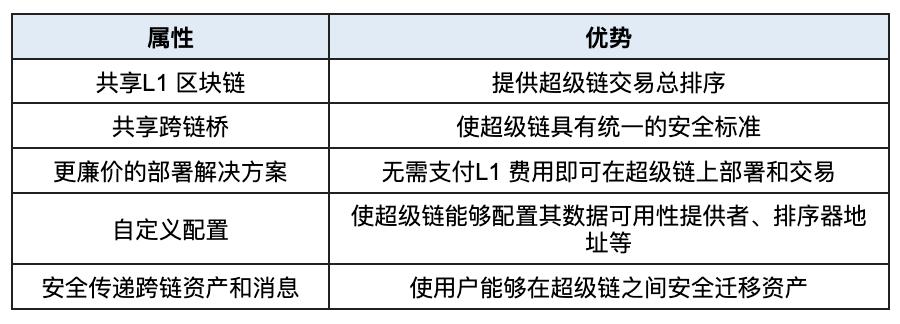
OP Stack unlocks greater potential for Optimism. For example, Base alone contributes an estimated $4.5 million annually to the OP treasury. Base pays 2.5% of its generated fees to the Optimism Collective and adheres to the “superchain” standard, paving the way for future interoperability. In return, Base gains governance rights as part of the Optimism Collective.
4.2 Arbitrum Orbit & ZK Stack
Arbitrum Orbit & L3: The Orbit development framework enables creation and deployment of L3 chains on Arbitrum. L3 Rollups, also known as app chains, play a crucial role in settling transactions to Arbitrum. They represent the next stage of Arbitrum’s scaling journey. Orbit is designed to be compatible with the upcoming Arbitrum Stylus upgrade, enabling developers to build dApps in C, C++, and Rust—expanding Arbitrum’s versatility and reach.
ZK Stack: On June 26, zkSync announced ZK Stack—a modular, open-source framework for building customized zkRollups—giving developers full autonomy over data availability modes and enabling token-based decentralized sequencers. Expected to launch by year-end.
Among existing RaaS offerings, most are based on Optimistic Rollup, primarily because:
-
Ecosystem comes first. OP-based RaaS offers better compatibility, significantly lowering migration and development barriers, enabling faster deployment and richer ecosystems with first-mover advantage.
-
Lower threshold, no heavy compute dependency. OP-based RaaS verifies transactions via fraud detection, requiring less machine power and reserve capacity—critical for providers unable to afford high-compute ZK proof generation.
-
Easier to scale. OP-based RaaS has lower development hurdles. Unlike ZK RaaS, which prioritizes performance and deep customization requiring provider involvement, OP-based solutions are simpler. Also, limited by ZKP generation capacity, ZK RaaS cannot be deployed at scale like Optimism-based RaaS.
While OP-based RaaS clearly leads in ecosystem development, ZK-based RaaS holds advantages in performance and security. In the short term, OP-based RaaS dominance is unshaken. But from a long-term value creation perspective, ZK-based RaaS may capture a larger market share in the future.
5. Challenges and Opportunities
Arbitrum’s airdrop ignited Layer 2 enthusiasm, but behind the FOMO lies a series of issues:
-
Overzealous speculation overshadows actual project development and technological progress. Compared to AI, the wealth-generation effect in crypto is too pronounced, causing users to miss out on experiencing real technological advancements—ultimately detrimental to industry growth;
-
Despite the bear market, capital battles and mutual extraction intensify;
-
Expectations for Layer 2 far exceed those for new public chains. With massive capital concentrated in the Ethereum ecosystem, the narrative and opportunity have clearly shifted to Layer 2.
Many Layer 2 projects have yet to issue tokens, meaning their wealth-generation potential may continue into the next bull run, sustaining investor and user interest. However, some projects remain experimental, and Layer 2 still faces risks:
-
Centralization Risk: Most scaling solutions are in early stages of decentralization. Layer 2 sacrifices some decentralization by processing transactions and data off-chain, relying on sequencers to bundle and submit transactions. Currently, a single entity often runs the sequencer, posing centralization risks. Arbitrum once experienced a sequencer outage causing widespread downtime.
-
Liquidity Fragmentation: This issue exists across both Layer 1 and Layer 2. As Layer 2 projects multiply and adopt different scaling approaches, composability between dApps is limited, fragmenting liquidity across Ethereum and various Layer 2s, increasing liquidity costs for projects.
-
Ecosystem Limitations: Layer 2s theoretically support tens of thousands of TPS, but actual usage peaks around 30. Current applications don’t require such high throughput. Layer 2 lacks a breakout application capable of fully leveraging its infrastructure capabilities.
Future Trends
-
Data Availability Trends: All current zk rollup projects use hybrid models for data storage (data availability), offering both on-chain (Rollup) and off-chain (Validium) versions. Emerging infrastructure like Celestia offers more decentralized data availability and may become the preferred choice for Layer 2.
-
Decentralized Sequencers: Decentralizing sequencers is key to improving Layer 2 security and fairness. Projects like Espresso, Astria, and Radius are developing shared sequencer solutions.
-
Implementation of EIP-4844 and danksharding will further reduce L2 rollup costs, accelerating adoption.
-
Interoperability Protocols will see growing demand to maintain composability and liquidity across the Ethereum ecosystem.
About HTX Ventures
HTX Ventures is the global investment arm of HTX (formerly Huobi), integrating investments, incubation, and research to identify the world’s most outstanding and promising teams. As a 10-year industry pioneer, HTX Ventures explores, reveals, and supports cutting-edge technologies and emerging business models, providing funding, resources, and strategic consulting to help grow the blockchain ecosystem.
Join TechFlow official community to stay tuned
Telegram:https://t.me/TechFlowDaily
X (Twitter):https://x.com/TechFlowPost
X (Twitter) EN:https://x.com/BlockFlow_News
 @Ventures_HTX