
Traditional financial institutions are increasingly moving into deposit tokenization—could asset tokenization ignite the next bull market?
TechFlow Selected TechFlow Selected
Traditional financial institutions are increasingly moving into deposit tokenization—could asset tokenization ignite the next bull market?
Besides BlackRock, what moves have other financial giants made?
 Navigating Web3 tides with focused insights
Author: Wang Jun, Co-founder of inpower
Recently, BlackRock's spot Bitcoin ETF has attracted sustained market attention. As I'm currently preparing content on mainstream institutional participation in asset tokenization, let me jump on this trend~
There are already numerous articles about BlackRock’s spot Bitcoin ETF, so I won’t repeat them here~
In my previous article on fund tokenization, I outlined three potential steps:
-
Incorporate on-chain assets into traditional fund structures
-
Move intermediary fund services onto the blockchain
-
Establish a secondary market for tokenized funds
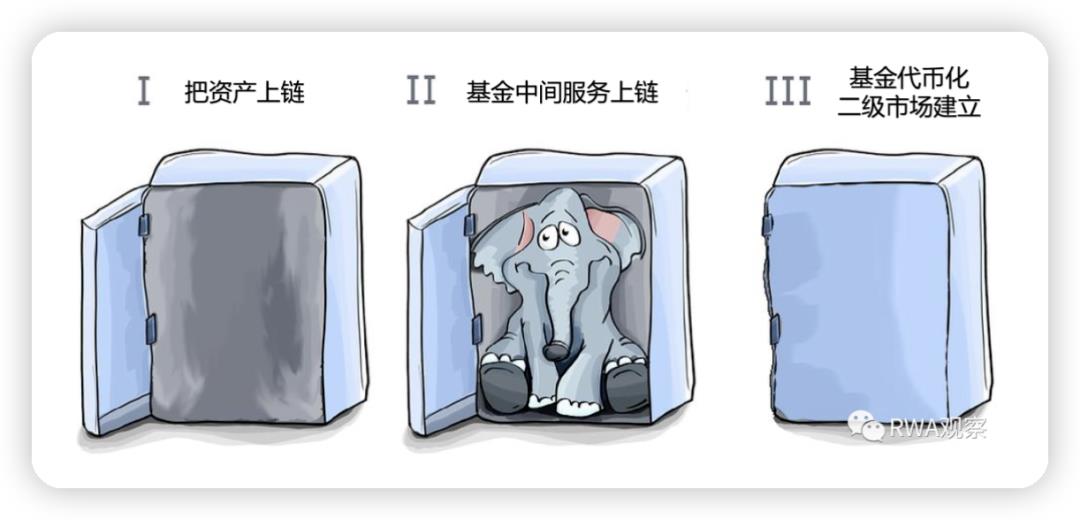
As Bitcoin is a natively on-chain asset, it's possible that after the approval of the spot Bitcoin ETF, other on-chain assets (cryptocurrencies) may follow a similar path into traditional financial markets.
BlackRock, an asset management giant with over ten trillion dollars in AUM (yes, ten times the current global crypto market cap), has had its CEO Larry Fink publicly state since late last year: "The next generation of markets, the next generation of securities, will be tokenized securities."
In fact, traditional finance has long been preparing for asset tokenization, which will bring vast amounts of assets and capital into future markets.
01 Legacy Financial Institutions Are Embracing Deposit Tokenization
JPMorgan: We’re the First On-Chain Institutional Service Provider
JPMorgan began experimenting internally with blockchain technology as early as 2015, launching an asset management platform called Onyx. It has reportedly processed around one trillion dollars in transactions to date, with even Goldman Sachs as a client.
JPMorgan also issued a token called JPM Coin, a deposit-backed digital token used internally. This model is likely to be followed by other banks. However, regulatory hurdles have delayed its official public launch.
Last year, JPMorgan also filed a trademark for a “J.P. Morgan Wallet,” setting a benchmark for traditional financial institutions.

Citigroup: Our Tokenization Services Are Catching Up
In mid-September this year, Citigroup launched its proprietary tokenization service, allowing clients to convert deposits into digital tokens (essentially deposit tokens).
Like JPMorgan, Citigroup currently serves only institutional clients, primarily addressing longstanding challenges such as cross-border payments and automated trade finance.
This time, Citi’s solution may go deeper into industry applications, partnering with shipping giant Maersk to streamline canal toll payments.
International shipping differs significantly from highway tolls—international payments can take days to settle. Tokenization can dramatically reduce settlement time and eliminate fees associated with bank guarantees and letters of credit.
UBS: We’ve Launched a Tokenized Money Market Fund
Earlier this October, UBS Asset Management unveiled a pilot application: a tokenized money market fund built on Ethereum.
Internet users are very familiar with money market funds—the underlying product behind Yu’ebao, which ignited internet finance in China, was a money market fund provided by Tianhong Asset Management.
This application is directly led by UBS’s tokenization platform, its official digital asset platform, compliant under Singapore’s regulatory framework.
A tokenized money market fund is essentially equivalent to a deposit token.
Banks: If CBDCs Don’t Come Out Soon, We’ll Launch Deposit Tokens Ourselves
If central bank digital currencies (CBDCs) from sovereign authorities continue to be delayed, traditional institutions’ deposit tokens might effectively serve the same role.
After all, in the real world, most people’s deposits are just entries on commercial bank ledgers—not direct claims on central bank M1 money.
Industry leader JPMorgan estimates that benefits typically attributed to CBDCs—such as reduced settlement costs and time, and lower counterparty risk—can also be achieved through deposit tokens.
The general process looks like this:
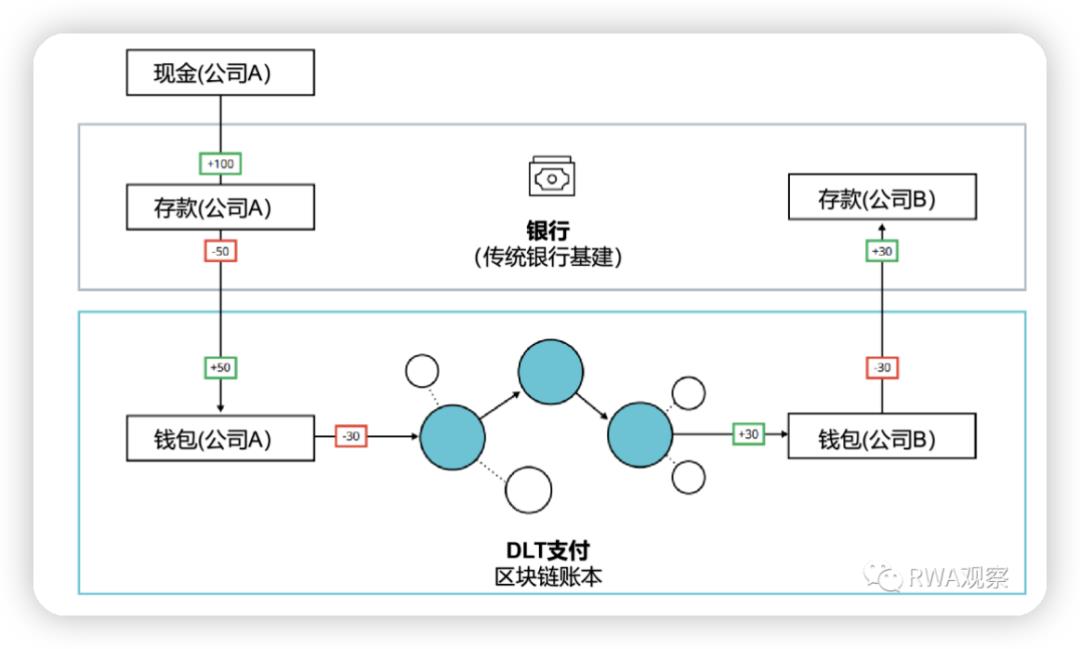
As you can see, there’s currently a missing piece—the DLT-based payment layer between institutions.
Indeed, most banks’ deposit tokens today operate only within their own closed networks.
To enable direct interbank settlement of deposit tokens, participation from additional major players will be required.
02 Undercurrents in Settlement Infrastructure
Federal Reserve: Join Our Network for Settlement?
In July, the prestigious Federal Reserve (specifically, the New York Innovation Center under the Fed) entered the arena by proposing a concept called RLN (Regulated Liability Network).
This framework enables real-time cross-border settlement of multiple asset types within the U.S. regulatory environment.
With the Fed taking direct action, several institutions quickly joined:
SWIFT, BNY Mellon, Citigroup, HSBC, Mastercard, PNC Bank, TD Bank, Truist Bank, U.S. Bancorp, and Wells Fargo.

SWIFT: Keep Using Us—we Can Be a Node
Traditional banks rely on SWIFT for cross-border settlements.
Cryptocurrencies often claim they will disrupt SWIFT.
But SWIFT isn’t standing still.
At the end of August, SWIFT launched a project enabling it to remain a core node in future interbank transfers of tokenized assets.
For this initiative, SWIFT brought on several partners, some overlapping with the Fed’s group:
ANZ (Australia and New Zealand Banking Group), BNP Paribas, BNY Mellon, Citigroup, two European clearing giants Clearstream and Euroclear, Nordea, SIX Digital Exchange (SDX), and DTCC (Depository Trust & Clearing Corporation—the same institution where BlackRock’s ETF was listed today).
Chainlink: Use My Cross-Chain Solution
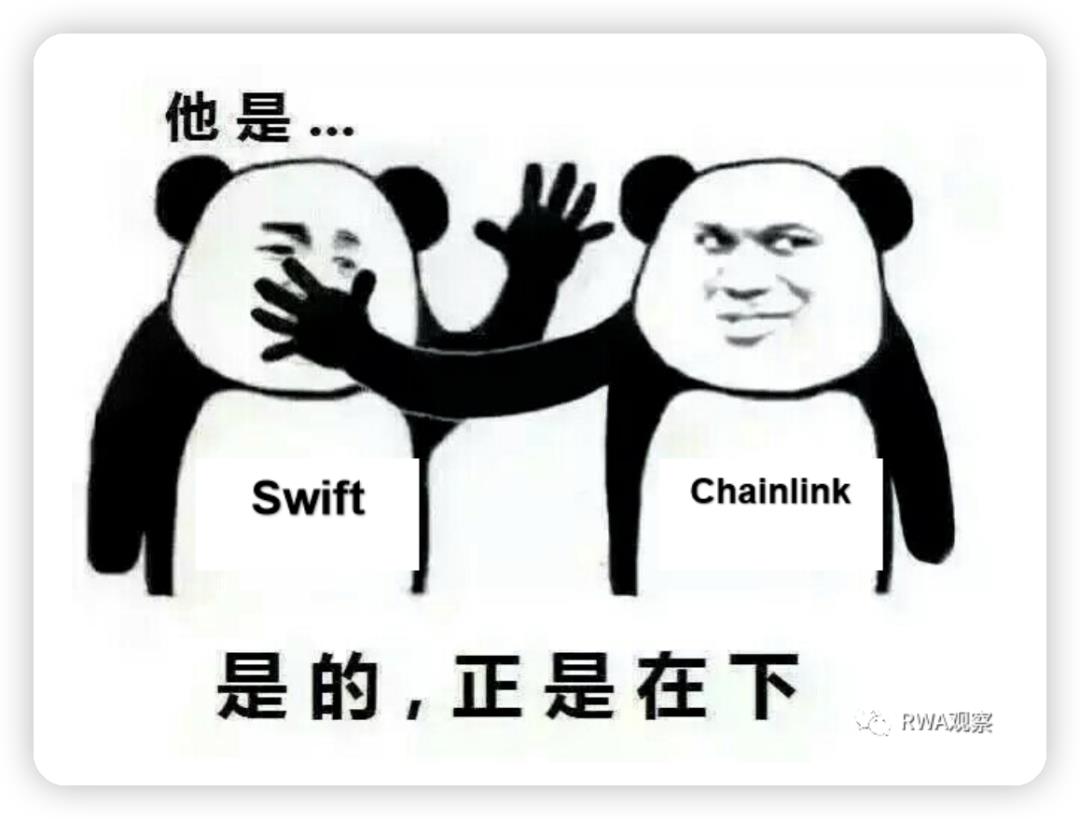
Under SWIFT’s proposed framework, each bank maintains its own private chain for onboarding original assets (which aligns with what major institutions are already doing). Then, Chainlink provides an enterprise abstraction layer (its now-famous CCIP) to map these assets cross-chain onto Ethereum’s Sepolia testnet.
If this solution gains broad adoption, who stands to benefit the most?
03 Traditional Exchanges Won’t Deliver in the Short Term
Nasdaq: Our Custody Solution Is Paused
While other financial institutions accelerate their moves, Nasdaq announced in July this year that it was pausing its digital asset custody solution.
Nasdaq first proposed this plan back in 2018. The official reason given for the pause was “regulatory uncertainty.”
Meanwhile, various spot Bitcoin ETF applicants are adopting Coinbase’s custodial solution. Given that both Coinbase and the upcoming ETFs will list on Nasdaq, this may simply be an effort to avoid conflicts of interest?
LSE: We’re Still in Discussions
The London Stock Exchange has also indicated it is preparing a new digital asset trading market, to be built on blockchain technology and operated as a separate entity from the LSE itself.
Current progress? Still in discussions with the UK government and regulators.
HKEX: I’m Following Closely~
Hong Kong has actually taken relatively bold policy steps to keep pace.
By the end of 2022, it opened the door to cryptocurrency ETFs, with CSOP and Harvest launching Bitcoin and Ethereum futures ETFs respectively. However, these futures ETFs are ultimately linked to futures contracts traded on the Chicago Mercantile Exchange (CME) in the U.S.
Now that the U.S. has approved spot Bitcoin ETFs, Hong Kong is highly likely to follow suit.
04 Could Asset Tokenization Trigger the Next Bull Run?
These are legacy financial titans—well aware of the importance of fully compliant asset tokenization (some of them are even part of the regulatory system).
In finance, virtually any asset can be tokenized.
But judging by current trends, deposit tokenization appears closest to large-scale real-world adoption—and regulators and lawmakers lack effective arguments to stop it.
U.S. legislative attitudes are also shifting positively—recently, PayPal’s stablecoin launch received support from the House Financial Services Committee. If solutions like JPMorgan’s deposit tokens get the green light, the volume of assets eligible for on-chain use could grow exponentially.

Join TechFlow official community to stay tuned
Telegram:https://t.me/TechFlowDaily
X (Twitter):https://x.com/TechFlowPost
X (Twitter) EN:https://x.com/BlockFlow_News
 @demir9527