The Rise and Fall of OPNX — From Bankruptcy Alliance to 100x Gains
TechFlow Selected TechFlow Selected
The Rise and Fall of OPNX — From Bankruptcy Alliance to 100x Gains
OPNX is the most comprehensive platform in the debt trading sector in terms of product design, but the trading volume of tokenized debt remains extremely low. OPNX's core focus on debt trading faces significant challenges and awaits a breakthrough.
 Navigating Web3 tides with focused insights
Author: Lisa, LD Capital
OPNX, originally named GTX, is a cryptocurrency exchange co-founded by Su Zhu and Kyle Davies of Three Arrows Capital (3AC) and Mark Lamb, co-founder of CoinFLEX. It supports bankruptcy claims, spot, and derivatives trading, aiming to streamline the claims process and build a public market for claim trading to unlock trapped capital. OPNX tokenizes bankruptcy claims for trading on an order book platform and allows these claims to be used as collateral in derivative contracts.
1. Timeline of Development
June 2022: Crypto derivatives exchange CoinFLEX announced it was suspending withdrawals due to a liquidity crisis.
July 2022: CoinFLEX proposed a user compensation plan, including issuing rvUSD (Recovery Value USD) representing the value of debts owed, distributing CoinFLEX equity and locked FLEX tokens to users, and further allocation of existing funds. The current displayed price of rvUSD on OPNX is $0.15, with no trading volume since August.
August 2022: CoinFLEX filed for restructuring in Seychelles courts. The restructuring plan passed with nearly 99% approval, granting creditors 65% ownership of the company, 15% to the CoinFLEX team, while Series B investors retained their stakes in the restructured entity.
January 16, 2023: The Block reported that Su Zhu and Kyle Davies were collaborating with CoinFLEX to raise $25 million for a new crypto exchange called GTX.
March 7, 2023: @DefiIgnas tweeted that GTX had completed its $25 million fundraising round—a claim later retweeted and confirmed by Su Zhu. In the same thread, @DefiIgnas stated that OPNX would acquire all assets of CoinFLEX, including personnel, technology, and tokens; FLEX would become their primary token; and there might be a rebranding similar to AAVE/LEND.
March 9, 2023: GTX was renamed Open Exchange (OPNX).
April 4, 2023: Open Exchange (OPNX) officially launched, supporting crypto spot and derivatives trading. On its first day, only two trades occurred, totaling just $1.26 in volume.
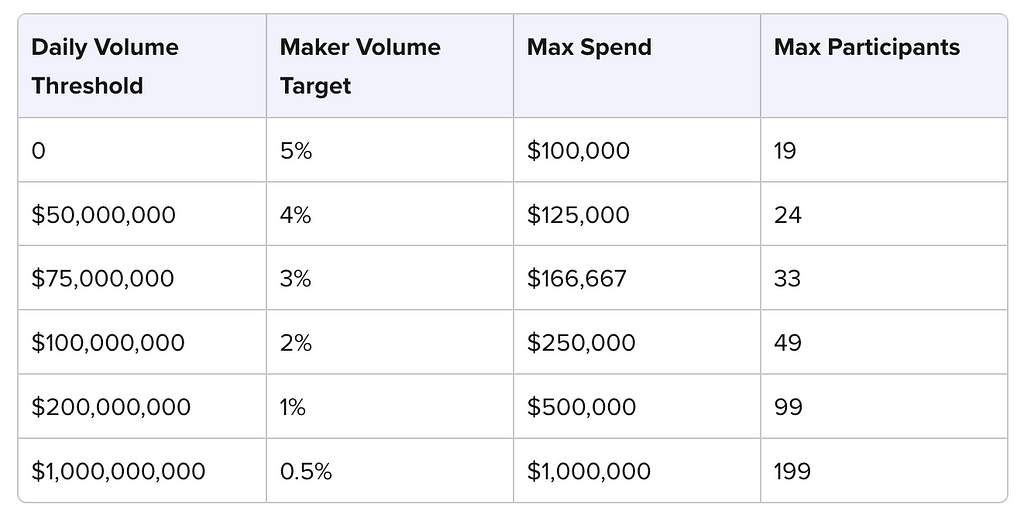
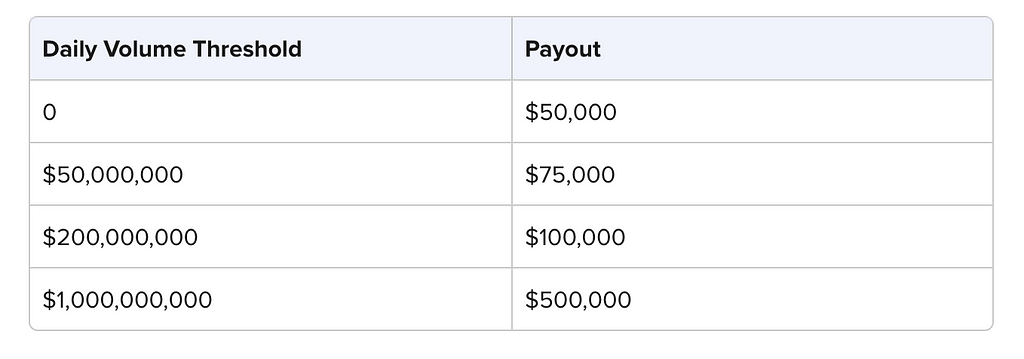
April 8, 2023: Open Exchange (OPNX) announced a Market Maker Program to incentivize liquidity provision through two main mechanisms:
First, up to 200 VIP market makers can receive monthly subsidies of $5,000;
Second, monthly incentives ranging from $50,000 to $500,000 based on trading volume.
April 21, 2023: OPNX tweeted that its investors included AppWorks, Susquehanna (SIG), DRW, MIAX Group, China Merchant Bank International (CMBI), Token Bay Capital, Nascent, Tuwaiq Limited, among others. However, the next day, DRW, Nascent, MIAX, and Susquehanna (SIG) all denied investing in OPNX. AppWorks clarified via Twitter that it did not directly invest funds into OPNX but rather had its CoinFLEX equity passively transferred into OPNX. It is reasonable to infer that these entities were original CoinFLEX investors whose stakes were automatically converted into OPNX shares post-restructuring—thus being misleadingly portrayed as strategic investors in a new project.
May 2, 2023: Open Exchange (OPNX) announced a partnership with real-world asset (RWA) tokenization service provider Heimdall to launch a claims trading market. Heimdall will manage verification, transfer, and tokenization of real-world assets for OPNX users. Verified claims will be transferred and held in dedicated special purpose vehicles (SPVs) per platform, and tokens representing proportional ownership of claims within each SPV will be issued and credited to claimants’ accounts.
June 1, 2023: Open Exchange (OPNX) launched its governance token OX and corresponding governance platform, The Herd. Users can stake OX for durations of 2 weeks, 1 month, 3 months, 6 months, or 1 year. Similar to Curve, longer staking periods yield more voteOX, increasing voting power proportionally.
June 4, 2023: OPNX announced the launch of its claims trading functionality.
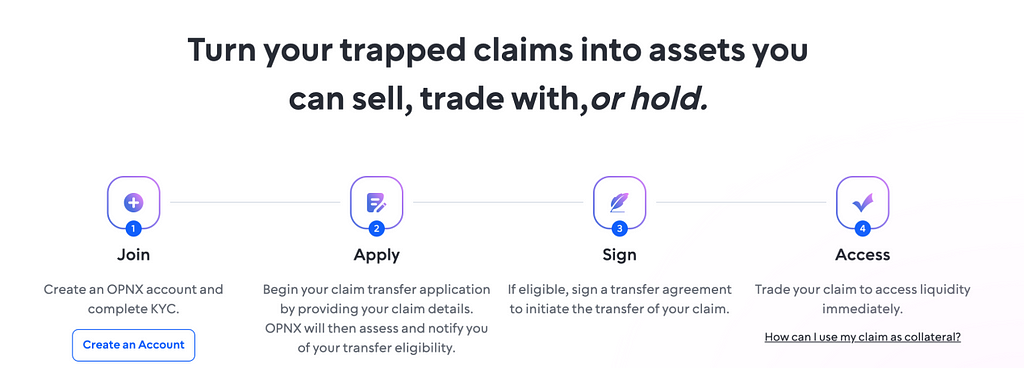
According to OPNX's operational guide, tokenizing claims for trading involves three steps:
1. Create an OPNX account and complete KYC
2. Provide detailed claim information and submit a claim transfer request
3. Sign the Claim Transfer Consent Form
After completing these steps, users may trade claim tokens on OPNX.
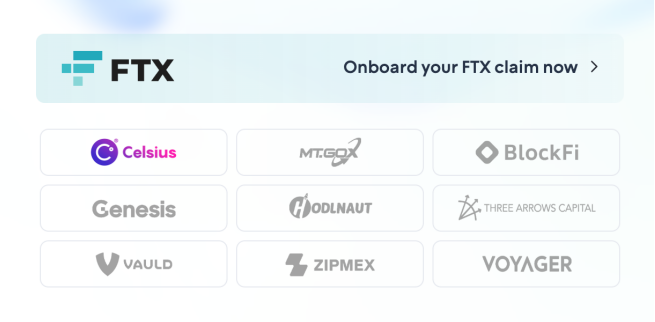
Currently, OPNX has listed bond trading for Celsius and FTX, but trading volume remains minimal.
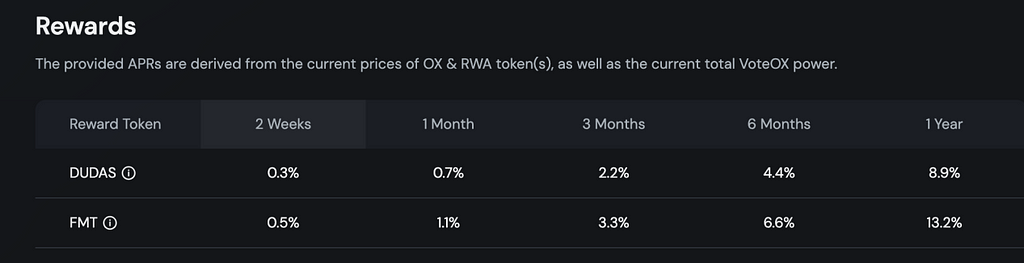
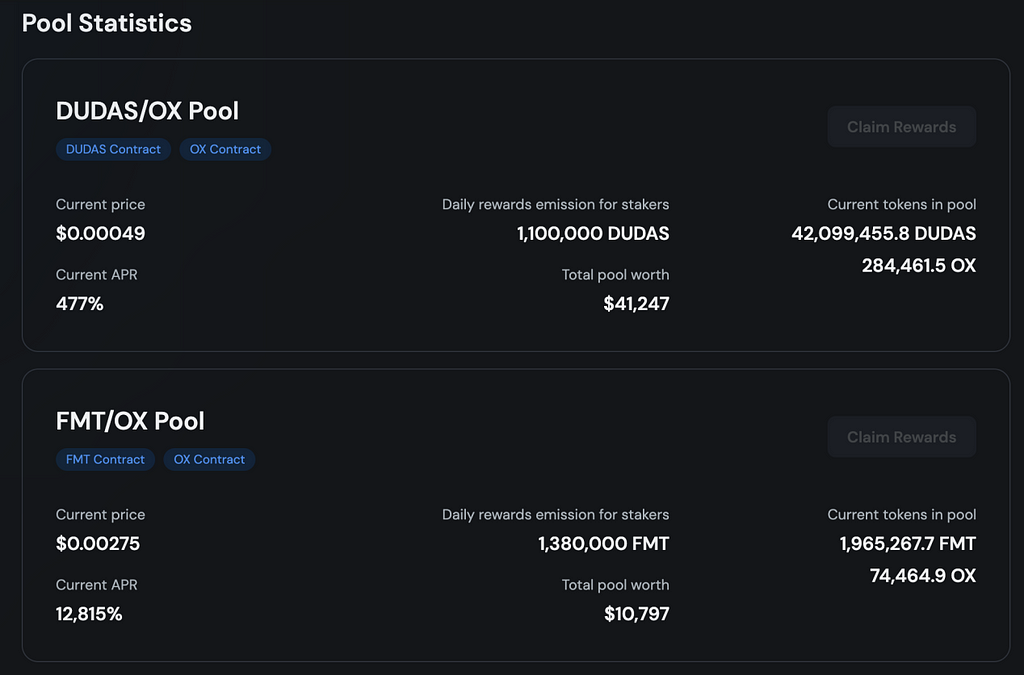
June 12, 2023: OPNX launched Justice Tokens—series of tokens issued based on certain risk events. Each token has a total supply of 1 billion, with 75% distributed over six months to OX stakers, 20% to JT-OX liquidity providers, and 5% to the Milady community. The whitepaper explicitly states that Justice Tokens are meme tokens with no intrinsic value, no underlying backing, and no expected returns. Two Justice Tokens have been launched so far: DUDAS and FTM, offering OX stakers annualized yields of 8.9% and 13.2%, respectively. The total liquidity pools for both tokens amount to only $40,000 and $10,000.
June 24, 2023: OPNX announced the launch of oUSD, a credit currency redeemable 1:1 with USDT. oUSD can serve as margin, and all futures trading profits and losses are denominated in $oUSD. Profitable traders will have positive $oUSD balances and can cash out profits via the $oUSD/$USDT trading pair. Loss-making traders will carry negative $oUSD balances (subject to interest), which they must repay by purchasing $oUSD. When $oUSD trades above $1, users are incentivized to sell; when below $1, users with negative $oUSD balances are incentivized to buy at a discount to repay liabilities, thereby helping maintain $oUSD's price stability.
June 25, 2023: OPNX announced its first Launchpad project—an uncollateralized lending market called Raiser (RZR)—with 10% of RZR’s total supply shared among OX stakers. As of now, the product has not launched. RZR eventually debuted on OPNX on July 17 at an initial price of 0.164 USDT, yet has seen zero trading volume since. On Uniswap, RZR has approximately $250K in liquidity, with recent daily trading volumes around $10,000.
July 26, 2023: One month after its first launchpad, OPNX announced its second Launchpad project—Gameplan, a sports metaverse venture by UFC champion Khabib Nurmagomedov. The investment was led by 3AC Ventures, with部分 GPLAN tokens allocated to OX stakers. Users can own tokens representing their favorite sports teams and participate in team management and strategic decisions through token-based voting. Currently, Gameplan only has Twitter and Discord presence, with no official website or whitepaper available.
August 6, 2023: Bloomberg, citing sources, reported that OPNX proposed injecting FLEX digital tokens worth $30 million into Hodlnaut, a bankrupt Singapore-based crypto lending platform.
2. Tokenomics
1. Total Supply
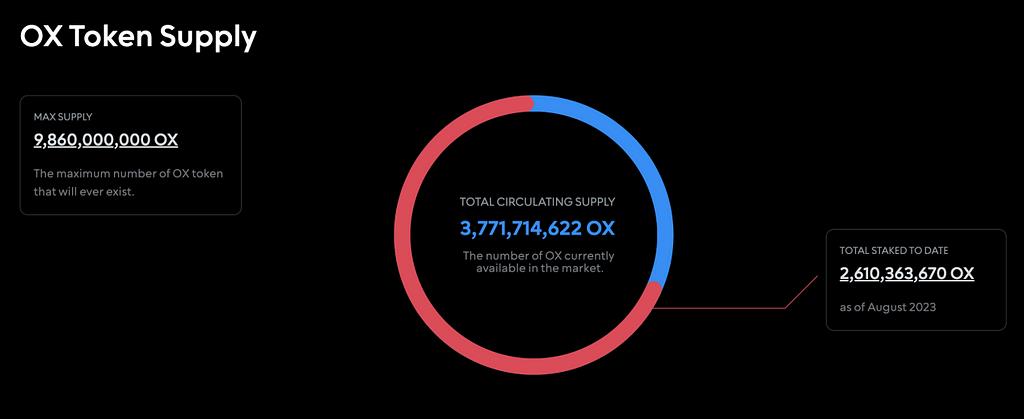
The total supply of OPNX’s platform token $OX = ($FLEX total supply - $FLEX burned) * 100
9.86B = (100M – ~1.4M) * 100
Current OX staking rate is approximately 70%.
2. Token Utility
(1) Trading Fee Rebates
OX holders can stake to trade fee-free. If a trader’s share of staked OX equals or exceeds their share of total trading volume on OPNX, they qualify for 100% trading fee rebates. Stakers exceeding this threshold receive 50% fee rebates on excess trading volume. All rebates are paid in OX.
(2) Trading Fee Discounts
Non-staking OX users are eligible for up to 50% trading fee discounts.
(3) Staking rewards in the form of OPNX Launchpad & Justice Token airdrops
(4) Use as collateral for futures trading
(5) Significantly reduced fees for RWA tokenization
3. $FLEX-$OX Conversion
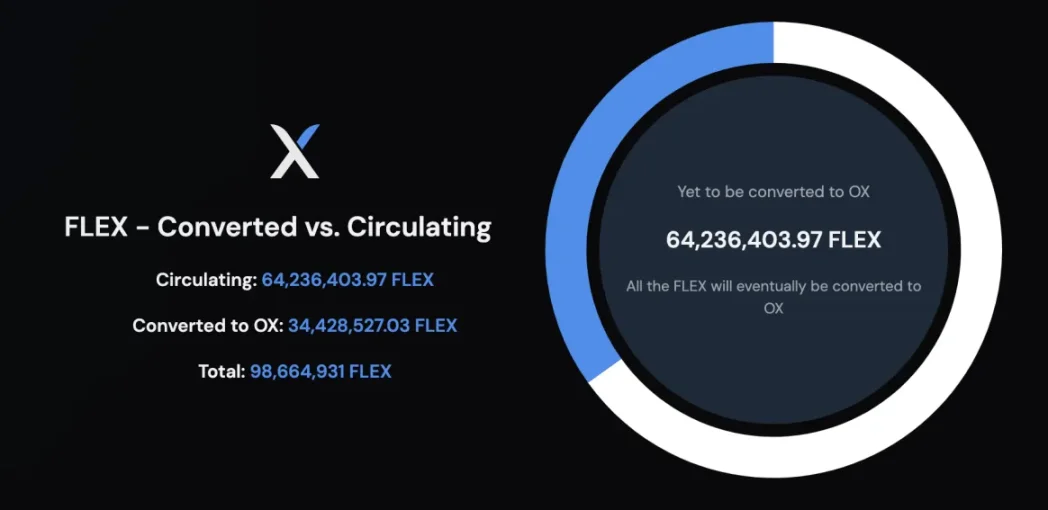
$FLEX can be converted to $OX at a 1:100 ratio. Users who choose to lock up their $FLEX for three months receive a 25% bonus (effective conversion rate of 1:125). This preferential rate will end on August 28, 2023. Approximately 35% of $FLEX has been converted to $OX so far.
Theoretically, the FLEX:OX price ratio should be 100:1. Due to the one-way conversion mechanism, FLEX prices should not fall below OX. When FLEX trades below this ratio, users are incentivized to convert to OX, pushing FLEX back toward parity. When FLEX trades above this level, users refrain from converting—but because OX cannot be converted back to FLEX, arbitrage opportunities remain incomplete.
3. Price Performance
-
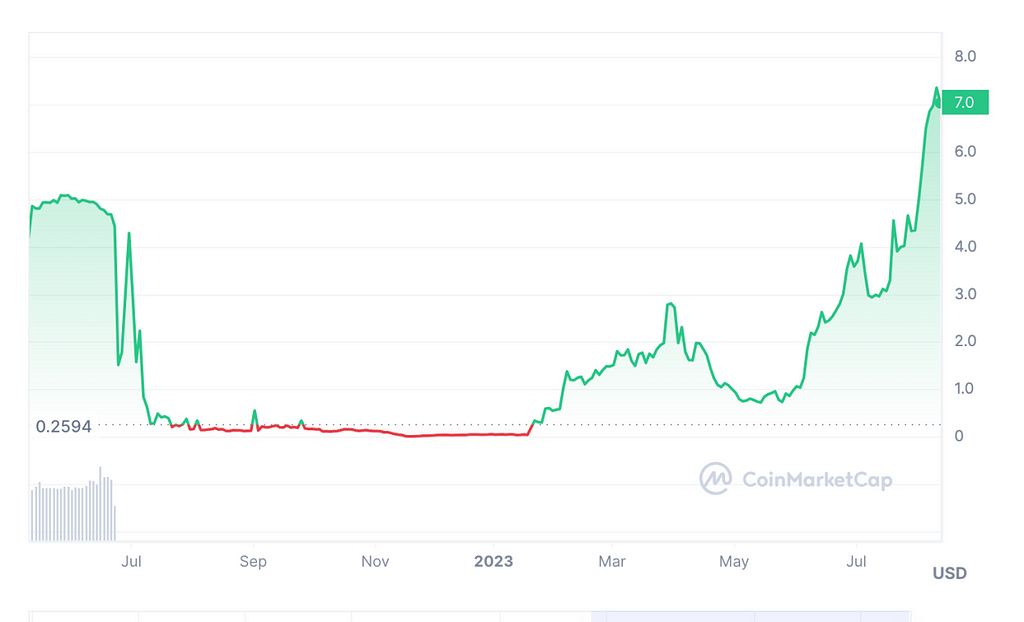
In June 2022, following CoinFLEX’s announcement of withdrawal suspension, FLEX crashed sharply;
-
In January 2023, after news of GTX’s fundraising emerged, FLEX rebounded and entered an uptrend, peaking at $2.80;
-
In early April 2023, upon OPNX’s official launch, business data proved dismal—only two trades occurred on day one. FLEX plummeted after listing on OPNX, falling over 70% from its peak;
-
On June 1, 2023, OX launched, and FLEX resumed an upward trajectory alongside OX. From June 5 onward, significant gains occurred, with announcements of the two launchpad projects contributing approximately 33% and 14% increases, respectively. YTD, the token has achieved a hundredfold return.
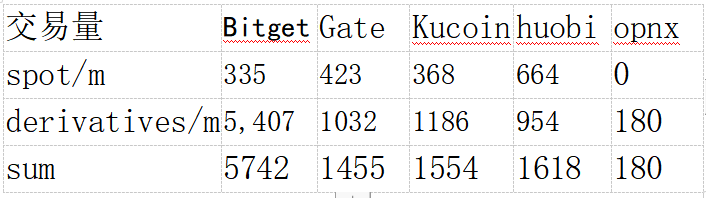
In terms of market cap, OPNX has approached $700 million, surpassing Bitget ($640M), Gate ($560M), Kucoin ($540M), and Huobi ($410M).
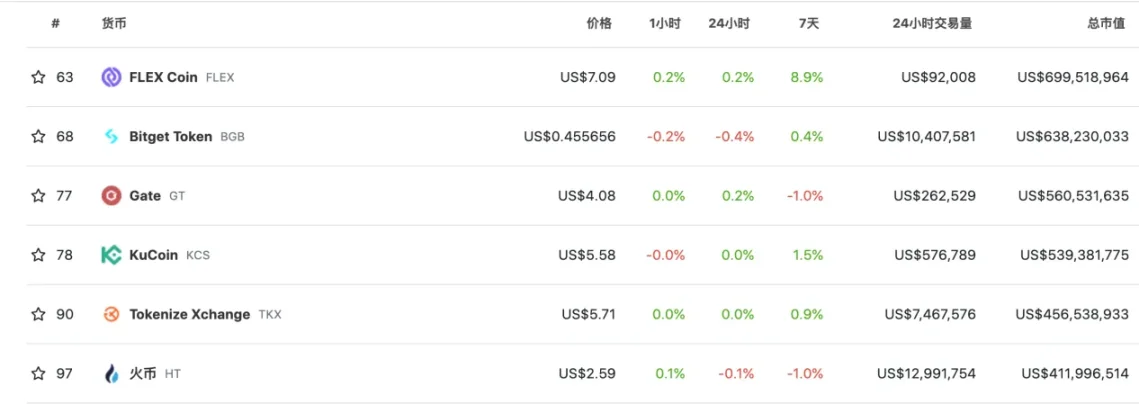
Source: CoinGecko
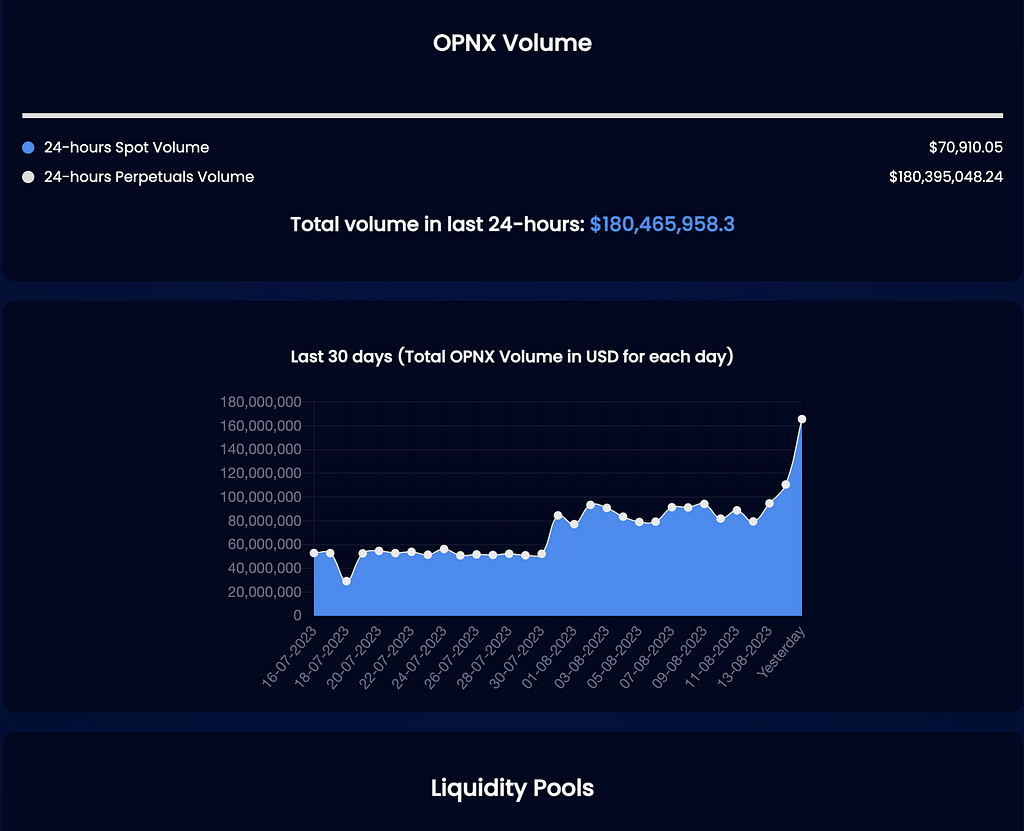
From a business metrics perspective, OPNX’s daily trading volume rapidly grew from single digits at launch to over $100 million, with the vast majority coming from derivatives trading. Spot trading volume remains at merely tens of thousands of dollars. Trading volume lags significantly behind Bitget, Gate, Kucoin, and Huobi. Additionally, OPNX exhibits inconsistencies between trading volume and price movements, raising questions about data authenticity.
4. Claims Trading Landscape
Currently, the other two major players in the crypto claims trading market are Xclaim and Claims-Market.
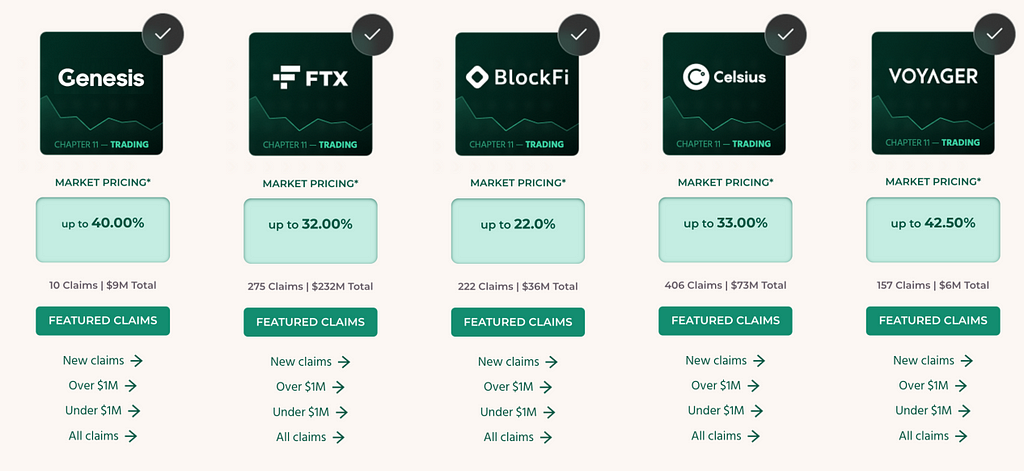
Founded in 2018, Xclaim aims to provide transparent pricing and fast execution for crypto claimants. Founder and CEO Matthew Sedigh brings 15 years of experience in corporate restructuring. Xclaim currently facilitates trading for claims related to Genesis, FTX, BlockFi, Celsius, and Voyager—five bankrupt platforms—with discounts ranging from 20% to 40%. To date, it has processed 1,070 transactions totaling approximately $356 million, primarily using a case-by-case model.
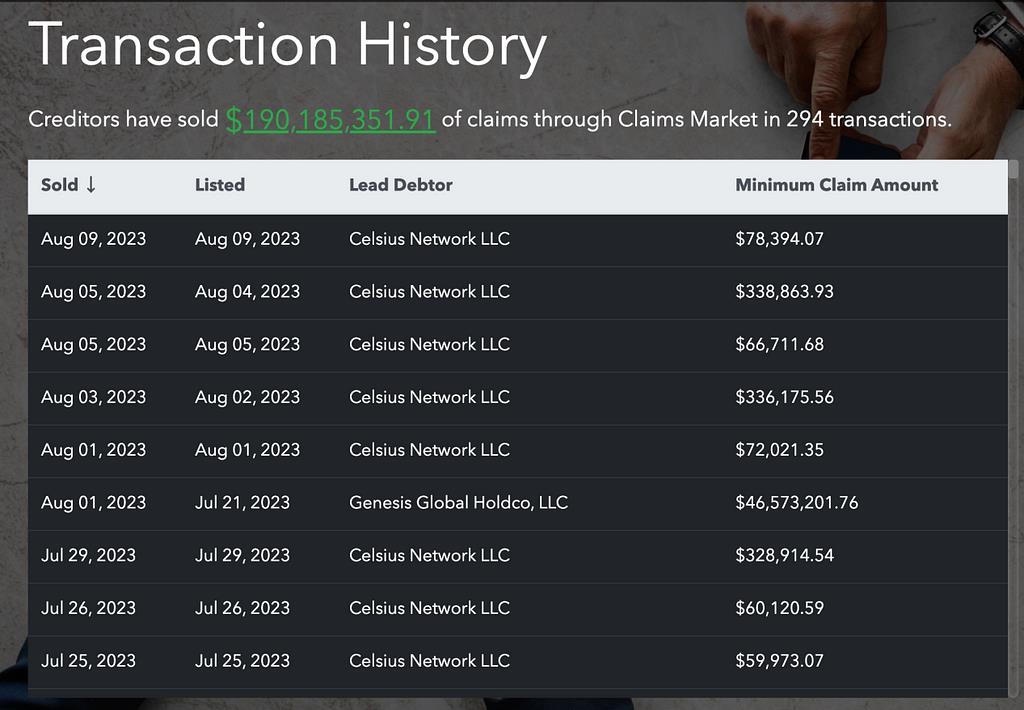
Claims-Market is a claims product under investment bank Cherokee Acquisition, serving all types of claimants, not limited to crypto. The process generally involves sellers signing a Seller Agreement and a Simple Assignment of Claim (SAC) to list their claims; buyers sign a Buyer Agreement and place bids or offers; once a deal is reached, the signed SAC and supporting documents are sent to the buyer to confirm ownership. Claims-Market also introduced the Simple Pass Through Assignment (SPTA) to facilitate secondary trading of claims. According to platform data, creditors have sold $190 million in claims across 294 transactions.
In terms of product design, OPNX differentiates itself by aiming to create a highly liquid, standardized order-book market and enabling claims as collateral—features not offered by the other two platforms.
5. Conclusion
Conceptually, OPNX presents the most comprehensive and ambitious vision in the claims trading space. However, in practice, trading volume for tokenized claims remains extremely low. Even the listing of FTX claims failed to turn the tide. OPNX’s core offering—claims trading—is struggling and requires breakthrough innovation. Meanwhile, OPNX continues to roll out frequent new features and positive announcements, though the quality of its Launchpad projects has drawn criticism. From a valuation standpoint, OX carries a significant premium compared to other exchange platform tokens.
Join TechFlow official community to stay tuned
Telegram:https://t.me/TechFlowDaily
X (Twitter):https://x.com/TechFlowPost
X (Twitter) EN:https://x.com/BlockFlow_News
 Cycle Capital Research