Sam Altman's Worldcoin, valued on par with OpenAI after a 100x surge, now faces its biggest crisis
TechFlow Selected TechFlow Selected
Sam Altman's Worldcoin, valued on par with OpenAI after a 100x surge, now faces its biggest crisis
The vision is beautiful, but it underestimates the complexity of human nature.
 Navigating Web3 tides with focused insights
Author | Xin Xin
Editor | Jingyu
In the bustling city center of Hong Kong, and in underdeveloped villages in Kenya and Cambodia, people can be seen lining up, pressing their eyes close to a spherical device to scan their irises—and upon completion, receiving an account and a few dozen dollars as "compensation."
This is not a Red Cross public welfare cataract screening initiative or an episode from Black Mirror, but rather the on-the-ground reality of Worldcoin, a cryptocurrency project co-founded by OpenAI CEO Sam Altman.
The Worldcoin project is undoubtedly Sam Altman’s bolder gamble: a global biometric identity network aiming to provide universal basic income and reshape the world's financial system.
From developing to developed nations, operators of Worldcoin’s iris-scanning device (Orb) are conducting grassroots campaigns worldwide, using a “Black Mirror”-like spherical device to capture iris data while spreading the crypto-utopian vision like missionaries.
Just one month ago, Worldcoin’s token WLD was listed on multiple cryptocurrency exchanges, briefly surging to a high of $4.7—more than a 1000% increase. If calculated using fully diluted valuation, the Worldcoin project is now valued at $28 billion—comparable to OpenAI’s current valuation.
In 2019, OpenAI CEO Sam Altman co-founded Worldcoin with others. Three years later, according to Worldcoin data, over two million people from more than thirty countries have registered for a World ID. The company also stated it has begun accelerating the global rollout of Orb devices, aiming to increase the number of scanners to 1,500 this year to boost adoption.
However, throughout this process, Worldcoin has been mired in endless skepticism and criticism:
-
Fake accounts
-
App bugs
-
Unprofessional staff
-
Data breaches
-
Regulatory scrutiny
-
Unclear direction
Facing these criticisms, Sam Altman, co-founder of Worldcoin, admitted that he and his team “don’t know exactly what will happen in the future.”
Problem One: Inability to Recognize Asian Eyes
Worldcoin’s iris-scanning device, Orb, has reportedly struggled when scanning Asian eyes.
“Open your eyes,” Forbes reported, quoting repeated prompts from the machine as an Asian-American executive at Tools For Humanity (Worldcoin developer) struggled to complete an eye scan—prompting laughter among colleagues.
Internal employees said the joke “wasn’t funny at all to those of us who are Asian.”
Multiple insiders noted that the orb device sometimes had difficulty scanning the eyes of other Asian employees. They also pointed out that during early stages, the orb frequently malfunctioned.
A former Worldcoin employee attributed the difficulty scanning Asian eyes to a lack of diverse training data, noting the system was primarily trained on white and Black eyes.
Tools For Humanity declined to comment specifically on the incident involving the executive, but communications director Rebecca Hahn stated in a release that the orb demonstrated “global inclusivity” during field testing, having scanned “diverse populations across five continents, including over two million in Asia.”
Problem Two: Fake Account Registrations
Among the more than two million who have registered for a World ID, many come from developing countries, including Kenya. The Worldcoin mobile app, World App, once became the most downloaded app in Kenya.
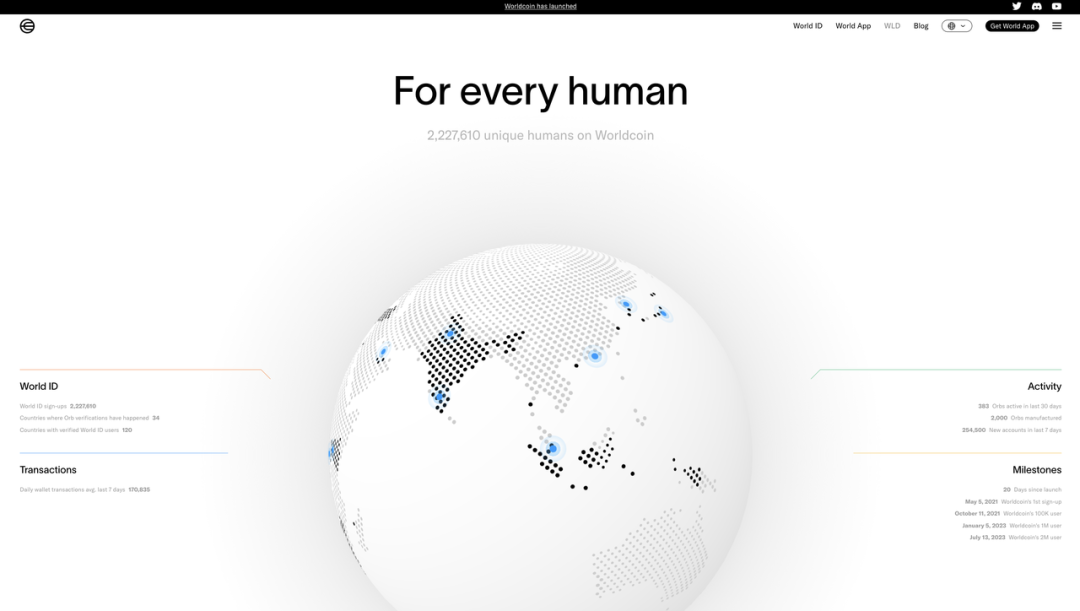
However, last year, a vulnerability in Worldcoin allowed Orb operators to exploit the system and create multiple registrations for the same individual. Since higher registration numbers meant higher commissions, this practice was frequently used in Kenya—one person reportedly created around 100 fake accounts using the loophole.
Now, the exact number of fake accounts remains unknown. According to former Worldcoin employees, some within the company see this as an “existential crisis,” as such cases undermine the core premise of the project—that each person is a unique individual.
In a statement, the legal director of Tools For Humanity said the company and the Worldcoin Foundation “investigate allegations of potential fraud or improper operations and take corrective actions as appropriate,” including firing certain operators and employees. The company also released software updates to fix the vulnerability.
Ethereum founder Vitalik Buterin argued it is difficult to verify whether the Orb device’s construction itself contains vulnerabilities that could leave room for backdoors. “Even if the software layer is perfect and fully decentralized, the Worldcoin Foundation still has the ability to insert backdoors into the system to create any number of fake human identities.” He also expressed concern about the possibility of using 3D-printed “dummy” eyes to pass iris scans and obtain World IDs.
Problem Three: Application Bugs
In late July this year, the Worldcoin app officially launched—but its rollout has been far from smooth.
Some users who completed iris scans reported being unable to claim their tokens. A Kenya-based operator said they received hundreds of complaints, with no response from Worldcoin representatives through customer service channels.
The mobile app once stopped working entirely. Users attempting to log in to access their crypto wallets encountered various error messages, including “Network Error: Rate Limit Exceeded,” “Backup Not Found,” and “Be Right Back.”
World App’s support team confirmed the issue on X (formerly Twitter), stating the mobile app “experienced higher-than-usual traffic,” and asked users encountering problems to “try again later.”
Alex Blania, CEO of Tools For Humanity, responded in a statement that the deadline for claiming tokens had been extended, citing “systemic and technical strain and intermittent delays due to a surge in global demand coinciding with a complex transition to production systems.” The project, he added, “has taken measures to ensure the technical challenges encountered at launch do not negatively impact the earliest Worldcoin users.”
Problem Four: Exploitation of People in Poor Countries
Since the launch of the scanning devices, people from over thirty countries have participated, with most registrants coming from South Africa, India, and Europe. Although the company was founded in the U.S., regulatory issues prevented U.S. citizens from accessing the project in its early stages.
Worldcoin offers free WLD tokens in exchange for iris scan data. In addition to the tokens, users receive a World ID proving they are human—not AI—which functions as a global digital ID usable for third-party verification without sharing additional personal information.
But critics have likened it to a brand of Silicon Valley colonialism. They argue the startup promises inclusive, crypto-based universal basic income, yet so far mainly builds a biometric database from impoverished populations.
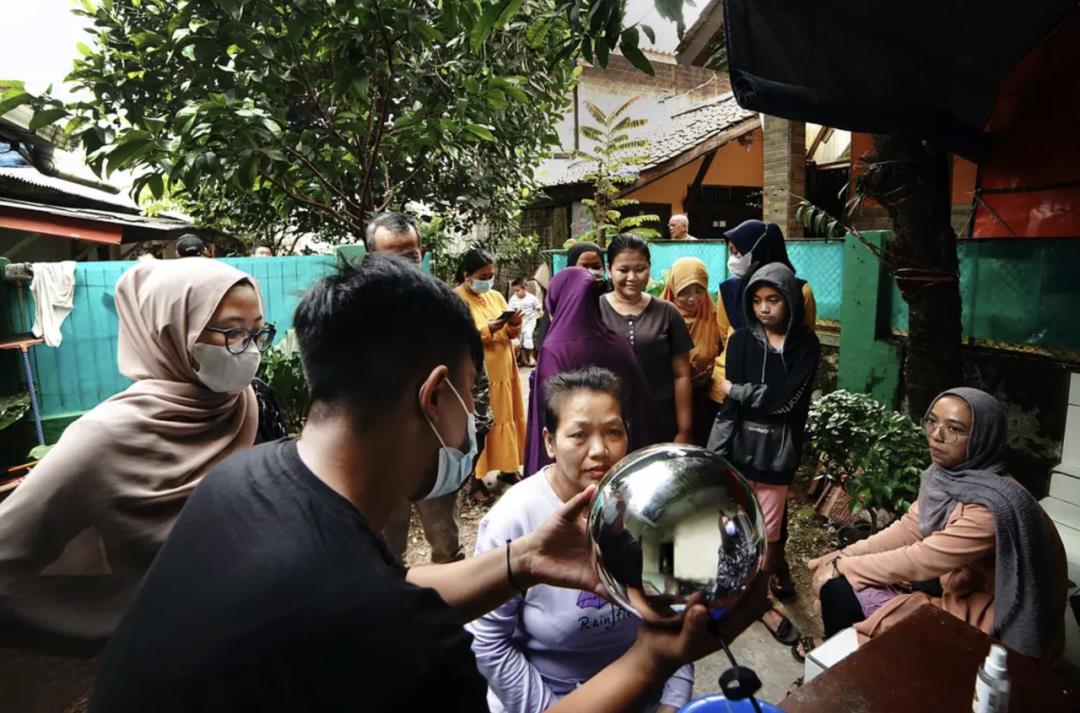
MIT Technology Review accused Worldcoin of exploitation in low-income countries in Africa and Asia—including Kenya—collecting biometric data from people with little understanding of Worldcoin and operating “where there is no money and no legal protection.”
An article from crypto platform BlockBeats claimed people in Cambodia and Kenya sold their iris data to black-market speculators for $30, who hoped the value of WLD tokens obtained from scans would rise.
In developing countries like Kenya, Orb operators are paid on commission and hire locals to conduct scans. On-the-ground promoters allegedly used deceptive marketing tactics, collected more personal data than acknowledged, and failed to obtain valid informed consent. Many local residents participated in eye scans without full awareness. Sometimes even local representatives and officials couldn’t answer basic questions about Worldcoin.
In response to these accusations, Worldcoin stated it also operates in developed countries, including several European nations.
Problem Five: “Stupid Behavior” by Device Operators
To acquire more registrants, the company encouraged device operators to subcontract their iris-scanning activities, capturing more irises to earn more commissions through weekly quotas and gain access to additional Orb devices. However, some operators were arrested, exploited, or harassed by local law enforcement and community members.
In Norway, device operators reportedly targeted individuals aged 16 to 25, leveraging youth peer pressure to promote Worldcoin among younger demographics. In other regions, operators reportedly scanned minors. Additionally, operators may offer kickbacks to local government leaders during registration drives. Or worse, the region itself may ban cryptocurrency-related activities, meaning local laws are being violated.
Co-founder Alex Blania reportedly remarked that Orb operators in some places “started doing very, very stupid things”—and that this was “to be expected.”
A team spokesperson said the device operators “are independent contractors, not employees of Worldcoin.” They must apply, interview, and get approved, earning commissions based on collected biometric data, and are required to “comply with local laws and regulations, including labor laws.”
Problem Six: Data Security and Regulation
Sam Altman said: “Worldcoin could significantly increase economic opportunity, provide a reliable solution to distinguish humans from AI online, while protecting privacy.”
Yet as a private entity, Worldcoin’s intent to collect global iris data has drawn regulatory attention. Citing data privacy concerns, regions including Kenya, France, the UK, and Germany have launched investigations into the project.
The Kenyan government suspended Worldcoin’s operations over data protection issues, launching an investigation to assess the project’s “authenticity” and “legality” in the East African nation. France’s data regulator also initiated an inquiry, stating “the legality of such data collection appears questionable, as does the storage of biometric data.” Meanwhile, data authorities in the UK and Germany have also opened investigations.
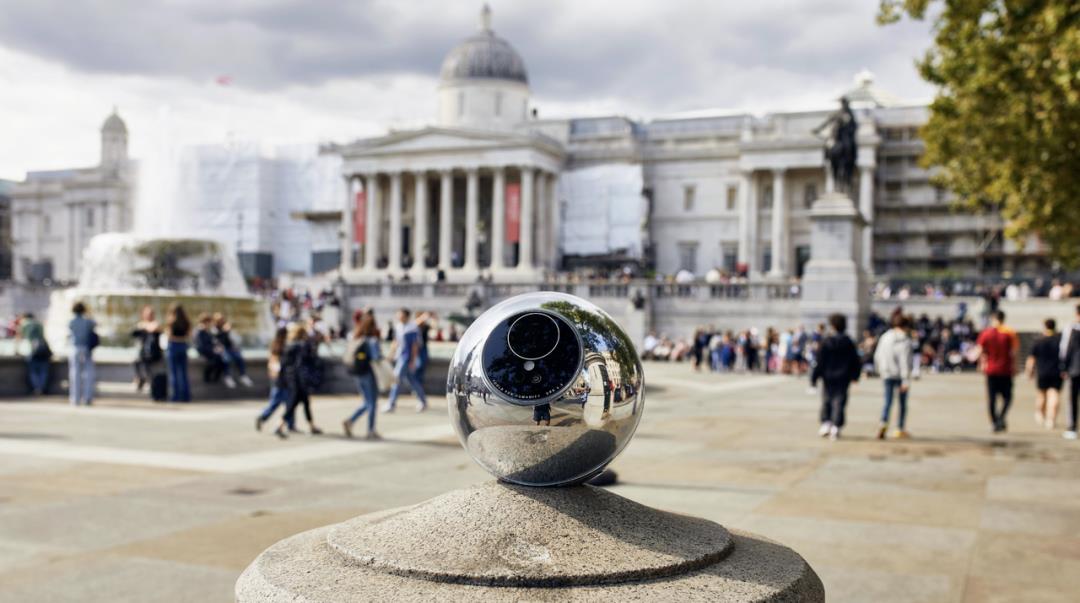
Are the benefits of iris-scan authentication worth the privacy risks? Some venture capitalists argue “it’s not a good idea for a group of people to hand over their biometric data to a non-governmental entity.” If project leaders become corrupt, dangerous consequences could follow.
In March, hackers reportedly stole login credentials from some Orb operators and gained full access to the Worldcoin Orb operator dashboard. Two months later, leaked hashed iris data began appearing on the dark web, reportedly priced as low as $20.
A Worldcoin spokesperson said an internal investigation concluded “no sensitive or personal user data was leaked.” No sensitive data is accessible to Orb operators, and all biometric data is encrypted. As a precaution, the company reset all Orb operator logins and accelerated the rollout of two-factor authentication for the Orb operator app.
“It’s important to emphasize that we don’t collect data to profit from or monitor our users, unlike many other tech companies. Instead, our goal is to improve the lives of billions through digital identity,” Worldcoin stated.
Yet Silicon Valley’s track record on data handling leaves a poor impression. Some fear iris scans could be used for surveillance or sold to third parties. Edward Snowden once commented on Altman’s post about Worldcoin: “Don’t use biometrics for anything—your body is not a ticket.”
Worldcoin responded that the project “will never sell any user personal data,” will continue cooperating with governments, comply with all applicable data protection laws, and respond to information requests from government agencies regarding its privacy and data practices.
According to Worldcoin, iris scan data is processed and stored locally in the Orb’s memory and deleted afterward unless the owner specifies otherwise, or at least after the company completes training its AI neural network to recognize irises and detect fraud. Processed personal data from the Orb is encrypted and uploaded to Worldcoin’s blockchain-based digital identity network.
UK regulators noted that consent for processing biometric data “must be freely given and revocable without penalty.” Yet because Worldcoin’s data is stored on blockchain, deletion and withdrawal options are unavailable.
Problem Seven: Fairness Under Scrutiny
Others have questioned Worldcoin’s claimed fairness. Around 20% of tokens have reportedly already been distributed: about 10% to full-time Worldcoin employees and another 10% to investors.
Moreover, Worldcoin relies on specialized hardware, raising concerns about “hardware centralization.” A key risk here is that if an Orb manufacturer is malicious or compromised, it could generate unlimited fake iris scan hashes and assign them World IDs.
To make the system more resilient against malicious Orb manufacturers, the Worldcoin team proposed regular audits to verify that Orbs are built to specification, that critical hardware components meet standards, and that no tampering occurs post-production—a challenging task.
Additionally, given Tools for Humanity’s ties to the now-bankrupt FTX exchange founder, Worldcoin’s credibility has been questioned. FTX founder Bankman-Fried provided a $25 million Series A investment in 2021 before facing 12 criminal charges including fraud and money laundering. Also, the now-defunct Singapore-based crypto hedge fund Three Arrows Capital reportedly participated in Worldcoin’s early funding rounds.
Worldcoin’s total token supply is capped at 1 billion over the next 15 years, with only 14.3 million tokens available at the start of the global scanning campaign. According to Coinbase data, Worldcoin’s market cap is currently around $220 million, down roughly half from its peak of $512 million on the day of its July 24 launch.
Problem Eight: Unclear Direction
Co-founder Alex Blania stated in a release: “Worldcoin has been around for over three years, aiming to create a new privacy-preserving identity and financial network owned by everyone.” They see themselves at the forefront of innovation, bringing cryptocurrency into the mainstream and paving the way for a global basic income system.
Sam Altman is also leveraging the fame he gained from OpenAI to promote Worldcoin and Orb. He posted photos of himself scanning his iris in Europe and shared videos on X (formerly Twitter) showing long queues outside Orb stations, claiming the project scans a new user every eight seconds.
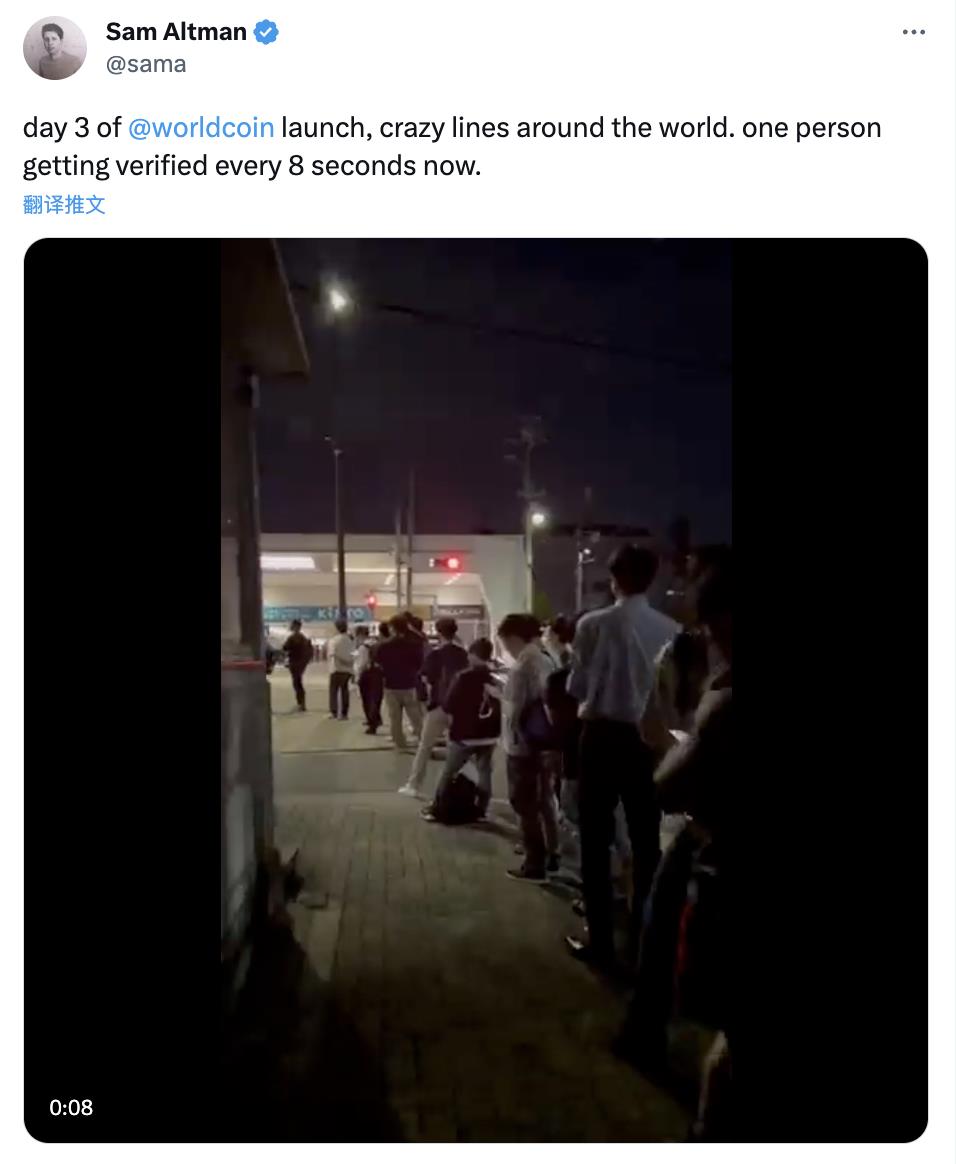
According to co-founder Alex Blania, during the second week after Worldcoin’s official launch, there were approximately 14,000 daily Orb verifications, the World App had 1.7 million monthly active users, topped app store charts in multiple countries, and saw “long lines—from Tokyo to Buenos Aires—sometimes exceeding 1,000 people.”
Yet Sam Altman himself seems uncertain about what Worldcoin will ultimately become. At a summit, he said, “We don’t seem to have fully figured that out yet. That’s okay—it’s hard and really new.” “Once we internally decide which direction we want to go—there are still multiple opinions—I think once we articulate it clearly, if it truly resonates, things will really take off.”
“I don’t know what the situation with Worldcoin will be like—I think none of us do. But if there’s a single global platform infrastructure—whatever form it takes—that half the world’s population uses and agrees is a store of value, I’m very confident that if we can build this platform layer, the world’s creativity will surprise us in positive ways,” said Sam Altman.
Global implementation of universal basic income is still “far in the future,” Sam Altman has no clear idea about which entity would distribute funds, but believes Worldcoin might lay the foundation for achieving this goal.
For now, possible applications of the Worldcoin authentication system include financial transactions, voting, cryptocurrency airdrops, remittances, and website logins. Its core value lies first in the ability to prove one’s identity, freeing users from traditional methods like passports. If successful, this protocol could become a universal authentication method for a new generation of the internet. Sam Altman said, “Worldcoin can achieve this globally without government permission, which is truly exciting.”
Additionally, Alex Blania reportedly mentioned in a company meeting that Worldcoin’s reshaping of the financial system “could lead to the collapse of nations.” Sam Altman, meanwhile, said his operational principle is “scale up and see what happens,” adding, “I think that’s extremely valuable.”
Sam Altman also welcomed criticism, saying “haters” energize his team: “Maybe it will succeed, maybe it won’t, but trying things like this is how progress happens.”
Join TechFlow official community to stay tuned
Telegram:https://t.me/TechFlowDaily
X (Twitter):https://x.com/TechFlowPost
X (Twitter) EN:https://x.com/BlockFlow_News
 极客公园
极客公园