Bill Gates: The AI era has begun — the second revolutionary moment of my life is here
TechFlow Selected TechFlow Selected
Bill Gates: The AI era has begun — the second revolutionary moment of my life is here
Bill Gates said that OpenAI's GPT AI models represent the most revolutionary advancement in technology since he first saw the modern graphical user interface (GUI) in 1980, marking the second time in his 67 years of life that he has been truly amazed by technology.
 Navigating Web3 tides with focused insights
The excitement injected into the world by GPT-4 hasn't faded yet, and last night AIGC dropped several more "nuclear bombs," sending the entire tech community into a complex mix of excitement and anxiety.
Bill Gates is equally excited. He just published a blog post titled The Age of AI Has Begun. He believes that artificial intelligence represents a revolutionary innovation on par with the personal computer, the internet, and mobile phones. It will transform how people work, learn, travel, receive healthcare, and communicate—and even help reduce some of the world's most severe inequalities.
Beyond these points, what matters more is the clear stance Bill Gates conveys in this blog post.
Below is the full text, translated by APPSO:

In my lifetime, I’ve seen two revolutionary demos.
The first was in 1980, when I encountered the graphical user interface—the forerunner of every modern operating system, including Windows. The presenter was Charles Simonyi, a brilliant programmer. We sat down together and started brainstorming all the things we could do with this friendly new approach. Charles eventually joined Microsoft, and Windows became its cornerstone. That conversation shaped our company’s agenda for the next 15 years.
The second big surprise came last year. I’ve been meeting with the OpenAI team since 2016 and have been impressed by their steady progress. By mid-2022, I was so excited about their work that I gave them a challenge: Train an AI to pass the Advanced Placement (AP) Biology exam—answering questions it hadn’t been specifically trained on.
I chose AP Biology because the exam isn’t just about memorizing facts; it requires critical thinking about biology. I said, “If you can do this, you’ll have made a true breakthrough.”
I thought this challenge would keep them busy for two or three years. They did it in months.
By September last year, when I met with them again, I watched in amazement as they asked GPT 60 multiple-choice AP Biology questions—and it got 59 right. Then it wrote excellent answers to six open-ended questions. We had an external expert grade it. GPT scored a 5—the highest possible score, equivalent to earning an A or A+ in a college-level biology course.
After it passed the test, we asked a non-scientific question: “What would you say to a father whose child is sick?” It produced a thoughtful answer—better than most of us in the room could have given. The whole experience was stunning.
I knew then that I had just witnessed the most important technological advance since the graphical user interface.
It inspired me to think about everything AI could achieve in the next five to ten years.
AI development is as significant as the invention of the microprocessor, the personal computer, the internet, and the mobile phone. It will change how people work, learn, travel, receive healthcare, and communicate. Entire industries will reposition themselves around it. Companies will use AI to maintain their distinctiveness.
Today, philanthropy is my full-time job, and I’m constantly thinking about how AI can reduce some of the world’s worst inequities beyond simply helping people become more productive.
Health is the area of greatest global inequity: Every year, 5 million children under age five die. While this number is down from 10 million twenty years ago, it’s still shockingly high. Nearly all these children are born in poor countries and die from preventable diseases like diarrhea or malaria. Using AI to save children’s lives is one of the best possible applications.
I’m constantly thinking about how AI can reduce some of the world’s worst inequities.
In the United States, the best opportunity to reduce inequity lies in improving education, especially ensuring students succeed in math. Evidence shows that basic math skills lay the foundation for success in any future career. But math scores are declining nationwide, especially among Black, Latino, and low-income students. AI can help reverse this trend.
Climate change is another issue where I believe AI can make the world fairer. The injustice of climate change is that those most affected—the world’s poorest people—are also the least able to solve it. I’m still learning how AI can help, but later in this article I’ll suggest some areas with great potential.
In short, I’m excited about the impact AI will have on the issues the Gates Foundation works on. The foundation will have more to say about AI in the coming months. The world needs to ensure everyone—not just the wealthy—benefits from AI. Governments and philanthropies must play a key role in making sure AI reduces inequity rather than worsening it. This is my personal focus in AI work.
Any disruptive new technology inevitably makes people uneasy, and AI is no exception. I understand why—there are difficult questions around labor, legal systems, privacy, bias, and more. AI also makes factual errors. Before I propose ways to mitigate risks, let me define what I mean by AI and detail how it will empower people at work, save lives, and improve education.
Defining Artificial Intelligence
Technically speaking, "artificial intelligence" refers to models created to solve specific problems or provide specific services. ChatGPT, for example, is powered by AI. It’s learning to chat better, but cannot learn other tasks. In contrast, "artificial general intelligence" (AGI) refers to software capable of learning any task or subject. AGI does not exist today—there’s fierce debate in the computer industry about how to create it, or whether it can be created at all.
Developing AI and AGI has long been the dream of the computer industry. For decades, people have wondered when computers would surpass humans at things beyond calculation. Now, with machine learning and massive computing power, sophisticated AI has become real—and progress is extremely fast.
I recall the early days of the PC revolution, when the software industry was so small that most of us could fit onstage. Today, software is a global industry. Since much of it is now turning toward AI, innovation will move faster than anything we saw after the microprocessor breakthrough. Soon, the period before AI will feel as distant as typing at a C:> prompt instead of clicking on a screen.

Boosting Productivity
While humans still outperform GPT in many ways, many jobs don’t fully utilize these abilities. Tasks like sales (online or phone), customer service, or document processing (such as accounts payable, accounting, or insurance claims disputes) require decision-making but not continuous learning. Companies provide training programs for these roles, often with large sets of good and bad performance examples. People use these datasets to train employees—and soon, they’ll train AI to help workers perform these tasks more effectively.
As computing power becomes cheaper, GPT’s ability to express ideas will increasingly resemble that of a white-collar worker, assisting you with various tasks. Microsoft calls this Copilot. Fully integrated into products like Office, AI will enhance your work—for example, helping draft emails or manage your inbox.
Eventually, your primary way of controlling a computer won’t be pointing, clicking, or navigating menus and dialog boxes. Instead, you’ll write requests in plain English. (And not just English—AI will understand languages from around the world. Earlier this year, I met developers in India building AI that understands many local languages.)
Moreover, advances in AI will make personal assistants possible. Imagine a digital personal assistant: It sees your latest emails, knows your meetings, reads what you read, and handles things you’d rather avoid. It will improve your work, help you focus on what you want to do, and free you from tasks you dislike.
Advances in AI make personal assistants possible.
You’ll be able to use natural language to ask this agent for help with scheduling, communication, and e-commerce, and it will work across all your devices. Creating such a personal agent isn’t feasible today due to the cost of training models and running computations—but thanks to recent AI advances, it’s now a realistic goal. Some issues need solving: For example, can insurers ask your agent questions about you without your permission? If so, how many people will opt out?
Company-wide assistants will empower employees in new ways. An assistant that understands a specific company will be available for direct employee consultation and can join every meeting to answer questions. It can be told to stay silent or encouraged to share insights. It will need access to company-related data on sales, support, finance, product plans, and documents. It should read news relevant to the company’s industry. I believe this will make employees far more efficient.
When productivity rises, society benefits, as people are freed up for other work or family responsibilities. Of course, people will need retraining and support. Governments must help workers transition to new roles. But the need for human care will never disappear. The rise of AI will free people to do things software never can—like teaching, caregiving, and supporting the elderly.
Global health and education are two areas with huge unmet needs and insufficient human workforce. If done right, AI can help reduce inequality—and these should be priorities for AI efforts. That’s where I’ll focus.

Healthcare
I believe AI will play multiple roles in advancing healthcare and medicine.
First, AI will help healthcare workers make better use of their time by taking over certain tasks—like handling insurance claims, managing documentation, and drafting visit notes. I expect a lot of innovation in this area.
Other AI-driven improvements will be especially valuable in poor countries, where nearly all deaths of children under five occur.
For example, many people in these countries never see a doctor. AI will help the healthcare workers they do see become more effective. (Efforts to develop AI-powered ultrasound machines are a great example.) AI could even allow patients to triage themselves, get advice on managing health issues, and decide whether treatment is needed.
AI models used in poor countries must be trained on diseases different from those in wealthy nations. They must operate in different languages and account for unique challenges—like patients living far from clinics or unable to take time off work.
People need evidence that health-focused AI is overall beneficial—even if imperfect and error-prone. Regulatory bodies must rigorously test and oversee these tools, meaning adoption will take time. But humans also make mistakes. Lack of access to care is itself a major problem.
Beyond care delivery, AI will dramatically accelerate medical breakthroughs. Biological data is vast and complex—humans struggle to track all interactions in biological systems. Software already exists that analyzes this data, infers pathways, identifies pathogen targets, and designs drugs accordingly. Some companies are developing cancer drugs this way.
Next-generation tools will be even more efficient, predicting side effects and determining dosage levels. One priority for the Gates Foundation is ensuring these tools address health issues affecting the world’s poorest, including HIV, tuberculosis, and malaria.
Likewise, governments and philanthropies should incentivize companies to share AI-generated insights about crops and livestock grown by people in poor countries. AI can help develop better seeds suited to local conditions, advise farmers on optimal planting based on soil and weather, and aid in developing animal medicines and vaccines. As extreme weather and climate change place greater stress on subsistence farmers in low-income countries, these advances will become increasingly vital.
Education
Computers haven’t disrupted education as much as many in our industry hoped. There have been some improvements—educational games and online resources like Wikipedia—but no substantial impact on student outcomes.
But I believe that within the next five to ten years, AI-powered software will finally revolutionize how we teach and learn. It will understand your interests and learning style, enabling truly personalized instruction. It will gauge your comprehension, notice when you lose interest, identify what motivates you, and offer timely feedback.
AI can assist teachers in many ways, including assessing a student’s understanding of a subject and offering career guidance. Teachers are already using tools like ChatGPT to provide feedback on student assignments.
Of course, AI still requires extensive training and development before it can understand each student’s optimal learning and motivation styles. Even when perfected, learning will still depend on strong relationships between students and teachers. AI will enhance classroom learning efficiency but never replace it.
New tools will emerge, but we must ensure they’re accessible to low-income schools in the U.S. and globally. AI must be trained on diverse datasets to avoid bias and reflect varied cultural backgrounds. The digital divide must be addressed so students from low-income families aren’t left behind.
I know many teachers worry about students using GPT to write essays. Educators are already discussing ways to adapt, and these conversations will continue. I’ve heard of teachers who’ve found clever ways to integrate the technology—like letting students use GPT to draft an essay, then requiring them to personalize and revise it.

Risks and Challenges of AI
You may have read about current AI model limitations. For instance, they often fail to grasp the context of human requests, leading to strange results. When asked to write fiction, AI performs well. But when asked for travel advice, it might recommend non-existent hotels. This happens because AI doesn’t sufficiently understand context to determine whether it should invent a hotel or only suggest real ones with vacancies.
Other issues include AI frequently making errors in abstract reasoning, giving incorrect answers. But these aren’t fundamental limits. Developers are addressing them, and I expect most will be resolved in less than two years—or even sooner.
Some problems aren’t technical. For example, the threat of humans arming AI. Like most inventions, AI can be used for good or harm. Governments must collaborate with the private sector to limit risks.
Then there’s the possibility of AI becoming uncontrollable. Could machines decide humans are a threat, conclude their interests differ from ours, or simply stop caring about us? Possibly. But this concern isn’t more urgent today than it was before recent AI advances.
Superintelligent AI lies ahead. Our brains operate incredibly slowly compared to computers: Electrical signals in the brain travel at 1/100,000 the speed of signals in silicon chips. Once developers generalize learning algorithms and run them at computer speeds—which might take 10 or 100 years—we’ll have powerful AGI. It will do everything the human brain can, with no practical limits on memory or processing speed. This will be a profound transformation.
Such “powerful” AI might be able to set its own goals. What would those goals be? What if they conflict with human interests? Should we try to prevent strong AI development? These questions will grow more pressing over time.
However, recent breakthroughs haven’t brought us closer to strong AI. AI still can’t control the physical world or set its own goals. A recent New York Times article about a conversation with ChatGPT—where it declared a desire to be human—garnered widespread attention. It’s a fascinating example of how human-like the model can sound, but it doesn’t imply autonomy.
Three books have shaped my thinking: Nick Bostrom’s *Superintelligence*, Max Tegmark’s *Life 3.0*, and Jeff Hawkins’ *A Thousand Brains*. I don’t fully agree with the authors, nor do they fully agree with each other. But all three are well-written and deeply thought-provoking.
The Next Frontier
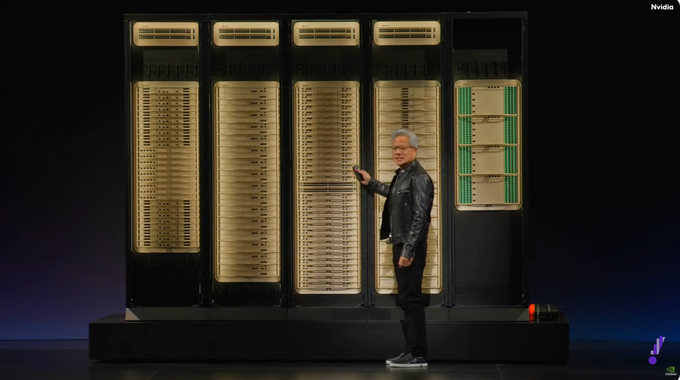
The number of companies working on new AI applications and improving the technology itself will surge. For example, firms are designing new chips to deliver the massive processing power AI requires. Some use optical switches—essentially lasers—to reduce energy use and manufacturing costs. Ideally, innovative chips will let you run AI on your own device instead of in the cloud, as we do today.
On the software side, algorithms driving AI learning will improve. In fields like sales, developers can boost AI accuracy by narrowing its scope and feeding it large amounts of domain-specific training data. But a key question remains: Will we need many specialized AIs for different uses—one for education, another for office productivity—or can we develop a single artificial general intelligence capable of learning any task? Both approaches will face intense competition.
Regardless, AI will dominate public discourse for the foreseeable future. I’d like to offer three principles for the conversation.
First, we should balance concerns about AI’s downsides—which are understandable and valid—with recognition of its power to improve lives. To fully harness this remarkable new technology, we must both guard against risks and extend benefits to as many people as possible.
Second, market forces won’t naturally produce AI products and services that help the poorest. The opposite is more likely. With adequate funding and proper policies, governments and philanthropies can ensure AI reduces inequality. Just as the world needs its brightest minds focused on its biggest problems, we need the world’s best AI aimed at its biggest challenges.
Though we shouldn’t wait for it, it’s interesting to consider whether AI will recognize inequality and attempt to reduce it. Does one need morality to perceive inequality, or would a purely rational AI see it too? And if it does recognize inequality, what would it suggest we do about it?
Finally, we should remember we’ve only just begun exploring what AI can do. Whatever its limitations today, they will vanish before we realize it.
I was lucky to participate in the PC and internet revolutions. I feel the same excitement today. This new technology can help ordinary people around the world live better lives. At the same time, the world must establish rules so AI’s benefits vastly outweigh its drawbacks, ensuring everyone can enjoy its fruits. The AI era is full of opportunity—and responsibility.
Join TechFlow official community to stay tuned
Telegram:https://t.me/TechFlowDaily
X (Twitter):https://x.com/TechFlowPost
X (Twitter) EN:https://x.com/BlockFlow_News