NVIDIA Pays $300 Million to Settle Eight-Year-Old Lawsuit Over Alleged Concealment from Crypto Industry
TechFlow Guide: Nvidia recently agreed to pay $290 million in cash to settle an eight-year investor class-action lawsuit, subject to court approval.
The core facts of this lawsuit are not complicated: during the Ethereum mining boom from 2017 to 2018, Nvidia allocated over a billion dollars in GPU sales originally intended for miners into its gaming segment, failing to disclose its reliance on the crypto cycle to capital markets. When the crypto winter hit at the end of 2018, channel inventory piled up. Following the downgrade of its earnings guidance, Nvidia's stock price plummeted 28.5% over two days. With the prior penalty from the U.S. Securities and Exchange Commission (SEC) and the Supreme Court's dismissal of the appeal, this payout, largely covered by commercial insurance, is expected to help the AI chip giant close the chapter on its past reliance on the crypto cycle.
After dragging on for a full eight years, Nvidia has finally reached a settlement over the lawsuit sparked by its profits from miners back then.
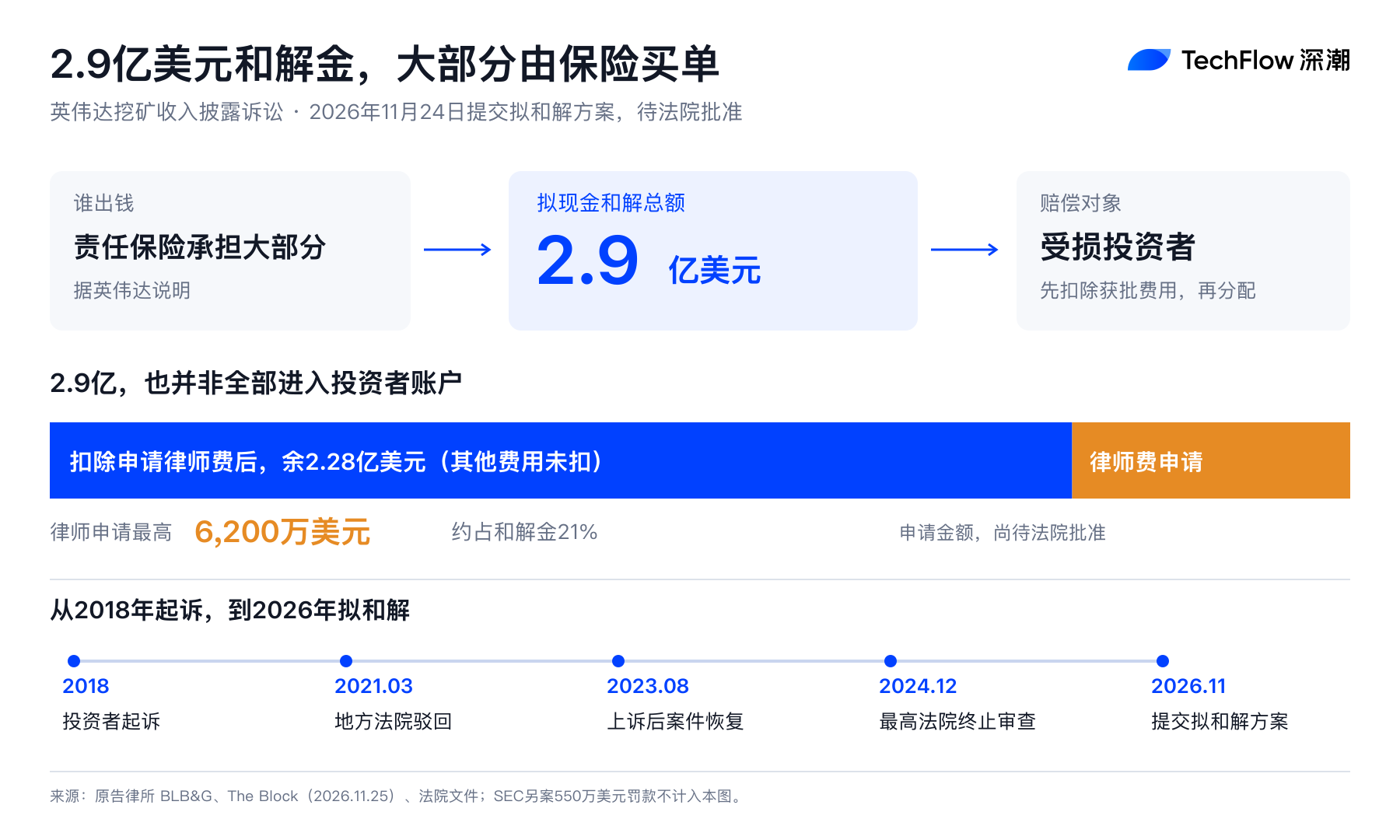
According to an agreement filed with the U.S. District Court for the Northern District of California on November 24 (local time), Nvidia agreed to pay $290 million in cash to settle the case with investors who accused it of financial misleading statements.
This lawsuit originated at the end of 2018, went through years of back-and-forth litigation, and boiled down to a single core dispute: a significant portion of the GPUs sold by Nvidia back then were purchased by crypto miners, yet Nvidia booked this revenue under its gaming player segment in its financial reports.
The Missing $1.1 Billion and "Crypto Hangover"
Let's turn back the clock to the Ethereum GPU mining craze of 2017 to 2018.
Although Nvidia established a small dedicated mining card business line that year, miners heavily stocked up on mainstream GeForce gaming GPUs in the market so they could resell them later for profit.
According to data later reverse-engineered by consulting firm Prysm Group and investment bank RBC based on Ethereum network hashrate growth: between May 2017 and July 2018, Nvidia sold GPUs worth $1.7 billion to $1.8 billion to miners, but the company only reported about $600 million under its crypto business, underreporting mining-related revenue by as much as $1.126 billion.

At the time, however, secondary market valuations for the gaming business were far higher than those for the volatile mining business.
Nvidia CEO Jensen Huang told analysts at the August 2017 earnings call that most miners bought dedicated mining cards; he further downplayed the impact of the crypto business in media interviews to "around $150 million."
It wasn't until the second half of 2018 that cryptocurrency prices crashed and mining became unprofitable. Miners stopped buying new cards and began dumping used ones at low prices, causing channel inventories to suddenly overflow.
On November 15, 2018, Nvidia finally admitted it was suffering from a "crypto hangover," significantly lowering its fourth-quarter revenue guidance. Within two days of the earnings report, Nvidia's stock price plummeted 28.5%, directly triggering a class-action lawsuit from affected shareholders.
Litigated for Eight Years, Now Settling with a $290 Million Insurance Payout
This lawsuit was initially dismissed by a district court in 2021, but the U.S. Court of Appeals for the Ninth Circuit overturned the ruling in 2023.
The appellate court's opinion made it clear, pointing out the $1.126 billion revenue gap by stating: "A CEO who had no idea where $1.126 billion in revenue came from practically does not exist."
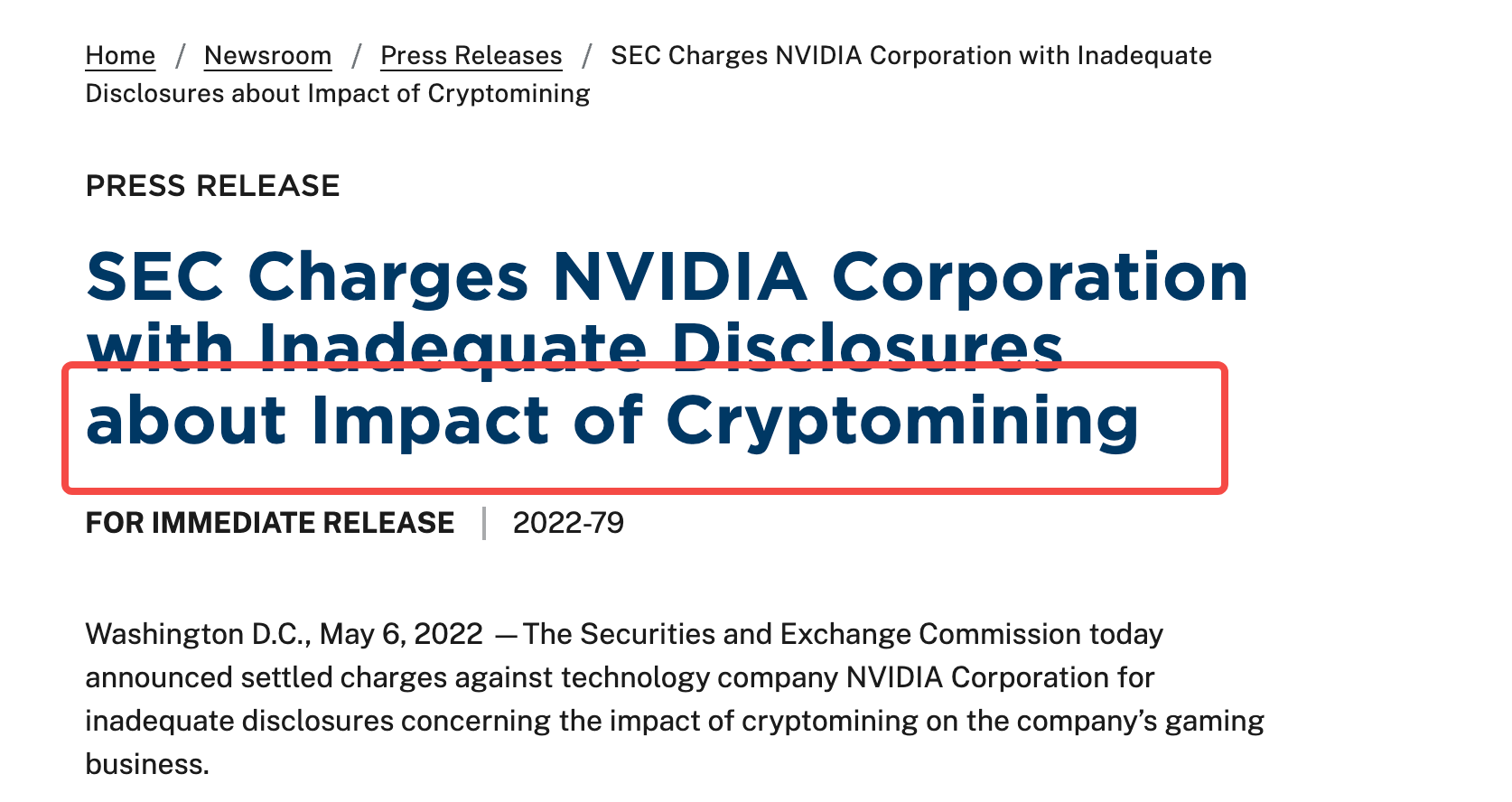
Additionally, the SEC had already ruled on the matter earlier in May 2022, fining Nvidia $5.5 million for failing to accurately disclose in its quarterly reports that gaming business growth was heavily reliant on mining.
After the U.S. Supreme Court denied Nvidia's petition in December 2024, the case was formally upgraded to a class-action lawsuit in March of this year, prompting Nvidia to ultimately choose to settle for money.
For the plaintiff investors, this $290 million covers only about 14% of the losses they originally claimed, representing a discounted buyout; for Nvidia, this expense is negligible against today's trillion-dollar market cap, and the company explicitly noted in its disclosure that most of the settlement amount will be paid directly by its liability insurance carriers.
Looking back, settling this eight-year-old case feels like a misplaced footnote of an era.
Before the explosion in AI computing power, it was precisely crypto miners that drove one of Nvidia's most critical periods of performance growth. Today, the chip giant attempts to turn the page on that history—where it wanted to earn money from the crypto circle without being labeled as one—through an insurance-covered payout.
Join TechFlow official community to stay tuned
Telegram:https://t.me/TechFlowDaily
X (Twitter):https://x.com/TechFlowPost
X (Twitter) EN:https://x.com/BlockFlow_News
 深潮TechFlow