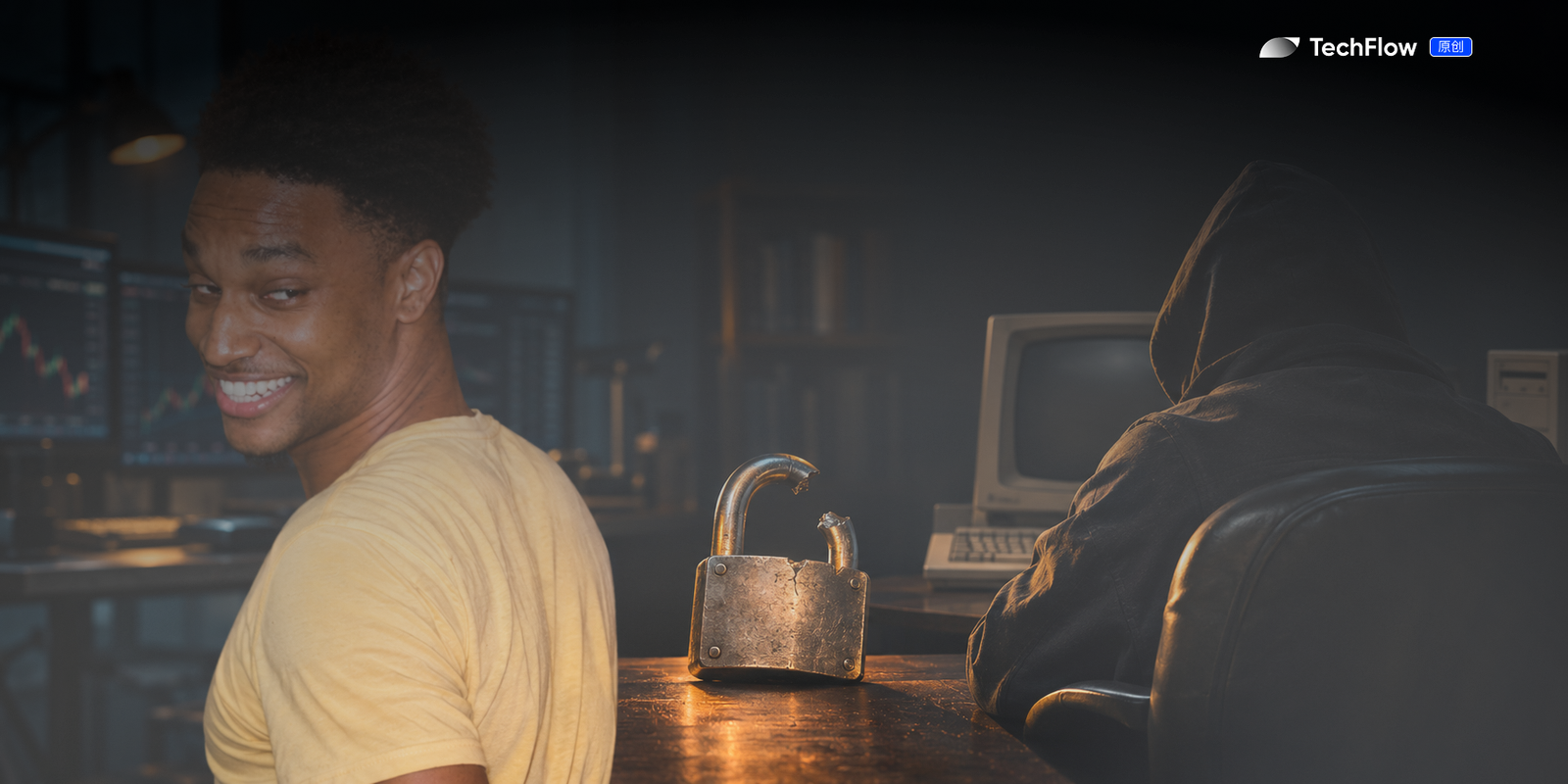
Ansem and Satoshi Nakamoto actually live under the same "stolen" roof.
Author: David, TechFlow
TechFlow:
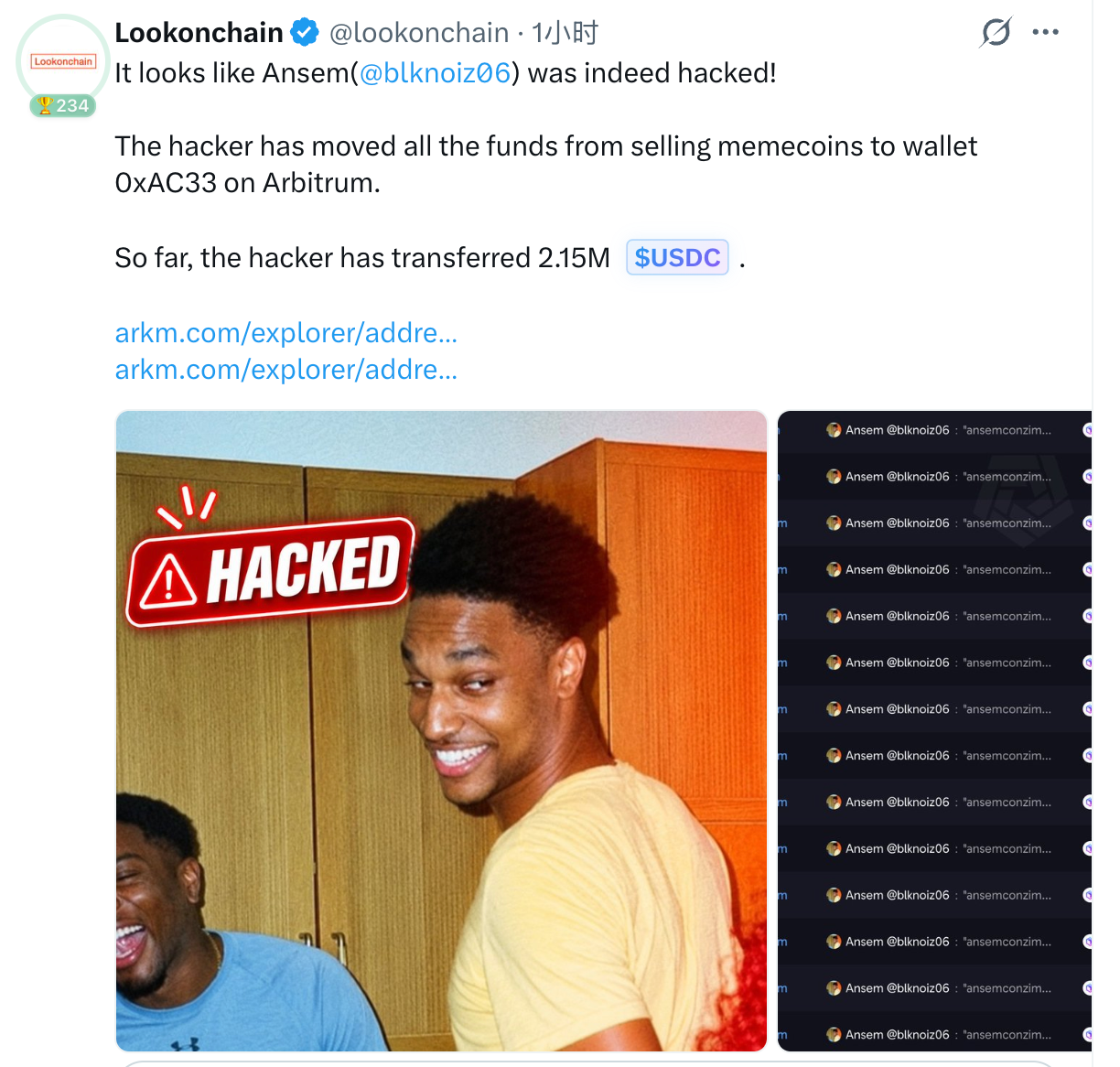
Solana trader Ansem concentrated dumped his eponymous token across linked wallets, exchanging them for approximately 17,600 SOL, worth roughly $1.25 million at the reporting price. Lookonchain subsequently reported that related addresses transferred about 2.15 million USDC to Arbitrum, covering proceeds from the sale of various Meme coins, which cannot be directly equated to the single-coin sale revenue of ANSEM alone. The community is fiercely debating whether he committed insider theft or was truly hacked, while a question posed by Frank DeGods pushed this micro-drama further: “What if this happened to Satoshi?”
From the uncontrollable dump of 70 million small-cap chips, to speculated early Bitcoin and quantum shadows belonging to Satoshi, the most fragile assumption in the crypto market is believing that dormant chips will never wake up. This means that in front of ruthless matching engines and liquidity abysses, it hardly matters whether hackers exist or not; on the same sell-order sheet, betrayal and acts of God have always been indistinguishable.
Ansem and Satoshi are obviously two different figures. Yet the massive chips they left on-chain face the exact same possibility of being pulled into the abyss by gravity.
One is a modern speculator thriving under the spotlight, risking attention and liquidity via Twitter pumps; the other is a creator who stepped down, completely fading his silhouette into cryptographic fog.
Theoretically, they should never be discussed together in any serious context.
But the recently flagged anomalous wallet dumps, combined with industry discussions on quantum computing risks, have made these dimensional boundaries seem less distinct than ever.
According to on-chain monitoring reports, Ansem-linked wallets sold off about 70.8 million ANSEM tokens in batches, securing roughly 17,600 SOL, valued at approximately $1.25 million at the time of reporting. Lookonchain later stated that the proceeds from these Meme coin sales were moved to an Arbitrum address starting with 0xAC33, totaling about 2.15 million USDC. The ~$1.25 million corresponds strictly to the sale proceeds of ANSEM alone, while the 2.15 million USDC represents the total transfer amount noted in monitoring reports, covering different fund scopes. During the dump, ANSEM plummeted significantly, with early monitoring noting a roughly 60% hourly drop; these are records of the event in real-time.
Subsequently, the familiar script unfolded methodically.
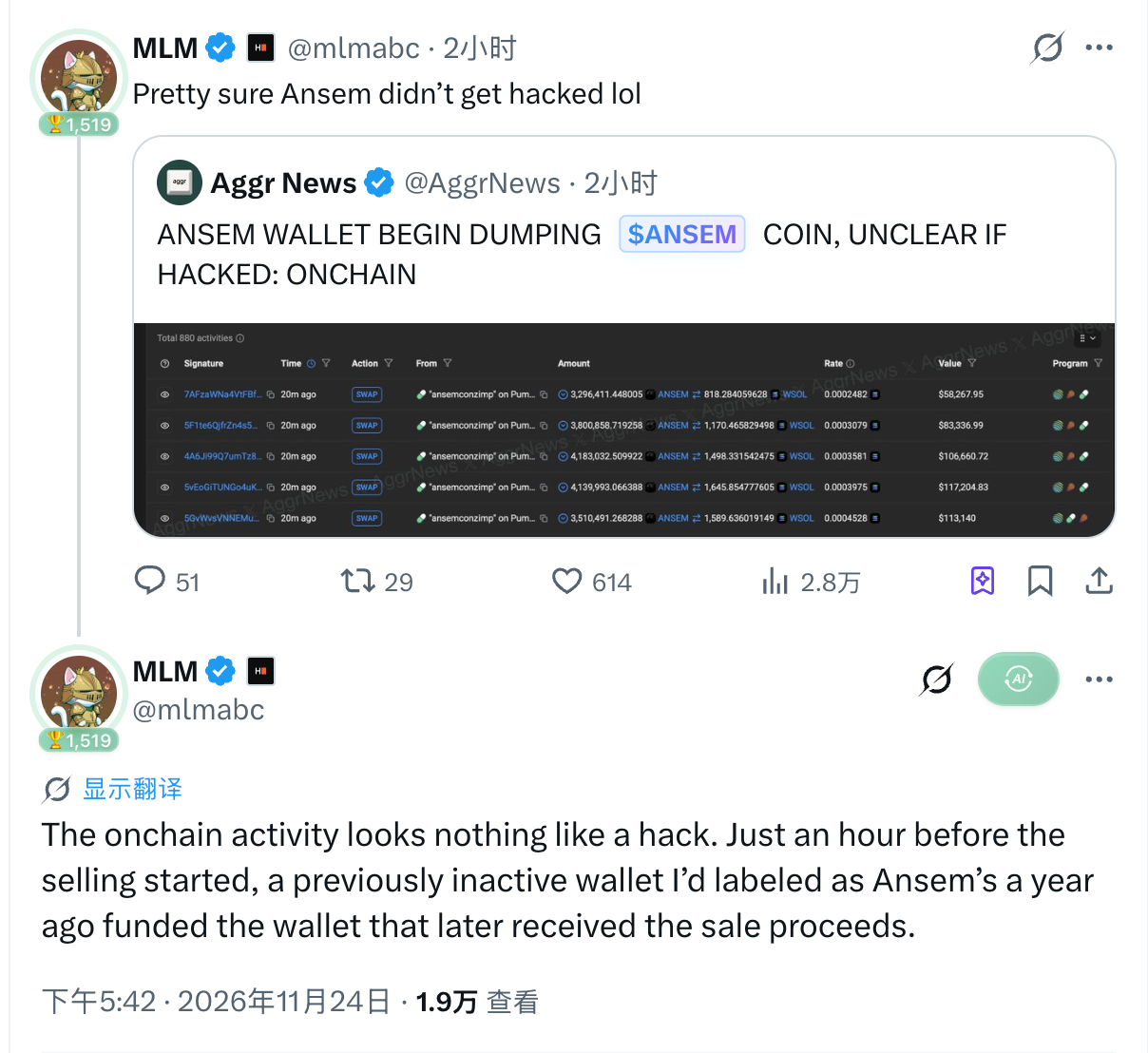
Ansem later claimed his Pump wallet was compromised, initially suspecting unauthorized access to the Bullpen account, which had previously imported a Solana private key; the specific attack vector remains unconfirmed. On-chain analyst MLM, however, presented a contrasting view, stating that roughly an hour before the dump, an old wallet he had previously tagged as Ansem's had already transferred funds to the receiving address. The wallet still held about 16.7 million ANSEM tokens, becoming another focal point for community debate.
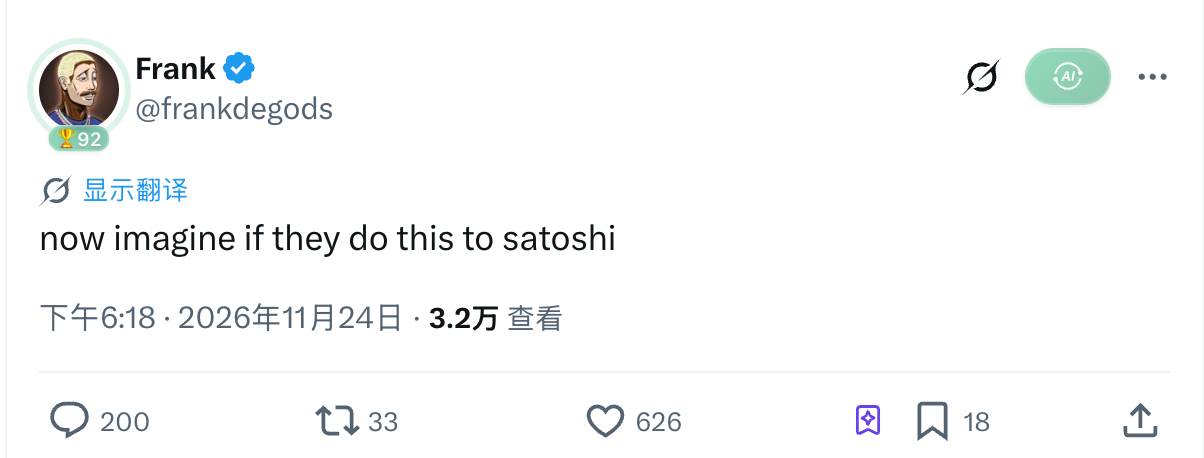
English-speaking crypto Twitter continues to argue over whether this was a hacker theft or Ansem staging a self-dump, while a post by Frank DeGods prompted me to consider a much broader question:
“Now, imagine if they did the exact same thing to Satoshi.”
In recent years, token holders have witnessed too many incidents beginning with suspicious wallet transfers.
Looking at the end result, whether a coin is stolen by hackers, dumped via a staged self-cover, or if Satoshi’s BTC is genuinely cracked by quantum computing, the resulting market crash is ultimately identical.
Self-Dumping and Hacked Dumping Are Mathematically Equivalent on the Charts
When positions grow large, holders often fall into a moral delusion amid desperation.
For instance, as an ANSEM holder, I desperately want to verify whether Ansem is innocent, as if confirming an external hacker attack would grant my 75% shrunk balance some sacred absolution; whereas proving it was a self-staged operation would only condemn the loss as unforgivable fraud.
But AMM pools possess no sense of morality whatsoever.
Deep within every order book match, there is no field to record the psychological state of the private key signer. It doesn’t care if the keyboard operator is a hacker, doesn’t care if this is a premeditated cash-out, and certainly doesn’t care whether retail investors were kept in the dark.
That said, the furious accusations circulating in the community are far from fabricated out of thin air.
On-chain analyst MLM (@mlmabc) pointed out that roughly an hour before the dump, a wallet he tagged as Ansem's a year prior had transferred funds to the address eventually receiving the proceeds, leading him to doubt a hacker attack. MLM’s assessment directly conflicts with Ansem’s claims, yet this pre-dump transaction makes it hard for the community not to grow suspicious.
Even more puzzling is that after this wallet executed three waves of sales totaling roughly 70.8 million ANSEM for about 17,600 SOL, it precisely left behind around 16.7 million ANSEM untouched. Transferring funds to receiving addresses before the dump, then leaving a trailing position afterward, makes these maneuvers even harder for the community to accept as a "stolen" narrative.
Until more evidence emerges, voluntary selling and private key theft remain competing explanations.
Because we’ve seen too many cases using "hacker breach" or "private key leak" as cover for insider dumping. Flooding believers with chips regardless of cost, then typing "I’ve been hacked" on Twitter, allows profit to wash safely into secure pockets while attempting to retain a shred of victim dignity in the court of public opinion—this has become a well-honed exfiltration script for many KOLs.
Yet the problem lies in the fact that, from a results standpoint, self-dumping and external hacking have become nearly indistinguishable.
Once the chart cracks and SOL is drained from the pool, finding institutions to handle refund requests from victims becomes futile on the Memecoin frontier, which lacks legal contracts and recovery mechanisms. Demanding restitution? That’s another grueling and protracted mission.
On a physical level, whether it’s an act or a hack, the devastation inflicted on every holder is entirely equivalent.
Satoshi’s Public Key in the Sunlight, the Quantum Ghost in the Shadows
I am certainly not trying to exonerate Ansem, nor do I believe hackers hiding in the shadows should escape justice.
It’s simply that if we follow Frank’s rhetorical question, shift our gaze away from this Solana token controversy, and contemplate a more distant, harder-to-counter scenario:
Satoshi, and the quantum computing sword hanging over Bitcoin.
With Ansem, the reason everyone argues endlessly is that he is a living, breathing person. He harbors greed, selfish desires, and motives ready to cash out and improve his life, so people can righteously unleash all their losses and anger onto the moral judgment of "he robbed his own vault."
But what about Satoshi?
If future quantum computing truly reverse-engineers private keys from early-exposed public keys, causing those long-dormant Bitcoin blocks presumed to belong to Satoshi to flood markets one morning, holders will still face a massive sell-off.
Would anyone reasonably call that a Satoshi-led self-dump at that point?
Thus, holding Meme coins automatically grants you a deterrent of "staged hack-induced dumping," while holding BTC automatically subjects you to a "long-term quantum computing FUD" deterrent.
Both of these debuffs hang like the Sword of Damocles overhead; this is the inherent risk token holders must bear.
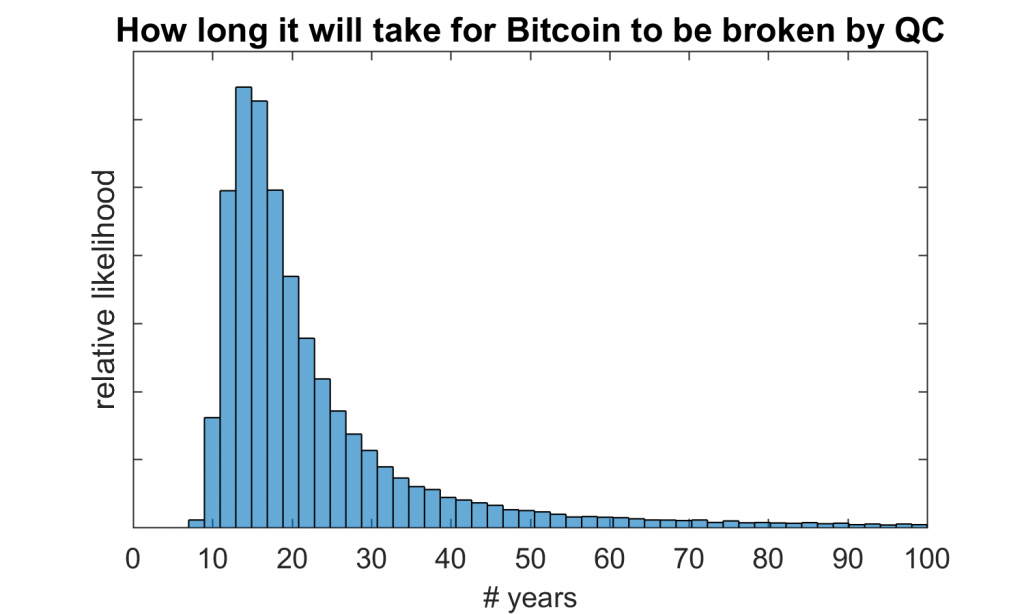
Original illustration: Schematic of quantum risk timeline distribution. Research sources and baseline years are not marked; this image does not serve as a basis for predicting decryption timelines.
Given that each ultimate threat objectively exists, would you abandon holding tokens altogether? Would you walk away today solely out of fear that quantum computing will crack Bitcoin?
Certainly not.
Jay Chang’s recent stance on this topic during an interview was quite revealing. He openly admitted that due to the evolution of AI algorithms and quantum computing risks, his long-term view on Bitcoin has shifted toward caution or even slight bearishness. He outlined a potential risk scenario:
In the interview, he expressed concern that some early-stage Bitcoin remaining in long-term dormancy may fail to actively migrate to newer security protocols, potentially creating sell-side pressure if cryptography faces future breakthroughs. This is his hypothetical stress test and should not be interpreted as confirmation that these private keys have already been breached.
Interestingly, he also bluntly stated in the same interview that he hasn't sold a single satoshi from his core Bitcoin holdings.
Perspective belongs to analysis, while positions belong to conviction.
The vast majority do not flee in panic not because they deny the risks, but because they grasp the most fundamental investment principle: facing system-wide, long-cycle risks, blindly panic-selling and exiting is just as reckless as burying your head in the sand and pretending it doesn’t exist.
Step Out of Gossip Noise and Enter “Bunker Mode”
Bringing our focus back to the present, you’ll realize how utterly draining it is to continue arguing over whether Ansem staged a self-dump or got hacked.
In an era of rapidly evolving AI, commonplace social engineering attacks, and North Korean Lazarus actors repeatedly breaching top-tier centralized exchanges, a leaked hot wallet private key or an influencer’s suspected self-staged fire sale is no longer the highest priority on the crypto security agenda.
Truly mature holders should instead focus on something else:
When the absolute worst-case scenario strikes, do your own assets and positions actually have a robust defensive architecture in place?
Ethereum researcher Justin Drake once urged the industry to calmly begin planning for "Bunker Mode," proposing an orderly migration to new addresses where public keys remain hidden behind hashes. This recommendation comes with specific technical prerequisites and does not imply that all new addresses offer identical protection.
For every holder gambling real capital in the market, "Bunker Mode" is not an empty slogan; it translates into concrete operational protocols.
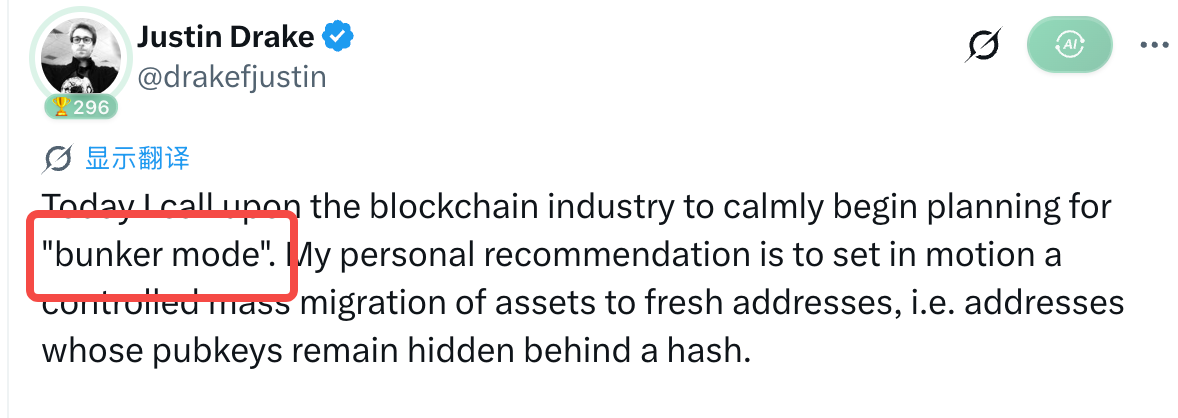
First, completely abandon wishful thinking, and execute physical-level cold isolation where feasible.
According to Ansem’s public statements, he initially suspects the breach is linked to the Bullpen account, which had previously imported a Solana private key; this is the subject's assessment, and the precise attack vector remains unverified.
Large, long-term assets should not share the same hot wallet private key with browser extensions or daily transactions. Storing keys offline, verifying transaction details on hardware wallets, and rationally designing multi-signature permissions can mitigate certain operational and single-point-of-failure risks; however, these measures themselves do not grant existing signature algorithms quantum resistance.
Second, distinguish address types and minimize unnecessary public key exposure.
For P2PKH and P2WPKH addresses whose public keys have never been published elsewhere, the blockchain typically displays only the public key hash until funds are spent, at which point the full public key is revealed. However, early P2PK outputs contain public keys directly, and Taproot (P2TR) outputs also broadcast public keys, meaning you cannot universally assume safety based on "never having sent funds." For structural specifics, refer to Bitcoin’s BIP 141 and BIP 341.
Avoiding address reuse helps reduce public key exposure for certain address types, but simply "generating a new address" is not a universal quantum-resistance solution. Google Quantum AI's research explicitly separates minimizing address exposure from migrating to post-quantum cryptographic schemes. Hash-based protection can limit certain attack vectors, but it does not guarantee absolute immunity against future quantum advances.
Third, prepare for the worst-case scenario in portfolio allocation.
Never stake your entire fortune on the moral self-restraint of any single centralized entity, founder, or smart contract. Gamble with Memecoins reliant on individual reputations using disposable capital ready to go to zero; for core assets bearing macro-consensus like Bitcoin, maintain sufficient fiat cash buffers to weather extreme volatility and systemic black swan events.
True crypto faith clearly does not involve closing your eyes and praying that hacker breaches and quantum crises will never occur.
It means you clearly see through human greed and potential technological flaws, yet still choose to sit at the poker table; meanwhile, you have personally built high bunker walls for your assets and installed brand-new locks that have never been exposed.
Do not gamble on anyone’s morality, nor turn a blind eye to any potential threats. In this uncertain era, only those who fully prepare for the worst stand any chance of claiming the future that ultimately pays out.
Join TechFlow official community to stay tuned
Telegram:https://t.me/TechFlowDaily
X (Twitter):https://x.com/TechFlowPost
X (Twitter) EN:https://x.com/BlockFlow_News
 深潮TechFlow