Podcast Notes | Dragonfly Partner Haseeb: Missed Investing in Solana at $0.4 Back Then, Now Betting on Ethena and Zcash
Curated & Compiled: TechFlow
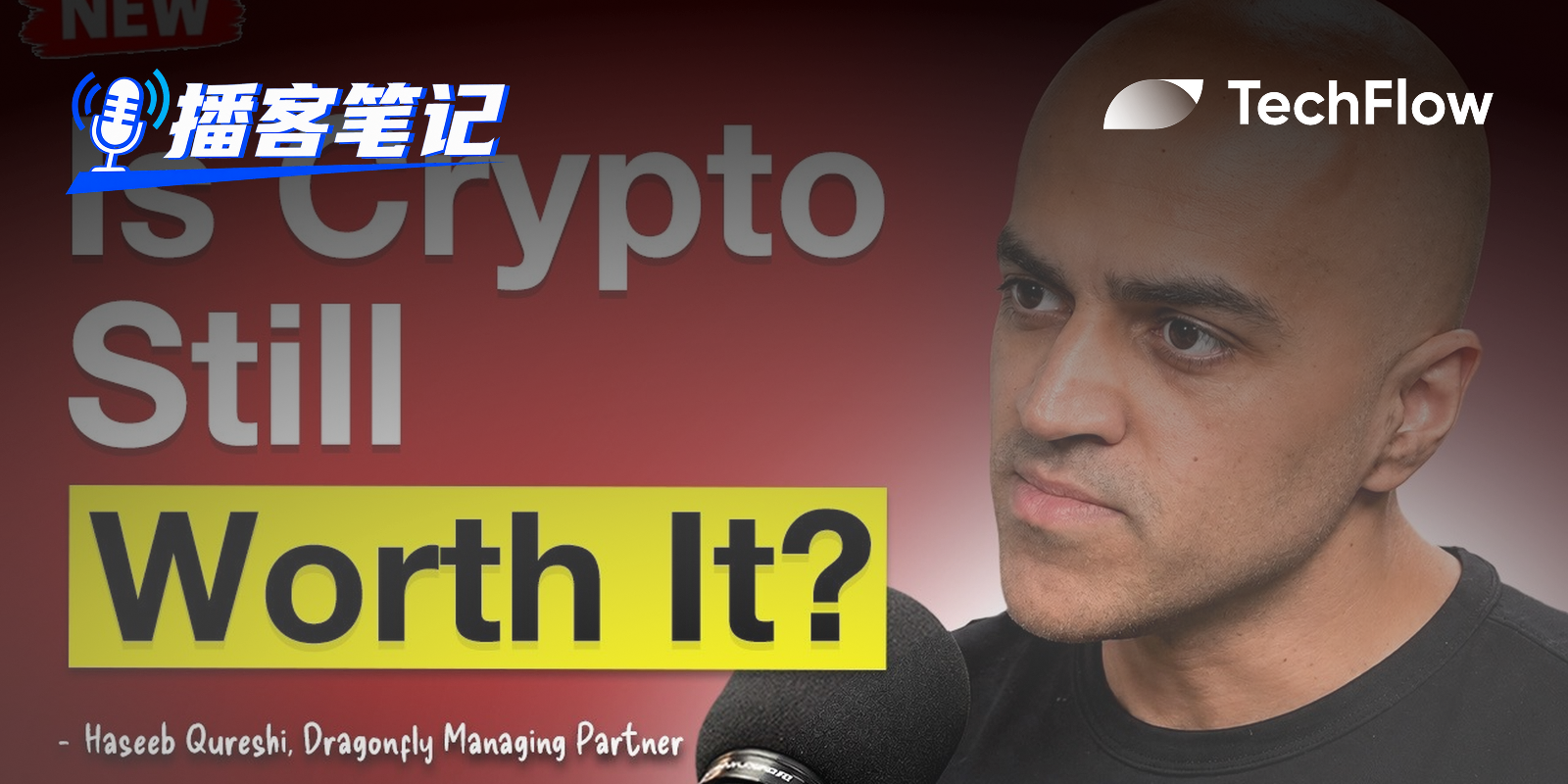
TechFlow Digest: As managing partner of Dragonfly, a premier crypto venture capital firm managing over $4 billion in assets, Haseeb Qureshi appeared on the When Shift Happens podcast for a comprehensive, 70-minute panoramic conversation with host Kevin Follonier. As a seasoned investor who has led and witnessed the growth of over 150 crypto unicorns, Haseeb thoroughly retraces the most profound missteps and highlight victories of his investment career. This includes his early "notebook-style" bias that led him to reject Solana's seed round at a mere 4-cent valuation, as well as the underlying mathematical rationale behind aggressively betting on and leading the investment in Ethena during the extreme industry-wide panic following the Terra collapse.
Confronting the AI wave currently reshaping the global tech landscape, Haseeb sharply points out the striking structural parallels between today's AI investment frenzy and the Crypto Summer of 2020. He not only dissects the deeper revelations behind Dragonfly's rejected offer to invest in Hyperliquid at a $600 million valuation, but also fully maps out the top-tier investment panorama heading into 2027: why the privacy-focused AI platform Venice is his strongest conviction holding today, why Zcash constitutes the indispensable ultimate hedging policy for Bitcoin against the cryptographic catastrophe triggered by rapid AI problem-solving and regulatory penetration, and why Silicon Valley's culture of embracing failure and trying new things is the only antidote to systemic rigidity.
Guest: Haseeb Qureshi (Managing Partner at Dragonfly, former professional poker player, and veteran software engineer)
Host: Kevin Follonier (Host of When Shift Happens)
Podcast Source: When Shift Happens (https://www.youtube.com/watch?v=-A1vEiQgu3g)
Original Title: $4 Billion Fund Manager Reveals The 5 Crypto Coins He’s Going All In On In 2027 | E194
Air Date: November 15, 2026
Key Takeaways
- The "Notebook Lesson" of Missing Solana at 4 Cents: Haseeb thoroughly recounts the pass memo he wrote in his early days as a junior VC rejecting Solana's seed round. At the time, Solana's token price was merely 4 cents. Due to the business plan claiming 600,000 TPS, Haseeb nitpicked every micro hardware bottleneck line-by-line as if grading a homework assignment and rejected it. He reflects deeply that an investor's most expensive mistake is never losing principal, but rather arrogantly clinging to early flaws and missing out on non-consensus winners with exponential upside.
- The Overlap Between the AI Investment Frenzy and the 2020 Crypto Summer: Haseeb observes that the current AI parties in San Francisco, capital scramble, and valuation inflation mirror the 2020 liquidity mania in crypto identically. While top talent floods into AI, the issue of "digital civil liberties" in the AI age has never been seriously adjudicated. The censorship and log monitoring practices of centralized oligarchs are quietly laying the groundwork for censorship-resistant privacy networks.
- The External Yield Confidence Behind Betting Big on Ethena Against the Current: Following the devastating Terra/LUNA collapse in May 2022, the entire industry shunned synthetic stablecoins. However, the Dragonfly team thoroughly reverse-engineered Ethena's financial mechanics, confirming that its delta-neutral external yield loop (relying on spot ETH staking and derivatives funding basis arbitrage) is worlds apart from the Ponzi-like internal token spirals without collateral. Dragonfly led the investment despite全网 panic; since then, Ethena's supply has exceeded $7 billion and maintained zero depeg.
- VC Self-Reflection After Being Rejected by Hyperliquid: Before Hyperliquid's token generation event (TGE), Dragonfly proactively approached founder Jeff and extended an investment offer at a staggering $600 million valuation, which was politely declined. Relying on robust quantitative market-making cash flow and a custom-built high-performance L1 chain, the Hyperliquid team opted for full self-funding and allocated 100% of tokens natively to the community and traders. This milestone signals that when a product possesses极强 self-sustainability and network effects, the traditional VC capital premium is completely shattered.
- The Ambition of Variational: A Cross-Asset Perpetual Swap Protocol: In traditional markets, crypto, US equities, gold, and commodities are fractured across different platforms. Leveraging liquidity aggregation and request-for-quote (RFQ) clearing mechanisms, Variational builds a universal on-chain derivatives protocol covering all asset classes. Given that derivatives markets are inherently dozens of times larger than spot, the ultimate form of on-chain derivatives will inevitably consume multi-asset liquidity from traditional finance.
- Dogfly's Long-Term Profit-Taking and Exit Framework: In venture capital, truly exceptional winners often sell too early. For tokenized assets in core sectors, frequent swing trading frequently causes investors to miss out on compounding. Beyond fund maturity redemptions and liquidity risk controls, true core positions should accompany protocols across bull and bear cycles until their fundamentals undergo an irreversible paradigm shift.
- Strongest Conviction Holding Heading Into 2027: Privacy-Focused AI Platform Venice: Haseeb explicitly states that Venice is his most firmly believed crypto asset today. While everyone cheers for centralized large model compute, they ignore that every interaction faces comprehensive auditing and profiling by Silicon Valley oligarchs. Venice utilizes a decentralized encrypted inference architecture to build permissionless, log-less, and uncensored private AI, serving as the core digital safe harbor for safeguarding human thought and free expression in the future.
- Zcash as the Ultimate Hedging Policy for Bitcoin: Borrowing from Naval Ravikant's framework, Haseeb rationalizes Zcash as a natural insurance policy for Bitcoin. On one hand, Bitcoin's fully transparent ledger faces increasingly strict UTXO stigmatization audits from global regulators. On the other, OpenAI's recent breakthrough of solving over 700 advanced math problems in 4 hours has sparked "math apocalypse" fears regarding the cracking of foundational elliptic curve and public key cryptography. With Bitcoin's social consensus being too rigid for rapid upgrades, Zcash, already equipped with post-quantum and zero-knowledge proof defenses, will become the ultimate Noah's ark protecting non-sovereign wealth.
- Silicon Valley Culture: The Ultimate Force Against Bearishness: Haseeb emphasizes that the fundamental pillar keeping him extremely optimistic about the industry is Silicon Valley's unique innovation culture: extremely high failure tolerance, encouragement of heresy, and a reckless spirit of trying new things regardless of cost. Traditional systems in Europe and Asia tend to be conservative and risk-averse. The grassroots resilience of this experimental spirit in Silicon Valley and the crypto open-source community is the driving force that propels technology through cyclical troughs.
Highlights
- "As an early-stage investor, the most painful experience isn't踩雷 losses; it's realizing you cleverly picked apart every flaw in a pitch deck, proved they couldn't succeed, and then watched helplessly as it became a 10,000x super legacy. Back then, Solana's seed round was just 4 cents. I treated the investment like grading an exam, critiquing every detail about their impossibility to hit 600k TPS, and ultimately missed an entire epoch."
- "In math exams, even if your final answer is wrong, you still get partial credit for showing beautiful steps; but in real-world venture capital, getting the process perfectly right but the conclusion wrong yields a strict zero. No matter how logically brilliant your analysis seems or how much like a once-in-a-generation genius you appear, if you pick the wrong project or miss it entirely, you are purely a failure."
- "After Luna crashed in 2022, every VC in Silicon Francisco would have a nervous breakdown hearing 'synthetic stablecoin'. But great investments often happen in the darkest moments when the public is trapped in post-traumatic stress disorder. Ethena is absolutely not a Ponzi scheme; it's a transparent, healthy spot basis arbitrage engine. It was precisely because the whole industry closed its eyes and fled that we dared to write the lead check."
- "We went to the Hyperliquid team with a valuation quote of $600 million, but Jeff calmly and politely declined. Outstanding, highly profitable teams simply no longer need VC dilution. The crypto world is birthing native super-species that rise purely through extreme engineering and product power without begging for capital, delivering a harsh lesson to all traditional VCs."
- "Today's San Francisco AI scene is a complete mirror image of the 2020 crypto summer. The same party atmosphere, the same endlessly inflating absurd valuations, everyone rushing to jump in. But history repeatedly proves that when everyone feverishly chases consensus, true long-term moats are often incubated in neglected, overlooked corners."
- "If I had to pick one crypto asset I believe in the most right now and plan to hold firmly until 2027, my answer is Venice. When large models take over humanity's entire cognitive framework, if every search, question, and deep thought must be logged, censored, and monitored by centralized oligarchs, it marks the total death of civil liberty. Censorship-resistant privacy AI is the fundamental, non-negotiable line of defense for humanity's future."
- "Zcash is the natural insurance policy for your held Bitcoin. If a cryptographic math apocalypse occurs in the future, or if Bitcoin is comprehensively besieged and penetrated due to its fully transparent ledger, the overly rigid consensus of Bitcoin will struggle to complete a rapid network-wide upgrade. Zcash, already prepared with zero-knowledge defenses, will take over the torch of non-sovereign hard assets. If you hold Bitcoin for 10 years, you ought to hold a corresponding position in Zcash."
- "The most dangerous mindset in venture capital is trying to play smart at every fluctuation. For foundational protocols with era-defining monopoly power, selling too early is often the biggest regret. As long as the team's core flywheel is spinning healthily, the best strategy is to sit tight, grab the rails, and let the miracle of compounding occur naturally."
Full Episode
Frenzy and Illusion: Why Today's San Francisco AI Investment Mirrors the 2020 Crypto Summer?
Kevin Follonier: Obviously, a party isn't the best venue for serious conversations, but for some reason, people in the crypto space seem incredibly keen on throwing various parties.
Haseeb Qureshi: That's definitely not exclusive to crypto. Friend, if you go to San Francisco right now and attend those AI circles' gatherings and parties, the scene is exactly identical. What played out in the crypto industry three or four years ago is unfolding word-for-word in the AI investment sphere today.
Haseeb Qureshi: It's purely socially driven investment mania, with virtually no serious due diligence可言. Term sheets are scribbled on napkins, checks are flying everywhere, and valuation metrics have completely broken down. You frequently see so-called "boutique labs" consisting of just four or five young guys and a concept idea, wildly raising funds at absurd valuations of billions. History always resembles itself shockingly; everything old becomes new again, and we've already experienced this entire script before.
Kevin Follonier: When you watch this scenario unfold firsthand, what touches you the most?
Haseeb Qureshi: It's pure human nature. Whenever the masses get maximally excited about something and feel they "must get involved immediately or be abandoned by the era," investment standards rapidly capitulate to surrounding hysteria and social atmosphere.
Haseeb Qureshi: Looking back now, it's easy to mock our past frenzy. People remember 2021 and 2022 with a touch of self-deprecation: we thought we could take over the world back then, felt Bored Apes represented the future of human culture, people could casually toss money into any absurdly stupid project and easily pull 3x, 5x, or even 10x profits, and everyone fantasized about getting rich overnight just by doing nothing.
Haseeb Qureshi: And if you talk to those young founders in San Francisco today, you see the exact same sense of entitlement in their eyes: "Of course I'm supposed to get rich! I don't even need to deliver a commercialized product; I just need to be in the right place at the right time. I rightfully deserve a massive check from top-tier VCs, and then smoothly cash out pre-IPO shares (Secondary) at high valuation rounds."
Haseeb Qureshi: I remember one of the most unbelievable things during that 2021 crypto craze was startup teams openly resisting equity vesting. And today in San Francisco, this has actually become normal! People discuss frankly on social media and in cafes: "Why do we need a 1-year vesting cliff? Demanding employees stay a full year to earn equity severely hinders hiring! What if AGI arrives in six months? Waiting a full year creates too high an opportunity cost. Who would be stupid enough to sign options agreements with a cliff?"
Haseeb Qureshi: So OpenAI literally abolished the option vesting cliff internally! Their direct reason was that all other AI startups elsewhere had already abandoned cliffs to poach talent. You constantly hear stories like: someone joins an AI lab as a co-founder, quits after three months, founds another lab, stays a year, and leaves again. These exact plotlines happened in the crypto circle back then; it's the irresistible instinct humans possess when facing speculative mania.
Kevin Follonier: Since you've already seen this movie on repeat, how tempted were you to jump in while watching it play out? Do you think it's a 100% pure bubble, or does it actually contain revolutionary core substance?
Haseeb Qureshi: The current frenzy is undeniably wild, but it happens precisely because there is indeed a rock-solid reason behind it: a genuine technological revolution is authentically unfolding.
Haseeb Qureshi: Just like the crypto market in 2020 to 2021: despite flooding scams and garbage filling the market then, 2021 witnessed Terra's collapse, FTX's implosion, and the rise and fall of Bored Apes and OpenSea; so much failed the test of time. Yet simultaneously, 2020 to 2021 was the golden era where DeFi was genuinely gestating. Stablecoin on-chain scale skyrocketed vertically during that period, and Bitcoin decisively broke the historical barrier of $20,000. Truth and illusion intertwined exactly at the same moment.
Haseeb Qureshi: The same holds true for AI today. Amidst massive pseudodemand guaranteed to fail and reach nowhere, there necessarily brews achievements capable of fundamentally transforming human society.
Kevin Follonier: So based on cycle comparison, where roughly is today's AI in the crypto cycle? Does it align with the 2021 crypto peak?
Haseeb Qureshi: I'd argue it's closer to the early midsummer phase of 2020.
Kevin Follonier: Meaning it will get even crazier from here?
Haseeb Qureshi: Before it violently reverses into a downward spiral and frustrates everyone, it must absolutely experience a peak frenzy far wilder than what we see now. But at some inflection point, tragedy inevitably strikes. Just look at the massive scale of global data center construction right now: to repay the colossal debt incurred building this compute infrastructure, the industry will eventually need to generate astronomical-level net profits just to square the accounts.
Haseeb Qureshi: Take算力 procurement commitments signed by frontier model makers like Anthropic, scaled at hundreds of billions of dollars! Once macroeconomic cyclic downturns hit, or structural actual demand for AI compute encounters any micro-stoppage fluctuations, mathematically speaking, they will struggle immensely to fill such terrifying capital black holes.
Cross-Cyclical Investment Paradigm: Finding Non-Consensus in Conformist Frenzy and Archaeology of the 2021 Pass Memo
Kevin Follonier: From your personal practical perspective, facing this cycle law, is your strategy feeding the fire and jumping in, or克制ly waiting for the bubble to burst and the market to punish everyone before picking up bargains in the ruins? How do you usually play your cards at this stage?
Haseeb Qureshi: The most fundamental truth is: regardless of which phase of the cycle you're in, exceptionally excellent investment opportunities essentially always exist on the market. During the peaks of 2020 and 2021, while undoubtedly flooded with trash destined to zero, if you review it—for instance, Ethena's seed round was exactly positioned by us in H1 2022, which was before severe market turbulence and the FTX collapse; similarly, for high-performance L1 Monad and cross-asset derivatives Variational, we issued seed checks near the 2020/2021 peaks as well.
Haseeb Qureshi: So the answer is: gold exists everywhere in the cycle. The key isn't whether external conditions are bull or bear, but how much capital you deploy at what stage, and ultimately what quality of assets you purchase.
Haseeb Qureshi: The most fatal error in investing usually occurs the moment you rashly act out of FOMO, or invest in projects you haven't truly understood. This is the trap I witness most frequently in heated markets: people see Axie Infinity mooning, see every top-tier VC screaming they must invest in OpenSea, see hot capital frantically snatching Yuga Labs. The average investor's real mindset is: "I honestly have no clue why this is worth this much money, but those elite firms are all buying in. They must know some insider info I don't."
Kevin Follonier: Was that superstition about "they must know insider info" ever proven true?
Haseeb Qureshi: Completely self-deception. After the grand collapses of 2021 and 2022, today we have the chance to conduct deep "ruins archaeology", reviewing countless investment memos written by institutions at the peak of their frenzy. Back then watching them execute those hundreds-of-millions-valuation share-grabbing trades, I once assumed these tier-one funds behind the scenes must have run massive rigorous financial modeling, exhaustive due diligence, and deep strategic simulations.
Haseeb Qureshi: But when you actually flip open those memos today, you feel intensely embarrassed: the investment theses are embarrassingly simplistic and幼稚, summarizing down to essentially one sentence: "Because other top-tier firms are investing, we have to throw money in too." This herd mentality during hype periods carries极强的 psychological contagion and is precisely the root cause of how most capital gets annihilated.
Profound Repentance for Missing 4-Cent Solana: The Junior VC's "Homework Grading" Nitpick Trap
Kevin Follonier: Speaking of investment memos, within your fund or your personal investment career, is there a single memo that makes you cringe remembering today or taught you a brutally costly lesson?
Haseeb Qureshi: Absolutely the pass memo I wrote about Solana early in my career. That was back in 2017 to 2018, roughly my first year entering venture capital. Today, as a mature institution, we only draft investment memos when deciding to back a project; but back then as a rookie junior investor, forced myself to learn and document the reasoning behind every decision node, I wrote incredibly detailed Pass Memos for every single project I rejected.
Haseeb Qureshi: 2018 was the ancient era of burgeoning L1 tracks. I almost wrote pass memos for every project that batch, and among them, the most brutally facepalming and humiliating was Solana's seed round. If memory serves, Solana's seed token price was approximately 4 cents.
Kevin Follonier: 4 cents! What exactly did you list as the rejection reason in that memo?
Haseeb Qureshi: If you look at that memo I wrote back then, you'll find it packed with hardcore micro technical nitpicking. Solana's BP explicitly declared in black and white: they would achieve 600,000 TPS ultimate throughput via GPU hardware acceleration and brand-new architecture.
Haseeb Qureshi: Because I come from a software engineering background, I basically treated that financing pitch deck like a high-difficulty computer science homework assignment! I dismantled their math formulas and engineering derivations line by line, listing pages of technical rebuttals in the memo: proving that consumer-grade hardware and existing network latency could never achieve 600k TPS, nitpicking micro bottlenecks in concurrent communication, memory bandwidth, and node verification, finally smugly concluding: "Project's technical specs are severely inflated, unfeasible in engineering implementation, recommend passing."
Haseeb Qureshi: This is painfully typical—a microcosm of a junior investor's arrogance. You literally interpret the grand vision sketched by the founding team at ultra-early stages, exhausting all energy proving they "can't technically achieve it yet", acting like a TA desperately trying to prove their IQ, meticulously grading homework, picking apart every flaw, and slamming a giant red X on it.
Haseeb Qureshi: I always joke: the worst outcome for an investor isn't just being right about every nitpicked detail, only to miss a 10,000x return! In college math class, if your solution steps are beautifully written, even if the final answer is wrong, professors still give you partial credit; but in the world of venture capital, getting the process perfectly right and the conclusion dead wrong yields a strict zero! No matter how logically airtight your analysis appears or how much you look like a once-in-a-generation genius, if you botch the final result, you are categorically wrong.
Kevin Follonier: This is exactly what makes business investing and entrepreneurship fascinating. I remember in school, if you were fiercely competitive doing math problems, you'd always hope: even if the answer is wrong, maybe the teacher will notice my steps are correct and give me a few pity points to pass; but in English Lit or French classes, if the teacher didn't like you, no matter what you wrote, you got a brutal low grade, filled with subjective arbitrariness.
Kevin Follonier: I always desperately wanted top grades, constantly wondering: how do I prove I'm better than everyone else? The answer is becoming an entrepreneur and investor! Because in the ultimate showdown of commerce and markets, there's only one pure standard: did your business succeed? Did your investment make money? There's no grader who can arbitrarily tank your score just because they dislike your appearance, glasses, or speaking tone. The market is absolutely objective.
The VC Career Ladder: From Deal Flow and Analysis to Picking and Truly Winning Deals
Haseeb Qureshi: Exactly. There's zero political maneuvering, zero ambiguity. The market doesn't care about your family background, social circle, or looks. Right is right, wrong is wrong. The objective world will tell you fastest and coldest whether you're an excellent investor or a terrible failure.
Haseeb Qureshi: Yet simultaneously, venture capital differs radically from hedge funds in its essence. In secondary hedge funds, everyone faces identical trading tools. If you want to buy Tesla stock, or SK Hynix/Micron, you simply click order in your trading app, everyone buys at fair prices. It's a truly level playing field.
Haseeb Qureshi: VC is completely different. In the VC industry, you can sit courtside all day pointing fingers afterward, acting like a hindsight prophet: "I knew that company would win, it was so obvious! Sequoia居然 invested in FTX, if I were there I definitely would've spotted the fraud." But it's meaningless because the biggest barrier to entry in VC isn't seeing clearly, it's securing access to invest from the very beginning.
Kevin Follonier: So compared to picking the right horse, securing the ticket to enter is the more core decisive factor?
Haseeb Qureshi: Neither can be neglected: step one is securing access, step two is picking the true winner. I often draw an ability progression pyramid for new junior investors inside Dragonfly, telling them exactly what skills will determine their assessment and promotion path.
Haseeb Qureshi: At the bottom of this skill ladder, layer one is Deal Flow: Can you source deals through massive outreach? Can you grasp what's happening in the industry? Layer two is Analysis: Can you conduct deep due diligence? Can you write solid memos fully decomposing commercial upside/downside scenarios?
Haseeb Qureshi: Layer three is Picking: Distinguishing within numerous deals who wins and who dies. But I emphasize that Picking only sits halfway up the ladder! Within the core competency system of VC, its weight is actually far lower than外界 imagine, because plenty of people across the industry can spot good projects.
Haseeb Qureshi: Above picking, the highest and most decisive fourth layer is called "Winning the Deal"!
Kevin Follonier: What exactly does winning the deal entail?
Haseeb Qureshi: Securing the allocation! The ocean of people who see OpenAI becoming a titan is vast—Sequoia sees it, a16z sees it, Benchmark sees it too. Everyone knows it'll win, but why leave precious allocation to you? Seeing a good project doesn't mean you get a seat at the negotiation table. True rank lies in winning the founder's trust and closing the transaction.
Breaking Through as the Underdog: Borrowing Giant Brand Halo vs Building Independent Personal Brand
Kevin Follonier: Unless you possess an unrivaled super brand. Like traditional consulting, McKinsey sweeps everything and charges premiums using its golden signboard. In VC, brand weight is huge too. If you're not a dynasty, as a non-traditional household or emerging underdog, how do you win these hyper-competitive top-tier deals?
Haseeb Qureshi: This is the most fascinating core proposition of VC. If you're at Sequoia or a16z with massive platform backing, you're essentially "renting" the platform's brand equity. Marc Andreessen, Ben Horowitz, and Chris Dixon spent decades building monumental reputations. As young investors inside the platform, you leverage their halo to negotiate deals; that's not personal asset.
Haseeb Qureshi: But if you're not inside those dynastic platforms, you must build your brand independently. Winning deals usually follows different tactical paths, core depending on your check size, your objectives, and the founder's opportunity cost of accepting your capital. If you're a mega fund managing vast capital, your competitors are a16z, you must defeat them head-on; but if you're a boutique mid/small fund, you're often replacing just a slice of angels or strategic investors, so entry friction drops significantly.
Haseeb Qureshi: Regardless, you must provide founders with unique scarce value, or make founders genuinely like you enough to willingly make difficult allocation compromises just to onboard you.
Haseeb Qureshi: Tactics generally split into two camps: "Hot Hunt Oriented" specifically targets the market's hottest picks, squeezing into negotiations at all costs; "Truffle Hunter Oriented" knows they can't beat giants head-on, choosing instead to dig deep into the jungle, mining cold early pearls giants utterly ignore. Truffle hunter strategy is extremely hard to scale, but for small funds, it frequently yields stunning returns.
Haseeb Qureshi: But if you want long-lasting success in VC, the core moat remains building a powerful public personal brand and industry legend. Why do优秀 founders fight over Marc Andreessen, Vinod Khosla, or Naval Ravikant's checks? Because they've built irreplaceable intellectual reputation in the industry. Founders say: "Vinod may be quirky and picky, but he's truly the pathfinder who pierces through fog."
Kevin Follonier: So this is exactly the deep reason you frequently do podcasts and output opinions? Building personal brand is the ultimate weapon in any domain.
Haseeb Qureshi: Exactly, VC boils down to a people business. Many assume a16z's brand unquestionably crushes mid-sized firms, but in many fiercely competitive top-tier deals, the ultimate tiebreaker isn't the cold institutional logo, it's the specific partner. Because over the next five to ten years, sitting in founder board seats, answering calls at 2 AM, helping founders navigate existential puzzles is that specific living, breathing person.
Haseeb Qureshi: Traditional finance harbors outdated tactics like arranging ultra-luxury private dinners for founders, charter jets, or gifting F1 paddock VIP passes, trying to dazzle founders with flashy displays. Might work in traditional IB or certain non-tech fields, but for truly top-tier tech geeks, this trickery is completely无效.
Haseeb Qureshi: In crypto and AI, real hardcore founders only value two things: deep intellectual understanding and absolute trust. They need an ally who truly resonates on code, network mechanics, and crisis PR—not a banker waving checks and flaunting wealth.
Rebetting NEAR: Transformer Paper Author, Paper Drafts, and One-Day Protocol Overhaul
Kevin Follonier: Let's talk about those highlight cases you unearthed at ultra-early stages. Starting with NEAR, you entered super early. Specifically when did you invest in NEAR, and what was the decision logic?
Haseeb Qureshi: Back in the distant 2018, I co-led NEAR's seed round. At the time, the project wasn't even named NEAR, it was called NEAR.ai. NEAR co-founder Illia Polosukhin is one of the authors of Google's globally shocking classic paper Attention Is All You Need, the co-inventor of modern Transformer architecture.
Kevin Follonier: When you invested in them in 2018, did you already foresee Transformer becoming the absolute bedrock for today's GPT and generative AI wave?
Haseeb Qureshi: Absolutely not! If anyone claims today they foresaw all this in 2018, they're purely fabricating history. In 2018, that paper was merely an exploratory academic attempt published internally by Google Research on frontier deep architectures. Even GPT-2 hadn't been born yet, and absolutely nobody on market knew large language models would explode the world this way later.
Haseeb Qureshi: The reason we decided to rebet was a completely different story. Illia and his co-founder Alex are extremely top-tier底层 system engineers. Alex previously worked at distributed memory database MemSQL (now SingleStore). They initially gathered doing AI projects. They pivoted to blockchain because they audited Ethereum's code and were completely floored by Ethereum's底层 implementation.
Haseeb Qureshi: Their immediate takeaway was: "Ethereum's code is written so amateurishly poorly! These guys clearly never actually built industrial-grade distributed systems. Blockchain's current底层 is practically a joke. Two of us can absolutely build a system ten to a hundred times better!"
Haseeb Qureshi: So I sat down with then-partner Ivan. Illia drew sketches on a whiteboard right then, outlining their envisioned blockchain protocol framework. Back then, a hugely popular narrative was "letting blockchain nodes run easily on smartphones for verification", because everyone was anxious about decentralization, thinking if phones couldn't run nodes, it wasn't decentralized enough. Funny looking back now, but it was a massive narrative then.
Haseeb Qureshi: Ivan and I stared at his whiteboard scheme and frankly told them: "Novel idea, but from engineering logic, it's riddled with holes, won't work, concurrency won't scale, parts contradict logically. We absolutely don't think this is a good protocol." So in that initial meeting, we verbally passed them.
Haseeb Qureshi: Result? Literally a day later, early next morning Ivan and I received a long email from Illia and Alex. It read: "Thank you deeply for yesterday's feedback. We redesigned a completely new protocol scheme, please review." In a mere 24 hours, they reworked and solved every single engineering flaw we pointed out!
Haseeb Qureshi: Honestly, their v2 still wasn't flawless, but I immediately realized: these two's engineering攻坚 capability is unfathomable! In 2018, most L1 builders were ivory tower academics, what they called "Professor Coins", theorists deriving formulas; Illia and Alex were extremely rare Eastern European hardcore engineers, the type who could grind code to极致 overnight to solve底层 concurrency issues! What explosive energy would such a top-tier combat engineering team unleash if tasked to rebuild an L1? Pure conviction drove us to write the seed check.
Kevin Follonier: Roughly what was the valuation of that seed round? You mentioned Solana seed was 4 cents, what about NEAR back then?
Haseeb Qureshi: Specific valuation numbers blur a bit now, but definitely well below $50M, likely in the $20-30M range.
Kevin Follonier: After eight full evolutionary years, what exactly has NEAR become today? If explaining in plainest layman terms, what's its core形态 now?
Haseeb Qureshi: NEAR has grown a massive ecosystem galaxy over years, but its core pillar evolved into an "All-Chain Interchain Trading and Settlement Hub". It allows global users to seamlessly tap liquidity from all mainstream chains and execute complex financial transactions through a unified account/address, end-to-end privacy protected.
Kevin Follonier: As early VC, funds typically have exit scheduling. After eight years, does Dragonfly still hold NEAR? Why choose to hold long-term without selling?
Haseeb Qureshi: Yes, we remain massively long NEAR. Look at NEAR's historical price chart, you'll see how many rollercoaster volwe experienced. But we hold firm because our confidence in the team's底色 and technical reserves is beyond doubt.
Haseeb Qureshi: In VC底层 frameworks, selling assets usually only fits two explicit scenarios: first, losing trust in team direction, finding them veering off; second, the grand vision promised originally is 100% fully delivered. They claimed to build X, now X is done, it's indeed time to profit-take and exit gracefully.
Haseeb Qureshi: But for NEAR, not only do we hold absolute confidence in the team, crucially: their mission is not finished (The job is not done)! Early NEAR was seen as Ethereum killer, attempting to beat ETH 2.0 to launch via sharding. Back then ETH solemnly claimed sharding in 2018, delayed to post-2020, and even today ETH hasn't truly achieved state sharding, whereas NEAR indeed forced-through functional sharding L1.
Haseeb Qureshi: More valuable is the team's extremely low ego包袱. Mediocre teams are rigidly stubborn—for example,立项 initially for NFTs, when market crashed, they'd stubbornly sink with that sunken ship. Top teams possess razor-sharp reality sensing, pivoting quickly along reality's pull toward all-chain abstraction and distributed AI基础设施 when market重心 shifts. Almost every foundational protocol achieving massive success in crypto history traces its ultimate victory to this kind of early strategic evolution.
Resolute逆行: Leading Ethena in Terra Collapse and Industry-Wide Trauma
Kevin Follonier: Another showcase you identified and rebetted early is Ethena. If I recall, you mentioned ~2022 investment?
Haseeb Qureshi: Precisely, we formally closed lead seed round in 2023. Because Terra/LUNA epic crash happened May 2022, Ethena's fundraising launched shortly after.
Kevin Follonier: After Luna imploded, industry fell into PTSD panic, algostable coins became poison. In that suffocating industry ruin, why dare you defy consensus to lead heavy Ethena?
Haseeb Qureshi: Widespread VC consensus was: stablecoins are a totally contaminated禁区, on-chain synthetic assets absolutely uninvestable. Anyone raising money for stablecoins then would be branded insane. Guy Young hit countless walls early raising seed rounds; most investors didn't even bother reading mechanisms, hearing "on-chain dollar" scared them off entirely.
Haseeb Qureshi: Our ability to understand Guy stemmed from prior investment in Lemma Finance, Ethena's precursor. Lemma attempted spot + perpetual short hedging basis arb on-chain, trying to close entire arb hedge loop purely via decentralized derivatives DEX (like dYdX/GMX).
Haseeb Qureshi: Lemma ultimately failed, fatal flaw: on-chain derivatives market capacity was tiny, on-chain Open Interest simply couldn't support billions in stablecoin hedge positions. We深耕 on-chain perp swaps for seven full years, knowing on-chain derivatives will rise, but back then distant water couldn't quench near thirst.
Haseeb Qureshi: That darkest hour, Guy found us. He profoundly dissected Lemma's failure: you can't sit passive waiting for on-chain perp scales to grow; you must embrace CEX's ready-made hundreds-B liquidity. Biggest catch of embracing CEX is counterparty risk—what if exchange rugs or misappropriates?
Haseeb Qureshi: Guy敏锐ly noted: market structure质变 irreversibly post-crash! Experiencing Terra, 3AC, FTX continuous implosions, CEX suffered unprecedented trust crisis. To retain large market makers and institutional capital, exchanges unprecedentedly opened full third-party off-exchange settlement integrations (Fireblocks, Anchorage, Copper ClearLoop) for margin mapping.
Haseeb Qureshi: This meant major institutions locking assets in compliant third-party custodians, depositing nothing into exchange accounts, yet directly posting shorts to hedge! A year earlier, exchanges wouldn't dream of agreeing; but in 2023 ruins, this historic door swung wide open! Guy caught this once-in-an-era structural seam, instantly untangling all our knots, so we毫不犹豫 led seed round.
Kevin Follonier: Seed round's quite dated now, investor token locks should've expired ages ago?
Haseeb Qureshi: Ethena's token release is exceptionally transparent. Early on had standard vesting, but months ago team fully unlocked all early investors. Today including us, all early allocators hold完全 circulating tokens.
Regulatory Iron Curtain Golden Channel: GENIUS Act and Ethena's Global Yield Hunger
Kevin Follonier: Since fully unlocked, still holding zero sells heavy long? Why?
Haseeb Qureshi: Yes, still heavily long. Reason is puristically simple: its growth ceiling sky-high远超大多数人想象.
Haseeb Qureshi: Macro-compliance-wise, advancing US stablecoin bill (GENIUS Act) establishes ironclad rule: all US-regulated compliant fiat-backed stablecoins (e.g., USDC) explicitly banned from paying direct interest yield to holders.
Haseeb Qureshi: Imagine this geopolitical landscape: when global inflation runs high, benchmark rates hold relatively elevated, ordinary folks holding compliant stablecoins legally earn strict zero interest, meaning colossal opportunity cost! Ethena's core product fundamentally engineered for stable dollar yield.
Haseeb Qureshi: With daily surging global South/non-US region demand for dollar liquidity, everyone urgently seeking USD savings carrier producing tangible positive yield. As long as this rigid global hunger for dollar yield persists, leveraging天然 external basis yield attribute, outside compliant fiat channels alone, scale absolutely有机会突破 from tens billions today to hundreds billions甚至 trillion-level.
All-Asset Derivatives Holy Grail: Why RFQ is Sole Solution for On-Chain RWA Perps
Kevin Follonier: In derivatives track, recently重点参与并领投ed Variational. Lucas & team have what uniquely distinguishing traits? What底层难题 are they solving?
Haseeb Qureshi: Lucas is rare genius, if I recall correctly enrolled university at 12, impossibly young but惊人 intellect dimensions. Sitting talking deep with him, you instantly感知 this breed's硬件配置截然不同.
Haseeb Qureshi: At seed, gave them smaller check. They当时 actually running HFT market maker biz. Usually rarely invest market makers since MM商业模式不像 scalable VC enterprise; but Lucas showed惊人天资, we made exception. Later survived FTX crash冲击, exploring next long-term壁垒商业模式.
Haseeb Qureshi: They observed Hyperliquid &各大链上 perp DEX rise,敏锐意识到: existing order book mode虽然表现不错于加密原生资产, but它不是未来全资产衍生品最优解!
Haseeb Qureshi: In crypto world, accustomed to rebuilding independent order books per new exchange, luring MMs to repeat-post on each independent book. But成熟传统金融体系根本不是这运作方式! US equity markets, retail trading Robinhood/Charles Schwab/Fidelity, retail aren't撮合 orders in broker自建独立交易所, broker底层采用点对点询价清算机制 (RFQ, Request for Quote).
Haseeb Qureshi: Retail initiates trade request, backend系统直接推送需求给华尔街顶级量化做市商(e.g. Citadel Securities等),各大做市商毫秒级内竞价提供最优报价,然后现金清算. This RFQ模式构成现代零售经纪业务骨架.
Kevin Follonier:移植 RFQ机制到链上衍生协议,最大价值在哪?
Haseeb Qureshi:最大价值在于解决真实世界资产(RWA)及海量长尾资产链上无法建流动性的死穴! 加密圈80%以上perp交易量被BTC/ETH/SOL三四主流币种瓜分,剩下极长尾小币种,勉强几条主流链维护订单簿深度.
Haseeb Qureshi:但在传统宏观金融市场,根本不存在所谓"绝对主流大盘股"! NASDAQ/S&P/WTI原油/黄金/数以千计全球上市公司股票,全球投资者想交易资产代码多达数万! 想想看,怎么可能在区块链为上万种股票商品分别建数万个深厚独立订单簿让做市商随时链上满挂流动性?工程资本效率绝对不可能任务!
Haseeb Qureshi:如果海外交易员想链上杠杆某只韩国股票,或钼期货合约,进场发现价差5%盘口百美金,肯定转头走回传统券商软件.唯利用链上RFQ架构,只要链下做市商愿对锚定价点对点清算,用户就能以传统CME/币安同样紧密价差完成无滑点交易.这就是打开链上全资产衍生品终极钥匙!
Kevin Follonier:你觉得赛道潜在市场规模(TAM)究竟多大?
Haseeb Qureshi:潜在空间是整个全球零售交易市场! 可把海外差价合约(CFD)市场最直接参照物. 全球除美国本土外大部分地区,如香港/东欧,散户想杠杆美股/全球外汇,绝大多数通过CFD平台进行,因无法直接触碰境外股票底层资产.
Haseeb Qureshi:全球CFD是万亿美元级极其惊人庞大市场,而目前整个加密链上perp在其中占份额,连个位百分比不到! 更重要,传统离岸CFD券商往往充斥严重灰色操作,很多平台注册塞舌尔等离岸岛,暗中执行B-Book模式,即平台直接作为对手盘和散户对赌,甚至暗中操纵插针吃掉散户本金.
Haseeb Qureshi:而在去中心化架构下,所有清算逻辑/抵押品规则/智能合约代码全部公开透明运行链上. 哪怕普通散户看不懂代码,在这个AI代理时代,你随便唤醒一个AI Agent,它能几秒钟帮你完整审计智能合约底层逻辑与历史流水.这种抗审查/无信任中介/只需一部手机网络就能畅通无阻交易全球任何资产基础设施,将彻底吞噬传统离岸金融衍生品市场.
Reflecting After Rejection by Hyperliquid: When Top Teams Possess Blood-Making Ability & Retain 100% Value
Kevin Follonier: Speaking decentralized perpetual swaps, must talk Hyperliquid. Project never did any seed VC funding, directly allocating tokens fully to early community & real traders. As top VC mission-driven on finding early seeds, how did you observe & try participating?
Haseeb Qureshi: Must admit frankly: we not only深observe, but当时极度渴望能投他们! Before Hyperliquid正式爆发 & TGE, I &业内众多顶尖基金合伙人都曾主动飞过去登门拜访创始人Jeff, &为他开出了非常激进投资要约.
Haseeb Qureshi: If I recall, Dragonfly直接开出了高达6亿美元估值投资报价,希望获得一部分战略份额. 当时dYdX依然是全网体量最大perp DEX, 但Hyperliquid增长斜率已经极其迅猛,正势如破竹逼近王座.
Haseeb Qureshi: Jeff面对我们报价,认真权衡推演了一番,然后非常温和得体但极其坚决对我们说了声: "不,我们不打算接受外部资本. 我们决定继续通过自有资金支持开发,把网络全部原生价值完整留给自己和社区." 据我所知,在他们临近TGE中后期,甚至有同行开出超10亿美元纯VC支票,同样被他毫不犹豫一口回绝.
Kevin Follonier:当你带着6亿美元诚意扑了空被当面拒,你当时心态是什么? 难道不会激起你更强烈投资执念吗?
Haseeb Qureshi:当然会! 当创始人指着自己项目告诉你: "我不打算把风险转嫁给你们,我坚信用我自己的钱/以我全部身家押注我自己"的时候,任何一个真正懂行投资人内心反应一定是: "妈的,这家伙太有种了,我更想投他了!"
Haseeb Qureshi:在创业投资中,这才是顶级创始人最稀缺优秀品质,全心全意押注自己. 最让投资人感到心寒糟糕信号,往往是那些融资轮次中迫不及待想要套现老股的创始人. 如果一个创始人刚融到钱就迫不及待地套现几百万落袋为安,这释放出的潜台词极其负面: 这意味着作为最清楚公司真实底牌的人,他其实对公司未来毫无信心,他想尽快把风险转移给接盘投资机构.
Haseeb Qureshi:而Jeff展现出的是完全相反格局. 他和他的核心量化团队从最早期起,就自掏腰包投入数百万乃至数千万元真金白银来支撑服务器和做市开发. 而且从产品上线第一天起,依靠他们极其精密量化做市策略和爆发式增长的真实手续费流水,整个协议就具备强大正向现金流造血能力.
Haseeb Qureshi:当一个团队资金实现自给自足/现金流充沛/且产品日交易量迅速登顶全网第一时,他们到底凭什么理由凭空稀释宝贵股权代币给VC呢? Jeff选择将100%代币原生价值回馈给生态真实交易者&流动性提供者,这不仅给传统风投行业好好上了一课,更树立了加密原生超级物种靠产品力与极致工程单兵突围全新范式.
Top Investor Exit Philosophy: Overcoming Premature Profit-Taking Temptation on Exponential Winners
Kevin Follonier: I previously interviewed on this podcast a大佬掌管数百亿美元的大佬, he said经典名言: "巨额财富往往是在卖出那一刻真正锁定的." Facing Hyperliquid或其他捕获顶级资产,什么时候应该果断止盈? 你们退出哲学到底是什么?
Haseeb Qureshi:这很大程度上取决于资产底层属性生命周期. 就像我之前提到框架: 对于平庸或逻辑破产项目,失去信心或预设论点证伪时果断离场; 但对于真正卓越赢家,如果你过早为了微薄短期收益卖出,往往会酿成整个基金生涯中最沉痛战略失误.
Haseeb Qureshi:作为受托管理VC基金,我们通常拥有长达约十年基金存续期. 这意味着LP赋予了我们充分战略耐心与自由度: 只要我们坚信此赛道项目在未来依然拥有远高于资本成本超额IRR,我们就有充分底气死死拿住核心筹码.
Haseeb Qureshi:当然,作为合规专业基金,这些年我们也卖出过海量资产,为LP实现了极为丰厚真实法币现金回流. 如果一个风投只懂账面浮盈而从来不把真金白银分给LP,你在行业里是绝对活不长久的.
Haseeb Qureshi:但LP最终追求是全周期超级阿尔法,而VC底层规律是由极端幂次法则(Power Law)支配的! 以我们早期重仓Polymarket为例,我们在其估值仅1.75亿时就大举介入. 过去几年里,市场上有无数个节点我们可以轻易套现离场: 拿10倍回报卖一点,涨到20倍再卖一点,涨到30倍全部结清,账面上看这笔交易已经极其漂亮了.
Haseeb Qureshi:但正如最近媒体披露,Polymarket最新融资轮次估值正在朝着20亿美元乃至更高超级巨头体量迈进! 如果你在半山腰频繁做聪明人/为了锁定浮盈早早清空筹码,你实际上亲手封顶了一个时代级赢家所能为你带来的百倍/千倍指数复利奇迹. 对于那些真正构建起不可替代网络护城河的核心资产,最佳卖出时机往往是永远不卖.
Betting on 2027: Privacy AI Inference Platform Venice & Bitcoin's Ultimate Hedging Policy Zcash
Kevin Follonier:If让你在当前所有加密代币中挑出一个你目前信念最强/愿意坚定持有直至2027甚至更久核心标的,你会选择哪一个?
Haseeb Qureshi:如果非要选出一个当前在我心中占据第一优先级资产,我的答案是Venice.
Kevin Follonier:为什么是Venice? 很多大众可能对项目还不太熟悉,它到底在解决什么痛点?
Haseeb Qureshi:Venice是一个基于去中心化加密架构构建的保护隐私的AI推理平台. 它让全球任何用户都可以在完全无需许可/不受言论审查/且绝对不记录任何后端日志前提下,直接调用全球最前沿开源AI基础模型. 你可以把它简单理解为一个完全匿名的去中心化版ChatGPT.
Haseeb Qureshi:他们发行了自己的代币,拥有极其清晰扎实的商业模式: 向全球C端用户收取高阶订阅费,并向开发者提供高性能无日志推理API接口. 这个业务正在以惊人速度野蛮生长,月环比增长率高达10%左右,目前ARR Run Rate已经远远跨过1亿美元大关! 而在我们去年12月刚接触他们时,这个数字还仅仅只有1500万美元左右.
Haseeb Qureshi:虽然整个AI算力推理市场都在爆发,但Venice真正击中是未来人类社会生死痛点, AI时代个人隐私与公民自由. 随着大模型深入每个人日常生活,它在本质上已成为人类大脑与意识的数字化延伸. 但在现代法律体系面前,这种直觉是完全错位.
Haseeb Qureshi:在美国司法体系中,存在一个著名第三方原则(Third-Party Doctrine): 一旦你自愿将某项信息分享给第三方公司,法律就认定你已经主动放弃宪法第四修正案赋予你的隐私期待权! 这意味着只要你卷入诉讼,对方律师可以轻而易举调取你和ChatGPT的全部历史对话; 执法机关甚至根本不需要向法官申请搜查令,只需开具一张普通传票,就能无死角审阅你在大模型里留下的所有商业机密/医疗咨询与潜意识思考.
Haseeb Qureshi:而放眼全球,中国在AI领域拥有极其严密审查测试体系,任何模型上线前必须通过合规测试,大量历史和政治事实被严格过滤; 在西方,Antropic最近也在Claude中加入敏感词拦截规则,一旦检测到所谓情绪化攻击词汇就会强行切断对话. 未来这个禁令名单还会被塞进多少东西?
Haseeb Qureshi:面对这种密不透风中心化监控与思想审查,每一个拥有独立意志人类内心深处都会自然涌现一股最原始愤怒与反叛: "滚你的! 由我来决定我对AI说什么,而不是由你们这些寡头来规训我怎么思考!" 这种普罗米修斯式的自由火种是深深植根人性的. Venice扮演的正是AI时代的去中心化无日志VPN,它是未来人类守护思想自由的不可退让根本防线.
Kevin Follonier:除了Venice,你们还有一个持有长达近十年但极具争议老牌资产: Zcash. 外界很多人对你们为什么重仓Zcash感到大惑不解,你的底层投资逻辑到底是什么?
Haseeb Qureshi:是的,Dogfly确实重仓持有Zcash. 要理解这个资产在当下颠覆性价值,可以引入两个全新核心维度. 第一个维度Naval Ravikant曾提出过的经典论断: Zcash在本质是你为你持有的比特币购买的一份终极保险单!
Haseeb Qureshi:从极简主义角度来,Zcash没有复杂智能合约生态,它本质上就是"具备不可穿透隐私特性的纯净版比特币". 如果你认同非主权硬通货的历史地位,你就必须清醒意识到: 非主权资产核心价值基石在于它绝不能被任何人轻易没收或冻结. 但今天的比特币正在走向高度合规化与账本全透明化,监管机构正在对所谓"被污染UTXO"实施全面拉黑与拦截,比特币抗审查可替代性正在遭受不可逆侵蚀.
Haseeb Qureshi:而第二个维度,则是最近引发全网震动的密码学生存危机,AI正在以不可思议速度解构基础数学! 就在不久前,OpenAI披露其尚未公开内部前沿推理模型,在短短4小时内接连攻克了700多项世界顶尖数学难题. 而在两年前,大模型连高中基础代数题都经常做错,今天它已经开始尝试求解纳维-斯托克斯方程(Navier-Stokes)这一千禧年难题! 全球数学界公认这是人类历史上单日取得数学突破最庞大的一天.
Haseeb Qureshi:最新流动态向是: OpenAI正式将这套强大算力激光直接瞄准了现代密码学底层根基! 全球密码学界正在陷入巨大恐慌之中. 一旦经典椭圆曲线公钥加密在数学上被AI撕开一道裂口,整个全球数字金融将面临灾难性"数学浩劫(Mathocalypse)"! 由于比特币社区治理共识极其笨重保守,一旦遭遇底层数学崩溃,它很难在短时间内迅速完成全网硬分叉升级.
Haseeb Qureshi:相比之下,Zcash社区早已在后量子密码学与高阶零知识证明防御上建立起极度完备应对预案. 再加上比特币在2140年前乃至未来几次减半后区块奖励骤降所带来的安全预算危机,任何一个打算持有比特币十年以上的理性投资者,都应该按照自己对尾部风险的担忧程度,买入相应比例Zcash作为对冲保单.
Super Bull in Desperation: What Would Make Haseeb Turn Bearish? & The Irreplaceability of Silicon Valley Hustle Culture
Kevin Follonier:In crypto industry whenever行情低迷/大家垂头丧气时,你总是那个极其坚定的超级多头. 从一个反思角度来看,究竟发生什么样的情况,才会真正让你从根本上转向看空加密行业/甚至选择离开?
Haseeb Qureshi:有两件事情会真正让我彻底转向看空. 第一,是对加密核心价值观的彻底背叛. 如果有一天加密技术彻底放弃了它作为"抵抗中心化剥削/为个体提供逃离传统体制避风港"的立身之本,全面向华尔街投降,退化成一个纯粹为了迎合监管无聊金融玩具,那我对它的信仰将会坍塌.
Kevin Follonier:但现在贝莱德(BlackRock)推出了现货ETF,传统机构全面涌入,很多人认为这本身就已经背离了赛博朋克精神初衷,你认同这种观点吗?
Haseeb Qureshi:我完全不认同这种肤浅解读. 贝莱德发行比特币ETF,难道会妨碍你在底层链上自主转账/或者妨碍你在Zcash里保护自己的隐私吗? 就像一个巨大的公共游泳池,有人在泳池那头游泳,并不妨碍你在这头畅游.
Haseeb Qureshi:关键本质在于: 从来不是赛博朋克被迫运行在传统机构铁轨上,而是传统机构最终不得不屈尊运行在去中心化密码学底层轨道之上! 除非有一天所有出块矿工和验证者全部被贝莱德彻底收买并只执行审查指令,否则这种机构化只会让密码学底层更加坚不可摧.
Haseeb Qureshi:而第二件会让我转向看空的事情,是加密行业彻底丧失了自我进化创造力. 这种创造力消亡往往不是因为人才变笨了,而是因为文化遭到了破坏,当人们开始对尝试疯狂新事物冷嘲热讽/对失败展开道德审判时,创新就彻底死了.
Kevin Follonier:这确实是欧美与亚洲传统文化一大痛点. 比如在欧洲很多国家,哪怕像瑞士这样自诩高度创新的体制,其实社会的风险偏好极度保守,根本没有人愿意承担失败的风险,创业失败往往会被社会视为一辈子职业污点; 在新加坡同样如此,所以这些地方几乎诞生不了世界级科技巨头.
Haseeb Qureshi:这正是硅谷文化最不可替代/最神圣的地方. 每个国家都在宣称要复制一个硅谷,但当他们得知硅谷成功的真正代价,你必须允许疯狂的人去尝试荒唐愚蠢的新想法,允许他们把大笔资金挥霍一空并彻底爆炸,而且当他们失败归来时,整个社会不仅绝不嘲笑审判他们,甚至将他们视为探索未知边界英雄,一旦听到这个代价,所有的传统体制全部吓得连连后退.
Haseeb Qureshi:以红杉资本为例,投资FTX毫无疑问是红杉整个五十年历史上最惨痛/最丢脸的道德与财务污点之一. 在FTX崩盘之后,大部分卷入其中的传统资本发誓再也不碰加密货币; 但红杉今天依然在坚定不移地投资Web3和加密底层! 他们本可以彻底退回只做AI和生物医药舒适区,但他们依然选择回到赛场.
Haseeb Qureshi:这就是最纯粹的硅谷灵魂: 被迎面重重打了一拳/鼻青脸肿地倒在地上,第二天清晨拍拍身上的尘土,若无其事地站起来继续战斗! 正是这种生生不息/鼓励离经叛道的折腾韧性,孕育了个人电脑/互联网/开源运动/加密货币以及今天的AI. 只要这种神圣的文化还在,任何短期熊市低谷与监管风暴,都注定无法阻挡技术奔涌向前滔天巨浪.
Join TechFlow official community to stay tuned
Telegram:https://t.me/TechFlowDaily
X (Twitter):https://x.com/TechFlowPost
X (Twitter) EN:https://x.com/BlockFlow_News
 深潮TechFlow