Former Facebook Stablecoin CEO, Once Personally Built America's Most Powerful Financial Weapon
TechFlow Selected TechFlow Selected
Former Facebook Stablecoin CEO, Once Personally Built America's Most Powerful Financial Weapon
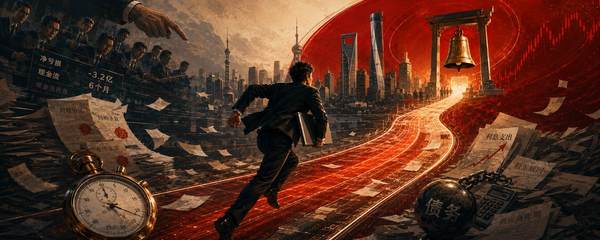
For investors, understanding this logic of economic warfare is to understand why de-dollarization is not merely a slogan but an urgent need.
 Navigating Web3 tides with focused insights
Author: Byron Gilliam
Translation: TechFlow
TechFlow Editor's Note: Stuart Levey changed the rules of the financial sanctions game with a simple insight—no need to persuade governments, directly persuade banks. This playbook turned the dollar system into a chokehold on opponents, but overuse is forcing out alternatives, including cryptocurrency. For investors, understanding this logic of economic warfare is understanding why de-dollarization is not a slogan but an urgent necessity.
During the 2004 presidential debate, when John Kerry accused President Bush of not imposing tough enough economic sanctions on Iran, Bush responded with near annoyance: "We've already sanctioned Iran! There's no more sanctioning to be done."
At the time, there was almost no trade between the two countries, so it indeed seemed there was nothing left to sanction.
However, shelves in Iran were still full of American-made consumer goods. The New York Times reported at the time: "Mattel refrigerators, Diesel clothing, and Victoria's Secret underwear are quite popular here."
Thousands of Iranian businesses bypassed U.S. sanctions simply by setting up offices and bank accounts in Dubai. "The best place to do business in Iran," one businessman told The New York Times, "is in Dubai."
Such arrangements had rendered U.S. sanctions virtually useless. But Bush's remark during the presidential debate inspired a Treasury official to re-examine the sanctions mechanism.
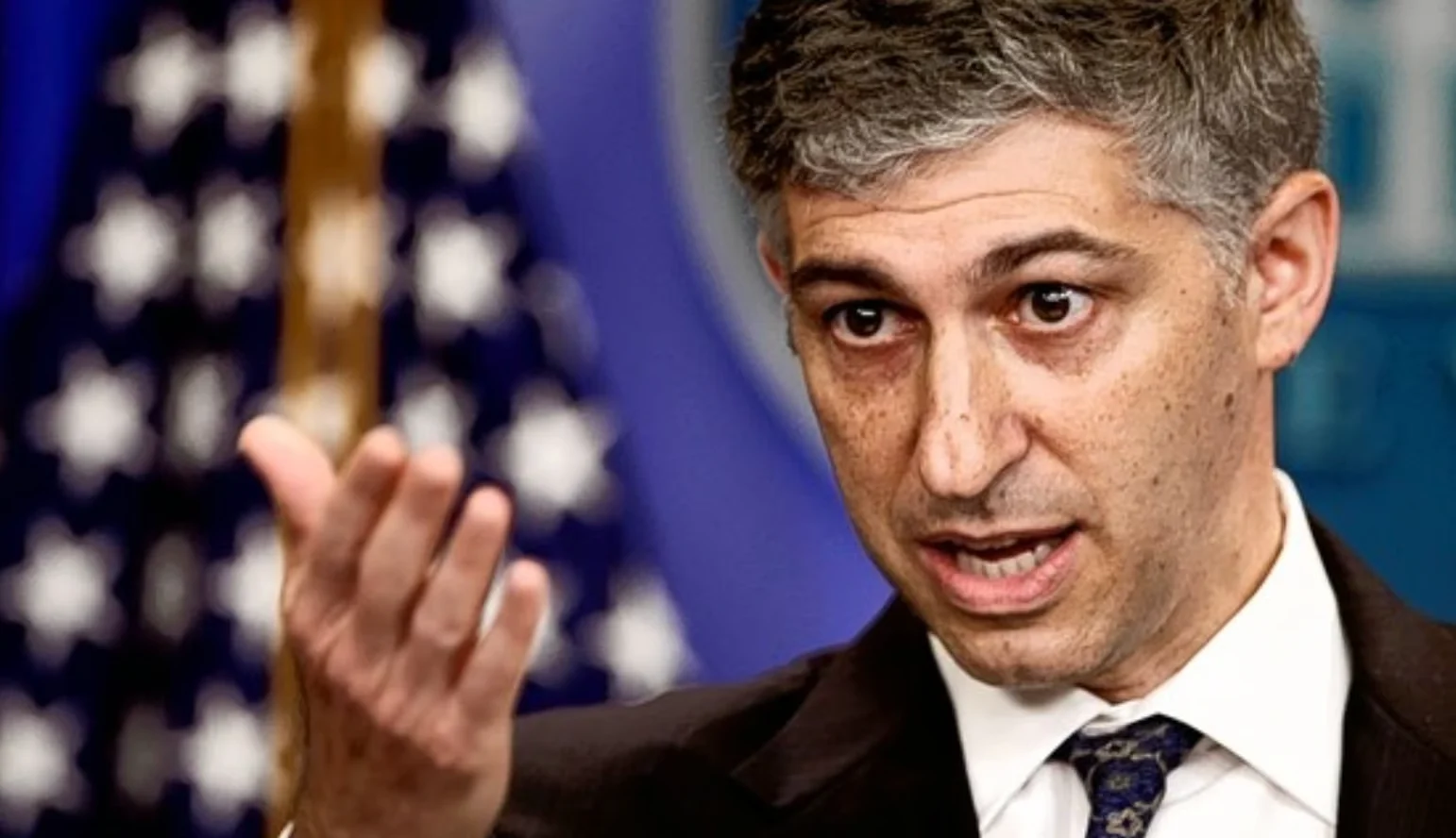
"Stuart Levey took this helplessness as a personal challenge," Edward Fishman wrote in the book "Chokepoint: America's Economic Power in the Age of Economic Warfare."
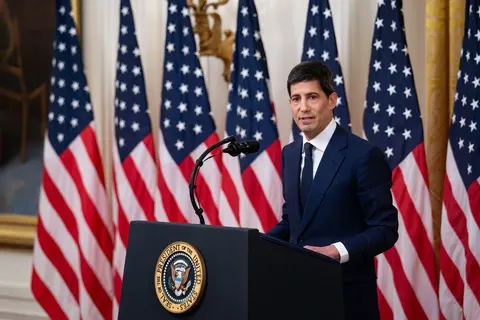
At the time, Levey was the Under Secretary of the Treasury for Terrorism and Financial Intelligence, tasked with finding ways to cut off funding for sanctioned organizations and countries.
He reinvented the way sanctions are played. Fishman calls Levey the "Founding Father of American Financial Warfare." Others call him a "Sanctions Technocrat." Still others say he is a "Guerrilla in a Gray Suit."
Levey earned these titles during his ten years in government. But his lasting impact stems from a simple insight: he could directly tell banks not to deal with certain parties.
Levey's Moment of Insight
Levey's moment of insight came in 2006, when he read a news report saying a Swiss bank had voluntarily cut off all ties with Iran.
"It suddenly clicked," he later said. "When we say 'sanctions have reached their limit,' it means it's illegal for U.S. companies to do business with Iran. But that doesn't mean the rest of the world has stopped doing business with Iran."
The problem was that although Iranian banks had been prohibited from directly trading with U.S. banks since the mid-1990s, they could still indirectly access the U.S. banking system through correspondent banks.
To make payments in USD, Iranian banks would transfer money to European or Asian banks, which would then transfer it to the recipient through U.S. correspondent banks—correspondent banks are banks that settle USD transactions on behalf of other banks.
This loophole seems obvious now, but before Levey, no one in the government paid much attention to this niche corner of the financial system. Even if they did, it seemed powerless. Stopping these transactions looked like it would require laborious persuasion of other governments to instruct their banks to stop trading with Iran.
Levey's insight was: he could directly lobby the banks.
"From his experience practicing at private law firms," Fishman wrote, "Levey was familiar with how corporate executives view regulatory risk and reputational risk. He believed he could persuade them to voluntarily cut off ties with Iran, regardless of whether their own governments supported it."
Persuasion was mixed with warnings: the Treasury Department would pursue violations of U.S. sanctions achieved through correspondent banks.
"We never threaten," Treasury Secretary Hank Paulson told Fishman. "We only talk about how important it is not to violate rules and not to participate in illegal transactions."
The subtext was: Your bank is really nice...
The implied threat was that violating U.S. sanctions law could lead to huge fines, or even loss of access to U.S. correspondent banks, meaning losing the ability to transfer USD.
Not every bank was happy to receive this message.
Fishman quoted the response from Standard Chartered's number two: "You damn Americans. On what basis do you tell us, tell the whole world, not to do business with Iranians?" Years later they found the answer—U.S. law enforcement fined Standard Chartered $359 million for violating sanctions.
Other banks needed no persuasion at all.
"Chinese banks didn't tell me they weren't doing business with Iran," Levey told Fishman. "They just stopped."
"18 months into the campaign, almost all of the world's largest banks stopped providing services for Iranian transactions, even though their own governments and the United Nations had not requested this," Fishman wrote.
One measure of the effectiveness of Levey's campaign was that the Governor of the Central Bank of Iran labeled it "financial terrorism."
But one person's financial terrorist is another person's financial freedom fighter. Fishman calls this campaign an act of economic warfare.
Treasury Secretary Scott Bessent prefers the term "economic statecraft."
Levey's Daily Pay
In a speech last month, Secretary Bessent defined economic statecraft as "the disciplined use of U.S. economic power to defend sovereignty."
This includes the kind of power Levey discovered. Access to the dollar system, Bessent said, "is no longer unconditional."
In fact, it has been conditional for some time. Even before Levey, the U.S. punished opponents like Cuba and Libya by denying access to the banking system.
Levey's discovery was just how much of a chokepoint the dollar system could become, and how the U.S. could use it to pursue geopolitical goals.
Bessent's emphasis on economic statecraft is a declaration that the U.S. intends to use this power more aggressively.
Fishman might applaud this idea—he believes economic warfare can be an effective alternative to hot war.
To this end, he suggests the U.S. establish "a standing committee on economic warfare" to propose policy recommendations faster and better during crises.
But he also warns that this trick won't work forever. Financial sanctions are like antibiotics: effective in large doses, but lose efficacy with overuse.
The U.S. may already be overusing it, evidenced by opponents—even friends—taking increasing measures to create alternatives to the dollar system.
Some of these alternatives involve cryptocurrency, including billions of dollars Iran has transferred via stablecoins in recent years.
Stablecoins could be used to evade sanctions, which is why Stuart Levey joined Facebook's stablecoin project Diem as CEO in 2020—"because he wanted to ensure digital currency would not undermine U.S. financial power," Fishman wrote.
Unfortunately, Diem shut down in less than two years.
But Levey—the Founding Father of American Financial Warfare—still landed on his feet.
As Oracle's Chief Legal Officer, he earned $14.5 million last year.
Join TechFlow official community to stay tuned
Telegram:https://t.me/TechFlowDaily
X (Twitter):https://x.com/TechFlowPost
X (Twitter) EN:https://x.com/BlockFlow_News
 Blockworks