Intelligent Computing Convergence: Deep Integration Architecture, Paradigm Evolution, and Application Landscape of AI and the Cryptocurrency Industry
TechFlow Selected TechFlow Selected
Intelligent Computing Convergence: Deep Integration Architecture, Paradigm Evolution, and Application Landscape of AI and the Cryptocurrency Industry
How Can AI and Crypto Be Better Integrated? The Answer Lies in Shifting from “Simple Tool Stacking” to “Deep Architectural Coupling.”
 Navigating Web3 tides with focused insights
Author: WEB3 Research by GO2MARS
Algorithm and Ledger Symbiosis: A Profound Shift in the Global Technological Paradigm
In the third decade of the 21st century, the convergence of artificial intelligence (AI) and cryptocurrency (Crypto) is no longer merely the juxtaposition of two trending terms—it is a profound technological paradigm shift. With the global cryptocurrency market capitalization officially surpassing $4 trillion in 2025, the industry has completed its transition from an experimental niche market to a vital component of the modern economy.
A core driver behind this transformation is the deep integration of AI—as an exceptionally powerful decision-making and processing layer—with blockchain—as a transparent, immutable execution and settlement layer. This synergy addresses critical pain points on both sides: AI is at a pivotal juncture in shifting from centralized tech giants’ monopolies toward decentralized, transparent “open intelligence”; meanwhile, the crypto industry, having steadily matured its infrastructure, urgently requires AI to resolve challenges such as complex on-chain interactions, fragile security, and insufficient application utility.
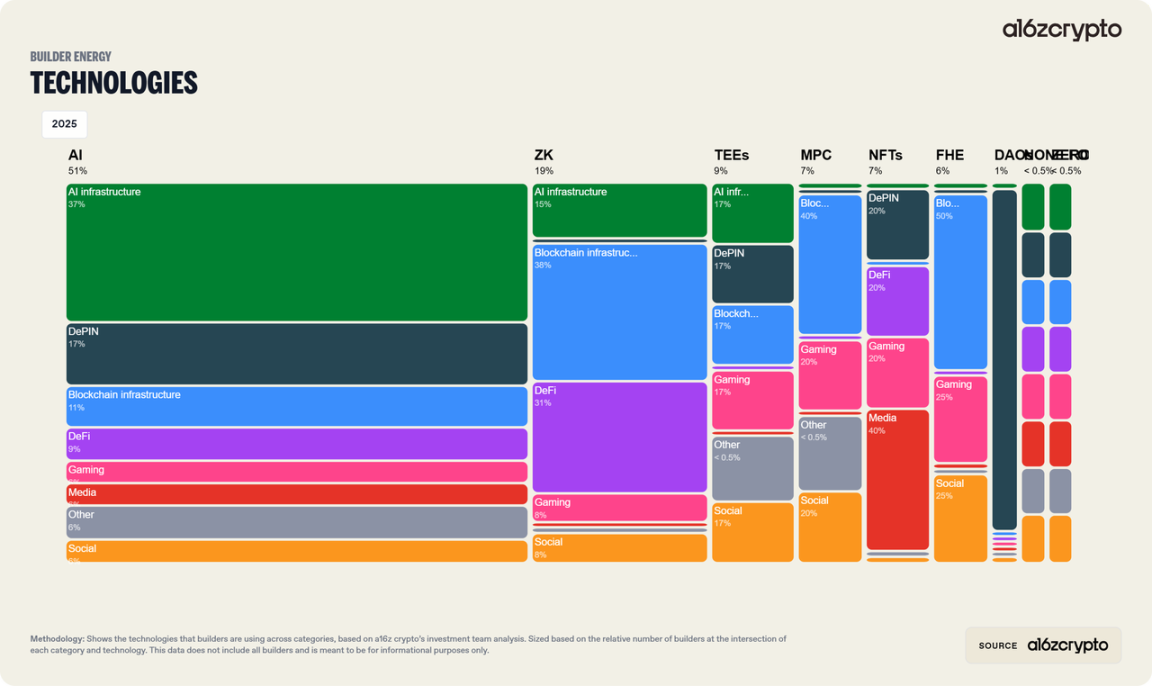
From the perspective of capital flows, strategic divergences among top-tier venture capital firms further confirm this trend. In 2025, a16z Crypto closed its fifth fund at $2 billion, firmly anchoring the AI–Crypto intersection as its long-term strategic core—viewing blockchain as essential infrastructure to prevent AI censorship and control.
Meanwhile, firms such as Paradigm are expanding their investment scope into robotics and general-purpose AI to capture cross-sectoral returns driven by technological convergence. According to OECD data, by 2025, AI-related venture funding accounted for 51% of global total VC investment; in Web3, the share of funding directed toward AI-related projects is also rising steadily—reflecting strong market endorsement of the “decentralized intelligence” narrative.
1. Infrastructure Reconfiguration: Decentralized Compute and Computational Integrity
AI’s insatiable demand for graphics processing units (GPUs) clashes inherently with the fragility of today’s global supply chains. GPU shortages have become commonplace between 2024 and 2025—creating fertile ground for the explosive growth of decentralized physical infrastructure networks (DePIN).
1.1 Dual Evolution of Decentralized Compute Markets
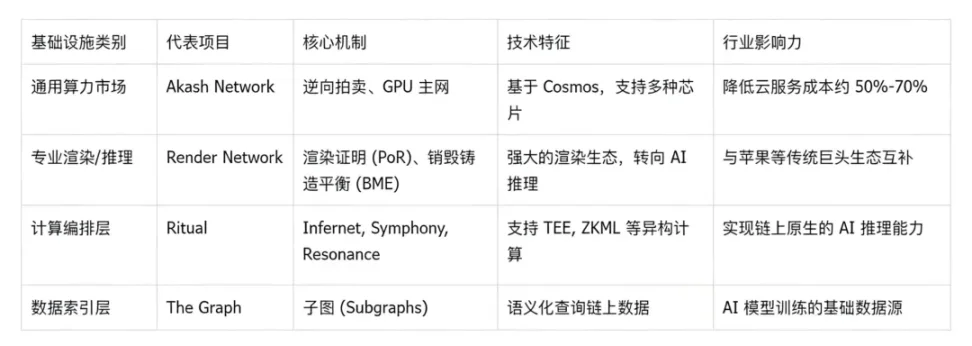
Current decentralized compute platforms fall into two main camps. The first comprises platforms like Render Network (RNDR) and Akash Network (AKT), which build decentralized two-sided markets aggregating idle GPU capacity worldwide. Render Network has become the benchmark for distributed GPU rendering—not only lowering costs for 3D creators but also supporting AI inference tasks via blockchain coordination, enabling creators to access high-performance compute at lower prices. Akash, after launching its GPU Mainnet (Akash ML) in 2023, achieved a major leap forward—allowing developers to rent high-spec chips for large-scale model training and inference.
The second camp consists of novel compute orchestration layers like Ritual. Ritual’s uniqueness lies not in directly replacing existing cloud services, but in acting as an open, modular sovereign execution layer that embeds AI models directly into blockchain execution environments. Its Infernet product enables smart contracts to seamlessly invoke AI inference results—solving the longstanding technical bottleneck of “on-chain applications being unable to natively run AI.”
1.2 Breakthroughs in Computational Integrity and Verification Technologies
Verifying whether “computation was correctly executed” remains a core challenge in decentralized networks. Technical progress in 2025 has focused primarily on the integrated application of zero-knowledge machine learning (ZKML) and trusted execution environments (TEE).
Ritual’s architecture adopts a proof-system agnostic design, allowing nodes to select either TEE-based code execution or ZK proofs depending on task requirements. This flexibility ensures that every AI inference result generated—even within highly decentralized environments—is traceable, auditable, and backed by integrity guarantees.
2. Democratizing Intelligence: Bittensor and the Rise of Commoditized Markets
The emergence of Bittensor (TAO) marks a new phase in AI–Crypto convergence: the “marketization of machine intelligence.” Unlike traditional single-purpose compute platforms, Bittensor aims to establish an incentive mechanism enabling diverse machine learning models worldwide to interconnect, learn from one another, and compete for rewards.
2.1 Yuma Consensus: From Linguistics to Consensus Algorithms
Bittensor’s core is Yuma Consensus (YC)—a subjective utility consensus mechanism inspired by Gricean pragmatics.
YC operates on the premise that an efficient collaborator tends to output truthful, relevant, and information-rich answers—because doing so constitutes the optimal strategy for maximizing rewards within the incentive landscape. At the technical level, YC calculates token emissions based on weighted evaluations of miners’ performance by validators. Its core logic for allocating emission shares can be expressed in LaTeX as follows:
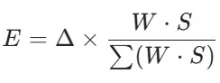
where E denotes emission reward, Δ represents daily total supply increment, W is the matrix of validator evaluation weights, and S is the corresponding staking weight. To prevent malicious collusion or bias, YC introduces a Clipping mechanism that reduces weights exceeding the consensus baseline—ensuring system robustness.
2.2 Subnet Economics and Dynamic TAO Paradigm
By 2025, Bittensor has evolved into a multi-layered architecture. Its base layer is the Subtensor ledger, managed by the Opentensor Foundation; above it sit dozens of vertically specialized subnets—each dedicated to specific tasks such as text generation, audio prediction, or image recognition.
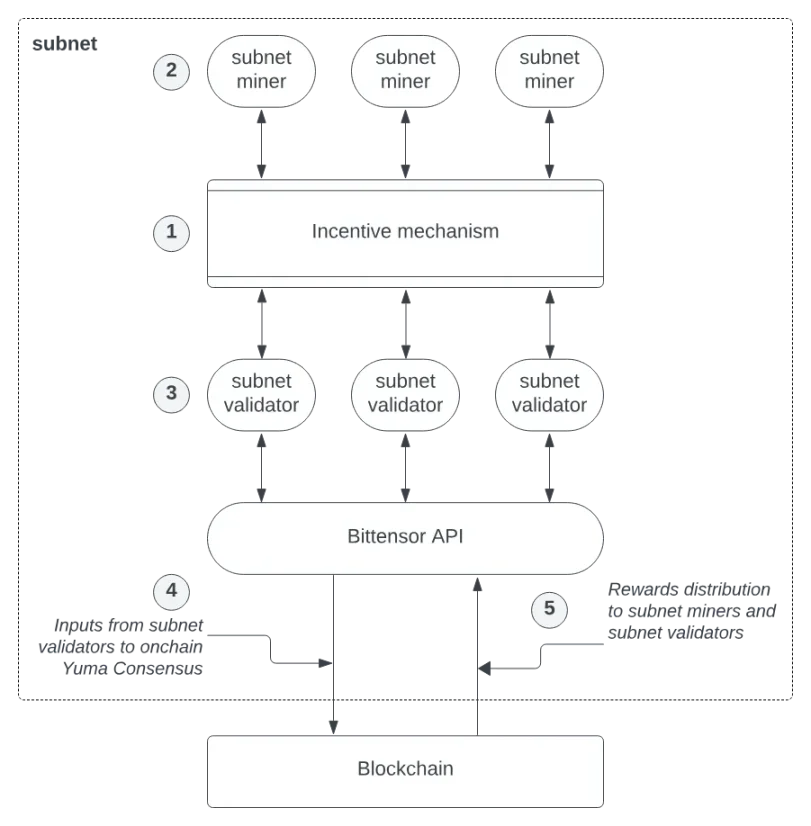
The newly introduced “Dynamic TAO” mechanism employs automated market makers (AMMs) to create independent value reserve pools for each subnet—its price determined by the ratio of TAO to Alpha tokens:
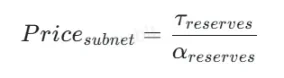
This mechanism enables automatic resource allocation: subnets with high demand and high-quality output attract more staking—and thus receive larger shares of daily TAO emissions. This competitive market structure has been aptly dubbed the “Olympics of Intelligence,” using natural selection to eliminate inefficient models.
3. The Rise of the Agent Economy: AI Agents as First-Class Web3 Entities
Between 2024 and 2025, AI agents are undergoing an essential metamorphosis—from “assistive tools” to “native on-chain entities.” This evolution extends beyond increased architectural complexity; it reflects a fundamental expansion in their roles and permissions within decentralized finance (DeFi) ecosystems.
Below is an in-depth analysis of this trend:
3.1 Agent Architecture: A Closed Loop from Data to Execution
Contemporary on-chain AI agents are no longer simple scripts—they are mature systems built upon three sophisticated logical layers:
Data Input Layer: Agents ingest real-time on-chain data—including liquidity pool states and trading volumes—via blockchain nodes or APIs (e.g., Ethers.js), while integrating off-chain information (e.g., social media sentiment or centralized exchange prices) through oracles like Chainlink.
AI/ML Decision Layer: Agents leverage Long Short-Term Memory (LSTM) networks to analyze price trends—or apply reinforcement learning (RL) to iteratively refine optimal strategies amid complex market dynamics. Integration of large language models (LLMs) further endows them with the ability to interpret ambiguous human intent.
Blockchain Interaction Layer: This is the linchpin of “financial autonomy.” Agents now manage non-custodial wallets, automatically calculate optimal gas fees, handle nonces, and even integrate MEV-protection tools (e.g., Jito Labs) to prevent frontrunning.
3.2 Financial Railways and Agent-to-Agent Transactions
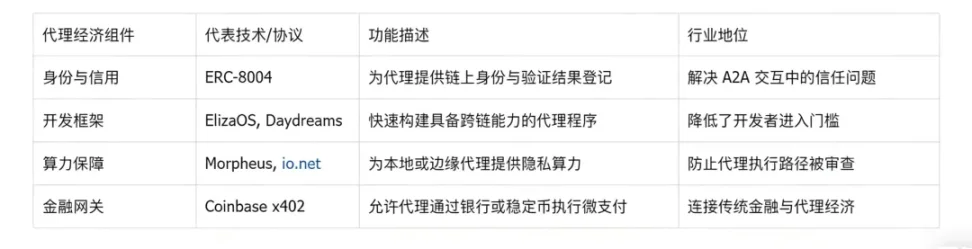
a16z’s 2025 report specifically highlights x402 protocol and similar micropayment standards as the financial backbone for AI agents—enabling autonomous payment of API fees or procurement of other agents’ services without human intervention. For example, the Olas (formerly Autonolas) ecosystem processes over 2 million agent-to-agent automated transactions monthly—spanning DeFi swaps to content creation.
This trend is already reflected in hard market data. The AI agent market stands on the cusp of explosive growth. According to MarketsandMarkets, the global AI agent market is projected to surge from $7.84 billion in 2025 to $52.62 billion by 2030—a compound annual growth rate (CAGR) of 46.3%. Similarly, Grand View Research forecasts the market will reach $50.31 billion by 2030.
Meanwhile, standardized developer tools are emerging. a16z-backed ElizaOS framework has become foundational infrastructure for AI agents—akin to Next.js in frontend development. It empowers developers to deploy financially capable AI agents across mainstream social platforms including X, Discord, and Telegram. As of early 2025, Web3 projects built on this framework collectively surpassed $20 billion in market capitalization.
4. Privacy Computing and Confidentiality: The Tripartite Interplay of FHE, TEE, and ZKML
Privacy remains one of the most intractable challenges in AI–Crypto convergence. When enterprises run AI strategies on public blockchains, they neither wish to expose proprietary data nor reveal core model parameters. Today, the industry has coalesced around three primary technical approaches: fully homomorphic encryption (FHE), trusted execution environments (TEE), and zero-knowledge machine learning (ZKML).
4.1 Zama and FHE’s Industrial Journey
Zama, the leading unicorn in this space, has made its fhEVM the de facto standard for “end-to-end encrypted computation.” FHE permits computers to perform mathematical operations on encrypted data—producing results that, once decrypted, match those obtained from plaintext computation exactly.
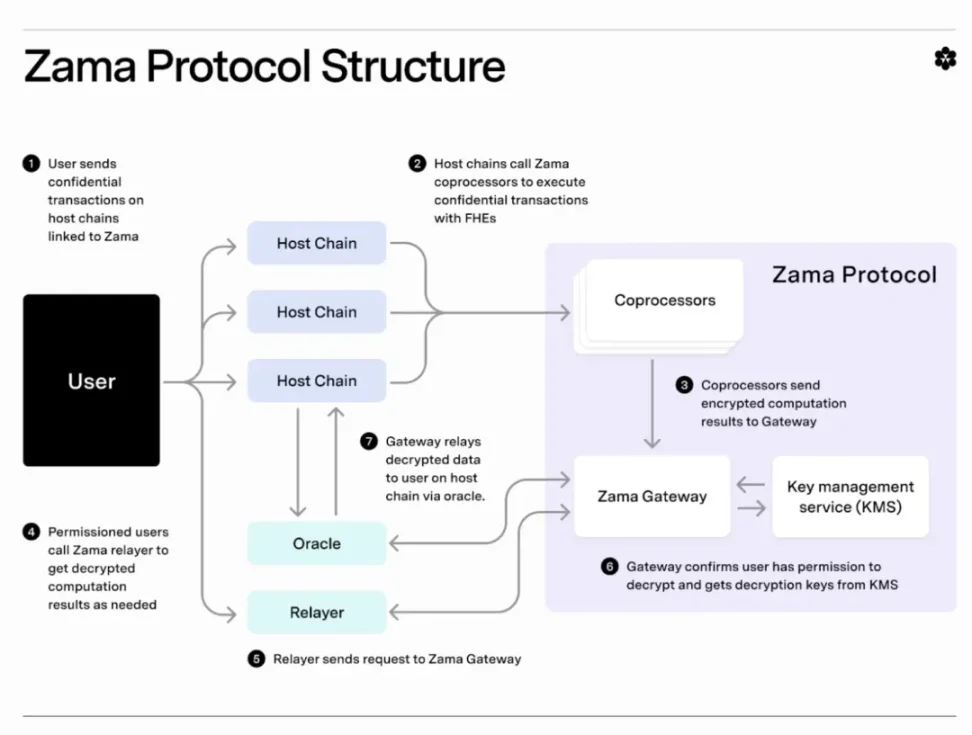
By 2025, Zama’s tech stack has achieved dramatic performance leaps: for 20-layer convolutional neural networks (CNNs), computation speed improved 21×; for 50-layer CNNs, it improved 14×. These advances make privacy-preserving stablecoins (where transaction amounts remain encrypted yet verifiable by protocols) and sealed-bid auctions viable on mainstream chains like Ethereum.
4.2 ZKML’s Verification Efficiency Meets LLMs
Zero-knowledge machine learning (ZKML) emphasizes “verification” rather than “computation.” It allows one party to prove correct execution of a complex neural network model—without revealing input data or model weights. The latest zkLLM protocol supports end-to-end inference verification for 13-billion-parameter models, reducing proof generation time to under 15 minutes and shrinking proof size to just 200 KB. Such capabilities are indispensable for high-stakes financial auditing and medical diagnostics.
4.3 TEE–GPU Synergy: The Power of Hopper H100
Compared to FHE and ZKML, TEE delivers near-native execution speed. NVIDIA’s H100 GPU integrates confidential computing features—using hardware-level firewalls to isolate memory—with typical inference overhead below 7%. Protocols like Ritual increasingly adopt GPU-based TEEs to support latency-sensitive, high-throughput AI agent applications.
Privacy computing technologies have officially crossed from laboratory idealism into a new era of “production-grade industrialization.” Fully homomorphic encryption (FHE), zero-knowledge machine learning (ZKML), and trusted execution environments (TEE) are no longer isolated technical tracks—they collectively form the “modular confidentiality stack” underpinning decentralized AI.
This convergence is fundamentally rewriting Web3’s foundational logic—and yields three core conclusions:
FHE Is Web3’s “HTTPS” Baseline Standard: As unicorns like Zama boost computational performance by orders of magnitude, FHE is achieving a qualitative shift—from “everything visible” to “encryption by default.” It resolves on-chain state-processing privacy challenges, enabling privacy-preserving stablecoins and fully MEV-resistant transaction systems to move from theory to large-scale, compliant deployment.
ZKML Is the Mathematical Endpoint of Algorithmic Accountability: The “ZKML Singularity” arriving in late 2025 marks a dramatic collapse in verification cost. By compressing inference proofs for 13-billion-parameter (13B) models to under 15 minutes, ZKML provides “mathematical-level consistency” guarantees for high-value financial audits and credit scoring—ensuring AI is no longer an untrustworthy black box.
TEE Is the Performance Bedrock of the Agent Economy: Compared to software-based solutions, hardware-enforced TEEs—powered by NVIDIA H100 and similar chips—deliver near-native execution speeds with overhead under 7%. It is currently the only economically viable solution capable of sustaining hundreds of millions of AI agents performing 24/7 real-time decisions—guaranteeing intelligent agents securely hold private keys and execute complex strategies behind hardware-level firewalls.
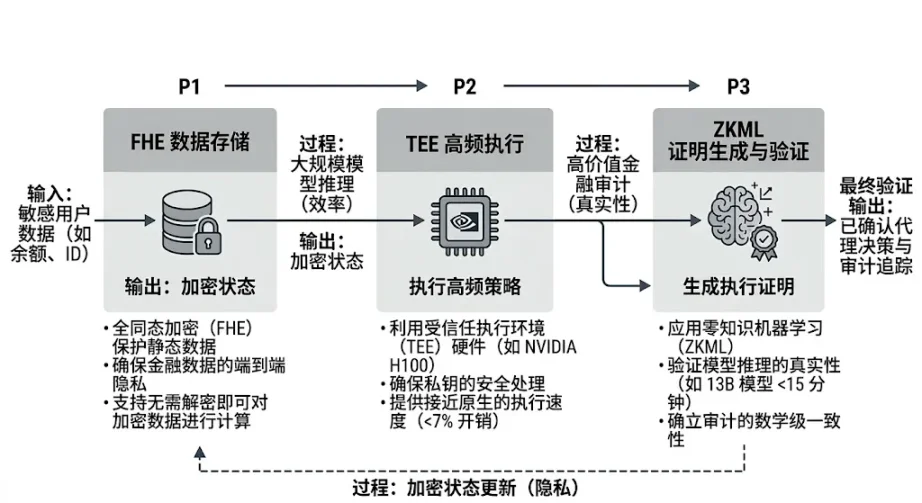
Future technological trends won’t favor any single path—but instead embrace the universal adoption of “hybrid confidential computing.” Within a complete AI workflow: TEE handles large-scale, high-frequency model inference to guarantee efficiency; ZKML generates execution proofs at critical nodes to ensure authenticity; and sensitive financial states (e.g., account balances and private IDs) are encrypted and persisted via FHE.
This “trinity” fusion is transforming the crypto industry—from “publicly transparent ledgers” into “sovereign-privacy intelligent systems”—ushering in the truly multi-trillion-dollar era of automated agent economies.
5. Industry Security and Automated Auditing: AI as Web3’s “Immune System”
The cryptocurrency industry has long suffered massive losses due to smart contract vulnerabilities. AI’s introduction is transforming this passive defense posture—shifting from costly manual audits to real-time AI monitoring.
5.1 Innovation in Static and Dynamic Auditing Tools
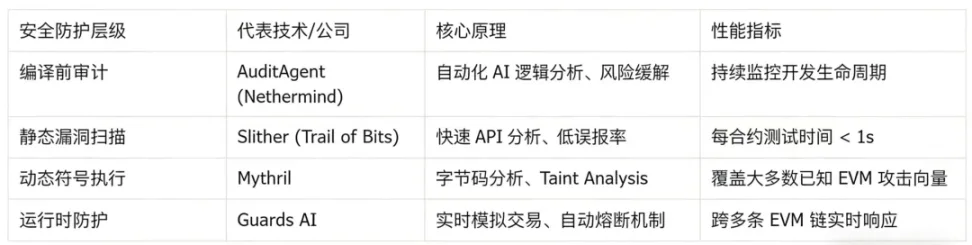
Tools like Slither and Mythril have, by 2025, deeply integrated machine learning models—scanning Solidity contracts for reentrancy attacks, suicidal functions, or abnormal gas consumption at sub-second speeds. Additionally, fuzz-testing tools such as Foundry and Echidna leverage AI to generate extreme input data—uncovering deeply hidden logical vulnerabilities.
5.2 Real-Time Threat Prevention Systems
Beyond pre-deployment auditing, real-time defense has also advanced significantly. Systems like Guardrail’s Guards AI and CUBE3.AI monitor all pending cross-chain transactions (in the mempool), automatically triggering contract pauses or intercepting malicious transactions upon detecting signals of adversarial activity—such as governance attacks or oracle manipulation. This “active immunity” markedly reduces the risk of hacks targeting DeFi protocols.
A Practical Roadmap for Advancing Crypto Through AI
In the future digital landscape, AI–Crypto convergence is no longer a technical experiment—it is a profound revolution concerning “productivity efficiency” and “wealth distribution rights.” This union endows AI with an independently controlled “wallet,” while granting Crypto a self-reasoning “brain”—together inaugurating the multi-trillion-dollar era of autonomous agent economies.
Below is a practical map outlining core benefits of this convergence for enterprises and individuals alike:
1. Enterprise-Level: From “Cost Reduction and Efficiency Gains” to “Business Boundary Expansion”
For enterprises, AI–Crypto convergence primarily resolves structural tensions among prohibitively expensive compute costs, fragile system security, and stringent data privacy requirements.
Drastic Infrastructure Cost Reduction (DePIN Effect): Leveraging distributed compute networks (e.g., Akash or Render), enterprises no longer face prohibitive upfront costs of procuring NVIDIA H100 clusters. Empirical data shows renting globally idle GPUs cuts expenses by 39%–86% versus traditional cloud providers. This “compute freedom” enables startups to afford fine-tuning and training of ultra-large models.
Automated and Affordable Security Barriers: Traditional contract audits are lengthy and expensive. Now, deploying AI-powered security agents like AuditAgent—driven by neural networks—enables “sentinel monitoring” across the entire development lifecycle. They instantly detect logic flaws (e.g., reentrancy attacks) upon code submission—and trigger automatic contract circuit-breakers at the mempool level the instant malicious instructions are issued—safeguarding protocol assets.
“Encrypted Computation” of Core Business Secrets: Using fully homomorphic encryption (FHE) and “blind compute” networks like Nillion, enterprises can run AI strategies on public blockchains—without exposing core model parameters or private customer data. This establishes true data sovereignty—and unlocks previously compliance-constrained financial and healthcare datasets for decentralized collaboration.
2. Individual-Level: From “Financial Exclusion” to “Intelligent Sovereign Economy”
For individual users, AI–Crypto convergence signifies the complete dissolution of technical barriers—and the opening of entirely new income streams.
Intent-Driven “Personal Banker”: Users no longer need to understand gas fees or cross-chain bridges. AI agents built on frameworks like ElizaOS deliver “radical abstraction”—you simply say: “Put this $1,000 into the safest place with the highest yield,” and the AI autonomously monitors APYs across all networks—automatically rebalancing positions during volatility. Ordinary users now enjoy hedge-fund-grade portfolio management.
Monetization of Personal Data (“Data Yield Farming”): Your digital footprint is no longer freely harvested by tech giants. Platforms like Synesis One enable “Train2Earn”—users contribute labeled data for AI training and earn tokens directly. Even holding Kanon NFTs entitles you to passive dividends each time an AI invokes a specific knowledge entry—making “data = asset” a tangible reality.
Ultimate Privacy and Identity Protection: Using Worldcoin or cryptographic identity protocols, you can prove you’re human—not AI—while leveraging privacy-computing networks to shield sensitive personal information (e.g., schedules or home addresses) from AI service providers. This “blind interaction” model ensures you retain ultimate interpretive authority over your digital sovereignty—even while enjoying AI’s conveniences.
This bidirectional architectural evolution entrusts “trust” to blockchain—and “efficiency” to AI. It doesn’t just reconstruct corporate moats; it equips every individual with a ladder toward an intelligent sovereign economy.
Evolutionary Forecast: Toward a New Era of the “Intelligent Ledger”
In summary, how can AI and Crypto converge more effectively? The answer lies in moving beyond “superficial tool stacking” toward “deep architectural coupling.”
First, blockchains must evolve into platforms capable of hosting large-scale computation. Efforts by protocols like Ritual and Starknet are making ZKML as simple to use as calling a standard library. Second, AI agents must become legitimate economic actors. As identity standards like ERC-8004 gain adoption, we’ll witness the emergence of an “intelligent network” comprising hundreds of millions of agents—engaging in 24/7 on-chain resource competition and value exchange.
Finally, this convergence will reshape human financial sovereignty. Privacy-preserving payments enabled by FHE, fair creator payouts enabled by provenance protocols, and algorithmic democratization enabled by markets like Bittensor—collectively chart a future digital economy that is fairer, more efficient, and more decentralized.
In this technological marathon, the crypto industry contributes not just capital—but a philosophical framework grounded in “transparency” and “trust”; AI contributes the “brain” that makes these frameworks operational. As 2026 approaches, this convergence will extend beyond technical circles—reaching billions of ordinary users worldwide through intuitive AI interfaces.
Join TechFlow official community to stay tuned
Telegram:https://t.me/TechFlowDaily
X (Twitter):https://x.com/TechFlowPost
X (Twitter) EN:https://x.com/BlockFlow_News
 Go2Mars Capital