








Meme实战与社群卧底,主打“听劝”的OKX钱包体验拉满 → Meme实战与社群卧底,主打“听劝”的TechFlow钱包体验拉满
TechFlow Selected TechFlow Selected
Meme实战与社群卧底,主打“听劝”的OKX钱包体验拉满 → Meme实战与社群卧底,主打“听劝”的TechFlow钱包体验拉满
The first step of product development is to identify genuine user needs.
 Navigating Web3 tides with focused insights
By TechFlow
March brings spring, yet the crypto world seems to have briefly entered winter, as investors take a break to reflect on their gains and losses in this cycle.
In summary, this has been a short bull market exclusive to on-chain activity—the "P-Generals" are thriving, while veteran VC investors feel disheartened.
Although the Solana meme season no longer shines as brightly as before, liquidity that has once tasted success on-chain finds it hard to return to centralized exchanges for slow cultivation. "On chain" has become a collective consensus, now only awaiting a new narrative to ignite the next on-chain summer (on-chain summer).
Why has pure on-chain momentum sustained from last year until now?
On one hand, it's naturally due to contrast with VC-backed tokens—high valuations and low circulating supply have squeezed retail profitability. Rather than serving as exit liquidity for others, many prefer abandoning the old game entirely and starting anew, leading to successive waves of memes.
On the other hand, the surge in on-chain assets has replenished on-chain liquidity, gradually closing its historical liquidity gap.
Despite widespread criticism of memecoins for lacking intrinsic value, their high-frequency trading has driven rapid improvements in infrastructure such as wallets, DEXs, and Telegram bots. New infrastructures like OKX Web3 have accelerated the on-chain transition by optimizing user experience and liquidity—just as OKX Wallet’s early support for BRC20 inscriptions sparked the inscription spring.
Today, OKX DEX has become one of the core infrastructures for on-chain trading. We use it as a case study to unpack the logic behind the product.
Truly Understanding On-Chain Needs
The first step: identify real demand.
Whether on X (formerly Twitter) or grassroots meme communities, you'll often find members of the OKX Web3 team—many are active "degens" who personally engage in on-chain trading, gaining authentic market feedback.
Besides, the OKX Web3 team has established a dedicated Product Experience Ambassador community to continuously collect bug reports and suggestions.
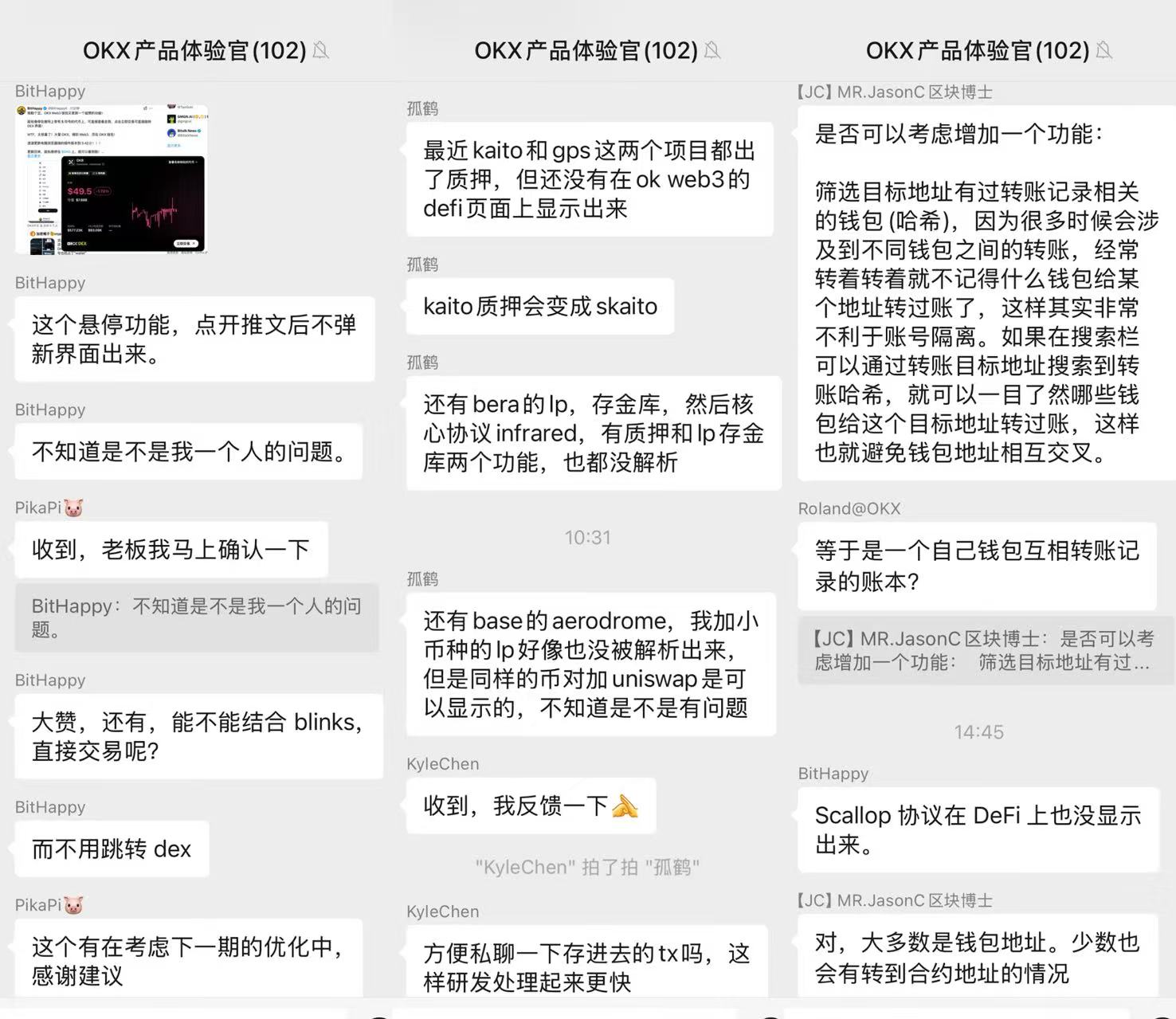
This rich frontline on-chain experience, combined with a highly receptive attitude toward user feedback, allowed the OKX Web3 team to quickly grasp the essence of on-chain trading: What kind of money can you actually make on-chain?
Whether large capital shifts on-chain due to distrust in centralized exchanges like FTX or Mt. Gox, or retail traders seek profits through quick trades, airdrop farming, or DeFi yield mining, the business logic of on-chain trading centers around one core principle—trading volume and frequency.
This is especially true in the meme coin market, where extreme volatility is normal. For users, transaction fees matter less; what matters most is the ability to buy and sell quickly to capture arbitrage opportunities.
Based on these insights, OKX DEX Aggregator defined its strategic path, building advantages across four key dimensions.
In my view, these also represent the four standards for evaluating any on-chain product—not equal in rank, but prioritized in importance.
Security: The Foundation
For both DEXs and CEXs, security is the "1"—the absolute foundation upon which everything else rests.
Here, security doesn't just mean secure transactions—it also means helping users identify "risky assets."
-
Token-level: Automatically scan token contracts for vulnerabilities, identifying high-risk schemes like貔貅 (Ponzi-style locked liquidity), minting traps, etc., blocking problematic tokens before users even interact;
-
Interaction-level: Sandbox simulation of contract approvals to predict potential asset transfer risks post-approval.
Speed: The Killer Feature
On-chain, speed reigns supreme. OKX's core advantage lies in its X Routing algorithm, which compares prices across multiple DEXs and chains, splits orders, and considers price, slippage, and network fees to select optimal routes, minimizing transaction latency.
Convenience: Mobile-First Dominance
A subjective assessment: OKX Web3’s mobile app currently sets the gold standard for Chinese-speaking Web3 product experiences—and this is its biggest moat today.
-
Wallet-DEX-Exchange Triad: Users don’t need to switch interfaces—complex operations are simplified to thumb-friendly access;
-
Market Dynamics: Intuitive display of price movements with automatic buy/sell signal markings.
Best Price: Saving on Chain
As a DEX aggregator, OKX DEX Aggregator pools liquidity from nearly all major on-chain DEXs, ensuring every trade executes at the best available price. When large trades risk price impact, it automatically splits orders across multiple DEXs for execution.
Security, speed, convenience, and optimal pricing form the four core evaluation criteria for on-chain trading products. Security is foundational—but it's impossible to maximize all four dimensions simultaneously. Prioritization is essential.
There’s no perfect product, only solutions suited to specific scenarios. The OKX Web3 team recognized that user priorities differ by context—in high-volatility markets, speed trumps fee sensitivity; but in routine large swaps, price and fees become critical. Thus, product strategy must dynamically adapt, giving rise to OKX DEX’s four trading modes.
Product Thinking Behind Four Trading Modes
The traditional DEX dilemma: security, speed, and price efficiency are hard to achieve simultaneously. OKX DEX Aggregator breaks this trilemma through demand segmentation.
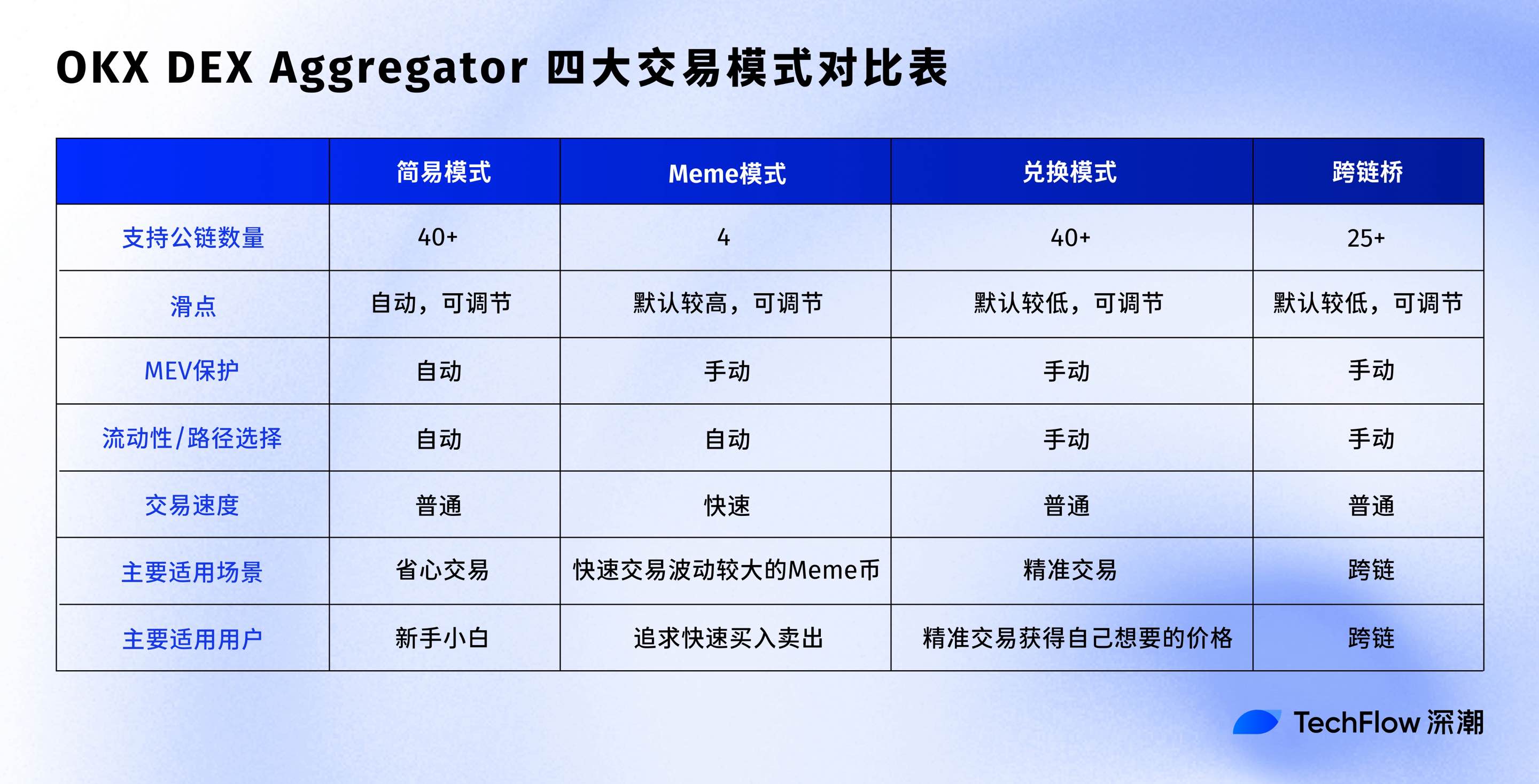
For different scenarios, OKX offers four distinct trading modes:
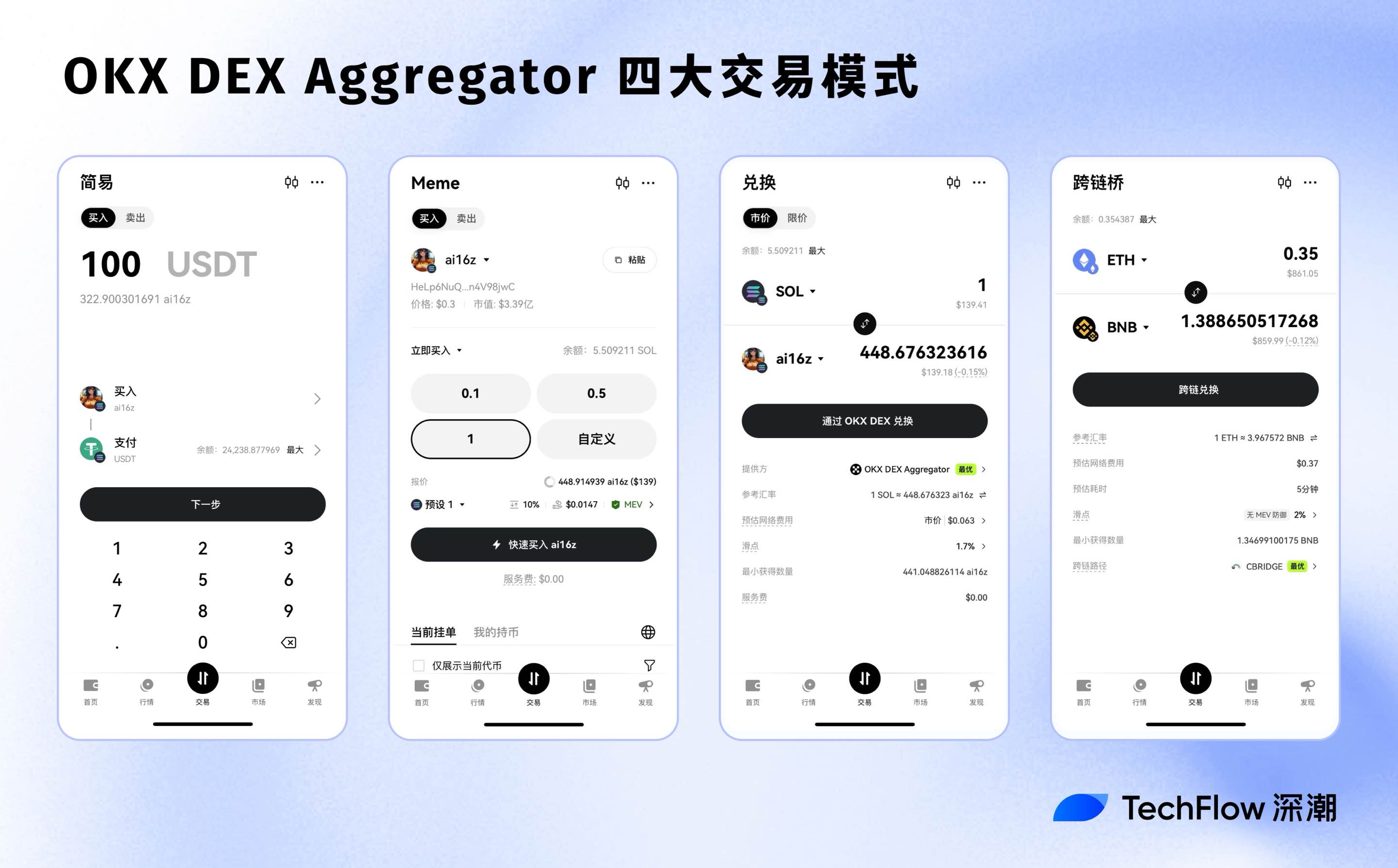
Simple Mode (Beginner-Friendly): Zero learning curve—direct one-click trading.
Swap Mode (Professional): Manual parameter adjustments for advanced users needing precise price control or complex strategies.
Meme Mode (Meme Hunting): Supports Solana, BSC, ETH, Base—default higher slippage tolerance, prioritizing fastest possible buys, though parameters can be customized, aligning with the "FOMO at any cost" mentality.
Cross-Chain Mode: Enables fast asset transfers across chains—including non-EVM chains like Solana from EVM chains such as Ethereum.
These four modes are essentially a concrete manifestation of an on-chain trading triad model: “Risk–Efficiency–Control” trade-offs, embodying three layers of product philosophy.
Scenario Segmentation
Breaking down the vague concept of “trading” into distinct behaviors:
-
No experience → needs safety → Simple Mode
-
Adrenaline-seeking → needs speed → Meme Mode
-
Precision-focused → needs control → Swap Mode
-
Infrastructure need → cross-chain access → Cross-Chain Bridge
Equilibrium Pricing Through Trade-Offs
At its core, on-chain trading is a competition in risk pricing—different users assign different values to various levels of risk.
Each mode involves implicit trade-offs: Meme Mode pays a premium in slippage for speed; Swap Mode trades complexity for cost efficiency.
Strategic Positioning Across User Lifecycle
With four modes, OKX DEX covers the entire lifecycle of on-chain users—ensuring engagement from novice entry to expert mastery.
Newbie Stage: Simple Mode builds trading habits;
Growth Stage: Meme Mode satisfies speculative urges and enables high-frequency meme hunting;
Maturity Stage: Swap Mode supports sophisticated strategies;
Expansion Stage: Cross-chain bridge enables multi-chain portfolio diversification;
From Transaction Infrastructure to Information Infrastructure
The first goal of on-chain trading is clear: enable trading, faster trading, easier trading. Many platforms, including OKX DEX, do this well. But the next battlefield lies *before* trading begins—helping users avoid risks and discover alpha.
The on-chain world is a dark forest—scams, rug pulls, and malicious actors abound. While some turn pennies into fortunes under the spotlight, countless others leave behind financial wreckage.
OKX DEX Aggregator stands out not merely as a trading tool, but as an information platform that bridges knowledge gaps.
-
Data Visualization – Spotting New Trends: Transform complex on-chain data into intuitive visuals, aggregating insights across trending sectors and leaderboards. See what narratives are hot right now, with customizable filters and sorting to discover the most talked-about tokens.
-
Security Protection: Token inspection is a unique OKX feature—assessing token risk based on on-chain signals, continuously monitoring AMM pools and tracking liquidity changes.
-
Trader Profiling: View suspicious addresses, snipers, and smart money positions. Analyze holder distribution, conduct PNL (profit & loss) analysis for individual addresses, and track their historical trades.
In the latest version of OKX, several practical features have been added:
-
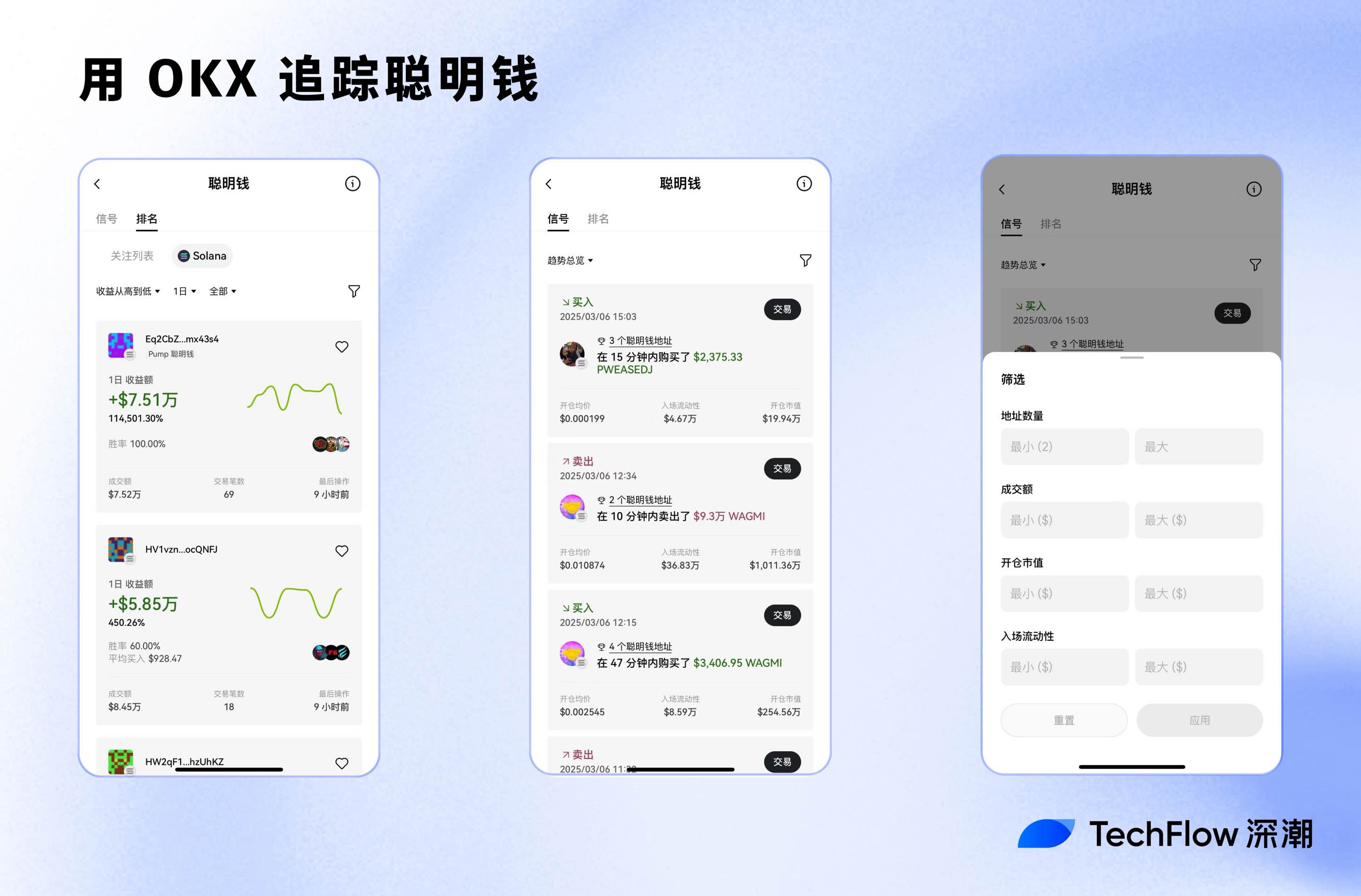
Finding Smart Money: Monitor smart money movements in real time, view rankings of smart money addresses, filter by number of addresses, trading volume, position size, and entry liquidity metrics.
-
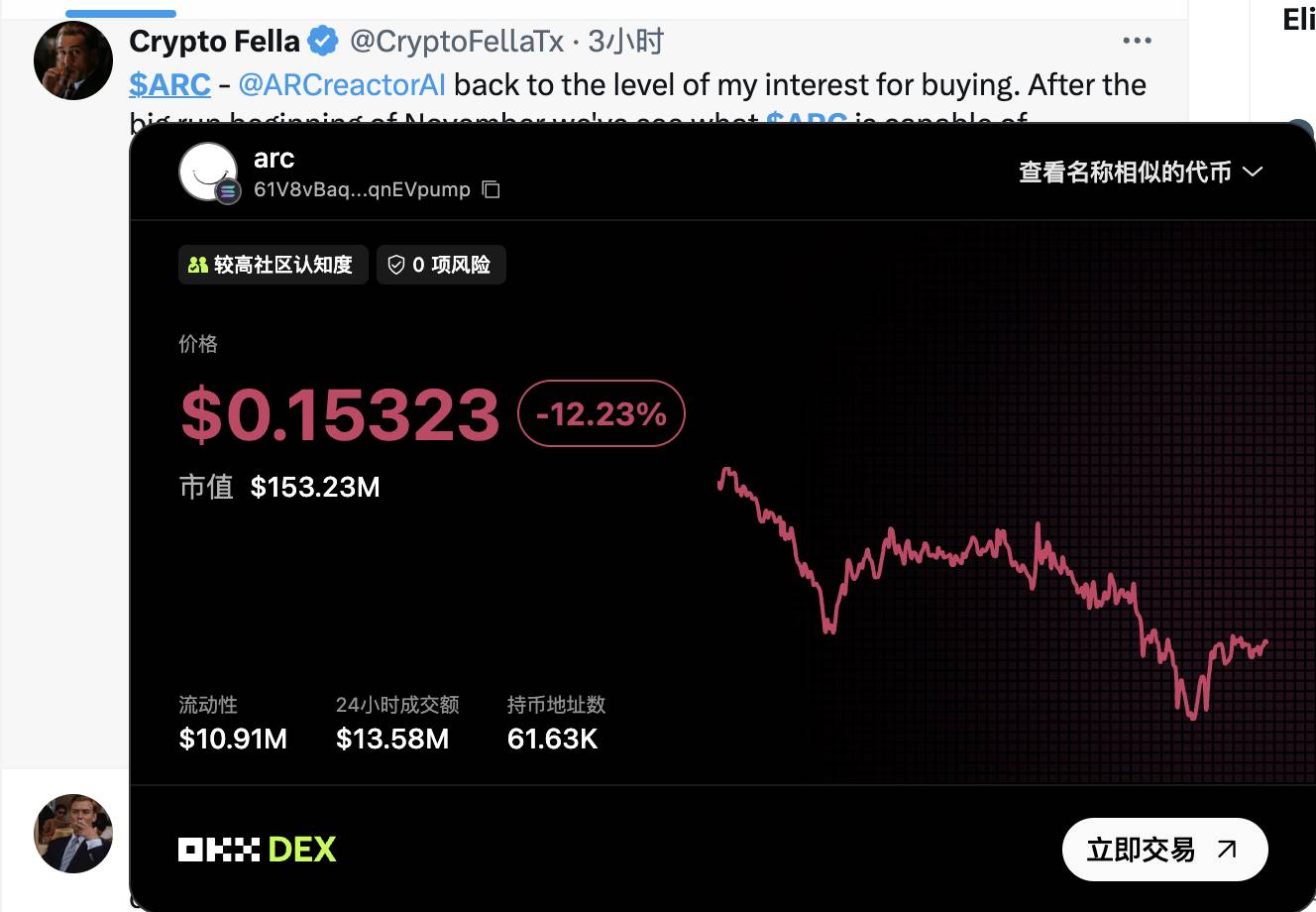
X (Twitter) Floating Window: While scrolling X for alpha, when your mouse hovers over a $-tagged token name, the OKX wallet plugin instantly displays basic info about the token. The top-right corner shows all same-name tokens across chains, and the bottom-right allows direct jump to OKX Web3 for trading.
-
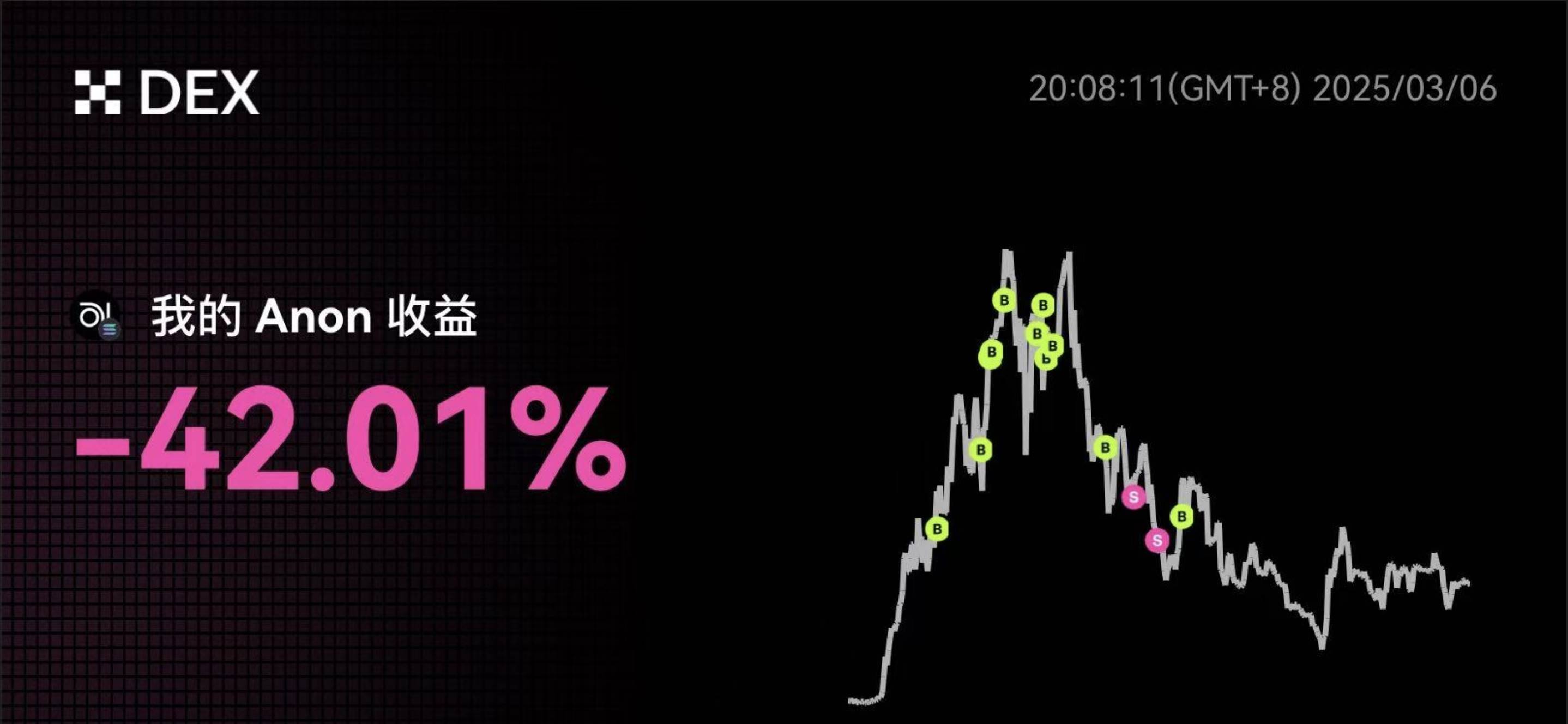
On-Chain PNL Sharing: Share your profit and loss status just like on CEXs. As the author boldly shares losses, let others have a laugh.
By making information and data serve on-chain trading, OKX DEX is evolving from a mere transaction channel into a "cognitive operating system" for on-chain behavior—when trading tools begin deconstructing how professional traders gather data, manage risk, and make decisions, traditional information arbitrage opportunities will be systematically compressed.
OKX Web3’s ambition may lie in becoming a hybrid of Bloomberg Terminal + trading platform + social graph for the crypto world. That’s the next high ground in the DEX wars—and where the next wave of opportunity truly lies.
Join TechFlow official community to stay tuned
Telegram:https://t.me/TechFlowDaily
X (Twitter):https://x.com/TechFlowPost
X (Twitter) EN:https://x.com/BlockFlow_News
 深潮TechFlow






