
The Original Sin of Finance: Virtual Currencies Retreat from China
TechFlow Selected TechFlow Selected
The Original Sin of Finance: Virtual Currencies Retreat from China
"The workplace may change, but Chinese people will never disappear from this industry."
 Navigating Web3 tides with focused insights
Author: Anderson Sima, Executive Editor at Foresight News
Hidden on Dongchangzhi Road lies the former site of Lestrange Engineering College. Its renovated auditorium retains its Gothic style, with weathered stone walls facing the 320-meter-high Magnolia Plaza.
On October 17, the Shanghai Blockchain Week—held consecutively for ten years—moved from the Bund W Hotel to this historic location. Promptly at 9:20 a.m., attendees outside streamed into the hall, drawn by the presence of a near-mythical figure: Vitalik Buterin, co-founder of Ethereum.
After the host's opening remarks, Vitalik’s face appeared on the big screen. Flashlights lit up the audience amid cheers, as people expressed their fascination with the 30-year-old genius and billionaire.
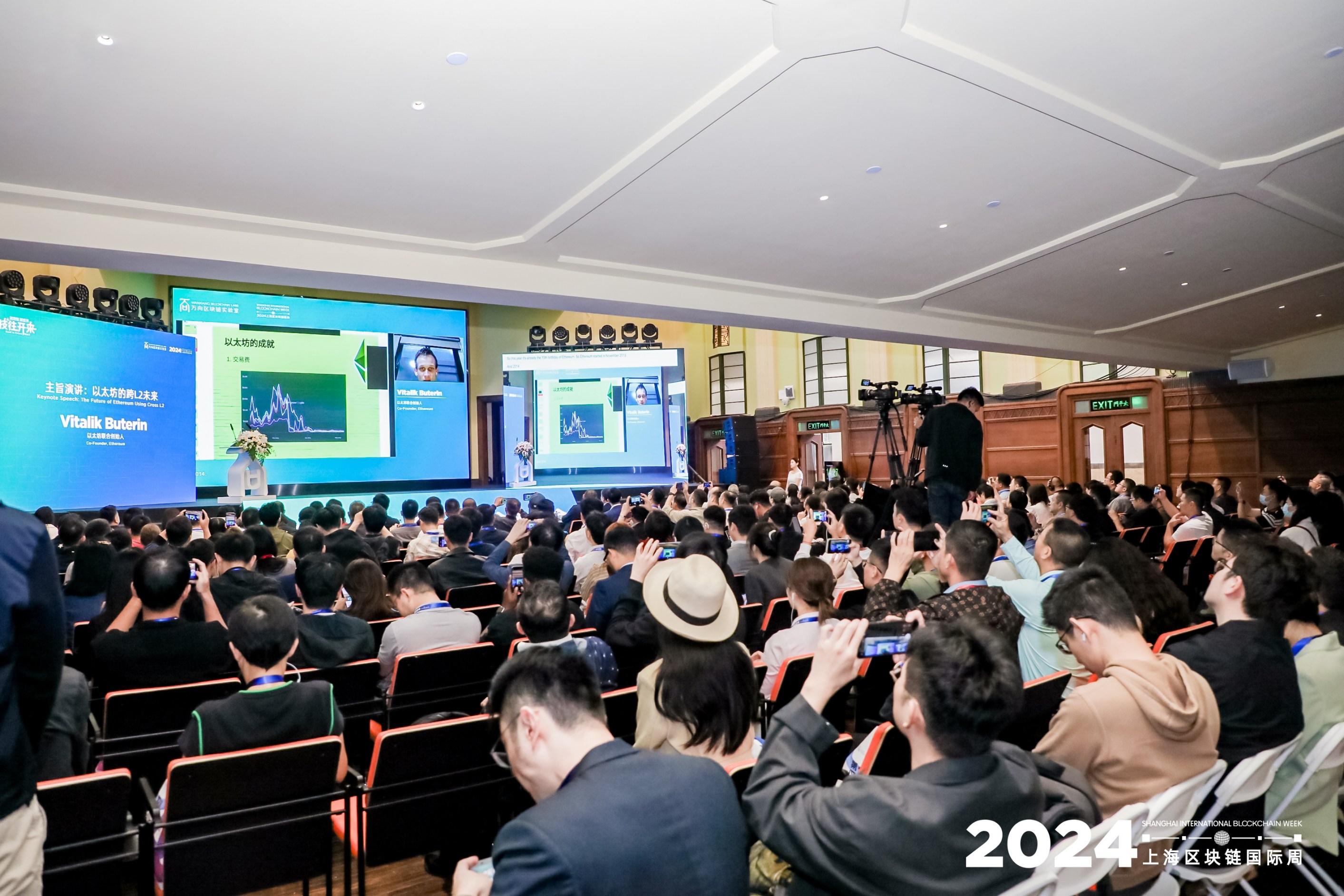
Audience photographing Vitalik during his speech. Image source: Wanxiang Blockchain Lab
Yet one subtle detail stands out: since 2019, this spiritual leader of the blockchain world has not stepped foot in mainland China—even though it was once the most important hub of Ethereum, currently the world’s largest blockchain ecosystem network.
As Vitalik disappears from the streets of Shanghai and Beijing, mainland China’s blockchain ecosystem is correspondingly fading. "This is an unfortunate reality," said Yujie Zhang, co-founder of Conflux, in an interview with Foresight News.
Wild Growth and Full Prohibition
Originating from the global financial crisis of 2008, blockchain and cryptocurrency gradually emerged as an innovative sector in fintech after Satoshi Nakamoto published the Bitcoin whitepaper in 2009.
In simple terms, blockchain refers to a distributed ledger network database, while tokens form the associated economic system that secures the ledger and governs its operations—commonly known as cryptocurrencies, which have sparked worldwide debate. In China, they are often called virtual currencies; some regions refer to them as digital currencies.
Driven by wealth effects, Bitcoin experienced three bull markets, reaching a total market capitalization of $1.3 trillion—comparable to Meta, the internet platform led by Mark Zuckerberg.
Notably, during the peak of each of these previous bull runs, the Chinese government took measures to cool down the "virtual currency" market.
In December 2013, the People's Bank of China (PBOC) and four other ministries issued the Notice on Preventing Bitcoin Risks, defining Bitcoin for the first time and stating it does not have legal tender status and cannot or should not be used as currency in market circulation.
In 2017, amid the ICO frenzy, seven departments—including the PBOC, Cyberspace Administration, Ministry of Industry and Information Technology, SAIC, CBRC, CSRC, and CIRC—issued the Announcement on Preventing Risks Associated with Token Issuance Financing. It banned illegal token issuance financing activities, declaring ICOs to be essentially unapproved public financings, suspected of illegal securities offerings, fundraising, fraud, pyramid schemes, and other criminal acts.
Following two rounds of strict regulation, the ICO craze began to subside. The first wave of domestic cryptocurrency exchanges started winding down or exiting mainland China, marking the end of direct RMB purchases of crypto assets.
However, apart from ICOs, cryptocurrency mining and exchange businesses continued to flourish across mainland China, at one point accounting for more than half of the global market share. Industry figures such as Ethereum founder Vitalik Buterin and Binance founder Changpeng Zhao remained active in the Chinese market.
By 2021, as cryptocurrencies entered another bull market, China escalated its regulatory crackdown to unprecedented levels. In September, the National Development and Reform Commission and other agencies issued a notice targeting cryptocurrency mining activities, requiring a full elimination of such operations nationwide.
Simultaneously, the PBOC and several other departments jointly released the Notice on Further Preventing and Managing Risks of Cryptocurrency Trading and Speculation, stipulating for the first time that overseas cryptocurrency exchanges serving Chinese users would also face legal liability. Individual crypto trading was deemed contrary to public order and good customs, rendering related civil acts invalid.
From then on, all industries related to virtual currencies began a complete withdrawal from mainland China.
The world’s three largest cryptocurrency exchanges—Binance, Huobi, and OKEx—all swiftly announced in 2021 the suspension of new user registrations from mainland China, followed by gradual user delisting.
Many smaller domestic exchanges chose to shut down entirely, unable to survive under intense regulatory pressure. Apart from Huobi, which primarily focused on user delisting, other offshore exchanges closed their offices in Beijing and Shanghai, eventually relocating to Singapore and Dubai.
On the mining front, China had once been the dominant source of global Bitcoin mining hash power. Hydroelectric mines in provinces like Yunnan, Guizhou, and Sichuan, along with thermal power mines in Xinjiang and Inner Mongolia, collectively accounted for over 60% of global Bitcoin computing power.
Following the large-scale ban on Bitcoin mining in 2021, miners relocated their equipment to Kazakhstan, the United States, Canada, and elsewhere. Leading upstream hardware manufacturers Bitmain and Canaan Creative shifted their business focus entirely overseas, completing the exit of China’s crypto mining industry.
Financial Sin: Illegal Fundraising and Money Laundering
The Chinese government’s stringent regulation of cryptocurrencies stems from their inherent financial characteristics, which in the mainland context frequently breach regulatory red lines.
Regulatory documents show that the PBOC and other supervisory bodies believe that speculation in cryptocurrencies can destabilize markets and foster gambling, illegal fundraising, fraud, and pyramid schemes. By strictly prohibiting crypto trading, the government aims to protect domestic financial stability and prevent systemic risks.
Following the P2P lending crisis, virtual currencies became another hotspot for illegal fundraising. According to CCTV.com, in May 2018, Plus Token—a so-called digital wallet created by former Google employees and staff from multinational companies—quietly emerged online. Under the guise of blockchain technology and promising high returns, Plus Token swept across more than 100 countries within just over a year, attracting over 2 million participants and involving 40 billion yuan ($5.6 billion). In June 2019, the platform vanished.
Moreover, the Chinese government has long been concerned about cryptocurrencies being used for money laundering, tax evasion, and other illicit financial activities. The anonymity and decentralization of cryptocurrencies make them ideal tools for criminals to evade oversight. In numerous cases of financial crimes across the country, crypto assets were almost always involved in money laundering.
Take the UK’s largest money laundering case in April this year: according to Caixin, a Chinese-British woman was convicted by a UK court for laundering at least 61,000 bitcoins, reportedly linked to a 43-billion-yuan fraud scheme in Tianjin. She allegedly helped Qian Zhimin, the mastermind behind the scam, convert large amounts of bitcoin into tangible assets.
Money laundering directly threatens national capital controls. As Yujie Zhang, co-founder of Conflux, told Foresight News: "With the rise of cryptocurrencies, some investors may exploit their cross-border liquidity to move funds overseas. The government fears this could weaken control over capital flows and lead to domestic asset outflows. Therefore, restricting virtual currency trading is seen as a critical measure to prevent capital flight."
Additionally, due to the highly speculative nature of the crypto market and its extreme price volatility, it attracts many speculators. The Chinese government believes such speculation not only harms retail investors but could also trigger financial chaos. Hence, regulators demand a strict ban on crypto speculation to prevent market disruption.
Li Guoquan, professor at Singapore University of Social Sciences, told Foresight News: "The Chinese government chose to crack down hard on 'speculation' and other乱象 when the field was overrun with weeds. This is extremely important for investor protection—I fully support this approach."
Fear of 'Coins,' Complete Shrinking
Under current high-pressure regulation, multiple experts and scholars told Foresight News that a stigma of “fear of coins” has taken root domestically within the blockchain space.
Xiao Sa, senior partner at Beijing Dacheng Law Firm, told Foresight News: "Between 2017 and 2022, we saw a proliferation of ICOs and widespread scams under the banners of cryptocurrency, metaverse, NFTs, and digital collectibles. This led Chinese regulators to adopt a strict stance toward cryptocurrencies. The resulting 'fear of coins' is real—and it has indeed hindered the development of blockchain technology in China."
While cracking down hard on virtual currencies, the Chinese government actively promotes consortium blockchains, hoping to drive blockchain applications in finance, supply chains, and government services. However, the actual outcome has been disappointing—the growth of consortium chains has fallen far short of expectations.
Deng Jianpeng, professor at CUFE Law School and director of the FinTech Law Research Center, told Foresight News: "Due to strict financial regulations in China, developing public blockchains faces policy obstacles. Public chains usually require issuing tokens as economic incentives. Therefore, non-tokenized consortium or private chains are preferred domestically. But these offer limited innovation ecosystems and raise transparency issues."
Despite numerous domestic consortium chain projects—such as Baidu’s Superchain, Ant Group’s AntChain, and Tencent’s blockchain platform—actual real-world applications remain extremely scarce. While China leads globally in blockchain patent filings, practical implementation lags significantly. Many companies treat blockchain merely as a marketing gimmick rather than a genuine technological solution.
One major obstacle to consortium chain development is their high degree of centralization, contradicting blockchain’s core principle of decentralization. Additionally, challenges persist in areas like data privacy, security, and system interoperability. These factors leave many enterprises hesitant, resulting in low adoption and utilization rates.
As China tightens its grip on the blockchain and crypto industry, the global center of gravity for crypto funding and collaboration is shifting. More and more Chinese companies are turning overseas—to Singapore, Hong Kong, the U.S., and the Middle East—for capital and business opportunities, while China itself gradually fades from the center of this domain.
According to Galaxy Digital’s Q3 2024 Crypto Industry Investment Report, the crypto sector raised $2.4 billion in Q3. Companies headquartered in the U.S. captured 56% of all venture capital, followed by the UK (11%), Singapore (7%), and Hong Kong (4%). Mainland China’s share was negligible.
This shift has been accompanied by a sharp decline in startups and talent. Although blockchain once gained popularity in universities, increasing regulatory pressure and shrinking job prospects have made students increasingly cautious about entering the field.
Bright, president of Fudan University’s Blockchain Association, told Foresight News: "Across Chinese universities, only top-tier institutions in major cities have blockchain associations, and very few core members ultimately pursue careers in blockchain." He cited Fudan’s association: fewer than 10 graduates per year accept blockchain-related job offers.
Where Do We Go From Here?
On September 28, the 2024 Tsinghua Wudaokou Chief Economist Forum was held in Beijing. Zhu Guangyao, former vice minister of finance, spoke about cryptocurrencies and, unusually, advocated for greater research attention.
"It certainly has negative impacts—we must fully recognize its risks and harm to capital markets. But we must study international developments and policy shifts, because it is a crucial aspect of digital economy development," said Zhu, reflecting on over a decade of crypto evolution. He noted that for years, the U.S. viewed cryptocurrencies as highly disruptive to anti-money laundering and counter-terrorism financing efforts.
Using the U.S. and Trump as examples, Zhu highlighted differing regulatory approaches: "Cryptocurrency’s volatile value poses massive shocks to global financial markets. But this year, U.S. policy has undergone a major shift. Trump’s campaign platform explicitly includes cryptocurrency, and he publicly stated, ‘We must embrace cryptocurrency, or China will replace us.’ The SEC has approved 11 Bitcoin ETFs for listing in stock and futures markets. Among emerging and BRICS nations, Russia, South Africa, Brazil, and India are also taking action."
Professor Deng Jianpeng shares similar views. He told Foresight News: "There are indeed many illegal and criminal activities in the virtual currency space, but I don’t think this should be a fundamental barrier to blockchain development in China. Regulators could deepen their understanding of blockchain and reference the current international acceptance of blockchain and even blockchain finance, then consider appropriate policy adjustments instead of simply fearing ‘coins.’"
"Virtual currencies in mainland China have been involved in various illegal acts or served as tools for crime. Yet the same is true in the U.S., Hong Kong, Europe, and Dubai. Tools for crime are diverse—for instance, U.S. cash is the world’s primary instrument for money laundering and drug trafficking—but we wouldn’t ban the dollar because of that. So we need to re-examine and rethink cryptocurrencies from multiple angles," he added.
Xiao Sa from Beijing Dacheng Law Firm also noted that the biggest challenge for blockchain development in mainland China today is compliance. With regulatory documents like the "September 4 Announcement" and "September 24 Notice" still in effect, building a crypto ecosystem faces inherent compliance hurdles, severely limiting room for innovation in DeFi, RWA, and related fields.
For blockchain practitioners in mainland China, is change possible under the long-standing high-pressure regime? All interviewees agreed: unlikely in the short term. "I think it will be difficult to see any change in at least the next five years," said Deng Jianpeng.
Epilogue
Shenzhen’s Luohu Port is about an hour’s drive—or 70 minutes by subway—from Times Square in Hong Kong’s Causeway Bay. On the streets of Causeway Bay, physical OTC cryptocurrency shops are everywhere, leaving visiting scholar Deng Jianpeng astonished. "Hong Kong has taken a bold step forward, but it must advance Web3 development while effectively managing crypto-related risks," he said.
After Hong Kong embraced virtual currencies, many entrepreneurs and companies have returned to neighboring Shenzhen—a place offering convenient transportation and much lower labor and living costs compared to connected Hong Kong.
Yujie Zhang, co-founder of Conflux, told Foresight News: "These returning small teams are scattered across Shenzhen, quietly participating in the global blockchain ecosystem. Office locations may change, but Chinese people will never disappear from this industry."
Join TechFlow official community to stay tuned
Telegram:https://t.me/TechFlowDaily
X (Twitter):https://x.com/TechFlowPost
X (Twitter) EN:https://x.com/BlockFlow_News
 Foresight News